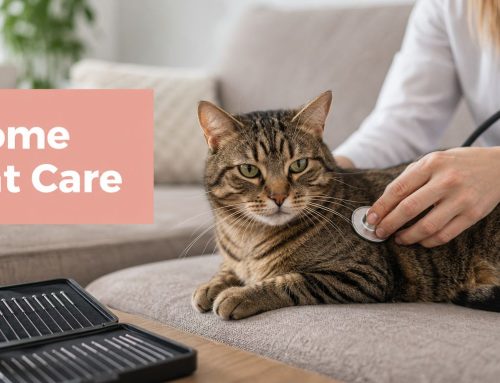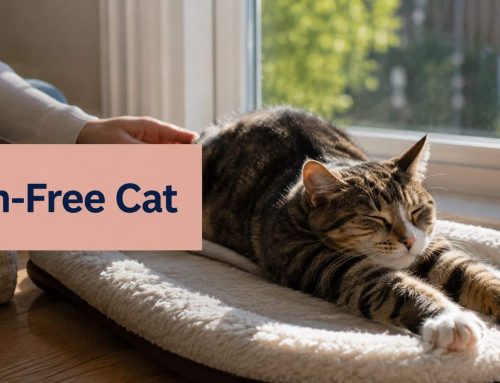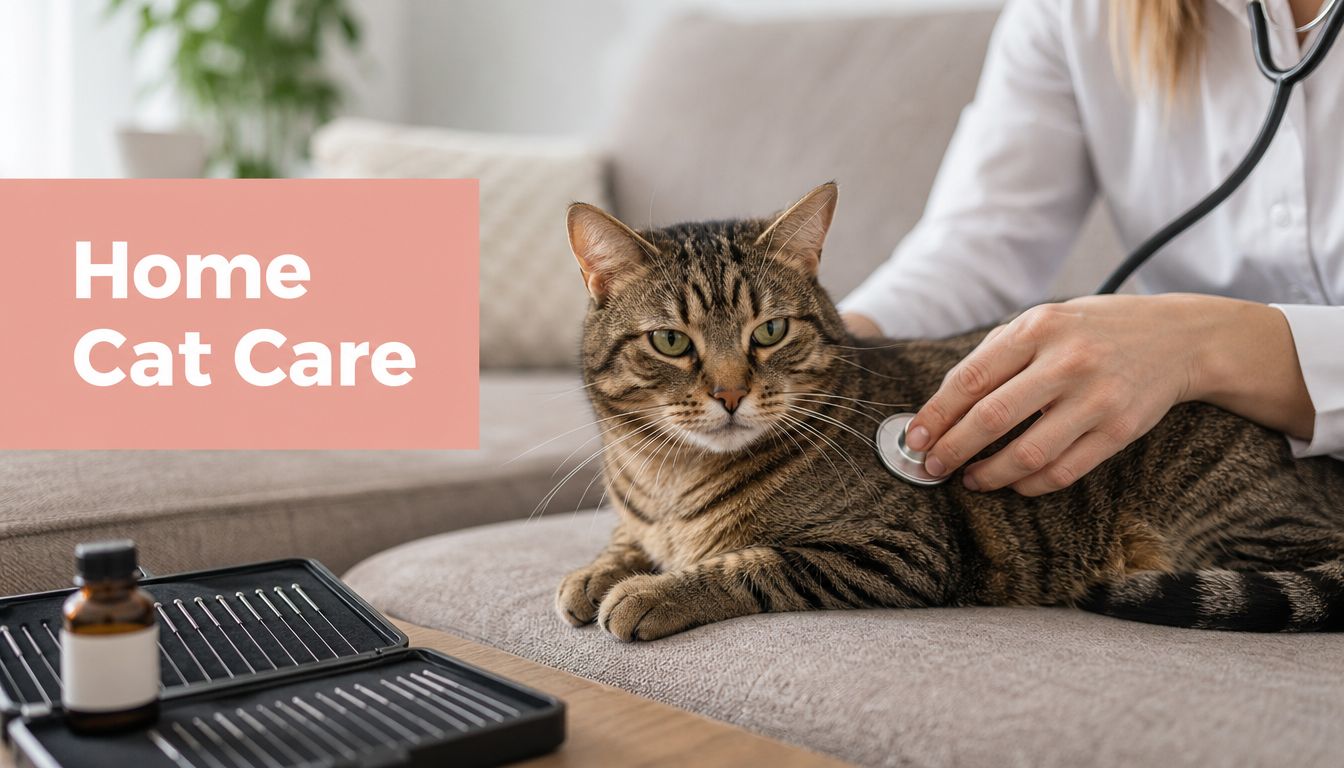
Your search for a mobile veterinary clinic near me usually starts in a stressful moment. Your dog is stiff and sore, but hates getting into the car. Your senior cat hides the second the carrier appears. Maybe your pet is recovering from surgery, slowing down with age, or dealing with chronic pain, and the effort of getting to a clinic feels harder than the appointment itself.
In South Tampa, that situation comes up often. Pets don't just react to medicine. They react to noise, smells, slippery floors, unfamiliar animals, and the disruption of being taken out of the place where they feel safest. For many dogs and cats, the trip is the hardest part.
As a mobile veterinarian, I've seen how much calmer pets can be when care happens at home. A quieter setting often gives us a more accurate picture of comfort, mobility, behavior, and daily function. It also helps families make thoughtful decisions about what their pet needs now, what can be managed at home, and what should go to a hospital right away.
Why South Tampa Pet Owners Choose In-Home Vet Care
A clinic visit can unravel before the exam even begins. An older Labrador may struggle to stand up in the back seat. A painful dachshund may tense when lifted. A cat with arthritis may cry through the drive, then shut down completely in the exam room. By the time the visit starts, the pet is frightened, the owner is worried, and everyone is already exhausted.
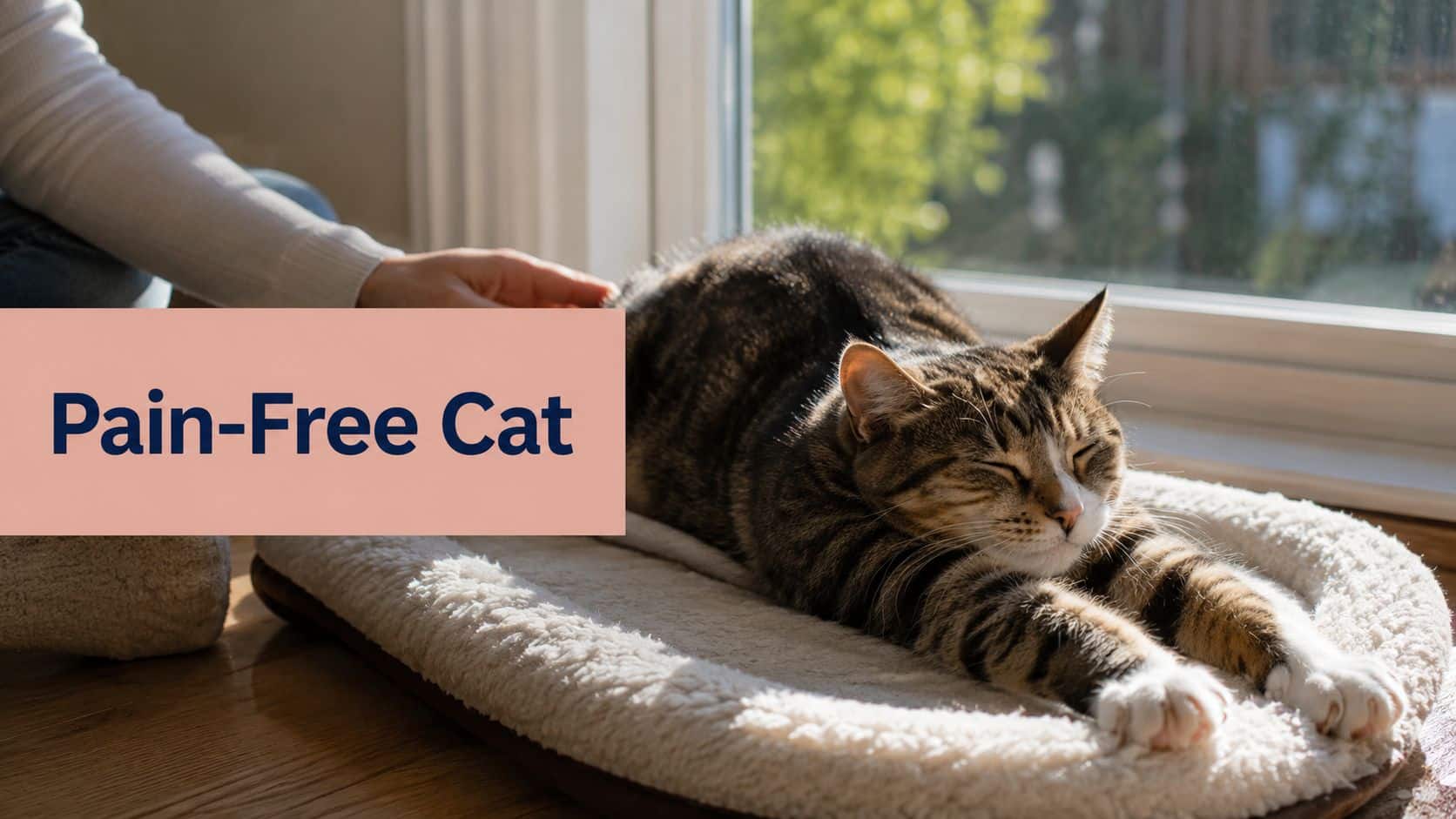
At home, the rhythm is different. The dog walks out onto familiar flooring. The cat stays in a known room with familiar smells. The visit starts with observation, not restraint. That changes a lot.
A neutral source focused on in-home veterinary care notes that when fear and transport stress are reduced, calmer animals are easier to examine, handle, and triage accurately, which can improve the quality of the physical exam, as described by Home Vet Care's overview of low-stress house calls. That's one of the biggest practical reasons many families prefer home visits, especially for anxious, senior, or mobility-limited pets.
Practical rule: If getting to the appointment feels like the hardest and riskiest part of your pet's care, an in-home visit may be the better setting.
For South Tampa households, house calls also fit real life. Many families are juggling work, kids, parking, traffic, and multiple pets. When care comes to the home, you're not spending the whole day around the appointment. You're creating a calmer medical experience.
That doesn't mean home care is always the right answer. It means it's often the right answer for the right patient. Pets with chronic pain, arthritis, neurologic weakness, post-operative stiffness, or significant clinic anxiety often do better when they're evaluated where they already feel secure.
If you want a broader look at why pets often settle better during home visits, this guide on the benefits of at-home vet care is a helpful starting point.
What Owners Often Notice First
The first benefit people expect is convenience. The first benefit they usually notice is relief.
Common early changes include:
- Less resistance before the visit because there's no carrier battle or car ride
- More natural movement since pets walk in their own space instead of bracing in a clinic
- Better conversation because owners aren't distracted by a crowded waiting room
- Smoother follow-through when home care plans fit the pet's real environment
That last point matters. Pain management, mobility work, rehabilitation exercises, and comfort-focused care all work better when they fit daily life.
Understanding Mobile Veterinary Services
A mobile vet visit can look very different from one practice to another, and that is often what confuses owners searching for a mobile veterinary clinic near me. Some mobile veterinarians provide house-call care from a vehicle stocked with exam supplies, medications, and equipment for outpatient treatment. Other programs operate from larger mobile units built with dedicated exam space and procedure capability. The Humane Society for Tacoma & Pierce County shows that model in its mobile clinic overview.

What Mobile Care Is
Mobile veterinary care is scheduled medical care delivered at home. In my kind of house-call practice, that usually includes an exam, treatment planning, pain management, quality-of-life support, rehabilitation guidance, and selected diagnostics or therapies that can be done safely outside a hospital.
For South Tampa families, the practical question is not whether mobile care is better in every situation. It is whether the home setting gives a clearer, calmer, and more useful exam for this pet, on this day. That distinction matters with senior pets, anxious cats, dogs with mobility problems, and patients whose daily comfort is easier to judge in their own space.
Mobile practice is not a fringe model or a temporary trend. The Veterinary Hospital Managers Association career center lists mobile veterinarian roles as an established part of the profession, which reflects how common and organized this type of care has become.
What Mobile Care Is Not
A mobile appointment is not emergency response, and a good mobile veterinarian is clear about that from the start. Pets with major trauma, severe breathing trouble, active seizures, collapse, uncontrolled bleeding, suspected bloat, or any condition that may require oxygen, surgery, imaging, or continuous monitoring should go to a hospital or emergency clinic.
That boundary protects patients.
Good in-home medicine depends on choosing the right setting for the right case. Some problems are best handled in the living room. Others need a treatment area, a full support team, and hospital equipment within reach.
For families who are unsure where their pet fits, a virtual vet visit to help decide between home care and hospital care can be a useful first step.
How A South Tampa House-Call Model Works Best
A focused service area makes mobile care more reliable. It supports punctual scheduling, realistic follow-up, and continuity for pets who need repeat visits rather than one isolated appointment.
In South Tampa, the home itself often adds medical value to the exam. I can assess how a dog rises from a favorite bed, whether slippery flooring is worsening arthritis, how steep the stairs are, where food and water are placed, and whether the current setup is helping or straining recovery. That kind of detail is hard to recreate in a clinic exam room.
This is why in-home care works well for pain cases, mobility concerns, senior wellness, hospice support, and pets whose behavior changes dramatically in a hospital setting. The home is not just where the visit happens. It is part of the clinical picture.
The Benefits Of House Calls Versus Clinic Visits
A common South Tampa scenario is a stiff senior dog who is comfortable on his own rug, then panics during the car ride and can barely step out in the clinic parking lot. In that case, the setting changes the quality of the exam as much as the exam itself.
Convenience matters, but comfort, observation, and case selection matter more. A clinic gives a veterinarian immediate access to equipment, technicians, imaging, and treatment space. A house call gives me the chance to see how a pet is living, moving, resting, and coping at home.

Where House Calls Shine
The biggest advantage of a home visit is often the pet's behavior. Dogs and cats that tremble, hide, vocalize, freeze, or resist handling in a hospital may show their normal posture, gait, and personality at home. That makes the exam more accurate, especially for pain, mobility, neurologic change, and quality-of-life discussions.
Home visits are often a strong fit for:
- Senior pets with arthritis, weakness, or difficulty getting in and out of the car
- Cats that become distressed in carriers or stop acting like themselves in a clinic
- Large dogs that are painful or unsafe to transport without assistance
- Multi-pet households where interactions between pets add useful clinical context
- Palliative and hospice patients who need calm, low-stress care focused on comfort
There is also a practical benefit for the family. Owners are not trying to remember every detail after a stressful trip. We can stand in the room where the pet sleeps, look at the stairs, review medications at the kitchen counter, and make changes that are realistic in that household.
Where Clinic Visits Still Have The Advantage
Hospital care is the better choice when the problem may require same-visit X-rays, ultrasound, oxygen support, sedation, surgery, intensive nursing, or several staff members working at once. Some cases require infrastructure that does not exist in a home setting.
That distinction helps owners choose the right setting instead of the nearest one.
A useful framework is simple:
- Choose home care for pets who need a lower-stress exam, follow-up care, pain assessment, senior support, behavior-friendly handling, or comfort-focused treatment.
- Choose a clinic or hospital for problems that may need imaging, procedures, rapid lab work, or close monitoring during the visit.
- Choose emergency care immediately for unstable pets, severe breathing trouble, collapse, active seizures, uncontrolled bleeding, or other signs that cannot wait.
Home medicine and hospital medicine are both good medicine. They serve different patients, different problems, and different moments in care.
The Scheduling Difference
Mobile veterinary care is usually scheduled care. It is not designed to function like on-demand urgent transport. That means the best results come when families book early, describe symptoms clearly, and understand whether the problem fits an in-home visit or should go straight to a clinic.
That trade-off is worth stating plainly. A house call often gives a calmer, more representative exam, but it does not replace the speed and equipment of a full hospital. For many South Tampa pets, especially seniors, cats, and mobility-limited dogs, the lower-stress setting is exactly what makes good care possible.
For owners comparing options, our in-home veterinary services for dogs and cats show the kinds of appointments that are well suited to a house-call model.
Our Specialized In-Home Services For Dogs And Cats
Some pets need more than a routine exam. They need support for comfort, mobility, recovery, or chronic conditions that change day to day. That's where a specialized in-home approach becomes especially useful.

A county-operated mobile clinic in Sacramento describes its PAWS program as a full-service, on-wheels outreach veterinary clinic, and the broader mobile sector commonly bundles services such as wellness exams, vaccines, bloodwork, senior care, dentistry, surgery, and euthanasia into a single house-call model, with some practices even assigning specific surgery days each week, as shown in Sacramento County's mobile clinic information. The details vary by practice, but the big takeaway is that mobile care can be broad while still remaining case-appropriate.
Acupuncture And Related Therapies
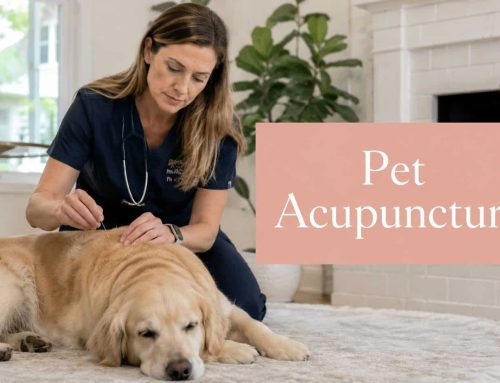
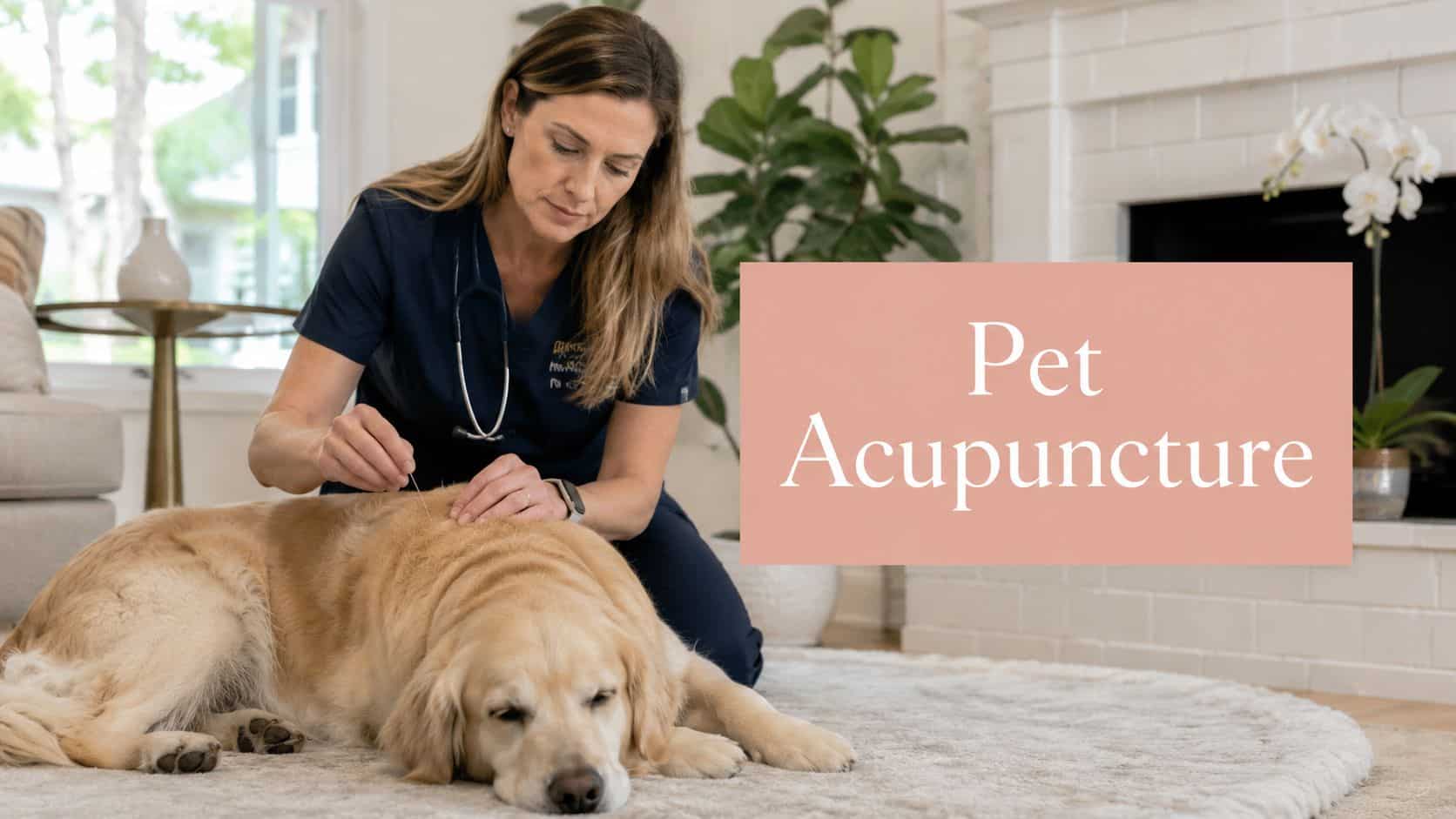
For dogs and cats with arthritis, neurologic weakness, back pain, or chronic stiffness, acupuncture can be a very gentle way to support comfort and function. The session is usually quieter than owners expect. Many pets settle once they realize they aren't being taken away from home.
Related treatments may include electroacupuncture or aquapuncture, depending on the patient's needs and how they tolerate care. In practical terms, these treatments are used to support pain relief, nerve function, and mobility goals within a larger treatment plan.
What owners often notice is not drama. It's subtler than that. A dog stands more easily after resting. A cat starts jumping onto a lower favorite spot again. A pet that had become withdrawn seems more willing to engage.
Laser Therapy And Rehabilitation
Laser therapy is often a good fit for sore joints, soft tissue strain, post-operative recovery, and chronic inflammation. It's quiet, noninvasive, and usually well tolerated in the home. Because the pet is already in a familiar place, they often accept the session with less guarding than they would in a clinic setting.
Rehabilitation adds the day-to-day part. That may include guided exercises, environmental changes, movement coaching, and practical home strategies.
Useful examples include:
- Surface changes such as improving traction where a dog slips most often
- Exercise adjustments for a pet that still wants activity but can't manage the same routine
- Strength work suited for a recovering or aging patient
- Recovery pacing so owners don't accidentally push too hard on good days
For a closer look at this style of whole-patient care, this page on integrative veterinary care gives helpful background.
Here's a short look at how calm, hands-on home treatment can fit into a pet's routine.
Chinese Herbal And Food Therapy
Some patients benefit from adding Chinese herbal support or food therapy to a broader plan. This isn't about replacing primary veterinary care. It's about complementing it when the pet's pattern of symptoms suggests that a more integrative approach may help with comfort, energy, appetite, digestion, or overall resilience.
The best home treatment plans are realistic. If a family can't sustain a complex routine, the plan should change. A good in-home visit makes that easier because the recommendations are built around the pet's actual home life, not an idealized version of it.
The most effective plan is the one a pet can tolerate and a family can carry out consistently.
Is A Mobile Vet Right For Your Pet
This is the question that matters most. Not whether home care sounds nicer, but whether it fits your pet's current medical situation.
Many mobile practices make this distinction clearly. They limit themselves to non-emergency care and direct urgent cases to outside hospitals. That boundary is important, and it's highlighted in Paws by the Peaks' discussion of when mobile care is clinically appropriate.

Good Candidates For In-Home Care
A South Tampa house call is often a strong choice when the main goals are evaluation, comfort, mobility support, follow-up, or low-stress management.
Your pet may be a good fit if they are dealing with:
- Arthritis or slowing with age and travel makes them more painful
- Clinic anxiety that interferes with exams or treatment
- Recovery needs after injury or surgery, when home function matters
- Neurologic or mobility changes that are easier to assess in the house
- Quality-of-life concerns where comfort, appetite, movement, and daily joy need careful review
For many families, the decision becomes clearer when they think in terms of what the pet needs most. If the pet needs a calm exam, a pain plan, mobility support, or guidance for daily care, home is often a very good setting. A pet quality of life discussion can also help families organize what they're seeing at home and when to ask for help.
When To Go To A Clinic Or Emergency Hospital Instead
Home care is not the right setting for every problem. Seek same-day clinic or emergency evaluation if your pet has signs of severe distress, rapid decline, major trauma, collapse, trouble breathing, uncontrolled bleeding, repeated seizures, or any condition that seems unstable.
A simple framework helps:
- Stable but uncomfortable often suits a mobile visit.
- Worsening and uncertain may need a primary care clinic the same day.
- Unstable or alarming belongs at an emergency hospital.
A Practical South Tampa Filter
Because services are limited to South Tampa, it helps to think local and realistic. If your pet needs careful, scheduled, non-emergency support at home, mobile care can be an excellent fit. If your pet needs immediate intervention, the right next step is a brick-and-mortar hospital, not waiting for a house call.
That clarity protects pets. It also protects trust.
Frequently Asked Questions About Our Mobile Vet Services
Do You Replace My Regular Veterinarian
No. A specialized mobile service works best as part of your pet's broader care team. For many dogs and cats, that means complementing the relationship you already have with your primary veterinarian.
That collaboration matters most when a pet has chronic pain, age-related changes, mobility decline, or recovery needs that benefit from hands-on support at home.
What Happens If My Pet Has An Emergency
If your pet is having an emergency, they should go directly to an emergency hospital. Mobile care is appropriate for non-emergency situations. It isn't the right setting for a pet who may need immediate stabilization, advanced imaging, intensive monitoring, or urgent surgery.
If you're unsure, call first. A quick conversation can often clarify whether your pet is stable enough for a home visit or needs hospital care now.
If your pet seems unstable, don't wait for convenience. Choose speed and hospital-level support.
Which Areas Do You Serve
Services are limited to South Tampa. That focused service area helps keep visits practical, timely, and suited to local households.
If you're not sure whether your address falls within the service area, ask before booking. It's the easiest way to avoid delays.
How Does Pricing Usually Work
Mobile veterinary pricing is usually structured differently from a standard clinic visit because the appointment includes travel, time in the home, and treatment planning in a one-on-one setting. Exact fees depend on the services being provided.
The clearest approach is to ask two questions when scheduling:
- What is included in the house-call fee
- Which treatments or therapies are billed separately
That way, you know whether your visit is focused on consultation, hands-on treatment, follow-up care, or a larger comfort and mobility plan.
What Should I Do Before The Visit
Keep things simple. Have your pet in a familiar, quiet area. Gather medications or supplements you're currently using. Make a short list of changes you've noticed, especially changes in appetite, mobility, sleep, stairs, jumping, accidents, or comfort.
Videos can also help. If your dog limps after naps or your cat struggles to get into the litter box, a short phone video from normal daily life can show details a pet may hide during the appointment itself.
Is A Mobile Veterinary Clinic Near Me Worth It For Cats
For many cats, yes. Cats often show stress quickly during transport and may mask pain or illness in unfamiliar settings. A home visit can make observation easier and handling gentler, especially for older cats, shy cats, and cats with arthritis or chronic conditions.
If your dog or cat in South Tampa would benefit from calmer, comfort-focused care at home, Pet Acupuncture & Wellness (PAW Vet Practice) offers specialized mobile support for pain relief, mobility, rehabilitation, and overall wellness. Reach out to schedule a consultation and find out whether an in-home visit is the right next step for your pet.