Laser therapy, clinically known as photobiomodulation (PBM), can meaningfully reduce pain and inflammation for many dogs with IVDD, and some post-operative studies show it may shorten the time it takes a dog to walk again. What it cannot do is remove a herniated disc or relieve mechanical spinal compression. If your dog is losing the ability to feel their back legs, surgery comes first. For dogs managing pain without severe compression, or recovering after a hemilaminectomy, photobiomodulation is a genuinely useful adjunct worth discussing with your veterinarian.
Laser therapy is an adjunct, not a cure. It works alongside surgery, medications, and rehabilitation — not instead of them. PetMD’s clinical guidance frames it clearly: outcomes depend heavily on the cause and severity of the disc disease, and no laser replaces the need for decompression when compression is the problem.
Your immediate next steps: ask your vet which device class they use, what dose they plan to deliver, and whether laser therapy is being offered as part of a multimodal plan or as a standalone treatment.
Table of Contents
- How laser therapy (photobiomodulation) actually works in dogs
- What the research says about laser therapy for IVDD
- Which dogs with IVDD are most likely to benefit?
- What to expect from a treatment protocol, and what it costs
- Is laser therapy safe for dogs with IVDD?
- Questions to ask your vet or rehab clinician before starting
- How mobile, in-home laser therapy fits into integrative care
- Key Takeaways
- A perspective on what laser therapy can and cannot carry
- Mobile integrative care for IVDD dogs in South Tampa
- Useful sources
- FAQ
How laser therapy (photobiomodulation) actually works in dogs
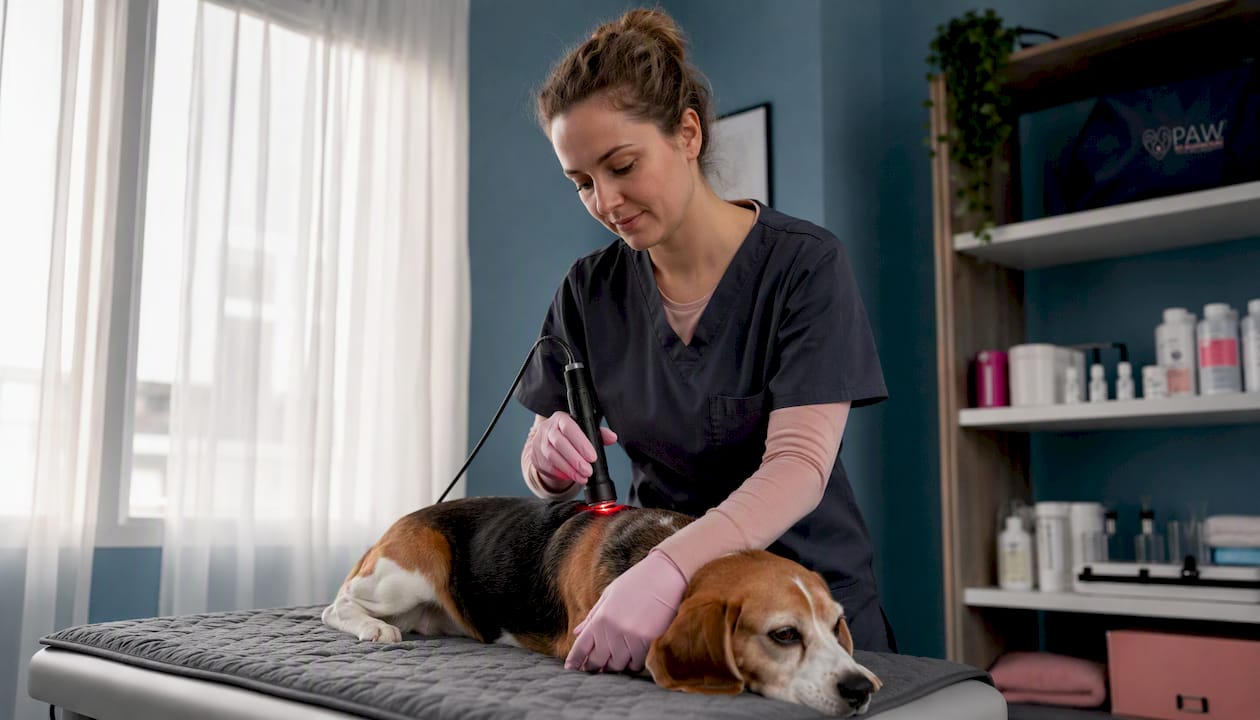
Photobiomodulation is the delivery of specific wavelengths of light, typically in the red and near-infrared range, to tissue without cutting or heating it. The light penetrates the skin and reaches cells, where it stimulates mitochondrial activity and increases ATP production. More ATP means cells have more energy to repair themselves, and the process also modulates inflammatory mediators and improves local circulation. For a dog with IVDD, that translates to less swelling around the affected spinal segment, reduced nerve irritation, and a lower pain signal.
Device class matters more than most owners realize:
- Class 3B lasers operate at lower power (up to 500 mW) and are common in veterinary rehab settings.
- Class 4 lasers deliver higher power (over 500 mW), penetrate deeper tissue, and can treat larger areas faster, but require stricter safety protocols.
- Low-power home devices exist but deliver a fraction of the energy of clinic-grade equipment, which limits their clinical effect on deeper spinal structures.
Pro Tip: Ask specifically about wavelength (typically 630–980 nm for therapeutic use) and the dose in joules per square centimeter (J/cm²). These two numbers, not the brand name on the device, determine whether the treatment reaches the tissue depth your dog actually needs.
What the research says about laser therapy for IVDD
The honest answer is: promising, but mixed. A systematic review published in Animals (MDPI) examined the veterinary laser therapy literature and found that inconsistent reporting of wavelength, dose, irradiance, and treatment area mapping made it difficult to draw firm conclusions across studies. Many trials were small, and methodological quality ranged from low to moderate.
That said, some individual studies are encouraging. One prospective trial found that dogs receiving low-level laser therapy after hemilaminectomy reached a modified Frankel Score of 4 (functional ambulation) notably faster than the control group, suggesting potential accelerated recovery times, though the study was preliminary and small. That is a striking difference, although the study was preliminary and small.
The evidence picture is more nuanced than either enthusiasts or skeptics suggest. A 2020 study of 24 dogs receiving perilesional photobiomodulation plus rehabilitation after spinal surgery showed better neurological status at 30 days in the laser group, but the difference in time to ambulation did not reach statistical significance (P = 0.178). Functional gains were real; the statistics were not clean.
The practical takeaway: photobiomodulation is a reasonable, low-risk adjunct for pain control and may accelerate recovery in some post-operative cases. Expecting it to produce dramatic, guaranteed results in every dog sets owners up for disappointment. The review of 45 studies reinforces that protocol standardization is the field’s biggest unresolved challenge, which is exactly why asking your vet for specific dosing details matters so much.
Which dogs with IVDD are most likely to benefit?
Not every IVDD presentation is a good fit for photobiomodulation, and knowing the difference protects your dog from delayed appropriate care.
Dogs who tend to benefit most:
- Dogs recovering after hemilaminectomy or other spinal decompression surgery, where laser therapy supports tissue healing and may reduce post-op pain
- Dogs with pain and mild neurological signs (ataxia, weakness) but no severe compression, managed conservatively with rest and medication
- Senior or chronically affected dogs who are not surgical candidates, where the goal is quality-of-life management rather than cure
- Dogs with residual deficits after surgery who are in an active rehabilitation program
Situations where laser therapy alone is not enough:
- Progressive paralysis developing over hours to days — this is a surgical emergency, not a laser therapy case
- Loss of deep pain perception in the hind limbs — the single most urgent red flag for immediate neurological surgery
- Urinary retention or inability to urinate, which signals severe cord compromise
- Rapidly worsening neurological status at any grade
If your dog cannot feel a firm toe pinch on the affected limb, stop reading about adjunctive therapies and call a veterinary neurologist today. Laser therapy has no role in replacing emergency decompression.
What to expect from a treatment protocol, and what it costs
Protocols vary based on the dog’s size, the location of the disc lesion, and whether therapy is post-operative or for chronic pain management. In general:
| Protocol Phase | Typical Frequency | Session Length | Goal |
|---|---|---|---|
| Acute post-op (days 1–5) | Daily or every other day | 5 minutes per site | Reduce inflammation, support healing |
| Active rehab phase | 2–3 times per week | — | Improve neurological function, reduce pain |
| Maintenance | Weekly to biweekly | 5 minutes | Sustain gains, manage chronic symptoms |
Most owners notice some change in comfort within the first two to four sessions, though neurological recovery follows its own timeline and is not always linear. Post-operative cases that respond well may show meaningful improvement within the first two weeks of combined laser and rehab care.
On cost: per-session fees in the U.S. typically range from $25 to $50, though geographic location, device class, and whether the session is bundled with a rehabilitation visit all affect the final number. A full course of treatment across several weeks can add up quickly, so asking about package pricing upfront is worth doing.
Home devices are available for purchase or rental, but they deliver significantly less power than clinic-grade Class 3B or Class 4 units. For a condition involving deep spinal structures, the penetration difference is clinically meaningful. Home devices may have a role in maintenance between clinic visits, but they are not a substitute for professional-grade treatment during the acute or active rehab phases.
Is laser therapy safe for dogs with IVDD?
Photobiomodulation has a strong safety record when used correctly. Side effects are rare and typically mild: a brief sensation of warmth at the treatment site, or occasional transient local sensitivity. Dogs generally tolerate sessions well, and many become visibly relaxed during treatment.
The most important safety rule is eye protection. Laser light at therapeutic wavelengths can cause permanent retinal damage. Both the dog and anyone in the treatment area must wear appropriate protective eyewear rated for the device’s wavelength. A clinic that skips this step is a clinic worth questioning.
A few contraindications to keep in mind:
- Active or suspected neoplasia at the treatment site — laser therapy should not be applied over a tumor without oncology clearance, as stimulating cellular activity in malignant tissue carries theoretical risk.
- Photosensitizing medications — some drugs increase light sensitivity; always disclose your dog’s full medication list before starting.
- Unknown masses — if there is an undiagnosed lump near the treatment area, it should be evaluated before laser therapy begins.
- Pregnancy — avoid direct application over the uterus in pregnant animals.
Clinic-grade devices carry more risk than home units simply because of their power, which is why proper training and safety protocols matter. A certified veterinary rehabilitation practitioner operating a Class 4 laser is a very different situation from an untrained handler using the same equipment.
Questions to ask your vet or rehab clinician before starting
Walking into a laser therapy consult prepared makes a real difference. Here is a numbered checklist you can bring with you:
- What is your training or certification in veterinary rehabilitation or laser therapy? Look for credentials such as CCRP (Certified Canine Rehabilitation Practitioner) or CCRT (Certified Canine Rehabilitation Therapist).
- What laser class and wavelength does your device use? A specific answer (e.g., “Class 4, 980 nm”) is a good sign; a vague answer is not.
- What dose, in J/cm², do you plan to deliver to the affected spinal segment? This is the single most important protocol question.
- How many sessions do you recommend, and how will you taper frequency? A clear phased plan suggests clinical rigor.
- What measurable goals are we working toward, and how will you track progress? Functional scoring (e.g., modified Frankel Scale) or pain scoring should be part of the answer.
- How does laser therapy fit with my dog’s current medications and any planned surgery or rehab? Laser therapy should integrate with, not compete with, the rest of the care plan.
- What would prompt you to change the protocol or refer to a neurologist? A good clinician has a clear escalation threshold.
If a provider cannot answer questions 2 and 3 specifically, or is unwilling to coordinate with your primary vet, consider a second opinion.
How mobile, in-home laser therapy fits into integrative care
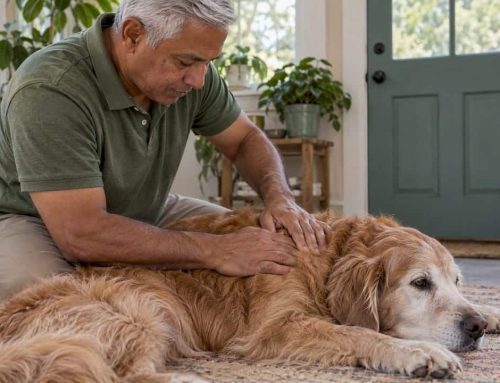
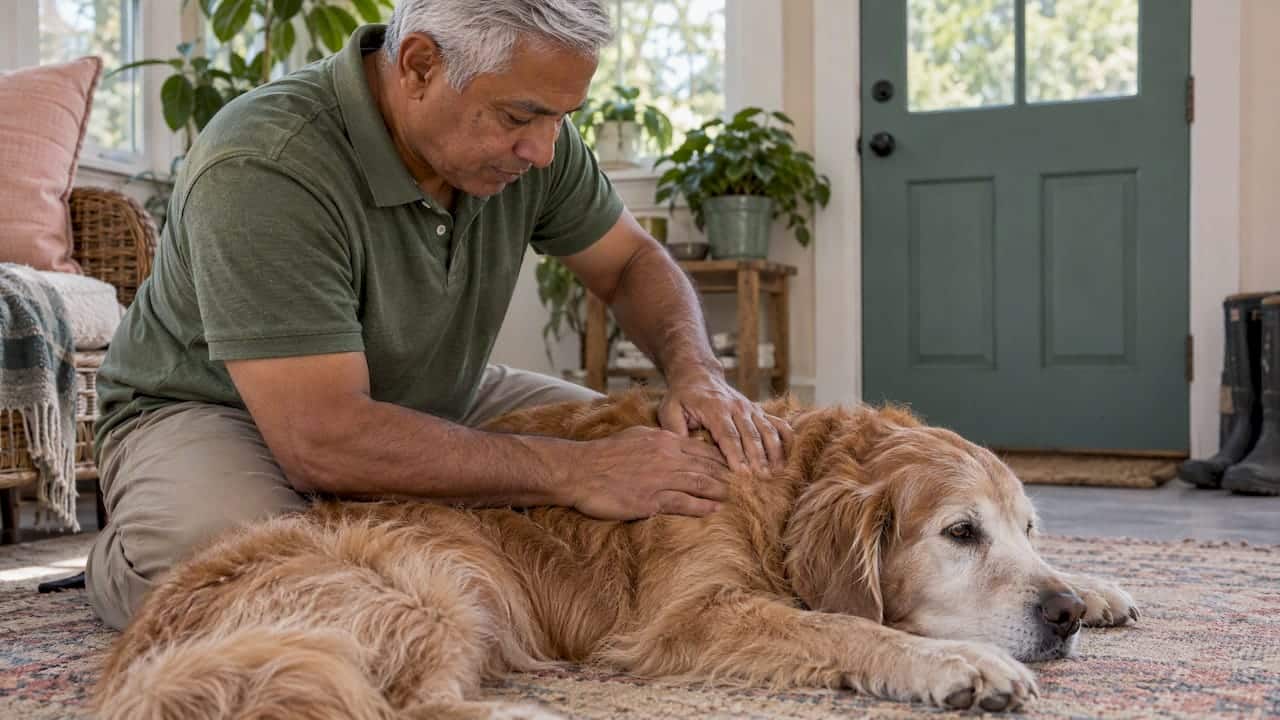
For senior dogs, dogs with significant mobility limitations, or dogs who become anxious in clinical settings, a mobile laser therapy visit offers something a clinic cannot: treatment in the environment where the dog actually lives. Stress itself elevates cortisol and can worsen pain perception, so removing the car ride and the waiting room is not just a convenience. It is a clinically meaningful difference for the right patient.
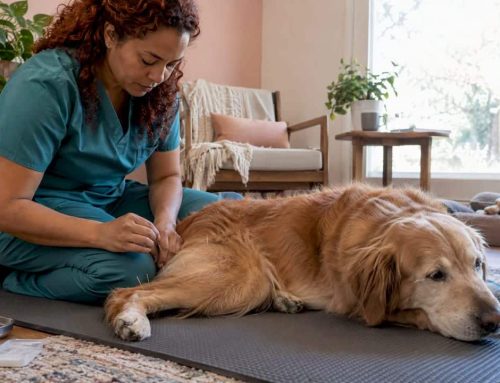
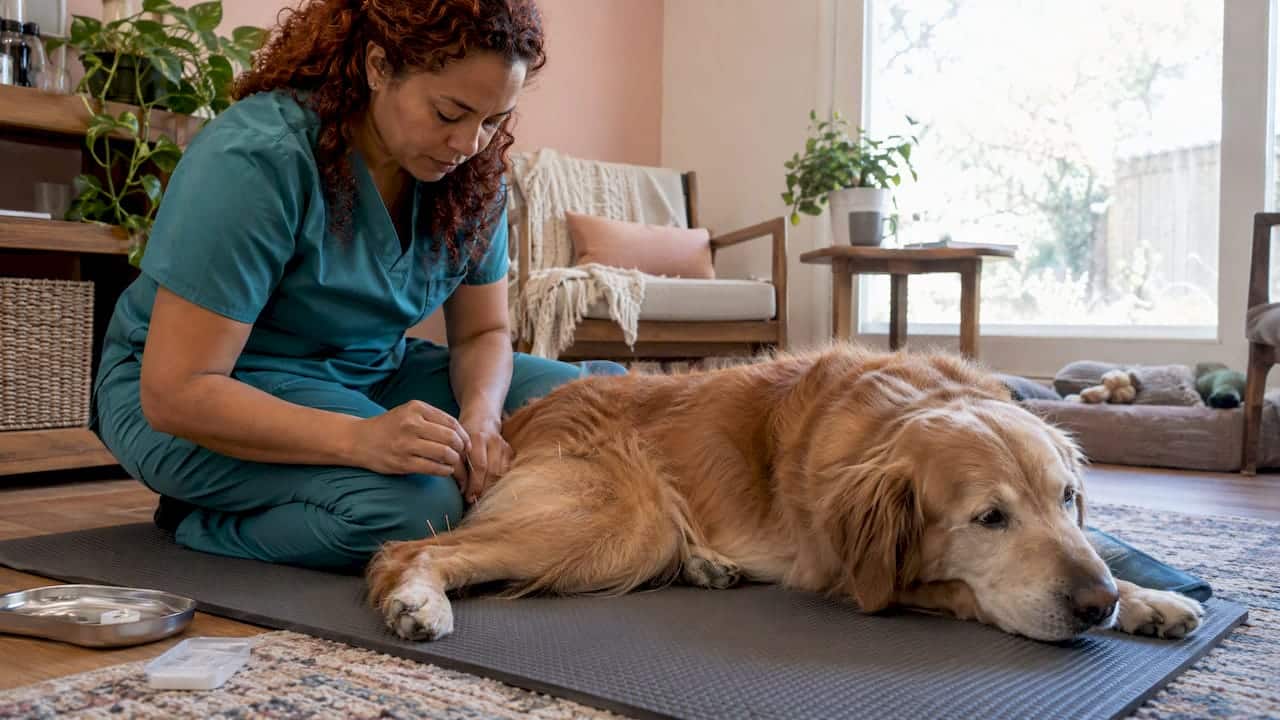
A typical mobile integrative visit for an IVDD dog might include a brief functional assessment (watching the dog move in their own home, checking posture and gait on familiar surfaces), targeted photobiomodulation over the affected spinal region, and integration with acupuncture for IVDD or manual rehabilitation techniques. The visit ends with a take-home plan: activity restrictions, positioning guidance, and a clear schedule for follow-up.
Seeing a dog in their home environment often reveals things a clinic visit misses — how they navigate stairs, where they rest, whether they are weight-shifting to protect a painful area. That real-world functional picture shapes a more accurate treatment plan than a brief exam on a stainless steel table.
The question of whether at-home laser therapy is appropriate depends on the dog’s IVDD grade and monitoring needs. Dogs in the acute post-operative period or with rapidly changing neurological status need clinic-based monitoring. Dogs in the maintenance or chronic management phase, or those recovering steadily after surgery, are often excellent candidates for mobile laser therapy visits. For a deeper look at responsible home device use and when it makes sense, the guide to dog laser therapy at home covers the key safety and efficacy considerations.
Key Takeaways
Laser therapy is a low-risk, evidence-informed adjunct for IVDD that works best as part of a multimodal plan, not as a standalone treatment.
| Point | Details |
|---|---|
| Adjunctive role only | Photobiomodulation reduces pain and inflammation but cannot remove disc material or replace surgery when compression is severe. |
| Post-op benefit | One study reported faster median ambulation with laser therapy compared to without, though evidence overall is mixed. |
| Ask specific questions | Request device class, wavelength, and dose in J/cm² before agreeing to a protocol. |
| Cost reality | U.S. per-session costs typically run $25–$50; a full course across several weeks requires budgeting. |
| Pet Acupuncture & Wellness | Offers mobile integrative care in South Tampa combining laser therapy, acupuncture, and rehab for IVDD dogs at home. |
A perspective on what laser therapy can and cannot carry
Most owners who ask about laser therapy for their dog’s IVDD are not looking for a miracle. They are looking for something they can do, something that helps their dog feel better while the nervous system heals at its own pace. That instinct is right, and photobiomodulation is a genuinely useful tool in that context.
What concerns us at Pet Acupuncture & Wellness is the gap between what owners are sometimes told and what the evidence actually supports. Laser therapy does not fix a herniated disc. It does not restore deep pain sensation that has already been lost. And a device that costs thousands of dollars does not automatically outperform a well-calibrated, lower-powered unit used by a skilled clinician who knows the dog’s case.
The dogs we see respond best to integrative plans where laser therapy is one piece: combined with acupuncture to support Qi flow and reduce nerve pain, with targeted rehabilitation to rebuild strength and coordination, and with clear communication between everyone involved in the dog’s care. Recovery from IVDD asks a lot of owners, in time, attention, and emotional energy. The therapy plan should be honest about what it can deliver, and it should make that commitment feel worth it.
Mobile integrative care for IVDD dogs in South Tampa
If your dog has been diagnosed with IVDD and you are weighing integrative veterinary care options, Pet Acupuncture & Wellness offers mobile in-home visits across South Tampa that combine laser therapy, acupuncture, and rehabilitation in a single, stress-free appointment. No car ride, no waiting room, no anxious dog on a cold exam table.
The first visit includes a functional assessment in your dog’s own home, a review of their current treatment plan, and a clear recommendation for whether photobiomodulation, acupuncture for pain relief, or a combined approach fits their current IVDD stage. Fees are discussed transparently before any treatment begins. To schedule an assessment or ask whether your dog is a good candidate for mobile laser therapy, reach out through the PAW Vet Practice website and book a home visit.
Useful sources
These are the primary research and clinical references used in this article. Sharing them with your veterinarian can help frame a productive conversation about your dog’s care plan.
| Source | What it adds |
|---|---|
| Systematic Literature Review: Laser Therapy in Veterinary Medicine (Animals, MDPI) | Comprehensive review of mechanism, evidence quality, and the need for standardized dosing protocols |
| Low-Level Laser Therapy After Hemilaminectomy (preliminary study) | Reports time-to-ambulation outcomes in post-op IVDD dogs |
| Perilesional PBM + Rehab Post-Op Study (BMC Veterinary Research) | 24-dog RCT showing improved neurological status at 30 days; mixed statistical significance |
| Laser Therapy for Dogs, PetMD | Consumer-facing clinical guidance on adjunctive framing and condition-specific considerations |
| Laser Therapy Cost Guide (Vety) | U.S. per-session cost ranges and package considerations |
| Laser Therapy Helps Dogs with Disc Disease (UF Veterinary Medicine) | University-level clinical perspective on laser therapy for canine disc disease |
| IVDD Overview (Cornell Riney Canine Health Center) | Authoritative overview of IVDD stages, surgical indications, and conservative management |
Share these with your vet before your next appointment, especially the systematic review and the BMC study, so the conversation starts from the same evidence base.
FAQ
Does laser therapy help with IVDD in dogs?
Yes, as an adjunct. Photobiomodulation can reduce pain and inflammation and may shorten recovery time in some post-operative cases, but it does not remove disc material or replace surgery when mechanical compression is present.
How much does laser therapy for dogs with IVDD cost?
Per-session costs in the U.S. typically range from $25 to $50, with total costs for a multi-week course varying by device class, clinic, and geography.
Can IVDD be reversed without surgery?
Some dogs with mild to moderate IVDD (grades I–III with intact deep pain) recover with strict rest, anti-inflammatory medications, and supportive therapies like laser and acupuncture. Dogs with severe compression or loss of deep pain perception generally require surgery; conservative management in those cases risks permanent paralysis.
What are the risks of laser therapy for dogs?
Side effects are rare and mild, typically limited to transient warmth at the treatment site. The primary safety requirement is protective eyewear for both the dog and handler. Laser therapy should not be applied over undiagnosed masses or active tumors without oncology clearance.
Does Pet Acupuncture & Wellness offer laser therapy for IVDD dogs at home?
Yes. Pet Acupuncture & Wellness provides mobile in-home laser therapy, acupuncture, and rehabilitation visits across South Tampa, making integrative IVDD care accessible for senior, anxious, or mobility-limited dogs who find clinic visits stressful.
This article is for general informational purposes only and is not a substitute for professional veterinary advice. Always consult a licensed veterinarian or veterinary neurologist for diagnosis and treatment decisions specific to your dog.