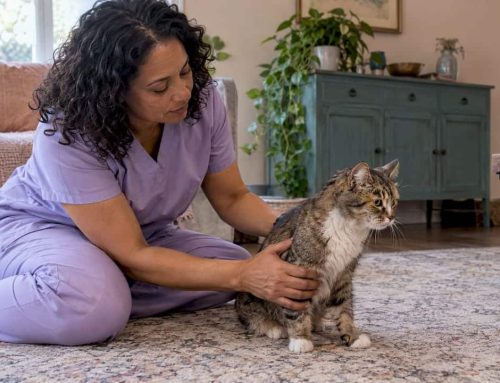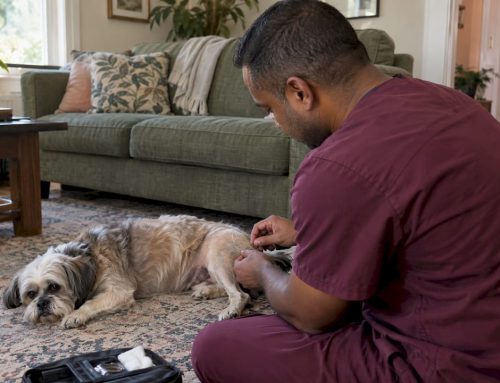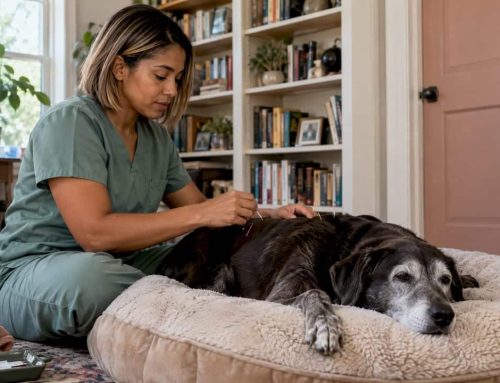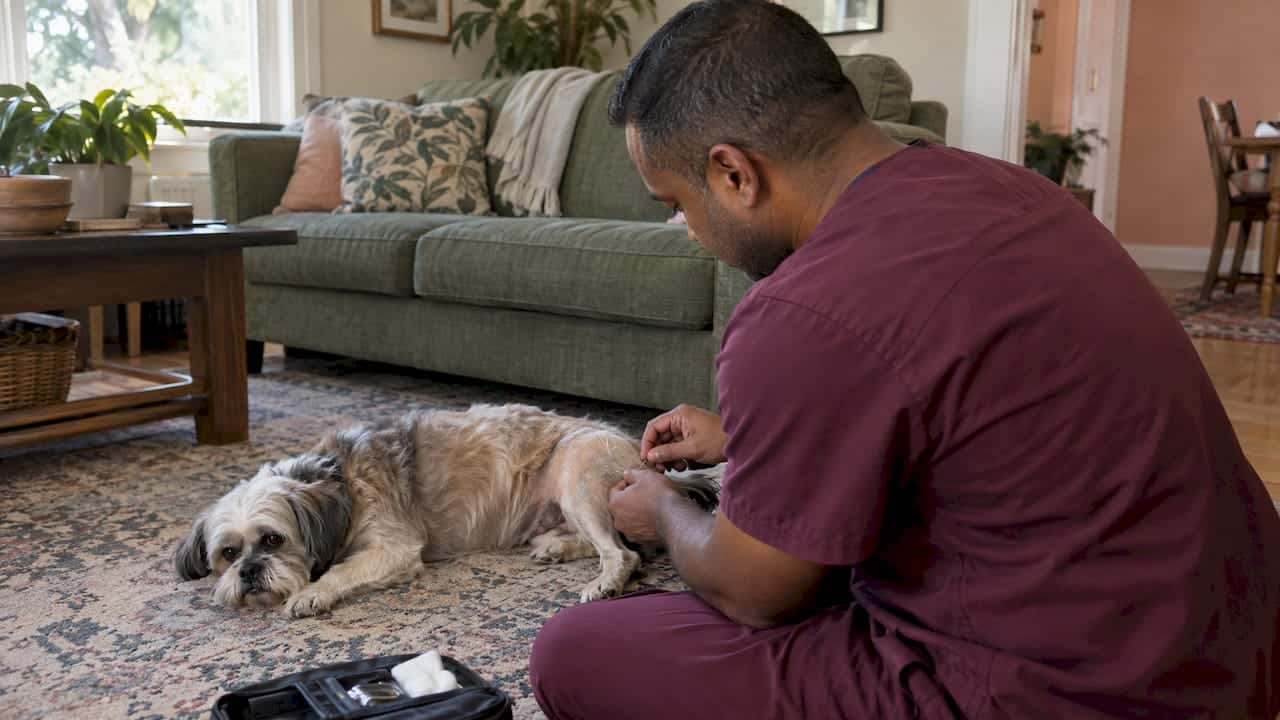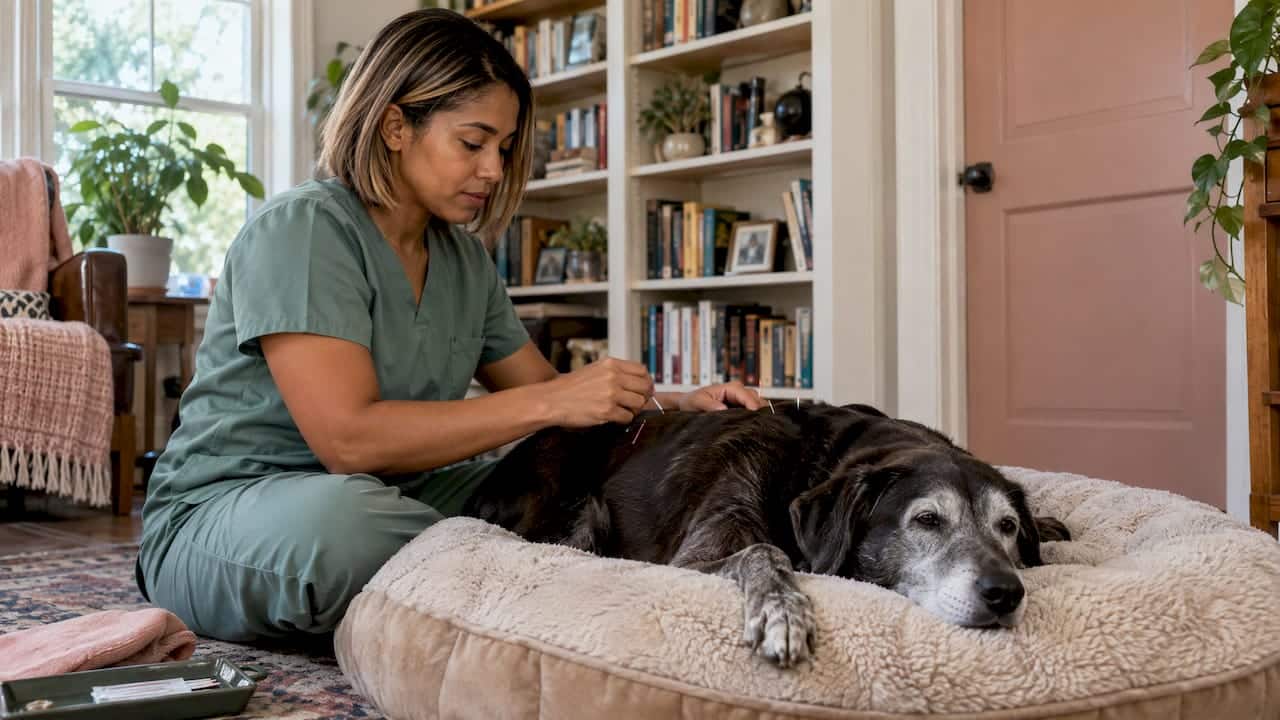
Most dogs with long-term pain, such as arthritis, stiff hips or a bad back, are not managed with opioids at all. The best plans combine several gentler tools: a lean body, the right diet, veterinary-approved medication when needed, rehabilitation, and treatments like acupuncture and laser therapy. If a car ride to the clinic is hard on your dog, or on you, most of this can happen on your own living room floor. In South Tampa, that is what we do at Pet Acupuncture & Wellness.
TL;DR
- Long-term oral opioids are not recommended for chronic pain in dogs, so a good plan is built from several non-opioid pieces.
- Never give human pain medicine such as ibuprofen, naproxen or acetaminophen. Dog NSAIDs should only be used under a veterinarian’s direction.
- Weight control, omega-3 fatty acids, rehabilitation, acupuncture, laser therapy and home changes like ramps and non-slip floors all have a place.
- Track appetite, stairs, sleep and rising each week, and share videos with your veterinarian.
- Home visits remove the stress of travel, which matters most for senior, disabled and anxious dogs.
Table of Contents
- Why “non-opioid” is the normal approach, not the alternative
- How to tell your dog is hurting
- Medicines your veterinarian may use (and the safety rules)
- The non-drug foundation: weight, food and movement
- Rehabilitation, acupuncture and laser at home
- Home changes that reduce daily strain
- Building a plan for a senior or disabled dog
- What home visits cost
- Our approach to pain care at home
- Start with a visit in your own living room
- FAQ
- Sources
Why “non-opioid” is the normal approach, not the alternative
Opioids have a role in short-term pain, such as after surgery. For the slow, daily ache of osteoarthritis, the American Animal Hospital Association (AAHA) says long-term oral opioids are not recommended. So when you search for non-opioid options, you are asking the question veterinary guidelines already ask.
Osteoarthritis (OA) is joint wear and inflammation that causes pain and stiffness. A 2026 expert framework describes it as affecting nearly half of adult dogs and recommends individualized, sustainable, multimodal care instead of a single treatment. Multimodal simply means more than one tool, each doing a small part of the job.
A 2024 review in the Journal of Small Animal Practice looked at weight management, nutraceuticals, acupuncture, therapeutic exercise, hydrotherapy, photobiomodulation and more. It also reminds us that OA has no cure. The goal is comfort and movement, and that is a goal worth working toward every day.
How to tell your dog is hurting
Dogs hide pain. Instead of crying, they change. Watch for:
- Limping, or trouble standing up and climbing stairs
- Hiding, irritability or pulling away from touch
- Less interest in walks and play
- Eating less
- Licking, biting or rubbing one spot
Washington State University’s teaching hospital lists altered behavior, withdrawal and licking or biting a reachable painful area among the common signs. AAHA notes that no owner-completed tool exists for acute pain, and that videos and photographs of your dog at home help veterinarians assess behavior. Record your dog getting up, climbing steps and walking across the floor. Those short clips become your baseline.
What to do in the moment
Until you speak with a veterinarian:
- Limit activity and give your dog a soft, supportive place to lie down.
- For sudden swelling after an injury, a cold compress for 5 to 10 minutes at a time is commonly advised.
- Give no human pain medicine. WSU is clear: never give human pain medication unless a veterinarian specifically recommends it, and acetaminophen is very poisonous to some pets.
Go to an emergency veterinary hospital if your dog cries constantly or cannot stand and your regular veterinarian is closed, or if your dog swallowed a human pain medication or too much of any pain medicine.
Medicines your veterinarian may use (and the safety rules)
“Non-opioid” does not mean “drug-free,” and it does not mean “any drug.” AAHA says veterinarians may use NSAIDs approved for dogs with chronic pain, and grapiprant. NSAIDs are non-steroidal anti-inflammatory drugs, which ease inflammation and pain. They can also affect the kidneys, liver and stomach.
The FDA warns that veterinary NSAIDs can cause serious side effects, including ulcers, kidney failure and liver failure, so use them only as your veterinarian directs. That usually means a prescribed dose, periodic lab work and a quick call if your dog vomits, stops eating or has dark stools.
For nerve-related pain, the World Small Animal Veterinary Association (WSAVA) protocol lists gabapentin or pregabalin as commonly used first-line options. The same protocol says nerve pain often needs trial and error, gradual tapering, and non-drug measures such as heat or cold, acupuncture, stretching, massage and exercise.
If your veterinarian has started a newer injectable for arthritis pain, report any new wobbliness, seizures, urinary accidents or increased thirst promptly. The FDA has described post-market reports of neurologic signs, incontinence and increased urination or thirst in some treated dogs, and the product label says safety alongside an NSAID has not been established. Your veterinarian can tell you which combination suits your dog.
Our role is to work alongside your regular veterinarian, so the medicines they prescribe and the therapies we provide fit together.
The non-drug foundation: weight, food and movement
A lean body is pain relief
AAHA reports that longitudinal studies support keeping dogs lean to slow OA progression and extend lifespan. Every extra pound loads every joint on every step. If your senior dog has gained weight since slowing down, this is the first place to look.
Omega-3 fatty acids
Among nutraceuticals, AAHA finds the evidence strongest for omega-3 fatty acids. You can read more about omega-3 benefits for dogs with arthritis and how diet supports joint health. Ask your veterinarian for the right dose for your dog’s size and health. It is also one reason we offer food therapy, which matches the diet to your dog’s individual needs.
Gentle movement and home exercises
The 2026 OA framework notes that owners can be taught passive range-of-motion exercises for home use, which may reduce swelling and gently stretch the tissues around a joint. Massage may also provide soothing sensory input and help circulation and drainage. Our guide to dog joint range exercises for senior dogs explains how to do them gently and when to stop at the first sign of pain.

Rehabilitation, acupuncture and laser at home
AAHA recommends considering rehabilitation as part of a plan, including passive range of motion, massage, walking and hydrotherapy. At-home rehabilitation takes advantage of your dog’s own floors, stairs and yard, so the exercises match the life your dog actually lives. Our rehabilitation therapy is delivered in the home, and our comprehensive guide to rehabilitation for pets explains what a program involves.
Traditional Chinese veterinary medicine (TCVM) gives us other tools. Think of Qi as your dog’s energy, and meridians as a highway system that carries it through the body. When traffic gets blocked, pain and stiffness can follow. Acupuncture and acupressure aim to get traffic moving again. We offer:
- Acupuncture and electroacupuncture, in which fine needles, sometimes with a gentle electrical current, are used at specific points.
- Acupressure, a needle-free touch approach, which suits dogs who dislike needles.
- Laser therapy, a painless treatment applied to sore areas.
- Herbal therapy, part of Chinese veterinary medicine, tailored to your dog.
WSAVA includes acupuncture, stretching, massage and exercise among the non-drug measures for neuropathic pain. Our treatment plans are tailored to each pet’s health needs and home environment.
If you have heard about homeopathic remedies, our vet-reviewed guide to homeopathic pain meds for dogs explains how to approach them safely and when a home remedy is not enough.
Home changes that reduce daily strain
The 2026 framework lists simple changes that reduce daily strain:
- Non-slip flooring or runners on tile and hardwood
- Ramps for the car, couch and steps
- Gates to block stairs
- Raised food and water bowls
- Supportive harnesses and other assistive devices
In a house call, we can see which floors your dog avoids and which doorway is the hard part. That makes recommendations specific to your home rather than generic.
Building a plan for a senior or disabled dog
A good plan is simple enough to follow every day. The 2026 framework stresses that a plan that is too burdensome may fail, so clinicians should streamline treatment and set expectations over time. Here is a practical way to start:
- Get a diagnosis. Ask your regular veterinarian what is causing the pain, and which medicines are safe for your dog.
- Set a baseline. Film your dog rising, walking and climbing, and note appetite, sleep and toileting.
- Pick the lowest-burden pieces. Start with weight, diet and home changes, then add rehabilitation, acupuncture or laser as appropriate.
- Track weekly. AAHA recommends using owner observations and validated pain-assessment tools to follow chronic pain over time, along with proactive, multimodal analgesia.
- Reassess and adjust. Share your notes and any lab results with everyone caring for your dog.
The framework also notes that at-home video review and mobile veterinary assessment can help when travel is difficult. That is the situation we were built for.
What home visits cost
We publish our fees on our cost of services page. The current list includes:
| Service | Published price |
|---|---|
| Initial assessment and acupuncture with a technician | from $430 |
| Technician mobile fee | $60 |
| Laser treatments | $45-$120 per treatment |
| Electroacupuncture | $30 |
| Vitamin B12 injection | $31.50 |
| At-home rehabilitation packages | $85-$918 |
Prices were read from our site in September 2026. Check the page for the latest.
Our approach to pain care at home
Most of the dogs we see are seniors, dogs with mobility problems, or dogs who become anxious the moment the car door opens. For them, the visit itself can be the hardest part of care.
That is why we treat exclusively in the pet’s home. A dog who is relaxed on their own bed is easier to examine, easier to treat and easier to help. You also see exactly what we do, so you can continue the gentle routines between visits.
Our plans are personalized and complement your regular veterinarian’s care. We combine acupuncture, rehabilitation, laser, herbal therapy and food therapy, because pain rarely has just one cause and rarely responds to just one tool. Our goal is a dog who moves more comfortably and an owner who feels less worried.
Pet Acupuncture & Wellness
Start with a visit in your own living room
If your dog is slowing down, hesitating at the stairs or dreading the car, we can come to you. Pet Acupuncture & Wellness provides in-home integrative care in South Tampa, including acupuncture, rehabilitation, laser therapy, herbal therapy, food therapy and telemedicine, and we work with your regular veterinarian.
See our services and published prices, or visit our home page to book a house call.
FAQ
What is the safest pain medication for dogs for long-term use?
There is no single answer, and it should be chosen by your veterinarian. AAHA says veterinarians may use NSAIDs approved for chronic pain in dogs and grapiprant, with monitoring because NSAIDs can affect the kidneys, liver and stomach. Long-term oral opioids are not recommended.
Can I give my dog ibuprofen, naproxen or Tylenol?
No. Human pain relievers can be dangerous for dogs, and acetaminophen is very poisonous to some pets. WSU advises giving human pain medication only if a veterinarian specifically recommends it. If your dog already swallowed some, go to an emergency veterinary hospital right away.
What can I do for my dog’s pain right now?
Limit activity, offer a soft place to rest and use a cold compress for 5 to 10 minutes if there is sudden swelling after an injury. Film your dog moving and call your veterinarian. Seek emergency care if your dog cannot stand or cries constantly.
Does my dog need to leave the house for pain treatment?
Not always. Many therapies, including acupuncture, laser and rehabilitation, can be delivered in the home. Our South Tampa house calls are designed for senior, disabled and anxious dogs and cats who struggle with clinic visits.
Sources
- Pharmacological Agents in the Treatment of Chronic Pain, AAHA
- Nonpharmacologic Modalities for Pain Management, AAHA
- Acute and Perioperative Canine Pain Assessment, AAHA
- 2022 AAHA Pain Management Guidelines for Dogs and Cats
- A proposed framework for practical multimodal management of canine osteoarthritis
- Current evidence for non-pharmaceutical, non-surgical treatments of canine osteoarthritis, Journal of Small Animal Practice
- How to tell if your pet is in pain, WSU Veterinary Teaching Hospital
- Get the Facts about Pain Relievers for Pets, FDA
- Dear Veterinarian Letter on adverse events in dogs treated with Librela, FDA
- Package Insert for Librela, FDA
- Neuropathic pain protocol, WSAVA
- What Can I Give My Dog for Pain? Chewy
- Omega-3 benefits for dogs with arthritis