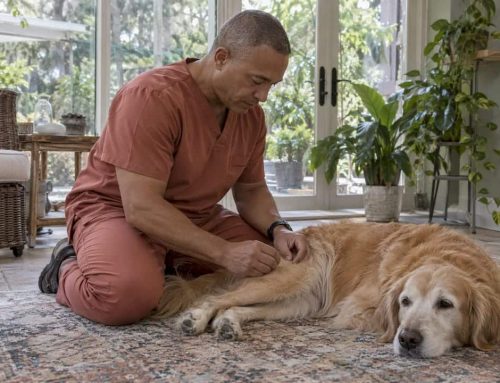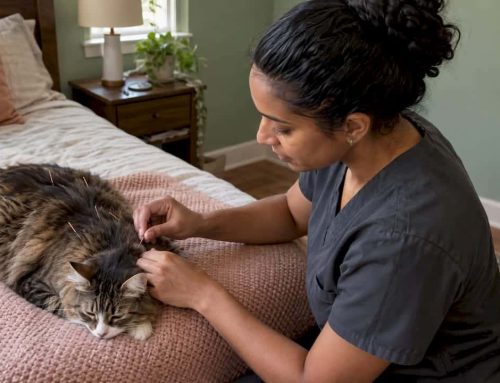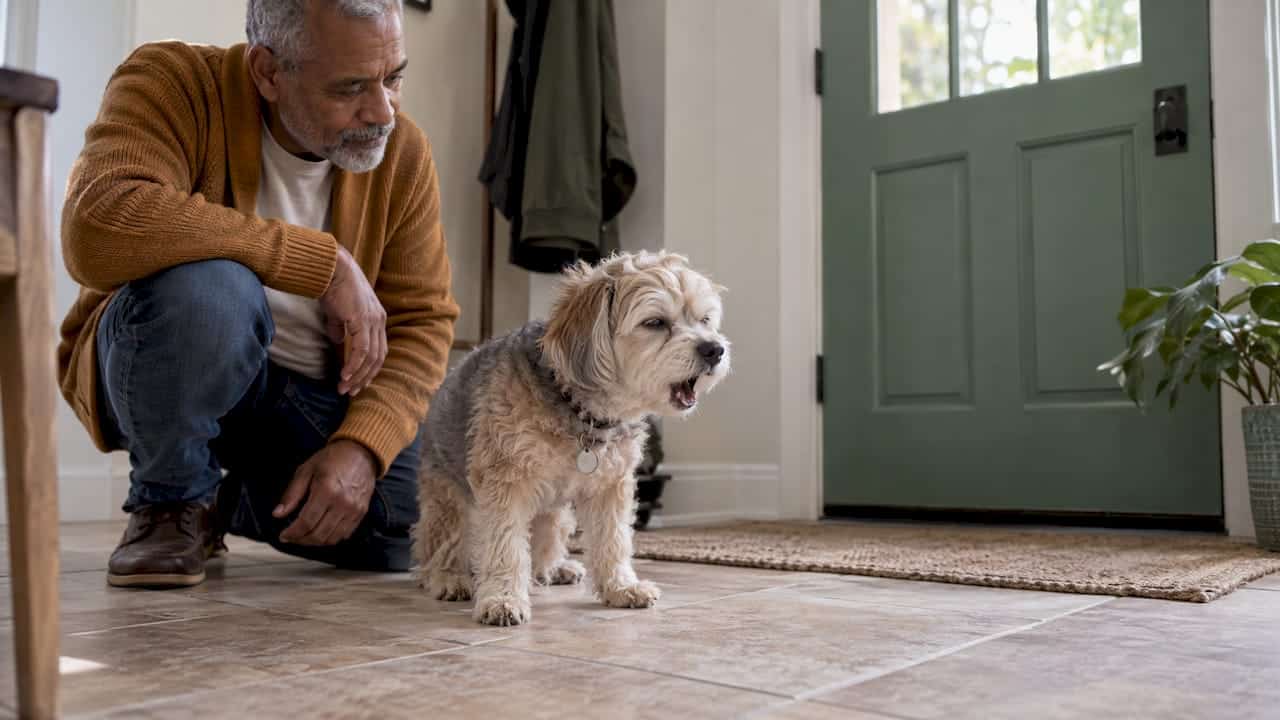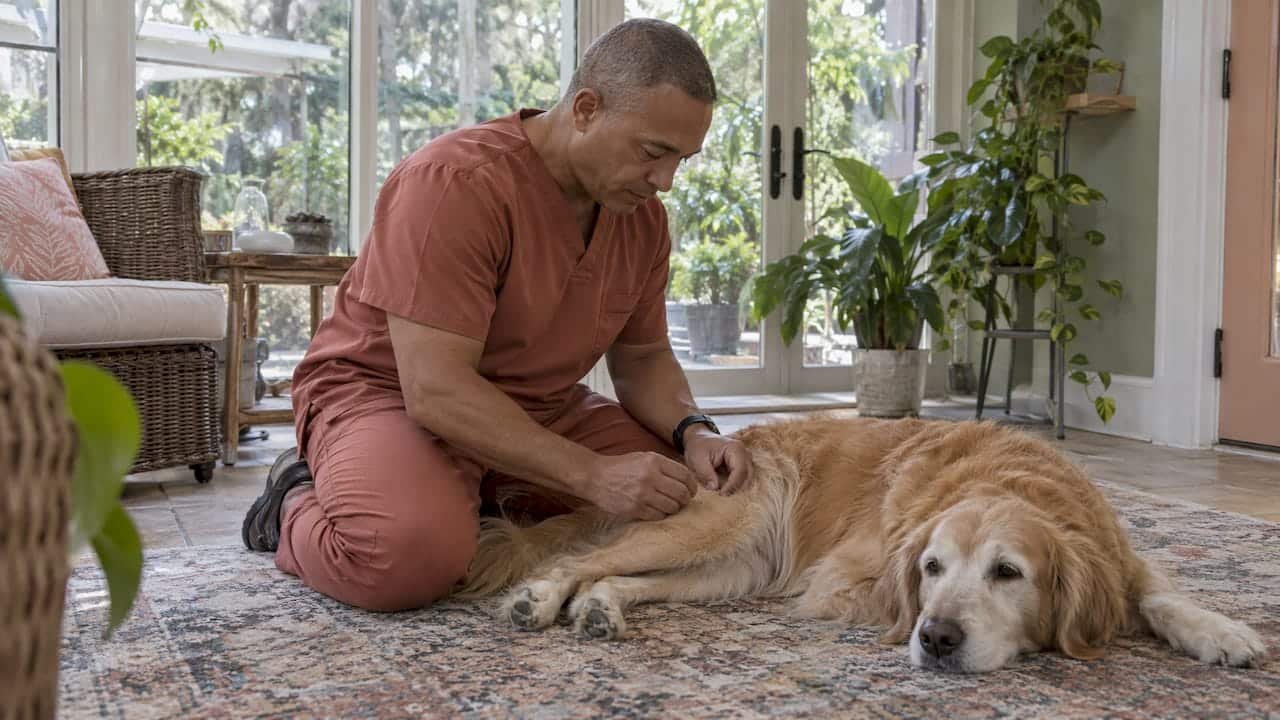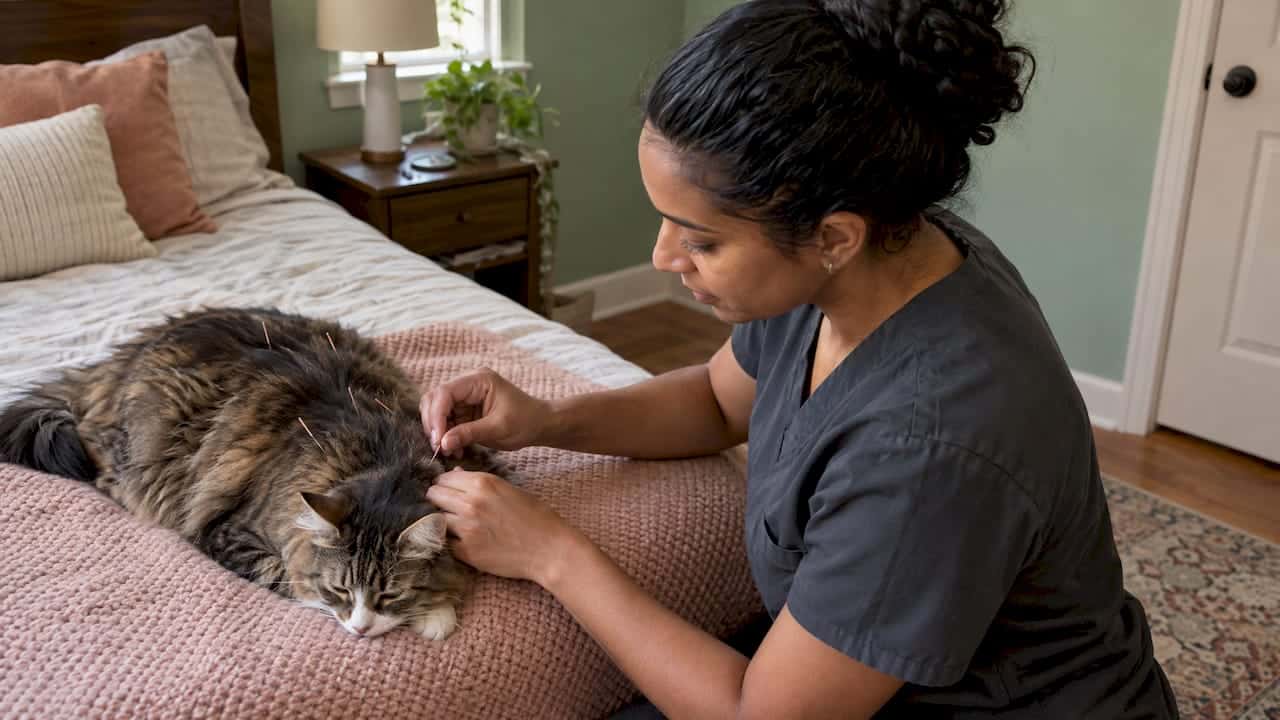
Senior dog acupuncture uses hair-thin needles placed at specific points on the body to ease pain, support mobility and help an aging dog feel more like themselves. It is most often used for arthritis, stiffness and weakness, usually alongside your regular veterinarian’s care rather than in place of it. For a dog who struggles with the car ride, the slick clinic floor or the waiting room, it can also be done in your living room.
If your older dog hesitates at the stairs, takes longer to stand, or has stopped jumping onto the couch, this guide walks you through what the research says, what a session looks like, who is a good candidate, and what it costs with us in South Tampa.
TL;DR
- Acupuncture is one option in a multimodal pain plan for senior dogs, and the 2023 AAHA Senior Care Guidelines list it alongside medications, supplements, weight management and physical therapy.
- Studies show owners often see better comfort and mobility, though results vary from dog to dog and larger trials are still needed.
- Sessions are usually short, and benefits are believed to build over several visits.
- Some dogs are not good candidates, so a veterinary exam comes first.
- In South Tampa, we bring acupuncture, laser and rehabilitation to your home, so your dog never has to travel.
Table of Contents
- What acupuncture means for an older dog
- What the research shows for senior dogs
- Acupuncture as one piece of a pain plan
- Signs your senior dog may be ready for acupuncture
- What a session looks like
- How many sessions and how often
- Safety and who needs a closer look first
- Why at-home care changes the experience
- Our perspective on senior dog acupuncture
- What senior dog acupuncture costs in South Tampa
- Book an at-home visit for your senior dog
- FAQ
- Sources
What acupuncture means for an older dog
Acupuncture comes from Traditional Chinese Veterinary Medicine (TCVM). In that tradition, health depends on Qi, the body’s vital energy, moving freely along pathways called meridians. Think of meridians as a highway system: when traffic flows, the body feels well, and when there is a blockage, pain, stiffness or low energy can show up. Yin and Yang describe the balance between rest and activity, like shade and sunlight across the same garden. Needles placed at specific points are meant to restore that flow and balance.
Modern veterinary medicine looks at it through another lens. The Merck Veterinary Manual says acupuncture may be prescribed for pain, weakness, neurologic injury or disease, immune dysfunction, digestive disorders and reproductive disturbances. In senior dogs, the common reasons are joint pain, back pain, hind-end weakness and general slowing down.
Both views can sit side by side. You do not need to settle the philosophy to see whether your dog moves more comfortably afterward.
What the research shows for senior dogs
The honest picture is encouraging and still developing. Here is what the published studies found.
Owners often notice a difference. In a 2017 study of 181 dogs with neurological and musculoskeletal disease, acupuncture alone or with pain medication led to success rates of 78% to 84% across pain, locomotion and quality-of-life measures. Dogs with musculoskeletal problems, such as arthritis, improved more than those with neurological problems.
Mobility changes can be visible at home. A 2016 trial of 47 dogs with lameness found that acupuncture combined with manual therapy brought short-term improvement in walking, trotting, jumping, play and stiffness after rest, as observed by their owners.
Placebo-controlled trials point to owner-perceived relief. In a randomized, placebo-controlled trial of 32 dogs with osteoarthritis, owner-completed questionnaires showed a treatment response to acupuncture, even though the objective gait measures did not change significantly. A 2024 Veterinary Evidence review of four such trials likewise found that acupuncture could have pain-relieving effects as perceived by owners. For a senior dog, how comfortable they seem in daily life is exactly what matters most.
Laser acupuncture is showing promise. A 2025 trial in Animals of 19 dogs with osteoarthritis found that after 30 days, only the treated dogs improved significantly, with less pain and better joint mobility. The authors describe laser acupuncture as a possible non-invasive option, particularly when medication is contraindicated or not effective, and call for larger trials.
Researchers want more data. A systematic review in the Journal of Small Animal Practice concluded that current research does not yet allow firm conclusions about acupuncture for osteoarthritis pain and that larger randomized trials are warranted. The American Kennel Club notes the same: veterinary trials are fewer and less consistent than we would like, though combined human and animal evidence suggests it may help several pain conditions.

The takeaway we give families: acupuncture is a gentle, low-risk way to add comfort to a bigger plan, and the best way to judge it is to watch your own dog’s movement, appetite and mood over a few visits.
Acupuncture as one piece of a pain plan
Pain in older dogs rarely has a single fix. The AAHA senior care guidelines state that pain management for senior dogs must be integrative and multimodal, with acupuncture sitting beside pharmaceuticals, nutraceuticals, herbals, weight management, physical modalities and changes to the home environment. The 2015 AAHA/AAFP Pain Management Guidelines go further, saying acupuncture should be strongly considered as part of multimodal plans and that for most animals it is not uncomfortable and is often pleasant.
In practice, that can look like this for one dog:
- Prescription or over-the-counter pain relief as directed by your veterinarian
- Acupuncture or laser therapy to ease sore joints and muscles
- Rehabilitation exercises to keep muscles strong
- Herbal therapy and food therapy chosen for your dog’s constitution
- Home changes such as ramps, rugs and elevated bowls
We work alongside your regular veterinarian, so the plan fits together instead of competing. If you want the full picture of how these pieces combine, our guide to multimodal pain plans and in-home care goes deeper, and our overview of alternative pain relief for dogs compares the options.
Signs your senior dog may be ready for acupuncture
Many owners write off changes as “just age.” The AAHA guidelines warn that clients often see these changes as normal aging when they may be clinical chronic pain. Pay attention if your dog:
- Is slow to rise, especially after naps or in the morning
- Hesitates at stairs, the car or the couch
- Slips on tile or hardwood floors
- Licks or chews at a joint
- Pants or paces at night
- Seems less interested in walks or play
- Drags the back toes or wobbles in the hind legs
- Pulls away when touched in certain places
Our articles on early signs of arthritis and how not to miss pain in a senior dog or cat help you spot the quieter signals. A short phone video of your dog walking, rising and climbing is also useful, because the AAHA guidelines note that videos of an animal moving in its own environment help assess pain, mobility and movement.
AAHA also recommends that dogs older than 7 years see their veterinarian every six months, and that for arthritis, acupuncture and laser therapy may be recommended alongside supplements, prescription medications, weight management and physical therapy. That regular exam is a good moment to ask about adding acupuncture.
What a session looks like
Most owners are surprised by how calm it is. Needles are very fine, and many dogs relax, sigh, or doze off. According to the AKC, sessions range from about 5 minutes to half an hour, and dogs typically have several of them.
Here is how a visit with us usually unfolds:
- We talk first. We ask about your dog’s history, medications, appetite, sleep, mobility and habits, and we look at what your regular veterinarian has already found.
- We examine your dog where they are most comfortable. That may be a favorite bed, the cool kitchen tile or the back porch. We observe how your dog stands and moves in the space they actually live in.
- We choose the points. Treatment is tailored to your dog’s needs and home environment, not a fixed routine.
- Needles go in gently. Your dog can lie down, sit or even stand. Treats and soft talk are welcome.
- We may add other tools. Depending on the plan, that could be electroacupuncture, laser, acupressure or aquapuncture. You can read more about electroacupuncture for dogs and how it differs from standard needling.
- We plan what comes next. You leave with home tips, such as better footing, bedding changes and gentle movement.
After a session, some dogs are sleepy or a little mellow for a day. Others perk up right away. Either way, we ask you to keep notes on stairs, rising, appetite and mood so we can adjust.
How many sessions and how often
Acupuncture is not usually a one-and-done treatment. The AKC explains that benefits are believed to be cumulative: sessions may stop once improvement appears, or continue less often as ongoing maintenance. A common pattern is a short run of closely spaced visits, then a gradual stretch between them as your dog settles.
The right rhythm depends on your dog’s condition, age and response. Our guide on how often your dog should get acupuncture explains the typical stages, and if arthritis is the main concern, see our South Tampa arthritis guide. For dogs with hip problems, we also have a hip dysplasia acupuncture guide.
Safety and who needs a closer look first
When performed by appropriately trained veterinary professionals, acupuncture generally has few adverse effects, according to the Merck Veterinary Manual. Risks to major organs or vessels are limited when the practitioner knows the relevant anatomy.
That same source lists situations that call for care. Acupuncture may be contraindicated if a dog cannot stay still enough for safe needling, or has a clotting disorder (coagulopathy) or a compromised immune system. Caution is advised around tumors, and infected areas of the skin should not be needled. That is why we always review your dog’s health history and talk with your veterinarian before starting, especially for dogs with cancer, bleeding problems or a complicated medication list.
Two more safety points for owners:
- Choose a trained practitioner. The AKC advises selecting a certified veterinary acupuncturist, and points to the American Academy of Veterinary Acupuncturists as a place to start looking.
- Do not guess with pain medication. Never give your dog human pain relievers or a new supplement without your veterinarian’s guidance. Dogs process many common medicines very differently than we do, and your vet can tell you what is safe alongside your dog’s current prescriptions.
If your dog suddenly cannot use a leg, cries out when touched, has trouble breathing or collapses, that is an emergency. Call your nearest emergency veterinary hospital instead of waiting for a routine visit.
Why at-home care changes the experience
For a healthy young dog, a car ride is an adventure. For a 14-year-old with sore hips, it can be a lot: the jump into the back seat, the slippery lobby, the barking in the waiting room, the smells and the stress. Anxious dogs may tense up, which makes everything harder. Owners feel it too, especially if you are lifting a heavy dog or managing a wheelchair or sling.
At-home acupuncture removes that hurdle. Your dog stays on familiar footing, with familiar smells and your hand on their back. You stay calm, and so does your dog. It also lets us see real obstacles, like a slick hallway or a steep step to the yard, and suggest fixes. The AAHA guidelines mention ramps, raised bowls, rugs or yoga mats for footing, padded harnesses, toe grips and supportive beds as practical ways to improve mobility and quality of life, and a visit in your home makes those recommendations specific to your rooms.
If your dog also has trouble with cognitive changes at night, see our page on acupuncture for dog dementia. If your senior cat could use the same help, we have a guide to at-home acupuncture for senior cats.
Our perspective on senior dog acupuncture
We see the same story often. An older dog has slowed down, the family has been told it is age, and everyone is worried about putting the dog through a stressful trip just to feel a little better.
We believe comfort should not cost your dog their peace of mind. That is why we built our practice around the home. Acupuncture, laser, rehabilitation, herbal and food therapy all work best when the dog is relaxed, and a relaxed dog is easier to read, easier to treat and easier to help.
We design every plan around the individual dog, their home and their regular veterinarian. We do not ask you to choose between conventional care and integrative care. We want them working together, with your dog’s quality of life as the measure of success.
Watch your dog, trust what you see, and bring us your questions. Small gains, like a smoother rise from the bed or a tail wag at the door, matter enormously in the senior years.
Pet Acupuncture & Wellness
What senior dog acupuncture costs in South Tampa
These are the prices published on our cost of services page, as listed when we last reviewed it:
| Service | Published price |
|---|---|
| Initial assessment and acupuncture with a technician | From $430 |
| Technician mobile fee | $60 |
| Electroacupuncture | $30 |
| Laser treatments | $45 to $120 per treatment |
| Vitamin B12 injections | $31.50 |
| At-home rehabilitation packages | $85 to $918 |
Acupressure, aquapuncture, herbal therapy, food therapy, telemedicine and medications are also part of what we offer. Because every dog’s plan is different, the total depends on which therapies fit your dog. Check the cost page for the current list.
Book an at-home visit for your senior dog
If your dog is slowing down and the trip to a clinic has become a burden, we can come to you. We offer in-home acupuncture and acupressure for dogs and cats in South Tampa, along with rehabilitation therapy, herbal therapy and food therapy, all planned around your dog and in cooperation with your regular veterinarian.
Start on our home page to learn more or schedule your dog’s first visit. If rehabilitation is your main goal, our guide to dog physical therapy at home shows how it works in practice.
FAQ
Is acupuncture painful for older dogs?
For most animals, it is not uncomfortable and is often pleasant, according to the AAHA/AAFP pain management guidelines. Many dogs become calm or sleepy during treatment. We go at your dog’s pace and stop if they are unsettled.
How long until I see a difference?
It varies. Some owners notice easier movement after the first few visits, while others need a longer series. Because benefits are believed to be cumulative, we track your dog’s progress visit by visit and adjust the schedule.
Can acupuncture replace my dog’s arthritis medication?
Please do not change or stop any prescription without talking to your veterinarian. Guidelines describe acupuncture as one part of a multimodal plan, alongside medications, supplements, weight control and physical therapy. We work with your veterinarian so everything fits together.
Is my dog too old or too frail for acupuncture?
Age alone is not the question. What matters is your dog’s overall health, including clotting, immune status and whether they can rest comfortably for needling, as the Merck Veterinary Manual outlines. We review your dog’s history first and adapt the approach for frail dogs.
Do you offer anything besides needles?
Yes. Depending on your dog, we may use electroacupuncture, laser, acupressure, aquapuncture, herbal therapy, food therapy or rehabilitation. Our electroacupuncture guide covers what research says about that option.
Sources
- Effect of acupuncture on pain and quality of life in canine neurological and musculoskeletal diseases (Silva et al., 2017)
- Effectiveness of combined acupuncture and manual therapy in dogs with lameness (Lane and Hill, 2016)
- Evaluation of acupuncture for the treatment of pain in dogs with osteoarthritis (2020)
- Assessing the efficacy of acupuncture as the sole analgesic, Veterinary Evidence (2024)
- Laser Acupuncture Effects on Chronic Pain, Animals (2025)
- Current evidence for non-pharmaceutical, non-surgical treatment of osteoarthritis, Journal of Small Animal Practice
- Acupuncture for Dogs: Everything You Need to Know, American Kennel Club
- Acupuncture in Veterinary Patients, Merck Veterinary Manual
- 2023 AAHA Senior Care Guidelines for Dogs
- 2015 AAHA/AAFP Pain Management Guidelines for Dogs and Cats
- Supporting Your Senior Pet, AAHA