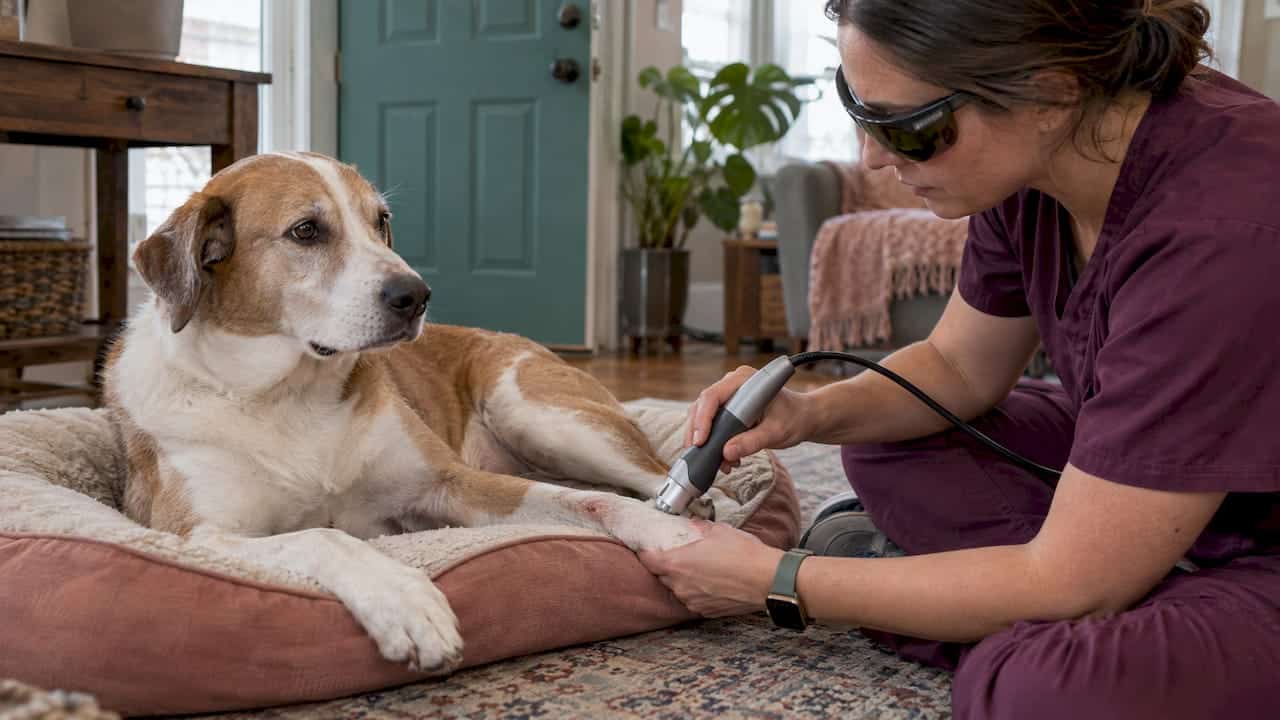
If your dog has a cough that will not quit, you have probably noticed how it wears on both of you: the late-night hacking, the pauses on walks, the worry every time it flares. Acupuncture is one way to support a dog with chronic bronchitis alongside the care your veterinarian already provides. It is used to help calm airway irritation and ease the effort of breathing, and it is meant to work with your dog’s diagnosis and medications, not replace them. Your dog needs a veterinary diagnosis first, because a cough has many causes and some of them are urgent.
TL;DR
- Chronic bronchitis in dogs is a persistent cough, and it needs a veterinary diagnosis before any integrative therapy begins.
- Acupuncture is used as a supportive therapy. Published veterinary research on coughing dogs is encouraging but still limited, so we describe it as support, not a cure.
- Herbal formulas can be part of a plan, but they can interact with medications, so a veterinarian should choose and monitor them.
- A mobile visit keeps a coughing, easily excited dog calm at home, which matters because stress can set off coughing fits.
- Fever, a wet cough, loss of appetite or labored breathing mean a prompt vet visit, not a wait-and-see approach.
Table of Contents
- What bronchitis means in a dog
- What the research says about acupuncture for coughing dogs
- How acupuncture is thought to help the airways
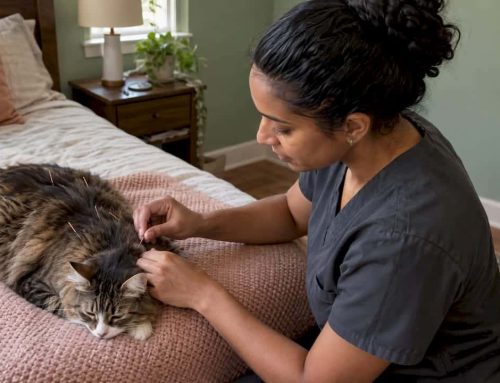
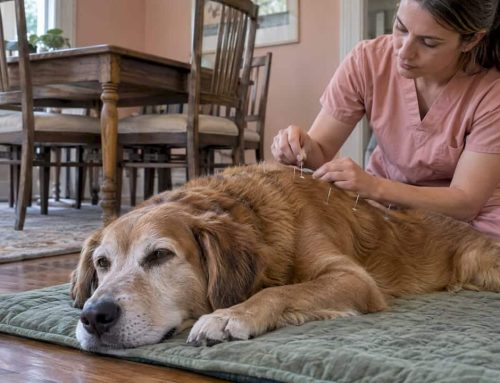
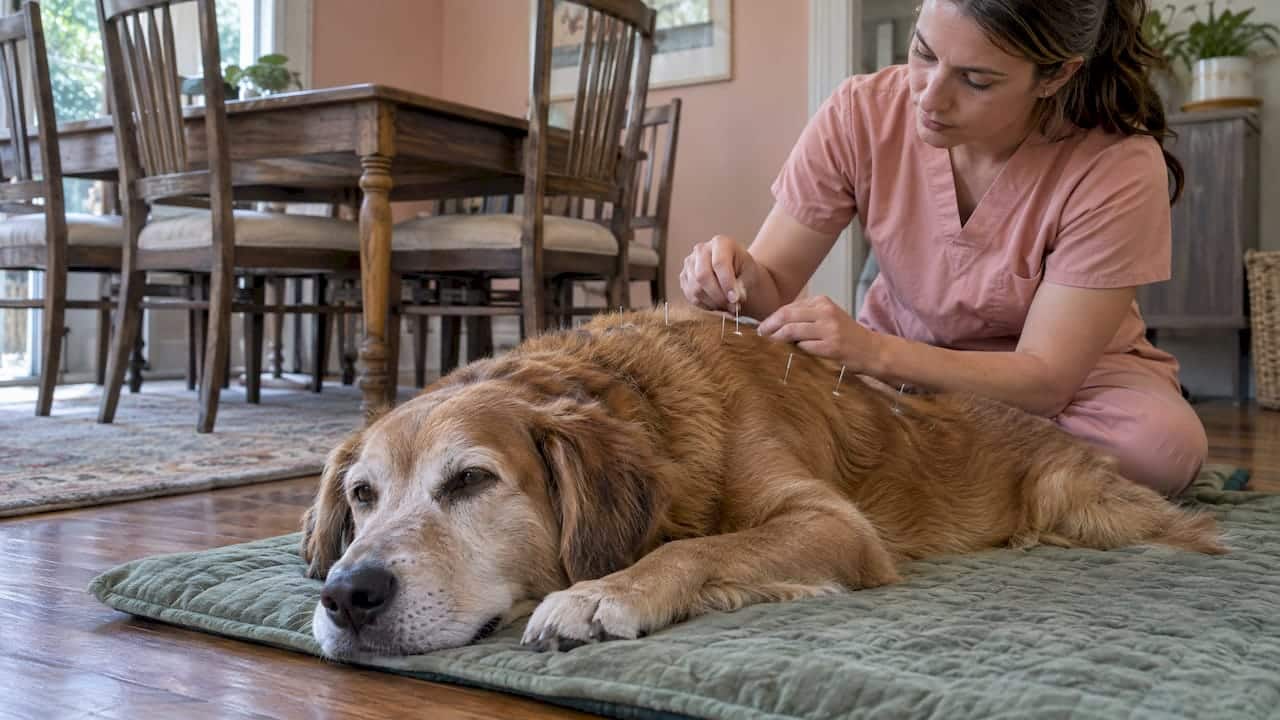
- What a session looks like at home
- Herbal formulas for a dog’s cough
- Our perspective
- When a cough needs a vet right away
- Costs and what is included
- Support for your coughing dog, at home in South Tampa
- Other ways to support a dog with a cough
- FAQ
- Sources
What bronchitis means in a dog
Bronchitis is inflammation of the bronchi, the branching airways that carry air into the lungs. In dogs, the Merck Veterinary Manual describes chronic bronchitis as a cough lasting at least two months that cannot be explained by another respiratory disease. That last part is important. “Bronchitis” is often a diagnosis reached after other causes have been ruled out.
A typical picture looks like this: a dry, hacking cough that is worse with excitement, exercise or a tug on the collar, and sometimes after waking. Many owners describe a dog who seems otherwise bright and hungry, which is why the cough gets brushed off for weeks. If your dog is older, the cough can also overlap with heart disease, a collapsing windpipe or other conditions, which is why guessing at home does not serve them.

Why the diagnosis comes first
The same Merck page explains that a veterinarian reaches a diagnosis by taking a history, examining your dog and ruling out other causes. Tests may include chest x-rays, bronchoscopy and laboratory analysis, and any underlying disease has to be treated as well.

We ask for this before we begin acupuncture, and we work with your dog’s regular veterinarian. Our approach is designed to complement conventional treatment. If you have a diagnosis, bring the records. If you do not yet, start with your primary vet.
What standard care usually looks like
According to the Merck Veterinary Manual, conventional treatment of chronic bronchitis often relies on corticosteroids to reduce airway inflammation, with antibiotics added if a bacterial infection is present. Many dogs do well on this, and acupuncture is typically added to support them, not to take its place. Never stop or lower a prescribed medication on your own. If you hope to reduce a dose over time, that is a conversation to have with the prescribing veterinarian.
What the research says about acupuncture for coughing dogs
We want you to have the real picture, not hype. Veterinary acupuncture research is growing, and respiratory studies are a small part of it. Here is what exists.
- Chronic allergic bronchitis. A 1992 review in Problem Veterinary Medicine suggested that acupuncture can enhance treatment of chronic allergic bronchitis in dogs and cats, potentially reducing medication needs as the acupuncture takes effect.
- Tracheal collapse. A 2022 study of dogs with tracheal collapse found that coughing scores dropped significantly during the acupuncture period compared with a period without it. This is a different condition from bronchitis, but the cough is a shared symptom, and it shows acupuncture can be measured in coughing dogs.
- The wider field. A 2017 scoping review of acupuncture in companion animals noted the breadth of conditions it is used for and the continued need for rigorous study.
The honest summary: the evidence points toward acupuncture as a helpful supportive therapy for some coughing dogs, and researchers are still building the studies. That is why we describe it as support for comfort and quality of life, and why we track how your dog responds, rather than promising a particular result.
How acupuncture is thought to help the airways
Researchers who study respiratory acupuncture have proposed several mechanisms. One paper from Thai veterinary researchers lists an increase in the mucociliary action of the airway lining and a reduction in airway and lung tissue inflammation among them. In plain terms, the idea is that needling may help the airways clear themselves and settle down.
In Traditional Chinese Veterinary Medicine (TCVM), we describe the same goal in a different language. Think of the body’s meridians as a highway system carrying Qi, the body’s vital energy, from place to place. When traffic backs up in the Lung pathways, the result can be a cough, noisy breathing and a dog who tires quickly. Yin and Yang are like shade and sunlight: a healthy dog has both in balance, and a chronic, dry, irritated cough can point to the shade side running low. Acupuncture points are chosen to help traffic move again and bring that balance back.
You do not have to adopt the TCVM view to benefit from the care. Many of our clients simply want a gentler way to support a pet who is tired of coughing. If you are curious how points are picked for each pet, we explain it in our guide to how vets choose acupuncture points.
What a session looks like at home
Acupuncture uses thin, sterile, solid needles placed at specific points on the body. The Merck Veterinary Manual describes it as generally safe when correctly performed, with the veterinarian weighing each patient’s situation, such as whether the dog can stay calm during treatment.
That last point is a big reason we come to you. A coughing dog who is stressed by a car ride and a waiting room often coughs more. At home, your dog stays on a favorite bed, with familiar smells and your hand nearby.
Here is how a first visit typically unfolds:
- A conversation. We ask about when the cough happens, what it sounds like, medications, appetite, energy and your dog’s history.
- A gentle exam. We look at your dog’s breathing, gums, posture and comfort, in the context of the diagnosis your veterinarian has made.
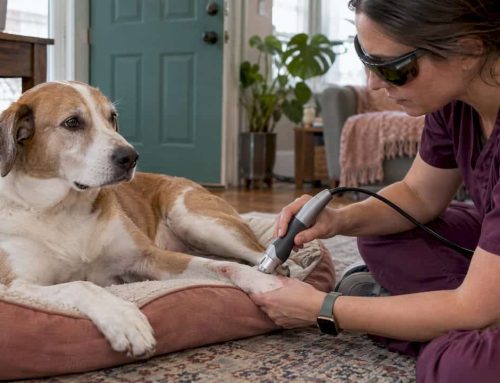
- Treatment. Needles go in at selected points, often along the Lung meridian and along the back. Many dogs relax or doze. Some sessions add acupressure, which uses hands only, or electroacupuncture, which adds mild electrical stimulation to the needles.
- A plan. We talk through how many sessions to expect, what to watch for at home, and whether laser therapy, food therapy or herbs could fit.
If you want to know how often dogs usually come in, our page on acupuncture frequency for dogs walks through what a typical schedule looks like.
Comfort cues to watch for
After treatment, owners often notice that their dog is sleepier or calmer for the rest of the day. Keep a short log: how many coughing fits per day, whether nights are quieter, how your dog handles the stairs or a walk. That log helps us and your veterinarian see whether things are moving in the right direction.
Herbal formulas for a dog’s cough
Many owners who search for help with a cough also ask about herbal formulas. Herbs are a traditional part of TCVM, and we offer herbal therapy as part of an integrative plan.
Here is what you should know to use herbs safely. The Merck Veterinary Manual notes that evidence for veterinary herbal products is limited, study quality is often poor, and herbs may change the blood levels of medications given at the same time. That is exactly why a veterinarian who knows your dog’s drug list should choose and monitor any formula, instead of you picking a bottle from a shelf.
An integrative veterinary article in IVC Journal lists Reishi for improving oxygen use and Cordyceps and Coriolus as anti-inflammatory and bronchodilating options in chronic bronchitis. These are the kinds of ingredients you may see discussed. If you want more background on herbal options and medication interactions, this overview of herbs for dogs and their risks is a good place to read further before your appointment.
Herbs and steroids: timing matters
VCA Animal Hospitals points out that strong drugs such as corticosteroids can mask symptoms that would otherwise guide the choice of an alternative remedy. For a dog on prednisone for bronchitis, this means the picture can look quieter than it truly is. We bring that into the plan: we share what we see with your regular veterinarian, choose formulas with your dog’s medications in mind, and add one thing at a time so changes are easy to read.
Our perspective
We see coughing dogs most often when they are older, when they have other health conditions, or when a trip to the clinic is hard on them. For those dogs, we believe the setting is part of the treatment. A dog who is relaxed on their own bed breathes more easily, tolerates needling better, and lets us observe how they really move and breathe in the place where they spend their days.
Our approach to bronchitis is to build on the diagnosis your veterinarian has made, never to bypass it. Acupuncture, laser therapy, food therapy and herbal support are tools for comfort and balance. We combine them with conventional medications and keep your dog’s regular veterinarian informed.
We also care about the person holding the leash. Watching a dog cough is exhausting, and loading a coughing dog in the car is stressful. Bringing integrative care to your living room lets both of you rest. We tailor each plan to your pet’s health needs and your home, and we describe what we do as support, with hope and honesty about how your dog is doing.
Pet Acupuncture & Wellness
When a cough needs a vet right away
Acupuncture is for dogs whose cough has been evaluated and is being managed. Call your veterinarian promptly, or an emergency hospital after hours, if you see any of the following. The Merck Veterinary Manual says that signs such as fever, pus-containing nasal discharge, depression, loss of appetite and a productive (wet) cough, especially in puppies, usually point to an added infection such as distemper or bronchopneumonia.
In practical terms, do not wait for an appointment with us if your dog:
- Has a fever, thick or colored nasal discharge, or stops eating
- Coughs up fluid or seems lethargic and withdrawn
- Breathes with visible effort, with blue or pale gums, or collapses
- Is a puppy with a new cough
Safe use also means the acupuncturist considers your dog as a whole. According to Merck, acupuncture may not be suitable if a dog cannot stay still or if needling would risk excessive bleeding or local infection. We review this at your first visit.
Costs and what is included
We publish our fees so there are no surprises. Our cost of services page lists current prices. As published there, the initial assessment and acupuncture with a technician starts from $430, and a technician mobile fee of $60 applies. Electroacupuncture is $30, and laser treatments range from $45 to $120 per treatment. Prices can change, so check that page for the latest.
Acupressure, food therapy, herbal therapy, telemedicine and rehabilitation are also available, and the plan we recommend depends on your dog.
Support for your coughing dog, at home in South Tampa
If you live in South Tampa and your dog has a diagnosed chronic cough, we can come to you. We combine acupuncture with other integrative therapies and coordinate with your regular veterinarian, so your dog gets care without the car ride.

You can see everything we offer on our main page, explore food therapy for a dog whose digestion and energy need support, or start with a remote conversation through our telemedicine consultations if you are not sure whether a home visit is right yet.
Other ways to support a dog with a cough
Beyond needles and herbs, small daily choices help a dog with irritated airways.
- Use a harness, not a collar. Pressure on the neck can set off coughing fits.
- Keep the air clean. Avoid smoke, strong sprays and dusty bedding where your dog rests.
- Keep excitement manageable. Calm greetings and shorter, steadier walks can mean fewer episodes.
- Talk about weight. Extra weight makes breathing harder, and food therapy can help build a plan that suits your dog’s age and condition.
- Think about the whole dog. Dogs with a cough are often also dealing with stiffness or allergies. Our guides on acupuncture for dogs with allergies and on anxiety show how the same therapy is used for those concerns, and rehabilitation can help a senior dog who has slowed down. You can read more about rehabilitation therapy too.
If you are ever unsure whether something is routine or an emergency, call your veterinarian. A short phone call is always the right call.
FAQ
Can acupuncture cure bronchitis in dogs?
We do not describe acupuncture as a cure. Chronic bronchitis is typically managed over time, often with medications such as corticosteroids, according to the Merck Veterinary Manual. Acupuncture is used as a supportive therapy that may help ease coughing and improve comfort, and published studies in coughing dogs, including one on tracheal collapse, are encouraging. Your veterinarian remains in charge of the overall treatment plan.
Can dogs get rid of bronchitis?
Acute cases caused by infection may resolve with treatment, but chronic bronchitis tends to be a long-term condition that is managed rather than erased. The goal is fewer and milder coughing episodes and a comfortable dog. A veterinary diagnosis tells you which type your dog has and what to expect.
How many acupuncture sessions does a coughing dog need?
It depends on your dog’s condition, age and response. Many plans begin with a short series of closer-together visits, then space them out as your dog improves. We tailor this to each pet, and our page on how often dogs get acupuncture explains the usual pattern.
Are herbal formulas safe for a dog that is already on medication?
They can be, when chosen by a veterinarian who knows the full medication list. The Merck Veterinary Manual notes that herbs may change the blood levels of other drugs, so never add a supplement without checking first. We review every medication and supplement before suggesting a formula.
Does acupuncture hurt a dog with a cough?
The needles are very thin, and many dogs relax or even doze during treatment. Treating at home helps because your dog is not stressed by travel. If your dog cannot stay still or seems distressed, we adjust, using acupressure or shorter sessions, or we pause.
Sources
- Tracheobronchitis (Bronchitis) in Dogs, Merck Veterinary Manual
- Chronic respiratory conditions and acupuncture therapy (1992)
- Acupuncture Improves Heart Rate Variability, Oxidative Stress and Cough in Dogs with Tracheal Collapse (2022)
- A scoping review of the evidence for efficacy of acupuncture in companion animals (2017)
- Acupuncture in Veterinary Patients, Merck Veterinary Manual
- Herbal Medicine in Veterinary Patients, Merck Veterinary Manual
- Integrative Treatment for Chronic Bronchitis in Dogs, IVC Journal
- Veterinary Therapies: Combining Therapies, VCA Animal Hospitals