If your cat keeps returning to the litter box, strains, or urinates in odd places, you are probably worried and tired. Acupuncture can be part of a gentle, multimodal plan for a cat with feline idiopathic cystitis (FIC), alongside the diagnosis and treatment your regular veterinarian provides. Because stress is a major driver of FIC, the setting matters: we bring acupuncture to your cat’s own living room in South Tampa, so there is no carrier, no car ride and no waiting room.
TL;DR
- Straining, crying, little or no urine, or repeated litter box trips, especially in a male cat, is an emergency. Call a veterinarian immediately.
- FIC is diagnosed by ruling out other causes, so your cat needs a veterinary workup before any complementary care.
- Current guidelines treat FIC as a stress-linked, painful condition, which is why pain relief and a calmer environment sit at the center of management.
- Acupuncture is used as an add-on to conventional care, not a replacement for it.
- In-home sessions remove travel and clinic stress, which suits anxious, senior and mobility-limited cats.
Table of Contents
- What feline idiopathic cystitis is
- Signs that need a vet right now
- How cystitis is diagnosed
- What usually helps, and where acupuncture fits
- Why home is the right place for a cat with cystitis
- What to expect during a session
- How many sessions to plan for
- Support at home between visits
- Our perspective
- Booking in-home care in South Tampa
- FAQ
- Sources
What feline idiopathic cystitis is
Cystitis means inflammation of the bladder. “Idiopathic” means no cause has been found. The 2025 iCatCare guidelines describe FIC as the most common cause of lower urinary tract signs in cats. Those signs include frequent trips to the litter box, straining, blood in the urine, pain and urinating outside the box.
The same guidelines frame FIC as a condition in which the body’s stress response stays switched on, so the bladder signs reflect more than the bladder alone. That is why good management looks at your cat’s whole life: water, litter, routine, safe spaces and pain.
Signs that need a vet right now
This is the one part of the article where acupuncture waits. The Merck Veterinary Manual says a cat that repeatedly visits the litter box, strains, cries, licks its genital area or produces little or no urine needs a veterinarian immediately, especially a male cat, because a complete blockage can turn fatal quickly. Cats with a blockage can die within about three days without treatment.
A blocked cat needs an emergency hospital, not a home visit. Once the crisis is handled, we are here for the long game.
How cystitis is diagnosed
There is no single test that confirms FIC. Per the iCatCare guidelines, the diagnosis rests on your cat’s history, risk factors, ruling out other causes (ideally with imaging) and how your cat responds to treatment. VCA Animal Hospitals lists the conditions that must be excluded: bladder stones or crystals, urethral plugs, infection, trauma, neurologic problems, anatomic abnormalities and tumors. Tests may include urinalysis, urine culture, blood work, X-rays and ultrasound.
That is why we ask owners to have a cat’s urinary signs worked up by their primary veterinarian first. Our approach is built to work with your regular vet and complement existing care.
What usually helps, and where acupuncture fits
FIC signs often settle in 2 to 7 days, but the MSD Veterinary Manual notes that about half of affected cats have another episode within a year. So management is about the long run.
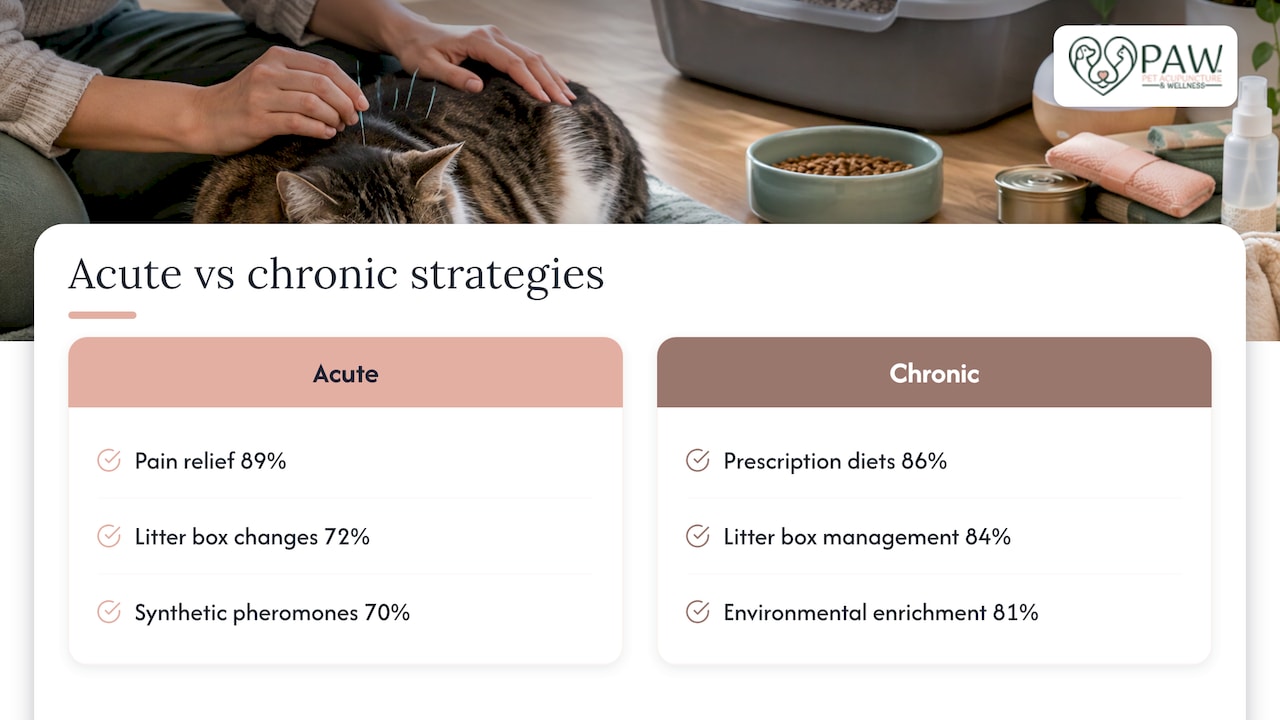
A 2024 survey of 606 US veterinarians found the most common acute treatments were pain relief (89%), litter box changes (72%) and synthetic pheromones (70%). For chronic management, the top strategies were prescription diets (86%), litter box management (84%) and environmental enrichment (81%). The iCatCare guidelines add that FIC is painful and that analgesia should be a priority.
Acupuncture belongs in the pain and stress parts of that picture. Veterinarian Ronald Koh writes in Today’s Veterinary Practice that a multimodal approach including acupuncture may allow lower doses of conventional analgesics and fewer side effects. He also notes that major pain management guidelines (AAHA, AAFP and WSAVA) endorse acupuncture as a safe adjunct for pain in dogs and cats. A feline acupuncture chapter by Gaspar in Veterian Key reports that the point GV 20, on top of the head, may help calm stressed cats and cats with inappropriate urination, and that such points are used alongside conventional treatment, never instead of it.
How much benefit a cat gets depends on the practitioner’s skill, the cat’s health and how long the problem has lasted, according to the Merck Veterinary Manual. That is a good reason to choose a veterinarian-led practice.
Why home is the right place for a cat with cystitis
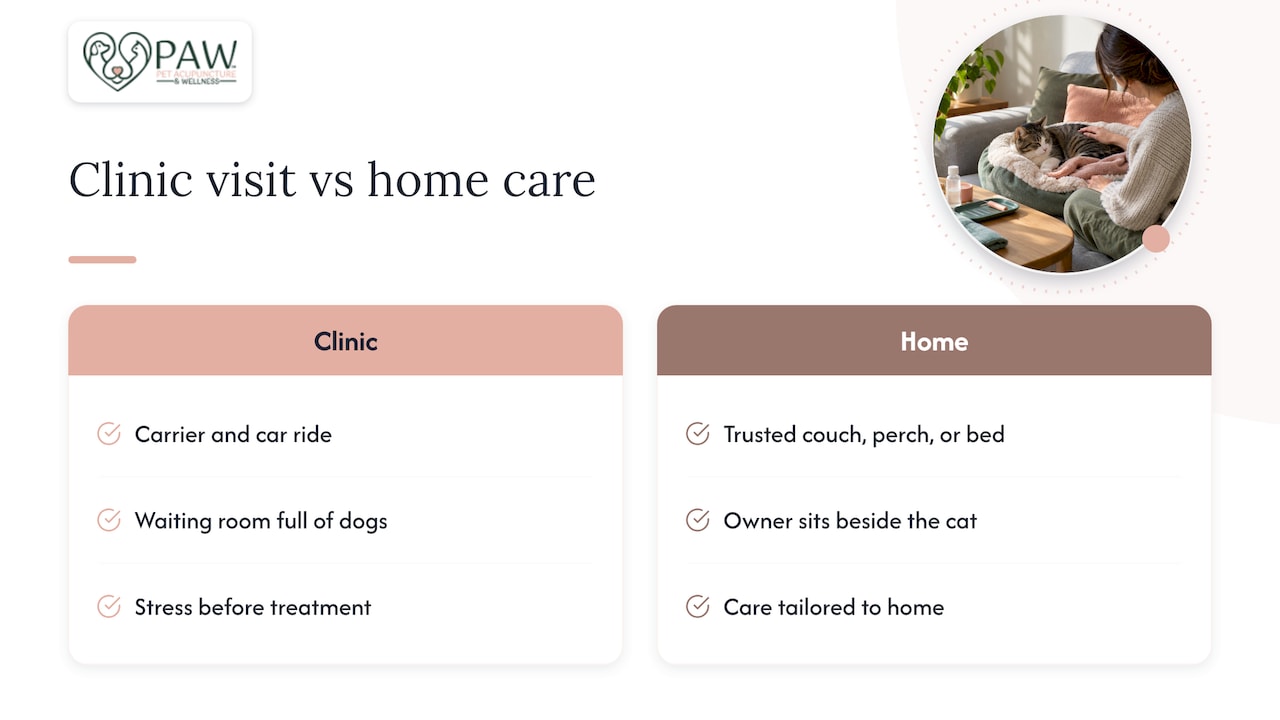
Stress is a recognized risk factor for FIC. The iCatCare guidelines list nervous disposition, household instability and a lack of safe, high resting places among the risk factors. Now picture the usual alternative: a hissing cat in a carrier, a car ride, a waiting room full of dogs.
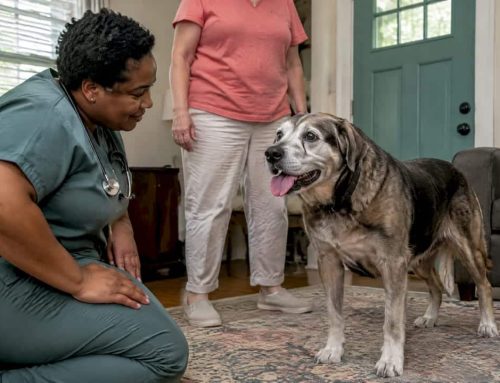
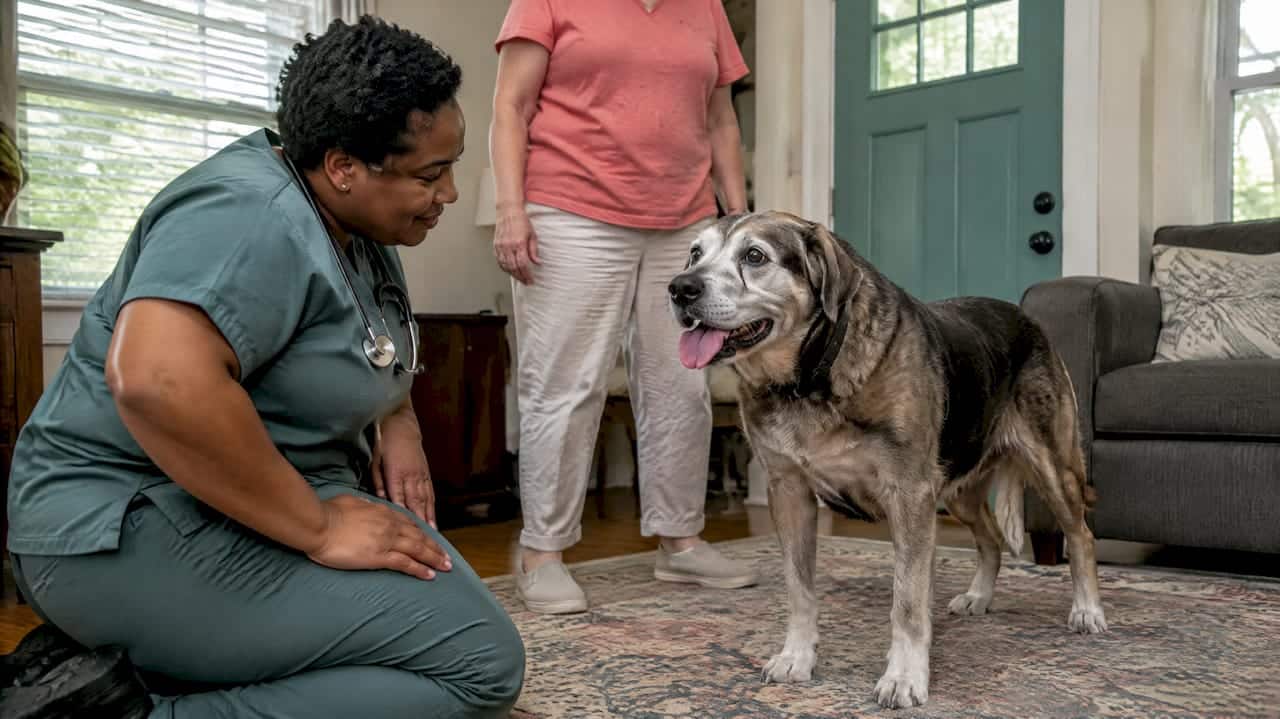
At home, your cat stays on the couch, the window perch or the bed she already trusts. You sit beside her. Our practice provides integrative care exclusively in the pet’s home, tailored to the pet’s needs and home environment. For senior cats, cats with arthritis, and cats who panic at the clinic door, this removes a stressor before treatment even begins. For more on how this works for older cats, see our guide to in-home acupuncture for senior, anxious cats.
What to expect during a session
According to Zoetis Petcare, most sessions ask a pet to rest quietly for 15 to 30 minutes, and owners can stay close and talk to their pet. Cats are usually treated on a soft, blanket-covered surface with very small needles, and the Veterian Key chapter notes that cats who do not tolerate needles can be treated with aquapuncture, a tiny injection of vitamin B12 at an acupuncture point. We offer aquapuncture, along with electroacupuncture, acupressure, laser treatments and herbal and food therapy.
In practice, a visit looks like this:
- A quiet start. Your cat settles in her usual spot while we review her history and any records from your regular veterinarian.
- Gentle point selection. Needles are fine and short. Koh reports needles of 28 to 36 gauge, typically left in place 10 to 30 minutes.
- Rest. Many cats relax or doze. Anxious cats may need calming first, which the Merck Veterinary Manual notes can be warranted before needling.
- Afterward. Some cats are tired, a little sore or thirstier for a day, which typically passes quickly, per Koh.
Highly fearful or aggressive cats may not be suitable candidates, since the Merck Veterinary Manual says high anxiety can counteract acupuncture’s calming effects. Acupuncture also is avoided over infected or inflamed skin, open wounds and tumor sites, and bleeding disorders or immune compromise need to be discussed first. Tell us about every diagnosis and medication, and we coordinate with your cat’s veterinarian.
If you are curious about the energy-based side of animal care, there is also an introduction to how reiki is practiced on animals.
How many sessions to plan for
Koh typically asks clients with chronic conditions to commit to weekly or twice-weekly sessions for at least 4 to 6 treatments, because acupuncture has both immediate and cumulative effects. Your cat’s plan will depend on how she responds. Our page on how many acupuncture sessions your pet needs walks through typical schedules.
Support at home between visits
Acupuncture works best when the household supports it. The iCatCare guidelines recommend:
- Water in several places, in different bowl types (wide ceramic is often preferred), with an optional fountain. Raise bowls for cats with pain or arthritis, and change water at least every other day.
- Wet food where appropriate, with water added if your cat accepts it. Change foods gradually.
- Litter trays: one per cat plus one, large, in quiet spots away from food and water, with sandy clumping litter, scooped at least once and ideally twice daily.
- Easy access for stiff cats: lowered tray sides and ramps or steps to favorite resting places.
- Predictable routines, daily play, a private raised resting spot and no punishment of any kind.
The 2024 US survey found 81% of veterinarians see owner follow-through as a barrier to success, so a plan that fits your home matters. Our food therapy and herbal therapy options can be built around your cat’s routine, and our telemedicine visits let us adjust the plan without another trip.
Our perspective
A cat with cystitis is telling you she does not feel safe. We take that seriously. Her bladder needs a proper veterinary workup, and her nervous system needs calm.
That is why we see cats only at home. Her scent, her blanket and her people are all there, and so is the treatment: acupuncture, laser, herbal therapy, food therapy and rehabilitation for the stiff joints that often come with age. We tailor each plan to the cat and her home, and we work alongside your regular veterinarian so nothing you already rely on is displaced.
For families caring for an aging, anxious or disabled cat, taking away the carrier and the car ride is often the kindest first step.
Pet Acupuncture & Wellness
Booking in-home care in South Tampa
Our initial assessment and acupuncture with a technician starts from $430, with a $60 technician mobile fee. Electroacupuncture is $30, laser treatments are $45 to $120 per treatment and vitamin B12 injections are $31.50. Rehabilitation packages range from $85 to $918. See the full cost of services for details, or learn about our acupuncture for cats in South Tampa.

When your cat’s urinary signs have been checked by her veterinarian and she is stable, you can book a visit at pawvetpractice.com. If you are not sure whether home care suits her, a telemedicine visit is a good first step.
FAQ
Can acupuncture cure feline cystitis?
FIC is a recurrent condition with no single cure, which is why guidelines emphasize ongoing management of pain, stress and environment. Acupuncture is used as a supportive part of a multimodal plan, with conventional care continuing alongside it.
Is acupuncture safe for cats?
The Merck Veterinary Manual describes acupuncture as generally safe when performed correctly. Minor effects such as tiredness, soreness or extra thirst usually pass quickly. A licensed veterinarian trained in acupuncture should perform it, and bleeding disorders, immune problems and tumors should be discussed beforehand.
Will my cat tolerate needles?
Many cats do, since the needles are very fine and the sessions are calm. Cats who dislike needles can often be treated with aquapuncture or acupressure instead.
My cat is straining in the litter box. Should I book acupuncture?
No. Straining, crying or passing little or no urine is an emergency, particularly in male cats. Go to a veterinarian or emergency hospital immediately, and consider acupuncture once she is stable.
Sources
- 2025 iCatCare consensus guidelines on lower urinary tract disease in cats
- Feline Idiopathic Cystitis, VCA Animal Hospitals
- Urinary Emergencies in Cats, Merck Veterinary Manual
- Noninfectious Diseases of the Urinary System of Cats, MSD Veterinary Manual
- Survey of veterinarians in the USA on FIC trends
- Use of Acupuncture for Pain Management, Today’s Veterinary Practice
- Alternative Modalities in Feline Practice, Veterian Key
- Acupuncture in Veterinary Patients, Merck Veterinary Manual
- Acupuncture for Dogs and Cats, Zoetis Petcare