Chinese herbs can be a gentle part of a cat’s care, but only when the formula, the source and the dose are chosen for your cat by a veterinarian trained in herbal medicine. Cats process substances differently from dogs and people, and herbal products vary widely in quality. Safety comes from three things: the right herb for your cat’s condition, a carefully made product, and someone watching how your cat responds. For senior cats, cats with kidney trouble, and cats who dread the car, that watching is easiest at home, where we can see how your cat eats, moves and rests.
TL;DR
- “Natural” does not automatically mean safe for a cat. Species, dose, product quality and your cat’s health all matter.
- The biggest risks are poorly made or undisclosed formulas and a few potent herbs, such as aconite (Fu Zi), which calls for particular caution in cats and older animals.
- Kidney support is one of the most common reasons owners ask about Chinese herbs, and it should always run alongside your cat’s regular veterinary care and lab monitoring.
- Never give your cat a human herbal product or a leftover formula. Dosing is not a scaled-down human dose.
- If your cat may have swallowed something harmful, call a veterinary poison center or an emergency clinic right away, without waiting for symptoms.
Table of Contents
- Why “natural” is not the same as “safe” for cats
- What can go wrong inside a formula
- What a safer herbal product looks like
- Kidney herbs for cats: what is used and how to approach them
- What about dogs?
- Signs to watch for, and what to do
- Herbal care that comes to your door
- FAQ
- Sources
Why “natural” is not the same as “safe” for cats
Traditional Chinese veterinary medicine (TCVM) uses herbs to support the body the way a gardener supports soil: gently, over time, and matched to the individual. In the hands of a trained practitioner it is a long-established part of integrative care. The same thing that makes herbs active, their plant chemistry, is why they deserve respect.
The Merck Veterinary Manual notes that evidence on plant products in veterinary patients is limited and that there are no standards or quality-control testing for many products commonly recommended for animals. That is the practical reason to treat herbs as a prescription-style decision rather than a shelf purchase.
Cats add a second layer. Toxicologist Robert Poppenga, DVM, PhD, points out that species differ in how susceptible they are to herbal toxins. For example, feline hemoglobin is vulnerable to oxidative damage, which may make cats more sensitive to oxidant herbs such as garlic. Little species-specific hazard data exists for many herbs. So a formula that suits a dog, or a person, is not a safe guess for your cat.
The same chapter states that most herbal remedies used as directed under the supervision of knowledgeable people are safe. That sentence is the heart of this article: the supervision is the safety feature.
What can go wrong inside a formula
Most problems do not come from the gentle, familiar herbs. They come from what is in the bottle that nobody expected, or from a potent ingredient used without care.
Undisclosed or contaminated ingredients. The Merck Veterinary Manual explains that some Chinese herbal mixtures can contain endangered plants or animal parts, heavy metals, or undisclosed pharmaceuticals, and that some are sold as “proprietary” blends without listing every constituent and its amount. Poppenga’s chapter adds that certain patent medicines have been found to contain arsenic, lead or mercury, and added anti-inflammatory drugs, corticosteroids, caffeine or sedatives.

Potent natural toxins. The same sources name aconite, toad secretions, mylabris, scorpion, borax and strychnine as natural toxins that turn up in some products. Poppenga reports that aconite poisoning can follow ingestion of about 1 gram of plant material, and that effects can appear within minutes to days. This is why a veterinary herbal course on the topic advises caution with formulas containing Fu Zi (aconite) in cats or geriatric patients. Prepared by a trained practitioner, aconite-containing formulas are handled with care. That care is exactly what you are not getting from an unlabeled online blend.
Species mix-ups. A manufacturing chapter in the veterinary herbal literature describes cases where one plant was substituted for a similar-looking one (Aristolochia for Stephania, for instance), which can cause kidney failure. For a cat whose kidneys are already working hard, this is the kind of error that matters most.
Combining products. Herbs can interact with each other and with medications. A cat on a heart, kidney, thyroid or pain medication needs a practitioner who knows the full list before anything new is added, including supplements you bought on your own.
What a safer herbal product looks like
You do not need to become a pharmacist. You need to know what good practice looks like so you can recognize it.
- Good manufacturing practice (GMP). The same chapter explains that GMP-compliant manufacturing helps ensure the right species is used and that products are not contaminated or adulterated. Material specifications should identify the species and include contamination reports and purity or potency information.
- A consistent, reputable supplier. Its best advice is to use a reputable herbal pharmacy or supplier consistently, so the product your cat gets this month matches last month’s.
- A full ingredient list. Every herb named, with nothing hidden behind “proprietary blend.”
- A dose set for your cat. A cat’s dose is based on the individual animal, not on a human label or a conversion by body weight. Human formulas are not meant to be reduced for pets.
- Texture and taste your cat accepts. Cats are notoriously sensitive to flavor and texture. Veterinarian Angie Krause notes in IVC Journal that cats with advanced kidney disease may have poor appetite and a sensitive stomach, so owners should use only supplements their cat will accept, to avoid creating a food aversion. A good plan adapts the form (powder, tiny capsules, a flavored mix) to your cat rather than forcing it.
These are things a veterinarian handles when the herbs are prescribed as part of a treatment plan. Our herbal therapy is offered as part of individualized care for each pet, alongside the regular veterinarian’s treatment.
Kidney herbs for cats: what is used and how to approach them
Kidney disease is common in older cats, and owners often ask us whether Chinese herbs can help. TCVM practitioners do use herbs for it, always as an addition to, not a replacement for, diet, hydration and conventional medication.
An IVC Journal overview of integrative care for feline kidney disease lists herbs used in this setting, including Rehmannia glutinosa, Astragalus membranaceus, Angelica sinensis, cinnamon, milk thistle (Silybum marianum), and the mushrooms Ganoderma lucidum and Cordyceps sinensis. It cites Rehmannia’s kidney-protective effects in rat studies and a Cochrane review of Astragalus that found promising effects on protein in the urine and on hemoglobin. Rehmannia is the main ingredient in formulas such as Ba Wei Di Huang Wan (often called Rehmannia Eight).
What do real cats look like? A few published cases:
- A 2022 case report in the American Journal of Traditional Chinese Veterinary Medicine describes a 10-year-old Abyssinian cat in renal failure whose kidney function improved after Shen Qi Wan and Rehmannia 6 were added to acupuncture, Tui-na, food therapy and conventional medications. The cat kept doing well for 3.5 years with acupuncture every six weeks.
- An AHVMA journal article describes four dogs and cats with chronic kidney disease treated with acupuncture and Chinese herbs. In one case, BUN fell from 95 to 51 mg/dL and creatinine from 4.7 to 3.1 mg/dL over nine months, followed by about five more years of good quality of life.
A case report is a single story, not a guarantee, but it shows the pattern we aim for: herbs, acupuncture, food therapy and regular medical care working together, with bloodwork guiding the plan.
On safety specifically, a randomized study in the Journal of Veterinary Internal Medicine followed 29 cats with stage 2 or early stage 3 kidney disease for an average of 22 months. The cats received Chinese rhubarb, benazepril, or both. Only two cats showed possible mild side effects (lethargy and vomiting), and those resolved without treatment. The authors concluded the supplement was likely safe over a relatively long period in these cats.
For your cat, the sensible approach is:
- Keep your regular veterinarian involved and share any herbal plan with them.
- Have kidney values, hydration and appetite rechecked on a schedule your veterinarian sets.
- Start one change at a time, so a reaction is easy to trace.
- Pair herbs with food therapy that fits your cat’s tastes and condition.
What about dogs?
The same principles apply: a trained practitioner, a quality product, a dose chosen for the individual, and monitoring. Dogs tolerate some herbs differently from cats, so a formula should never be passed between species. If your dog’s care involves a well-known herbal product, our guide to Yunnan Baiyao for dogs covers its safety, dosing and veterinary monitoring.
Signs to watch for, and what to do
Watch your cat in the first days after any new herb or supplement. Call your veterinarian if you see vomiting, diarrhea, refusing food, unusual sleepiness, hiding, or any change that feels off to you. You know your cat’s normal better than anyone.
If your cat may have swallowed something harmful, such as a whole bottle, an unlabeled product or a human herbal supplement, treat it as an emergency:
- Call a veterinary poison center or an emergency veterinary clinic immediately, even if your cat looks fine. The Merck Veterinary Manual explains that early decontamination is key when a toxic dose may have been eaten, and that poison centers can guide you.
- Keep the package. Have the product name, ingredient list, amount, time of exposure and your cat’s weight ready.
- Do not make your cat vomit unless a veterinarian or poison professional tells you to.
For a sense of timing, the Merck chapter describes stimulant herbs such as ma huang (ephedra) causing vomiting, agitation, a racing heart, tremors and seizures, with signs starting from 30 minutes to 8 hours after exposure and lasting 24 to 72 hours. Signs differ by product, which is one more reason not to wait.
Our perspective
When owners come to us about Chinese herbs, they usually are not looking for a miracle. They have a senior cat who is slowing down, eating less or struggling with kidneys, and they want something gentle that fits alongside what their veterinarian already does.
We believe herbs belong inside a plan, not on a shelf. Our treatment plans are tailored to each pet’s health needs and home environment, and we work collaboratively with your pet’s regular veterinarian so everything complements existing care. Herbal therapy sits beside acupuncture, food therapy and rehabilitation, which is how TCVM is meant to work.
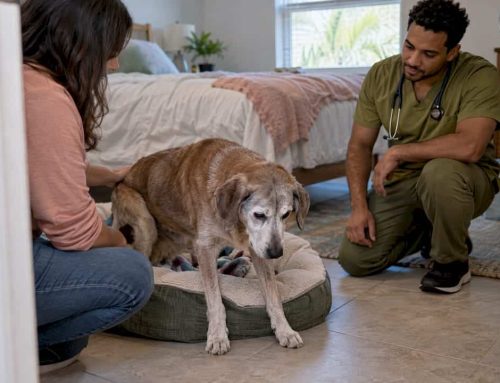
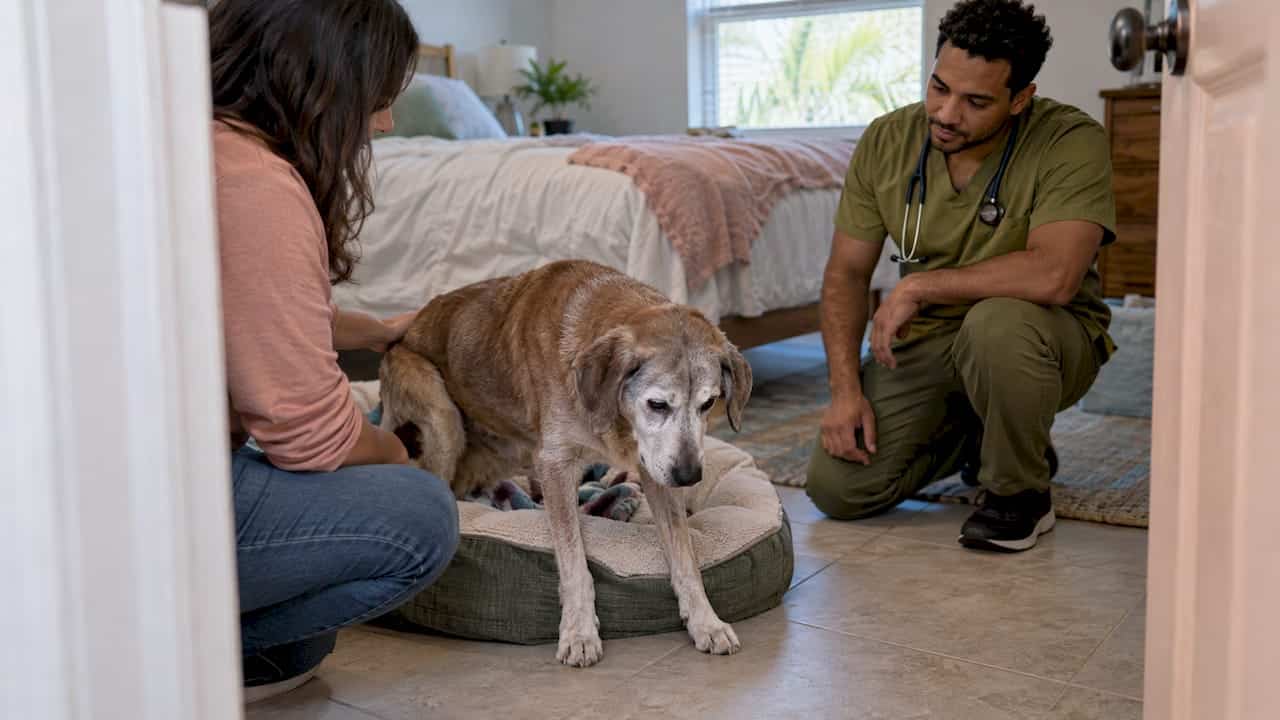
Doing this in your living room matters more than people expect. We see how your cat moves across the floor, where she sleeps, what she eats and how she reacts to a new routine, without the stress of a carrier and a car ride. For an anxious or fragile cat, that calm is part of the care.
Pet Acupuncture & Wellness
Herbal care that comes to your door
If your cat is older, has kidney or mobility concerns, or simply hates the clinic, we bring integrative care to your home in South Tampa. Herbal therapy, acupuncture, rehabilitation, laser therapy, food therapy and telemedicine are part of what we offer, and our online pharmacy and recommended products support the plan between visits.

An initial assessment and acupuncture with a technician starts from $430, with a $60 technician mobile fee, and electroacupuncture is $30 per session. You can see all published fees on our cost of services page. If you would like to talk through whether herbs make sense for your cat before a visit, our telemedicine consultations are a place to start, or you can begin at pawvetpractice.com.
FAQ
Are Chinese herbs safe for cats?
They can be when a veterinarian trained in herbal medicine selects the formula, the product is carefully manufactured with a full ingredient list, and your cat is monitored. Cats are more sensitive than people and dogs to some plant compounds, so human products and guesswork are not appropriate.
Are Chinese herbs safe for dogs?
The same rules apply to dogs: individualized formulas, quality sourcing and supervision. Dosing differs between species, so never give a dog’s herbs to a cat or the reverse.
Which Chinese herbs are used for cats with kidney disease?
Practitioners commonly work with Rehmannia, Astragalus, Angelica sinensis, cinnamon, milk thistle and certain medicinal mushrooms, often in classic formulas such as Ba Wei Di Huang Wan. Which one suits your cat depends on her bloodwork, symptoms and medications, so the choice belongs with her veterinarian.
Can I give my cat a Chinese herbal formula made for people?
No. Human formulas are not meant to be scaled down by weight for a cat, and some contain ingredients that call for special caution in cats. A formula prescribed for your cat, with a dose set for her, is the safe route.
Sources
- Herbal Medicine in Veterinary Patients, Merck Veterinary Manual
- Hazards Associated with the Use of Herbal and Other Natural Products, Veterian Key
- How to Use Acupuncture and Herbal Medicine for Treatment of Chronic Kidney Disease, WSAVA/VIN
- Herb Manufacture, Pharmacy, and Dosing, Veterian Key
- An Integrative Approach to Feline Kidney Disease, IVC Journal (2024)
- An integrative approach to chronic kidney disease in cats, IVC Journal (2018)
- Acupuncture, Chinese Herbal Medicine, Tui-na and Food Therapy for Chronic Renal Disease of a Cat, AJTCVM
- CAVM in Practice: TCVM for Renal Disease, AHVMA
- The Effect of Chinese Rhubarb, Rheum officinale, in Cats with Chronic Kidney Disease, J Vet Intern Med
- Toxicoses in Animals From Human Dietary and Herbal Supplements, Merck Veterinary Manual