TL;DR:
- Electroacupuncture effectively reduces pain, speeds recovery, and improves neurologic function in dogs with spinal injuries. It outperforms manual acupuncture in analgesia and enhances ambulation when combined with conventional care, although most studies are small and methodologically limited. The treatment involves electrical stimulation through needles at specific points, stimulating nerves and releasing pain-relieving substances, with protocols tailored individually by trained veterinary acupuncturists.
Electroacupuncture for dogs works. Clinical studies show it reduces pain, speeds recovery of ambulation, and improves neurologic function in dogs with spinal cord injury and chronic musculoskeletal conditions, particularly when used alongside conventional care. A literature review published in Animals (MDPI) concluded that electroacupuncture offers better analgesia than manual acupuncture and may improve both ambulation and deep pain perception in dogs with spinal cord injury when combined with other treatments. That is not a minor finding for a dog owner watching their companion struggle to walk.
Here is what the evidence supports:
- IVDD and spinal cord injury: A prospective controlled study published in the Journal of the American Veterinary Medical Association found that dogs with grade 3–4 thoracolumbar IVDD who received electroacupuncture plus standard treatment recovered ambulation in a mean of 10.10 days, compared to 20.83 days for dogs receiving standard treatment alone. The overall success rate for the EA group was 88.5% versus 58.3% for the control group.
- Chronic osteoarthritis and lameness: Canine electroacupuncture is used clinically to improve range of motion and reduce pain in dogs with chronic arthritis, with cumulative benefit building across a series of sessions.
- Timeline: Many owners notice early changes within the first two to four sessions; chronic conditions typically require six to eight weeks of consistent treatment before meaningful improvement stabilizes.
- Evidence caveat: Most studies are small, some lack blinding or randomization, and many combined EA with corticosteroids, making it difficult to isolate EA’s independent contribution. The evidence is promising and clinically meaningful, but not yet from large randomized controlled trials.
Table of Contents
- How does electroacupuncture for dogs actually work?
- What does the research actually show about canine electroacupuncture?
- What does a typical treatment protocol look like?
- Who is a good candidate, and when should you avoid it?
- Who should perform electroacupuncture on your dog?
- What happens during a session, and how do you care for your dog afterward?
- How many sessions are needed, and what does it cost?
- How does EA fit into multimodal care, and when is surgery the right call?
- Is mobile electroacupuncture at home right for your dog?
- What we still don’t know about electroacupuncture in dogs
- Key Takeaways
- A perspective from Pet Acupuncture & Wellness
- Mobile electroacupuncture in South Tampa, at your dog’s pace
- Useful sources and further reading
- FAQ
How does electroacupuncture for dogs actually work?
Electroacupuncture (EA) is the application of a mild, controlled electrical current through acupuncture needles already placed at specific points on the body. Think of it as manual acupuncture with a calibrated boost: instead of a practitioner periodically rotating or flicking each needle by hand, a small device delivers a continuous, measurable electrical signal between paired needles. That consistency is what makes EA physiologically distinct, and clinically more predictable, than manual needle work alone.
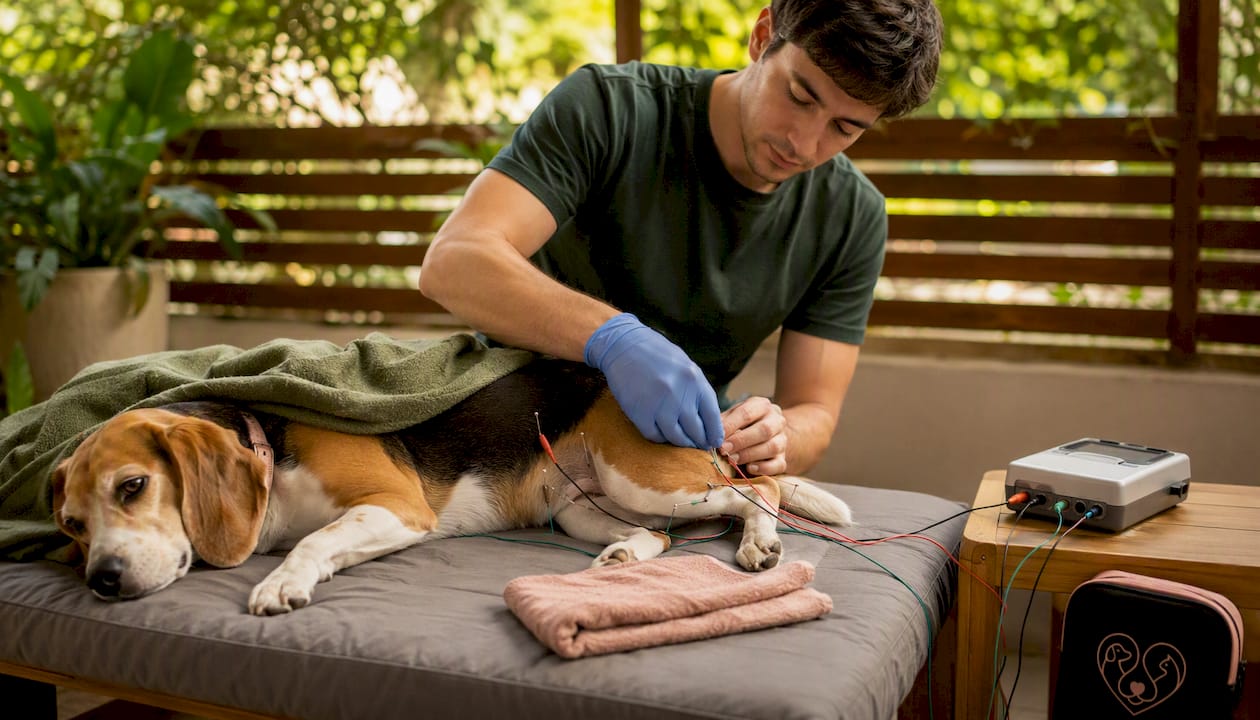
In a typical setup, pairs of needles are connected by small leads to an electroacupuncture device. The current flows between each pair, stimulating the nerve pathways and tissues between those points. Practitioners choose local pairings (needles near the affected area, such as lumbar points for a dog with back disease) alongside distal pairings (points on the limbs that influence the same spinal segments through nerve pathways). The result is a coordinated stimulus across a defined circuit of the nervous system, not just a localized poke.
The physiologic effects are well-documented. Acupuncture stimulates the nervous system and triggers the release of anti-inflammatory and pain-relieving substances, improves blood flow, and relaxes muscle trigger points. EA takes this further by increasing spinal opioid release, elevating local circulation to the spinal cord and nerve roots, and producing neuromodulatory effects through endorphins, serotonin, and dynorphins. Frequency matters here: lower frequencies (around 2 Hz) preferentially release endorphins and enkephalins, while higher frequencies (around 100 Hz) drive dynorphin release for rapid, short-term analgesia. Alternating patterns combine both effects.
Pro Tip: Ask your veterinary acupuncturist which frequency pattern they plan to use and why. A practitioner who can explain their frequency rationale for your dog’s specific condition is demonstrating the individualized dosing that separates skilled EA from a one-size-fits-all approach. The deQi response, a subtle muscle twitch or relaxation that signals effective stimulation, is the clinical cue they watch for to confirm the current is working.
For a deeper look at how EA compares to manual acupuncture point by point, the electroacupuncture vs. acupuncture guide from Pet Acupuncture & Wellness walks through the key differences in plain language.
What does the research actually show about canine electroacupuncture?
The short answer: the evidence is genuinely encouraging for spinal injury and chronic pain, but most studies are small and methodologically limited. Owners deserve an honest picture of both the promise and the gaps.
The MDPI literature review, which examined nine studies meeting inclusion criteria for dogs with spinal cord injury, found that combined Eastern and Western treatments consistently produced better ambulation outcomes than medical treatment alone. The JAVMA prospective controlled study remains the most cited single-study reference, and its numbers are striking.

| Study / Review | Population | Condition | Primary Outcomes | Main Limitations |
|---|---|---|---|---|
| JAVMA prospective controlled study | — | Thoracolumbar IVDD, grades 1–5 | EA group: 88.5% success rate vs. 58.3% control; mean ambulation recovery 10.10 days vs. 20.83 days | No blinding; corticosteroids used in both groups; small sample per grade |
| MDPI Animals literature review | Nine studies reviewed | Spinal cord injury / IVDD | EA improved ambulation and deep pain perception when combined with other treatments | Mixed protocols, variable grading systems, concurrent corticosteroid use across studies |
| Frontiers in Veterinary Science review (IVDH adjunctive therapies) | Multiple case series reviewed | Acute IVDH, variable severity | EA associated with shorter time to walking and greater proportion of dogs becoming ambulatory vs. medical management alone | Lack of blinding/randomization, historical controls, small sample sizes per neurologic grade |
| Frontiers perioperative EA study (OVH) | — | Postoperative pain (ovariohysterectomy) | 10-minute perioperative EA did not significantly reduce postoperative pain scores | Very short EA duration (10 min); feral dogs with anxious behavior affecting pain assessment |
The outcome measures owners care most about are ambulation recovery, return of deep pain perception, proprioception, and urinary control. The JAVMA study reported that partial to total recovery of ambulation was more frequent in dogs receiving EA-plus-treatment compared to treatment alone. Recovery of proprioception followed a similar pattern with better outcomes in the EA group.
One important nuance: the perioperative study using only 10 minutes of EA found no significant benefit for postoperative pain. Duration and cumulative dosing appear to matter considerably. A brief single session is unlikely to produce the same effects as a structured multi-week protocol.
The most honest summary of the evidence is this: EA combined with standard care consistently outperforms standard care alone for IVDD and spinal injury in the studies available, but those studies are small, rarely blinded, and often complicated by concurrent corticosteroid use. That does not diminish the clinical signal; it means owners should set realistic expectations and track outcomes carefully rather than treating EA as a guaranteed cure.
What does a typical treatment protocol look like?
A standard EA protocol is not a fixed recipe. It is a calibrated, evolving plan that a trained veterinary acupuncturist adjusts based on your dog’s response. That said, there are common patterns across clinical practice.
A typical EA session, step by step:
- Intake exam: The practitioner reviews your dog’s history, current medications, and any changes since the last visit. Baseline neurologic or gait function is assessed.
- Needle placement: Fine acupuncture needles are placed at selected points, typically including local points near the affected area and distal points on the limbs. For thoracolumbar disease, points along the lumbar spine, governing vessel, and hindlimb channels are common.
- Lead connection: Leads from the EA device are clipped to pairs of needles. The device is powered off and amplitude set to zero before any leads are attached.
- Gradual ramp-up: The practitioner turns on the device and slowly increases amplitude until a deQi response is observed, then reduces slightly to a comfortable, effective level.
- Session duration: Initial sessions typically last 5–20 minutes with up to three pairs of needles. Once your dog is acclimated, sessions commonly run 20–45 minutes with more needle pairs and customized frequencies.
- Monitoring throughout: The practitioner watches for signs of discomfort, excessive muscle contraction, or distress and adjusts amplitude or needle placement accordingly.
- Completion: Leads are disconnected, needles removed, and your dog is given a few minutes to rest before leaving.
Frequency selection follows clinical intent. Low frequencies around 4–20 Hz encourage systemic endorphin and serotonin release, making them useful for chronic pain and long-term neurologic support. Higher frequencies near 100 Hz produce rapid, short-term analgesia suited to acute or surgical contexts. Dense-disperse patterns, alternating low and high frequencies, are commonly used for paralysis and IVDD recovery because they engage multiple neurotransmitter pathways simultaneously. These are illustrative examples, not prescriptions; only a trained veterinary acupuncturist should select and set device parameters for your dog.
Bilateral point selection is generally preferred over unilateral placement for conditions requiring stronger systemic analgesia, since stimulating corresponding points on both sides of the body engages more of the relevant spinal circuitry. For a dog with thoracolumbar IVDD, bilateral hindlimb points alongside spinal points create a more complete therapeutic circuit than treating one side alone.
For guidance on how practitioners choose specific acupuncture points, the acupuncture point selection resource from Pet Acupuncture & Wellness explains the rationale in owner-friendly terms.
Who is a good candidate, and when should you avoid it?
Most dogs with chronic pain or spinal disease are reasonable candidates for EA as part of a multimodal plan. The conditions with the strongest clinical support include chronic osteoarthritis, thoracolumbar IVDD (as an adjunct to medical or surgical care), post-operative rehabilitation, and some neurologic deficits where nerve pathway stimulation may support recovery.
Contraindications are real and worth knowing. The MSD Veterinary Manual identifies the inability to remain still as a primary contraindication, since a moving dog risks needle migration or injury. Active neoplasia at or near needling sites, severe coagulopathies, and uncontrolled aggression or severe anxiety are also reasons to avoid or postpone EA. Dogs with implanted electronic devices (pacemakers) require special caution, as electrical current near those devices carries risk.
Practitioners manage risk through sterile single-use needles, careful site selection that avoids tumor tissue, pre-treatment coagulation assessment for at-risk patients, and continuous monitoring during the session. For dogs with mild anxiety, acupuncture for anxious dogs can sometimes be a preparatory step before introducing EA.
Red flags that require stopping treatment and contacting your veterinarian:
- Sudden worsening of neurologic signs after a session
- New or increased pain, limb weakness, or loss of bladder/bowel control
- Bleeding, swelling, or signs of infection at needle sites
- Prolonged lethargy lasting more than 24–48 hours
- Any sign of distress, vocalization, or behavioral change that persists after the session
Common, expected side effects are mild: temporary soreness at needle sites, mild sedation or tiredness for a few hours after the session, and occasional brief local bleeding. Most dogs tolerate EA well and many become visibly relaxed during treatment.
Who should perform electroacupuncture on your dog?
Electroacupuncture must be performed by a licensed veterinarian with formal training in veterinary medical acupuncture, or by a certified veterinary acupuncturist working under direct veterinary supervision. This is not a gray area. EA involves electrical current, needle placement, and clinical decision-making that requires both a veterinary license and specialized post-graduate training.
What credentials to look for:
- An active AVMA-recognized veterinary license in your state
- Completion of a formal veterinary acupuncture training program (programs recognized by the Chi Institute, the International Veterinary Acupuncture Society, or equivalent post-graduate veterinary education)
- Continuing education in veterinary integrative medicine, including EA-specific technique training
- Diplomate status in veterinary acupuncture or integrative medicine is an additional credential that signals advanced training
Questions to ask when booking:
- What is your specific training in electroacupuncture, and how long have you been using it?
- What protocol do you typically use for my dog’s condition?
- How do you measure and document outcomes between sessions?
- How do you handle an adverse reaction during a session?
- Will you coordinate with my primary veterinarian and share session notes?
That last question matters more than most owners realize. EA works best when the acupuncturist and primary vet are communicating, especially for dogs on concurrent medications, post-surgical patients, or dogs with complex neurologic presentations.
Pro Tip: Before your first appointment, ask your primary veterinarian to share relevant imaging (X-rays, MRI reports) and a current medication list with the acupuncturist. Baseline documentation of your dog’s neurologic grade or pain score, recorded before treatment starts, gives both practitioners an objective reference point for measuring progress.
For help identifying a qualified provider in South Tampa, the certified veterinary acupuncturist guide from Pet Acupuncture & Wellness covers what credentials actually mean and what questions to ask.
What happens during a session, and how do you care for your dog afterward?
A typical visit begins with a brief intake exam, not just a quick hello. The practitioner assesses your dog’s current neurologic status, gait, and pain level, then reviews any changes since the last session. This baseline check shapes the day’s protocol. Needle placement follows, then lead connection, gradual amplitude increase to deQi, and a monitored session period. The full visit, including initial assessment, the EA session, and post-session monitoring, generally takes 45–60 minutes for an established patient.
Before the visit:
- Let your dog relieve themselves beforehand so they are comfortable lying still
- Bring a list of all current medications and any supplements
- Note any changes in gait, appetite, or behavior since the last session
- Arrive a few minutes early so your dog can settle before the exam begins
During the session, you may notice your dog twitching slightly at needle sites as the current ramps up. That is the deQi response, a sign the stimulus is reaching the intended nerve pathway. Many dogs become progressively calmer as the session continues, sometimes drifting into a light sleep. Mild muscle tremor near active needle pairs is normal. If your dog seems distressed, vocalizes, or tries to move away repeatedly, tell the practitioner immediately.
After the session, track these things:
- Activity level and willingness to move or bear weight
- Pain cues (guarding, reluctance to be touched, facial tension)
- Appetite and water intake
- Gait quality on a simple 1–5 scale you define at the start of treatment
- Any unusual reactions: excessive tiredness beyond a few hours, limping, or behavioral changes
A simple tracking log, date, session number, medications given that day, and a brief observation note, gives your practitioner the data they need to adjust the protocol. Mild tiredness for a few hours after a session is normal and usually resolves by the next morning. If soreness or lethargy persists beyond 48 hours, contact the clinic.
How many sessions are needed, and what does it cost?
EA is a cumulative therapy. A single session rarely produces lasting change; the benefit builds across a series of treatments, particularly for chronic conditions. Most initial protocols run one to three sessions per week for the first several weeks, then taper to a maintenance schedule as the dog improves.
Typical timelines by condition:
- Acute post-operative recovery: Sessions may begin within days of surgery, often two to three times per week for the first two to four weeks, then weekly as healing progresses.
- IVDD recovery (grades 3–4 with deep pain intact): The JAVMA study found dogs in the EA group recovered ambulation after a few sessions, though the full protocol involved multiple sessions. Owners should plan for a multi-session course before drawing conclusions.
- Chronic osteoarthritis: Six to eight weekly sessions is a common initial course, with many dogs transitioning to monthly or bimonthly maintenance once a stable improvement plateau is reached.
Cost in the U.S. varies by geographic market, practitioner credentials, session length, and whether the visit is mobile or clinic-based. Mobile in-home visits typically carry a higher per-session fee than clinic visits, reflecting travel time and equipment transport. Ballpark ranges for veterinary acupuncture sessions in the U.S. generally fall between $75 and $200 per session for clinic-based care, with mobile visits often running higher depending on location and session complexity. These are rough market estimates; actual pricing varies widely and should be confirmed directly with the practice.
What to ask about pricing before you start:
- Is the initial evaluation or baseline assessment billed separately from the first treatment session?
- Are package or multi-session discounts available for a committed course of care?
- What is the cancellation policy for scheduled sessions?
- Does the fee include post-visit notes to your primary veterinarian?
Planning financially for a full initial course, rather than booking session by session, usually produces better clinical outcomes and sometimes better pricing.
How does EA fit into multimodal care, and when is surgery the right call?
EA is most effective as one component of a broader treatment plan, not as a standalone cure. The strongest clinical results in the literature come from combinations: EA plus standard medical management, EA plus physical rehabilitation, EA plus appropriate pain medication. Think of EA as a powerful amplifier within a multimodal approach, not a replacement for the other instruments.
Therapies commonly combined with EA in veterinary integrative practice include:
- NSAIDs and analgesics: Pharmaceutical pain management addresses acute inflammation while EA works on neurologic and circulatory pathways
- Laser therapy: Low-level laser targets tissue healing and local inflammation, complementing EA’s systemic neurologic effects
- Physical rehabilitation: Therapeutic exercises, hydrotherapy, and manual therapy rebuild strength and proprioception that EA helps restore neurologically
- Weight management: Reducing mechanical load on arthritic or injured joints amplifies the benefit of any pain-reduction therapy
When to escalate to surgery or urgent medical care:
- Loss of deep pain perception, especially if acute or rapidly progressive
- Progressive neurologic decline despite conservative management
- Acute loss of bladder or bowel control
- Severe trauma with suspected spinal instability
- Conditions where imaging shows surgical lesion requiring decompression
The practical owner tip here is straightforward: document your dog’s response to EA objectively, using the tracking log described earlier, and share those records with your primary veterinarian at every recheck. Objective data, not impressions, is what allows your vet team to make a timely, informed decision about escalation.
For dogs with IVDD specifically, the acupuncture for dogs with IVDD resource from Pet Acupuncture & Wellness covers how integrative care fits into the broader treatment picture for spinal disease.
Is mobile electroacupuncture at home right for your dog?
For many dogs, the most therapeutic environment is the one they already know. Senior dogs with severe arthritis, dogs with mobility limitations that make car travel painful, and dogs with significant anxiety around clinical settings are often the best candidates for mobile EA. The familiar smells, sounds, and surfaces of home reduce stress hormones before the session even begins, which can meaningfully affect how a dog responds to treatment.
Mobile EA is appropriate when your dog can remain reasonably still in a home environment, does not have active infection or high-risk coagulopathy requiring immediate clinic resources, and has a suitable space for the practitioner to work safely. It is less appropriate for dogs requiring concurrent imaging, IV medications, or emergency monitoring equipment.
Checklist for assessing home visit suitability:
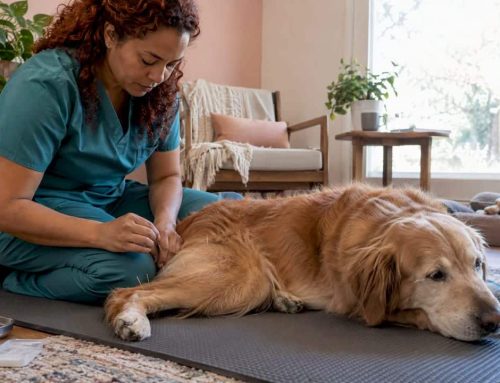
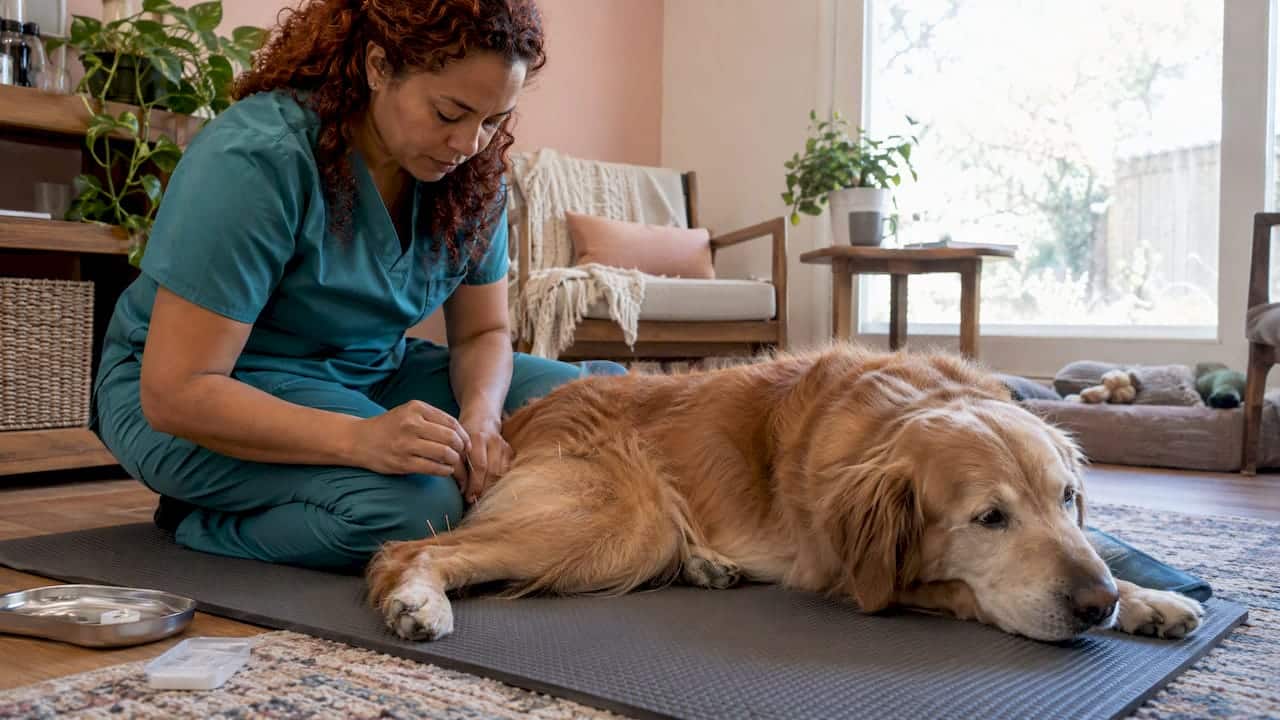
- A quiet room with a firm, non-slip surface (a yoga mat or folded blanket on the floor works well)
- Ability to minimize household distractions during the session (other pets, children, loud noise)
- Your dog can lie comfortably for 20–45 minutes with mild encouragement
- No active wounds, open infections, or recent surgical sites at planned needle locations
- Current medications and medical records accessible for the practitioner to review
What a mobile visit from Pet Acupuncture & Wellness typically includes:
- A baseline exam and review of your dog’s records before needles are placed
- All EA equipment brought to your home, including sterile single-use needles and the EA device
- A full session with monitoring, adjusted to your dog’s comfort and response
- Post-visit notes sent to your primary veterinarian
- A follow-up plan with session frequency and home monitoring guidance
Pro Tip: Set up the treatment space before the practitioner arrives. Choose the room where your dog is most relaxed, remove other pets, and have a favorite blanket or mat ready. A lick mat with a small amount of appropriate food can help keep your dog focused and calm during needle placement, especially for first-time patients.
Pet Acupuncture & Wellness serves South Tampa with mobile in-home integrative care, including EA, for senior, disabled, and anxious dogs who benefit from treatment in their own environment. Cases that require clinic-level resources are referred appropriately, and all mobile visits include coordination with your primary veterinarian.
What we still don’t know about electroacupuncture in dogs
The most important evidence gap is straightforward: there are no large, blinded, randomized controlled trials with standardized EA protocols for canine spinal disease or osteoarthritis. The existing evidence is clinically meaningful, but it comes from small studies, mixed protocols, and populations where concurrent treatments make it hard to isolate EA’s independent effect.
Specific gaps the field needs to address:
- Randomized controlled trials with standardized EA dosing (defined frequency, amplitude, duration, and point selection) to allow meaningful comparison across studies
- Longer-term follow-up data beyond the initial recovery period, particularly for chronic osteoarthritis maintenance
- Studies that separate EA effects from concurrent corticosteroid or NSAID use, so the independent contribution of EA can be quantified
- Clearer, validated outcome measures used consistently across studies (standardized neurologic grading, validated pain scales, objective gait analysis)
- Research on optimal maintenance protocols for chronic conditions: how often, for how long, and at what point tapering is appropriate
For owners and clinicians right now, the most practical response to these gaps is consistent outcome tracking. Using a validated pain scale, documenting gait changes, and recording medication use at each session creates the kind of real-world data that, aggregated across practices, can eventually answer the questions the current literature cannot. If your veterinary acupuncturist participates in a clinical registry or outcome-tracking program, contributing your dog’s data is a meaningful way to advance the field.
Key Takeaways
Electroacupuncture combined with standard veterinary care consistently outperforms standard care alone for canine IVDD and chronic pain, with the JAVMA study showing an 88.5% success rate in the EA group versus 58.3% in controls.
| Point | Details |
|---|---|
| EA outperforms standard care alone for IVDD | The JAVMA study found a notably higher success rate with EA plus standard treatment compared to standard treatment alone. |
| Cumulative therapy requires consistency | Most chronic conditions need six to eight sessions before meaningful improvement stabilizes; one or two sessions is not a fair trial. |
| Frequency and dosing must be individualized | Low frequencies drive endorphin release for chronic pain; higher frequencies produce rapid analgesia; only a trained veterinary acupuncturist should set parameters. |
| Contraindications are real | Avoid EA in dogs that cannot remain still, have active neoplasia at needle sites, or have severe coagulopathies. |
| Pet Acupuncture & Wellness offers mobile EA in South Tampa | In-home sessions are available for senior, anxious, or mobility-limited dogs, with full coordination with your primary veterinarian. |
A perspective from Pet Acupuncture & Wellness
What the evidence gets right, and what owners often miss
The clinical literature on canine electroacupuncture is genuinely encouraging, but there is a gap between what the studies measure and what owners experience in practice. Studies track ambulation recovery times and neurologic grades. Owners track whether their dog got up to greet them this morning, whether they made it up the back steps, whether they slept through the night without restlessness. Both matter, and they do not always move in lockstep.
What the research underemphasizes is the role of consistency and environment in outcomes. A dog treated in a calm, familiar space by a practitioner who has taken time to understand their temperament and history responds differently than the same dog stressed by a car ride and a clinical waiting room. That is not a soft observation; it reflects real neurochemistry. Cortisol and stress hormones directly modulate pain perception and the body’s capacity to respond to neuromodulatory therapies like EA. Reducing that stress load before the session begins is part of the treatment.
The other thing owners often underestimate is the value of objective tracking. It is easy to feel uncertain about whether EA is “working” when improvement is gradual. A dog with chronic osteoarthritis does not dramatically transform after session three. But a simple weekly note, “walked to the water bowl without hesitation,” “climbed one step today,” “slept four hours without repositioning,” builds a picture that neither owner nor practitioner can hold in memory alone. That record is what allows a thoughtful clinician to say with confidence: this protocol is working, or it is time to adjust.
Pet Acupuncture & Wellness approaches every case with that same commitment to honest, documented, individualized care. If you are wondering whether your dog is a candidate for EA, the right first step is a full evaluation, not a booking assumption. Every dog deserves a plan built around their specific condition, temperament, and goals.
Mobile electroacupuncture in South Tampa, at your dog’s pace
Your dog does not have to leave home to receive expert electroacupuncture care. Pet Acupuncture & Wellness brings mobile dog acupuncture directly to South Tampa homes, designed specifically for senior, disabled, and anxious dogs who deserve treatment in the environment where they feel safest.

A first visit includes a comprehensive baseline exam, a review of your dog’s medical history and current medications, and a customized EA session with all necessary equipment brought to your home. The entire visit usually takes 45–60 minutes. The practice coordinates directly with your primary veterinarian, sharing session notes and outcome data so your dog’s full care team stays aligned. Pricing varies by session length and treatment complexity; contact the practice directly for current rates in your area.
Before starting any new therapy, check with your primary veterinarian to confirm EA is appropriate for your dog’s current condition and medications. Ready to find out if your dog is a candidate? Book a home visit with Pet Acupuncture & Wellness and get a personalized assessment in the comfort of your own home.
Useful sources and further reading
- MDPI Animals literature review: EA in dogs with spinal cord injury: A systematic review of nine studies examining EA’s clinical relevance for canine spinal cord injury; the primary source for evidence summaries and ambulation outcome data in this article.
- JAVMA: Evaluation of EA for thoracolumbar IVDD in dogs: The most-cited prospective controlled study comparing EA plus standard treatment to standard treatment alone; source for the 88.5% vs. 58.3% success rate figures.
- Frontiers in Veterinary Science: Adjunctive therapies for acute canine IVDH: A broad review of emerging therapies including EA for acute spinal cord injury; useful for understanding where EA fits among other adjunctive options.
- Frontiers in Veterinary Science: Perioperative EA and postoperative pain in dogs: A 2024 controlled study examining a 10-minute perioperative EA protocol; important for understanding the limits of brief, single-session EA.
- MSD Veterinary Manual: Acupuncture in veterinary patients: A trusted clinical reference covering indications, contraindications, and safety considerations for veterinary acupuncture including EA.
- IVC Journal: EA for chronic lameness in small animals: A practitioner-focused article covering protocol details, frequency selection rationale, and individualized dosing guidance; primary source for session setup and frequency examples.
- VCA Animal Hospitals: Acupuncture/acupressure for dogs: An owner-facing overview of physiologic mechanisms and what to expect; useful as a plain-language primer on how acupuncture affects the nervous system.
FAQ
Does electroacupuncture actually help dogs with IVDD?
Yes. A prospective controlled study in the Journal of the American Veterinary Medical Association found that dogs with thoracolumbar IVDD receiving EA plus standard treatment had an 88.5% overall success rate, compared to 58.3% for standard treatment alone, with ambulation recovery nearly twice as fast in the EA group.
How long does an electroacupuncture session last for a dog?
Initial sessions are usually 5–20 minutes to allow your dog to acclimate; for established patients, sessions often last 20–45 minutes. Including the intake assessment and monitoring after the session, most visits take 45–60 minutes.
How many sessions does a dog need before seeing improvement?
For chronic conditions, most practitioners recommend six to eight sessions before drawing conclusions, with early changes sometimes noticeable within the first two to four sessions.
Is electroacupuncture safe for dogs?
EA is generally safe when performed by a trained veterinary acupuncturist using sterile technique and appropriate patient selection. The MSD Veterinary Manual notes that it is contraindicated in dogs that cannot remain still, and caution is required for patients with neoplasia at needle sites or coagulopathies.
How much does dog acupuncture treatment cost in the U.S.?
Clinic-based veterinary acupuncture sessions in the U.S. generally range within typical pricing for specialized veterinary care, with mobile in-home visits often costing more depending on location and session complexity. Costs vary by practitioner credentials, geographic market, and session length; contact your local provider directly for current pricing.