TL;DR:
- Curcumin can help ease canine arthritis pain if it reaches the bloodstream, which requires bioavailability enhancement. Raw turmeric provides minimal absorption, so pairing it with piperine, fat, or liposomal carriers is essential for effectiveness. Proper dosing, veterinary consultation, and a multimodal approach improve outcomes for dogs with joint discomfort.
Curcumin, the active compound in turmeric, can genuinely help ease mild-to-moderate arthritis discomfort in dogs — but only when it actually reaches your dog’s bloodstream. That one condition changes everything. Raw turmeric powder sprinkled over kibble delivers less than 1% systemic absorption, which means most of the curcumin passes right through without doing much at all. The practical fix is straightforward: always pair curcumin with a bioavailability enhancer, either piperine (black pepper extract) or a phospholipid/liposomal carrier, and give it alongside a dietary fat.
Here is what that means for your dog today:
- Curcumin works as an adjunct for arthritis, not a replacement for veterinary-prescribed pain control in dogs with significant joint pain.
- Bioavailability-enhanced forms (piperine-paired or phytosome/liposomal) are the only ones worth using therapeutically.
- Raw turmeric in food or most commercial kibbles is present at trace levels and is not therapeutic.
- Always tell your veterinarian before starting, especially if your dog is on NSAIDs, anticoagulants, or has liver or gallbladder disease.
Pro Tip: Before buying any turmeric product, check the label for a declared curcumin percentage (ideally 95% curcuminoids) and a stated bioavailability enhancer. If neither appears, the product is unlikely to help your dog’s joints.
Table of Contents
- What is the difference between turmeric and curcumin?
- What does the research actually show for canine arthritis?
- Why curcumin is hard to absorb and how to fix it
- How much curcumin should you give your dog?
- Safety, side effects, and drug interactions to know before you start
- How to actually give turmeric to your dog
- How to choose a quality curcumin product for your dog
- When will you see results, and when should you call the vet?
- How turmeric fits into a complete arthritis plan for your dog
- Key Takeaways
- A note from the clinic on real-world expectations
- Pet Acupuncture & Wellness can help you build the right plan
- Useful sources
- FAQ
What is the difference between turmeric and curcumin?
Turmeric is the dried, ground root of Curcuma longa, a plant in the ginger family. It is the yellow spice in your kitchen cabinet. Curcumin is the bioactive curcuminoid fraction within that root — the specific molecule responsible for turmeric’s anti-inflammatory and antioxidant effects. The distinction matters because curcumin makes up only roughly 2–5% of turmeric by weight, so a teaspoon of turmeric powder delivers a very small amount of actual curcumin.
For arthritis management, curcumin is the molecule of interest. It works by inhibiting inflammatory pathways, including NF-κB signaling and prostaglandin production, which are the same pathways many NSAIDs target. Standardized extracts concentrate the curcuminoid fraction to a declared percentage, making dosing predictable in a way that raw powder simply cannot be.
When you are reading product labels, here are the terms to recognize:
- Curcumin extract / curcuminoids — the concentrated active fraction; look for a stated percentage (95% is standard for therapeutic products)
- Piperine / black pepper extract (BioPerine) — the absorption enhancer derived from black pepper
- Phytosome / phosphatidylcholine complex (Meriva-style) — a phospholipid carrier that improves solubility
- Liposomal curcumin — a lipid-encapsulated form for enhanced uptake
- Golden paste — a DIY preparation combining turmeric powder, coconut or MCT oil, and black pepper; delivers modest curcumin with basic bioavailability enhancement
- Turmerosaccharides — a distinct polysaccharide fraction of Curcuma longa with its own studied activity, separate from curcuminoids
Most pet food labels listing turmeric include it at trace amounts (typically 0.001–0.05% of the formula) — well below the level needed for any therapeutic effect. If a joint supplement or kibble does not declare a curcumin mg per serving alongside a bioavailability enhancer, treat it as a marketing ingredient rather than a medicinal one.
What does the research actually show for canine arthritis?
The evidence for curcumin in dogs with osteoarthritis (OA) is directionally positive, but it is honest to say the research base is still developing. Laboratory and rodent studies consistently demonstrate curcumin’s anti-inflammatory mechanisms. Canine-specific clinical trials are more limited in size and design, yet the results are encouraging enough that many veterinarians include curcumin in multimodal arthritis plans.
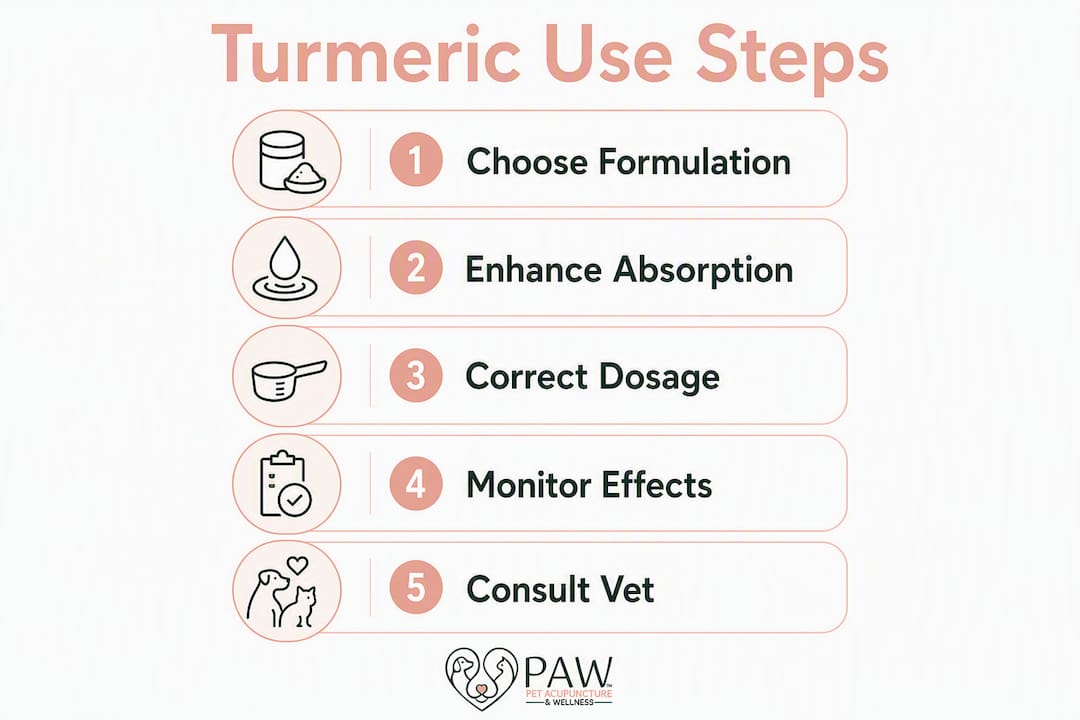
One notable published study examined a turmerosaccharide-rich Curcuma longa extract in twenty dogs with OA. Dogs received the extract orally at 300 mg per 20 kg body weight once daily for 42 days. Both veterinarian and owner assessments showed significant reductions in pain and clinical signs, the extract was well tolerated with no adverse events, and radiographic evaluation showed no structural deterioration. A separate glucosamine/chondroitin group served as the comparator. That is a small trial, but the design was rigorous for a canine nutraceutical study.
A broader PMC review of curcumin’s health-promoting properties confirms the anti-inflammatory mechanisms are well established at the molecular level, even when canine-specific powered trials remain scarce.
Strengths and limitations of the current evidence:
- ✓ Strong mechanistic support: curcumin inhibits inflammatory cytokines and prostaglandins relevant to OA
- ✓ Owner-reported pain score improvements and gait improvements documented in some canine trials
- ✓ Good safety profile in published canine studies when used at appropriate doses
- ✗ Most canine trials use small sample sizes (often under 30 dogs)
- ✗ Many studies use multi-ingredient formulas, making it hard to attribute benefit to curcumin alone
- ✗ Clinical evidence is described as directionally positive but underpowered and inconsistent across formulations
The bottom line: curcumin is not a proven standalone treatment for canine OA, but the evidence supports its use as one component of a supervised, multimodal plan.
Why curcumin is hard to absorb and how to fix it
This is the section most articles skip over, and it is the most important one. Unenhanced oral curcumin has extremely low bioavailability in dogs. The reasons are rapid intestinal metabolism, rapid hepatic metabolism, and poor water solubility. A dog can swallow a large dose of plain turmeric powder and absorb almost none of it systemically.
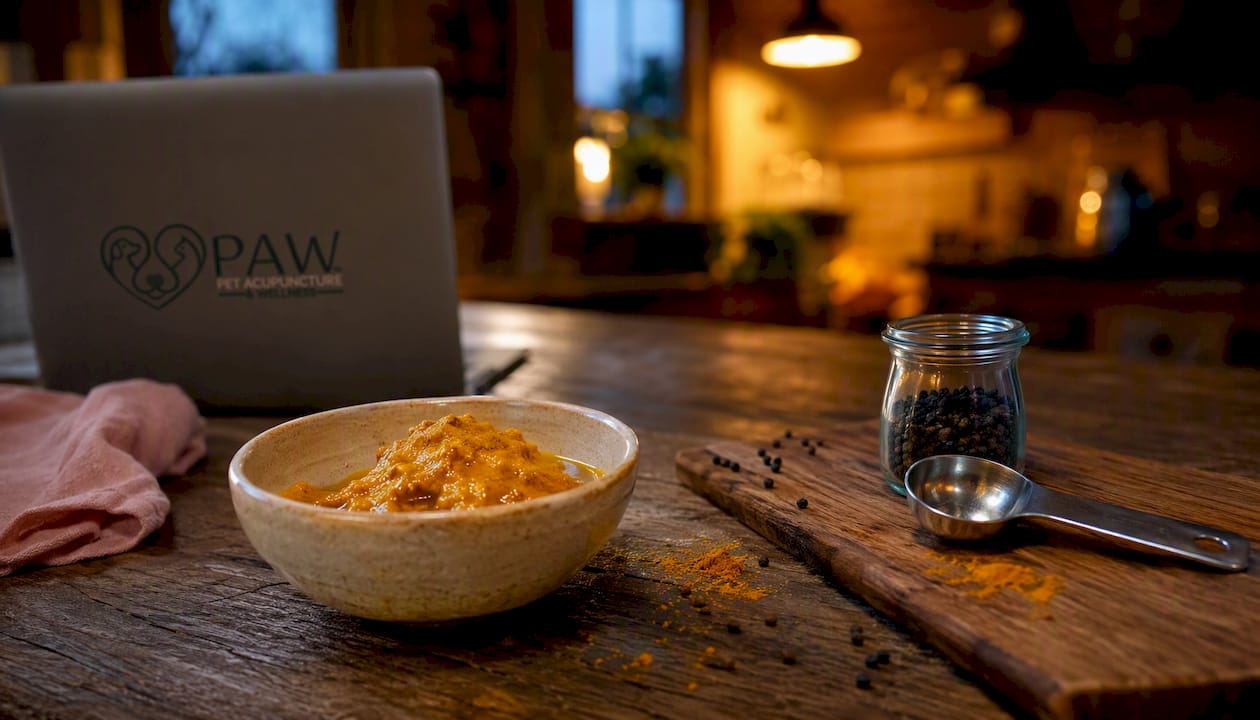
Three proven strategies change that picture:
1. Piperine co-administration
Piperine, the alkaloid in black pepper, inhibits intestinal and hepatic metabolism of curcumin, dramatically increasing how much reaches circulation. The practical guideline is 20 mg of piperine per 1,000 mg of curcumin, given together. The catch: piperine is a broad CYP3A4 and UGT enzyme inhibitor. That means it can raise blood levels of other drugs your dog is metabolizing on those pathways, including some NSAIDs, anticonvulsants, and corticosteroids.
2. Dietary fat co-administration
Curcumin is fat-soluble. Giving it alongside coconut oil, MCT oil, or fish oil improves passive absorption through the gut wall. This is the principle behind golden paste. Fat pairing is gentler on drug interactions than piperine, though the absorption boost is generally more modest.
3. Phospholipid phytosome or liposomal carriers
Phospholipid-complexed curcumin (phytosome/Meriva-style) achieves markedly better absorption without CYP3A4 inhibition. This makes it the preferred choice when your dog is on multiple hepatic-metabolized medications. Certain Curcuma longa extracts, including turmerosaccharide-rich fractions and phytosome complexes, show distinct delivery advantages over plain curcumin powder.
Pro Tip: If your dog takes NSAIDs, anticonvulsants, or any medication processed by the liver, choose a phytosome or liposomal curcumin product rather than a piperine-based one. Bring the product label to your vet appointment so they can review the piperine content before you start.
How much curcumin should you give your dog?
Dosing depends almost entirely on the formulation. A raw turmeric dose and a 95% curcuminoid phytosome extract are not interchangeable by weight. Clinical reports commonly reference 15–20 mg/kg/day of curcumin for medium-to-large dogs when using piperine-enhanced or phytosome formulations, though product-specific instructions should always guide final decisions.
| Form | Typical Daily Dose | Notes |
|---|---|---|
| 95% curcuminoid extract + piperine | 15–20 mg/kg curcumin | Split into two doses; give with a meal containing fat |
| Phytosome/phospholipid complex | Follow product label (often lower mg needed) | Preferred for dogs on multiple medications |
| Golden paste (DIY) | 1/4 tsp per 10 lbs body weight, twice daily | Includes fat + black pepper; lower curcumin concentration |
| Soft chews with curcumin | Per manufacturer’s weight chart | Verify declared curcumin mg and bioavailability enhancer |
Starting protocol:
- Begin at half the target dose for the first 7–10 days to let your dog’s digestive system adjust.
- Split the daily dose into two servings (morning and evening) for more consistent plasma levels.
- Always give with food that contains some fat, even when using an enhanced extract.
- Increase to the full dose only if your dog tolerates the lower amount without digestive upset.
A few practical notes on product forms:
- Concentrated 95% curcuminoid extracts give you the most control over actual curcumin intake and are easiest to dose by weight.
- Phytosome complexes are worth the slightly higher cost for senior dogs on complex medication regimens.
- Soft chews are convenient and palatable, but verify the curcumin mg per chew rather than relying on “turmeric” listed as a secondary ingredient.
- DIY golden paste is a reasonable starting point for owners who want a whole-food approach, but the curcumin concentration is variable and lower than standardized extracts.
Safety, side effects, and drug interactions to know before you start
Turmeric is generally well tolerated in healthy dogs at appropriate doses, but several situations require a veterinarian’s sign-off before you begin.
Contraindications — do not use turmeric without veterinary guidance if your dog has:
- Gallstones or gallbladder disease (turmeric stimulates bile production and can worsen these conditions)
- Bile duct obstruction
- A history of oxalate kidney stones (turmeric contains soluble oxalates)
- Active liver disease
- Pregnancy or nursing
Drug interactions to discuss with your vet:
Piperine’s CYP3A4 and UGT inhibition is the primary concern. It can raise blood levels of drugs metabolized on those pathways, including certain NSAIDs, anticonvulsants, and corticosteroids. Curcumin itself also has mild antiplatelet effects, so dogs on anticoagulants (warfarin, clopidogrel) need monitoring. For a detailed breakdown of how herbal supplements interact with prescription medications, the herbal interactions guide from Pet Acupuncture & Wellness covers these pathways in practical terms.
Monitoring checklist for owners starting turmeric:
- Schedule a baseline vet consult and bring a complete list of current medications and supplements.
- Note your dog’s current stool consistency, appetite, and energy level before starting.
- Watch for loose stools, vomiting, or reduced appetite in the first two weeks.
- Watch for any signs of unusual bruising, bleeding gums, or blood in urine or stool.
- Watch for jaundice signs: yellowing of the eyes or gums, dark urine, lethargy.
- For long-term use (beyond 8–12 weeks), ask your vet about a follow-up blood panel to check liver values.
This article provides general information, not veterinary medical advice. Always confirm supplement choices with your veterinarian for your dog’s specific health situation.
How to actually give turmeric to your dog
Getting curcumin into a dog consistently is half the battle. Here are the most practical methods, from simplest to most hands-on.
Option 1: Use a vet-approved commercial supplement
Choose a product with a declared curcumin mg per serving, a stated bioavailability enhancer, and third-party testing. Give it with a meal that contains fat (a drizzle of fish oil or a spoonful of coconut oil works well). This is the easiest route for consistent dosing.
Option 2: Capsule hidden in food
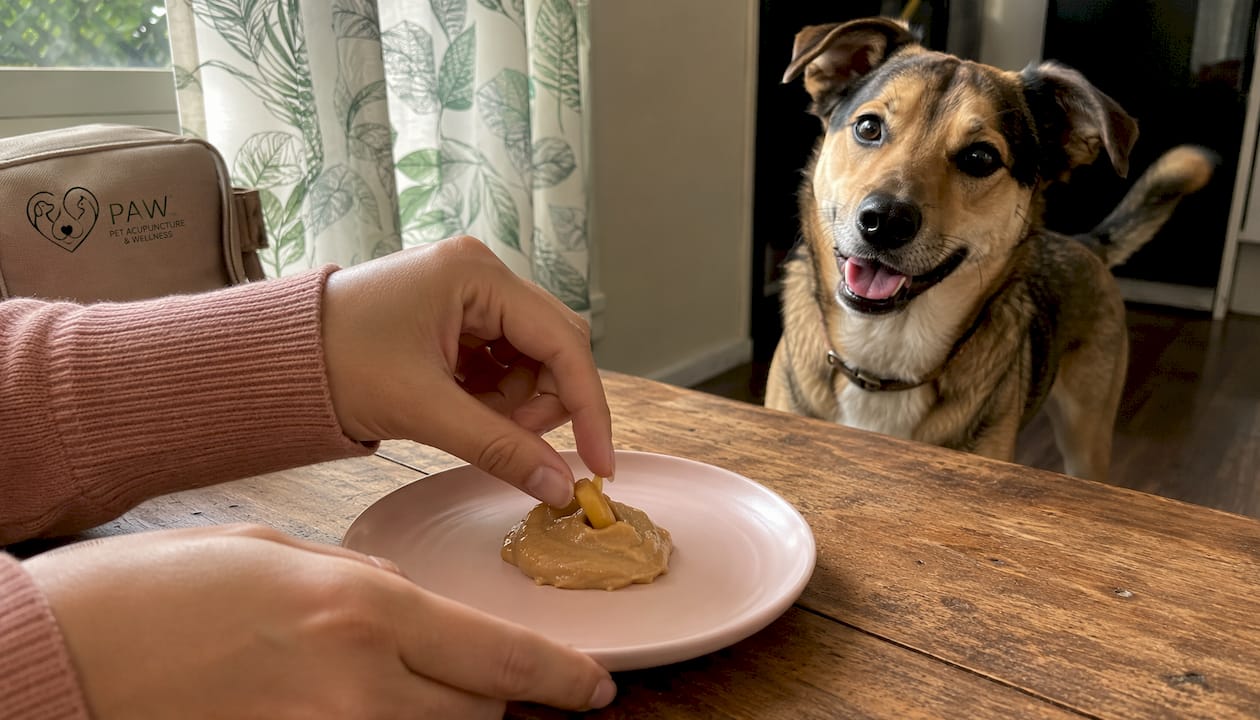
If your dog accepts capsules, hide them in a small amount of peanut butter, cream cheese, or a soft treat. Give the capsule with a fatty meal. This works well for dogs who would otherwise detect and reject a powder mixed into their food.
Option 3: Golden paste (DIY)
A basic golden paste preparation:
- Combine 1/2 cup turmeric powder with 1 cup water in a small saucepan.
- Stir over low heat for 7–10 minutes until a thick paste forms.
- Remove from heat and stir in 1/3 cup coconut oil (or MCT oil) and 1 1/2 teaspoons freshly ground black pepper.
- Cool completely, then store in a sealed glass jar in the refrigerator for up to two weeks.
- Start with 1/4 teaspoon per 10 lbs of body weight, twice daily, mixed into food.
Option 4: Powder mixed with oil and broth
For dogs who reject paste, mix a small amount of curcumin powder with a teaspoon of fish oil and a tablespoon of low-sodium bone broth. Pour it over their regular food. The fat from the oil and the palatability of the broth usually win over even picky eaters.
Palatability tips for reluctant dogs:
- Warm food slightly before adding the supplement — heat releases aromas that mask the turmeric’s bitterness.
- Start with a very small amount (one-quarter of the target dose) and increase gradually over a week.
- Mixing into wet food or a food topper works better than dry kibble for masking the flavor.
- If your dog consistently refuses, a soft chew formulation is worth trying since the flavoring is designed to appeal to dogs.
How to choose a quality curcumin product for your dog
The supplement market for pets is largely unregulated, which means product quality varies widely. These are the markers of a product worth buying.
What to look for on the label:
- Standardized curcumin percentage: 95% curcuminoids is the benchmark for therapeutic extracts.
- Declared bioavailability enhancer: piperine with a stated mg amount, or a named phytosome/liposomal delivery system.
- Dose per serving in mg: not just “turmeric” as an ingredient, but actual curcumin mg per serving so you can calculate a weight-based dose.
- Third-party testing or Certificate of Analysis (COA): confirms potency and screens for heavy metals and contaminants.
- Clear canine dosing instructions: products designed for dogs should include weight-based guidance.
- Extract type specified: products that name the extract (turmerosaccharide-rich fraction, Meriva phytosome, etc.) are more transparent than generic “turmeric extract.” Specific extract types have distinct therapeutic profiles and delivery characteristics.
Red flags to avoid:
- Turmeric listed near the end of a long ingredient list (indicates trace inclusion)
- No bioavailability enhancer declared anywhere on the label
- Proprietary blends that hide individual ingredient amounts
- No manufacturer contact information or third-party test results available
- Any product with a history of heavy metal contamination (turmeric from some regions has tested positive for lead)
Label math: To check whether a product delivers a therapeutic dose, divide the curcumin mg per serving by your dog’s weight in kg. A 30 kg dog at 15 mg/kg needs 450 mg of curcumin per day. If a soft chew delivers 50 mg per chew, that dog needs nine chews daily, which is likely impractical and expensive. A concentrated extract at 500 mg per capsule is far more efficient for larger dogs.
For a broader look at how to evaluate herbal supplements for dogs, including safety considerations when combining them with prescription medications, Pet Acupuncture & Wellness has a vet-reviewed guide covering the key questions to ask.
When will you see results, and when should you call the vet?
Curcumin is not a fast-acting pain reliever the way an NSAID is. It works through gradual modulation of inflammatory pathways, and the timeline reflects that.
Realistic timeline:
- Weeks 1–3: Subclinical changes may be occurring, but visible improvement is unlikely this early. This is the adjustment and tolerance phase.
- Weeks 4–8: Most owners who see benefit notice it here. Look for easier morning movement, more willingness to use stairs, or a longer comfortable walk. Clinical studies using enhanced formulations have documented owner-reported improvements in this window.
- Weeks 8–10: Peak benefit in some studies. If your dog is going to respond well, you should have a clear sense of it by now.
What to track:
- Ease of rising from rest (especially first thing in the morning)
- Willingness to climb stairs or jump onto furniture
- Duration and comfort on walks
- Playfulness and engagement compared to baseline
- Any owner-observation pain score you can document consistently
When to stop and call your vet:
- Worsening lameness or new limping at any point
- New systemic signs: lethargy, appetite loss, vomiting, or jaundice
- No meaningful improvement after a consistent 8–12 week trial with a properly dosed, bioavailability-enhanced product
- Any sign of gastrointestinal distress that does not resolve within a few days of starting
If curcumin alone is not moving the needle after a fair trial, that is not a failure — it is information. It usually means your dog needs a more comprehensive pain management plan, which may include prescription analgesics, acupuncture for arthritis, physical rehabilitation, or a combination.
How turmeric fits into a complete arthritis plan for your dog
Curcumin works best when it is one piece of a larger strategy. Veterinarians who specialize in integrative care view it as a useful adjunct, not a standalone solution, particularly for dogs with moderate-to-severe OA. The multimodal approach that most integrative vets recommend includes:
- Weight management: reducing load on arthritic joints is often the single highest-impact intervention
- Omega-3 fatty acids (EPA/DHA): well-supported anti-inflammatory effect with a strong evidence base in dogs
- Physical rehabilitation: targeted exercises, hydrotherapy, and therapeutic massage to maintain muscle mass and joint range of motion
- Acupuncture and laser therapy: shown to reduce pain signaling and support Qi flow along affected meridians in Traditional Chinese Veterinary Medicine
- Joint nutraceuticals: curcumin, glucosamine, chondroitin, and green-lipped mussel, used in combination
- NSAIDs or other prescription analgesics: when pain is significant, these remain the most reliable pharmacological option and should not be delayed in favor of supplements alone
Pet Acupuncture & Wellness coordinates all of these elements in a single in-home visit, which matters for senior or arthritic dogs who find car travel painful and stressful. An in-home integrative consult can assess your dog’s current pain level, review their medication list for interaction risks, and build a supplement and therapy plan tailored to their specific joints and health history.
When to book a consult rather than going it alone:
- Your dog is on NSAIDs, anticonvulsants, or any hepatic-metabolized medication
- Pain appears to be progressing despite current management
- You want guided supplementation with monitoring rather than trial and error
- Your dog has not been formally assessed for OA severity
Pro Tip: Bring your dog’s most recent bloodwork and a complete medication list to any integrative consult. It takes five minutes to prepare and allows the veterinarian to recommend the safest curcumin formulation from the start, rather than adjusting after the fact.
Key Takeaways
Curcumin helps dogs with arthritis only when it reaches systemic circulation, which requires a bioavailability enhancer (piperine at 20 mg per 1,000 mg curcumin, or a phytosome/liposomal carrier) and fat co-administration.
| Point | Details |
|---|---|
| Curcumin, not raw turmeric | Curcumin is the active compound; raw turmeric powder delivers too little to be therapeutic. |
| Bioavailability is non-negotiable | Raw turmeric powder delivers less than 1% absorption; a bioavailability enhancer is required for therapeutic effect. |
| Safety check first | Contraindicated in dogs with gallbladder disease, oxalate stones, or liver disease; disclose to your vet before starting. |
| Expect 4–8 weeks for results | Visible joint improvement typically appears between weeks 4 and 8 with consistent, enhanced-formulation dosing. |
| Pet Acupuncture & Wellness | Offers in-home integrative consults in South Tampa to supervise curcumin use alongside acupuncture, rehab, and herbal therapy. |
A note from the clinic on real-world expectations
Curcumin tends to show up most clearly in the dogs we see with mild-to-moderate stiffness: the senior Labrador who hesitates at the bottom of the stairs, the older Shepherd who is slower to rise in the morning but otherwise moves reasonably well. In those cases, a well-formulated curcumin supplement, combined with omega-3s and weight management, often produces a noticeable shift in comfort over six to eight weeks. Owners describe it as their dog “finding their legs again” in the morning.
Where curcumin rarely suffices on its own is in dogs with advanced OA, significant joint effusion, or pain that is already disrupting sleep and appetite. In those situations, delaying prescription pain control in favor of supplements alone is not kind to the dog. The honest answer is that curcumin and acupuncture can reduce the dose of NSAIDs needed, and that is genuinely valuable, but they are partners to conventional care, not replacements for it.
The question we hear most often is: “Is it safe to just try it?” For a healthy dog with no contraindications and no complex medications, a properly dosed, third-party tested phytosome or piperine-enhanced curcumin product is a reasonable thing to try. The risk is low. The potential benefit is real. The only mistake is buying a trace-dose turmeric product and expecting it to do the work of a therapeutic extract.
Pet Acupuncture & Wellness can help you build the right plan
Managing your dog’s arthritis at home can feel like piecing together a puzzle without the full picture. Pet Acupuncture & Wellness brings the full picture to you, literally, with in-home integrative consultations in South Tampa that take the stress of travel off your arthritic dog entirely.
A visit covers pain assessment, a review of your dog’s current medications for supplement interaction risks, and a personalized plan that may include curcumin guidance, in-home acupuncture, physical rehabilitation, laser therapy, and herbal therapy, all coordinated under one veterinarian who knows your dog’s full history. For owners who want supervised herbal therapy and supplement planning rather than guesswork, this is the most direct route to getting it right. To schedule an in-home integrative consult for your dog, visit pawvetpractice.com or call to book directly.
Useful sources
These are the primary references cited throughout this article. Bringing relevant studies to your vet appointment gives you a focused, productive conversation rather than a general one.
- Protective effects of turmerosaccharides-rich extract of Curcuma longa L. in osteoarthritic dogs (PubMed) — Randomized canine OA trial showing significant pain reduction with a C. longa extract at 300 mg/20 kg/day over 42 days.
- Turmeric and Curcumin: Health-Promoting Properties (PMC) — Broad review of curcumin’s anti-inflammatory mechanisms and bioavailability challenges.
- Frontiers in Veterinary Science: Curcuma longa extract research — Covers extract-specific delivery differences, including turmerosaccharide-rich fractions and phytosome complexes.
- KibbleIQ: Turmeric in dog food, bioavailability, and evidence gap — Practical overview of why trace kibble inclusions are not therapeutic and how piperine affects drug metabolism.
- VitaDog: Turmeric for dogs, dosing and safety — Weight-based dosing guidance and clinical context for enhanced curcumin formulations.
- VitaDog: Can dogs have turmeric? — Contraindications including gallbladder disease, bile duct obstruction, and oxalate stones.
- Watts Pet: Turmeric ingredient profile and bioavailability — Explains typical trace inclusion levels in pet food and why they do not reach therapeutic thresholds.
- MAYA: Turmeric and curcumin for dogs, evidence and bioavailability — Covers the less-than-1% absorption baseline, the piperine ratio guideline, and phytosome advantages.
Bring the PubMed and Frontiers citations to your vet for a focused discussion about whether a curcumin trial is appropriate for your dog’s specific OA severity and medication profile.
FAQ
How much turmeric do I give my dog for arthritis?
Dosing depends on the formulation. For piperine-enhanced or phytosome curcumin extracts, clinical guidance commonly references 15–20 mg of curcumin per kg of body weight per day, split into two doses and given with food containing fat. Always follow the product’s weight-based chart and confirm the dose with your veterinarian.
Is it okay to give my dog turmeric every day?
Yes, for most healthy dogs without contraindications, daily use of a properly dosed, bioavailability-enhanced curcumin supplement is considered safe. Dogs with gallbladder disease, oxalate kidney stones, liver disease, or those on hepatic-metabolized medications need veterinary clearance first.
What is the best natural remedy for arthritis in dogs?
No single supplement outperforms a multimodal plan. Omega-3 fatty acids (EPA/DHA) have the strongest evidence base among nutraceuticals; curcumin is a well-supported adjunct when given in an enhanced formulation. Combined with weight management, physical rehabilitation, and acupuncture, these approaches can meaningfully reduce pain and improve mobility.
How do I give turmeric to my dog for pain?
The most reliable method is a standardized 95% curcuminoid extract paired with piperine (20 mg per 1,000 mg curcumin) or a phytosome/liposomal product, given with a meal that contains fat. Golden paste (turmeric powder cooked with coconut oil and black pepper) is a practical DIY option, though it delivers lower and less consistent curcumin levels than a standardized extract.