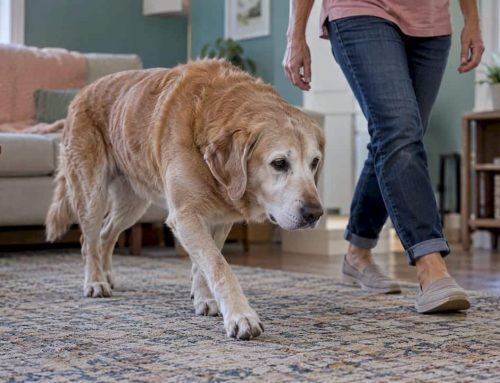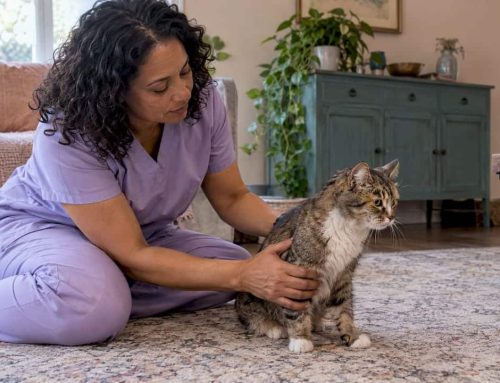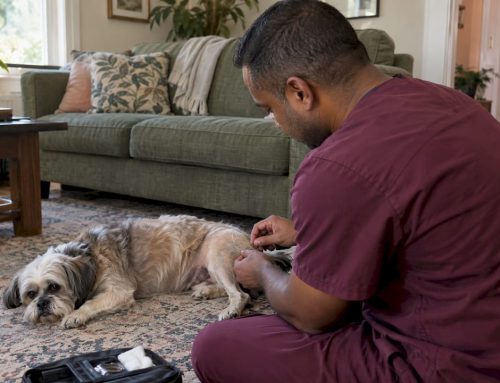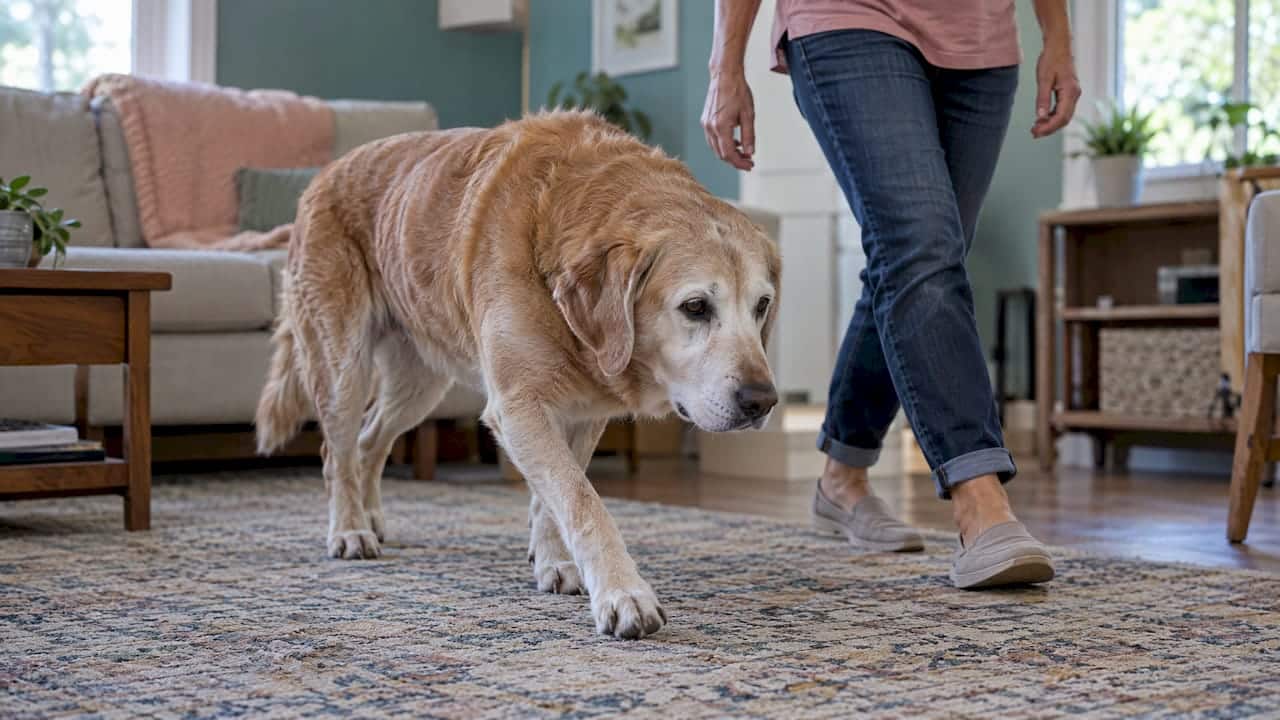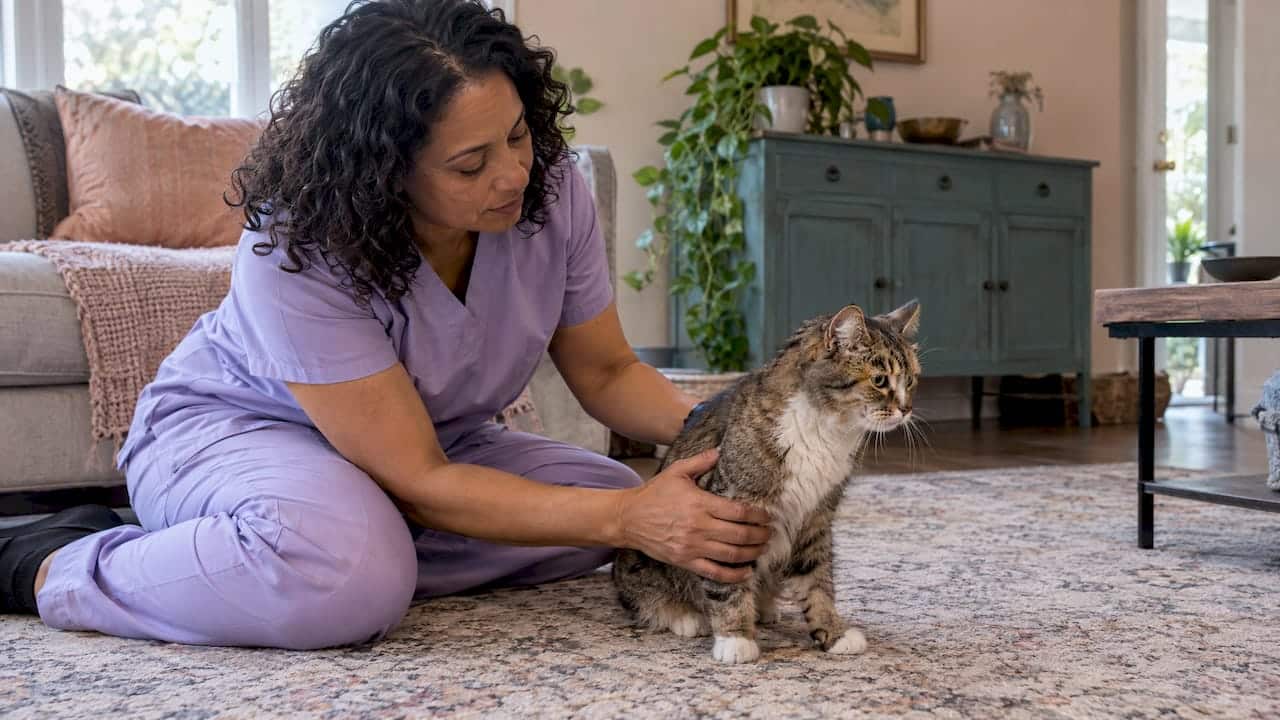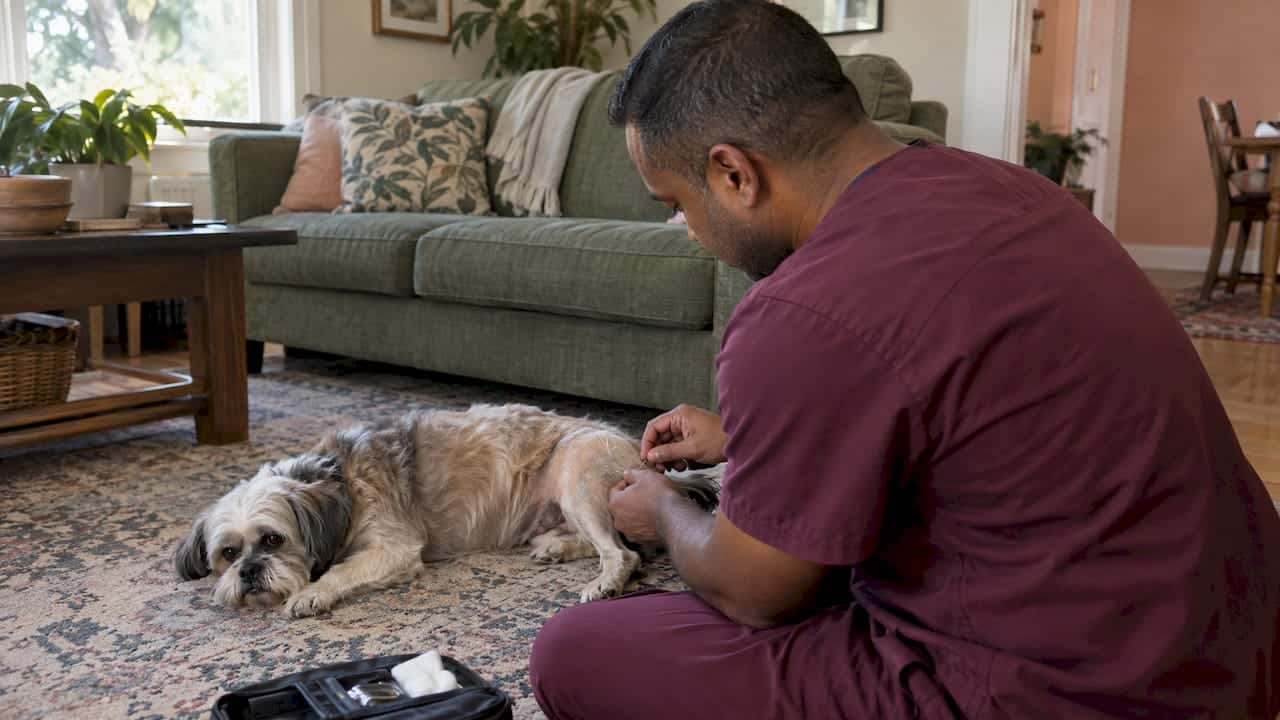
Rehab for a luxating patella works best when it is guided by your veterinarian, matched to your dog’s grade and done in the place your dog feels safest. For mild cases it can be the main treatment, and after surgery it helps rebuild the muscle that protects the knee. In South Tampa, we bring that rehab to your living room, so a small, anxious or aging dog never has to ride in a car to get it.
TL;DR
- A luxating patella is a kneecap that slips out of its groove. It is graded I to IV, and the grade decides whether rehab alone is enough or surgery should be discussed.
- Rehab without surgery is generally used for grade I and for grade II dogs with few signs. It centers on pain control, a lean weight and strengthening the thigh muscles.
- After surgery, expect restricted activity for roughly 6 to 8 weeks or longer, with gentle, vet-approved exercises layered in.
- More limping, new pain or a dog who stops using the leg means stop and call your veterinarian.
- Our mobile team does acupuncture, laser and at-home rehabilitation alongside your regular veterinarian’s care.
Table of Contents
- What a luxating patella is, and why the grade matters
- Rehab without surgery: who it suits
- What conservative rehab includes
- Rehab after luxating patella surgery
- A simple home setup that protects the knee
- When to stop and call your veterinarian
- How we bring rehab to your door
- Our perspective
- FAQ
- Sources
What a luxating patella is, and why the grade matters
The patella is the kneecap. In a healthy knee it glides up and down in a groove at the end of the thigh bone. In a luxating patella it slips out of that groove. VCA Animal Hospitals describes four grades:
- Grade I: the kneecap only moves out when someone pushes it, and it returns by itself.
- Grade II: it pops out on its own now and then.
- Grade III: it is out most of the time, but you can push it back.
- Grade IV: it stays out permanently.
You may have seen the classic sign: your dog skips a few steps, lifts a back leg, then suddenly walks normally again. About half of affected dogs have both knees involved, according to the same VCA page.
The grade is a snapshot, not a life sentence. A review in Today’s Veterinary Practice notes that a grade II knee can progress to grade III months or years later, which is why regular rechecks matter.
Rehab without surgery: who it suits
A 2026 article in Today’s Veterinary Nurse states that conservative management as the primary treatment is indicated only for grade 1 and for grade 2 dogs without signs. A VIN summary adds that a dog of any grade with frequent or persistent lameness may be recommended for surgery, and that dogs with grade 3 or 4 most often benefit from it.
So the first step is always an exam by your veterinarian to confirm the grade and whether the knee is painful. If you have a senior dog or one that panics in the waiting room, we can work from that diagnosis in your home and coordinate with your regular veterinarian.
What conservative rehab includes
A 2018 review in PMC lists the usual pillars: pain control, rehabilitation that strengthens the quadriceps (the big muscle at the front of the thigh), weight control, and massage or hydrotherapy for comfort.
Pain control and comfort
A painful knee changes how your dog moves, and that strains the back, hips and the other leg. The Today’s Veterinary Nurse rehabilitation article describes pain medication and nutraceuticals, cold packs on the knee, and other tools such as acupuncture and laser therapy. Your veterinarian chooses any medication and dose.
This is where integrative care fits naturally. Our practice offers acupuncture, electroacupuncture, laser therapy, herbal therapy and Chinese veterinary medicine for chronic pain, all delivered at home. You can see our published fees on the cost of services page.
Weight management
Extra weight loads the knee on every step. The 2026 Today’s Veterinary Nurse piece calls weight management a main focus for exactly this reason. Even a modest, steady loss can make a skipping dog move more easily. We also offer food therapy for dogs who need a diet tailored to them.
Strengthening exercises
The goal is to build the muscles that hold the kneecap in line. Exercises described by the rehab literature include:
- Sit-to-stand repetitions, slow and square, with the dog’s back end straight.
- Standing on a slight incline, and walking uphill.
- Side stepping.
- Weight shifts while standing.
- Swimming or underwater treadmill work, with water between the knee and mid-thigh height.
These come from the Maddox article, which also advises good traction on the floor. On a slick tile floor, a yoga mat or runner can help. If your dog likes water, see our guide to swimming therapy for dogs.
The same source says dogs treated this way often attend rehab one to three times a week while owners repeat the exercises daily at home, sometimes for a few months. That daily part is why home-based rehab works well: the exercises are taught on the very floors and stairs your dog lives with.
A realistic expectation
One conservative protocol notes that rehab may not reverse the instability itself, but it can improve function and help prevent decline. That is a fair and hopeful goal: a dog who moves more comfortably and has fewer skipping episodes.
Rehab after luxating patella surgery
If your veterinarian or surgeon recommends surgery, rehab becomes part of the recovery plan. A 2018 PMC review says activity is restricted for 6 to 8 weeks, with short slow leash walks at first, then range-of-motion, strength and balance work to speed recovery and prevent muscle loss. Radiographs at 6 to 8 weeks check bone healing before normal activity resumes.
Timing varies. The 2026 Today’s Veterinary Nurse article says running, jumping and off-leash play must wait until a full assessment, typically with radiographs at 8 to 12 weeks, and warns that rehab pushed too hard too soon can disrupt scar tissue and lead to the kneecap slipping again.
A sample of what a surgeon’s home plan may look like
One post-op sheet from a Georgia surgical practice gives a useful picture of the pacing:
- Sit-to-stand, 5 repetitions, 2 to 3 times a day.
- Weight-shifting sways.
- Slow leash walks, lengthened to 10 to 15 minutes, 2 to 3 times a day.
- Icing for 10 to 15 minutes, 2 to 3 times a day, on sore days.
- If your dog gets sorer or lamer after adding an exercise, cut that activity by 50% for 3 to 7 days before building up again.
Use it as an illustration, not a prescription. Your dog’s surgeon sets the plan. A 2024 study in PMC found post-operative pain and inflammation after medial patellar luxation surgery resolved within 7 to 14 days in all the rehabilitation groups it compared.
What the research says about progress
A 2026 review in Frontiers in Veterinary Science proposes moving through three phases: first activating the muscles and stabilizing the kneecap, then restoring coordination across the joints, then retraining gait. It stresses that progress should follow your dog’s pain, weight bearing and gait rather than a fixed calendar. That fits how we work: we adjust to the dog in front of us.

For other post-surgery guidance, our pages on home exercises after surgery and post-surgery acupuncture go deeper.
A simple home setup that protects the knee
You do not need special equipment to make a real difference:
- Put rugs or runners on slick floors so your dog has traction.
- Block stairs and furniture jumps, since limits on running, jumping, stair climbing and sharp turns are standard in rehab plans, per Veterinary Practice News.
- Use a leash for every bathroom trip during recovery.
- Keep a short log: how many skips, how well your dog gets up in the morning, how long a walk lasts.
That log helps your veterinarian and us see whether the plan is working.
When to stop and call your veterinarian
If your dog becomes more lame or seems in more pain during rehab, stop the exercises and have your veterinarian re-examine the knee. The Today’s Veterinary Nurse rehab article says this is needed to rule out other problems such as a cruciate ligament rupture or meniscus damage. After surgery, call promptly about swelling, discharge, or a dog who suddenly won’t bear weight rather than waiting to see if it passes. If you are unsure, a telemedicine visit can help you decide what to do next.
How we bring rehab to your door

Many dogs with kneecap trouble are small, older or nervous. A car ride and a clinic waiting room can leave them shaking, and that stress makes it hard to learn exercises. We practice mobile veterinary care in South Tampa, so your dog is treated at home, on familiar floors, with you beside them.
Our rehabilitation therapy is paired with acupuncture, laser and herbal options, and our plans are tailored to each pet’s needs and home. Published fees include at-home rehabilitation packages at 85-918 USD, laser treatments at 45-120 USD per treatment, electroacupuncture at 30 USD, and an initial assessment and acupuncture with a technician from 430 USD, plus a 60 USD technician mobile fee. We work alongside your regular veterinarian to complement their care.
If your dog is skipping, limping or recovering from knee surgery, you can book an at-home visit with us.
Our perspective
A kneecap problem is rarely only about the kneecap. When a dog guards one back leg, the whole body compensates, and we often think of that in Traditional Chinese Veterinary Medicine terms: blocked Qi along the meridians, the body’s highway system, that shows up as stiffness and discomfort elsewhere.
We believe the home is the best place to treat that. A calm dog moves naturally, so we can see how your pet really rises, turns and climbs, and we can teach you exercises on your own floors. Acupuncture, laser and herbal support aim to keep your dog comfortable while strengthening work rebuilds the muscle around the knee.
Our care complements your regular veterinarian’s diagnosis and surgical decisions. It is designed to make recovery gentler for both of you.
Pet Acupuncture & Wellness
FAQ
Can a luxating patella heal with rehab alone?
Rehab alone is usually considered for grade I and for grade II dogs with few signs. It aims to reduce symptoms and improve function, and it may not correct the kneecap itself. Your veterinarian can tell you whether your dog is a candidate.
How long is recovery from luxating patella surgery?
Most sources describe 6 to 8 weeks of restricted activity, and some surgeons keep restrictions longer, with recheck radiographs at 8 to 12 weeks. Your surgeon decides when running and jumping are safe again.
Is walking good for a dog with a luxating patella?
Walks and swimming are generally encouraged, while high-impact exercise is usually discouraged, as one veterinary Q&A explains. Keep walks on a leash, on good footing, and ask your veterinarian how long they should be.
Does the evidence prove rehab works after surgery?
Most studies on rehab after medial patellar luxation surgery are small case series, according to the 2026 Frontiers review, so plans are individualized. Rehab remains a core part of recovery because it targets pain and muscle loss, which is why your dog’s plan should follow their own progress.
Sources
- Luxating Patella in Dogs, VCA Animal Hospitals
- Canine Patellar Luxation: Diagnosis and Treatment Options, Today’s Veterinary Practice
- Looking Closer at Luxating Patellas in Small Animals, Today’s Veterinary Nurse
- Luxating Patellas: Pathology and Treatment Options, Today’s Veterinary Nurse
- VETzInsight, VIN
- Patellar luxation in dogs, PMC
- Post-op instructions, Vetsurgery of Georgia
- Comparative analysis of post-operative rehabilitation, PMC
- Translational rehabilitation strategies for canine medial patellar luxation, PMC
- Rehab first for patellar luxation, Veterinary Practice News
- Managing Luxating Patella in Dogs, Hepper