One minute your dog is wobbling, yelping, or refusing the stairs. The next, you're hearing a new term, IVDD, and trying to make sense of rest instructions, medications, possible surgery, and whether your dog will walk normally again.
That moment feels heavy because it is. Most families I talk with are frightened by how suddenly IVDD can change a dog's mobility. They're also worried about doing the wrong thing. Should they move their dog? Is acupuncture safe? Does it help, or is it just something people try when they're desperate?
There is real reason for hope. Acupuncture for dogs with IVDD isn't just a comfort measure. It's an evidence-based tool veterinarians use to reduce pain, calm inflammation, and support neurologic recovery. It can fit alongside medical management, surgery, rehab, and strict home care. For many dogs, that combination matters.
A Hopeful Path After an IVDD Diagnosis
A lot of IVDD stories begin the same way. A dog who seemed fine the day before suddenly cries when picked up, drags a paw, knuckles over, or can't stand without help. Then everything moves fast. You're trying to remember what the emergency doctor said while watching your dog look confused and uncomfortable.
That's when many owners need two things at once. They need urgency, and they need reassurance. IVDD is serious, but serious doesn't mean hopeless.
Acupuncture often enters the picture when owners want something gentle that still has a medical purpose. That's a reasonable instinct. In a dog with a painful, inflamed spine, we want therapies that support healing without adding more physical strain.
When a dog has IVDD, small improvements matter. A more comfortable posture, a stronger tail wag, less trembling during rest, or the first steady steps back are all meaningful signs.
For some dogs, the early goal is simple. Get pain under control. Help them relax. Make crate rest more tolerable. For others, especially dogs recovering after surgery or those being managed without surgery, the goal is broader. We want better nerve function, safer movement, and a smoother path back to daily life.
Owners also ask a practical question that deserves more attention than it usually gets. Where should treatment happen? If your dog is already painful, weak, or anxious, repeated car trips and clinic handling can be hard on everyone involved. In-home care can remove that layer of strain and make it easier to stay consistent with treatment and monitoring.
As you weigh options, it also helps to keep your dog's day-to-day comfort in focus. Looking at pet quality of life signs that matter at home can help you notice progress that isn't always obvious in the first few days.
Understanding IVDD and Veterinary Acupuncture
IVDD stands for intervertebral disc disease. The simplest way to picture it is a jelly donut. A healthy spinal disc sits between the bones of the spine and acts like a cushion. If that disc degenerates and the center pushes out, it can press on the spinal cord and nearby nerves.
That pressure causes pain, weakness, wobbliness, and in some cases paralysis. Some dogs mainly look sore. Others lose coordination in the rear legs. In the most severe cases, they may lose the ability to walk.

What Acupuncture Actually Means
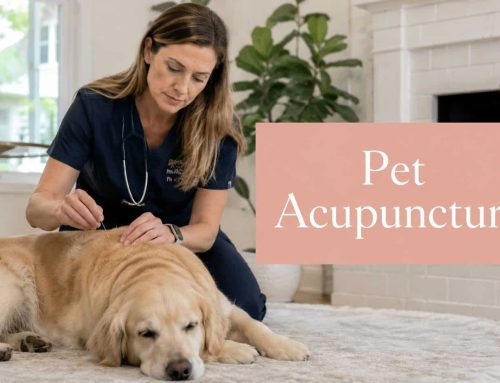
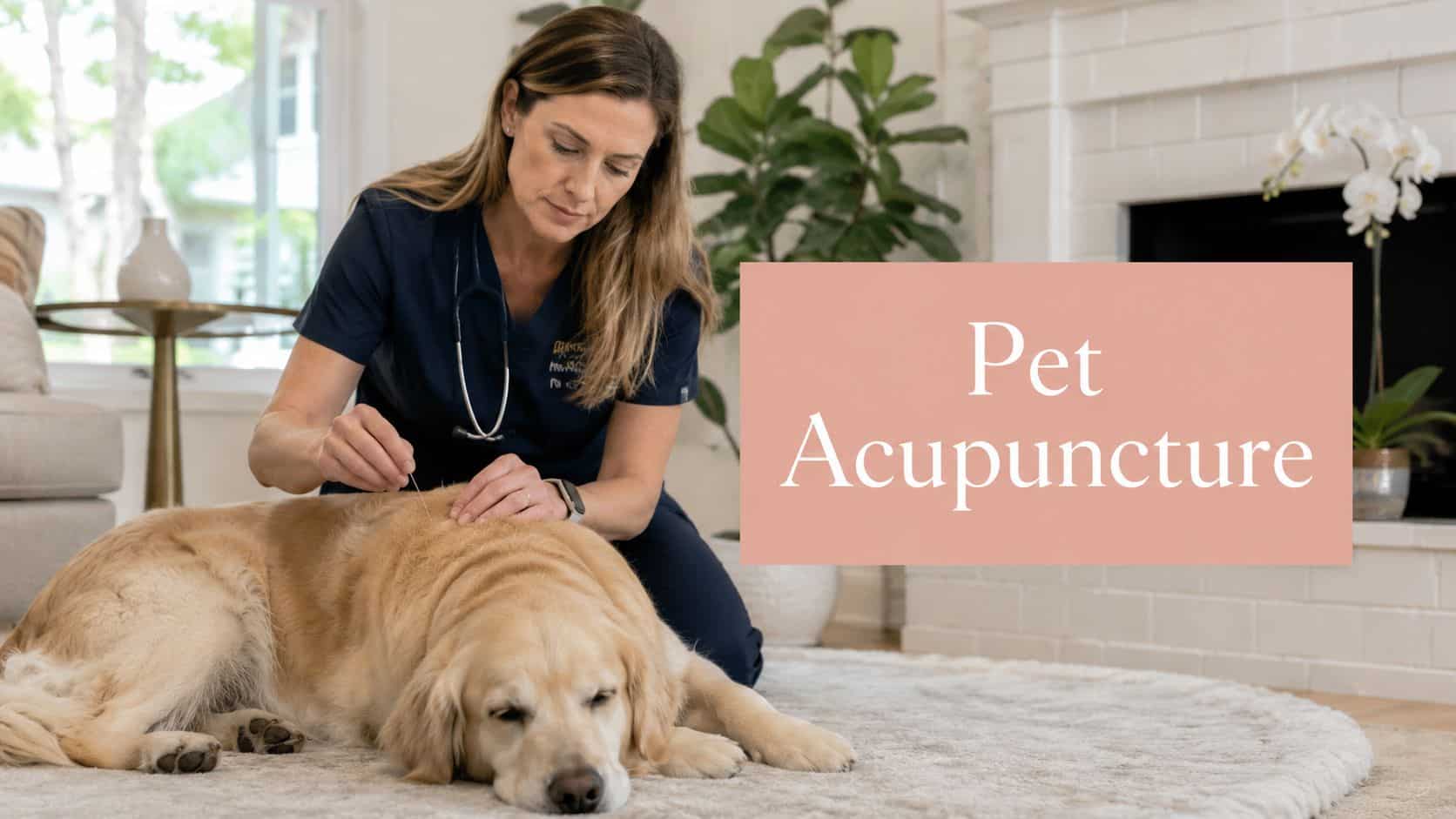
Veterinary acupuncture uses very fine needles placed in specific points chosen for the dog's diagnosis, neurologic status, pain pattern, and overall constitution. Most dogs tolerate the needles better than owners expect. Many relax during treatment, and some get sleepy.
There are a few forms you may hear about:
- Traditional acupuncture involves placing sterile needles in selected points to influence pain pathways, circulation, and nerve signaling.
- Electroacupuncture adds a gentle electrical pulse between certain needles. This gives a stronger, steadier stimulation and is often useful in neurologic cases.
- Aquapuncture involves injecting a small amount of sterile fluid, often something like B12, into an acupuncture point so the stimulation lasts longer.
These aren't interchangeable in every case. A sore but walking dog may need a different plan than a dog with significant weakness or paralysis.
Why Veterinarians Use It For IVDD
Acupuncture can seem mysterious until you put it in plain terms. We're using the body's own signaling systems to calm pain, improve local blood flow, and support recovery in tissues under stress.
That's why it isn't an either-or choice against standard care. In fact, a landmark 2007 randomized controlled trial by Hayashi et al. found that dogs with IVDD who received acupuncture along with standard care walked significantly sooner than dogs receiving standard care alone, which is why this study is still cited so often in veterinary discussions of integrative spinal care, as summarized in this review of the Hayashi trial and IVDD acupuncture care.
If your dog's signs include weakness, wobbliness, or hind-end deficits, it may also help to understand how neurological treatment for dogs is approached in home-based care.
How Acupuncture Promotes Healing in IVDD Dogs
The reason acupuncture helps some IVDD dogs is not magic. It's physiology. We place needles with the goal of changing what the body is doing in that moment, especially around pain signaling, inflammation, and circulation to injured tissues.
A dog with a compressed or inflamed spinal cord doesn't just hurt. That dog may also have a local healing environment that's struggling. Oxygen delivery, tissue metabolism, muscle tension, and nerve signaling can all be affected.

Pain Relief That Isn't Just Sedation
One of the most immediate goals is reducing pain without making the dog groggy. Research discussed in the veterinary literature shows acupuncture stimulates release of endorphins, endogenous opioids, and serotonin, which help reduce pain signal transmission.
In practical terms, owners often notice that their dog settles more comfortably, pants less at rest, resists handling less, and can finally sleep. That matters because a dog in constant pain won't move normally, won't rest soundly, and won't engage as well in rehab.
Practical rule: If your dog seems calmer after treatment, that doesn't mean the session was “just relaxing.” Better relaxation is often a sign that pain has eased.
A useful way to think about it is this. Pain keeps the whole system on alert. Acupuncture helps turn the volume down.
Here's a helpful visual overview from a veterinarian discussing the topic:
Better Conditions For Nerve Repair
The more important question in IVDD is whether acupuncture can help healing, not just comfort. Evidence suggests it can support a healthier metabolic environment in damaged tissues.
After acupuncture for IVDD, dogs showed measurable improvement in cellular energy production, with plasma pyruvate concentrations decreasing from 0.17 to 0.10 mM and a shift in enzyme patterns from LDH5 to LDH1, indicating enhanced aerobic metabolism that supports nerve repair, as described in this open-access veterinary review on acupuncture for intervertebral disc disease.
That sounds technical, so here's the plain-English version:
- Lower pyruvate after treatment suggests the tissue is using energy differently.
- A shift from LDH5 to LDH1 points toward improved aerobic metabolism.
- Improved metabolism means injured cells may be working in a more repair-friendly state.
Why Circulation And Inflammation Matter
When I explain this to owners, I use a garden analogy. If the soil is compacted and dry, the plant struggles even if the roots are still alive. In IVDD, compressed tissues need a better local environment. Acupuncture may help by improving microcirculation and reducing inflammatory pressure around the spinal area.
That doesn't replace crate rest, medication, surgery when needed, or rehab. It supports those treatments by making the body a better place for healing to happen.
Your Dog's Acupuncture Treatment Plan
Most owners feel better once they know what the process looks like. Not because it removes uncertainty, but because it turns a crisis into a plan.
A treatment plan for IVDD is always individualized. A dog with mild pain and normal walking ability needs something different from a dog who is non-ambulatory but still has deep pain sensation. Response to treatment also varies based on timing, severity, rest compliance, medications, and whether surgery was performed.

What The First Visits Usually Involve
The first appointment is usually longer because there's more to review. I want to know when signs started, what imaging or diagnosis has already been done, which medications your dog is taking, whether bladder function is normal, and how your dog manages basic movement at home.
Then I look at:
- Posture and comfort during rest, standing, and assisted movement
- Neurologic function such as paw placement, strength, and response to touch
- Pain pattern including where your dog guards, trembles, or resists
- Home setup because flooring, crate design, and lifting technique all affect recovery
The actual acupuncture session is usually quiet and gentle. Some dogs stand for needle placement, some lie down, and some do better resting against their person on a bed or mat.
How Frequency Usually Changes Over Time
Treatment is usually more frequent early on, especially in an acute flare or the first stage of recovery. As the dog stabilizes, sessions are spaced farther apart. The exact schedule depends on response and neurologic status rather than a one-size-fits-all calendar.
Clinical evidence also gives us an important guide for expectations. Electroacupuncture appears most effective in dogs with Grade 3 to 4 IVDD, meaning paralysis or marked weakness with intact deep pain sensation, and it significantly speeds return to walking compared with medical management alone. Its benefit is less pronounced in Grade 5 cases where deep pain is absent.
That point matters because owners often hear success stories online without knowing the dog's neurologic grade. The same treatment can look very different depending on how much nerve function is still present.
The return of walking isn't the only sign of progress. In some dogs, the earliest gains are subtle and still very encouraging.
Early Signs Owners Can Watch For
Improvement doesn't always arrive in a dramatic leap. It often comes in pieces.
You may notice:
- A stronger tail wag, especially when greeting you or during supported standing.
- Less resistance to being repositioned in bed or crate.
- Improved bladder or bowel control, depending on the original deficits.
- Better paw placement with less knuckling.
- Return of deep pain perception or purposeful movement, when that was reduced but not absent.
If you're wondering how many sessions are common before a pattern becomes clear, this overview of how many acupuncture sessions pets often need can help set expectations without promising a fixed timeline.
Integrating Acupuncture with Conventional IVDD Care
One of the biggest misunderstandings about acupuncture is that it sits outside real medicine. In veterinary neurology and rehab, that's not how we use it. We use it as an adjunct, meaning it supports the primary treatment plan already in place.
If a dog needs surgery, acupuncture doesn't replace surgery. If a dog needs pain medication and strict rest, acupuncture doesn't cancel those out either. The goal is to combine tools that work through different mechanisms.
Where It Fits In Real Cases
For a dog managed medically, acupuncture may help make the resting period more tolerable. Better comfort can mean less muscle guarding, more settled sleep, and easier handling for toileting and nursing care.
For a dog recovering after surgery, acupuncture is often used to support comfort and neurologic recovery while the body heals from both the disc injury and the procedure itself. It can pair well with rehab exercises once the surgeon clears activity progression.
A simple way to think about the integration is this:
- Medication helps control inflammation and pain chemically.
- Surgery removes or relieves compression when needed.
- Rehabilitation rebuilds function through guided movement.
- Acupuncture supports pain modulation, circulation, and nerve recovery alongside the rest.
Why The Combination Often Feels Smoother
Owners sometimes tell me their dog seems more willing to participate in exercises after acupuncture. That makes sense. A dog who is less sore and less tense can often move more normally.
This collaborative mindset is the basis of integrative veterinary care for mobility, pain, and recovery. It isn't about replacing your primary veterinarian. It's about helping the overall plan work better.
A good IVDD plan is coordinated, not competitive. Each member of the care team should be making the next step easier for your dog.
Communication matters here. Your acupuncturist should understand your dog's diagnosis, medications, surgical history if any, and current restrictions. The best outcomes usually come from clear teamwork and realistic goals.
Choosing a Qualified Veterinary Acupuncturist in South Tampa
Credentials matter. If your dog has IVDD, you don't want someone treating “back pain” in a vague way. You want a veterinarian who understands neurologic disease, recognizes red flags, and knows when acupuncture is appropriate, when it needs to be modified, and when the dog needs urgent referral instead.
A Certified Veterinary Acupuncturist, often abbreviated CVA, has formal training in veterinary acupuncture beyond standard veterinary school. That doesn't guarantee a perfect fit, but it's an excellent starting point.

Why Mobile Care Can Be More Than Convenience
For an IVDD dog, the setting matters. A painful dog may tense up during transport, slip getting in or out of the car, vocalize from stress, or arrive too overwhelmed to settle into treatment. That can make a gentle therapy harder than it needs to be.
This is one reason the in-home model deserves more discussion. Broader veterinary stress research indicates that 68% of dogs show increased stress hormones in a clinic setting, and while direct IVDD comparison studies are still pending, that clinic stress may work against comfort and healing in a dog recovering from spinal injury.
The practical advantages of home care are easy to see:
- Less physical strain from lifting, carrying, and car travel
- Fewer stress triggers such as barking dogs, slippery floors, and unfamiliar smells
- More accurate observation of how your dog moves within their own home environment
- Better follow-through because nursing care, crate setup, and exercise restrictions can be reviewed on the spot
What To Ask Before You Book
When choosing someone local, ask direct questions.
- Training and certification. Are they a veterinarian, and do they hold formal acupuncture certification?
- Experience with neurologic patients. Have they treated IVDD cases across different grades of severity?
- Approach to collaboration. Will they work with your regular veterinarian or surgeon?
- House-call logistics. Can they provide in-home treatment in South Tampa specifically?
You can also look at what certified veterinary acupuncturist credentials mean for pet owners before deciding.
A good practitioner should be calm, clear, and honest. They shouldn't promise miracles. They should explain what they're seeing, what progress might look like, and when expectations need to stay guarded.
Frequently Asked Questions About Acupuncture for IVDD
Is Acupuncture Safe For My Dog
In the hands of a trained veterinarian, acupuncture is generally very well tolerated. The needles are very fine, and many dogs relax during treatment. Mild sleepiness after a session can happen. Some dogs seem looser or a little tired later that day. Serious problems are uncommon when treatment is done properly and matched to the dog's condition.
How Soon Will I See Results
Some owners notice changes in comfort, posture, or restfulness quickly. Neurologic recovery usually takes longer and tends to happen in stages. A dog may first seem calmer, then show better paw placement, then start taking stronger assisted steps. That's why we track small functional gains rather than waiting only for a dramatic milestone.
Does Acupuncture Replace Surgery Or Medication
No. If your dog needs urgent imaging, surgery, pain control, bladder support, or strict confinement, those remain essential. Acupuncture works best as part of a broader IVDD plan. It supports recovery, but it doesn't erase the need for proper diagnosis and case management.
What About Long Term Prevention In High Risk Breeds
This is an especially good question for Dachshunds, French Bulldogs, Corgis, and other dogs who may face repeat episodes. Owners often hear vague advice about maintenance sessions, but there is emerging discussion around more precise intervals.
A 2025 meta-analysis reported that in high-risk breeds, maintenance acupuncture every 6 weeks was associated with a 35% lower recurrence rate than schedules every 4 or 8 weeks. Because that finding is future-dated, it should be viewed as a projected evidence point rather than a long-settled rule. Still, it offers a useful framework for discussing prevention with your veterinarian, especially once your dog is stable and out of the acute phase.
For prevention, consistency matters more than intensity. The best maintenance plan is the one your dog can actually stay on safely over time.
If your dog is recovering from IVDD and you want calm, evidence-informed support at home in South Tampa, Pet Acupuncture & Wellness (PAW Vet Practice) offers mobile integrative veterinary care focused on comfort, mobility, and practical recovery plans designed for your pet's daily life.