Your dog may still be wagging. He may still greet you at the door. But maybe he's taking longer to lie down, hesitating at the couch, or giving you that brief look when you touch his shoulder or hip. Those small changes matter.
For many families in South Tampa, the first question isn't “Is this an emergency?” It's “What can I safely do right now?” That's the right question. Good at home dog pain relief starts with noticing subtle signs, making your home easier to move through, and using simple tools correctly. It also means knowing when home care is supportive and when it's no longer enough.
Recognizing Your Dog Is In Pain
Pain in dogs doesn't always look dramatic. Often it shows up as reluctance. A dog that once jumped into the car now waits to be lifted. A senior dog who used to settle easily now circles longer before lying down. Some dogs become clingy. Others get quiet or even irritable.
Those observations are worth trusting. Pain is common enough in veterinary settings that it needs structured attention. One emergency-service study found that 36% of dogs presented with signs consistent with pain above an intervention threshold, which helps explain why home support is such a meaningful part of modern care for dogs with arthritis, injury, or recovery needs, according to this veterinary pain study in PubMed Central.

Signs Owners Often Notice First
Pain can look physical, behavioral, or both. Watch for patterns such as:
- Mobility changes like limping, stiffness after rest, slowing on stairs, or refusing jumps that used to be easy
- Posture shifts such as standing hunched, sitting crooked, tucking the tail, or holding the head lower than usual
- Behavior changes including hiding, restlessness, panting at rest, reduced interest in play, or snapping when touched
- Routine changes like accidents in the house because getting outside feels harder, or sleeping in unusual places to avoid slippery floors
Practical rule: If your dog is moving, resting, or interacting differently for more than a day or two, pain belongs on the list of possibilities.
Subtle Does Not Mean Mild
One of the hardest parts of canine pain is that dogs often keep going. They adapt. They compensate. That's why a “small limp” can still reflect meaningful discomfort.
If you're seeing age-related changes, this guide on signs of pain in a senior dog or cat can help you spot clues owners often miss. In South Tampa homes, I see this often in dogs living on tile or hardwood floors, where weak traction makes underlying soreness much more obvious.
Immediate Comfort And Environmental Adjustments
Before you reach for a remedy, change the space around your dog. This is often the fastest way to reduce strain.
A painful dog does better when the home asks less of his body. Slick flooring, steep furniture jumps, crowded walkways, and low food bowls can all increase discomfort. The goal is to create a simple path through the day with less slipping, twisting, and repeated effort.
Build A Resting Area That Helps
Start with where your dog spends the most time.
- Place a supportive bed on the main floor so your dog doesn't need to climb stairs or jump onto furniture to rest comfortably
- Keep the bed in a quiet area away from heavy foot traffic, rough play, or household commotion
- Choose easy access over aesthetics. A bed near the family is usually better than an isolated room your dog won't want to use
Dogs in pain often sleep more lightly. If they're being bumped, startled, or asked to get up repeatedly, they won't rest as well.
Reduce Slipping And Reaching
A dog with sore joints or a tender back spends a lot of energy trying not to fall. That effort adds up.
Consider these low-tech fixes:
- Add non-slip rugs or runners over tile, wood, or other slick surfaces
- Block access to repeated jumping onto beds or sofas if that movement worsens pain
- Raise food and water bowls slightly if bending low seems uncomfortable
- Move essentials closer together so your dog isn't pacing from room to room
Comfort isn't only about pain relief. It's about reducing the number of painful movements your dog has to make in the first place.
Calm Helps More Than People Expect
Some dogs handle discomfort better in a dim, predictable space. Others want to stay right beside you. Follow your dog's behavior. If he keeps relocating, he may be telling you the current setup isn't comfortable.
For many families, the most effective first step in at home dog pain relief isn't a product. It's a rearrangement. Better footing, less jumping, quieter rest, and easier access to daily needs can lower the physical load on an already sore body.
Safe Home Remedies And Therapeutic Tools
Once your dog is set up in a safer environment, hands-on care can help. The key is matching the tool to the problem. Cold is useful for fresh inflammation or swelling. Heat is usually more appropriate for stiffness and tight muscles, not a newly aggravated area.
If you're trying at home dog pain relief, use short sessions and watch your dog's response closely. If your dog tenses, pulls away, pants more, or seems more uncomfortable afterward, stop.
When To Use Cold
Cold therapy is helpful when an area looks recently irritated, swollen, or warm after exertion. Veterinary guidance recommends wrapping an ice pack in a towel, applying it for 10–15 minutes per session, and repeating every 6–8 hours when appropriate, as explained in this guide to natural pain relief for dogs.
That timing matters. Longer is not better. The goal is to calm tissue irritation without causing skin injury.

Use cold when you notice:
- Recent soreness after activity
- Local swelling
- A warm, irritated area
- Mild muscle spasm after a strain
When Heat Can Help
Heat is better for dogs with ongoing stiffness, especially those who loosen up after they've been moving for a few minutes. A warm compress can relax tight muscles and make transitions, like getting up from bed, easier.
Keep heat gentle. It should feel warm, not hot. Avoid heat on swollen areas, fresh injuries, or anything that seems inflamed.
Massage And Supportive Options
Gentle massage can help some dogs settle. Use an open hand and slow pressure over large muscle groups, not directly over a painful joint or a spot your dog guards. If your dog leans in, exhales, softens his body, or lies down, that's usually a good sign. If he stiffens, stop.
You may also be considering supplements such as glucosamine products or omega fatty acids. Those can fit into a broader plan, but they still need veterinary guidance because “natural” doesn't automatically mean appropriate for your dog's condition, medications, or stomach tolerance.
For dogs already using professionally guided modalities, some families also explore dog laser therapy at home as part of a larger pain-support plan. The important point is not to pile on tools randomly. Choose one or two sensible supports and judge whether your dog is more comfortable.
If a home remedy makes movement easier later the same day, helps your dog settle more comfortably, or reduces guarding when touched, it's probably helping. If it increases avoidance, it's the wrong tool or the wrong timing.
Gentle Movement And Therapeutic Exercises
For stable, chronic discomfort, especially arthritis, complete rest usually isn't the answer. Too little movement can leave dogs stiffer. The better approach is controlled, gentle activity that maintains mobility without flaring pain.
This section applies to dogs with an already recognized chronic issue. It is not the right starting point for a dog with sudden severe pain, a fresh injury, or an unknown limp.

Better Movement Usually Looks Boring
The most useful exercise is often a slow leash walk on level ground. No sprinting. No chasing. No weekend-athlete bursts because your dog seems to be having a “good day.”
Think of movement as maintenance:
- Short leash walks on flat surfaces
- Steady pacing instead of stop-start excitement
- Consistent routine rather than long outings followed by recovery days
- Avoiding high-impact activity such as jumping, rough play, and sharp turns
Passive Range Of Motion
Some dogs also benefit from simple passive range-of-motion work. This means you gently move a limb through a comfortable arc while your dog stays relaxed.
A safe approach looks like this:
- Choose a calm time when your dog is resting comfortably.
- Support the limb above and below the joint so you're not twisting.
- Move slowly into a mild bend and mild extension.
- Stop before resistance or discomfort.
- End immediately if your dog pulls away, tenses, turns to look sharply, or pants more.
For chronic musculoskeletal pain such as osteoarthritis, evidence supports a multimodal rehabilitation plan that starts with environmental modification and owner-delivered home exercise, while professional therapies may include TENS used 2–3 times per week for 5–6 weeks with sessions of about 30 minutes, according to this review of canine osteoarthritis rehabilitation in PubMed Central.
A helpful visual walkthrough is below.
If your dog has been diagnosed with arthritis, weakness, or post-injury mobility loss, these rehabilitation exercises for cats and dogs can give you a sense of how a structured home plan is built. The right exercise should leave your dog looser, not worse.
Knowing When To Call Your Veterinarian
Many owners need the clearest guidance. Home care is for support. It is not for diagnosing severe, sudden, or worsening pain.
If your dog can't get comfortable, cries out, stops using a limb, develops obvious swelling, or seems worse despite your efforts, stop trying to manage it yourself. Your job shifts from comfort care to getting medical help.
Red Flags That Need Prompt Attention
Call your veterinarian promptly if you notice any of the following:
- Sudden non-weight-bearing lameness or a major change in gait
- Persistent vocalizing such as crying, yelping, or repeated whimpering
- Visible swelling, heat, or deformity in a limb or joint
- Trouble breathing, collapse, or profound weakness
- A hard, distended, or painful abdomen
- Worsening pain despite rest and simple home support
- Refusal to eat or drink along with clear discomfort
- Paralysis or inability to rise

Human Pain Medicines Are Not Safe Shortcuts
Many well-meaning owners reach for the medicine cabinet because they want to help quickly. That can make things much worse.
Authoritative consumer guidance warns against giving human pain medicines like ibuprofen or acetaminophen to dogs, notes that aspirin should only be used under veterinary direction, and says severe pain or worsening symptoms should prompt immediate veterinary evaluation rather than continued home treatment, as outlined in this PetMD guide on natural pain relief for dogs.
A painful dog needs the right diagnosis, not just a temporary attempt to mute symptoms.
The Question To Ask Yourself
Ask one simple question. Is this a dog with a known, stable problem who needs supportive care, or is this a dog with new, escalating, or unexplained pain?
That distinction protects dogs. At-home care can be very useful for a diagnosed issue like chronic arthritis or mild post-activity soreness. It is not a safe substitute for an exam when the story is unclear. If you're struggling with that judgment call, a pet quality of life guide can help you organize what you're seeing and when it's time to escalate care.
How In-Home Integrative Care Can Help
The most effective pain plans are rarely one thing. For chronic pain, especially osteoarthritis, dogs usually do best with a multimodal rehabilitation plan. That means combining environmental changes, carefully chosen home exercises, and professional therapies rather than relying on a single remedy.
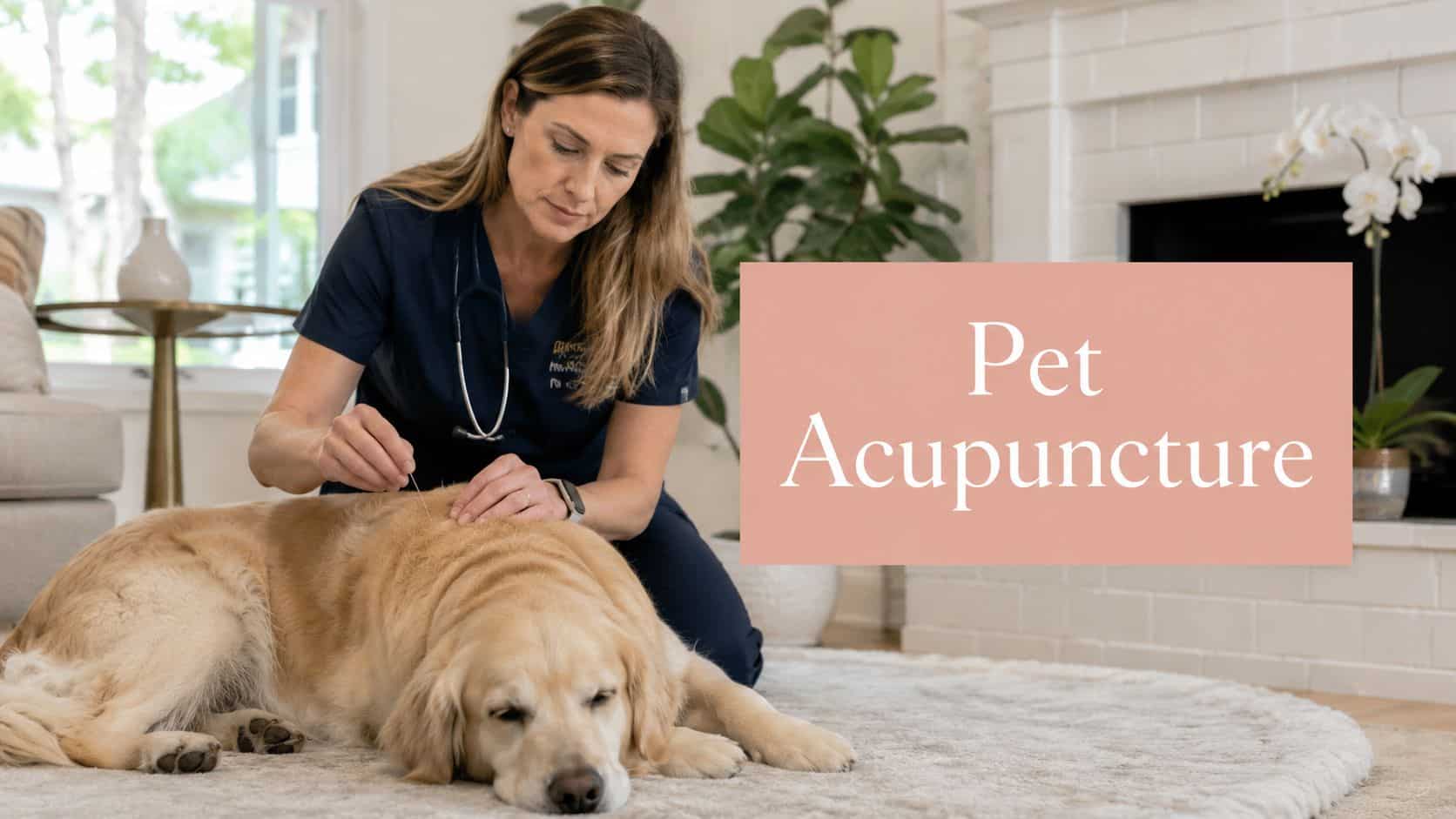
In practice, that may look like better traction at home, a realistic walking routine, prescription medication from the primary veterinarian, and integrative options layered on top. Some dogs benefit from acupuncture. Others do well with laser therapy, therapeutic exercise coaching, or a personalized rehabilitation plan. The point is not to use every tool. It's to choose the right mix for that dog, in that home, with that diagnosis.
Why In-Home Care Matters For Pain Patients
For anxious dogs, senior dogs, and dogs with mobility limits, the trip to the clinic can be part of the problem. Getting into the car, walking across parking lots, and waiting on slick floors can all increase stress and discomfort. In-home care avoids a lot of that friction.
That's especially relevant for families in South Tampa, where many pets are aging in place with owners who want practical support without repeated transport challenges. One option is integrative veterinary care, which can include modalities such as acupuncture, laser therapy, rehabilitation guidance, and other home-based support coordinated with your regular veterinarian. Pet Acupuncture & Wellness (PAW Vet Practice) provides that kind of mobile care in South Tampa.
What A Good Plan Looks Like
A strong plan should feel manageable, not overwhelming. It should answer:
- What is the likely source of pain
- Which home strategies are appropriate
- What activities should stop for now
- How will we know if this is helping
- When do we recheck or escalate
Owners often do best when they aren't told to “just watch it.” They need specific instructions. Which surface is safest. Which movement should be avoided. Whether cold, rest, or exercise fits the current problem. That kind of clarity is where integrative in-home care can fill the gap between simple home remedies and a full hospital-based workup.
If your dog is slowing down, stiff after rest, or uncomfortable moving around your home, Pet Acupuncture & Wellness (PAW Vet Practice) offers mobile integrative veterinary care for South Tampa pets. Dr. Monica works with families to build realistic at-home pain plans that may include acupuncture, laser therapy, rehabilitation exercises, and other supportive care coordinated with your primary veterinarian, all in the comfort of your home.