You notice it in small moments first. Your dog pauses before getting up from the floor. She hesitates at the first stair. He still wants to join you in the kitchen, but he takes the long way around the slick hardwood instead of crossing it directly. Most families in South Tampa don't walk in worried because of one dramatic limp. They come in because their dog just doesn't look comfortable anymore.
That worry is appropriate. It's also manageable.
Arthritis is one of the most common sources of ongoing pain in dogs. Major veterinary guidance estimates it affects at least 20% of dogs over one year old, about 80% of dogs over eight years old, and roughly 14 million adult dogs in the U.S. according to VCA Hospitals' overview of arthritis in dogs. Arthritis usually isn't something we cure. It's something we manage thoughtfully, consistently, and early.
Good arthritis relief for dogs rarely comes from one magic fix. It comes from a plan. The best plans combine pain control, weight management, safe movement, traction at home, and selected integrative therapies that fit the dog in front of you. If you live locally and want a calm home-based evaluation, our South Tampa veterinary hospital services are designed around that kind of practical, day-to-day support.
Your Guide to a Comfortable and Happy Dog
Arthritis changes how a dog moves, rests, and participates in family life. It can also change how owners feel. Many people blame themselves for “missing it,” especially when the signs were subtle for months. That guilt doesn't help your dog. Observation and action do.
A useful care plan starts with three questions:
- What is your dog showing you at home
- What makes the pain worse
- What support can you put in place now
Those answers matter more than guessing based on age alone. Some dogs show pain after rest. Others struggle most on turns, stairs, or slippery floors. A few seem physically stronger than they feel because anxiety about falling keeps them from moving normally.
Arthritis care works best when owners stop looking only for limping and start looking for patterns.
I tell clients to think in layers. The first layer is recognition. The second is home setup. The third is body condition and movement. The fourth is medical and integrative treatment. When those layers work together, dogs often move with more confidence and rest more comfortably.
This is especially important in South Tampa homes with tile, sealed wood, and frequent indoor-outdoor transitions. A dog can be medically stable and still struggle every day because the flooring, feeding station, and routine don't match the body they have now.
Recognizing the Subtle Signs of Canine Arthritis
Many owners expect arthritis to look obvious. A severe limp. Crying out. Refusing to walk. Sometimes that happens. More often, the signs are quiet and easy to dismiss as “slowing down.”

Physical Clues Owners Often Miss
Watch what happens after your dog has been still. Arthritis pain often shows up most clearly during transitions.
- Stiff rising: Your dog takes a few awkward steps after getting up, then looks better once moving.
- Joint licking: Repeated licking over elbows, knees, wrists, or hips can be a pain behavior.
- Muscle loss: The rear legs may look thinner because the dog is unloading painful joints.
- Altered posture: Some dogs stand with a shifted weight pattern or tuck their hindquarters oddly.
- Difficulty settling: A painful dog may circle, reposition, or seem unable to get comfortable on the floor.
Owners sometimes say, “Once he gets going, he's fine.” That often means he's loosening up, not that he's pain-free.
Activity Changes That Matter
A dog with arthritis usually edits her own life before she stops moving altogether. That self-limiting behavior is one of the clearest clues.
- Stair hesitation: Pausing at the top or bottom, or needing coaxing.
- Jump avoidance: No longer hopping onto the couch, bed, or into the car.
- Shorter enthusiasm window: Starting a walk normally, then lagging or wanting to turn back early.
- Careful turning: Wide turns, bunny hopping, or trouble pivoting on smooth floors.
- Slower outdoor routines: Taking longer to squat, posture, or reposition in the yard.
A dog that stops doing favorite activities is often protecting painful joints, not “being lazy.”
Mood And Social Changes
Pain changes behavior. Dogs may not connect the discomfort to their family, but they do react to it.
Some become clingier. Others withdraw. A usually patient dog may look irritated when touched over the hips or shoulders. You may also notice less interest in greeting you at the door, less willingness to follow you room to room, or more nighttime restlessness.
Pain can also look like caution. Dogs that have slipped once or twice on slick flooring may become visibly worried in those areas. Owners often read that as confusion or age-related fear. Sometimes it's a very rational response to an unsafe surface.
When To Call Your Veterinarian
Make the appointment if your dog has a pattern, not just a single bad day. Record short videos of:
- Getting up from bed
- Walking on your usual flooring
- Going up or down stairs
- Turning in a tight space
Those clips help far more than memory. They also give your veterinarian a baseline for tracking change over time.
Creating a Safe and Comfortable Home Environment
Medication matters, but many dogs suffer most in the hours between treatments because the home itself asks too much of painful joints. I see this constantly. The dog isn't refusing to walk. The dog is refusing to slip.

The biggest missed issue is the emotional effect of poor footing. The concern isn't only physical injury. It's the fear-based immobility that develops after repeated slips. That gap in guidance is discussed in this review-focused source on canine osteoarthritis and home function. If you want practical support you can start using right away, our guide to at-home dog pain relief expands on these day-to-day adjustments.
Start With Floors And Pathways
Walk through your home at dog level. Identify the routes your dog uses most often: bed to water bowl, couch to back door, kitchen to family room.
Then change the route before you change the dog.
- Use anchored runners: Choose rugs or mats that don't curl, slide, or bunch under paws.
- Create continuous traction: One rug in the middle of a room isn't enough if the dog has to cross bare floor to reach it.
- Protect corners and turns: Turning is harder than walking straight. Dogs often slip where they pivot.
- Trim nails and paw fur: Long nails and overgrown fur reduce grip on smooth surfaces.
- Block unsafe shortcuts: If one hallway is slick and unavoidable, guide your dog through the safer path.
Dogs with arthritis plus balance loss often need more than “a rug here and there.” They need a predictable, low-anxiety travel lane through the house.
Resting Areas Need More Than Softness
A supportive bed helps, but placement matters just as much as cushioning.
Put the bed where your dog already wants to rest. Don't isolate it in a quiet room if your dog prefers staying near family activity. If the bed is too far from you, many dogs will choose a harder surface just to remain included.
Look for these features:
- Dense support: The bed should cushion bony pressure points without collapsing.
- Easy entry: Very high bolsters can be awkward for stiff dogs.
- Warm, draft-free placement: Cold tile under an arthritic dog usually doesn't help comfort.
- Multiple stations: One bed in the living room and another in the bedroom often works better than one “perfect” bed no one uses.
Practical rule: If your dog struggles to stand up from a sleeping area, change the surface first.
Stairs, Cars, And Furniture
Use ramps or broad stable steps when your dog still has enough confidence to learn them. Waiting until mobility is severely limited makes training harder.
For cars, support under the chest and hindquarters may still be necessary even with a ramp. For furniture, decide early whether access is allowed or not. Mixed rules confuse dogs and increase awkward attempts to jump.
A few simple choices make a major difference:
- Pick one entry point into the house with the best traction.
- Add lighting for nighttime bathroom trips.
- Use harness support for dogs who wobble when stepping down.
- Avoid steep, narrow pet stairs that force tiny unstable steps.
Feeding And Daily Routines
Raised bowls can reduce the repeated strain of reaching down, especially for dogs who brace poorly through the front end or neck. Keep food and water in a stable area with good footing. If the bowl slides, your dog has to chase it. That's extra effort on already sore joints.
Routine also lowers strain. Dogs do better when walks, medications, rest periods, and outdoor trips happen on a predictable schedule. Pain flares often look worse in chaotic households because the dog never settles into a rhythm.
The Power of Diet Weight and Gentle Movement
A common pattern looks like this. A dog slows down because his joints hurt. He gains a few pounds because he is moving less, still eating the same amount, and getting extra treats because everyone feels bad for him. Then the added weight makes standing, walking, and recovering from activity even harder.
That cycle is one of the first things I address with families. If a dog in South Tampa is dealing with arthritis, body condition and daily movement often determine how much benefit we get from every other part of the plan.

Why Weight Control Comes First
Extra weight increases stress on sore joints with every step, every rise from bed, and every trip outside. It also makes it harder for dogs to rebuild muscle, which matters because muscle helps stabilize arthritic joints.
Weight loss has to be deliberate and realistic. Dogs with pain usually need fewer calories than owners expect, and treat calories count quickly. I usually tell owners to stop guessing. Measure meals, write down treats for a week, and let your veterinarian score body condition with you at rechecks. Small adjustments made consistently work better than dramatic food cuts that leave a dog miserable and begging.
A practical plan usually includes:
- Measured meals instead of scoop estimates
- Lower-calorie treats or part of the daily kibble used for rewards
- A scheduled weigh-in and body condition check
- Food changes based on current activity, not past activity
- Family agreement about who is giving treats
Diet And Supplements Work Best As Part Of A Larger Plan
Food matters, but it does not fix arthritis by itself. The same is true for supplements. Some dogs seem to benefit from joint supplements or prescription joint diets, especially when they are chosen carefully and used long enough to judge a response. Others show very little change.
That is why I set expectations early. Supplements can support a plan. They rarely replace pain control, exercise changes, or rehab work in a dog with meaningful arthritis. Product quality also varies a lot, so it is smarter to choose with your veterinarian than to buy the first option that has appealing marketing.
Gentle Movement Protects Mobility
Dogs with arthritis still need exercise. They need the right dose.
Too little movement leads to stiffness, weakness, and reduced confidence. Too much movement causes soreness that can last for days. The goal is repeatable activity your dog can recover from well. For many dogs, that means shorter leash walks done regularly instead of one long outing on the weekend.
Helpful options often include:
- Short, steady leash walks
- Grass or other forgiving surfaces
- Slow incline work for dogs who can handle it well
- Simple home exercises prescribed for your dog's weak points
- Water exercise when access, safety, and comfort line up
Our page on dog physical therapy at home explains how to build that kind of routine safely.
The Goal Is Consistency, Then Progress
Owners often ask when they can reduce medication if acupuncture, laser therapy, rehab exercises, or weight loss start helping. The answer is not based on hope. It is based on function.
I look at whether the dog is rising more easily, walking farther without a setback, sleeping better, and staying comfortable between doses. If those gains hold steady, the veterinarian may be able to adjust the plan carefully rather than stopping an NSAID abruptly and risking a flare. That tapering conversation goes much better when weight is improving and exercise is structured, because we can tell which changes are helping and which are not.
What Commonly Triggers Flares
Arthritic dogs often get into trouble during bursts of enthusiastic activity that do not match their day-to-day conditioning.
Try to limit:
- Repeated ball chasing
- Fast pivots during play
- Jumping on and off furniture
- A big weekend outing after quiet weekdays
- Rough running on slick or uneven ground
A slow walk and a chaotic game of fetch are not the same workload. Most arthritic dogs do better with modest daily movement, steady footing, and a routine their body can trust.
Exploring Medical and Integrative Therapies
A common South Tampa appointment goes like this. A family tells me their dog is still stiff in the morning, the NSAID helps, and they want to know whether acupuncture or laser could let us lower medication safely. That is the right question. Arthritis care works best when we add therapies in a planned order and taper only after the dog proves, over time, that function is holding.

Where NSAIDs Fit
For many dogs with osteoarthritis, NSAIDs are the starting point because they reduce pain enough for the rest of the plan to work. A dog that hurts will not move normally, build muscle well, or participate comfortably in rehab. Owners sometimes worry that starting medication means they have failed or that it rules out natural or integrative care. In practice, medication often creates the comfort needed to make those other therapies useful.
NSAIDs are not interchangeable, and they are not right for every patient. Age, kidney and liver values, gut history, other medications, and overall disease burden all matter. That is why monitoring and rechecks are part of treatment, not an optional extra.
The trade-off is straightforward. These drugs can improve day-to-day comfort, but they require case selection and follow-up. Used thoughtfully, they are often one piece of a larger plan rather than the whole plan.
The Question That Matters Most: When Can We Reduce Medication?
Owners ask this all the time, and I am glad they do. The safest answer is based on function, not enthusiasm after one good day.
If we start acupuncture or laser therapy, I usually want a clear baseline first. How easily does the dog rise after rest? How far can they walk before they slow down? Are they slipping more, pacing at night, or struggling after activity? Once a new therapy starts, those details tell us whether the improvement is real enough to justify discussing a taper.
A careful taper usually includes:
-
A defined baseline before the new therapy begins
Morning stiffness, pace on walks, sleep quality, stair use, and recovery after activity. -
A trial period with the new modality while medication stays stable
This helps your veterinarian judge response without guessing which change caused it. -
A slow adjustment, not abrupt stopping
If the dog stays comfortable between doses and function remains steady, the prescribing veterinarian may reduce medication step by step. -
A plan for setbacks
If stiffness, limping, restlessness, or reduced activity returns, the taper may have been too much or too soon.
That process matters because some dogs feel better briefly, then overdo it. Families see a happier dog, activity increases, and pain shows up two days later. That is not a failure. It is a sign that the body is still catching up.
Where Acupuncture and Laser Therapy Can Help
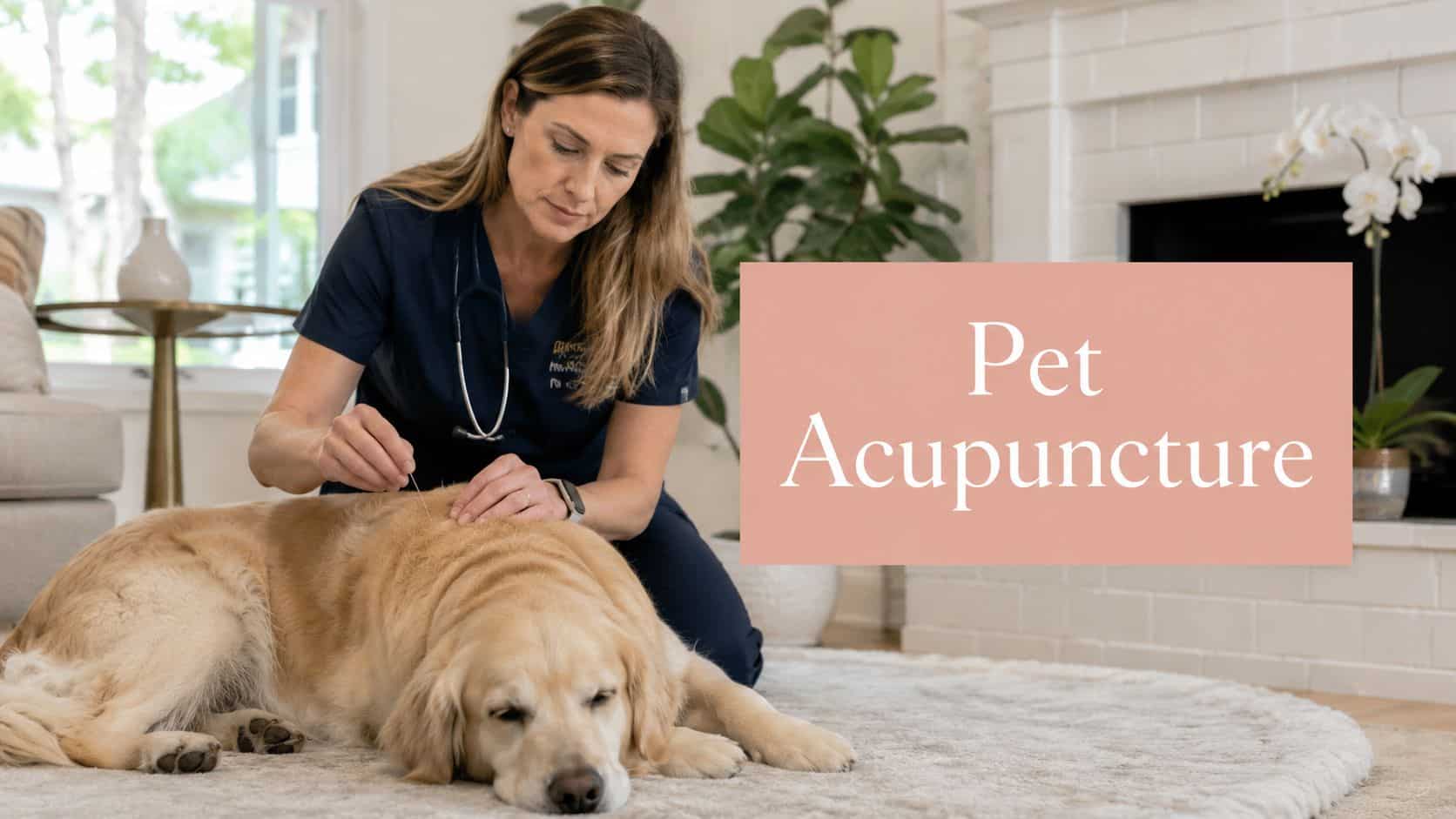
Integrative care can add meaningful support, especially in dogs who have muscle tension, chronic stiffness, medication limits, or incomplete control on drugs alone. Acupuncture may help reduce pain, improve comfort, and relax compensating muscles. Some dogs are calm and sleepy after treatment. Others show more comfortable movement over a series of visits.
Laser therapy is often used to reduce inflammation and pain in sore joints and surrounding soft tissues. In practice, the response tends to be cumulative. One visit may help a little. A series is more informative. Families considering laser therapy for dogs should ask how often treatments are given at the start, how progress is measured, and when the plan is reassessed.
Pet Acupuncture & Wellness (PAW Vet Practice) provides mobile integrative care, including acupuncture and laser therapy, which can be coordinated with a dog's primary veterinarian. That coordination is what keeps the plan safe. If one doctor prescribes the NSAID and another provides integrative treatment, both should know exactly what the dog is receiving and how the dog is responding at home.
What A Good Combined Plan Looks Like
The strongest arthritis plans are layered and practical. An NSAID may control enough pain for better sleep and more normal walking. Acupuncture may reduce muscle guarding. Laser may improve comfort in a joint that still flares. Home traction, weight control, and a realistic activity routine support all of it.
I tell owners to judge the plan by daily life. Is your dog getting up with less hesitation? Settling more comfortably at night? Finishing a walk without paying for it later? Those are the signs that give us room to reconsider dosing. Without those gains, tapering is usually premature.
What does not work well is changing several things at once and hoping for the best. Start therapies with a purpose, track response, and make medication changes with your veterinarian on a schedule that matches the dog in front of you.
Your Partner in Creating a Long-Term Mobility Plan
The dogs who do best with arthritis are rarely the ones with the fanciest product list. They're the ones whose families track patterns, make practical adjustments, and stay flexible as needs change. Arthritis care is maintenance medicine. That's not discouraging. It's useful, because it tells you what to focus on.
Build A Plan You Can Actually Maintain
A good mobility plan has to fit your household. If a recommendation only works in theory, it won't last. I'd rather see a family follow a realistic schedule consistently than attempt a perfect routine for five days and abandon it.
A durable plan usually includes:
- A pain baseline: What your dog looks like on a typical morning, evening, and after activity
- A flare strategy: Who to call, what activity to stop, and what changes are warning signs
- A home setup review: Floors, resting spots, entry points, bowl placement, and nighttime access
- A movement routine: Small amounts done reliably
- A medication and therapy review schedule: So treatment evolves with the dog
Know What To Reassess
Arthritis shifts over time. A plan that worked in spring may not fit during a hot, stormy summer or after a quieter month indoors. Reassess function, not just pain.
Watch for changes in:
- Getting up after rest
- Confidence on indoor flooring
- Ease of squatting or posturing outside
- Ability to recover after walks
- Sleep quality and willingness to engage
When mobility drops, ask what changed in the environment, routine, or pain control before assuming your dog is simply aging.
That question often reveals the answer. Sometimes the dog gained weight. Sometimes the nails are too long. Sometimes the NSAID dose needs veterinary review. Sometimes a dog who improved physically is still avoiding a hallway because she remembers slipping there.
Work With A Veterinarian Who Looks At The Whole Picture
That whole-picture view matters during the medication tapering phase. It also matters when the issue isn't just the joint. Senior dogs often have overlapping weakness, neurologic wobble, anxiety, or muscle loss that changes how arthritis shows up at home.
In-home care can make those patterns easier to see because the dog is observed where the problem happens. For owners in South Tampa who want a collaborative, home-based option, pet acupuncture near me can be part of an ongoing mobility conversation with a veterinarian who works alongside your primary vet rather than replacing that relationship.
Your dog doesn't need a perfect body to have a good life. Your dog needs comfort, traction, support, and a plan that gets adjusted before small problems turn into major setbacks.
If your dog in South Tampa is moving less, slipping at home, or struggling through the transition from medication-based pain control to a more integrative plan, Pet Acupuncture & Wellness (PAW Vet Practice) can help you build a practical arthritis care strategy at home. Dr. Monica provides mobile veterinary support focused on pain relief, mobility, acupuncture, laser therapy, and realistic day-to-day adjustments that fit your dog's needs and your routine.