Start with gentle passive range-of-motion and cold therapy the day your dog comes home, keep the incision and e-collar protected, and add short, controlled leash walks right away. Bone at the surgery site typically needs 8 to 12 weeks to heal, so a staged plan matters more than speed. Call your surgeon if you see swelling, limping that worsens, or drainage from the incision.
TL;DR:
- Bone healing at the surgery site typically takes 8 to 12 weeks, requiring staged rehab and avoidance of rushing through recovery phases.
- Short, controlled leash walks (3 to 4 times daily) and passive range-of-motion exercises should start immediately after surgery, with icing to manage swelling.
- Most post-TPLO rehabilitation benefits come from therapeutic exercise and cold therapy, while modalities like laser therapy have less robust supporting evidence.
- Progressing from protection to strength and balance exercises occurs gradually over weeks 2 to 8, with full activity usually resumed after 8 weeks if healing is confirmed.
- Red flags such as incision drainage, worsening limping, or joint instability require prompt veterinary consultation to prevent reinjury.
Table of Contents
- Phases and goals: what to expect week by week
- Phase 1: immediate post-op home steps (days 0 to 14)
- Phase 2: rebuilding strength and balance (weeks 2 to 8)
- Phase 3: advanced strengthening and return to activity (8 weeks and beyond)
- Step-by-step exercises you can do at home
- Pain control and modalities: what helps and what the evidence says
- Complications and red flags: when to call your vet
- How at-home integrative rehab complements TPLO care
- Practitioner perspective: tailoring rehab and avoiding reinjury
- Booking in-home rehabilitation services
- FAQ
- Sources
Phases and goals: what to expect week by week
Think of recovery as three overlapping phases, each with its own job to do. Moving through them too quickly is one of the most common reasons dogs reinjure the joint or stress the implants.
- Phase 1 (days 0 to 14): protect the incision, control swelling, and keep the leg moving gently without weight-bearing stress.
- Phase 2 (weeks 2 to 8): rebuild muscle around the knee, improve balance, and lengthen walks as the bone continues to knit.
- Phase 3 (8 weeks and beyond): add real conditioning and test whether your dog is ready to return to normal activity.
That 8 to 12 week window isn’t arbitrary. It reflects how long bone from a tibial osteotomy generally needs to regain its full strength, even though most dogs are putting weight on the leg well before that point. Our week-by-week recovery guide walks through each phase in more detail if you want a printable reference.
Phase 1: immediate post-op home steps (days 0 to 14)
These first two weeks set the tone for everything that follows. Your surgeon’s instructions always take priority, but the following steps are a reliable framework.
- Ice the knee for 10 to 15 minutes after any activity, wrapped in a thin towel to avoid frost injury to the skin, a few times a day.
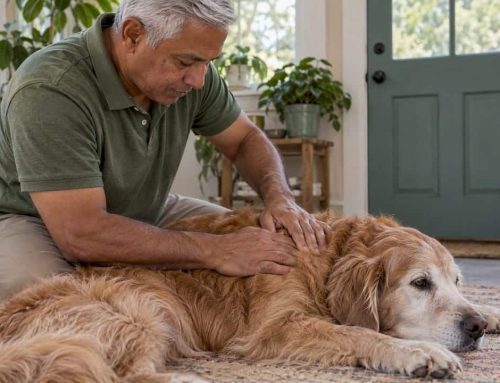
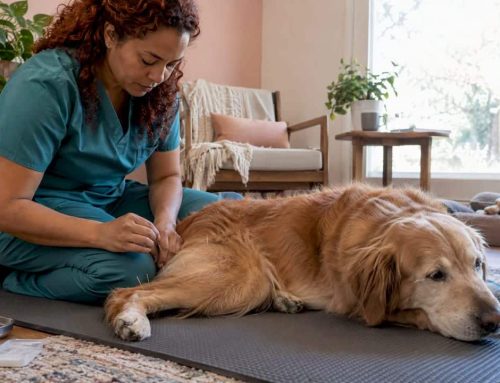
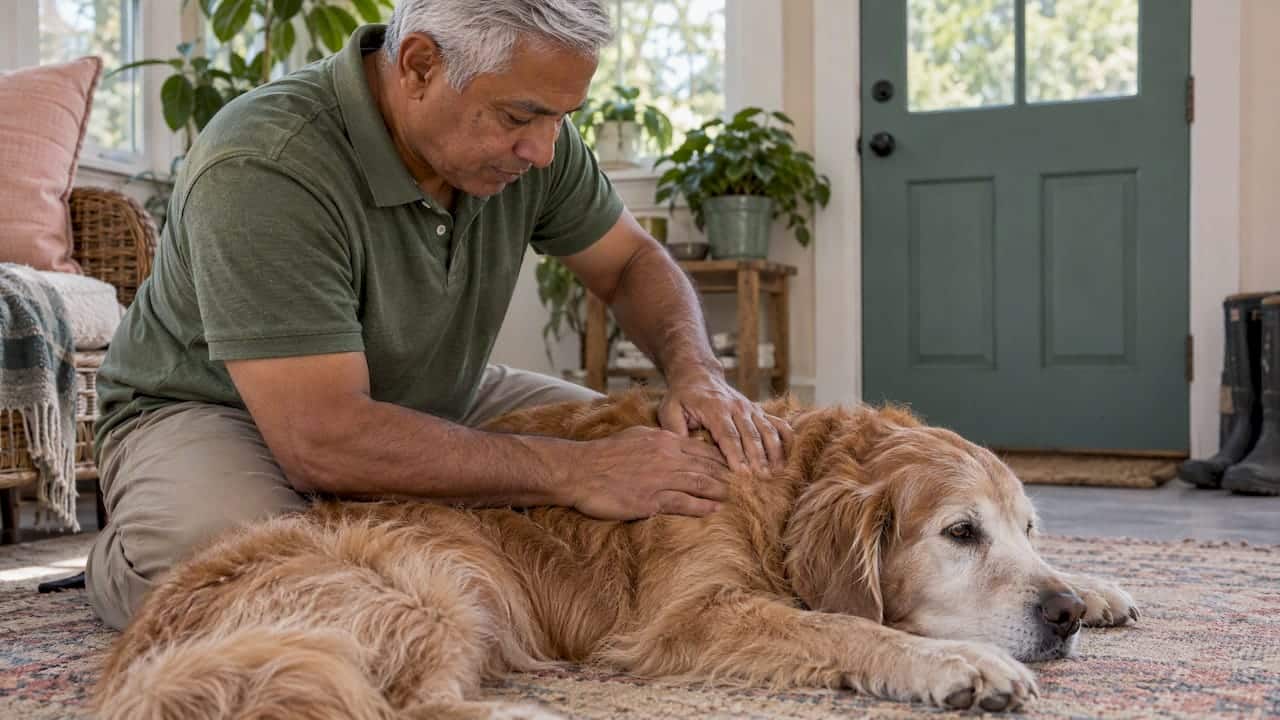
- Do passive range-of-motion (PROM) by cupping the paw and gently bending and straightening the knee through a comfortable arc, 10 to 15 reps, two to three times daily, stopping if your dog tenses or pulls away.
- Check the incision daily and keep the e-collar on between sessions so your dog can’t lick or chew at it.
- Give prescribed pain medication 30 to 60 minutes before PROM or walks so your dog is comfortable enough to cooperate.
- Walk on a short leash 3 to 4 times a day for 5 to 10 minutes, no running, no jumping, no stairs unless your surgeon says otherwise.
These early steps, including icing and short structured walks, line up with standard post-TPLO rehabilitation guidance from veterinary rehabilitation specialists.
Pro Tip: Keep a small notebook or phone note of swelling, appetite, and attitude each day. Patterns are easier to spot than single bad moments.
Phase 2: rebuilding strength and balance (weeks 2 to 8)
Once the incision is healed and your surgeon clears the next step, the focus shifts from protection to rebuilding. This is where most of the functional recovery happens.
- Lengthen leash walks gradually, adding a few minutes every few days as long as your dog isn’t limping afterward.
- Add sit-to-stand reps, 5 to 10 at a time, watching that your dog pushes evenly through both hind legs rather than favoring the stronger side.
- Try short step-overs using low household items like a broomstick on blocks, which encourages your dog to lift and place each paw deliberately.
- Introduce balance work on a thick towel or wobble cushion for 30 to 60 seconds at a time, always with a hand nearby to steady your dog.
Watch for the most common owner mistakes here: letting excitement turn a walk into a sprint, or skipping ahead to off-leash play because the limp looks gone.
Pro Tip: A dog who looks “back to normal” at week 4 still has healing bone underneath. Confidence in the leg outpaces the biology.
Phase 3: advanced strengthening and return to activity (8 weeks and beyond)
By the time you reach this phase, the osteotomy is approaching full strength, and the work shifts toward conditioning and confirming readiness.
- Longer controlled trots on leash, gradually extending distance rather than speed.
- Incline walking on gentle slopes or ramps to build hip and thigh strength without impact.
- Figure-eight patterns at a walk to challenge turning and weight shift through the healed limb.
Before any off-leash return, run through a simple checklist: no limping at a walk or trot, full range of motion compared to the other leg, and a strong, even sit-to-stand. Working dogs and canine athletes often need a longer timeline and formal rehab clearance or follow-up imaging before returning to their sport, while a family pet’s bar is typically lower but still worth confirming with your vet.
Step-by-step exercises you can do at home
A handful of exercises cover most of what a TPLO recovery needs. Doing them correctly matters more than doing a lot of them.
- Passive range of motion: cup the paw in one hand and support just above the knee with the other, then slowly flex and extend the joint to a comfortable stopping point, 10 to 15 reps, without forcing past resistance.
- Sit-to-stand: place your dog against a wall so it can’t swing its hips sideways, then cue a slow sit and stand, 5 to 10 reps, watching for a hind leg that drags or avoids weight.
- Cavaletti or step-overs: space low rails or broomsticks about one body length apart, starting flat on the ground and raising them an inch or two as strength improves.
- Balance disc work: stand your dog on a cushion or disc for short holds, spotting under the belly, and increase time only once your dog is steady.
- Gait patterning: walk at a slow, even pace on a short leash, watching for a smoother, more symmetrical stride as weeks pass.
For video demonstrations of these movements, our home exercise guide shows the hand placement and pacing in action.
Pain control and modalities: what helps and what the evidence says
Follow your vet’s prescribed NSAIDs or pain medications exactly, and time doses before exercise sessions so your dog can move comfortably.
- Therapeutic exercise has the strongest and most consistent supporting evidence among post-TPLO rehab interventions.
- Cold compression therapy also has solid support for reducing swelling and discomfort in the early days.
- Laser therapy and other modalities like shockwave or TENS are used as adjuncts, though the evidence behind them is less robust than for exercise and cold.
- Joint supplements may offer long-term support but work alongside, not instead of, structured movement.
A systematic review of 19 studies found that therapeutic exercise and cold compression had the strongest supporting evidence for post-TPLO rehabilitation, even though many of the underlying studies carried a meaningful risk of bias.
Complications and red flags: when to call your vet
Most TPLO recoveries go smoothly, but knowing what’s abnormal helps you act fast.
- Incision changes: redness, swelling, discharge, a foul smell, or any gap in the skin edges.
- Worsening lameness: a dog who was bearing weight and suddenly stops, or a limp that gets worse instead of better.
- Clicking, popping, or instability in the joint, which can signal a hardware or healing problem.
- Lethargy, fever, or loss of appetite alongside any of the above.
When you call, have the surgery date, a description of the change, and photos ready. TPLO success depends on strict home care as much as the surgery itself, so don’t wait out a red flag hoping it resolves on its own.
How at-home integrative rehab complements TPLO care
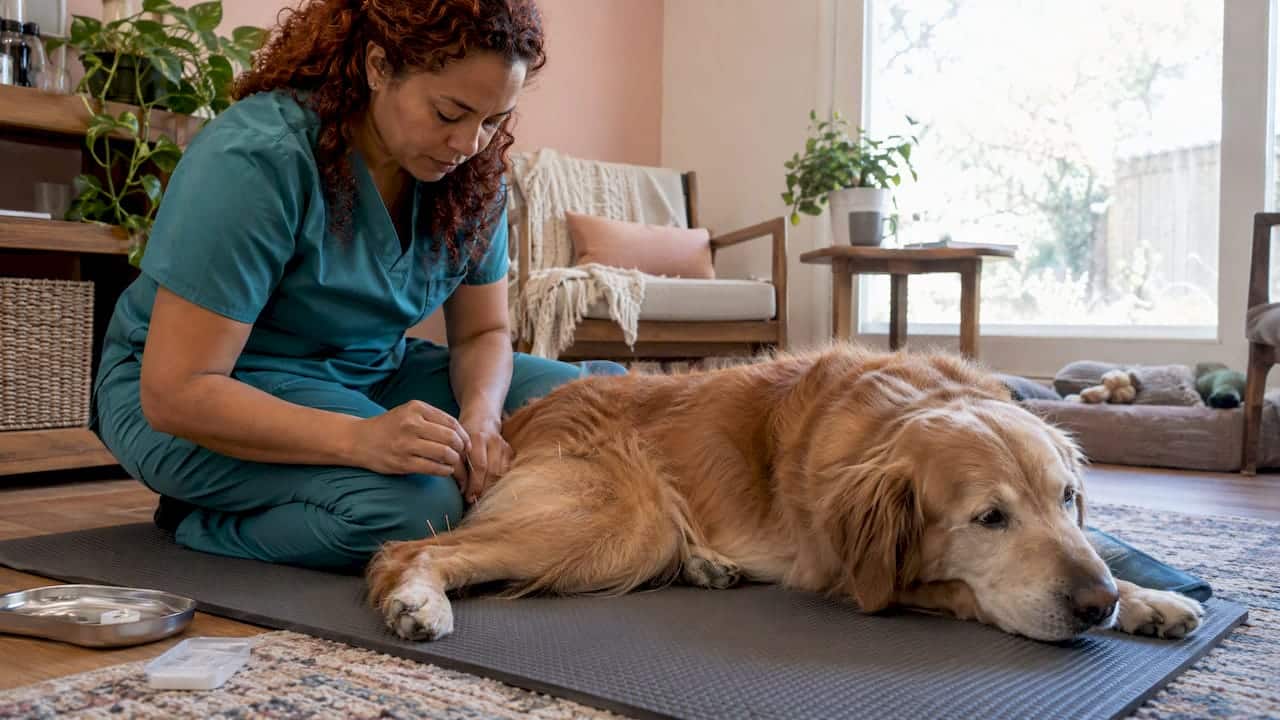
For dogs who are anxious, senior, or simply uncomfortable traveling after surgery, in-home rehab removes the stress of a car ride and waiting room. Pet Acupuncture & Wellness offers initial assessments, rehabilitation therapy packages, acupuncture, and laser therapy delivered in your own home, always working within the activity limits your surgeon has set. Seeing exercises demonstrated in your actual living room often makes compliance easier.

Practitioner perspective: tailoring rehab and avoiding reinjury
Rest alone rarely restores full function after TPLO. Dogs receiving structured rehab were nearly twice as likely to reach full function by 8 weeks compared with rest-only management. Short, frequent sessions beat occasional long ones for both compliance and healing. If progress stalls or something looks off, imaging and a specialist recheck beat guessing.
— Pet Acupuncture & Wellness
Booking in-home rehabilitation services
If daily clinic visits feel like too much for your dog’s recovery, or for your schedule, an in-home visit might fit better. Providers can bring the initial assessment, exercise coaching, and therapies like laser or acupuncture directly to your living room, so your dog recovers somewhere familiar instead of a waiting room.
- Initial assessments review gait, incision healing, and current mobility before building a home plan.
- At Home Rehabilitation Packages range from $85 to $918 depending on the scope of care needed.
- Tele-advice visits are useful between in-person sessions if you have a quick question about an exercise or a symptom.
Before a visit, jot down any changes you’ve noticed and have your surgeon’s activity restrictions handy. You can review packages and book an assessment to get started.
This article is general information, not a substitute for advice from a qualified doctor. Consult a qualified healthcare professional about your own circumstances before acting on anything here.
FAQ
How do you rehab a dog after TPLO surgery?
Rehab after TPLO starts with passive range-of-motion exercises, cold therapy, and short leash walks in the first two weeks, then progresses to strength work like sit-to-stands and balance exercises as healing continues. Therapeutic exercise and cold compression have the strongest evidence among rehab approaches for this surgery.
Can my dog walk around the house after TPLO?
Yes, but movement should be controlled and limited, not free roaming. Most surgeons recommend confining your dog to a small area or crate between short, supervised leash walks for the first couple of weeks to protect the healing bone; for options on safely limiting your dog’s roaming during recovery, consider resources on travel-safe dog containment.
How long will my dog be in pain after TPLO?
Most dogs show noticeable improvement in comfort within the first two to three weeks, though some soreness after activity can continue into the early strengthening phase. Prescribed pain medication, timed before exercise sessions, helps keep your dog comfortable enough to participate in rehab.
What should I do week by week after TPLO surgery?
In weeks 0 to 2, focus on icing, gentle PROM, and short leash walks. From weeks 2 to 8, lengthen walks and add strength and balance exercises, then from 8 weeks on, build toward normal activity once your dog clears a basic movement checklist. Bone at the surgery site is typically substantially healed by 8 to 12 weeks, which is why the plan stays staged.
Is laser therapy helpful after TPLO surgery?
Laser therapy is commonly used as an adjunct to exercise and cold therapy, though its supporting evidence is less consistent than for those two core interventions. It’s reasonable to discuss adding it to a rehab plan, especially for dogs who tolerate hands-on therapy well.
Sources
- Fundamental principles of rehabilitation and musculoskeletal tissue healing
- Physical Rehabilitation of Dogs Following TPLO – Veterinary Partner (VIN)
- TPLO recovery: setting pets up for success (Texas A&M Vet Med)