You're probably here because something feels off, but it's hard to name.
Your dog still wants to be near you, but now pauses before jumping onto the couch. Your cat still follows the household routine, yet chooses a lower perch instead of the windowsill she used to reach in one smooth leap. These changes are easy to explain away. Busy week. Bad weather. Getting older. A lazy day.
Sometimes that's true. Often, it isn't.
Arthritis usually doesn't announce itself with a dramatic limp at the start. It tends to show up in small, repeatable changes in comfort, posture, and behavior. Those early signs matter because the sooner pain is recognized, the sooner you can protect mobility, sleep, confidence, and quality of life at home.
Is Your Best Friend Secretly in Pain
A family once told me their senior dog was “basically fine.” He was still eating, still wagging, still excited when they picked up the leash. What worried them was one oddly specific change. He had started standing at the edge of the sofa and looking at it, as if he were deciding whether it was worth the effort.
That detail mattered more than they realized.
Pets with early joint pain often keep doing the big things that reassure us. They eat. They greet us. They ask to go outside. What changes first are the transition moments. Getting up after rest. Turning tightly. Climbing stairs. Jumping onto furniture. Settling into a comfortable position.
Cats can be even harder to read. Many don't limp in an obvious way. Instead, they reroute. They choose lower surfaces, stop grooming hard-to-reach areas, or become less tolerant of handling. A pet doesn't need to cry out to be uncomfortable.
Watch for a pattern, not a single bad day. Arthritis pain usually reveals itself through repeated hesitation.
This is one reason so many owners miss the early signs of arthritis. The changes are subtle, and they often look like ordinary aging until they start shaping your pet's routine. If that sounds familiar, you're not overreacting. You're noticing the right things.
If you've seen similar shifts in an older dog or cat, this guide on how not to miss the signs of pain in a senior dog or cat is a helpful companion to what you're reading here.
The Whispers of Discomfort Uncovering Subtle Signs
The earliest clues usually aren't dramatic. They're the little adjustments pets make to avoid pain.

Mobility Changes That Owners Often Miss
The most common early red flag in dogs is stiffness after rest. The Morris Animal Foundation notes that the most prevalent early clinical indicator of osteoarthritis in dogs is subtle lameness that shows up as “stiffness on rising” after extended rest, and that this sign is present in approximately 20% of the canine population.
That looks like:
- A slow start after naps: Your dog gets up stiffly, takes a few uneven steps, then seems to “warm out of it.”
- A pause before stairs or jumping: Not refusal every time. Just hesitation.
- A different way of standing up: Front end first, hind end first, or a push that looks awkward compared with the old normal.
- Less willingness to play hard: Fetch becomes shorter. Tug becomes gentler. Zoomies fade.
Cats show mobility pain differently. They may stop making vertical choices and start making practical ones. You'll see fewer jumps, shorter jumps, and more climbing in stages instead of one fluid movement.
Behavior Changes That Point to Pain
Pain changes temperament before many owners realize it.
Some pets become clingier. Others withdraw. A previously easygoing cat may swish her tail or leave when touched near the lower back or hips. A dog who loved full-body petting may turn his head when you reach over the shoulders or hindquarters.
Watch for patterns like these:
- New irritability: Snapping, flinching, growling, or walking away when touched in certain spots
- Restlessness: Trouble settling, changing positions often, circling longer before lying down
- Reduced social engagement: Less interest in family activity, visitors, or normal routines
- Anxiety around movement: Reluctance when it's time to get in the car, go outside, or climb steps
Some pets don't become less affectionate. They become more careful.
Physical Signs You Can See at Home
Early arthritis isn't just about movement. It can change how a pet carries the body day to day.
Look for:
- Muscle loss: Often around the hips, thighs, or shoulders when a pet protects a sore limb
- Over-grooming or licking: Repeated attention to one joint or area
- Poor grooming in cats: Mats, dandruff, or an unkempt coat over the back end
- Posture changes: A tucked stance, shifted weight, or a reluctance to sit squarely
- Mild swelling: Sometimes subtle, especially around a repeatedly used painful joint
Owners trying to help cats at home often find practical comfort ideas in this guide to cat pain relief at home, especially when the signs are behavioral more than obvious.
Arthritis Versus Normal Aging How to Tell the Difference
Aging changes pace. Arthritis changes comfort.
That distinction helps. A pet who is older may move more slowly overall but still looks relaxed during normal movement. A pet with arthritis tends to show specific friction points. Certain motions become harder, certain times of day become harder, and certain body positions trigger visible hesitation.

What Normal Aging Usually Looks Like
Older pets often sleep more and recover more slowly after exercise. They may choose shorter activity bursts. Their pace may be more measured. But they still move without obvious guarding, and they don't repeatedly avoid the same motion unless something hurts.
What Arthritis Usually Looks Like
Arthritis tends to create a pattern like this:
- After rest is worse: The first few steps are the hardest.
- One activity stands out: Stairs, jumping, getting into the car, using the litter box, crouching to eat.
- The pet adapts: Uses a different route, asks for help, or stops doing one favorite activity.
- The pattern progresses: Not overnight, but steadily enough that the household routine changes around it.
A Better Way to Observe at Home
Guessing isn't very helpful. Tracking is.
Use a simple notebook or phone note and score a few daily items in plain language:
- Getting up after rest
- Stairs
- Jumping up or down
- Interest in walks or play
- Comfort with touch
- Grooming habits
- Litter box or potty posture
You don't need a perfect scoring system. You need consistency. If your pet hesitates before the same movement for several days, or if there's a clear difference between morning and later in the day, that's useful medical history.
Practical rule: If a change is specific, repeatable, and tied to movement, treat it like pain until proven otherwise.
When joint discomfort is suspected, options for degenerative joint disease treatment often work best when they're specific to the exact activities your pet is avoiding, not just the diagnosis on paper.
Confirming Your Suspicions What to Expect at the Vet
A veterinary arthritis visit is usually less dramatic than owners expect and more useful than they imagine. The biggest help you can bring is a clear history of what you've been seeing at home.

Tell your veterinarian what changed first, which activities are hardest, whether stiffness is worse after rest, and whether cold or damp weather seems to affect comfort. Videos from home can help a lot because some pets move differently in the clinic than they do in their own space.
The Physical Exam Matters
During the exam, a veterinarian checks more than the obvious joint. We watch how your pet stands, sits, turns, and shifts weight. We gently feel joints and surrounding muscles, looking for pain, thickening, reduced range of motion, or muscle loss from compensation.
In many pets, the signs develop gradually rather than all at once. The Johns Hopkins Arthritis Center explains that the earliest signs of arthritis can begin insidiously with stiffness and pain developing over weeks to months, and that radiological studies confirm bone erosions can be visible within the first 2 years of disease onset. In practical terms, that means a pet can be uncomfortable before imaging tells the full story.
Why X Rays Help and Why They Don't Tell Everything
X-rays can show joint remodeling, narrowing, spurs, and other structural changes. They're useful for confirming where disease is present and how advanced it appears. They can also help rule out other causes of pain.
But X-rays don't measure pain directly. A pet with significant discomfort may have modest imaging changes, while another with striking X-ray findings may cope surprisingly well. That's why the home history and hands-on exam remain central.
This short video gives a helpful overview of how arthritis is recognized and managed in pets:
Bring your observations, your questions, and if possible, a short list of your pet's daily trouble spots. That information often shapes the treatment plan more than owners realize.
Immediate Steps to Increase Comfort at Home
You don't have to wait to make your home easier on sore joints. Small environmental changes can reduce strain right away.

The strongest first step is to reduce the number of times your pet has to slip, jump, twist, or lower onto a hard surface. According to Veterinary Partner, 65% of early arthritis cases improve significantly with multimodal environmental management alone, and these changes can reduce pain scores by 30–40% in early-stage dogs and cats, often delaying or avoiding the need for medication.
The Changes That Usually Help Fastest
- Add traction where your pet turns: Rugs, yoga mats, carpet runners, and non-slip mats help on tile and wood floors. Hallways, food areas, and the path to the back door matter most.
- Use ramps or sturdy steps: A good ramp can spare repeated impact on shoulders, elbows, hips, and knees. This is especially useful for couches, beds, and car access.
- Upgrade the bed: Orthopedic or memory foam bedding cushions pressure points and makes rising easier after sleep.
- Raise bowls when needed: For pets who strain to reach down, raised food and water dishes can make meals more comfortable.
- Keep resting areas warm: Many arthritic pets are stiffer in cool conditions. Warm bedding or a draft-free sleep space often helps.
- Massage gently if tolerated: Light massage around sore muscles can ease guarding, but stop if your pet seems tense or protective.
What Doesn't Work Well
Owners often mean well and accidentally make things harder.
Avoid these common mistakes:
- Weekend athlete routines: One long walk after several quiet days can flare pain.
- Encouraging repeated jumping: Even if your pet still can do it, repeated impact usually catches up.
- Slippery “shortcuts” at home: A clean floor isn't always a safe floor.
- Pushing exercise through visible stiffness: Movement helps, but forcing painful movement usually backfires.
A thoughtful plan for at-home dog pain relief can support comfort while you arrange veterinary care, especially if your pet is showing mild but consistent changes.
Integrative Care for a Happier Pet in South Tampa
Arthritis care works best when it's multimodal. That means combining tools instead of expecting one intervention to solve everything.
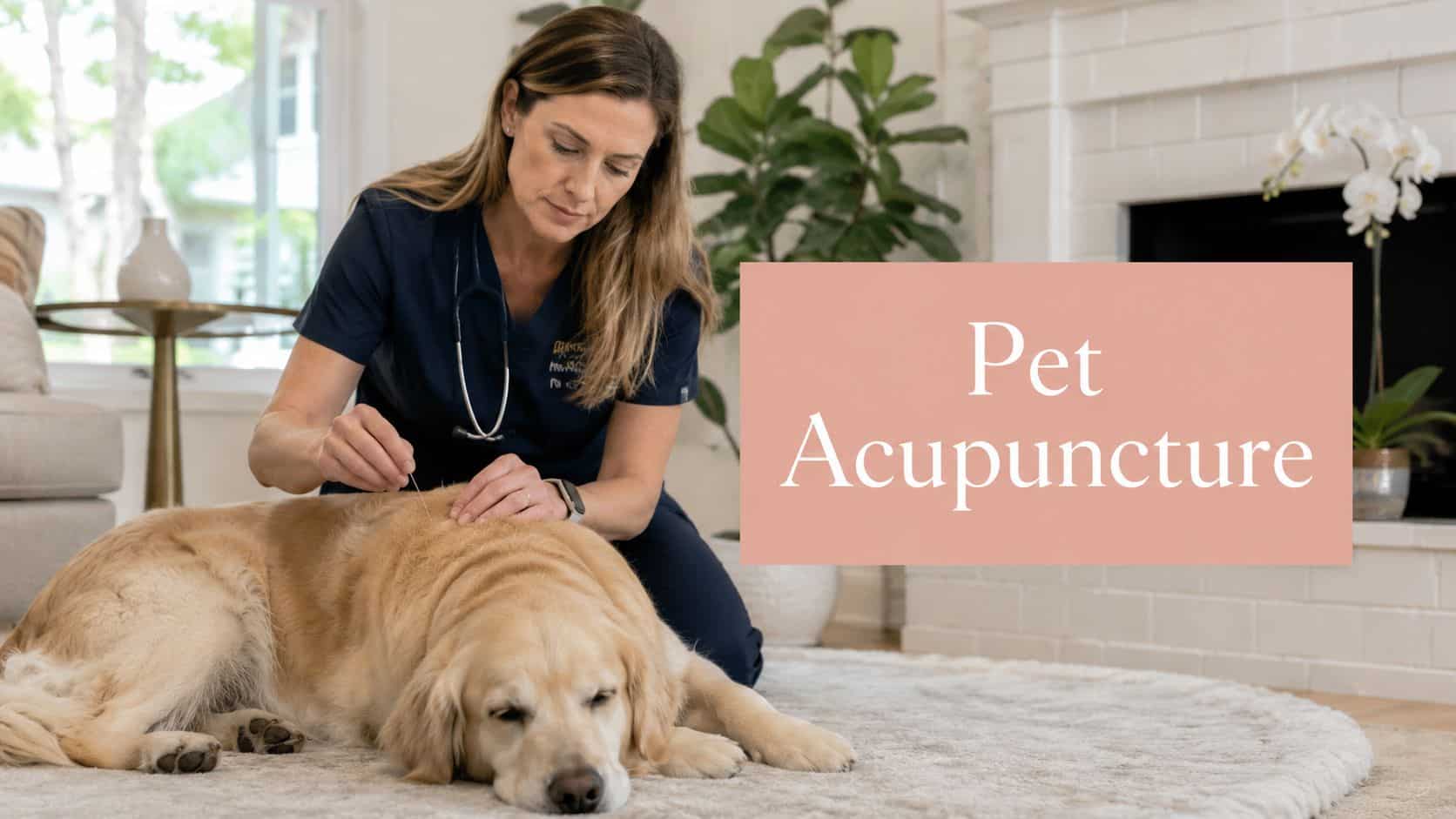
Some pets need medication. Some benefit first from environmental support, weight management, and changes in daily activity. Others do best when traditional treatment is paired with rehabilitation-style exercises or complementary therapies that improve comfort and movement quality.
The Port Road Vet guidance notes that traditional treatment often includes daily anti-inflammatory medications and injections such as pentosan polysulphate, while integrative therapies like acupuncture and laser therapy can offer a complementary or alternative path to reduce inflammation and manage pain within a multimodal plan. That fits what many veterinarians see in practice. The best plan is usually the one that matches the pet's pain level, temperament, mobility limits, and home setup.
Why In Home Care Can Matter
For sore pets, the trip to a clinic can be part of the problem. Getting into the car, walking on unfamiliar floors, and tightening up in a stressful setting can all make the exam day harder. In-home care changes that context.
A house-call visit lets the veterinarian see:
- How your pet gets up from the living room floor
- Which stairs are difficult
- Whether the bed, bowls, and flooring are helping or hurting
- How your pet moves when they're not bracing against clinic stress
That real-life view is especially valuable for senior dogs and cats with mobility concerns. It also helps when designing a personalized plan that may include acupuncture, laser therapy, rehabilitation exercises, or other forms of integrative veterinary care.
If you live in South Tampa, local access matters too. Care is easier to continue when it fits your household, your pet's tolerance, and the reality of daily life. We only service the South Tampa area.
If your dog or cat is showing early signs of arthritis, Pet Acupuncture & Wellness (PAW Vet Practice) offers compassionate in-home support for pets in South Tampa. Dr. Monica provides integrative veterinary care focused on pain relief, mobility, and practical home-based treatment plans, so your pet can be evaluated and cared for where they feel safest.