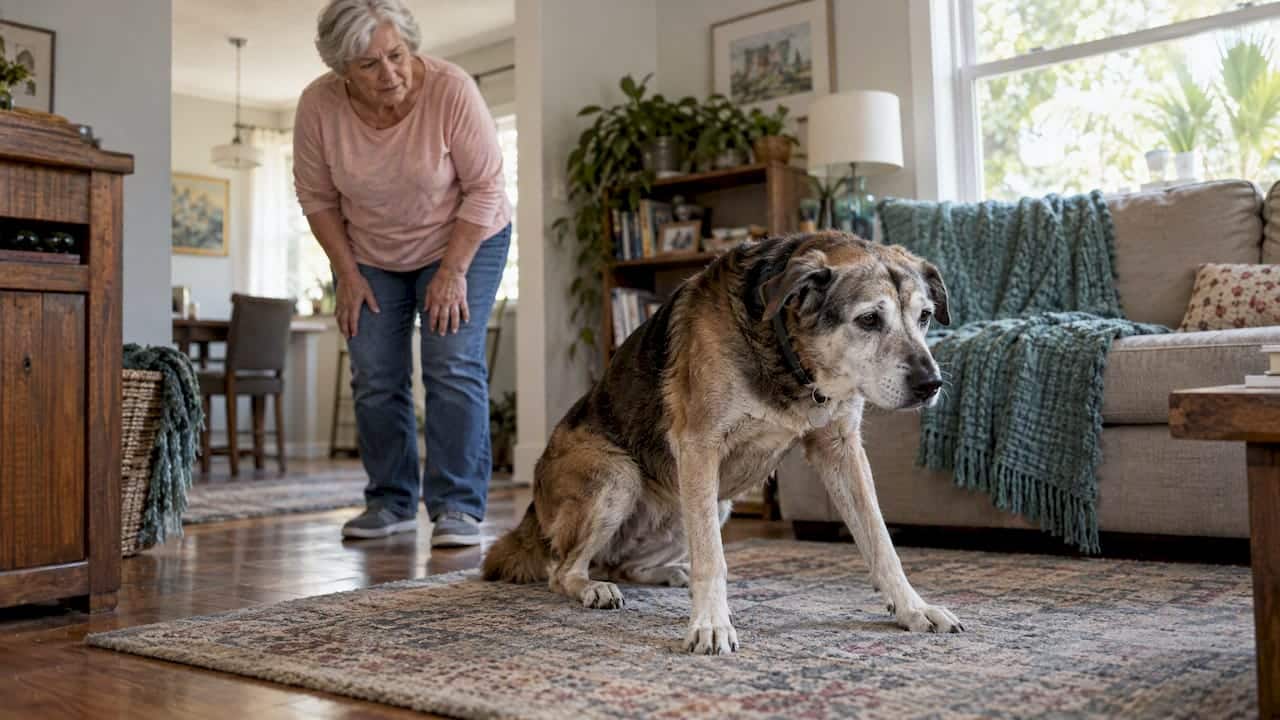
Acupuncture, usually combined with manual therapy and sometimes photobiomodulation, has been shown in peer-reviewed research to meaningfully reduce the frequency and volume of urinary incontinence episodes in dogs, especially cases tied to lumbar back pain. It is not a guaranteed cure, and it is not a substitute for a proper diagnostic workup. If your dog is leaking urine or losing bowel control, the right next step is a veterinary evaluation, ideally with a practitioner trained in Traditional Chinese Veterinary Medicine (TCVM), to find out why before deciding how.
TL;DR:
- Acupuncture combined with manual therapy and photobiomodulation has shown significant reduction in urinary incontinence episodes in dogs, particularly with lumbar back pain.
- Most studies are small, retrospective, and involve multimodal treatments, making it difficult to isolate acupuncture’s individual effectiveness.
- Diagnostic tests, including urinalysis and urine culture, are essential before starting any treatment to rule out infections or structural issues.
- Dogs with acquired urinary sphincter incompetence, especially larger, spayed females with back pain, respond better to acupuncture than those with structural or neurologic anomalies.
- In-home acupuncture services can provide stress-free, tailored care for older or anxious dogs, often integrating therapy for better outcomes.
Table of Contents
- What the Research Says About Acupuncture for Incontinence in Dogs
- How Acupuncture and Related Therapies Are Thought to Help
- Which Dogs Respond Best to Acupuncture for Incontinence?
- What a Treatment Plan and Timeline Actually Look Like
- Is Acupuncture Safe for Dogs With Incontinence?
- How to Choose a Veterinary Acupuncturist for Your Dog
- Real Cases and What In-Home Treatment Looks Like
- Our Take on Acupuncture for Dog Incontinence
- A Gentler Path to Managing Your Dog’s Incontinence at Home
- Sources
- FAQ
What the Research Says About Acupuncture for Incontinence in Dogs
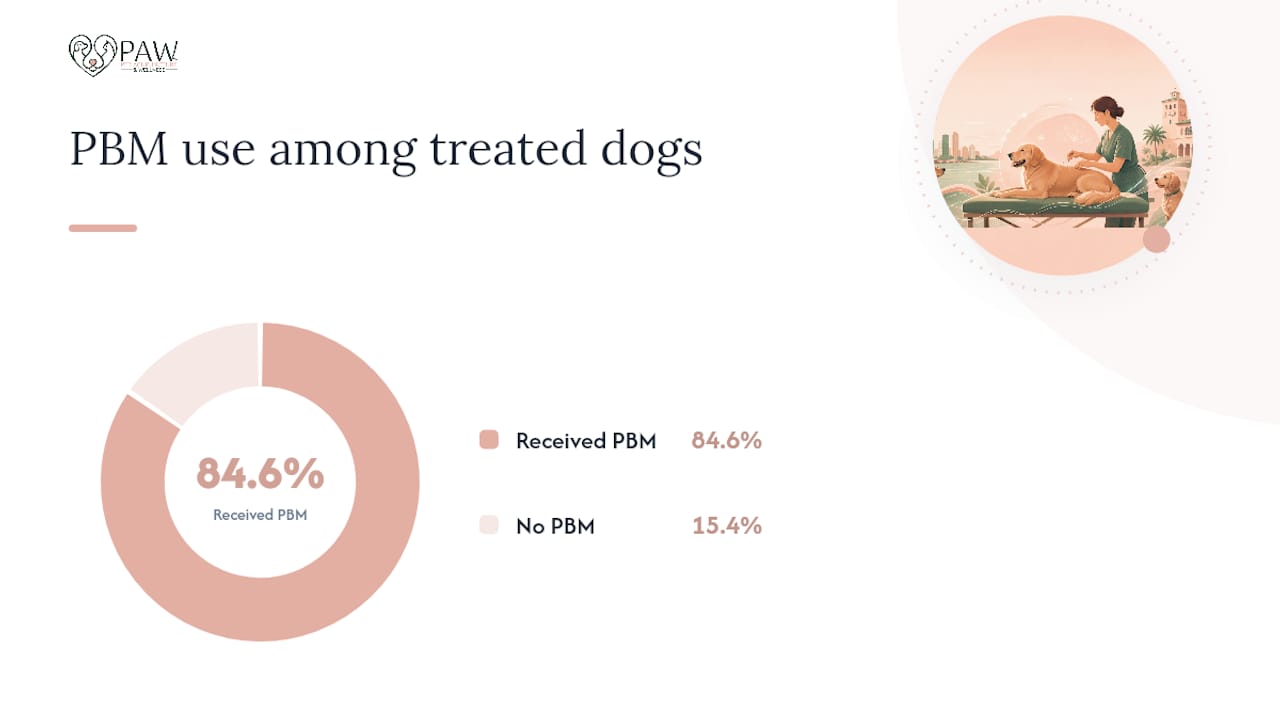
The strongest data point comes from a retrospective review of dogs treated for lower back pain. Researchers tracked 39 dogs who received combined acupuncture and manual therapy, and 33 of those also received photobiomodulation (PBM), a form of low-level laser therapy. The result: a statistically significant reduction in both the frequency and volume of urinary incontinence episodes, with a p-value under 0.01, according to the study published on PMC. In plain terms, the improvement was extremely unlikely to be coincidence.
Case reports add texture to that statistical finding. One dog, already on maximum doses of phenylpropanolamine and estriol, the standard drugs for urinary sphincter mechanism incompetence (USMI), was still incontinent. After starting combined manual therapy, acupuncture, and PBM, she became continent within two days. Her medications were tapered gradually over four and a half months, and according to the Open Veterinary Journal case report, she remained continent for 644 of the following 648 days.
A separate case out of a university veterinary center followed a young poodle named Stitch, born with congenital urinary dribbling and fecal incontinence. Electroacupuncture produced visible improvement after the very first session, and the clinic’s write-up reported 70 to 80 percent improvement after several sessions, an outcome that suggests electroacupuncture may be especially useful when nerve conduction itself is compromised.
Fecal incontinence has a smaller but real body of supporting case material. Practice reports document dogs with lumbar pain and mild fecal incontinence improving after acupuncture aimed at lumbar and sacral points, detailed in a Curacore.
The numbers that matter: In the 39-dog retrospective review, combined acupuncture and manual therapy (plus PBM in most cases) reduced urinary incontinence frequency and volume with a p-value under 0.01, a result strong enough to rule out chance in a study of that size.
None of this makes acupuncture a proven universal fix, and honesty about the limits matters here:
- Sample sizes in the available studies are small, often fewer than 40 dogs.
- Most research is retrospective, meaning it looks backward at records rather than following dogs forward under controlled conditions.
- Multimodal protocols, acupuncture plus manual therapy plus PBM, make it hard to know how much credit acupuncture alone deserves.
- Case reports, while compelling, describe individual dogs rather than population-level outcomes.
Before any of these findings apply to your dog, veterinary consensus is clear: urinalysis and aerobic bacterial urine culture (ABUC) should be performed on every dog presented for urinary incontinence, according to current veterinary guidance. Skipping that step risks treating a symptom of infection or another underlying disease as if it were simple sphincter weakness.
How Acupuncture and Related Therapies Are Thought to Help
Traditional Chinese Veterinary Medicine describes incontinence as a disruption in the flow of Qi, your dog’s vital energy, along pathways called meridians. Think of meridians as a highway system: when traffic backs up or a route gets blocked, energy and function downstream suffer. Acupuncture needles placed at specific points aim to clear that congestion and restore smoother flow.
Modern veterinary science offers a complementary explanation. Needling points along the lumbar and sacral spine appears to stimulate nerve roots that feed directly into the pelvic nerve pathways controlling the bladder and urethral sphincter. That neuromodulation may help normalize sphincter tone, the muscle “seal” that keeps urine from leaking when a dog isn’t actively urinating.
There’s also a pain connection that’s easy to overlook. Many dogs with acquired USMI also have chronic lower back pain, and pain itself can trigger reflex changes that worsen incontinence. Treating the back pain directly, through acupuncture and manual therapy together, may relax that reflex loop and let the sphincter function more normally. It’s part of why the PMC review frames lower back pain and incontinence as connected conditions rather than coincidental ones.
Electroacupuncture, where a mild electrical current runs between needles, is often added when nerve conduction seems to be the bottleneck, as in Stitch’s case above. PBM, delivered with a low-level laser, is thought to reduce local inflammation and support tissue healing near treated points. Dogs recovering from disc disease or spinal compression sometimes receive similar rehabilitation strategies, which you can read more about in our guide to acupuncture for dogs with IVDD.
- Neuromodulation of lumbar and sacral nerve roots may help normalize urethral sphincter tone.
- Reducing chronic back pain can interrupt reflex patterns that worsen incontinence.
- Electroacupuncture targets nerve conduction issues directly.
- PBM supports tissue response and may shorten recovery windows when combined with needling.
Pro Tip: If your dog has both mobility issues and incontinence, mention both to your practitioner at the first visit. Treating them as separate problems often means treating them less effectively than treating them together.
None of these mechanisms are proven with the certainty of, say, germ theory. They’re biologically plausible, backed by measurable outcomes in the studies above, but the field doesn’t yet have the large randomized trials that would settle every question about cause and effect.
Which Dogs Respond Best to Acupuncture for Incontinence?
Not every dog with a wet bed is a good candidate for the same treatment plan, and knowing where your dog fits matters more than the treatment itself.
Dogs most likely to respond well share a few traits. Acquired USMI, incontinence that develops later in life rather than from birth, tends to respond better than congenital structural problems. Spayed female dogs of larger breeds are a classic presentation. Dogs with concurrent lumbar pain or reduced hind-end mobility often see the biggest gains, since treating the back pain component appears to compound the benefit to bladder control.
Dogs less likely to respond include those with structural urethral abnormalities, untreated urinary tract infections, bladder stones, tumors, or certain neurologic lesions that interrupt nerve signaling beyond what needling can influence. This is exactly why diagnostics come before treatment, not after.
A responsible workup includes:
- A full history, including onset timing, medication list, and whether leaking happens during sleep, activity, or both.
- A physical exam with hands-on palpation of the lumbar and sacral spine to check for pain or restricted movement.
- Urinalysis and ABUC on every dog presenting with incontinence, per veterinary consensus guidance.
- Imaging, such as ultrasound or radiographs, when the history or exam suggests something structural.
Watch for red flags that mean acupuncture should wait:
- Sudden onset incontinence paired with lethargy, vomiting, or appetite loss.
- Recurrent urinary tract infections that haven’t been fully treated.
- Visible blood in the urine.
- Straining to urinate or apparent pain when the bladder is touched.
Any of those signs warrant a prompt veterinary visit before considering acupuncture or any complementary therapy.
What a Treatment Plan and Timeline Actually Look Like
The first appointment is mostly information gathering. Expect a detailed history, a physical exam focused on your dog’s spine and gait, and a conversation about your dog’s daily incontinence pattern, how often, how much, and under what circumstances. This is also when your practitioner should confirm that urinalysis and ABUC results are current, since treating without them means treating blind.
Once the workup supports a diagnosis compatible with acupuncture response, typically acquired USMI with a lumbar pain component, the actual session begins. Many practitioners start with calming points, such as GV20 near the top of the skull, to help an anxious dog settle before working on the areas that matter most. From there, treatment usually shifts to lumbar and sacral points tied to bladder and sphincter function.
Commonly used acupoints in published case material include BL23 and BL27 along the bladder meridian, ST36 on the stomach meridian (often used for overall vitality), GV points along the spine’s governing vessel, KI3 near the ankle, and BL60, according to case reports cited in the PMC review. Needle count typically ranges from a handful up to around 15, depending on the dog’s size, temperament, and how many issues are being addressed at once. Dwell time, how long needles stay in, is often reported at up to 10 minutes, though smaller or first-time patients may tolerate shorter sessions better.
Electroacupuncture or PBM is added at the practitioner’s discretion, generally right after needle placement, when nerve conduction issues or inflammation are part of the picture.
Session frequency tends to follow a taper. A common pattern looks like this:
- Weeks 1 to 4: Weekly sessions to build momentum and assess early response.
- Weeks 5 to 8: Sessions spaced to every other week if improvement is tracking.
- Beyond 8 weeks: Monthly maintenance visits for dogs who’ve stabilized, adjusted based on how symptoms trend.
For a deeper look at how that cadence gets tailored to individual dogs, see our breakdown of how often dogs need acupuncture.
In the case report of the dog on maximum-dose medication, continence returned within two days of starting combined treatment, though full medication tapering took four and a half months under veterinary supervision, according to the Open Veterinary Journal.
That timeline isn’t universal. Some dogs show gradual improvement over several weeks rather than a dramatic early shift. Success is usually measured with a simple owner diary tracking accidents per day or week, urine volume when possible, and any changes noted on physical exam. Medication adjustments, especially tapering drugs like phenylpropanolamine, should happen only under veterinary supervision, since systemic side effects from these medications are part of why many owners explore acupuncture in the first place, not a reason to stop them abruptly.
Is Acupuncture Safe for Dogs With Incontinence?
When performed by a trained veterinary acupuncturist, side effects are generally mild and short-lived. Some dogs feel a little sore or sleepy for a day after a session, similar to how you might feel after a deep massage. Serious complications are rare in the published literature, particularly compared to the systemic risks that come with long-term medication use.
That said, acupuncture isn’t appropriate in every situation. Dogs with active, untreated infections should have that infection addressed first. Severe coagulopathy, a blood clotting disorder, is a reason for caution around needle placement. And any dog with an undiagnosed cause of incontinence shouldn’t start acupuncture as a first move, since treating the wrong problem, even gently, wastes time your dog’s underlying condition doesn’t have.
Coordination with your regular veterinarian matters more than owners often expect. Keep urinalysis and ABUC results current, share your incontinence diary at every visit, and never stop or reduce a prescribed medication without your veterinarian’s direct input. Integrative care works best as a team effort, not a replacement for conventional oversight.
- Mild, temporary soreness or lethargy is the most commonly reported side effect.
- Active infections should be treated before or alongside acupuncture, never ignored.
- Coagulopathy and certain neurologic conditions call for extra caution.
- Medication changes belong to your veterinarian, not to trial and error at home.
Pro Tip: Ask whether your practitioner reviews bloodwork or urinalysis results before every session, not just at intake. Ongoing infections can develop between visits, and catching them early keeps your dog’s treatment plan on track.
In the United States, acupuncture on dogs should be performed by a licensed veterinarian with recognized TCVM or acupuncture certification, not by an unlicensed practitioner working outside veterinary oversight.
How to Choose a Veterinary Acupuncturist for Your Dog
Credentials come first. Look for a DVM with recognized training through a certified acupuncture or TCVM program, and ask directly whether they’ve treated incontinence or USMI cases before, not just general pain or mobility issues.
A few questions worth asking at your first consultation:
- How many sessions do you typically recommend before reassessing progress?
- Do you combine acupuncture with manual therapy or PBM, and when would you add electroacupuncture?
- What diagnostics do you require before starting treatment?
- Can you describe outcomes you’ve seen in similar cases, in general terms?
- What does follow-up and cost look like over the first two to three months?
Red flags are just as telling as good answers. Be cautious of any practitioner who promises a guaranteed cure, since even the strongest published results describe likely improvement, not certainty. Walk away from anyone who skips diagnostics or pushes unsupervised herbal regimens without involving a conventional veterinarian in the plan.
- A qualified practitioner welcomes questions about training and case experience.
- Diagnostics should never be optional, regardless of how confident the practitioner sounds.
- Herbal recommendations should complement, not replace, veterinary oversight.
Real Cases and What In-Home Treatment Looks Like
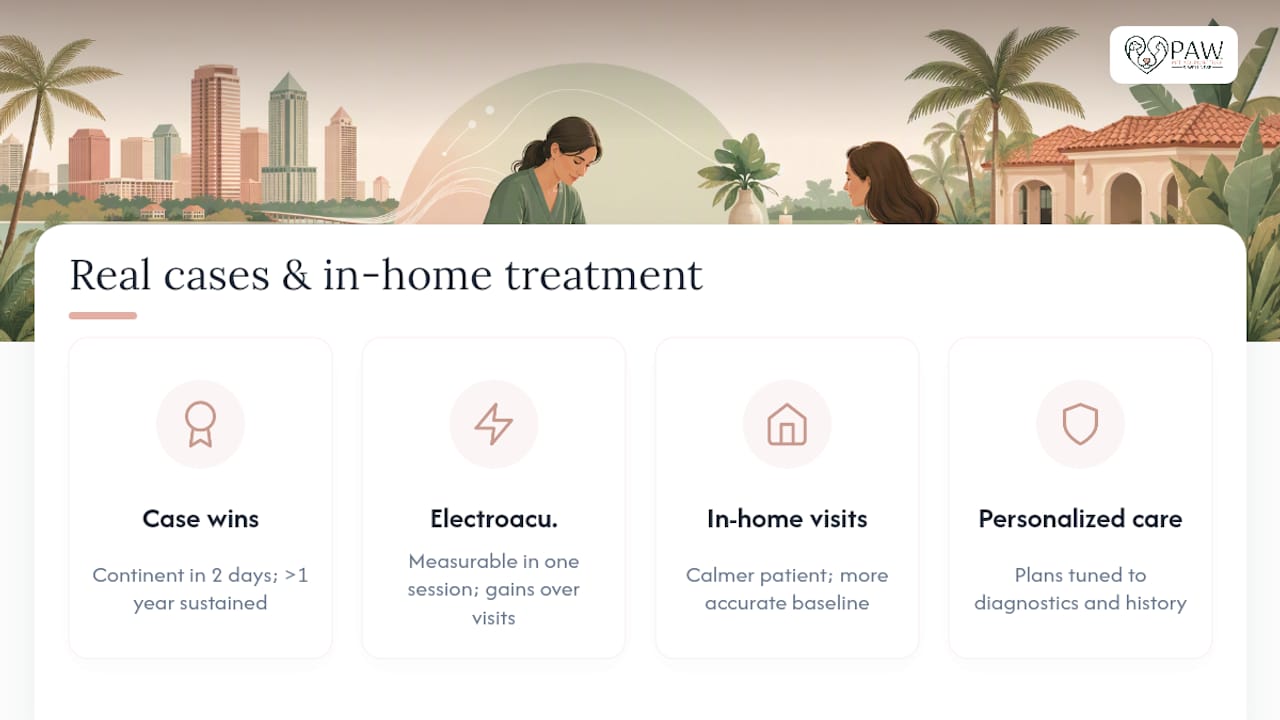
Published cases give a realistic picture of what’s possible. The dog who became continent within two days of starting combined manual therapy, acupuncture, and PBM, documented in the Open Veterinary Journal, stayed continent for well over a year afterward. Stitch the poodle showed measurable improvement within a single electroacupuncture session, with continued gains over several visits. These aren’t universal guarantees, but they show what a well-coordinated, multimodal approach can achieve.
This integrative philosophy is often applied through in-home visits, particularly for senior dogs and dogs with mobility limitations who find clinic visits stressful. Treating a dog on familiar territory, its own living room instead of an unfamiliar waiting room, often means a calmer patient and a more accurate read on baseline behavior. One-on-one monitoring during each visit allows closer tracking of subtle changes between sessions.
Every dog’s incontinence has its own combination of causes, and individual results genuinely vary. What worked for the case reports above won’t necessarily play out identically for your dog, which is exactly why an individualized plan, built around your dog’s specific diagnostics and history, matters more than following a generic protocol. For dogs managing multiple health issues alongside incontinence, our page on in-home care for complex conditions like pancreatitis shows how integrative plans get adjusted around comorbidities.
Our Take on Acupuncture for Dog Incontinence
The evidence here is better than most owners expect and weaker than most marketing suggests, and both things are true at once. A p-value under 0.01 from a real retrospective review means something. It doesn’t mean acupuncture cures incontinence the way antibiotics cure a bacterial infection.
Where conventional advice falls short is the false choice it often presents: medication or nothing. The dogs who do best in the published cases weren’t choosing between phenylpropanolamine and acupuncture. They were getting both, with acupuncture and manual therapy addressing the back pain and neuromodulation piece that medication alone can’t touch.
What we’d prioritize first, before session counts, before acupoints, is the diagnostic workup. Skipping urinalysis and ABUC to jump straight to needles is the single most common mistake we see, and it’s the one most likely to waste a dog’s time on the wrong problem. Get the diagnosis right, then let acupuncture do the specific, evidence-backed job it’s actually good at.
— Pet Acupuncture & Wellness
A Gentler Path to Managing Your Dog’s Incontinence at Home
Clinic visits add stress that can work against the very nervous system regulation acupuncture is trying to achieve, especially for a senior dog who dreads the car ride and the waiting room. Pet Acupuncture & Wellness brings the entire evaluation and treatment process to your South Tampa home instead, so your dog stays in a familiar, low-anxiety environment while receiving the same integrative care outlined throughout this guide: acupuncture, manual therapy, and complementary rehabilitation support tailored to your dog’s specific incontinence pattern.
This approach suits dogs who are older, anxious, or physically limited, exactly the population most likely to benefit from acupuncture for lower back pain and USMI according to the research above, and whose owners are tired of stressful transport just to get basic care. Our in-home acupuncture services start with a full history and physical exam, just like the protocol described earlier, and coordinate closely with your regular veterinarian on diagnostics and medication management. For dogs whose incontinence is tied to back pain or reduced mobility, we often pair acupuncture with our pet rehabilitation therapy for a more complete plan.
If your dog has been struggling with accidents and you want a diagnostic-first, integrative approach delivered without the stress of a clinic visit, schedule an in-home evaluation with Pet Acupuncture & Wellness.
Sources
- The relationship between urethral sphincter mechanism incompetency and lower back pain: Positing a novel treatment for urinary incontinence in dogs
- Open Veterinary Journal case report: combined therapy for USMI
- Merck Veterinary Manual — Pharmacotherapeutics in urinary incontinence in dogs and cats
- Veterinary consensus on diagnosis and treatment for dogs with urinary incontinence (ISCAID-related guidance)
FAQ
What helps incontinence in dogs naturally?
Acupuncture combined with manual therapy, and sometimes photobiomodulation, has reduced urinary incontinence frequency and volume in dogs with a statistically significant result. Weight management, physical therapy for underlying back pain, and bladder-supportive routines can also help, but a diagnostic workup should come first.
What is the best Chinese herb for treating dog incontinence?
TCVM practitioners sometimes use herbal formulas alongside acupuncture, but herbs should only be given under the guidance of a veterinarian trained in TCVM, since dosing and formula choice depend on the dog’s specific pattern and diagnosis rather than a single universal herb.
Can acupuncture stop incontinence?
Acupuncture has helped some dogs become fully continent, including a documented case where a dog regained continence within two days of starting combined treatment, according to the Open Veterinary Journal. Results vary by cause, and acupuncture works best as part of an integrative plan rather than a standalone guarantee.
Can anything be done for a dog with incontinence?
Yes. Options include medications like phenylpropanolamine or estrogens, surgery for structural issues, and integrative therapies such as acupuncture and manual therapy, which Merck’s veterinary guidance notes can reduce reliance on medications with systemic side effects. The right combination depends on a proper diagnosis, starting with urinalysis and urine culture.