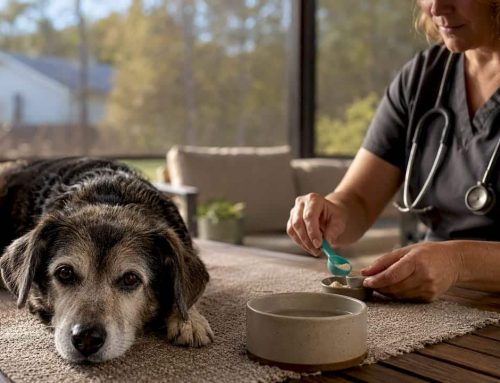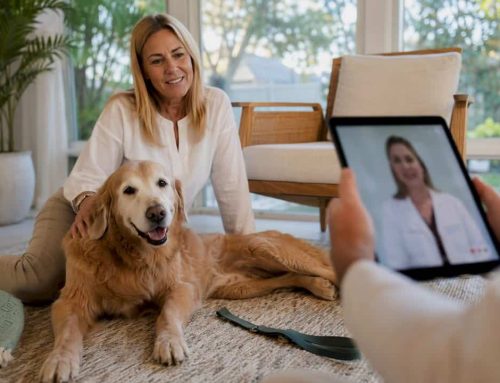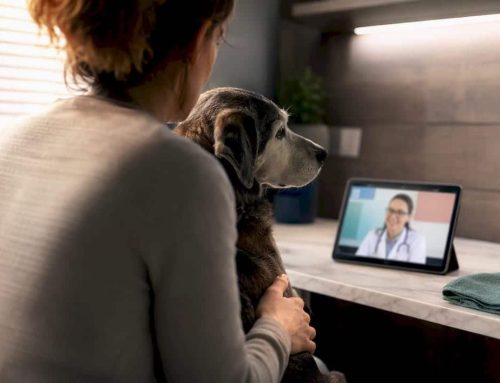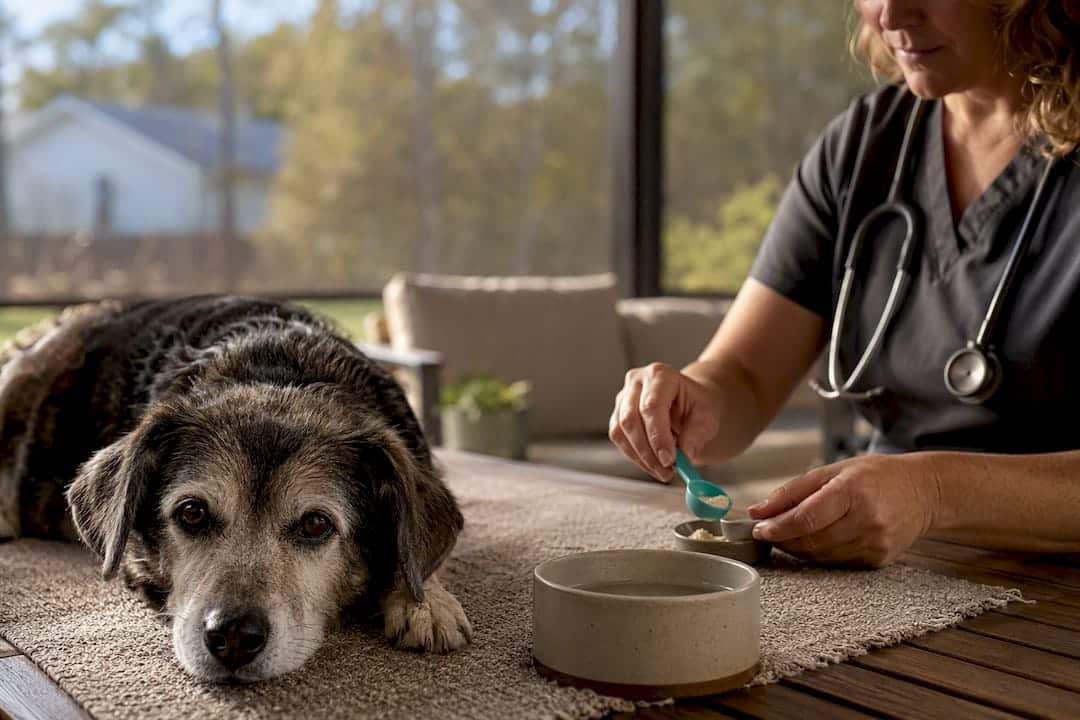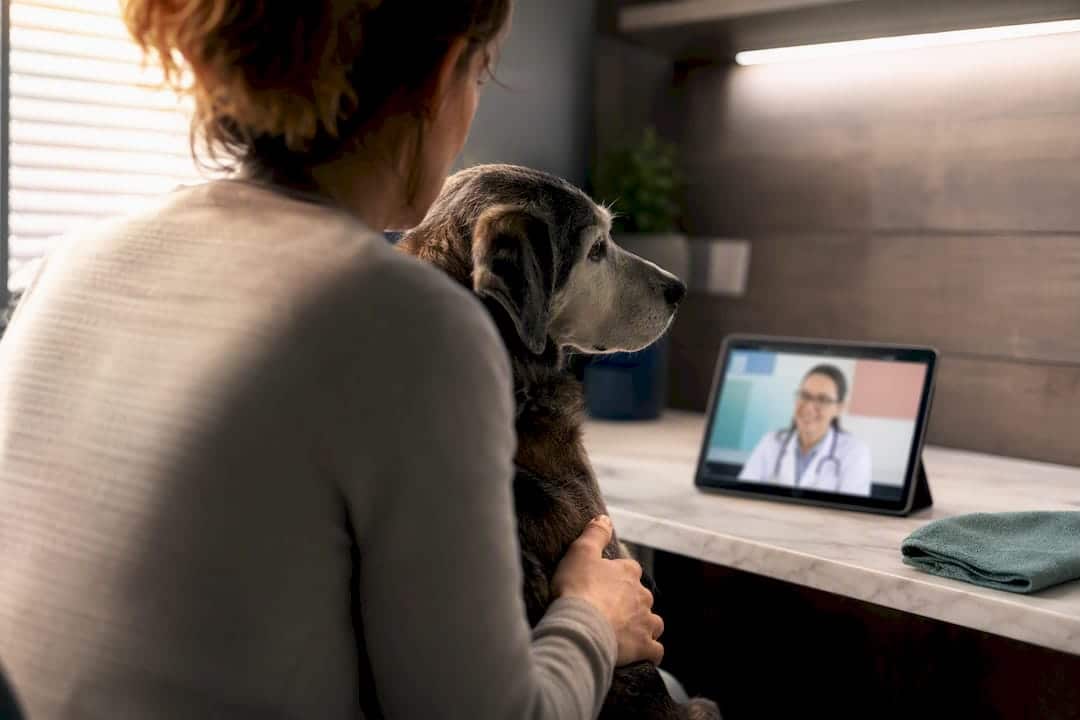
Restrict your dog’s movement immediately, call your veterinarian to schedule an exam, and never give human pain medication while you wait. Once your vet confirms a cranial cruciate ligament injury, at-home recovery follows a predictable arc: short-term safety and rest, a proper diagnosis, veterinarian-prescribed pain control, and a staged rehabilitation plan that may include mobile integrative therapies like acupuncture or laser work alongside conventional care.
TL;DR:
- Confinement to a crate or small room is essential in the first two days to prevent further injury or strain.
- Veterinary pain medications like NSAIDs are necessary, while human drugs such as ibuprofen or acetaminophen are toxic to dogs and must be avoided.
- Home exercises should start with gentle passive range of motion before progressing to weight-bearing and balance activities, only after vet approval.
- Stress reduction through in-home integrative therapies like acupuncture and laser therapy may improve long-term comfort and healing outcomes.
- Long-term joint care includes maintaining a lean weight, gentle movement, and periodic rehab checks to prevent future issues in the opposite knee.
Table of Contents
- Immediate Steps for Cruciate Injury Home Care in the First 48 Hours
- How Do You Manage Pain Safely at Home?
- Setting Up a Safe Recovery Space at Home
- What Home Exercises Help a Dog Recover From a Cruciate Injury?
- Complementary Therapies That Support At-Home Recovery
- Signs You Need to Call the Vet or Reconsider Surgery
- Protecting Your Dog’s Joints for the Long Haul
- Why Mobile Integrative Care Changes the Recovery Experience
- In-Home Acupuncture and Rehab Support for Your Recovering Dog
- Sources
- FAQ
Immediate Steps for Cruciate Injury Home Care in the First 48 Hours
The first two days shape everything that follows. A dog who reinsures an already-strained knee during this window often faces a longer, harder recovery, so the goal right now is simple: keep her still and get her seen.
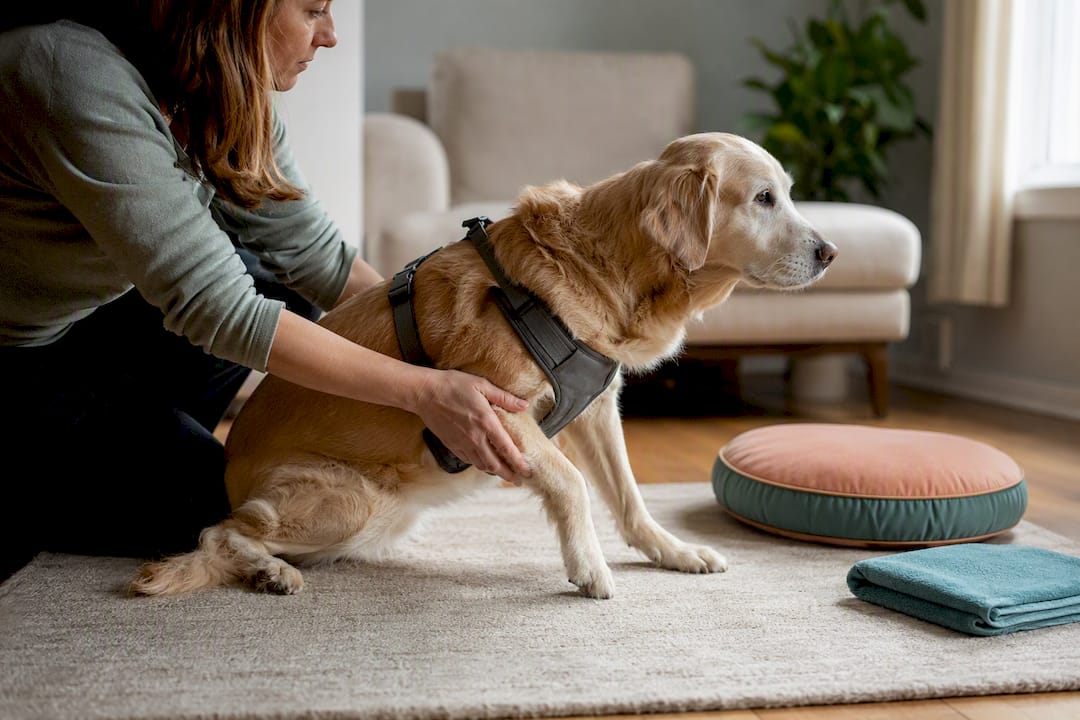
If your dog is limping, favoring a hind leg, or suddenly won’t bear weight, treat her like she’s fragile. Carry small dogs rather than let them walk to the car. For larger or senior dogs, use a sling or a towel looped under the belly to support the hindquarters on stairs or slippery floors. A collapsible crate or a small, blocked-off room works better than a leash and open house.
- Confine your dog to a crate or small room with no jumping, running, or stair access.
- Apply a cold pack wrapped in a towel to the knee for 5 to 20 minutes, up to three times a day, watching for pale or numb skin.
- Note when the limping started, whether it followed a jump or fall, and whether the leg is weight-bearing at all.
- Call your vet the same day; go to an emergency clinic if the leg is dangling, grossly swollen, or your dog is in visible distress.
The American College of Veterinary Surgeons notes that CCL disease is one of the most common causes of hind-limb lameness in dogs, and it’s usually diagnosed through a physical exam checking for cranial drawer or tibial thrust, not imaging alone. That’s good news for you: your vet can often confirm the injury quickly and start a plan the same week.
How Do You Manage Pain Safely at Home?
Never reach for ibuprofen, naproxen, or acetaminophen. These common human medications are toxic to dogs even at low doses, and they won’t do the job anyway since canine pain pathways respond differently. Real pain control has to come from your veterinarian.
Veterinary NSAIDs like carprofen or meloxicam are the backbone of most pain plans, but they require bloodwork first and periodic monitoring, since they can affect the liver or kidneys over time. Many vets add gabapentin for nerve-related discomfort, and trazodone is often prescribed short-term to help anxious or high-energy dogs tolerate confinement without pacing or whining themselves into a frenzy.
- Give NSAIDs exactly as prescribed, with food, and never combine them with another NSAID or steroid.
- Use gabapentin as directed for pain that seems to worsen at night or with movement.
- Ask about trazodone if confinement is causing obvious distress.
- Layer in cold therapy and, once cleared, laser sessions as drug-free pain aids.
Pro Tip: Keep a simple log of your dog’s pain medication times and any side effects like vomiting, dark stool, or lethargy. That log turns a vague “she seems off” into specific information your vet can act on fast.
Watch for vomiting, black or tarry stool, yellowing of the gums, or unusual lethargy after starting any medication. Those are signs to call your vet immediately rather than waiting for the next dose.
Setting Up a Safe Recovery Space at Home
Your house probably has hazards you’ve never thought twice about until now: a favorite jump onto the couch, a slick tile hallway, a staircase your dog bounds up without a second thought. All of that has to change temporarily.
- Confine your dog to a crate or a small, gated room, and carry or leash her outside only for bathroom breaks.
- Lay down yoga mats, rubber runners, or interlocking foam tiles over hardwood or tile floors.
- Block stairs with baby gates and remove access to beds, couches, and other furniture she’d normally leap onto.
- Add low-effort mental stimulation, snuffle mats, frozen food puzzles, or gentle scent games, to burn mental energy without physical strain.
- Rotate two or three enrichment options daily so boredom doesn’t turn into destructive behavior.
If your dog is pacing, barking excessively, or seems miserable despite enrichment, mention it at her next vet check. Anxiety left unmanaged during confinement can slow healing just as much as a physical setback.
What Home Exercises Help a Dog Recover From a Cruciate Injury?
Rehabilitation doesn’t start with walks. It starts with your hands, gently coaxing a stiff joint back toward normal motion before your dog is ready to bear real weight on it.
- Passive range of motion (PROM). Support the leg above the knee with one hand, and gently extend then flex the joint with the other, holding each position for 5 to 10 seconds. Repeat 3 to 5 times per session, once or twice daily, and stop if your dog pulls away or tenses.
- Sit-to-stand repetitions. Once your vet clears light weight-bearing, ask for 5 to 10 slow sit-to-stand cycles to rebuild thigh muscle without impact.
- Short, controlled leash walks. Add these gradually, starting with a few minutes on flat ground, always on a short leash with no sniffing sprints or sudden turns.
- Balance work. Once walking is steady, try gentle weight-shifting exercises or standing on a folded towel to rebuild proprioception.
Pro Tip: Progress only one variable at a time, either duration or difficulty, never both in the same week. Owners who add extra minutes and a new exercise on the same day are the ones who end up back at square one.
Hold off on advancing any exercise if you notice new swelling, reluctance to bear weight, or obvious pain. A structured home exercise program with clear reps reduces muscle loss and keeps recovery on schedule, but pushing too fast is one of the most common reasons dogs backslide.
Complementary Therapies That Support At-Home Recovery
Standard veterinary care handles the structural side of a cruciate injury. Integrative therapies tend to work on what surgery alone doesn’t fully resolve: chronic inflammation and the arthritis that almost always follows a cruciate injury.
- Acupuncture targets pain and inflammation through specific points along the leg and back, and it fits naturally alongside a rehab plan rather than replacing it.
- Laser therapy (photobiomodulation) uses light to reduce inflammation and support tissue healing; most dogs find it painless and even relaxing, and it’s typically scheduled a few times a week early in recovery.
- Braces and orthotics can improve weight-bearing for dogs who aren’t good surgical candidates, though fit and tolerance vary widely, and some dogs never fully adjust to wearing one.
- Regenerative options like PRP or BMAC are delivered in a clinical setting and can support healing, but they work best as one part of a broader plan, not a standalone fix.
A multimodal approach combining acupuncture, laser, and herbal support often produces better long-term comfort than any single treatment used alone, largely because it addresses inflammation from more than one angle at once. If you’re curious how acupuncture specifically applies to cruciate cases, this deeper look at acupuncture for CCL injuries walks through what a session actually involves.
Signs You Need to Call the Vet or Reconsider Surgery
Healing rarely moves in a straight line, but certain signs mean you shouldn’t wait for the next scheduled checkup.
- Sudden worsening of lameness after a period of improvement.
- Redness, discharge, or an open incision if your dog had surgery.
- Fever, loss of appetite, or unusual lethargy.
- No improvement in weight-bearing after several weeks of restricted activity.
Most dogs heal over 6 to 12 weeks postoperatively with strict early rest followed by staged rehab, though the surgery-versus-conservative-care decision depends on your dog’s size, activity level, joint instability on exam, and risk of an accompanying meniscal tear. Smaller, less active dogs sometimes do well without surgery; larger or highly active dogs usually benefit more from surgical stabilization. Plan on rechecks with your primary vet at roughly two, six, and twelve weeks, with rehab visits layered in between.
Protecting Your Dog’s Joints for the Long Haul
One cruciate tear roughly doubles the odds of trouble in the other knee down the road, which makes long-term joint care just as important as the initial recovery.
- Keep your dog at a lean body condition; even a few extra pounds add measurable stress to healing joints.
- Consider an omega-3 supplement, with roughly 50 mg per pound of combined DHA and EPA daily cited as a common anti-inflammatory dose, always confirmed with your vet first.
- Keep up gentle, regular movement like leash walks or swimming once fully healed, rather than sporadic bursts of high-impact play.
- Schedule periodic rehab check-ins even after recovery looks complete, since early arthritis changes are easier to manage than late ones.
Full-speed fetch and off-leash zoomies may never return exactly as they were, and that’s a reasonable trade for a dog who stays comfortable and mobile for years.
Why Mobile Integrative Care Changes the Recovery Experience
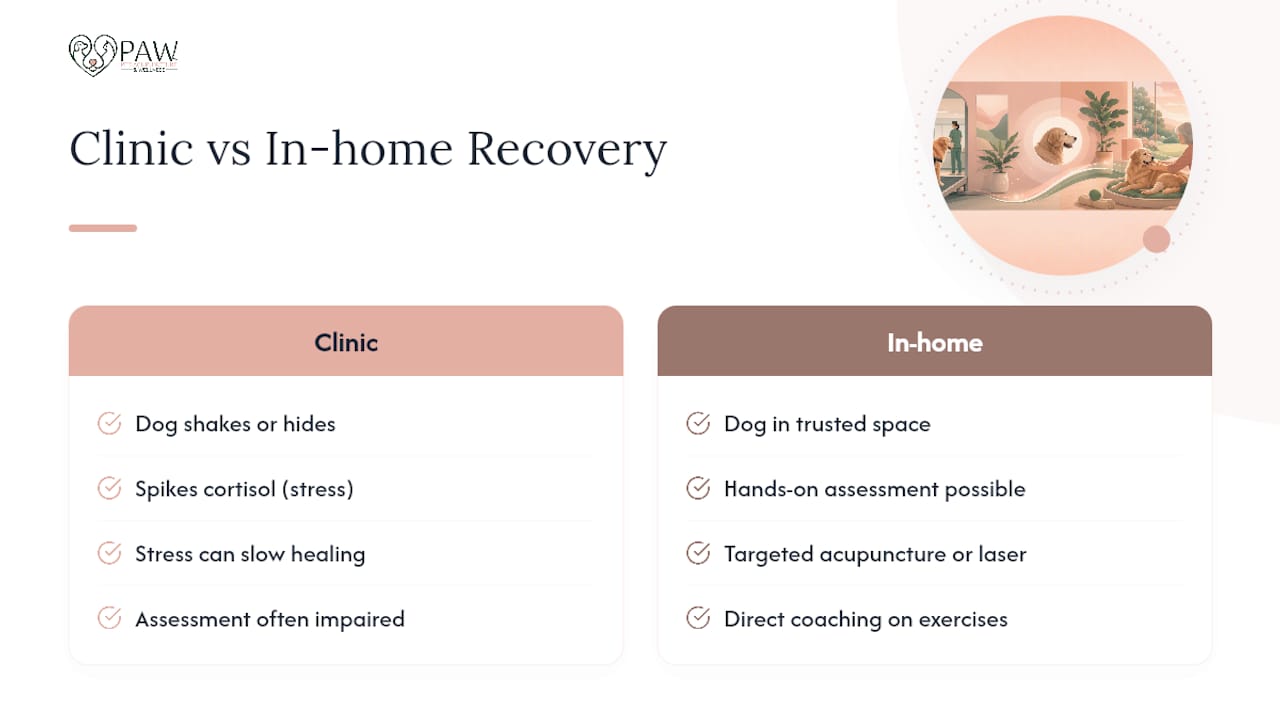
Traditional clinic visits can undo a lot of progress for a dog who shakes, hides, or spikes cortisol the moment she smells a waiting room. We’ve seen that stress alone slow healing in dogs who otherwise had straightforward injuries.
An in-home integrative visit typically includes a hands-on assessment, targeted acupuncture or laser work, and direct coaching on your home exercise routine, all in a space your dog already trusts. Dogs who freeze up in clinics often relax enough during a home session to let a practitioner actually feel range of motion and muscle tone accurately, which improves both the treatment and the follow-through you get at home.
— Pet Acupuncture & Wellness
In-Home Acupuncture and Rehab Support for Your Recovering Dog
You already know the hardest part of a clinic visit isn’t the treatment, it’s getting an anxious or mobility-limited dog through the door in the first place. This practice brings the appointment to your living room instead.
A first booking usually starts with a full assessment of your dog’s gait, pain level, and range of motion, followed by acupuncture treatment targeted to the affected leg and surrounding musculature. From there, sessions can fold in hands-on rehabilitation therapy and telemedicine follow-ups, so your dog’s surgeon or primary vet stays looped in without you juggling three separate offices. For dogs who tense up at the sight of a carrier or a clinic parking lot, this is care that meets them where they already feel safe. Reach out to schedule a home visit and find out what a calmer recovery could look like for your dog.
Sources
- Cranial Cruciate Ligament Disease (CCL) — ACVS
- CCL injuries in dogs: what they are, how to fix them — Veterinary Medicine at Illinois
- AHVMA Journal article on multimodal integrative approaches — AHVMA
- Home Exercise Program – Cranial cruciate ligament injury (PDF) — MLAH Vet
This article is general information, not a substitute for advice from a qualified doctor. Consult a qualified healthcare professional about your own circumstances before acting on anything here.
FAQ
How Long Does Cruciate Injury Home Care Usually Last?
Most dogs need 6 to 12 weeks of staged home care after surgery, starting with strict confinement and progressing gradually to controlled activity.
Can I Give My Dog Ibuprofen for a Cruciate Injury?
No. Human pain medications like ibuprofen and acetaminophen are toxic to dogs; only veterinarian-prescribed medications are safe for at-home pain control.
Do Dogs Need Surgery for a Torn Cruciate Ligament?
It depends on the dog’s size, activity level, and joint instability on exam; smaller or less active dogs sometimes recover with conservative management, while larger or highly active dogs usually do better with surgical stabilization.
Is Acupuncture Actually Helpful for a Dog’s Torn Knee Ligament?
Acupuncture can reduce pain and inflammation as part of a broader rehab plan, and mobile providers like Pet Acupuncture & Wellness deliver it directly at home for dogs who struggle with clinic visits.
What’s the Biggest Mistake Owners Make During Home Recovery?
Progressing exercises too fast, adding more time and more difficulty in the same week, which is one of the most common causes of setbacks during recovery.