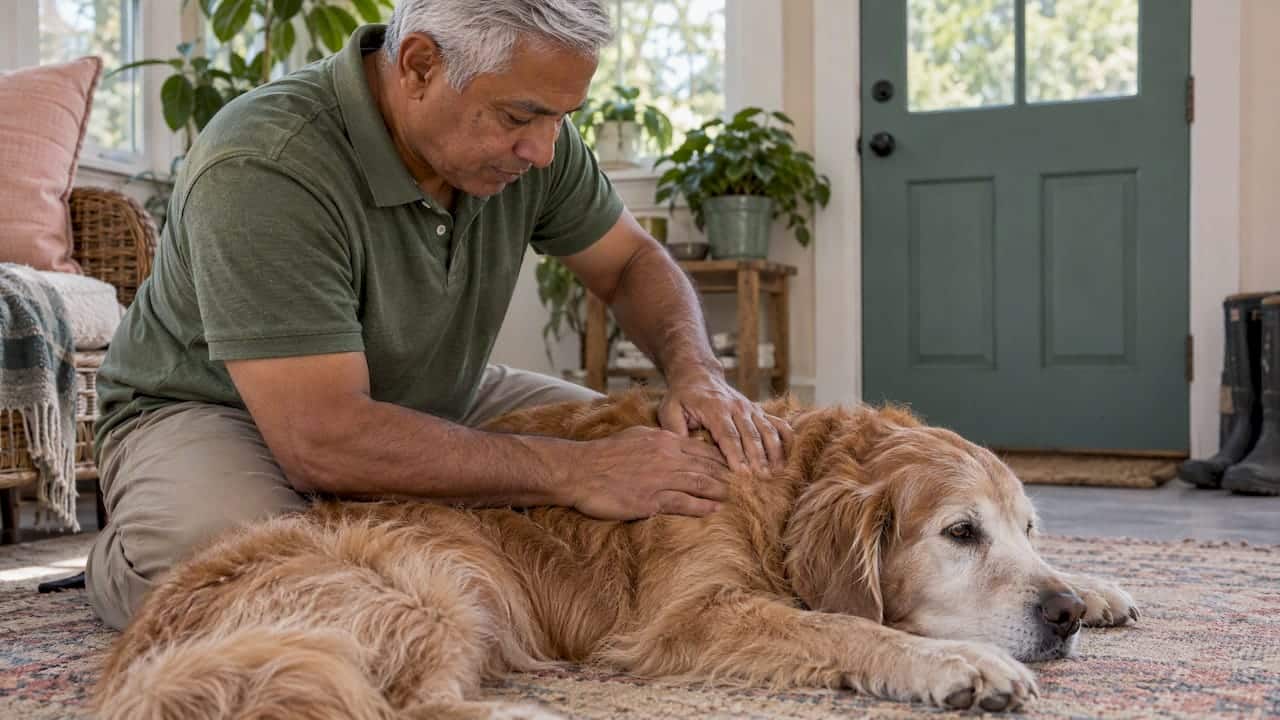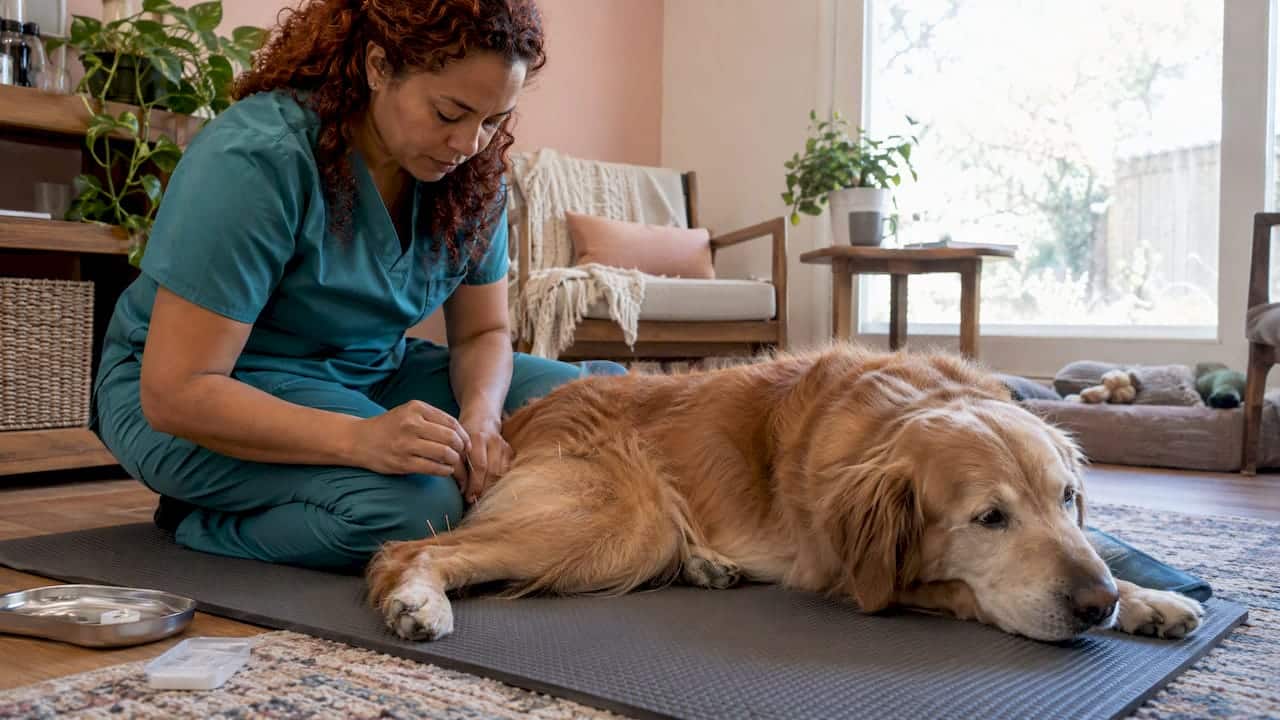
Pet telemedicine works well for medication check-ins, mobility follow-ups, and deciding whether a symptom needs a same-day visit. It cannot replace bloodwork, X-rays, or a hands-on exam, and in most states a vet cannot legally start a new prescribing relationship with your pet over video alone. The FDA is explicit that a veterinarian-client-patient relationship, the legal foundation for prescribing, generally requires an in-person exam first. Telemedicine can maintain that relationship once it exists, but it rarely creates it from scratch.
The single most important rule: use virtual visits for triage and follow-up, and go in person the moment you see a red-flag symptom like labored breathing, collapse, or suspected poisoning.
Here’s the short version of where the limits sit:
- Diagnostics: no labs, imaging, or palpation over video.
- Prescribing: often blocked without an existing in-person relationship.
- Emergencies: never the right first call.
- Records: scattered across apps unless you actively manage them.
Pro Tip: If you’re unsure whether your pet’s situation qualifies as urgent, call your regular vet’s line first. A quick phone triage from a clinic that already knows your pet beats guessing through an app.
Key Takeaways
Pet telemedicine safely handles triage and follow-up care, but hands-on diagnostics, most new prescriptions, and every emergency require an in-person veterinary exam.
| Point | Details |
|---|---|
| Diagnostics need hands-on exams | Bloodwork, imaging, and palpation cannot happen through a screen, regardless of video quality. |
| VCPR usually requires an in-person visit | Federal guidance says telemedicine can maintain but rarely establish a prescribing relationship. |
| Emergencies bypass virtual care entirely | Breathing trouble, collapse, seizures, or poisoning need immediate in-person or emergency clinic care. |
| Records fragment across platforms | Ask every telemedicine provider for a written summary and forward it to your primary vet. |
| Preparation improves virtual visit accuracy | Good lighting, symptom timelines, and a second pair of hands make video calls more clinically useful. |
Table of Contents
- Pet Telemedicine Limitations Start With What a Camera Can’t See
- How Do VCPR Rules and Prescribing Laws Limit Virtual Vet Visits?
- Why Is Telemedicine Unsafe for Pet Emergencies?
- Do Video and Photo Quality Actually Affect Diagnosis?
- What Happens When Pet Medical Records Get Scattered Across Apps?
- How to Use Pet Telemedicine Safely and Prepare for a Virtual Visit
- How Pet Acupuncture & Wellness Uses Telemedicine Alongside House Calls
- What This Article Gets Right That Most Telemedicine Marketing Doesn’t
- Sources
- FAQ
Pet Telemedicine Limitations Start With What a Camera Can’t See
A screen shows you a picture. It does not show you a heartbeat, a blood cell count, or a mass under the skin that only a vet’s fingers would catch. That’s the core of every diagnostic limitation in pet telemedicine, and it’s why professional guidance treats virtual care as a supplement, never a replacement.
A peer-reviewed review of veterinary telemedicine makes this point directly: major diagnostic tools, bloodwork, X-rays, ultrasound, physical palpation, simply cannot be performed through a screen. No app fixes that. It’s a hardware problem, not a software one.
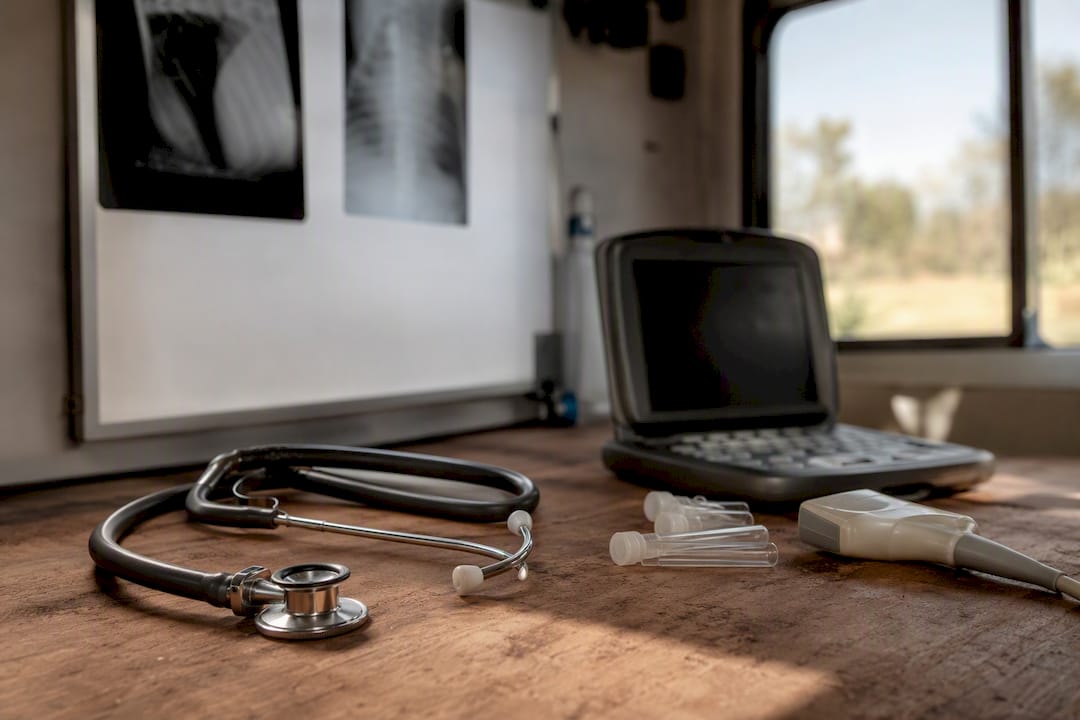
Think about what a routine in-person exam actually involves. The vet listens to the heart and lungs with a stethoscope. They press along the abdomen to feel for pain, gas, or an abnormal mass. They check gum color and capillary refill time, both of which require good lighting and a trained eye up close, not a grainy video frame. None of that translates through a phone camera, no matter how good the connection is.
Several common conditions in senior and disabled pets depend entirely on these hands-on steps:
- Kidney disease requires bloodwork and urinalysis; symptoms like lethargy or drinking more water look identical to a dozen other conditions on video.
- Intestinal obstruction often needs an X-ray or ultrasound to confirm; a bloated abdomen can look similar to normal weight gain over camera.
- Fractures need imaging and manual palpation; a limping older dog might have arthritis or a hairline fracture, and only touch and an X-ray tell the difference.
- Dental disease hides under the gumline; a video call rarely reveals the abscess or root infection driving a pet’s sudden appetite loss.
- Ear infections frequently require an otoscope to check the eardrum, something no camera angle replicates.
This is where the “time-delay trap” becomes a real clinical risk. A practitioner advisory from the AVMA warns that leaning on a virtual consult as the first step for acute symptoms can burn through hours that matter. A pet owner who schedules a video call for a swollen abdomen, waits for the appointment, gets a “let’s monitor it” recommendation, and then drives to an emergency clinic six hours later has lost time a bloat case cannot afford. The video call felt like progress. Clinically, it was a detour.
Practitioner guides echo the same warning: telemedicine cannot run labs or perform physical diagnostics, and any recommendation made without that data carries built-in uncertainty. That doesn’t mean virtual care lacks value. It means the value lives in narrower use cases, medication questions, behavior coaching, deciding whether a symptom warrants a trip in, not in replacing the physical exam room.
How Do VCPR Rules and Prescribing Laws Limit Virtual Vet Visits?
The legal backbone of veterinary care is something called the Veterinarian-Client-Patient Relationship, or VCPR. It’s the formal recognition that a vet has examined your pet, knows their history, and can take responsibility for their care, and it’s the gatekeeper for almost every prescription your pet receives.
The FDA’s guidance states plainly that a VCPR generally cannot be established solely through telemedicine. It requires an in-person physical exam, or at minimum a timely visit to where the animal is kept. Once that relationship exists, telemedicine can help maintain it, follow-up calls, medication adjustments, check-ins between visits. But the door into that relationship almost always requires showing up first.
This creates a practical wall for owners hoping to get a diagnosis and prescription entirely from home with a vet they’ve never met. Even if a virtual provider is licensed and well-meaning, federal guidance and most state veterinary boards won’t recognize the relationship as sufficient for prescribing, especially for controlled substances like certain pain medications or sedatives, which carry additional documentation and often mandate an in-person exam regardless of VCPR status.
State law adds another layer of unpredictability. Some states allow more flexibility for maintaining existing relationships remotely; others hold a stricter line. The AVMA’s telehealth guidelines recommend that telemedicine happen only within an already-established VCPR, and flag licensure as a recurring compliance issue, particularly for platforms that connect owners with vets outside their home state.
That licensure detail matters more than most owners realize. A veterinarian is licensed state by state, not nationally. A vet based in another state generally cannot legally treat your pet in your state unless they hold a license there too, even over video. This is why so many telemedicine platforms restrict their vet pool by the pet owner’s location rather than letting you pick any available provider.
Before booking a virtual consult, it’s worth asking:
- Is this provider licensed in my state?
- Do I already have an established VCPR with them, or will this be our first interaction?
- Can they legally prescribe what my pet might need, or will I be referred elsewhere?
- What happens if the visit reveals something that needs in-person follow-up?
Policy researchers at the ASPCA point to these same legal and structural barriers as a major reason telemedicine hasn’t scaled the way some predicted, state law variation, licensure friction, and inconsistent connectivity in more rural markets all slow adoption despite genuine welfare benefits for pets who struggle with travel.
Why Is Telemedicine Unsafe for Pet Emergencies?
Some symptoms don’t leave room for a video call. If your pet shows any of the following, skip the app and get to an emergency clinic:
- Difficulty breathing or open-mouth breathing in a cat.
- Collapse or inability to stand.
- Seizures, especially lasting more than a minute or repeating.
- Profuse bleeding that doesn’t stop with pressure.
- Suspected poisoning, including chocolate, xylitol, rodenticide, or unknown pills.
- Bloated, hard abdomen with retching but no vomit produced.
- Pale or blue-tinged gums.
A clinical guide from VCA hospitals is blunt about this: telemedicine is inappropriate for emergencies, and owner-supplied video often misses the subtle signs a trained eye would catch in person, shallow breathing, gum color shifts, the specific way a painful abdomen guards against touch.
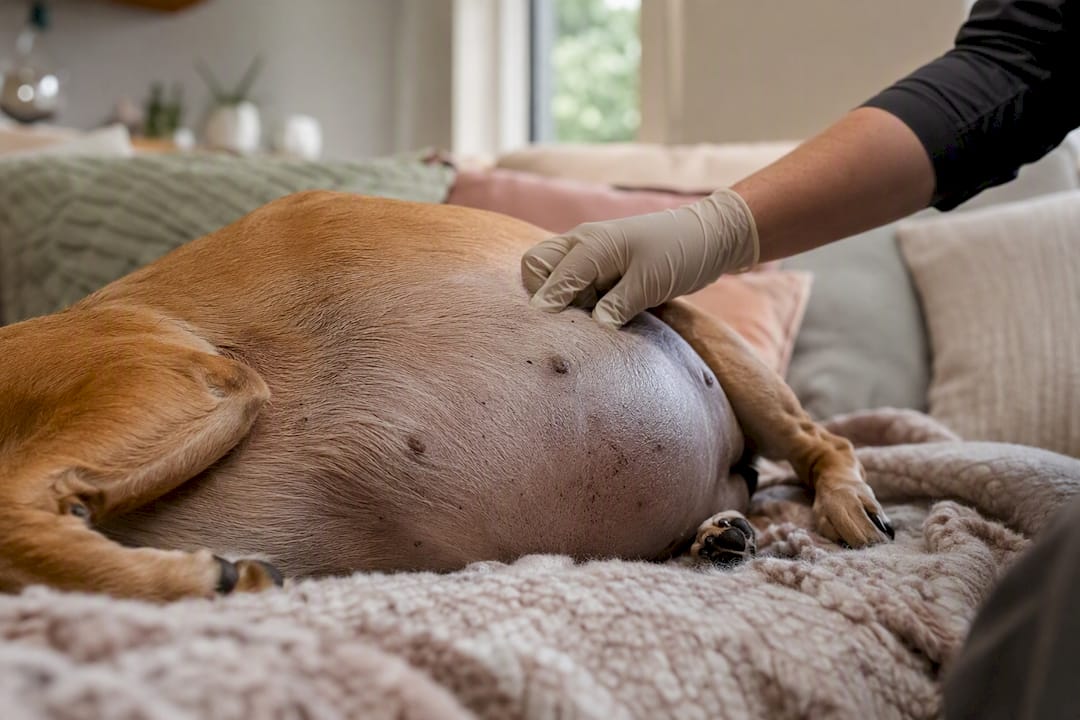
Here’s the illustrative risk: a dog with early bloat can look mildly uncomfortable on camera, pacing, drooling, restless, symptoms that read as “maybe an upset stomach.” In person, a vet feeling a distended, tympanic abdomen recognizes an emergency within seconds. Bloat can turn fatal within hours. A 20-minute video call spent describing symptoms instead of driving to a clinic is time that pet doesn’t have to spare.
If you’re facing one of these situations, the checklist is simple:
Pro Tip: Call ahead. Most emergency clinics can prep for your arrival and tell you what to do en route, like keeping your pet still to avoid worsening an injury, if you call before you leave.
Call your nearest emergency or mobile-capable clinic, transport your pet safely and calmly, and be ready to describe exactly when symptoms started and what changed. Staff triage faster when you arrive with a clear timeline instead of a vague “he’s been off today.”
Do Video and Photo Quality Actually Affect Diagnosis?
Yes, more than most owners expect. A blurry video of your cat limping tells a vet almost nothing about which leg, how severe, or whether it’s neurological versus orthopedic. Poor lighting hides gum color changes that would otherwise flag anemia or shock. A choppy connection drops the exact three seconds where your dog’s breathing pattern would have revealed labored effort.
Owner reporting adds a second layer of distortion. Pet parents describing symptoms tend to compress timelines (“he’s been like this for a while”) or miss details that seem irrelevant but matter clinically, whether vomiting happened before or after eating, whether limping is worse after rest or after activity. Vets are trained to catch nonverbal cues in the room, a flinch, a subtle favoring of one side, that simply don’t transmit well through owner narration.
You can close some of this gap with preparation:
- Film in natural daylight near a window, not under yellow indoor bulbs.
- Get a full-body shot first, then zoom in on the specific area of concern.
- Keep a simple written symptom timeline: what happened, when, and what’s changed since.
- Have a pet scale (even a bathroom scale with a “hold pet, subtract your weight” trick) and a pet-safe thermometer on hand.
Pro Tip: Record a 15-second video of your pet walking across the room before the call. Gait changes are one of the hardest things to describe in words but among the easiest to actually show.
What Happens When Pet Medical Records Get Scattered Across Apps?
Chronic conditions, arthritis, kidney disease, diabetes, depend on a vet seeing the full pattern over months or years. Bounce between three different telemedicine apps and your regular clinic, and no single provider has that complete picture anymore. One AVMA advisory on virtual-only care structures notes that this fragmentation raises real risk of misdiagnosis for complex or chronic patients, because each new provider is essentially starting from partial information.
There’s a sharper risk buried in this pattern too: direct-to-consumer platforms that lack access to a pet’s full history can end up in a cycle of repeated prescription refills without anyone catching a developing problem, sometimes described as pill-mill behavior. A vet who only sees a snapshot of “pet needs pain medication refilled” without seeing the underlying arthritis progression can’t adjust the treatment plan the way a vet managing the full case would.
You can protect against this yourself:
- Ask any telemedicine provider for a written visit summary after every call.
- Forward that summary to your primary vet, or better, request a coordinated second opinion that folds virtual findings into your pet’s existing chart.
- Favor telemedicine options that already integrate with your regular clinic over one-off apps with no connection to your pet’s history.
For senior pets managing multiple conditions, this isn’t a minor administrative detail. It’s the difference between a vet catching a subtle downward trend and missing it entirely.
How to Use Pet Telemedicine Safely and Prepare for a Virtual Visit
Telemedicine earns its keep in specific situations: a medication question, a mobility check-in for a senior dog, deciding whether a mild symptom needs an in-person visit at all. It falls short the moment a real diagnosis or new treatment plan is on the table.
Run through this before booking:
- Ask what changed. Is this a new symptom, or a known condition you’re monitoring? New and worsening symptoms lean toward in-person.
- Check severity against the red-flag list. Any breathing trouble, collapse, bleeding, or suspected poisoning skips telemedicine entirely.
- Confirm the relationship. Do you already have an established VCPR with this vet, or is this platform meant only for general guidance?
- Gather your materials. Photos in good lighting, a short video of any movement issue, a written symptom timeline, and a list of current medications with doses.
- Line up a second pair of hands. Have someone available to hold or reposition your pet during the call so the vet can actually see what they need to see.
- Ask direct questions upfront: Does this establish a VCPR? Are you licensed in my state? Can you prescribe if needed, or will I be referred? What’s the plan if this needs an in-person exam?
- Save everything. Screenshot or request the visit summary, then forward it to your primary clinic so it lands in your pet’s actual chart.
Pro Tip: Keep a running note on your phone titled with your pet’s name and “symptom log.” Update it the moment you notice something off, not right before the call. Real-time notes beat memory every time.
A pre-visit checklist and expectations guide can help you walk in prepared rather than improvising answers on the spot. The better your prep, the more a vet can actually do with the limited window a screen gives them.
How Pet Acupuncture & Wellness Uses Telemedicine Alongside House Calls
We built our practice around house calls for a reason: senior, disabled, and anxious pets often do worse with the stress of clinic visits than with the condition itself. Telemedicine fits into that model as a bridge, not a substitute. We use it for medication check-ins between acupuncture sessions, quick triage calls to decide whether a symptom needs an in-home visit sooner than scheduled, and coaching pet owners through mobility exercises between rehabilitation appointments.
- Follow-up on medication response after a new herbal or pharmaceutical protocol starts.
- Quick triage to decide if a symptom warrants moving up an in-home visit.
- Coaching on rehab exercises or acupuncture aftercare between sessions.
Our telemedicine offerings exist specifically to extend the relationships we’ve already built through in-home care, never to replace the hands-on exam a fragile or aging pet actually needs.
When a case calls for palpation, imaging, or a new diagnosis, we schedule a house call instead of pushing further through video.
What This Article Gets Right That Most Telemedicine Marketing Doesn’t
Most telemedicine platforms sell convenience without mentioning the ceiling on what convenience can accomplish. That’s the gap worth naming plainly: virtual care is genuinely valuable for senior and disabled pets who find travel stressful, but the industry rarely admits how narrow the safe use case actually is.
The conventional advice, “try telemedicine first to save a trip”, gets it backward for anything beyond a routine check-in. The smarter default is asking what a vet would need to touch, smell, or measure to answer your question. If the answer involves a stethoscope, an X-ray, or fingers on the abdomen, skip the video call and go straight to in-person care.
What we’d prioritize differently: treat telemedicine as a scheduling tool, not a diagnostic one. Use it to decide when and whether to come in, not to replace the visit itself. That single mental shift prevents most of the time-delay risk this article covers, and it’s the one piece of judgment no app can make for you.
Sources
- FDA: Veterinarian-client-patient relationships, prescribing/dispensing animal drugs and telemedicine
- Veterinary telemedicine: A new era for animal welfare (PMC review)
- Everything You Need to Know About Veterinary Telemedicine (VCA)
- Veterinary Telemedicine: A New Frontier in Animal Welfare (ASPCA)
FAQ
What are the main limitations of pet telemedicine?
Pet telemedicine cannot perform bloodwork, imaging, or physical palpation, cannot usually establish a new prescribing relationship without a prior in-person exam, and is unsafe for emergencies like breathing trouble or seizures.
What is the rule of 20 in veterinary medicine?
The “rule of 20” refers to a checklist of 20 physiological parameters (fluid balance, oxygenation, pain, nutrition, and more) that critical care vets monitor in hospitalized patients, none of which can be assessed remotely.
Is telehealth coverage extended through 2027?
Some federal telehealth flexibilities for human healthcare have seen extensions debated in Congress, but veterinary telemedicine operates under separate FDA and state veterinary board rules that aren’t tied to those human healthcare deadlines.
Is veterinary school harder than medical school?
Veterinary medicine (DVM) and human medicine (MD) both require intense, multiyear training, but vets must master anatomy, physiology, and treatment across multiple species rather than one, which many veterinarians describe as its own distinct challenge rather than simply “harder.”
When should I skip telemedicine and go straight to an in-person vet?
Go in person immediately for breathing difficulty, collapse, seizures, uncontrolled bleeding, suspected poisoning, or any symptom that might require imaging, bloodwork, or a procedure to diagnose properly.