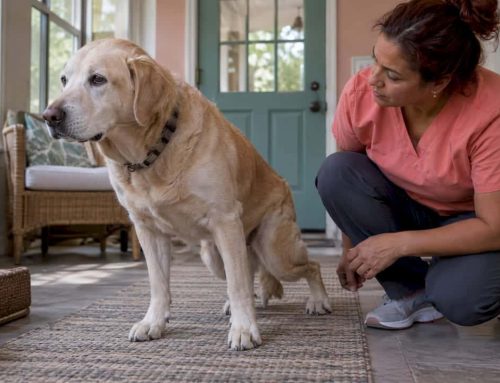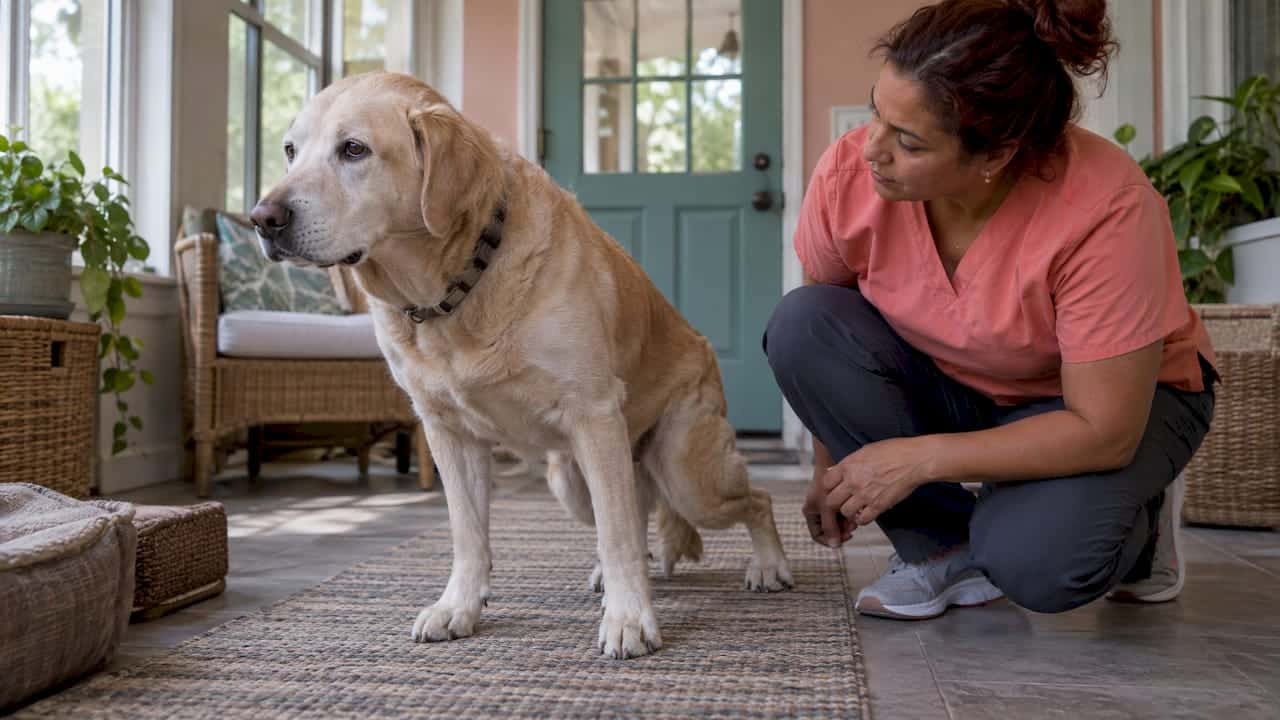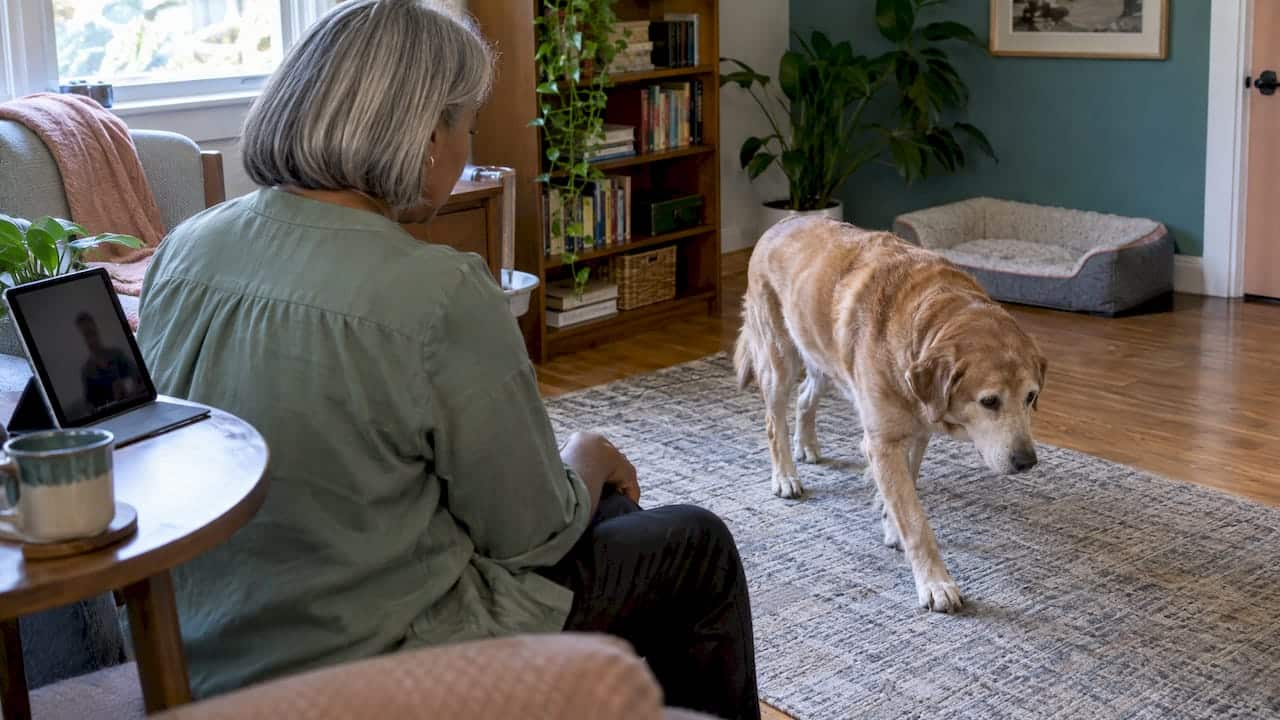
If your dog is limping on a front leg, stiff after naps, or slow to get up the stairs, elbow dysplasia may be the reason. Acupuncture is one of the gentle, drug-free tools veterinarians use to help ease that discomfort. It works best as one part of a plan that also includes weight control, appropriate pain medication, rehabilitation and, when needed, a surgical opinion. Here is what that looks like, what the research says, and how it can be done in your own living room.
TL;DR
- Elbow dysplasia is a developmental joint disease. It can’t be cured, but it can be managed well, and many dogs keep a good quality of life.
- Acupuncture is used to help with pain and muscle tension around the elbow. It is meant to sit alongside conventional care, not replace it.
- Research on acupuncture for dog joint pain is still developing, and professional guidelines favor using it inside a multimodal plan.
- At-home acupuncture spares an uncomfortable dog the car ride and the waiting room, which matters for senior, large or anxious dogs.
- Weight management, gentle exercise and rehabilitation do much of the heavy lifting at home.
Table of Contents
- What elbow dysplasia does to your dog
- How acupuncture is used for elbow dysplasia
- What the research says
- What an at-home acupuncture visit looks like
- Where acupuncture fits with surgery, medication and rehab
- Elbow dysplasia home care that makes a difference
- Safety: when acupuncture needs extra care
- What it costs in South Tampa
- Our perspective
- Bring comfort to your dog’s elbows, at home
- FAQ
- Sources
What elbow dysplasia does to your dog
Elbow dysplasia is a developmental orthopedic disease. It most often affects medium, large and giant breeds while they are still growing. The name covers several problems in the joint: a fragmented medial coronoid process, osteochondritis of the inner humeral condyle, an ununited anconeal process, and a poor fit between the bones, as described in the Merck Veterinary Manual. The Orthopedic Foundation for Animals describes it as an inherited condition, and notes that these problems can occur alone or together and that lameness can stay subtle for a long time.
You might notice:
- Limping on one or both front legs
- Stiffness after rest that eases as your dog warms up
- Reluctance to climb, jump or play the way they used to
- A shorter stride, or an elbow that looks swollen or feels sore when touched
In some dogs the signs begin between 4 and 8 months of age. Others, especially dogs with both elbows affected, aren’t diagnosed until after their first birthday, according to the same Merck manual entry. Over the years the joint wears and arthritis follows, which is why many owners first seek acupuncture when their dog is middle-aged or senior.
Cornell’s Riney Canine Health Center explains that elbow dysplasia is the second most common cause of elbow lameness in dogs after osteoarthritis. It can’t be cured, but it can be well managed, and many dogs have a good long-term outlook. That is the hopeful part, and it’s where we like to start with families.
How acupuncture is used for elbow dysplasia
In Traditional Chinese Veterinary Medicine (TCVM), the body is understood as a balance of Yin and Yang, like shade and sunlight on the same hillside. Qi, the body’s vital energy, travels along meridians, which you can picture as a highway system. When Qi can’t move freely through an achy, stiff joint, pain and tension build up. Fine needles placed at specific points are meant to restore that flow.
In practical, Western terms, acupuncture is used to help with:
- Pain around the elbow and the compensating muscles in the shoulder, neck and back
- Muscle spasm and tightness from favoring a sore leg
- Overall comfort, relaxation and willingness to move
A skilled practitioner commonly treats points above and below the affected joint, as well as points along the spine and the opposite limb, because dogs with a sore elbow shift weight to the rest of the body. Some visits also include electroacupuncture, a gentle current passed between needles, or acupressure for dogs who do best with a very light touch.
What the research says
It helps to be clear-eyed about the evidence, because it’s still growing.
The 2015 AAHA/AAFP Pain Management Guidelines state that the task force considers acupuncture a compelling, safe method for pain management that should be strongly considered within multimodal plans. It is minimally invasive, and for most animals it is not uncomfortable and is often pleasant.
A 2017 prospective study of 181 dogs with neurological and musculoskeletal disease followed them for up to 24 weeks. Success rates were 79% for the chronic pain index, 84% for quality of life and 78% for pain and locomotion scores. Dogs with musculoskeletal problems improved more in chronic pain and locomotion than those with neurological problems. This was not a controlled trial of elbow dysplasia alone, but it reflects the kind of change owners often tell us about.

An evidence-based review by Huntingford and Petty concludes that acupuncture can be used independently or as part of a balanced multimodal approach for acute and chronic pain, and that in skilled hands it can be a safe and effective modality for companion animals.
The study most often cited for elbow dysplasia specifically is a 2006 trial in the Journal of the American Veterinary Medical Association. It was small: nine dogs with chronic elbow osteoarthritis secondary to dysplasia, treated with electrostimulated acupuncture. It did not find significant changes in ground reaction forces or pain scores over its short protocol. Larger, longer studies of elbow patients are still needed. The more recent AAHA guidelines likewise describe the body of evidence-guided studies as limited, while acknowledging acupuncture’s reported use as an adjunct for postoperative pain and intervertebral disc disease.
What does that mean for your dog? It supports how we use acupuncture: as a comfort-focused add-on within a bigger plan, with a defined trial period and an honest check-in on how your dog is moving. You can read more about the broader picture in our guide to TCVM for arthritis.
What an at-home acupuncture visit looks like
Many dogs with sore elbows are also big dogs. Lifting a 70-pound Lab into the back seat, then asking them to walk across a slippery clinic floor, can leave them more sore than when they started. A house call changes that.
Here is the typical flow of a first visit:
- History and conversation. We talk about your dog’s daily routine, when the limp is worst, what medications they take, and any imaging or records from your regular veterinarian.
- Gentle exam. We watch your dog move on the floors they actually live on, then check the elbows, shoulders, spine and muscles for pain and tightness.
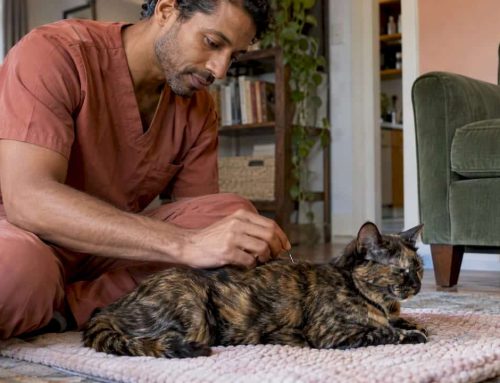
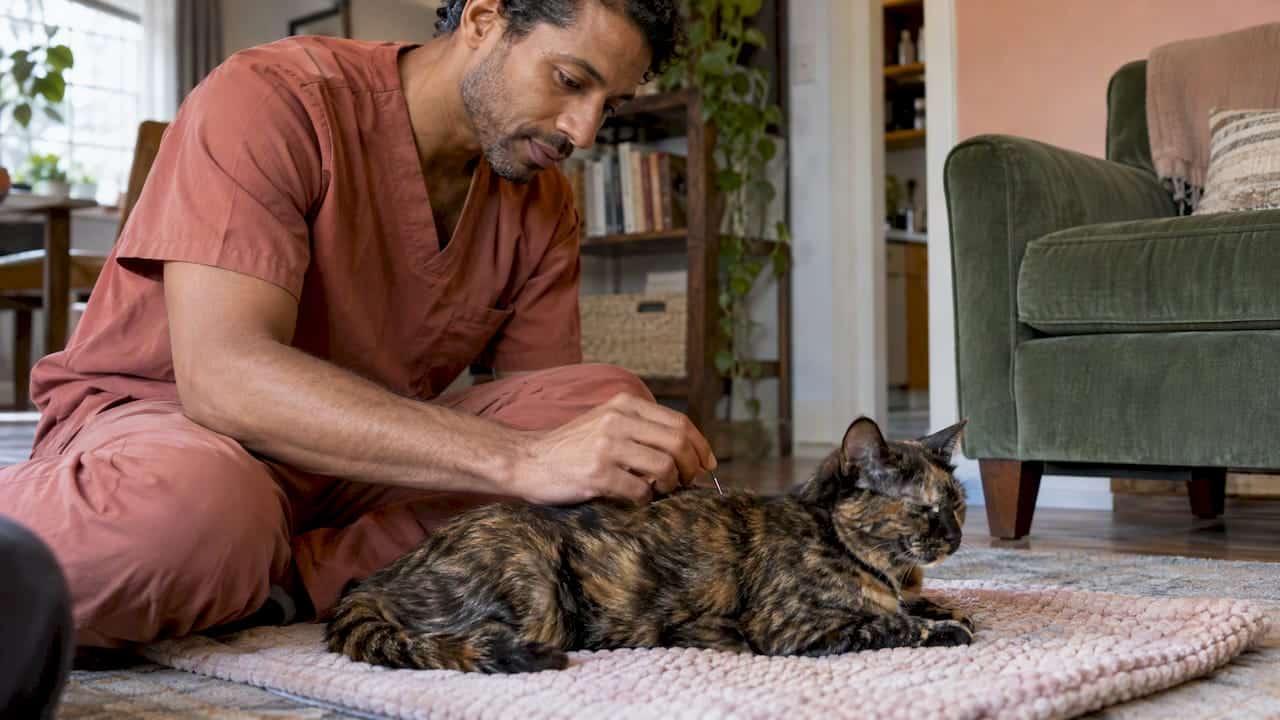
- Treatment. Needles go in at selected points while your dog rests on their own bed. Many dogs relax, sigh or doze off.
- Home plan. You get simple instructions for the days that follow, from comfort measures to activity limits, and we discuss how often to return.
Because treatment plans are tailored to your dog’s health needs and home setup, we can also look at your stairs, rugs and sleeping spots and suggest changes. We work collaboratively with your dog’s regular veterinarian so that care complements, rather than competes with, what is already in place.
How many sessions? Often a short series is planned first, then spaced out as your dog improves. Our page on how often a dog should get acupuncture walks through typical schedules.
Where acupuncture fits with surgery, medication and rehab
Elbow dysplasia care is rarely one thing. Cornell notes that because the elbow can’t correct itself, surgery is often considered the best choice for symptomatic dogs, and that on average about 85% of surgical cases show some improvement in lameness and comfort. The MSD Veterinary Manual adds that surgery is best performed before arthritis develops, and that anti-inflammatory drugs and joint fluid modifiers can help with pain and inflammation.
So a thoughtful plan may combine:
- A surgical consultation with a board-certified veterinary surgeon, especially for young dogs or newly diagnosed cases
- Medication chosen by your veterinarian, such as anti-inflammatories or joint supplements
- Weight management, which takes load off the joint
- Rehabilitation, including strengthening and range-of-motion work
- Acupuncture, laser and herbal or food therapy for comfort and whole-body support
If your dog is heading for surgery, acupuncture can be part of the lead-up and the recovery period, working alongside your surgeon’s instructions. If surgery isn’t an option because of age, other health conditions or cost, acupuncture and rehabilitation become even more valuable for keeping your dog comfortable and moving. Cornell lists physical therapy options for these dogs, including massage, hydrotherapy, laser, TENS, ice therapy and acupuncture.
Our at-home rehabilitation therapy is built around the same idea: short, doable sessions that fit your dog’s day. If your dog also has dysplasia in the hips, our hip dysplasia acupuncture guide covers the overlap.
Elbow dysplasia home care that makes a difference
Between visits, small daily habits matter most.
Keep your dog lean
Extra weight is extra load on a joint that is already struggling. Cornell lists weight management first among home measures. Ask your veterinarian for a target weight and measure meals rather than guessing. Our food therapy consults look at diet through a TCVM lens, tailored to your dog.
Exercise gently and consistently
Short, steady walks beat weekend marathons. Cornell advises moderate exercise with a warm-up and cool-down. Avoid repetitive jumping, hard fetch sessions and rough stop-and-start play.
Make the house easier
- Lay non-slip runners on slick floors
- Use ramps for the car and sofa
- Raise food and water bowls slightly if your dog finds it hard to lower their head
- Provide a thick, supportive bed away from drafts
Keep a simple routine
Rehabilitation protocols from the Elbow Score Database suggest home programs of three to five exercises, shown in person, with a total daily time of 15 to 20 minutes, and an easier version for bad days. That matches our experience: a plan you can keep up beats an ambitious one you can’t.
Support the joints from the inside
Omega-3 fatty acids are a common part of joint-support plans, and these omega-3 benefits for dogs with arthritis are worth discussing with your veterinarian before you add a supplement. We can also talk with you about herbal therapy as part of a TCVM plan.
Watch and write things down
A quick note each evening, such as how your dog got up, whether they took the stairs, and whether they limped on the walk, gives us and your regular veterinarian something real to measure. The 2015 AAHA/AAFP guidelines encourage giving owners clear written instructions and inviting questions by phone or email, and we do the same.
Safety: when acupuncture needs extra care
When performed by an appropriately trained veterinary professional, acupuncture generally causes few adverse effects, according to the Merck Veterinary Manual. Common mild reactions listed by Today’s Veterinary Practice include tiredness, increased thirst, soreness, muscle spasm and minor bleeding, which typically pass quickly.
A few situations call for adjusted technique or no needles at all. Huntingford and Petty list these:
- Inflamed or infected skin
- Bleeding disorders
- Fractures or acute trauma at the site
- Pregnancy, where certain points are avoided
- Electroacupuncture across tumor sites, across the chest in dogs with pacemakers, or across the skull in dogs with seizure conditions
That is why a veterinarian should perform the treatment after a proper exam and review of your dog’s history. Tell us about every medication, past surgery and diagnosis, and mention anything unusual in the 24 hours after a session. If your dog seems to be in sudden, severe pain or stops using the leg altogether, call your regular veterinarian or an emergency clinic rather than waiting for the next appointment.
What it costs in South Tampa
Our published fee schedule lists the following:
| Service | Price |
|---|---|
| Initial assessment and acupuncture with a technician | from $430 |
| Technician mobile fee | $60 |
| Electroacupuncture | $30 |
| Laser treatments | $45 to $120 per treatment |
| At-home rehabilitation packages | $85 to $918 |
| Vitamin B12 injection | $31.50 |
Acupressure, herbal therapy, food therapy and telemedicine are available too, and we’ll go over what makes sense for your dog when you call.
Our perspective
We see elbow dysplasia most often in dogs whose families have already done a lot right: the medication is on board, the weight is under control, and yet the dog still hesitates at the back step. That’s usually when owners start to wonder what else can help.
Our answer is a calmer, more personal kind of care. We believe a dog who is relaxed on their own bed, with their family nearby, tells us far more about how they really move than a dog who has just survived a car ride and a waiting room. For senior, large and anxious dogs, that matters.
We design acupuncture, laser, rehabilitation, herbal and food therapy as a complement to your regular veterinarian’s work, never a replacement for it. We’d rather build a plan with a clear trial period and honest check-ins, so you can see for yourself how your dog is responding, and adjust together.
Elbow dysplasia is a lifelong condition, but it doesn’t have to mean a life of pain. Many dogs enjoy comfortable, active years when the whole team works together, and we’re proud to be part of that team in your home.
Pet Acupuncture & Wellness
Bring comfort to your dog’s elbows, at home
We’re a mobile veterinary practice serving South Tampa, specializing in in-home integrative care for senior, disabled and anxious dogs and cats. Your dog’s first visit includes an assessment and acupuncture, and we can add laser therapy, rehabilitation, herbal or food therapy as needed.
If you’d like to talk it through first, our telemedicine consultations are a good place to start. When you’re ready, visit our home page to request an appointment.
FAQ
Can acupuncture cure elbow dysplasia?
No. Elbow dysplasia is a structural joint disease, and Cornell notes it can’t be cured, only managed. Acupuncture is used to help with pain, muscle tension and comfort, alongside other care your veterinarian recommends.
How many acupuncture sessions does a dog with elbow dysplasia need?
It depends on the dog. A short initial series followed by spacing out visits is a common approach, with your dog’s response guiding the schedule. Our guide to acupuncture frequency for dogs explains typical patterns.
Is elbow dysplasia surgery worth it?
Often it is worth discussing. Cornell reports that on average about 85% of dogs show some improvement in lameness and comfort after surgery, and the MSD manual notes outcomes are best before arthritis develops. A board-certified veterinary surgeon can tell you whether your dog is a candidate, and acupuncture and rehab can support either path.
When is acupuncture not recommended?
Needles are avoided on infected or inflamed skin, open wounds, fracture sites and tumors, and in dogs with bleeding disorders. Pregnancy and conditions like pacemakers or seizures change which points and techniques are used. A veterinary exam beforehand sorts this out.
Can I do anything at home between visits?
Yes. Keep your dog lean, walk them in short, steady outings, add traction and ramps around the house, and follow any home exercises we show you. A short daily note on how your dog moves helps us fine-tune the plan.
Sources
- Elbow Dysplasia in Dogs, Merck Veterinary Manual
- Elbow Dysplasia, Orthopedic Foundation for Animals
- Elbow dysplasia, Cornell University College of Veterinary Medicine
- 2015 AAHA/AAFP Pain Management Guidelines for Dogs and Cats
- Effect of acupuncture on pain and quality of life in canine neurological and musculoskeletal diseases
- Evidence-Based Application of Acupuncture for Pain Management in Companion Animal Medicine
- Effects of electrostimulated acupuncture on ground reaction forces and pain scores in dogs with chronic elbow joint arthritis, JAVMA
- 2022 AAHA Pain Management Guidelines for Dogs and Cats
- Other Joint Disorders in Dogs, MSD Veterinary Manual
- Rehabilitation and Physical Therapy for Elbow Dysplasia, Elbow Score Database
- Acupuncture in Veterinary Patients, Merck Veterinary Manual
- Use of Acupuncture for Pain Management, Today’s Veterinary Practice