A virtual rehab consult is a scheduled video visit in which a veterinarian watches your dog move, guides you through a few simple checks, and adjusts the home exercise and comfort plan. It works best for rechecks and plan adjustments once a dog has already been examined in person. It does not replace a hands-on exam, and in many states the law requires that exam before a veterinarian can diagnose or treat through telemedicine.
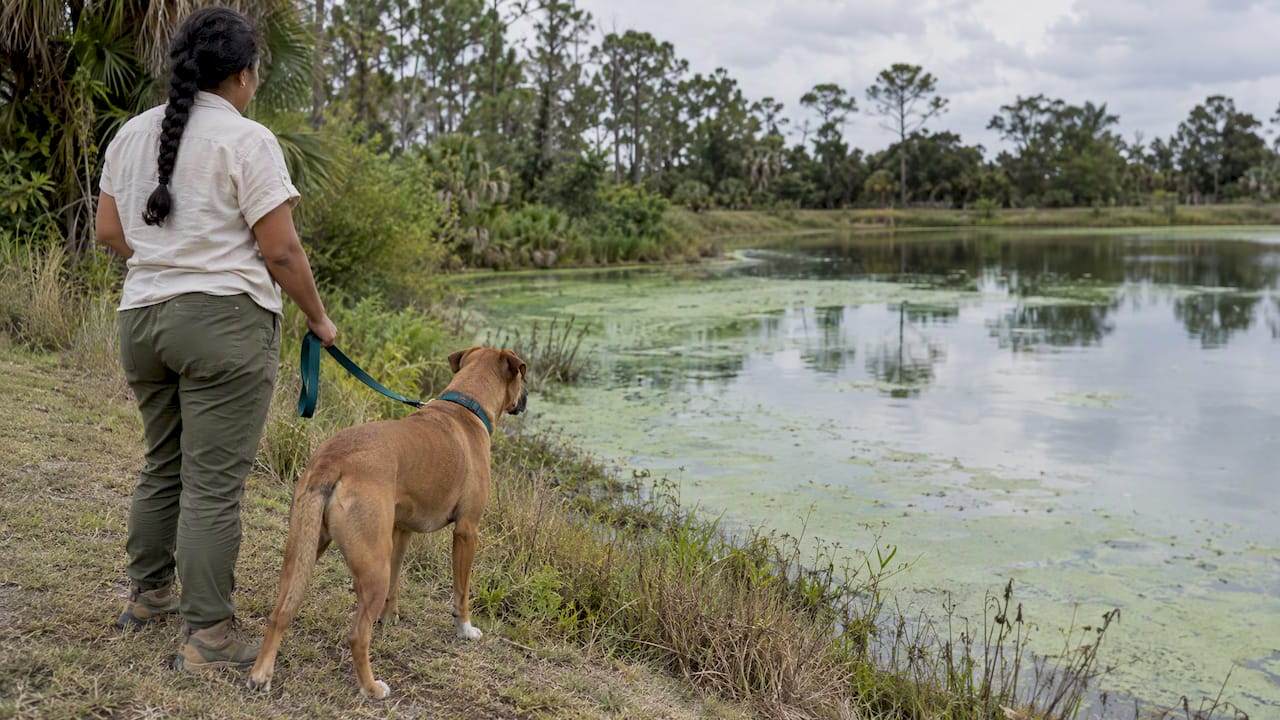
If your dog is older, painful, anxious in the car, or simply too big or too wobbly to load up easily, that is welcome news. Some of the work of rehabilitation can come to you, on your own floors, where your dog is most relaxed.
TL;DR
- A virtual rehab consult is a video visit where you act as the veterinarian’s hands: you show your dog walking, standing and rising, and you help with simple movement checks.
- In a study of canine rehab rechecks, owners were about as satisfied with video visits as with in-person ones, and they rated scheduling higher.
- Telemedicine is not teletriage. Teletriage only sorts out urgency. Telemedicine gives patient-specific advice, usually after a veterinarian-client-patient relationship (VCPR) exists.
- State law decides what can happen by video. Many states require an in-person exam or premises visit first, and a house call can meet that requirement.
- Good preparation is simple: clear video, good lighting, a non-slip surface, a helper, and a short list of what you have noticed.
Table of Contents
- What a virtual rehab consult for dogs actually is
- What happens during the visit
- What can be handled remotely, and when your dog needs hands-on care
- Teletriage vs. telemedicine: the difference matters
- State law: why an in-person visit often comes first
- Telemedicine for anxious, senior and disabled dogs
- How a telemedicine follow-up works
- How to prepare for the appointment
- Our perspective
- Getting rehab help for your dog in South Tampa
- FAQ
- Sources
What a virtual rehab consult for dogs actually is
Think of it as a recheck conducted through a screen. Rehabilitation is a process rather than a single appointment: the veterinarian sets a plan, you carry it out at home, and then someone has to check whether it is working. A virtual consult handles that middle part.
A study of canine rehabilitation rechecks in the United States used 30-minute video consultations that included owner-assisted assessment of functional mobility and discomfort. Owners reported satisfaction comparable to in-person consultations, and they were more satisfied with the scheduling. That matches what many families tell us: not having to plan around a car ride for a stiff, nervous dog takes a real weight off.
It is worth being clear about what the video visit is. It is a conversation and an observation session. The veterinarian cannot feel a swollen joint, test a reflex, or run bloodwork through a camera. What you get instead is a look at how your dog moves in their own environment, which is often more honest than how they move in an unfamiliar clinic, where adrenaline can hide a limp.

What happens during the visit
Every practice runs these a little differently, but a typical rehab video consult follows a rhythm like this:
- Catch-up. The veterinarian asks how the last week or two has gone: appetite, sleep, how your dog gets up in the morning, whether stairs or slick floors have become harder.
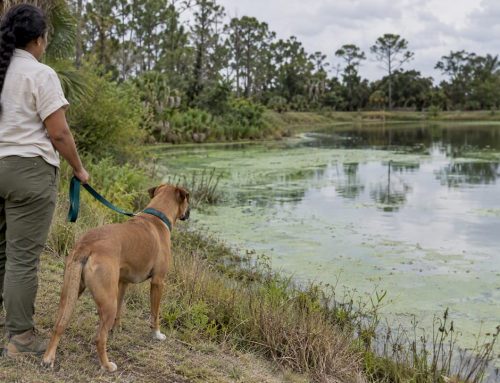
- Watching movement. You walk your dog on a leash across a hallway or yard while the camera follows. The veterinarian looks at stride, weight shifting, head carriage, and how the back legs track.
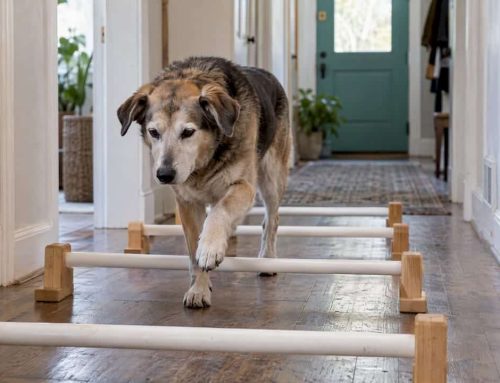
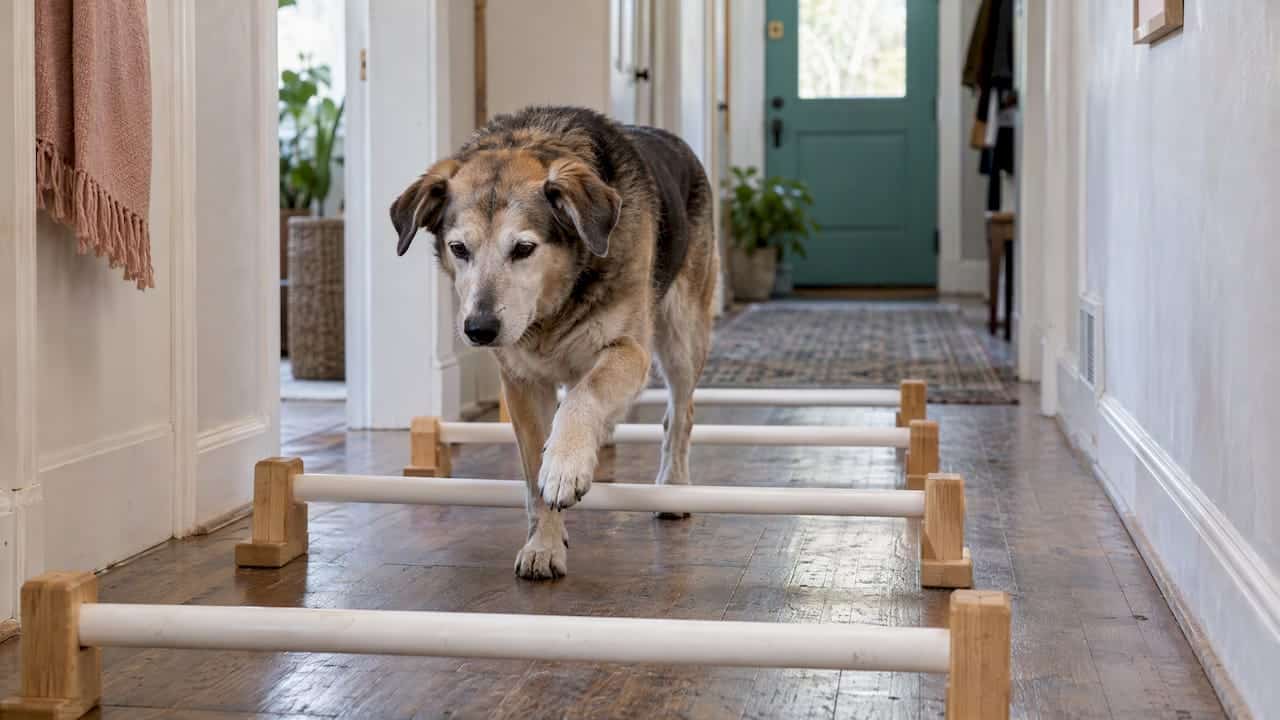
- Guided checks. You may be asked to help your dog sit, stand, turn, or step over a low object, and to show where your dog reacts when you gently touch certain areas. Owner-assisted assessment is exactly the approach the study above used.
- Review of the home plan. Exercises, rest, traction on floors, supplements or herbs, and comfort measures are reviewed, tweaked or progressed.
- Next steps. You leave knowing what to repeat, what to change, what to watch for, and when the next check should be, by video or in person.
If you have already seen our guide to a virtual vet visit, the flow will feel familiar. A rehab consult just spends more time on movement.
What can be handled remotely, and when your dog needs hands-on care
The most useful way to think about it comes from the AVMA’s connected care framework. AVMA guidance on telehealth notes that remote evaluation can help decide whether an in-person examination is needed, while reminding clinicians to account for incomplete visual information, owner descriptions, missed physical cues and the lack of diagnostic testing. It frames telehealth as valuable when it improves patient care and expands access, and not as a substitute for an examination that is truly necessary.
In practical terms, here is how that tends to sort out for dogs:
| Situation | Good fit for a video consult | Needs hands-on care |
|---|---|---|
| Progress check on a rehab plan already started | Yes | If progress stalls |
| Adjusting home exercises or floor setup | Yes | Rarely |
| Senior dog with slowly worsening stiffness, already examined | Yes, for monitoring | If the change is sudden |
| Questions about harnesses, ramps, mats | Yes | Fitting may need a visit |
| New limp with no known cause | Not on its own | Yes |
| Sudden weakness, dragging paws, loss of bladder control | No | Yes, promptly |
| Needs acupuncture, laser, or electroacupuncture | No, these are done in person | Yes |
Sudden hind-end weakness, collapse, severe pain, or trouble breathing are emergencies, not video-visit topics. Call an emergency hospital right away.
For dogs with limited mobility, our page on at-home rehab for paralyzed dogs explains how in-person home care is structured, and mobility aids for dogs covers the equipment that makes daily life safer between visits. For a clearer picture of the boundaries, see what pet telemedicine cannot do.
Teletriage vs. telemedicine: the difference matters
These two words get used interchangeably online, and they are not the same thing.
- Teletriage is an electronic assessment of how urgent a problem is and whether your dog needs to be seen. According to AVMA connected care guidance, it does not involve rendering a diagnosis.
- Telemedicine is the exchange of patient-specific clinical information electronically, and it leads to patient-specific recommendations and follow-up.
The AVMA explains that teletriage can determine whether an animal needs veterinary attention, and how quickly, without a VCPR. Telemedicine, by contrast, provides patient-specific recommendations and follow-up after a VCPR exists.
So if you message a clinic at 9 p.m. asking whether your dog’s limp can wait until morning, that is triage. If you sit down with the veterinarian who already knows your dog and review a rehab plan, that is telemedicine.
State law: why an in-person visit often comes first
A VCPR is the legal and ethical relationship that lets a veterinarian diagnose and treat your dog. How it can be established depends on where you live. The AVMA reports that federal law requires an in-person exam or premises visit for covered activities, that 43 states and the District of Columbia use essentially the FDA’s VCPR language, and that 22 states have added wording specifically prohibiting the VCPR from being established electronically.

States keep updating these rules. Colorado, for example, now requires an in-person physical examination or timely premises visit to establish a VCPR, and only a licensed veterinarian with an established VCPR may prescribe through telemedicine.
What does this mean for you? Ask any provider offering a virtual rehab consult two questions: Has a veterinarian licensed in my state examined my dog in person, and who will be on the video call? If you live in Florida, we have written about how Florida pet telehealth rules work in practice and how a mobile practice uses telemedicine in Florida. Check your own state’s veterinary board for the current rules if you are elsewhere.
This is one reason the house call model fits so well. A first visit at your home can establish the relationship in person. After that, video follow-ups can fill the gaps between visits without sending your dog back into the car.
Telemedicine for anxious, senior and disabled dogs
For some dogs, the ride is the hardest part of the appointment. They pant in the car, tremble in the waiting room, and come home exhausted and sore. For a large dog with arthritis or a dog who slips on clinic tile, the trip can set back the very progress you are trying to build.
In a randomized JAVMA trial of 30 dogs, owner satisfaction with videoconference postoperative rechecks was comparable to in-clinic rechecks. Owners reported that their dogs were less afraid than usual, though that difference was not statistically significant. We read that as encouraging rather than conclusive: it points in the direction many caregivers already feel, but it is not proof that every anxious dog will relax on camera.
Some ways to make a video visit calmer:
- Hold it where your dog already naps, not in a room that is out of the ordinary.
- Keep a favorite chew or lick mat ready so the camera is not the main event.
- Let your dog sniff the phone or tablet first, then set it on a stand.
- Skip the visit if your dog is in obvious pain or distress, and call instead.
Our page on telemedicine visits for senior pets goes deeper on deciding between home care and the clinic.
How a telemedicine follow-up works
A follow-up is the most common and most natural use of video. In the JAVMA trial, the video rechecks took place 8 to 19 days after sterilization surgery to assess healing. The authors found that videoconferencing could replace selected routine postsurgical rechecks, but they stressed careful case selection, informed client education, compliance with state law, and that telemedicine is not a replacement for physical examination.
For rehab, a follow-up usually means the veterinarian reassesses:
- How your dog rises from lying down and whether it takes fewer attempts
- Gait on different surfaces and whether the pattern looks more even
- Comfort during guided movements you perform
- Whether home exercises are being done safely and correctly
- Appetite, sleep and mood, which often change before movement does
The same logic applies: if the picture is not improving, or looks worse, the next step is an in-person exam, not a longer video call.
How to prepare for the appointment
This is where you make the visit worth it. A few minutes of setup can change what the veterinarian is able to see.
- Pick the space. Choose a hallway or room with a clear path of about 15 to 20 feet if you can, and good daylight or bright lamps. Avoid backlighting from a window behind your dog.
- Make the footing safe. Use a non-slip surface. A slippery floor can make a healthy dog look unsteady, which can mislead everyone.
- Recruit a helper. One person walks the dog and another holds the camera, so the veterinarian can see the whole dog, from the side and from behind.
- Test your tech. Charge the device, check the link, and make sure the camera and microphone are working before the call.
- Record a short clip beforehand. A 30 to 60 second video of your dog on a typical day, such as getting up or climbing a step, shows patterns that may not appear during the visit.
- Write a short list. Note what has changed, medications and supplements, questions, and any times of day that are better or worse.
- Have supplies handy. Leash, treats, a towel or yoga mat, and any ramps, harnesses or slings you are using.
- Keep records close. Have your regular veterinarian’s notes or imaging reports available if you have them.
What a home-care plan usually includes
After the visit, expect a plan you can actually follow. It typically covers gentle exercises or walking goals, rest and activity balance, floor traction and furniture adjustments, comfort measures such as warmth or massage, and a date for the next check. Ask the veterinarian to put it in writing, and ask what would make them want to see your dog sooner.
Our perspective
We built our practice around a simple belief: a dog heals best when the care comes to the dog. Many of the pets we see are seniors, dogs with limited mobility, or dogs who are anxious about the car and the clinic. For them, the travel can be as hard as the condition.
That is why we see video as one useful tool in a bigger home-based plan. We pair in-home visits with telemedicine and tele-advice so that we can see how a pet is moving between appointments, adjust exercises, and decide together with you whether a hands-on visit is needed sooner.
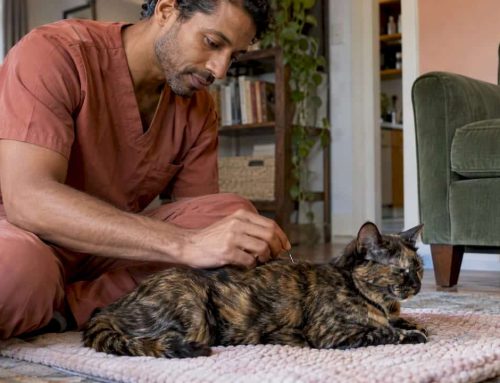
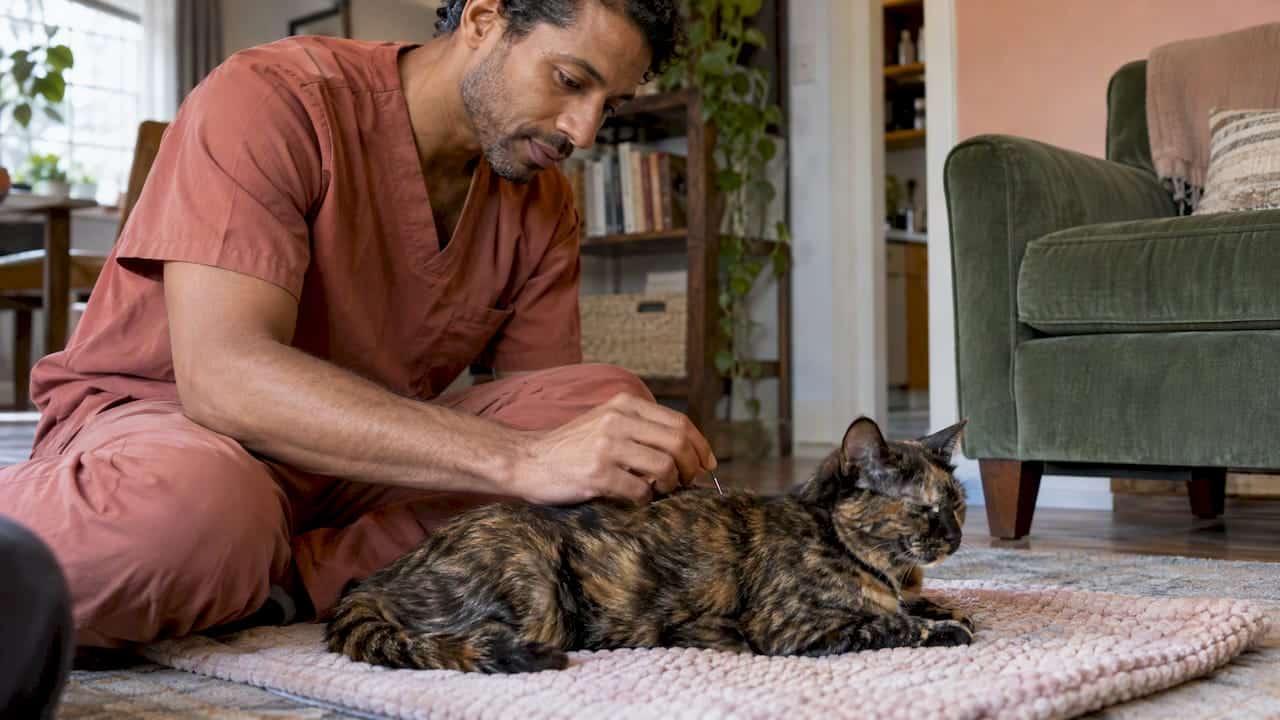
We also think integrative care works best as a team effort. Rehabilitation, laser therapy, acupuncture, herbal and food therapy, and conventional medicine each bring something. We work alongside your pet’s regular veterinarian to complement existing care, and we tailor each plan to your dog’s health needs and the layout of your home.
If you are not sure where to begin, start with a conversation. We can help you work out what your dog needs and how to deliver it without the stress of a trip.
Pet Acupuncture & Wellness
Getting rehab help for your dog in South Tampa
If you live in South Tampa, we bring integrative rehabilitation to your home. Our rehabilitation therapy is designed around senior, disabled and anxious dogs, and it can include laser treatments, acupuncture and other integrative therapies alongside your regular veterinarian’s care. You can read about our remote veterinary consultations if you want to start with a video conversation.
Here are the published prices from our cost of services page:
- Initial assessment and acupuncture with a technician: from $430
- Laser treatments: $45 to $120 per treatment
- At-home rehabilitation packages: $85 to $918
- Electroacupuncture: $30
- Technician mobile fee: $60
Telemedicine and tele-advice do not have a published price, so ask us when you get in touch. To book, start from our South Tampa mobile vet page.
FAQ
Can a virtual rehab consult replace an in-person exam for my dog?
No. The authors of the JAVMA trial said telemedicine is not a replacement for physical examination, and AVMA guidance says remote evaluation is useful partly because it helps decide whether an in-person exam is needed. Video works best for rechecks and plan adjustments after your dog has been examined.
What is the difference between teletriage and telemedicine?
Teletriage assesses how urgent a problem is and whether your dog needs to be seen, without giving a diagnosis. Telemedicine delivers patient-specific advice and follow-up, which generally happens once a VCPR exists. If your dog seems to be in sudden distress, skip both and go to an emergency hospital.
Is telemedicine good for anxious dogs?
It can be. In a randomized trial, owners said their dogs were less afraid than usual during video rechecks, though the difference was not statistically significant. Staying home removes the car ride and waiting room, but a very distressed or painful dog should be seen in person.
How long is a virtual rehab consult?
The canine rehab recheck study used 30-minute video consultations. Your provider may schedule differently, so ask when you book and have your video and notes ready before the call starts.
Do I need a first visit before a video follow-up?
Usually, yes. Many states require an in-person exam or premises visit to establish a VCPR, and the FDA’s definition does the same for covered activities. Check with your veterinarian and your state veterinary board for the rules that apply where you live.
Sources
- Veterinary telerehabilitation satisfaction study, PMC
- Owner satisfaction with videoconferencing for postoperative rechecks, JAVMA
- Using Connected Care (Telehealth) Successfully in Veterinary Practice
- Concerns about a virtual VCPR, AVMA
- Colorado enacts bills impacting veterinary technician scope and telemedicine, AVMA