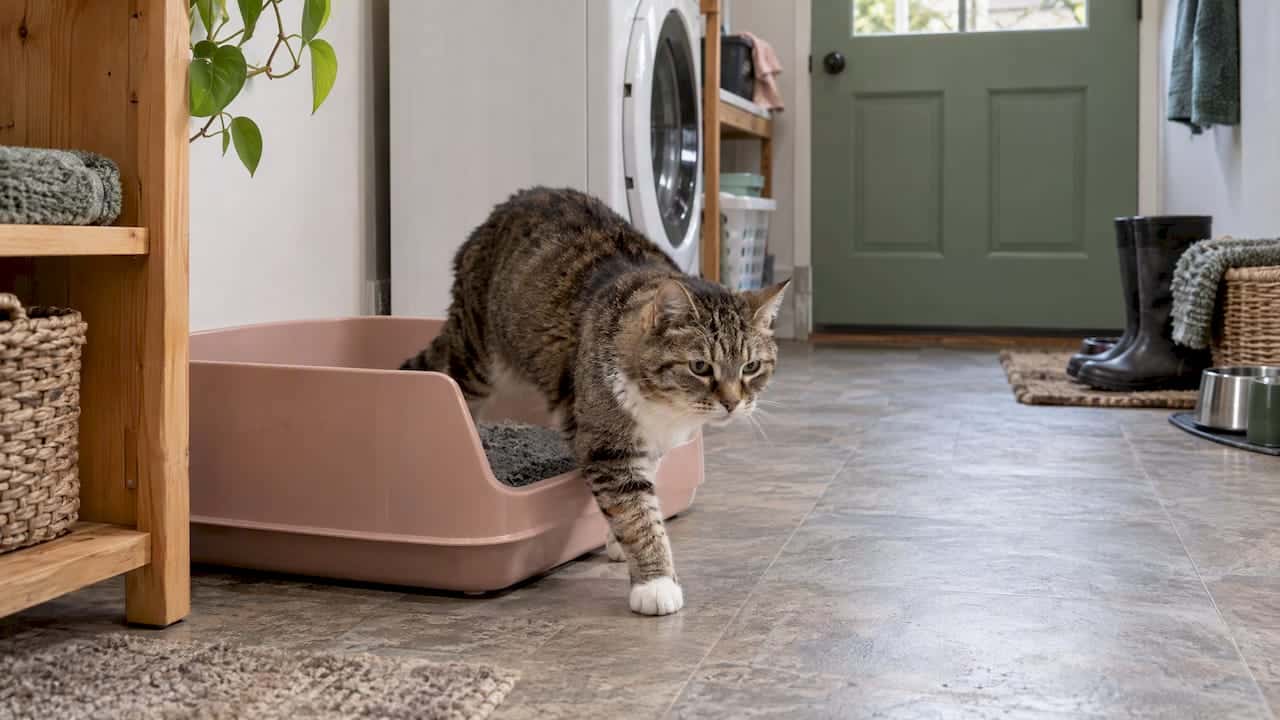
If your cat has inflammatory bowel disease (IBD), you already know the pattern: the vomiting, the loose stools, the weight that creeps down, the good week followed by a bad one. Acupuncture is one of the complementary options veterinarians use alongside diet and medication for cats like yours. It does not replace your regular vet’s diagnosis or treatment plan. It works next to them, and for a cat who hates the carrier, it can happen on the couch, in a favorite bed, or by a sunny window.
Here is what the research says, what a session looks like, and how to decide whether it suits your cat.
TL;DR
- Veterinary acupuncture is used as a complementary therapy for cats, alongside conventional care, never as a stand-in for a diagnosis or for emergency treatment.
- A professional veterinary paper describes acupuncture, Chinese herbs and diet management together as an effective approach to IBD in small animals, while researchers also call for more high-quality trials.
- Cats are often more relaxed when treatment happens at home, in a favorite bed or chair.
- Cats that cannot stay still, or are very anxious or aggressive, may not be good candidates, and caution applies with cancer, clotting problems or a weak immune system.
- In South Tampa, we bring acupuncture to your cat’s home. An initial assessment and acupuncture visit with a technician starts at $430.
Table of Contents
- What IBD does to a cat, and why vets treat it in layers
- What the research says about acupuncture for feline IBD
- How acupuncture is done on a cat
- A TCVM view: Qi, the digestive “Earth” and the highway system
- What a session looks like at home
- How many sessions, and how will you know it is helping?
- Is acupuncture safe for a cat with IBD?
- Working with your regular veterinarian
- Our perspective
- What it costs in South Tampa
- Book an at-home visit for your cat
- FAQ
- Sources
What IBD does to a cat, and why vets treat it in layers
IBD is a chronic inflammation of the digestive tract. Cats who have it may vomit, have diarrhea, lose weight or lose their appetite. Getting to an actual IBD diagnosis matters, because the right treatment depends on it. A review in a veterinary journal explains that rational therapy requires a definitive diagnosis and that treatment failures are not uncommon, which is why vets sometimes add other therapies when a cat is not responding well.
The usual backbone is diet and medication. The same review notes that cats with IBD are generally treated with dietary manipulation and immunosuppressive therapy. A separate review adds that treatment includes dietary and pharmacologic therapy, and that probiotic effectiveness has not been established in controlled clinical trials. That is a useful reminder: the supplement aisle can’t stand in for a plan built with your vet.
This is the gap where integrative care comes in. When a cat has been through trial diets and medications, and the symptoms still flare, owners understandably ask what else can support the gut, the appetite and the cat’s comfort.
What the research says about acupuncture for feline IBD
The honest picture has two sides, and both are encouraging if you read them carefully.
Veterinary specialists describe a role for it. A WSAVA congress paper on using acupuncture for IBD describes Chinese medicine, including acupuncture and herbal medicine, as effective therapy for IBD in dogs, cats and horses. The same paper concludes that Chinese herbal medicine, acupuncture and dietary management together are a very effective therapeutic approach for controlling IBD in small animals. Note the word together: this is a layered approach, not a single needle that fixes everything.
There is a plausible mechanism. An article in Inflammatory Bowel Diseases, discussed by Veterinary Practice News, noted that acupuncture may reduce IBD-associated inflammation and disease activity by increasing vagal activity and regulating gut dysbiosis. That work centers on human IBD, so we treat it as a reason for optimism rather than proof for cats. More generally, the MSD Veterinary Manual explains that acupuncture works through neuromodulation: stimulating sensory nerve fibers to trigger reflexive and homeostatic responses that can ease pain and inflammation and improve circulation.
There are case reports. One published case describes an 8-year-old cat with presumed IBD whose clinical signs resolved after acupuncture, electroacupuncture and diet changes, without oral steroids. A single case can’t tell you what will happen for your cat, but it shows how practitioners combine tools in real patients.
Researchers want stronger trials. A scoping review of companion animal acupuncture found a need for high-quality randomized trials and consistent, clinically relevant outcomes. Likewise, the 2019 article calls for standardized methods and outcome measures. This is the normal state of a growing field, and it is why we describe acupuncture as a complement and not a promise.
A sensible way to hold all this: acupuncture has professional support as an adjunct, a plausible biology, and a research base that is still maturing. For a cat whose conventional options are limited or whose symptoms keep returning, that is a reasonable thing to explore with your vet.

How acupuncture is done on a cat
Cats can receive acupuncture from a licensed veterinarian with acupuncture training. According to PetMD, the veterinarian places tiny, sterile needles at selected acupoints, and treatment may also use aquapuncture, electroacupuncture or laserpuncture.
The needles are hair-fine, far thinner than the ones used for injections. Many cats settle quickly, purr, or doze off. The points chosen depend on the cat. For a gut problem, a practitioner might look at points along the abdomen, the hind legs and the back, and combine them with others that address nausea, pain or stress. If you want to understand that reasoning, our guide to how vets choose acupuncture points walks through it.
The tools in the toolkit
- Dry needle acupuncture: thin sterile needles placed at selected points and left in place for a short time.
- Electroacupuncture: a gentle electrical pulse passed between needles. See our owner’s guide to electroacupuncture versus acupuncture for when each is used.
- Aquapuncture: a small amount of a substance, such as vitamin B12, placed at a point.
- Laser therapy: light applied to points without needles, which suits cats who object to needles.
- Acupressure: hands-on pressure at points, useful between visits and for very sensitive cats.
That last pair matters. If your cat is wary of needles, a good plan can start gently, with laser or acupressure, and build up.
A TCVM view: Qi, the digestive “Earth” and the highway system
In Traditional Chinese Veterinary Medicine (TCVM), the body’s energy, Qi, travels along pathways called meridians, a bit like a highway system. When traffic slows or jams somewhere, symptoms appear. Yin and Yang are the shade and sunlight of the body: cooling and calming on one side, warming and active on the other. Health is the balance between them.
In that picture, a chronically upset gut is often a sign that digestive Qi is weak or stuck, and that the balance has tipped. Practitioners use acupuncture to move Qi, herbs to support the digestive system, and food therapy to match what your cat eats to what their body needs. That is why TCVM treats the whole cat, not only the bowel. You can read more about two of those pieces on our pages for herbal therapy and food therapy.
What a session looks like at home
PetMD describes a first visit as a thorough health history and physical exam by a trained veterinarian, followed by a specific treatment plan. It also notes that cats may be more comfortable if treatment is done in a favorite bed or chair at home. That is the heart of what we do.
Here is how a typical first visit goes for a cat with digestive trouble:
- The history. We ask about appetite, stool, vomiting, weight, current diet, medications and previous tests. Bring your vet’s records or have them sent ahead.
- The exam. We look at your cat’s comfort, abdomen, body condition and mobility, and take a TCVM look at the tongue, pulse and temperament.
- The plan. We choose points and tools, and talk about whether food therapy or herbs make sense alongside your cat’s regular treatment.
- The treatment. Your cat stays where they feel safe. Sessions are calm, with breaks if your cat wants them.
- The follow-up. We tell you what to watch for at home and how to share changes with your regular vet.
Our first visit guide covers what to prepare and how long to set aside. If you are curious how a cat’s age changes things, see our page on acupuncture for senior cats.
Making the visit easy on your cat
- Keep your cat’s usual feeding schedule, and tell us when they last ate.
- Choose a quiet room and let your cat pick the spot.
- Keep other pets in another room for the hour.
- Write down any vomiting or stool changes since your last vet visit.
Planning around feeding and rest times is easier with house call vet scheduling that fits your household’s routine, so the appointment lands when your cat is calmest.
How many sessions, and how will you know it is helping?
There is no single number. Acute flare-ups are handled differently from long-standing problems, and some cats get a short series followed by occasional maintenance. We explain the typical rhythm in how many acupuncture sessions your pet needs.
Because IBD waxes and wanes, a symptom diary is the best way to see what is happening. Track these, preferably on the same chart each day:
- Appetite and how eagerly your cat comes to the bowl
- Vomiting episodes and what they looked like
- Stool quality
- Weight, weighed monthly on the same scale
- Energy, grooming and willingness to jump or play
If you see steady improvement, tell your regular vet before anyone changes a dose. Don’t stop or reduce a prescribed medication yourself. Changes to medication belong with the veterinarian managing your cat’s IBD.
Is acupuncture safe for a cat with IBD?
For most patients, yes. The University of Florida’s small animal hospital states that acupuncture is generally well tolerated, with usually minimal to no side effects, and that rare problems are minor local infection or bruising.
Some cats are not good candidates. The MSD Veterinary Manual lists inability to remain still, high anxiety or aggressive behavior as contraindications that may call for calming efforts or skipping the procedure. It also advises caution with cancer, coagulopathies (clotting disorders) and immune compromise. If your cat has any of those, or has been on immunosuppressive drugs, tell us and your regular veterinarian before the first session so the plan can be adjusted.

Acupuncture is also not for emergencies. PetMD notes it is used as an adjunct for acute and chronic conditions but not as a primary treatment for medical emergencies. Call your regular vet or an emergency clinic right away if your cat has repeated vomiting, cannot keep water down, seems painful or lethargic, has blood in the vomit or stool, or stops eating for more than a day. Cats who stop eating can develop serious liver problems quickly.
Working with your regular veterinarian
Best results come from teamwork. The WSAVA Global Pain Council includes acupuncture among non-drug options for small animal pain, and a 2022 review describes it as an adjunct to conventional practice. That is exactly how we practice: we complement what your cat’s vet is doing and share findings with them.
A few ways to set that up:
- Send us your cat’s records, lab work and any biopsy or ultrasound reports.
- Give your regular vet a summary after each visit.
- Ask your vet whether anything in the plan, such as a medication timing or a diet trial, should be kept steady while we begin.
- Use telemedicine for quick check-ins between visits. Our page on telemedicine for senior pets explains when a remote chat is enough and when a visit is better.
Our perspective
We see the same story in cat after cat: the diagnosis was made, the diet and the medications were tried, and the person who loves that cat is still watching them feel unwell. The carrier, the car and the waiting room can make things worse. A cat with a sensitive stomach and a stressed nervous system is not a cat who needs more stress.
That is why we bring care to the living room. At home, your cat is relaxed, we can see how they move through their space, and we can look at the food bowl, the litter box and the daily routine that shape their gut. We use acupuncture, laser, acupressure, food therapy and herbs together because we think a layered plan suits a layered condition, and we design each plan around one cat, not a protocol.
We do not replace your regular veterinarian. We work beside them, so your cat’s diagnosis and conventional treatment stay at the center while we add comfort, support and a calmer gut-and-nerve balance. If you are wondering whether this could help your cat, we would love to talk it through with you.
Pet Acupuncture & Wellness
What it costs in South Tampa
We publish our pricing on the cost of services page. The figures most relevant to a cat with IBD are:
| Service | Published price |
|---|---|
| Initial assessment and acupuncture with a technician | From $430 |
| Technician mobile fee | $60 |
| Electroacupuncture | $30 |
| Laser treatments | $45-120 per treatment |
| Vitamin B12 injections | $31.50 |
Herbal therapy, food therapy and acupressure are available too, and we’ll tell you what applies to your cat when we talk. Check the cost page for the current list before booking.
Book an at-home visit for your cat
If your cat has been diagnosed with IBD, or your vet suspects it, and you would like a gentler way to add support, we come to you across South Tampa. We take a full history, work with your regular vet, and build a plan around your cat’s comfort.
See our services and prices or start from our home page to arrange a visit. You can also read about our acupuncture for cats in South Tampa and our approach to pain and mobility in senior and anxious cats.
FAQ
Can acupuncture help a cat with IBD?
It may help as part of a broader plan. A WSAVA paper describes acupuncture, Chinese herbs and diet management as an effective combined approach to IBD in small animals, though researchers still call for more high-quality trials. Your cat’s regular vet should keep guiding the diagnosis and medication.
Can you do acupuncture on a cat?
Yes. A licensed veterinarian with acupuncture training places tiny sterile needles at selected points, and can also use electroacupuncture, aquapuncture or laser. Many cats tolerate it well, especially in a familiar place at home.
What can I give a cat with IBD?
Only what your veterinarian recommends. Cats with IBD are generally treated with diet changes and immunosuppressive medication, and the right choice depends on a confirmed diagnosis. Acupuncture, herbs and food therapy can be added as complements after you’ve discussed them with your vet.
What if my cat won’t sit still for needles?
Tell us before the visit. Cats who cannot stay still or are very anxious may not be good candidates for needles, so we can begin with laser or acupressure, or wait until your cat is calmer. We never force a session.
Sources
- Idiopathic Inflammatory Bowel Disease in Cats: Rational Treatment Selection
- Feline Idiopathic Inflammatory Bowel Disease: What We Know
- How to Use Acupuncture for the Treatment of IBD, WSAVA 2011
- Is acupuncture effective for IBD? Veterinary Practice News
- Acupuncture in Veterinary Patients, MSD Veterinary Manual
- DLH Cat, 8, with Inflammatory Bowel Disease
- A scoping review of the evidence for efficacy of acupuncture in companion animals
- What Is Acupuncture for Cats? PetMD
- Acupuncture, University of Florida Small Animal Hospital
- Evidence-Based Application of Acupuncture for Pain Management in Companion Animals