Your dog cannot tell you where it hurts, so the signs show up in how they move, rest, eat and greet you. Limping and yelping are the obvious ones. The more common signs are quieter: hesitating before the stairs, skipping the jump into the car, sleeping apart from the family, or licking one spot over and over. You see your dog every day, which puts you in the best position to notice. This guide walks you through what to look for, what to do next, and how pain care can happen in the comfort of your own living room.
TL;DR
- Most dogs show pain through small changes in behavior and movement, not crying. Slowing down on walks, stiffness after rest and withdrawing from family are common early signs.
- Senior dogs often get written off as “just getting old.” Pain is treatable at any age, and ignoring it lets it grow.
- Never give human pain relievers like ibuprofen, naproxen or aspirin. The FDA warns that they are not approved for dogs and can cause serious harm.
- Sudden crying when touched, a hunched back, wobbly back legs or inability to stand call for same-day professional care.
- Short phone videos of your dog at home are some of the most useful evidence you can bring to a vet.
Table of Contents
- Why dogs hide pain
- Common signs of pain in dogs
- A quick at-home check
- When dog pain is an emergency
- Why senior dogs are easy to miss
- Do not reach for the medicine cabinet
- What pain management looks like
- Our perspective: pain care belongs where your dog feels safe
- How we can help at home in South Tampa
- What to bring to your appointment
- FAQ
- Sources
Why dogs hide pain
Dogs are wired to mask weakness. A dog who hurts rarely announces it. Instead, they adapt: they shift weight off a sore hip, take the ramp instead of the step, or stop asking for the ball. Because it happens slowly, families often adjust right along with them.
That is why your observations matter so much. The 2022 AAHA Pain Management Guidelines call for pain assessment that combines behavioral, physiological and contextual indicators, and for regular re-checks so treatment can change as your dog does. You supply the “contextual” part, because you know what normal looks like in your house.
Common signs of pain in dogs
Sorting the signs into groups makes them easier to spot. Few dogs show all of them. One or two that are new for your dog are enough to start a conversation with your veterinarian.
Changes in how your dog moves
Cornell’s Riney Canine Health Center describes chronic pain as often showing up through subtle shifts in mobility and behavior. Watch for:
- Reluctance to climb stairs or hesitation before jumping
- Stiffness, especially after lying down
- Difficulty rising from a resting position
- Limping or a change in gait
- An arched back or an unusual posture
- Muscle loss, often visible in the hind legs
- Slipping or avoiding smooth floors such as tile and hardwood, common in South Tampa homes
The American College of Veterinary Surgeons lists several more clinical signs of osteoarthritis: bunny hopping, a waddle or sway through the hindquarters, sitting with one leg held out straight or weight on one hip, and being unwilling to jump onto furniture or into the car.
Changes in behavior and mood
Pain changes personality. A dog who is hurting may:
- Become irritable, snap when touched or avoid being petted in a certain spot
- Withdraw from the family or stop greeting you at the door
- Hide, or seek out unusual places to rest
- Pant or tremble when nothing is hot or frightening
- Whine, whimper or yelp, though many dogs never vocalize
- Sleep far more, or pace and struggle to settle at night
Owners often read these as moodiness or age. If it is a new behavior, treat it as a question worth asking.
Changes in eating, grooming and habits
- Eating less, or dropping food from the mouth (dental pain is a common cause)
- Licking, chewing or biting at one area
- Difficulty posturing to urinate or defecate, or accidents in the house from a dog who was reliably trained
- Less interest in play, walks or favorite toys
A quick at-home check
You are not diagnosing anything here. You are gathering notes a veterinarian can use.
- Watch a normal walk. Does your dog keep up as they used to? Do they lag, stop or favor a leg?
- Watch them stand up. Note whether it takes two or three tries, or whether the back legs slip.
- Offer a stair or a hop. Does your dog hesitate, or ask for help?
- Pet gently from head to tail. Note any flinch, pull away, tensed muscle or lip lick. Stop if your dog seems distressed, and never force a painful area. A hurting dog can bite even someone they love.
- Take a short video. Record your dog walking, climbing and lying down. Repeat every few weeks.
The video step is not a gimmick. A 2024 study in the Journal of the American Veterinary Medical Association found that 89% of surveyed owners found the Colorado State University Canine Acute Pain Scale useful for identifying their dog’s pain level and describing it to a veterinarian, and 84% found it useful for deciding when to seek care. Owner observations carry real weight, and travel stress and an unfamiliar exam room can make a dog look better or worse than they do at home.
When dog pain is an emergency
Some signs should not wait for a regular appointment. Call your regular veterinarian or an emergency hospital right away if your dog:
- Cries out when picked up or touched along the neck or back
- Stands hunched, holds their head low or refuses to move their neck
- Has wobbly, “drunken” back legs, drags their feet or cannot stand
- Suddenly cannot use a leg
- Has a swollen, hard belly, repeated unproductive retching or labored breathing
Spinal pain deserves particular urgency. Cornell notes that for many animals with diseased spinal disks the first and sometimes only sign is pain, such as reluctance to move the head or neck, or crying and a hunched stance when picked up. The American College of Veterinary Surgeons adds that minor spinal cord damage can cause a “drunken sailor” walk, while more significant damage can lead to loss of walking. This is especially true for dachshunds, corgis and other long-backed breeds. Do not wait and see.
Why senior dogs are easy to miss
The most common thing we hear from families is, “I thought it was just age.” Slowing down is common in older dogs, but it is not painless by default. Osteoarthritis, spinal disease, dental problems and other conditions are very common in older dogs, and they respond to care.
A few patterns can help you tell the difference:
- Gradual change hides in plain sight. A dog who walks a little less each month looks the same today as yesterday. Comparing old and new videos shows the trend.
- Good days and bad days. Pain often fluctuates with weather, activity and rest. A good morning does not mean the problem is gone.
- Anxiety and pain feed each other. A dog dreading the car and the clinic may be hiding signs in the exam room, where adrenaline masks discomfort.
If your senior dog has a disability or struggles with travel, ask your veterinarian whether some of the assessment can happen at home.
Do not reach for the medicine cabinet
Watching your dog hurt makes the urge to help immediately very strong. But the FDA states that over-the-counter NSAIDs made for people, such as ibuprofen, naproxen and aspirin, are not approved for dogs, and that they can cause stomach ulcers, liver failure and kidney damage. Safe options are prescription medications made for veterinary use, given under a veterinarian’s supervision. The Merck Veterinary Manual also lists vomiting, weakness, shaking and abnormal heart rhythms among the signs of poisoning from human over-the-counter drugs. If your dog may have swallowed any, call your veterinarian or a pet poison hotline immediately.
Natural does not automatically mean safe either. If you are curious about supplements or remedies, our vet-reviewed guide to homeopathic pain meds for dogs explains what the science does and does not support.
What pain management looks like
Once your veterinarian confirms what is causing the pain, the best plans rarely rely on one tool. The American College of Veterinary Surgeons describes multimodal pain management: treating pain at several points along the pain pathway, often by combining medication with non-drug therapies such as rehabilitation, acupuncture and laser therapy. The goal is long-lasting comfort with fewer side effects from any single treatment.
For a senior or disabled dog, the goal often changes from curing to keeping your dog doing the things that matter to them. Cornell specialists describe rehabilitation therapies as a way to rebuild muscle and improve joint mobility, which supports a senior dog’s stamina and daily quality of life.
A plan might include:
- Prescription medication chosen by your veterinarian
- Acupuncture, electroacupuncture or acupressure
- Laser therapy
- Rehabilitation exercises and home set-up changes (rugs, ramps, non-slip mats)
- Herbal and food therapy, guided by a veterinarian
- A weight plan
Weight deserves its own mention. The American College of Veterinary Surgeons notes that excess weight stresses arthritic joints and that weight control is a core part of managing osteoarthritis. Some owners also add a daily joint-support chew, and a veterinary-formulated option can be part of routine care. This guide on screening senior dogs every 6 to 12 months explains why regular check-ups matter as dogs age. Ask your veterinarian before starting any supplement, especially if your dog takes other medication.
For gentle movement at home, see our walkthrough of joint range exercises for senior dogs, and our plan for senior dog mobility exercises. Check with your veterinarian first so you do not push a painful joint.
Our perspective: pain care belongs where your dog feels safe
We see it constantly. An older dog trembles in the car, pants in the waiting room and goes stiff on the exam table. The owner leaves feeling that the visit told them little, and the dog needs a day to recover.
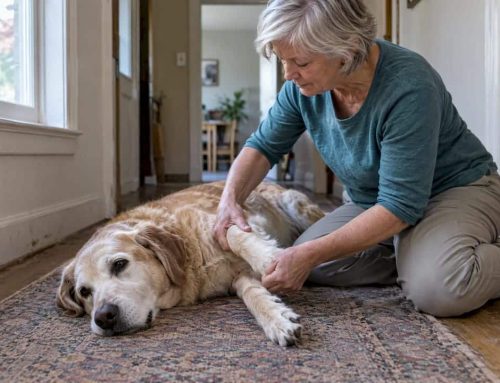
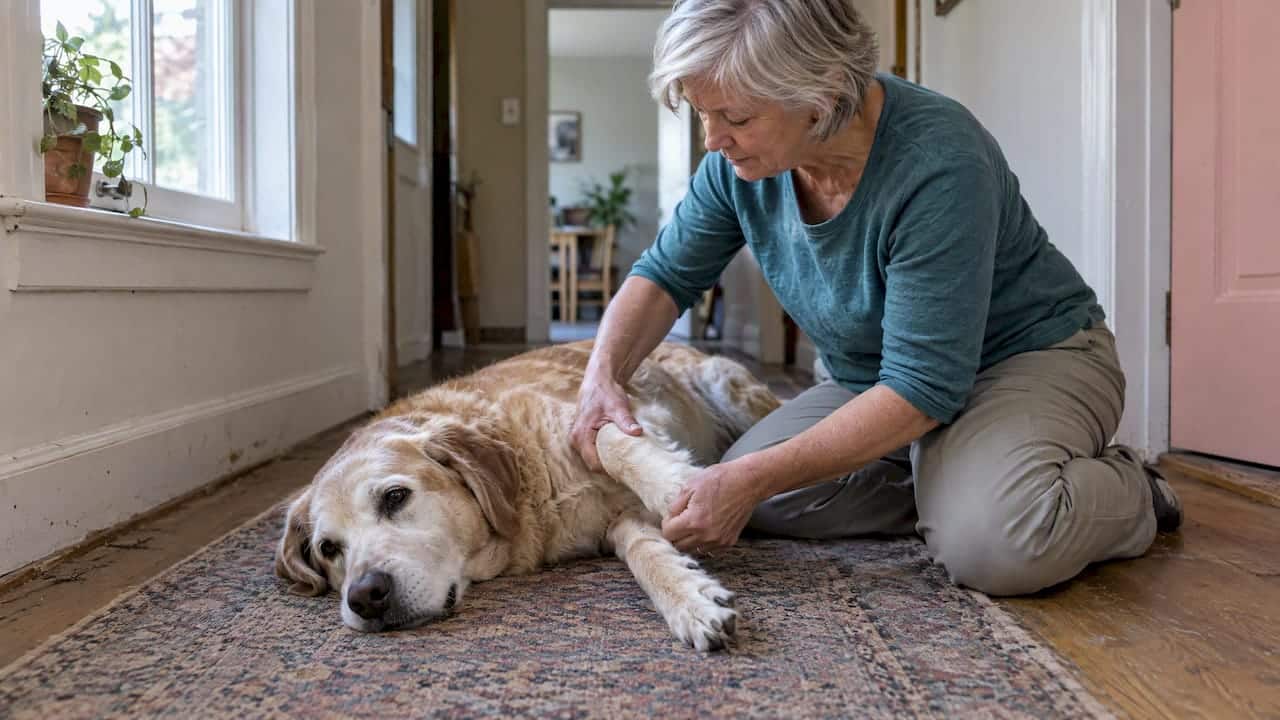
That is why we built our practice around house calls in South Tampa. When we examine a dog on their own rug, we see how they get up from their bed, how they cross your kitchen floor, and how they react to the stairs they use every day. A calm dog moves more naturally, and what we observe is closer to the truth.

We also look at the whole dog. In Traditional Chinese Veterinary Medicine, pain is often described as a blockage of Qi, the body’s flowing energy, along the meridians, which you can picture as a highway system. A traffic jam in one place can cause trouble elsewhere. Acupuncture, acupressure and laser therapy aim to get things moving again, and they sit comfortably beside conventional medicine. We work with your dog’s regular veterinarian rather than replacing them, so that every treatment fits the same plan.
Most of all, we want you to feel less alone. You noticed that your dog hesitated at the stairs. That small observation is where good pain care starts.
— Pet Acupuncture & Wellness
How we can help at home in South Tampa
If your senior, disabled or anxious dog struggles with vet visits, our mobile practice brings integrative care to your home. Services include acupuncture and acupressure, laser therapy, rehabilitation therapy, herbal therapy and food therapy. If you are not sure whether your dog needs an in-person visit, a telemedicine consult can help you decide between home care and a clinic.
Our published prices are on our cost of services page. An initial assessment and acupuncture with a technician starts from $430, plus a $60 technician mobile fee. Laser treatments run $45 to $120 per treatment, electroacupuncture is $30, and at-home rehabilitation packages range from $85 to $918. Other services, including herbal and food therapy, do not have published prices, so please contact us. To see how we build a plan, read about our multimodal pain plans and in-home care, or explore alternative pain relief for dogs.

What to bring to your appointment
Whether you see us or your regular veterinarian, a little preparation makes the visit more useful:
- Two or three short videos of your dog walking, climbing and lying down
- A list of when you first noticed changes and what makes them better or worse
- Every medication and supplement your dog takes, with doses
- Notes on appetite, sleep, bathroom habits and mood
- Your dog’s rough weight over the last year
The AAHA guidelines describe pain management as a partnership between veterinarian and owner. Your notes are a big part of your side of that partnership.
FAQ
How can I tell if my dog is in pain but hiding it?
Look for small, consistent changes: slower rising, avoiding stairs, licking one spot, less play, or pulling away from touch. Videos taken over several weeks make slow changes easier to see. If you notice any of these, book a veterinary exam rather than waiting for louder signs.
Can I give my dog ibuprofen or aspirin for pain?
No. The FDA states that human over-the-counter NSAIDs are not approved for dogs and can cause ulcers, liver failure and kidney damage. Only prescription medications made for dogs, given under veterinary supervision, are appropriate. If your dog has already taken one, call your veterinarian or a pet poison hotline right away.
Is limping always a sign of serious pain?
Not always, but it is never something to ignore. A mild limp that clears within a day may be a minor strain, though a limp that persists, returns or comes with crying, swelling or refusal to bear weight needs an exam. Sudden inability to use a leg is an emergency.
Can acupuncture help a dog in chronic pain?
Acupuncture is used as one part of a multimodal plan, alongside other therapies, and the American College of Veterinary Surgeons lists it among non-drug options. It should be guided by a veterinarian who knows your dog’s diagnosis and medications. We use it with conventional care, not instead of it.
Should I take my senior dog to the clinic or ask for a house call?
Sudden collapse, severe spinal pain or breathing trouble belong in an emergency hospital. For ongoing pain, stiffness and mobility decline in a dog who is anxious or struggles to travel, a home visit often gives a calmer and more accurate picture.
Sources
- Journal of the American Veterinary Medical Association (2024): dog owners’ perceptions of behavior changes that could indicate pain
- Cornell University: Recognizing pain in dogs
- Cornell University: Diseased spinal disks
- Cornell University: Treadmill and soundwave therapies
- American College of Veterinary Surgeons: Osteoarthritis in dogs
- American College of Veterinary Surgeons: Intervertebral disc disease
- American College of Veterinary Surgeons: Pain management
- 2022 AAHA Pain Management Guidelines for Dogs and Cats
- FDA: Get the facts about pain relievers for pets
- Merck Veterinary Manual: Poisoning from human over-the-counter drugs