TL;DR:
- Neuromuscular electrical stimulation for dogs uses electrical impulses to prevent muscle atrophy and re-educate muscles after injury or surgery. It involves targeted muscle contractions via skin electrodes, aiding recovery in various neurological and orthopedic conditions. Proper assessment and skilled application are essential for safety and effectiveness.
What is neuromuscular electrical stimulation for dogs, and how does it help?
Neuromuscular electrical stimulation for dogs, commonly called NMES, uses low-level electrical impulses to trigger muscle contractions in targeted muscle groups. Think of it as a way to “wake up” muscles that have gone quiet after injury, surgery, or nerve damage. The electrical current travels through electrodes placed on your dog’s skin, causing the muscle beneath to contract and relax in a controlled rhythm as explained in detail on service and emotional support dogs.
Veterinary studies confirm that NMES rebuilds atrophied canine muscles, with longer sessions producing greater gains in muscle mass. That makes it one of the most direct tools available in canine rehabilitation therapy for preventing the muscle loss that follows immobilization or illness.
Here is what NMES accomplishes in a clinical setting:
- Prevents muscle atrophy by keeping muscle fibers active during periods when your dog cannot exercise normally
- Re-educates muscles to fire in the correct sequence after nerve damage or surgery disrupts normal movement patterns
- Improves circulation to injured tissue, supporting faster healing
- Reduces protective muscle spasm that often develops around painful joints
- Supports tendon and fracture healing by stimulating the surrounding musculature
- Complements active exercise by preparing muscles to contract correctly before your dog moves on their own
NMES is distinct from TENS (transcutaneous electrical nerve stimulation). NMES rebuilds muscles via contractions, while TENS focuses on pain relief through nerve modulation. Both have a place in veterinary care, but they serve different goals.
Which conditions in dogs respond best to electrical stimulation therapy?
NMES is not a one-size-fits-all treatment, but it fits a surprisingly wide range of situations. Veterinarians most often recommend it when muscle loss or abnormal muscle firing is part of the problem.
Common conditions and recovery scenarios where NMES helps:
- Muscle disuse atrophy following orthopedic surgery, limb immobilization, or extended crate rest
- Intervertebral disc disease (IVDD) causing hind limb weakness or paralysis, where muscles need stimulation to stay viable during spinal recovery
- Post-surgical rehabilitation after procedures like tibial plateau leveling osteotomy (TPLO) or femoral head ostectomy (FHO)
- Neurological atrophy from spinal cord injuries, degenerative myelopathy, or nerve root compression
- Improper muscle firing sequences where injury has caused compensatory movement patterns
- Circulatory disorders affecting limb perfusion and tissue health
- Chronic muscle weakness in senior dogs with arthritis or reduced activity levels
If your dog has had neurological issues affecting their hind legs or spine, NMES is often one of the first rehabilitation tools a veterinary neurologist will reach for.
What actually happens during an NMES session?
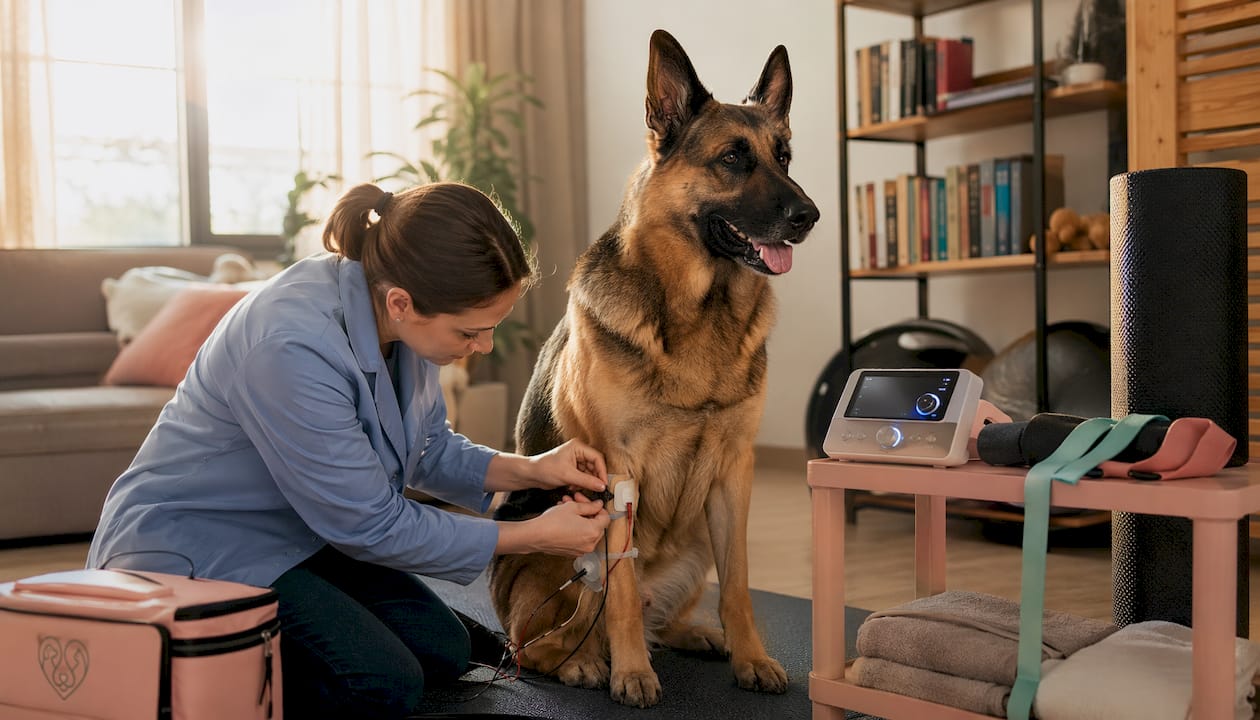
Knowing what to expect makes the whole process less stressful for you and your dog. Sessions are calm and methodical, and most dogs tolerate them well once they adjust to the sensation.
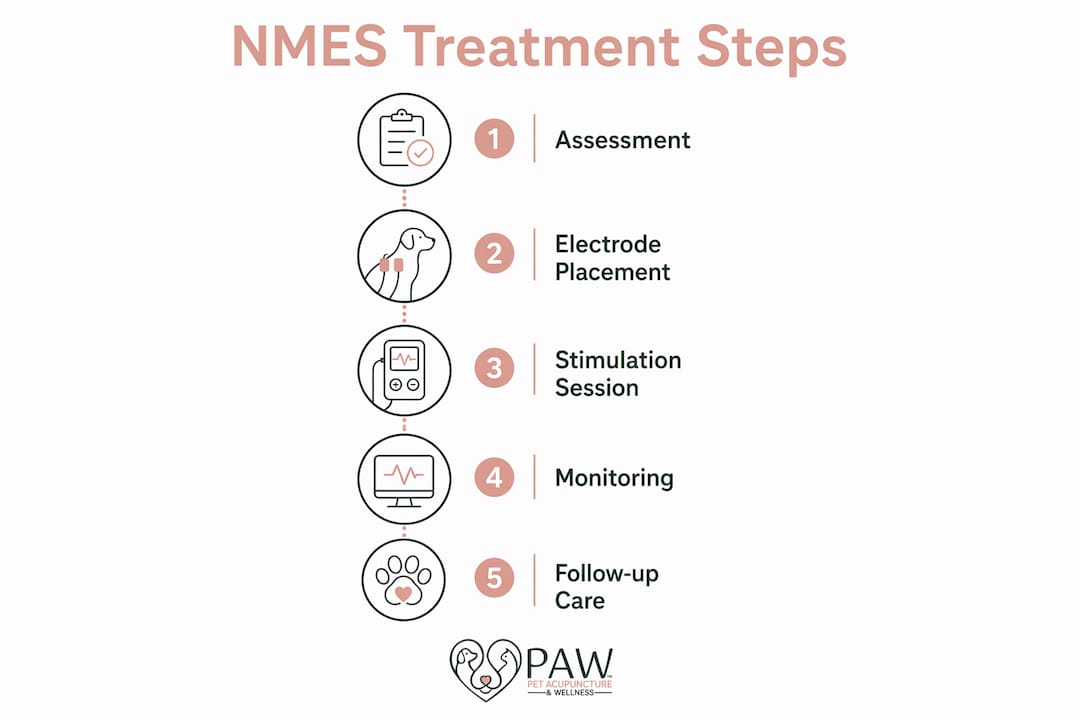
A typical NMES treatment follows these steps:
- Coat preparation: The therapist clips hair at the electrode sites if your dog has a thick coat, since fur traps air and blocks current transmission
- Skin cleaning: The treatment area is cleaned to improve electrode contact
- Electrode placement: Pads are positioned over the target muscle group, sized to match the muscle being treated
- Intensity calibration: The therapist starts at a low current and gradually increases it until a visible muscle contraction occurs, staying within your dog’s comfort range
- Timed contraction cycles: The machine alternates between stimulation and rest, typically at a 1:2 on/off ratio
- Active exercise pairing: Many protocols follow NMES immediately with therapeutic exercise to reinforce correct muscle firing
For acute conditions, sessions typically run 15 minutes once or twice daily. Chronic cases often follow a protocol of 30-minute sessions two to three times weekly for approximately five weeks. Your dog’s specific condition and response guide the exact schedule.
Is NMES safe for your dog? What you need to know first
NMES is safe when administered by a trained professional who has assessed your dog’s nerve function beforehand. The key word is “assessed.” Dogs with severe nerve denervation may not respond to NMES at all, and stimulating a non-functional nerve can cause discomfort without benefit.
Absolute contraindications (NMES should not be used):
- Cardiac pacemakers
- Active tumors or neoplasia
- Skin infections at the electrode site
- Open wounds in the treatment area
- Seizure disorders
- Active inflammation
Use with caution in these situations:
- Diminished pain sensation (your dog cannot signal discomfort)
- Pregnancy
- Severe nerve damage without confirmed motor nerve function
Possible side effects to watch for:
- Mild muscle soreness after the first few sessions
- Temporary skin irritation at electrode sites
- Fatigue in the treated muscle group
Always consult a veterinary neurologist before starting NMES, especially if your dog’s condition involves spinal cord or nerve involvement.
How much does electrical stimulation cost for dogs in Florida?
NMES pricing in Florida varies depending on the clinic’s specialization, your dog’s condition, and whether sessions are bundled with other therapies. No single published rate applies across all providers, but here are the factors that shape what you will pay:
- Per-session fees at specialty neurology or rehabilitation clinics tend to be higher than at general practices offering rehab as an add-on service
- Condition complexity affects session length and frequency, which directly affects total cost; a dog recovering from IVDD surgery will likely need more sessions than one with mild disuse atrophy
- Package pricing is common at dedicated rehab centers and can reduce the per-session cost compared to paying individually
- Mobile services like Happy Paws Rehabilitation and Wellness may offer competitive pricing by eliminating facility overhead, though travel fees can apply
- Combined therapy sessions that pair NMES with laser therapy, underwater treadmill, or manual therapy are priced higher but often deliver better outcomes than NMES alone
For a general reference, dog rehabilitation equipment and treatment costs in Florida typically place NMES within the broader range of veterinary physical therapy services. Calling the clinic directly for a treatment estimate is always the most reliable approach.
Top Florida clinics offering canine muscle stimulation and neuro rehab
Florida has a strong network of veterinary rehabilitation providers offering NMES as part of broader neuro and orthopedic recovery programs. The clinics below represent the most specialized options across the state.
| Provider | Location | NMES & Rehab Services | Certifications | Rating |
|---|---|---|---|---|
| Southeast Veterinary Neurology (Miami) | Miami, FL | NMES, laser therapy, underwater treadmill, therapeutic exercises, manual therapy, therapeutic ultrasound, cart fitting, neurosurgery, high-field MRI | Board-certified veterinary neurologists | 4.5★ (469 reviews) |
| Southeast Veterinary Neurology (Boynton Beach) | Boynton Beach, FL | NMES, laser therapy, underwater treadmill, therapeutic exercises, manual therapy, therapeutic ultrasound, cart fitting, neurosurgery, high-field MRI | Board-certified veterinary neurologists | 4.5★ (469 reviews) |
| Specialists in Companion Animal Neurology (SCAN) | Clearwater, FL | NMES as part of neurological treatment, neurology diagnostics | Experienced veterinary neurology specialists | 4.7★ (306 reviews) |
| Healing Paws Center | Oakland Park, FL | NMES, acupuncture, laser therapy, underwater treadmill, shockwave therapy, ozone therapy, orthotics, herbal medicine | Certified professionals with advanced post-doctoral training | 4.8★ (267 reviews) |
| Florida Veterinary Rehabilitation | DeLand, FL | NMES, physical rehabilitation, pain management, chiropractic, acupuncture, sports medicine, joint injections, exercise therapy | Veterinary rehab specialists | 5★ (122 reviews) |
| mOcean mobility + wellness for animals | Jacksonville Beach, FL | NMES-based therapies, advanced diagnostics, natural mobility therapies | Focus on comfort and natural mobility support | 4.9★ (76 reviews) |
| Happy Paws Rehabilitation and Wellness | Kissimmee, FL (mobile) | Mobile NMES, diverse rehab techniques, IVDD and arthritis care | Mobile rehab specialists | 5★ (15 reviews) |
| Florida Well Adjusted Animals | Boynton Beach, FL | Chiropractic, NMES support, pain management, mobility therapies | Chiropractic and rehab care | 5★ (6 reviews) |
Southeast Veterinary Neurology stands out for dogs with complex neurological conditions. With board-certified neurologists at both their Miami and Boynton Beach locations, they offer the full diagnostic and surgical picture alongside NMES, which matters when your dog’s condition is not yet fully understood.
Healing Paws Center in Oakland Park is the strongest choice for owners who want NMES paired with acupuncture, herbal medicine, and other integrative therapies under one roof. Their certified professionals hold advanced post-doctoral training across multiple modalities.
Florida Veterinary Rehabilitation in DeLand covers the broadest range of physical rehab services, including sports medicine and advanced pain management, making it well-suited for active dogs or those with complex orthopedic histories.
Happy Paws Rehabilitation and Wellness is the practical pick for owners in the Kissimmee area who need mobile service. Their specialization in IVDD and arthritis care means they bring real clinical focus to the house call model.
Expert tips for getting the most from your dog’s NMES treatment
Getting NMES right at home or during clinic visits comes down to a few details that make a real difference in outcomes.
- Clip the coat at electrode sites. Thick fur insulates the skin and prevents the current from reaching the muscle. Expect small, temporary bald patches where the electrodes contact the skin during a treatment course.
- Match electrode size to the muscle group. Electrodes that are too small cause current to bypass the muscle entirely. A trained technician will select pads that cover the full target area without the electrodes touching each other.
- Schedule NMES directly before active exercise. Stimulating the muscle first primes it to fire correctly during movement, reinforcing the right patterns rather than letting compensatory habits take hold.
- Watch for signs of over-treatment. Excessive muscle fatigue, reluctance to participate, or visible soreness after sessions are signals to reduce intensity or frequency.
- Confirm nerve function before home use. A veterinary neurological exam is the only reliable way to know whether your dog’s motor nerves can respond to NMES at all.
Pro Tip: Technician skill matters as much as the equipment. Improper electrode placement reduces treatment effectiveness and can cause discomfort. If you are considering a home NMES unit, ask your veterinarian to demonstrate correct placement on your specific dog before you attempt it independently.
Pairing NMES with complementary care, such as electroacupuncture, can further support nerve and muscle recovery, particularly for dogs dealing with chronic neurological conditions.
Pet Acupuncture & Wellness offers a different path for Tampa-area dogs
If your dog is recovering from injury or surgery but the idea of repeated clinic trips feels like too much, Pet Acupuncture & Wellness offers a genuinely different approach. Rather than asking a senior, anxious, or mobility-limited dog to travel to a facility, Pet Acupuncture & Wellness brings integrative veterinary care directly to your home in South Tampa.
The practice specializes in acupuncture, rehabilitation, laser therapy, herbal treatments, and Chinese veterinary medicine, all delivered in the calm of your dog’s own environment. For dogs whose stress responses make clinic visits counterproductive to healing, that setting change alone can shift outcomes. Pet Acupuncture & Wellness works alongside your primary vet and any specialists your dog sees, so the care stays coordinated rather than fragmented.
If you are exploring natural pain relief and rehabilitation support for your dog in South Tampa, Pet Acupuncture & Wellness is worth a conversation. You can also learn more about their integrative veterinary care approach to see whether it fits your dog’s recovery plan.
FAQ
What is neuromuscular electrical stimulation for dogs?
NMES uses electrical impulses delivered through skin electrodes to trigger muscle contractions in dogs, helping prevent muscle atrophy and re-educate muscles after injury, surgery, or nerve damage.
Can I use EMS on my dog at home?
Home use is possible with veterinary guidance, but a neurological exam must confirm your dog’s motor nerves are functional first. Severe nerve denervation means NMES will not work and may cause discomfort.
What are the disadvantages of NMES for dogs?
NMES is contraindicated for dogs with pacemakers, active tumors, open wounds, or seizure disorders, and it requires proper electrode placement and technician skill to be effective rather than uncomfortable.
How much does electrical stimulation cost for dogs?
Pricing varies by clinic, condition severity, and session length. Package deals and mobile services like Happy Paws Rehabilitation and Wellness can reduce per-session costs compared to individual appointments at specialty facilities.
Key Takeaways
NMES is one of the most direct veterinary tools for rebuilding canine muscle after injury, surgery, or neurological damage, and Florida offers several strong providers across the state.
| Point | Details |
|---|---|
| NMES triggers muscle contractions | Electrical impulses cause muscles to contract and relax, preventing atrophy and re-educating firing patterns. |
| Session protocols vary by condition | Acute cases generally receive 15-minute sessions once or twice daily, while chronic cases are treated with 30-minute sessions two to three times weekly for about five weeks. |
| Safety screening is required | A neurological exam must confirm motor nerve function before NMES begins, especially for dogs with spinal or nerve injuries. |
| Florida has specialized providers | Southeast Veterinary Neurology, Healing Paws Center, and Florida Veterinary Rehabilitation offer NMES within broader neuro and rehab programs. |
| Pet Acupuncture & Wellness serves South Tampa | Mobile integrative care including acupuncture and rehabilitation delivered at home, suited for senior or anxious dogs who struggle with clinic visits. |