Your dog is slowing down, and you can see it in the small moments. He hesitates before jumping into the car. She circles longer before lying down. A short walk that used to feel easy now ends with stiffness, panting, or a sore back leg the next morning.
That's often when people start searching for Dog Acupuncture Austin. They want relief, but they also want something gentle. They're trying to avoid piling on more medication if they can, especially for older dogs, dogs with mobility problems, and dogs who get stressed by clinic visits.
Acupuncture can be a very practical part of that plan. It isn't mystical, and it isn't a miracle fix. It's a recognized medical technique that can help many dogs with pain, neurologic issues, and quality-of-life support. For some families, the biggest difference isn't just the treatment itself. It's having that care done at home, where the dog is calmer, less guarded, and easier to accurately assess.
The Gentle Science Of Canine Acupuncture
Acupuncture works because the body responds to targeted stimulation. A simple way to think about it is a circuit board. When the right point is activated, it sends a signal through the nervous system that changes how the body processes pain and healing.
In dogs, that stimulation isn't random. A trained veterinarian places very fine needles in specific points chosen for the dog's condition, exam findings, comfort level, and treatment goals. The effect is physiological, not theatrical.

What The Needles Are Actually Doing
The basic mechanism is well described by Paz East's overview of veterinary acupuncture. The treatment involves inserting sterilized, disposable needles into specific acupuncture points to stimulate nerve activity, increase blood circulation, relieve muscle spasms, and trigger the release of the body's natural pain-control chemicals like endorphins and cortisol.
That matters because many painful conditions in dogs aren't just about one sore joint. They involve tension, guarding, reduced movement, poor circulation in overused tissues, and a nervous system that has started amplifying pain signals. Acupuncture helps interrupt that cycle.
For point selection, location matters. A veterinarian doesn't just needle where the dog hurts. They may combine local points, distant points, and pattern-based treatment choices depending on whether the problem is arthritic pain, weakness, back discomfort, or nerve dysfunction. A deeper look at how veterinarians choose acupuncture points in dogs helps explain why two dogs with a limp may get very different treatment plans.
Practical rule: Good acupuncture looks customized. If every dog gets the same few points regardless of diagnosis, age, or comfort, that's not thoughtful integrative medicine.
Why Dogs Often Relax During Treatment
One of the biggest surprises for first-time owners is how quiet the session can be. Most dogs don't react the way people expect when they hear the word “needles.” The needles are extremely fine, and many patients settle once the initial placements are done.
In clinical experience reported in the veterinary literature, the vast majority of dogs accept acupuncture easily, and many become so relaxed that they fall asleep during treatment in this clinical review on veterinary acupuncture outcomes and tolerance. That's one reason home visits can work so well. A dog who's already on his own bed, hearing familiar household sounds, often shows less tension than he would in a lobby or exam room.
Acupuncture doesn't replace every other treatment. It works best as part of a broader medical plan when that plan is needed. But for the right patient, it can reduce discomfort, improve comfort with movement, and help the dog feel more like himself again.
Common Conditions Treated With Acupuncture In Dogs
The dogs who benefit most from acupuncture usually have a problem you can see in daily life. They're slower to rise, reluctant on stairs, stiff after rest, sore after activity, or not using a limb quite normally. Some have pain with a clear diagnosis. Others just seem older than they should.

Mobility And Chronic Pain Problems
The strongest day-to-day use for acupuncture in dogs is pain management. Major veterinary organizations recognize it as a safe adjunct treatment for multimodal pain management, especially for osteoarthritic and chronic spinal pain, as summarized in Today's Veterinary Practice on acupuncture for pain management.
That includes dogs with issues such as:
- Arthritis and age-related stiffness that make rising, walking, and getting into the car harder.
- Hip discomfort and compensatory muscle tension where the dog shifts weight and starts overloading other areas.
- Chronic back pain in dogs that yelp when turning, avoid stairs, or stand with a guarded posture.
For owners focused on osteoarthritis in particular, this guide to dog acupuncture for arthritis support is useful because it connects treatment goals to mobility, comfort, and realistic home observations.
Neurologic Cases And Recovery Support
Acupuncture also has a place in neurologic and neuromusculoskeletal cases. That's often where owners notice uneven progress with standard care alone. The dog may be healing, but not comfortably, or function may be returning slowly.
Conditions commonly considered include:
- Intervertebral disc disease and sore backs
- Nerve injuries or weakness
- Post-surgical support for comfort and function
- Dogs recovering from neuromusculoskeletal injuries
The literature also supports meaningful pain relief in inflammatory, neuropathic, cancer, and visceral pain states, and notes benefit for acute pain from surgery and injury. That doesn't mean every neurologic case responds the same way. It means acupuncture has a reasonable medical role when integrated thoughtfully.
Some dogs show the clearest gains in comfort first, then movement later. Owners often expect a dramatic gait change before they notice that the dog is sleeping more comfortably, turning more easily, or asking to go for walks again.
Quality Of Life And Whole-Patient Care
Acupuncture isn't only about limbs and spines. In practice, it's often used to support comfort and quality of life in dogs dealing with complex chronic illness, including cancer care support, appetite changes, stress related to chronic discomfort, and generalized decline in older pets.
I'm careful not to oversell that. If a dog has severe orthopedic disease, advanced neurologic compromise, or a problem that needs surgery, acupuncture won't erase the underlying issue. What it can do is improve comfort, reduce tension, and help the dog participate more fully in daily life.
That's why it fits best inside a wider treatment plan, not as a stand-alone promise.
What To Expect During Your Dog's Acupuncture Session
A first session usually starts with conversation, not needles. The veterinarian watches how your dog walks, stands, sits, turns, and lies down. They'll ask where your dog seems sore, when the stiffness is worst, what medications are already being used, and what your goals are. Sometimes the goal is better mobility. Sometimes it's easier rising, fewer pain flares, or better sleep.
In a clinic, some dogs do well from the start. Others spend the first part of the visit adjusting to the smells, sounds, flooring, and handling. That doesn't mean acupuncture won't help them. It just means the environment can change how relaxed they are, and relaxation matters.
Why In-Home Sessions Can Be Easier On Dogs
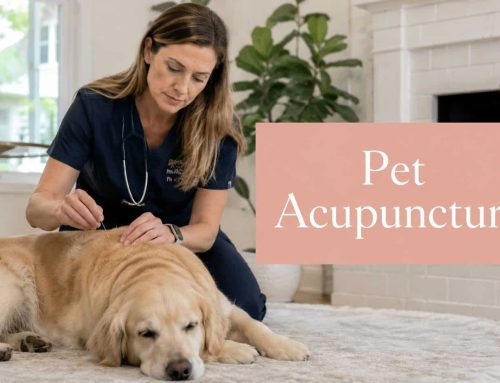
At home, many dogs settle faster. They walk on familiar surfaces, rest in their own bed, and don't have to recover from the car ride before treatment even begins. That's especially useful for senior dogs, dogs with arthritis, dogs with chronic back pain, and dogs who become anxious in veterinary settings.
An in-home appointment also lets the veterinarian see the dog in the environment where their specific issues present themselves. They can observe the dog's movement across rugs, stairs, slick floors, thresholds, and favorite sleeping spots. Those details often shape the treatment plan more than a polished clinic gait ever could.
During The Needle Placement
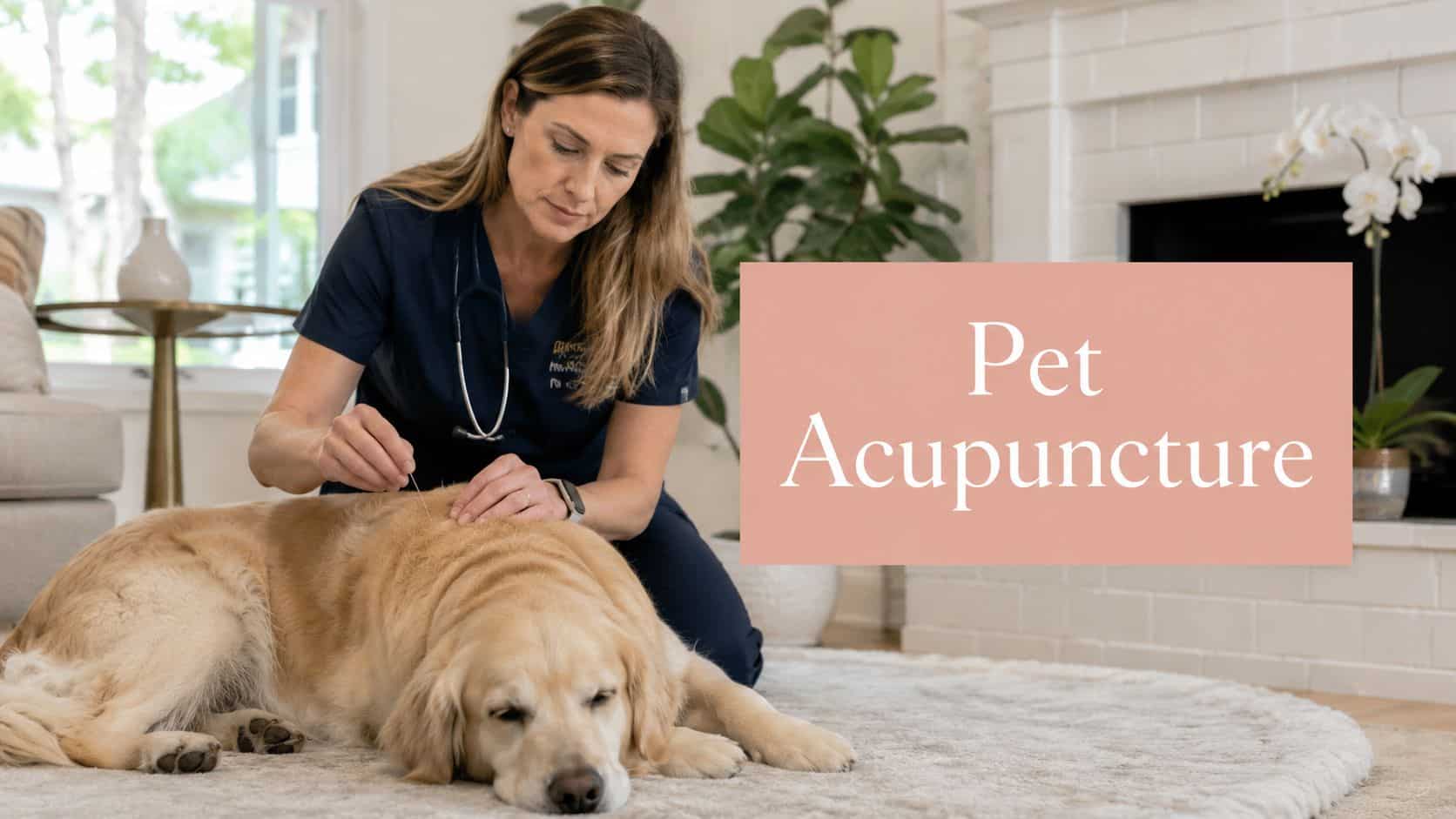
The needles used for acupuncture are thin and sterile. Placement is usually brief. Some dogs barely react. Some turn and look. A few object to certain points, especially if the area is already sensitive, and that gives useful clinical information.
Once the needles are in, many dogs relax well. Some get sleepy. Some stand still, then soften through the neck, back, and hips as the session continues.
A calm session doesn't have to look dramatic. If your dog breathes more slowly, stops scanning the room, and shifts weight more evenly, that's often a very good sign.
After The First Few Visits
This is where realistic expectations matter. Acupuncture often isn't a one-visit treatment, especially for chronic problems. Improvement commonly requires a series of sessions, and TC Veterinary's acupuncture FAQ notes that 30 to 40% of pets may experience slightly increased pain for a day after the first session as underused nerves “wake up.”
That temporary soreness can worry owners if no one warned them about it. In most cases, it's brief. I tell people to watch the overall trend, not just the first evening. Is the dog moving more freely over several visits? Is recovery after activity better? Is the dog more willing to engage?
Acupuncture works best when the plan is adjusted based on observed changes, not on wishful thinking. If a dog improves, the treatment schedule can often be spaced out. If a dog doesn't improve enough, the veterinarian should say so and pivot.
Beyond The Needles Different Types Of Acupuncture
“Acupuncture” often gets used as if it means one thing, but veterinarians have several related tools. The point is not to use every option. The point is to choose the one that fits the dog in front of you.
Dry Needling And Electroacupuncture
Traditional dry needling is what most owners picture first. Fine needles are placed at selected points and left in place for a treatment period. This can be very effective for mild to moderate pain, tension, and supportive care.
Electroacupuncture adds a gentle electrical current between selected needles. In the right patient, that added stimulation can be very useful for chronic pain and neurologic cases. According to the American Journal of Traditional Chinese Veterinary Medicine review on acupuncture validity, electroacupuncture has shown statistically equal efficacy for pain relief compared to the opioid butorphanol in veterinary pain management studies.
If you want a plain-language comparison of when one may be preferred over the other, this overview of electroacupuncture vs standard acupuncture for pets lays out the practical differences.
Other Modalities In The Toolbox
Some veterinarians also use aquapuncture, where a small amount of sterile liquid is placed into an acupuncture point for longer stimulation. That can be helpful when a dog won't tolerate longer needle retention or when the practitioner wants a different treatment effect.
The key point is customization:
- Dry needling may be enough for a calm dog with chronic stiffness.
- Electroacupuncture may be the better fit for stronger pain control or certain neurologic cases.
- Aquapuncture may help when tolerance or treatment style needs to change.
These aren't competing brands of care. They're different tools used by trained veterinarians to build a plan that fits the patient.
How To Choose A Qualified Acupuncturist In Austin
The most important screening step is simple. Your dog's acupuncturist should be a licensed veterinarian with formal training in veterinary acupuncture. That's not a bonus credential. It's a safety issue.

A helpful place to start is this guide to finding a certified veterinary acupuncturist, which explains what credentials and case experience are worth asking about.
The Non-Negotiables
Proper administration requires a licensed veterinarian with formal training in veterinary acupuncture, and veterinary acupuncture is legally classified as a surgical procedure in most jurisdictions. That high standard matters because the person treating your dog needs to understand anatomy, pain pathways, medical contraindications, neurologic exams, and how acupuncture fits with conventional treatment.
When you speak with a provider, ask direct questions:
- What is your veterinary degree and acupuncture training?
- How often do you treat dogs with my dog's condition?
- Do you coordinate with the primary veterinarian when needed?
- What does success look like in realistic terms for this case?
- When would you recommend something other than acupuncture?
A qualified veterinarian won't be annoyed by those questions. They should welcome them.
To hear a clinician discuss the field and professional standards in more detail, this video is a useful overview.
What Good Communication Looks Like
Credentials matter, but so does judgment. A good acupuncturist doesn't promise a cure, rush through the exam, or act as if every limp needs the same treatment. They explain why they're recommending acupuncture, what they'll monitor, and what they'll do if your dog doesn't respond as hoped.
Ask one question that reveals clinical honesty: “If this were your own dog, what signs would tell you the plan is working, and what signs would tell you it's time to change course?”
That answer tells you a lot. You want precision, not sales language.
One practical note from our side. We only service the South Tampa area. If you're searching for Dog Acupuncture Austin, use the same checklist locally and look for the same level of veterinary training, transparency, and calm handling.
Understanding The Cost Of Dog Acupuncture
Cost matters, and most owners don't want a vague answer. The honest one is that pricing varies based on the setting, the provider's training, whether the first visit includes a full exam and treatment plan, and whether the dog is being seen in a clinic or at home.
An initial visit is usually more involved than a follow-up. The veterinarian needs time to review records, assess gait and posture, examine painful areas, identify treatment goals, and decide whether acupuncture makes sense at all. Follow-up sessions are often more efficient because the diagnosis and response pattern are already clearer.
Clinic Visits Versus In-Home Visits
For many families, the main trade-off is convenience versus travel. Clinic visits may be simpler to schedule in some markets. In-home care usually costs more because the veterinarian is bringing medical time and travel to your door.
That added cost can still be worth it for dogs who don't travel well, senior dogs who struggle getting in and out of the car, and pets whose pain worsens with transport. In those cases, the house-call setting isn't just a comfort upgrade. It can improve how naturally the dog moves and relaxes during the visit.
How To Think About Value
A useful way to think about cost is to compare it with your actual goal. If you're trying to improve comfort, reduce pain flares, support mobility, or make daily handling easier, the question isn't only “What does one session cost?” It's also “Does this plan help my dog function better?”
Some practices offer treatment series or ongoing care plans. Some don't. Before agreeing to anything, ask for clarity on the expected treatment frequency, what signs of improvement they want you to track at home, and when they'd reassess the plan. This breakdown of dog acupuncture cost and what affects pricing can help you frame those questions before you book.
Frequently Asked Questions About Canine Acupuncture
Owners usually ask the best questions after the first wave of hope wears off. That's a good thing. Acupuncture deserves the same practical scrutiny as any other treatment.

Is Acupuncture Painful For My Dog
Usually, no. Most dogs tolerate it well, and many relax once the needles are placed. The needles are much finer than injection needles, and a skilled veterinarian adjusts point choice and handling style to the dog's comfort level.
That said, “gentle” doesn't mean “nothing is felt.” Some points are more sensitive than others. A dog may glance back, shift weight, or briefly object to a specific placement. What I care about more is the overall session. If the dog settles, softens, and remains comfortable, that's what matters.
How Many Sessions Will My Dog Need
It depends on the problem and on the dog. Chronic issues usually need a series before you can judge the result fairly. Some dogs show subtle improvement early, such as easier rising or less stiffness after rest. Others need repeated treatments before the change is obvious.
Published clinical references describe common treatment series such as several initial visits followed by maintenance sessions based on the condition and response. The exact schedule should come from the dog's diagnosis, exam findings, and progress at home, not from a one-size-fits-all package.
Are There Side Effects
Acupuncture is generally considered safe when performed by a trained veterinary professional. Minor effects can include tiredness, increased water intake, temporary soreness, or slight bleeding at a needle site. Those effects are typically short-lived.
If a dog seems dramatically worse, develops new neurologic signs, or has pain that doesn't settle, the veterinarian should reassess promptly. That's not a reason to avoid acupuncture. It's a reason to use it inside a medically accountable plan.
What If It Doesn't Work For My Dog
This is the question more clinics should answer plainly. Not all dogs respond equally. Some improve a lot. Some improve moderately. Some show limited benefit. In fact, this discussion on veterinary acupuncture response variability notes an estimated 15 to 25% of cases may have limited benefit.
That doesn't mean the visit was pointless. Sometimes the trial of care gives useful information. If the dog doesn't respond well, the next step may be changing technique, changing frequency, shifting to another integrative option, adjusting medication, adding rehabilitation, or rechecking whether the original diagnosis fully explains the symptoms.
The most trustworthy acupuncturists aren't the ones who promise every dog will improve. They're the ones who can tell you, clearly and early, when the response is partial, when expectations need adjusting, and what they recommend next.
Acupuncture works best when it's treated as one part of thoughtful care. For many dogs, it's an excellent part. For some, it's supportive but not central. The primary goal isn't proving that acupuncture works in theory. The goal is helping your dog move, rest, and feel better in real life.
If you're in South Tampa and want calm, in-home integrative care for a dog who's dealing with arthritis, mobility changes, chronic pain, or recovery support, Pet Acupuncture & Wellness (PAW Vet Practice) offers house-call treatment designed around your pet's comfort in the place they feel safest.