TCVM (Traditional Chinese Veterinary Medicine) is an integrative approach, combining acupuncture, herbal medicine, food therapy, and Tui-na, best used alongside Western care for chronic or systemic problems rather than as a stand-in for emergency medicine. It is not a replacement for surgery, trauma care, or acute illness.
Owners tend to reach for TCVM when their dogs face:
- Arthritis and chronic joint pain
- Ongoing digestive issues, including stress colitis
- Anxiety or behavioral changes
- Certain cardiac and neurologic conditions
Peer-reviewed research on formulas like Da Xiang Lian Wan (DXLW) and Zhi Li Tang (ZLT), plus a retrospective heart-failure case series, gives owners something rare in complementary medicine: actual clinical data to weigh, not just tradition.
Key Takeaways
TCVM works best as a complement to conventional veterinary care, with the strongest evidence backing specific herbal formulas for GI and infectious disease and individualized acupuncture protocols for chronic pain.
| Point | Details |
|---|---|
| TCVM complements, not replaces | Use it alongside Western care for chronic issues, never instead of emergency treatment. |
| Four branches, different roles | Acupuncture, herbal medicine, food therapy, and Tui-na each target different patterns and conditions. |
| Evidence is real but limited | DXLW and ZLT trials show strong results in small shelter-dog samples, worth discussing, not assuming. |
| Credentials matter | Confirm DVM licensure plus TCVM certification and IVAS or AAVA membership before starting treatment. |
| Mobile care reduces stress | Pet Acupuncture & Wellness delivers in-home TCVM visits across South Tampa for dogs who struggle with clinic travel. |
This article is general information, not a substitute for advice from a qualified doctor. Consult a qualified healthcare professional about your own circumstances before acting on anything here.
Table of Contents
- What TCVM Means and How It Differs From Western Veterinary Medicine
- The Four Branches of TCVM and What Each One Does
- Which Conditions Respond Best to TCVM, and What the Studies Show
- What to Expect at a TCVM Consultation and Treatment Timeline
- Safety, Herb-Drug Interactions, and When TCVM Isn’t the Right First Call
- How TCVM Works Alongside Your Dog’s Regular Vet
- How to Choose a Qualified TCVM Practitioner for Your Dog
- How We Bring TCVM Care to Your Dog
- Sources
- FAQ
What TCVM Means and How It Differs From Western Veterinary Medicine
Western veterinary medicine names a disease and treats it. TCVM asks a different question: what pattern of imbalance is showing up in this particular dog? Two dogs with the same arthritis diagnosis might get two very different TCVM plans, because their underlying patterns, think of it as their body’s internal weather, don’t match.
Practitioners read that pattern through tongue color and coating, pulse quality, and a nose-to-tail physical exam that goes beyond a standard checkup, according to the Chi Institute. This is genuinely specialized diagnostic training, not an alternative reading of the same lab work.
Pro Tip: Before a TCVM consult, gather your dog’s current medication list, recent bloodwork, and any imaging. A good TCVM practitioner wants this information to build a plan that works with your primary vet, not around them.
What this means for your dog:
- The plan is built around your individual dog’s pattern, not a generic protocol for “arthritis” or “colitis”
- Multiple modalities are often combined for a stronger, more targeted effect
- Your regular vet stays in the loop on diagnostics and medication changes
The Four Branches of TCVM and What Each One Does
TCVM rests on four pillars, and each targets your dog’s health from a different angle.
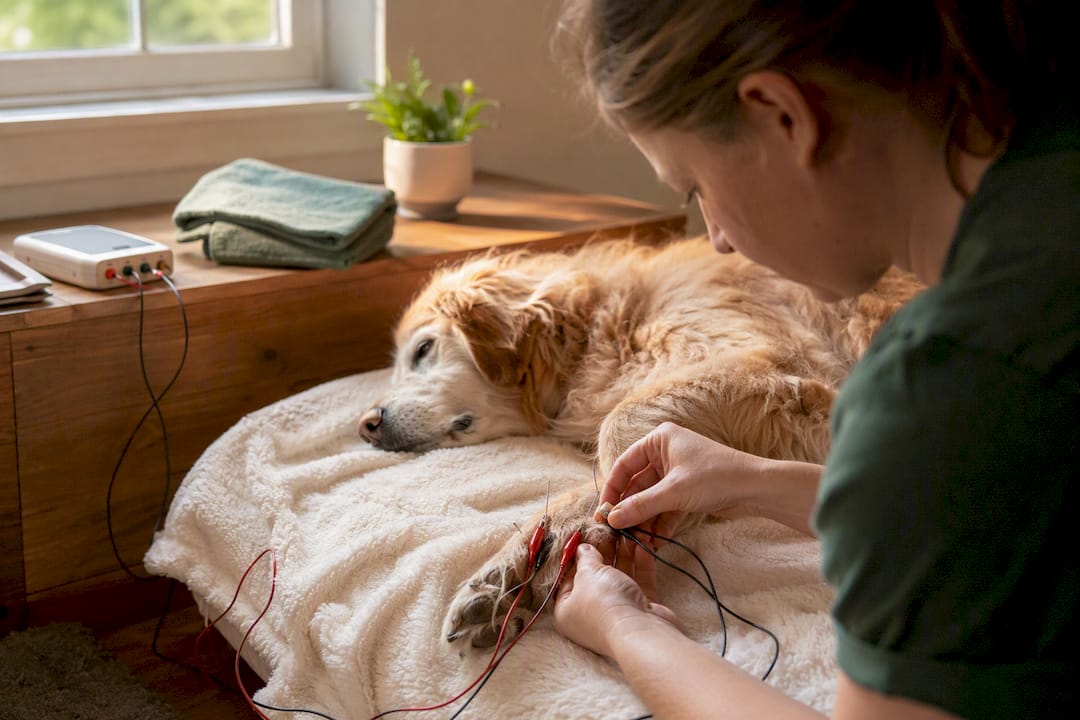
Acupuncture covers several techniques: dry needling, electroacupuncture (a mild electric current through the needles), aquapuncture (injecting vitamin B12 or saline at specific points), and moxibustion (warming acupoints with burning mugwort). Sessions usually run 20 to 30 minutes. It’s a go-to for osteoarthritis pain, where needling specific points can ease stiffness without stacking more medication on an aging liver or kidneys.
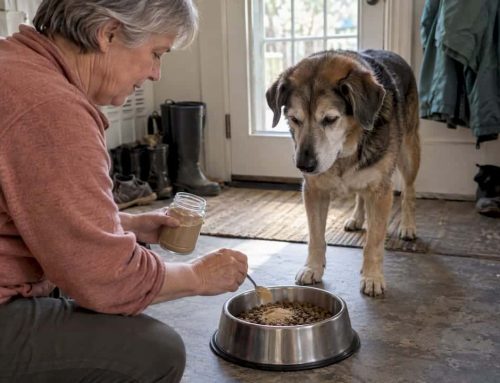
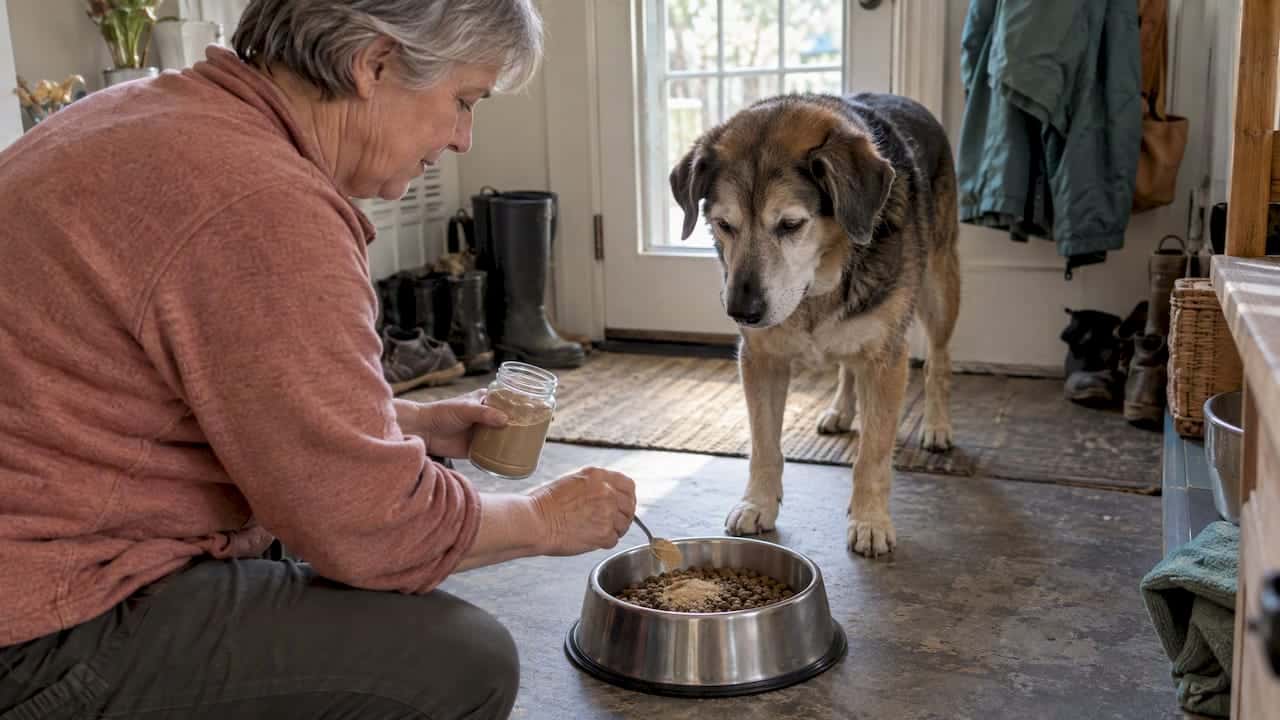
Herbal medicine uses formulas like DXLW for digestive upset and ZLT as adjunct support in more serious infections. Herbs come as powders mixed into food, capsules, or occasionally teas, and effects build over days to weeks rather than hours.
Food therapy treats food as medicine, choosing ingredients by their warming or cooling energy to counter a dog’s specific pattern, similar to how you’d offer a cooling snack on a hot day and something heartier in winter.
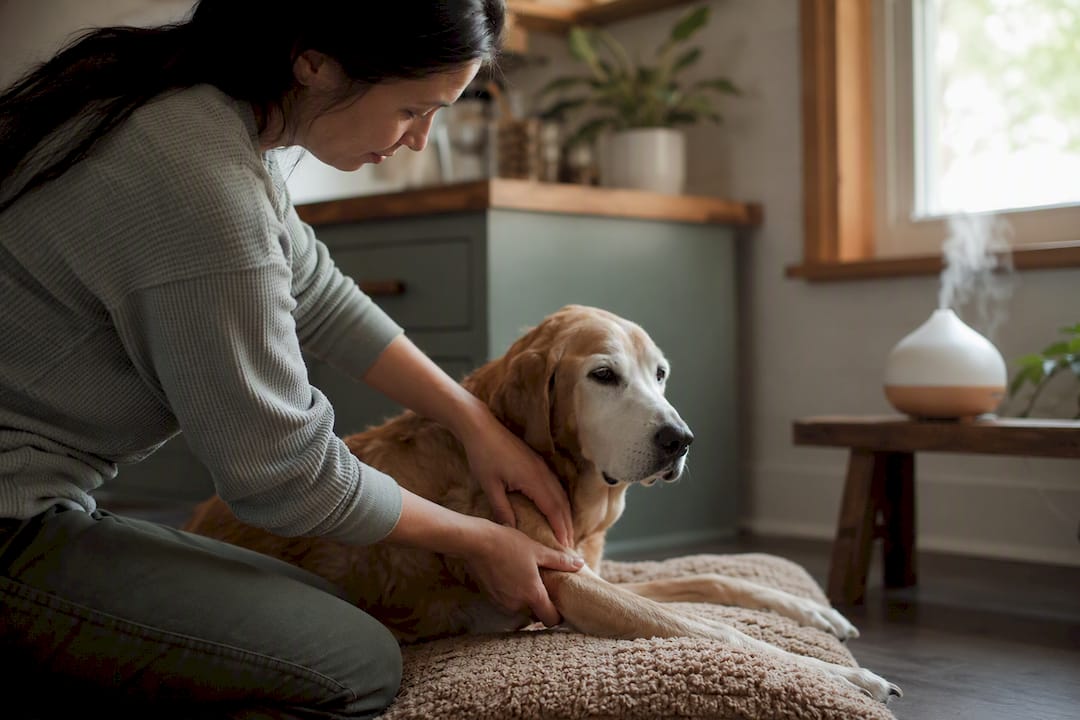
Tui-na is therapeutic massage along meridian lines. Many practitioners teach owners simple Tui-na strokes to use at home between visits, which is one of the few TCVM techniques you can genuinely practice yourself.
| Branch | Best For | Typical Format |
|---|---|---|
| Acupuncture | Arthritis, pain, anxiety | 20-30 minute sessions |
| Herbal medicine | GI issues, chronic organ support | Daily, food-mixed or capsule |
| Food therapy | Ongoing pattern management | Daily diet adjustment |
| Tui-na | Mobility, bonding, mild pain | Owner-taught home sessions |
If arthritis is your main concern, our guide to dog acupuncture for arthritis walks through what a treatment series typically looks like.
Which Conditions Respond Best to TCVM, and What the Studies Show
Dogs most often come to TCVM for arthritis, inflammatory bowel disease or stress colitis, seizures, skin and allergy issues, anxiety, and as adjunct support for heart failure or serious infections like parvovirus. The evidence backing these uses varies a lot by condition, and it’s worth knowing where the strongest data actually sits.
A randomized controlled trial found DXLW produced a 97% response rate for stress colitis in shelter dogs, compared to 89% for metronidazole, a head-to-head result against a standard antibiotic, not just a placebo comparison.
For parvovirus, a randomized pilot study found zero mortality in dogs receiving ZLT alongside conventional care, versus 43% mortality in the control group. That’s a striking number, but the sample was small (12 treated dogs, 7 controls), so it’s a promising signal rather than a settled answer.
A retrospective case series of 36 dogs found significant improvement in clinical heart-failure scores and echocardiographic measures after individualized TCVM therapy, with more than a third of dogs showing normalized heart measurements.
The pattern across these studies is consistent: TCVM shows real, measurable effects in specific conditions, but the trials are small and often shelter-based. That combination of “real signal, limited scale” is exactly why TCVM works best as a documented complement to Western diagnostics, not a solo act.
A separate 2025 trial of Anemoside B4, a Pulsatilla-derived compound, found faster fever and breathing recovery in dogs with mild-to-moderate pneumonia compared to placebo, showing this research base is still actively growing.
What to Expect at a TCVM Consultation and Treatment Timeline
Your first visit runs longer than a standard checkup. Expect a detailed history, a tongue and pulse exam, a full pattern diagnosis, and a written plan that may blend two or three modalities.
- Initial consult (60 to 90 minutes): history, exam, pattern diagnosis, baseline plan
- Early treatment series: acupuncture sessions once or twice weekly for four to six weeks
- Reassessment: your practitioner checks tongue and pulse again to confirm the pattern is shifting
- Maintenance phase: sessions taper to monthly or as-needed, often paired with ongoing herbs or food therapy
Improvement timelines vary by condition. Acute pain often eases within a few sessions; chronic organ or systemic patterns can take six to eight weeks of herbal support before you notice a real shift.
Costs depend on a few factors:
- Practitioner credentials and years of TCVM training
- Whether the plan uses acupuncture alone or combines modalities with herbs
- In-clinic versus mobile, at-home visits
- Follow-up frequency and any additional diagnostics needed
Safety, Herb-Drug Interactions, and When TCVM Isn’t the Right First Call
TCVM herbs are still pharmacologically active substances, and that means real interaction risks with conventional medications. Run through this before starting any herbal protocol:
- Confirm your practitioner is a licensed veterinarian with formal TCVM certification, not just a general herbalist
- Ask specifically about interactions between the proposed herbs and any medications your dog currently takes
- Confirm dosing is calculated for your dog’s exact weight and condition, not a generic package amount
- Ask where the herbs are sourced and how they’re tested for contamination
TCVM should never replace emergency Western care for trauma, severe infection, internal bleeding, or anything requiring surgery. Herbal support also requires sustained, sometimes weeks-long administration, and results are cumulative, which means tapering off a conventional drug has to happen gradually and under veterinary supervision to avoid a clinical relapse.
Pro Tip: Never stop a prescribed medication on your own to “make room” for an herbal formula. Bring both to your primary vet and your TCVM practitioner so they can coordinate a safe transition together.
How TCVM Works Alongside Your Dog’s Regular Vet
TCVM rarely operates in isolation from conventional care, it typically layers on top of it. Acupuncture for chronic pain can reduce how much NSAID medication a dog needs long term. Herbal formulas sometimes support dogs through chemotherapy, always under direct supervision. Food therapy adjustments often run alongside a prescription diet already in place.
Good coordination means:
- Sharing your dog’s full medication and diagnostic history with both providers
- Running any relevant bloodwork or imaging your TCVM practitioner requests
- Reporting changes in symptoms to both teams, not just one
For dogs with complex, multi-system conditions, referral or co-management between your primary vet and a TCVM specialist is often the safest structure. Learn more about how these approaches work together on our integrative veterinary care page.
How to Choose a Qualified TCVM Practitioner for Your Dog
Not every acupuncture provider has real TCVM training, so credential-checking matters here more than almost anywhere else in veterinary care. Look for:
- A DVM license plus formal TCVM certification, not a weekend seminar certificate
- Membership with IVAS or AAVA, which require ongoing continuing education
- Direct experience treating dogs specifically, not just general small-animal familiarity
- Willingness to discuss herb sourcing, dosing logic, and expected timelines in plain language
Pet Acupuncture & Wellness delivers this care through in-home visits across South Tampa, which matters most for senior or disabled dogs who find clinic visits stressful or physically difficult. Bringing the exam room to your living room removes the car ride, the waiting room anxiety, and the whole ordeal for dogs who struggle with any of it.
Pro Tip: At your first consult, ask three things directly: what interactions exist with current medications, what timeline to expect for improvement, and what the plan is if symptoms worsen unexpectedly.
A Practical View on TCVM’s Place in Pet Wellness
We see TCVM work best as a documented, collaborative tool, not a replacement for your dog’s regular vet. The strongest cases we’ve reviewed pair real evidence with caution about small sample sizes. Used that way, alongside conventional care, it consistently improves quality of life in dogs with chronic conditions.
How We Bring TCVM Care to Your Dog
You skip the stressful car ride and the waiting room entirely: Pet Acupuncture & Wellness brings TCVM directly to your South Tampa home, which matters most for senior, disabled, or anxious dogs who find clinic visits genuinely hard on their bodies and their nerves.
Our in-home visits include:
- Acupuncture, electroacupuncture, and aquapuncture sessions
- Herbal therapy consultations, including formula selection and dosing guidance
- Food therapy planning built around your dog’s specific pattern
- Follow-up visits and telemedicine check-ins between appointments
If your dog struggles with arthritis, chronic GI issues, or anxiety, and travel to a clinic adds unnecessary stress, book a mobile acupuncture assessment or ask about our herbal therapy consultations to start with a plan built around your dog’s actual needs.
Sources
- A Randomized Controlled Study Comparing Da Xiang Lian Wan to Metronidazole in the Treatment of Stress Colitis in Shelter/Rescued Dogs
- AB4 trial for canine pneumonia (Frontiers in Veterinary Science)
- What is TCVM? (Chi Institute)
FAQ
Can TCVM shrink tumors without surgery?
Some TCVM practitioners use herbal formulas to support dogs with cancer, often alongside conventional treatment, but no rigorous published trial in the research supporting this article shows TCVM shrinking tumors on its own; treat it as adjunct support, not a surgical alternative.
Is a TCVM veterinarian a real doctor?
Yes. A qualified TCVM practitioner is a licensed DVM who has completed additional certification, often through the Chi Institute, and typically holds IVAS or AAVA membership on top of standard veterinary training.
How much does vet acupuncture cost?
Cost varies by practitioner credentials, session length, and whether care is delivered in-clinic or at home; ask for a specific estimate during your first consult since pricing isn’t standardized nationally.
What exactly is a TCVM vet?
A TCVM vet is a licensed veterinarian trained in Traditional Chinese Veterinary Medicine, using pattern diagnosis and the four branches, acupuncture, herbal medicine, food therapy, and Tui-na, to build individualized treatment plans for chronic and systemic conditions.