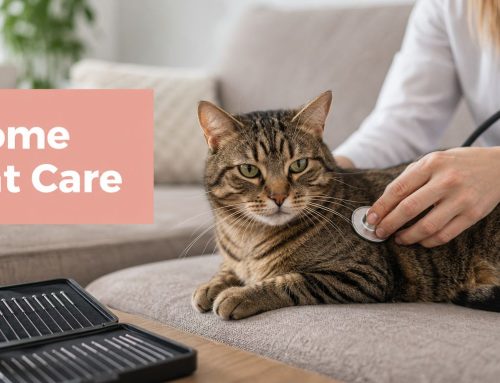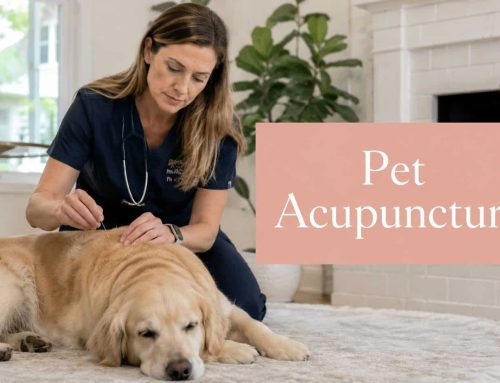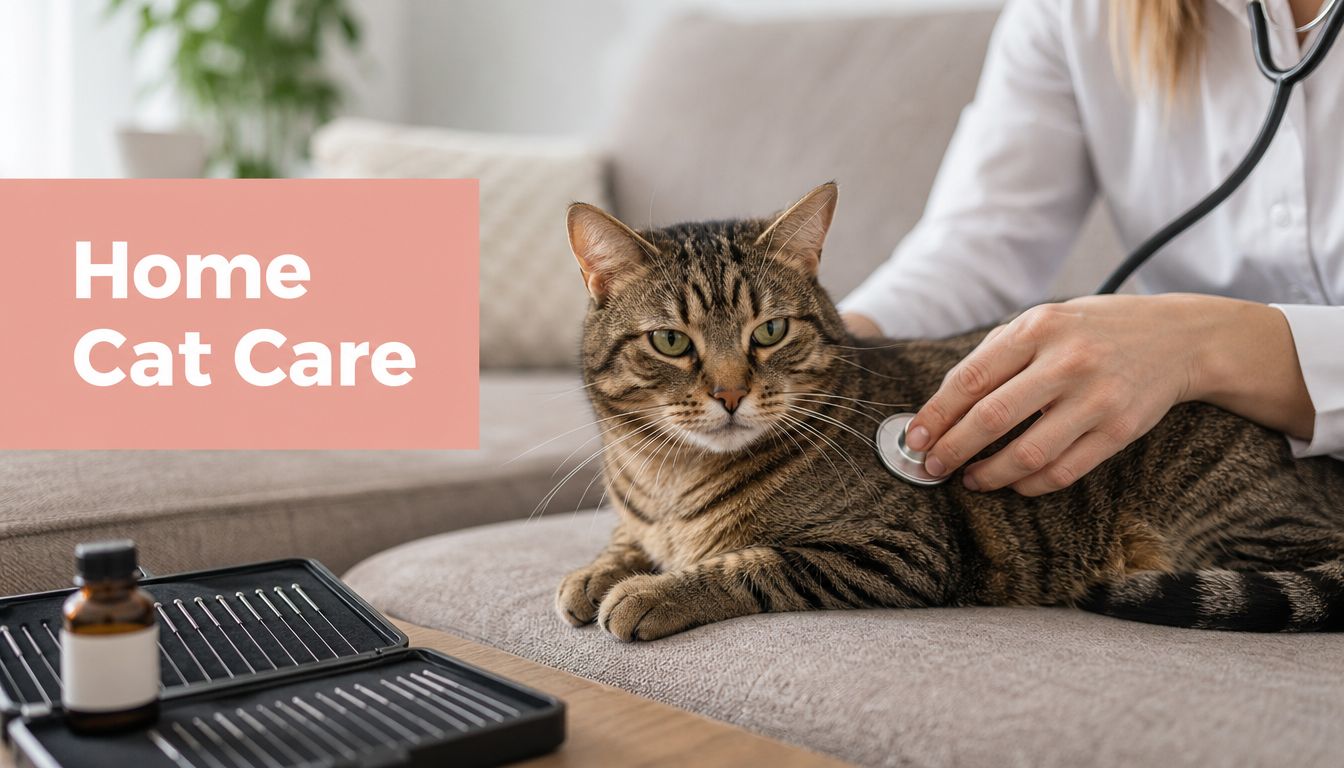
You may be watching your dog settle onto a favorite blanket while a veterinary acupuncturist feels along the hips, checks posture, and places one tiny needle near the leg instead of directly over the sore spot. Or maybe your cat, who hates car rides and exam rooms, is somehow calmer at home than you expected, and you're wondering how anyone decides exactly where those needles should go.
That question is a good one. Acupuncture point selection isn't random, and it isn't a memorization contest. During a calm house-call visit in South Tampa, the goal is to choose points that fit your pet's body, symptoms, medical history, comfort level, and the practical realities of treatment in your living room.
The Art and Science of Choosing Acupuncture Points
A common assumption is that acupuncture works from a giant map with hundreds of possible points, and that an effective visit must use many of them. In veterinary medicine, that idea can make the whole subject feel intimidating before treatment even starts.
It is much simpler. A practical review for veterinary learners notes that many people think they need to memorize 150 to 360+ veterinary acupoints, yet 5 to 15 needles using 50 to 70 core points resolve 80% of common conditions in dogs and cats, with many standard protocols limiting treatments to 1 to 5 points for best results, according to Animal Acu Academy's discussion of acupoint selection.
Why Fewer Points Can Make More Sense
If your senior dog has arthritis, I don't need to "use everything." I need to choose the points most likely to help that dog move more comfortably, tolerate the session well, and recover without stress. If your cat is anxious, fewer needles may be the smarter plan, even if the cat's condition is complex.
That surprises people. They expect more needles to mean more treatment.
Practical rule: The right points matter more than the most points.
To illustrate, consider turning on lamps in a dark house. You don't flip every switch. You use the switches that light the rooms you need. Acupuncture works much the same way. Point selection aims for effect, not quantity.
What I Want Pet Owners To Notice
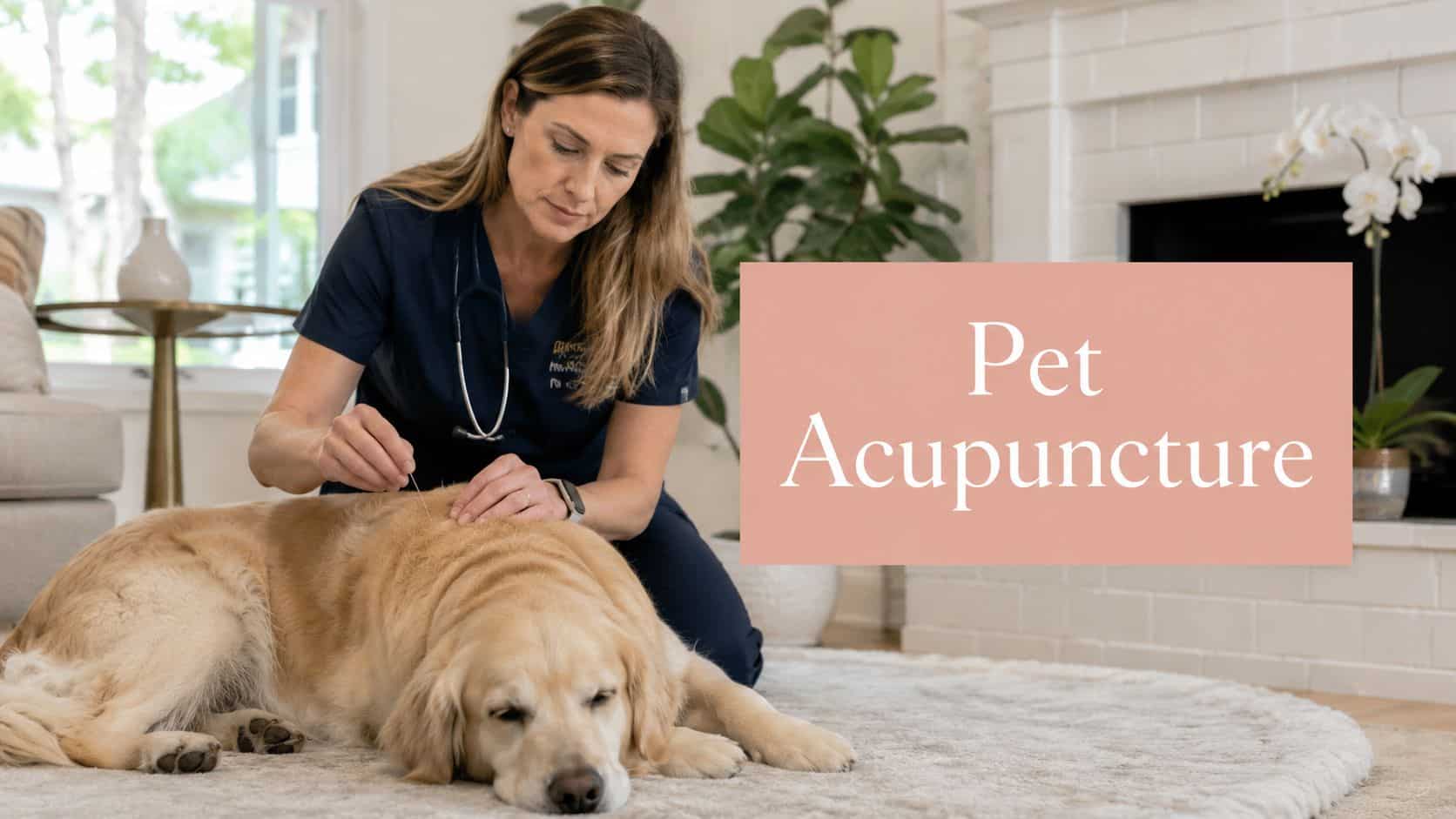
During an in-home visit, you may see long pauses before the first needle goes in. That's not hesitation. That's assessment. I'm watching how your pet stands, how they shift weight, whether they guard one side, whether they seek contact or pull away, and how quickly they settle once the room gets quiet.
A personalized plan often blends familiar orthopedic thinking with Traditional Chinese Veterinary Medicine observations. For pets receiving integrative veterinary care, point choices may be paired with laser therapy, rehab ideas, herbs, or home adjustments depending on the problem being treated.
Here is the part that often reassures owners most: point selection is usually focused, not mysterious. A calm visit may involve only a small set of points chosen with a clear purpose, such as easing joint pain, supporting digestion, reducing nausea, settling the nervous system, or improving mobility after injury.
The Two Lenses of Point Selection
Some owners want to know whether acupuncture is being chosen from an "Eastern" model or a "Western" one. In practice, many veterinarians think through both lenses at once.

The TCVM Lens
Traditional Chinese Veterinary Medicine treats the body like a connected system. A helpful analogy is a city with roads, intersections, traffic patterns, and neighborhoods that depend on each other. In this model, meridians are like highways of communication. Qi is the movement that keeps traffic flowing. Pain, stiffness, nausea, weakness, or restlessness can reflect a kind of blockage, deficiency, excess, or misdirection in that system.
So if a dog has chronic back pain, the point choice may not be based only on where the pain sits. The veterinarian may also ask whether that pet seems cold, tired, weak in the hind end, thirsty, restless at night, or worse after exertion. Those details shape the pattern being treated.
A pet with the same limp as another pet may get a different set of points because the underlying pattern isn't the same.
The Western Anatomical Lens
Now shift to a neuroanatomy map. In this lens, points are chosen because they line up with muscles, connective tissue planes, nerve pathways, trigger zones, and local areas of pain or inflammation.
Research summarized by Morningside Acupuncture's review of point selection describes acupoints as dynamic sites that can become sensitized during illness, with altered biochemistry. That same review notes that stimulating these points can trigger specific neural pathways involved in an anti-inflammatory response through adenosine A1 receptor activation, and that this effect wasn't seen at sham points.
One lens asks, "What pattern is this pet showing?" The other asks, "What tissues and nerves do I want to influence?"
Both questions matter.
How These Lenses Work Together At Home
In a house-call setting, this blend is especially practical. A certified practitioner may watch a dog rise from hardwood floors, note which turns seem difficult, palpate tight muscles, and also assess tongue, pulse, sleep habits, appetite, and temperament. That's not two separate visits. It's one clinical picture.
If you're looking for a certified veterinary acupuncturist, it's worth choosing someone who can explain both the pattern-based reasoning and the anatomical reasoning in plain language. Owners usually feel more comfortable when they understand why one needle goes near the paw, another near the spine, and a third somewhere that seems unrelated at first glance.
How Your Pet's Unique Needs Shape Their Treatment
Two pets can walk into the same room with "back pain" on the chart and leave with different acupuncture plans. That's appropriate. Acupuncture point selection should reflect the individual patient, not just the diagnosis label.

The Factors That Change Point Choice
A veterinarian is usually balancing several layers at once:
- Primary complaint: Arthritis, weakness, anxiety, nausea, post-surgical discomfort, or neurologic change each call for a different strategy.
- Age and resilience: A senior dog may need a gentler session than a young athletic dog, even when both have hip pain.
- Temperament: A wiggly, suspicious pet may do better with fewer needles and shorter retention time.
- Other medical issues: Kidney disease, heart disease, cancer history, digestive sensitivity, or medication use can all influence the plan.
- Daily life at home: Slippery floors, stairs, crate rest, appetite patterns, and sleep setup help determine what matters most.
A calm senior cat with stiffness and poor appetite often needs a different session from an anxious young dog with the same radiographic problem. The first may need support for comfort and constitution. The second may need points that ease pain without overstimulating an already revved-up nervous system.
Local, Distal, And Supportive Points
Owners often expect every needle to go exactly where the problem is. Sometimes that happens. Sometimes it doesn't.
A practical way to consider this:
- Local points address the sore area itself, such as around a painful joint or tight muscle group.
- Distal points are farther away, often on the limb, but they can influence the same functional pathway.
- Supportive points help the whole patient by calming, strengthening, or improving tolerance of treatment.
That combination is one reason acupuncture can look unusual from the outside while still being highly intentional.
A point on the lower leg may be chosen because it helps the hip, not because anyone missed where the hip is.
Why Timing And Frequency Matter
How points are stimulated also changes the treatment effect. According to this veterinary acupuncture FAQ discussing stimulation frequency, high-frequency, low-intensity stimulation can provide immediate but shorter-lived pain relief, while low-frequency stimulation can trigger endorphin release 30 to 40 minutes after treatment, with effects that last for hours to days. That's one reason chronic conditions often do better with spaced, lower-frequency protocols.
Practical treatment planning then begins. A pet with a sudden flare may need one approach. A pet with longstanding osteoarthritis may need another. Owners often ask how often sessions are needed, and the answer depends on response, goals, and the condition being managed. A useful starting point is understanding how many acupuncture sessions pets often need, then adjusting based on what your pet shows over time.
Common Acupuncture Recipes For Dogs And Cats
Owners often want examples. Not because they plan to needle their pet themselves, but because examples make the logic easier to follow. The key is that a "recipe" is really a strategy. The exact points can shift based on the patient in front of you.

Arthritis And Joint Pain
For arthritis, treatment often combines points near the painful joint with points farther down the leg that support circulation, comfort, and function. That mix is common because joint disease isn't only about one sore spot. There may be local inflammation, compensatory muscle tension, reduced range of motion, and nervous system sensitization.
For osteoarthritis, a systematic review found that GB34 was the most frequently selected point, appearing in 93% of protocols, while ST36 and SP9 each appeared in 64%, according to the SAGE review on acupoint selection for osteoarthritis pain. For pet owners, the practical takeaway isn't that every dog gets the same points. It's that clinicians repeatedly return to certain distal points because they are broadly useful in joint pain strategies.
A dog with stifle arthritis might receive:
- Points around the stifle: To address local pain and restricted motion.
- A distal leg point such as GB34 or ST36: To support broader pain relief and limb function.
- A calming or balancing point: Helpful if the dog braces, pants, or struggles to relax.
If your pet is dealing with stiffness and mobility loss, dog acupuncture for arthritis is one example of how these combinations are used in real patients.
Anxiety And Stress
Anxiety cases look different. The point selection usually aims to settle the nervous system and improve the pet's ability to process the environment without escalating. In-home care helps because the pet isn't already overloaded by the car ride, lobby noise, and exam room smells.
A nervous cat may do better with a very small number of calming points and a shorter session. A dog with thunderstorm anxiety might need a different plan from a dog whose anxiety is linked to pain. The visible behavior may look similar, but the point choices can differ because the drivers are different.
Digestive Upset And Appetite Problems
Digestive cases often benefit from a core set of points chosen for regulation rather than simple symptom suppression. For functional gastrointestinal disorders, practitioners commonly rely on ST36, ST25, CV12, and CV4 as an optimal combination for regulating the stomach and intestines, according to the PMC review on acupoint combinations for gastrointestinal disorders.
That helps explain why a pet with nausea or inconsistent stool may receive both abdominal and limb points. One supports the local digestive region. Another helps regulate the larger system.
The treatment plan is often less like "one point for vomiting" and more like a small team of points, each handling part of the problem.
Recovery And Post-Procedure Comfort
Post-operative or post-injury treatment usually focuses on comfort, tissue recovery, movement confidence, and preventing compensation elsewhere in the body. A dog protecting one leg can overload the opposite side, tighten the back, and lose smooth gait patterns quickly.
That means the point choice may include the injured area, nearby muscle groups, and a few points intended to support whole-body recovery. In practice, good acupuncture recipes are adaptable. They follow principles, not rigid formulas.
What To Expect During An In-Home Acupuncture Session
An in-home session usually feels quieter and slower than a clinic visit. That matters more than many owners realize. Pets often show their true movement, posture, and stress signals more clearly at home, where the floors, smells, and routines are familiar.

What Dr. Monica Is Looking For
Dr. Monica will usually start by talking with you about the issue that brought you to the visit. Then she watches your pet walk, turn, stand, sit, lie down, and interact in the home environment. She may also perform Traditional Chinese Veterinary Medicine observations such as tongue and pulse assessment, along with a conventional hands-on exam.
That combination is useful because owners often notice different things at home than they would in a clinic parking lot or exam room. A dog may reveal where the struggle is when getting up from a bed. A cat may show appetite patterns, favorite resting spots, or subtle stiffness during normal household movement.
For families searching for pet acupuncture near me in South Tampa, the home setting is often part of the treatment value, not just a convenience feature.
What Point Selection Looks Like In Real Life
Once the exam and discussion are complete, the point choices are selected based on the goals of that day. If the visit is for digestive discomfort, the veterinarian may choose a point pattern that reflects the clinical use of ST36, ST25, CV12, and CV4 for gastrointestinal regulation, as noted in the earlier section. If the visit is for mobility, the pattern may emphasize comfort, muscle release, and steadier gait.
Most owners notice that the pace stays flexible. If a pet settles quickly, more can be done. If a pet becomes unsure, the plan can be simplified on the spot.
Here's a look at the kind of calm, educational support many owners find helpful during that process:
What Your Pet Usually Feels
Most pets tolerate treatment well when the room is quiet and the handling is gentle. Some grow sleepy. Some lick, yawn, stretch, or rest. Others need a slower introduction over more than one visit.
A house-call model works well because your pet doesn't have to spend energy coping with travel before treatment even begins. Since service is limited to South Tampa, the visit can stay focused on practical home-based care, realistic routines, and what your pet needs where they live every day.
Safety And Partnering For Your Pet's Best Health
Acupuncture has a strong safety profile when a trained veterinarian performs it thoughtfully. Good technique matters. So does judgment. Point selection should always fit the pet's diagnosis, medications, temperament, and overall medical picture.
There are also situations where caution matters. A veterinarian may avoid certain areas, use fewer needles, or modify the session if a pet is frail, highly distressed, pregnant, or has a mass in a location where needling wouldn't be appropriate. Safe acupuncture isn't just about where a point is on a chart. It's about whether that point is appropriate for that patient on that day.
Why Collaboration Matters
The best results often come from teamwork. Acupuncture doesn't need to replace your regular veterinarian's care. It can complement it.
That means sharing records, imaging results, lab work, medication lists, and your day-to-day observations. If your pet has arthritis, neurologic disease, digestive issues, or recovery needs after an injury, the point selection becomes more meaningful when it's informed by the full medical story.
What Pet Owners Can Take Away
If you've ever wondered how a vet "knows where to put the needles," the answer is that the decision comes from diagnosis, observation, experience, anatomy, and pattern recognition. It's not a generic formula, and it shouldn't be.
Good acupuncture point selection is tailored, quiet, and purposeful. It meets your pet where they are.
That matters even more in the home. A pet who is fearful in clinics may finally relax enough to show what hurts. A senior dog who slips on tile may reveal a mobility problem that wasn't obvious elsewhere. A cat with intermittent appetite changes may give better clues when examined near the places they eat, sleep, and hide.
Pet owners don't need to memorize point names. You only need to know that there is a reason behind the plan, and that a careful veterinarian can explain it in a way that makes sense.
If you'd like a personalized conversation about your dog or cat's mobility, pain, digestion, anxiety, or recovery needs, Pet Acupuncture & Wellness (PAW Vet Practice) offers mobile, in-home care for pets in South Tampa. A consultation can help you understand what point selection might look like for your pet, how acupuncture may fit with their current veterinary care, and what a realistic home treatment plan could involve.