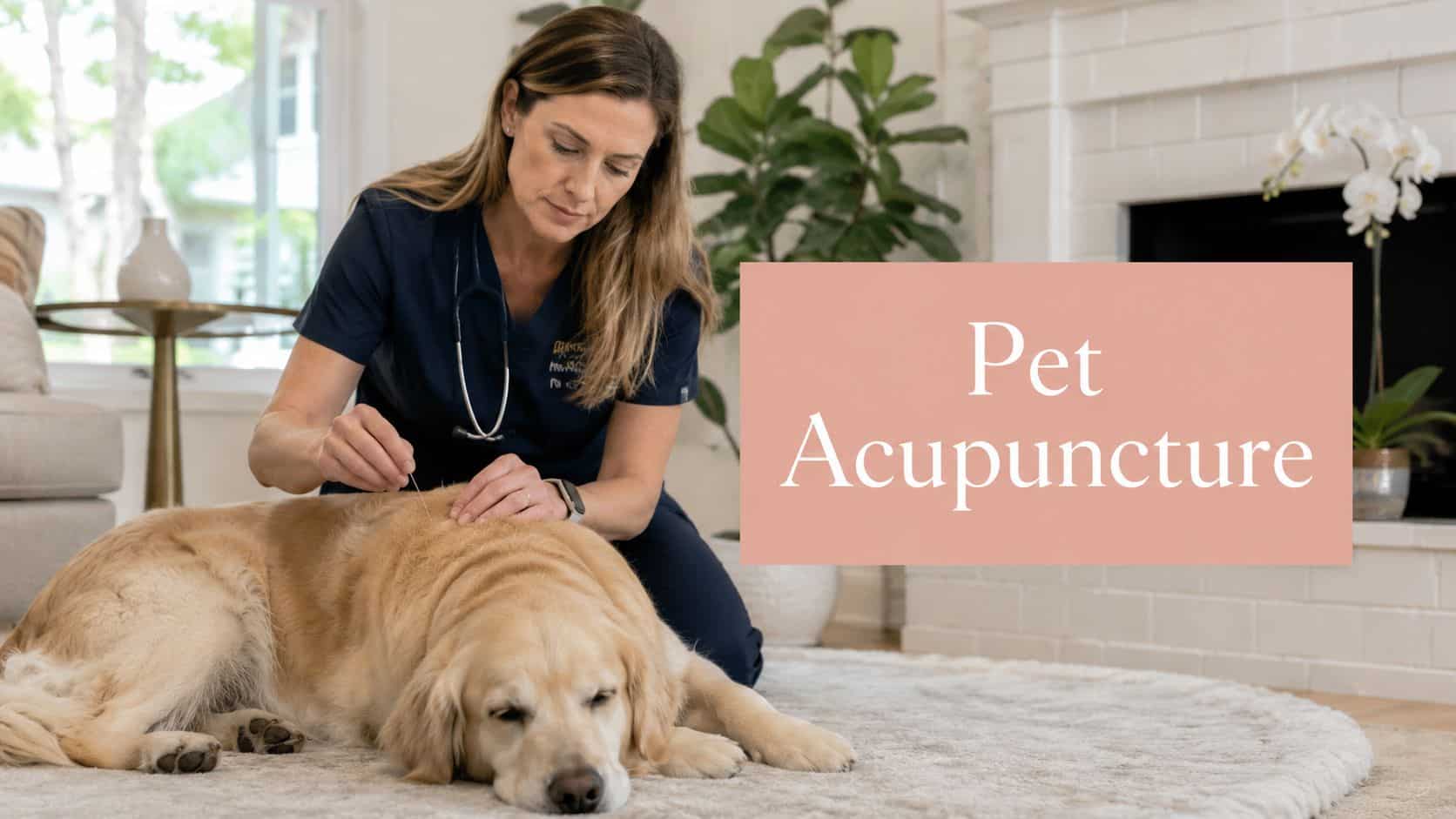
Dog acupuncture usually costs $25 to $300 per treatment in the United States, but that single-session number only tells part of the story. Your real investment depends on the initial exam, whether care is provided at home, and how many visits your dog needs in a full treatment plan.
If you're in South Tampa, you're probably not searching because you're casually curious. You're looking because your dog is slower getting up, hesitates before jumping on the couch, struggles after a walk, or just doesn't look as comfortable as they used to. At that point, most families want two things at once. They want relief that works, and they want honest clarity on what it will cost.
Investing in Your Dog's Comfort and Wellness
A lot of South Tampa dog owners notice the same pattern. Their older dog still wants to be part of the family, still follows them from room to room, still perks up at dinnertime, but movement looks different. Rising from a bed takes longer. Stairs become a negotiation. The evening walk shortens before anyone says it out loud.
That's often when acupuncture enters the conversation. Not as a trend, and not as a last resort, but as a practical option for dogs dealing with arthritis, back discomfort, neurologic changes, or the general wear that comes with aging. For families already exploring options like dog back pain relief, the cost question comes up quickly and understandably.

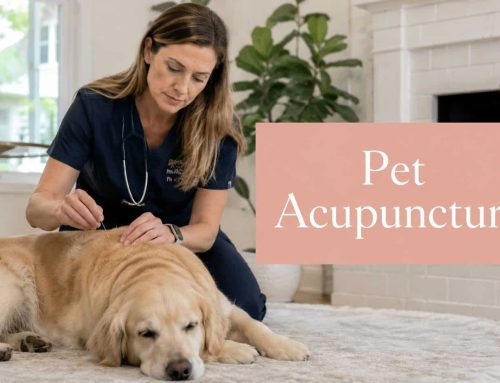
What many people learn after the first call is that acupuncture pricing isn't just about needles. It reflects the veterinarian's time, the exam, the treatment strategy, your dog's diagnosis, and in home care, the logistics of bringing that care to your door. For some dogs, the biggest value isn't only the treatment itself. It's getting that treatment in a quiet home where they aren't bracing in a lobby or slipping on a clinic floor.
A dog who's painful, anxious, or mobility-limited often shows you the difference between “cheaper” and “easier” very quickly.
I look at dog acupuncture cost the same way I look at any chronic care decision. The price matters. But so does what that price buys: a calmer visit, a realistic plan, and a chance to improve comfort in a way that fits the dog in front of you. That's the lens worth using before you compare providers.
The Typical Per-Session Dog Acupuncture Cost
The broad national starting point is straightforward. Neutral pet-care sources report a dog acupuncture cost of $25 to $300 per treatment in the United States according to Pawlicy's overview of acupuncture for dogs.
That wide range exists for a reason. A single “session” can mean very different things depending on where you go and what's included.
Why the First Visit Usually Costs More
The first appointment is rarely just an acupuncture appointment. It's usually the visit where the veterinarian gathers history, reviews records, examines gait and comfort, identifies the main treatment goals, and decides whether acupuncture is appropriate on its own or alongside other therapies.
That's why first visits are commonly priced above follow-ups. Pawlicy notes that one mobile integrative practice lists an initial acupuncture visit at $624.75 plus a travel fee of $105 to $210, while follow-up visits are $519.75 plus travel in that model. Those figures show how much the structure of the visit changes the final bill.
A typical first visit may include:
- Medical review: Your dog's diagnosis, medications, imaging history, and daily limitations.
- Hands-on assessment: Mobility, pain response, muscle tension, neurologic function, and posture.
- Treatment planning: Which points to use, how often to treat, and whether to combine care types.
- Session delivery: The acupuncture treatment itself.
- House-call logistics: Travel time and the convenience of in-home care, when mobile service is involved.
What Follow-Up Pricing Reflects
Follow-up visits are usually more focused. The veterinarian already knows your dog's history and response pattern, so more of the appointment can go toward treatment and adjustment rather than intake.
That doesn't mean the visit is simple. Follow-ups still involve reassessment. Dogs change week to week, especially when pain, weakness, or mobility issues are involved. A good follow-up visit should answer practical questions. Is your dog getting up more easily? Are they slipping less? Are they recovering better after activity? Has their comfort window improved?
Practical rule: When you compare prices, ask what the fee actually includes. A lower sticker price can leave out the exam, travel, or treatment planning that another practice builds into the visit.
How to Read a Quote Correctly
If you're comparing options in South Tampa, don't ask only, “What's your acupuncture price?” Ask these instead:
- Is this the initial consultation or a follow-up?
- Does the fee include the full exam and treatment plan?
- Is there a travel charge for in-home visits?
- Are add-on therapies billed separately if recommended?
If you're looking for a local provider, start with a practice page that clearly outlines pet acupuncture near me and confirm how the visit is structured before you book. That's the simplest way to understand the dog acupuncture cost, not just the advertised session fee.
Key Factors That Influence Your Final Price
Price variation makes more sense once you look at what changes from one acupuncture visit to another. In South Tampa, the biggest differences usually come down to who is providing the treatment, where it happens, how the session is structured, and how many visits your dog will need before you can judge whether it's helping.

Credentials and Clinical Judgment
Acupuncture performed by a veterinarian with formal acupuncture training is different from a basic wellness add-on. The price reflects more than needle placement. It reflects diagnosis, safety judgment, case selection, and the ability to adjust the plan when the response is partial, delayed, or uneven.
If you're evaluating qualifications, it helps to understand what veterinary acupuncture certification means in practice. Training matters most in complex cases, especially when a dog has neurologic disease, multiple medications, mobility decline, or a history that doesn't fit neatly into one category.
Geography and Service Model
Urban and high-demand service areas often carry higher fees than less dense markets. South Tampa also has its own reality. Convenience matters here, but convenience isn't free. House-call medicine requires travel time, scheduling efficiency, and equipment transport. That adds overhead even before the appointment begins.
In-home care can still be the better value for the right dog. If a dog is painful, car rides may worsen the problem. If a dog is reactive, weak in the rear limbs, or highly stressed in clinic settings, a home visit can make the treatment more workable from the start.
In-Clinic Versus In-Home Acupuncture Cost Factors
| Factor | In-Clinic Visit | In-Home Visit (PAW Vet Practice) |
|---|---|---|
| Setting | You travel to the hospital and wait in a shared clinical space | The veterinarian comes to your home in South Tampa |
| Stress level for some dogs | Can be higher for dogs that dislike travel, slick floors, or unfamiliar animals | Often calmer because the dog stays in a familiar environment |
| Time demands on owner | Drive time, loading and unloading, waiting room time | More convenient for owners managing work, family, or mobility concerns |
| Travel overhead | Usually built into clinic operations rather than billed as a separate trip | May include a separate house-call or travel component |
| Best fit | Dogs that do well in hospital settings | Dogs with pain, anxiety, senior mobility issues, or difficulty traveling |
Paying more for a home visit can be reasonable when the dog actually tolerates treatment better at home. Better cooperation often leads to a smoother session and a clearer read on whether acupuncture is helping.
Session Design and Complexity
Not every appointment is equally simple. Some dogs settle immediately and need a straightforward treatment. Others need a slower pace, positioning support, treats, breaks, or modified techniques because they're stiff, nervous, or uncomfortable. The more individualized the visit, the more you should expect the pricing to reflect professional time rather than a flat commodity service.
Costs of Advanced and Complementary Therapies
Some dogs do well with standard dry-needle acupuncture alone. Others benefit more when the session includes another modality chosen for the condition in front of them. That's where costs can shift upward, not because the plan is being padded, but because the treatment is becoming more specific.
Electroacupuncture
Electroacupuncture uses a gentle electrical current attached to selected needles. The goal is to provide a stronger or more sustained stimulation at chosen points. In practice, this can be useful when a dog needs more than a quiet needle session, especially in cases where pain patterns or neurologic issues call for a more targeted approach.
It may affect cost because it adds equipment, setup time, and clinical judgment about which patients are appropriate candidates. It isn't necessary for every dog. When it's recommended thoughtfully, it should be tied to a clear reason, not offered as an automatic upgrade.
Aquapuncture
Aquapuncture involves injecting a small amount of therapeutic liquid, often something like B12, into selected acupuncture points. That creates ongoing stimulation at the point after the appointment ends. Some dogs tolerate aquapuncture very well, especially if the goal is to extend the effect without dramatically changing the visit flow.
Because it adds material cost and a different technique, it may change the final invoice. Ask whether it's included in the treatment fee or billed separately. That's a fair question, and good practices should answer it plainly.
Laser Therapy
Laser therapy is another common complementary option in integrative care. It uses light energy over targeted tissues rather than needles at acupuncture points, though the two approaches are often paired in dogs with pain or mobility issues. Some families pursue both because one modality addresses a different part of the comfort picture.
If your veterinarian discusses laser therapy for dogs, ask what the goal is for your dog specifically. Is the laser being used to support a painful joint, a tight muscle group, a healing area, or overall rehabilitation? That answer helps you decide whether the added cost makes sense.
When Add-Ons Are Worth It
Not every extra therapy improves value. What works is selecting the least complicated plan that the dog can tolerate and that has a realistic chance of helping.
A practical way to evaluate add-ons:
- Ask for the reason: Why this therapy for this dog, right now?
- Clarify billing: Is it built into the visit or charged separately?
- Set a checkpoint: What improvement would tell you it's worth continuing?
The best plans don't pile on modalities. They use the right ones for the case.
Budgeting for a Full Course of Treatment
A South Tampa owner may call after the first good day their dog has had in weeks and ask the question I hear all the time: “What does acupuncture cost?” The more useful question is, “What will the full first course cost if my dog needs enough treatment to judge whether it is helping?”
That distinction matters. Acupuncture is usually evaluated over a series of visits, not a single appointment, especially in dogs with chronic pain, stiffness, mobility loss, or neurologic disease. A peer-reviewed review discussing veterinary acupuncture outcomes in dogs with neurologic and musculoskeletal disease reported improvements in pain and quality of life, as described in the PMC article on veterinary acupuncture outcomes. From a budgeting standpoint, that means owners should plan for a course of care before deciding whether the expense fits the household budget.

What a Realistic Course Looks Like
Many dogs start with a closer treatment schedule, often weekly visits for several weeks, followed by reassessment. If the dog is improving, visits may spread out. If there is little or no response after a fair trial, the plan should change.
That is why I advise owners to ask for the expected cost of the first treatment block, not just the price of the intake visit.
A practical course often includes:
| Your Dog's Acupuncture Journey |
|---|
| Initial assessment |
| Treatment plan based on diagnosis, comfort, and goals |
| Repeated sessions close enough together to judge response |
| Maintenance or tapering if the dog benefits |
How to Budget Without Guessing
Build the estimate from the full plan your veterinarian recommends for the first reassessment point.
- Start with the first-visit fee. This is often the highest fee because it includes history review, hands-on exam, treatment planning, and the first session if the dog is ready that day.
- Add the follow-up visits. Use the number of sessions recommended before the recheck decision point.
- Include travel charges for mobile care. For many South Tampa families, in-home treatment is worth the added cost because some dogs are calmer, less painful, and easier to handle at home.
- Ask what home care is part of the plan. Simple exercises, weight guidance, traction changes, bedding adjustments, and flare-up advice can improve the value of the treatment course because they support the dog between visits.
- Ask whether any package pricing applies. Some practices reduce the effective per-visit cost when several sessions are scheduled as a group.
That last point matters more than owners expect. A well-planned course with useful home instructions may provide more value than a lower session price with no guidance between appointments.
What Makes a Course Worth the Cost
The goal is not to keep adding visits indefinitely. The goal is to see whether your dog is more comfortable, moving better, sleeping better, or needing less support for daily activities after a reasonable trial.
For dogs with chronic orthopedic disease, that assessment is often straightforward. A dog with degenerative joint disease may show clearer signs at home than in the exam room. Easier rising, fewer slips on tile, longer walks, or more interest in stairs all help determine whether continued acupuncture makes financial sense.
In-home care can improve that decision-making. Owners often notice function more accurately in the home setting, and the veterinary team can recommend practical changes that reduce strain between visits. That does not make mobile care the cheapest option. It can make it the better value for the right dog.
Judge acupuncture by the cost of a fair treatment course and by what changes in your dog's daily life, not by the price of one visit alone.
Managing Costs in South Tampa With Insurance
Insurance can make acupuncture easier to fit into the household budget, but only if you verify the details before treatment starts. Policies vary widely in how they handle integrative care, and the phrase to look for is usually “complementary” or “alternative” therapy coverage.

Questions to Ask Your Insurance Company
Call your insurer before the first appointment and ask specific questions, not general ones. “Do you cover acupuncture?” is a start, but it's not enough.
Use this checklist:
- Ask about the category: Is veterinary acupuncture covered under complementary, alternative, rehabilitation, or pain management benefits?
- Ask about diagnosis rules: Does your dog need a covered condition such as arthritis, back pain, or neurologic disease for reimbursement to apply?
- Ask about provider requirements: Must the treatment be performed by a licensed veterinarian, or by a veterinarian with specific acupuncture credentials?
- Ask about claim documents: Will you need itemized invoices, medical records, or referral notes from your primary veterinarian?
- Ask about limits: Is there a deductible, annual cap, waiting period, or per-condition restriction that affects reimbursement?
Keep Your Paperwork Clean
Owners lose reimbursement more often from paperwork gaps than from true denial of eligible care. Request an itemized invoice and save the treatment notes if your practice provides them. If your dog is being treated for a diagnosed orthopedic or neurologic problem, keep those records organized too.
A simple habit helps. Create one folder for invoices, one for prior diagnostics, and one for claim correspondence. That way, if your insurer asks for additional records, you're not searching through old emails while a claim clock is running.
For a visual overview of how pet insurance can fit into the planning process, this video is a helpful starting point:
If Insurance Doesn't Cover It
Even without coverage, you still have options. Ask the practice whether treatment can be staged, whether a shorter recheck cadence makes sense after improvement, or whether a package is available when multiple visits are expected. Some families also use health savings habits of their own, setting aside a monthly pet-care amount for chronic needs rather than waiting for a flare-up to force the decision.
The key is to make the financial plan as deliberate as the medical plan. That reduces stress for you and helps you commit to a treatment course long enough to judge it fairly.
Frequently Asked Questions About Dog Acupuncture
How long does a typical session take
Session length varies by dog, temperament, and treatment style, so I wouldn't trust a one-size-fits-all promise. A first visit usually takes longer because it includes the exam, record review, and planning. Follow-up visits are often more efficient, but dogs still need enough time to settle and be handled comfortably.
Is acupuncture painful for my dog
Most dogs tolerate acupuncture better than owners expect. The goal isn't to force a dog through treatment. A good session is quiet, calm, and adjusted to the dog's comfort level. Dogs that are fragile, anxious, or mobility-limited often do better when the visit happens in familiar surroundings.
The dog should not have to “push through” the appointment for it to count as successful.
How quickly will I see results
Some dogs show small changes early, such as easier rising, better rest, or smoother walking. Others need several visits before the pattern is clear. The fairest way to judge progress is to look at day-to-day function, not just the hours right after treatment.
How do I find a qualified veterinary acupuncturist in South Tampa
Start by confirming that the provider is a veterinarian and ask about formal acupuncture training. Then ask practical questions. Do they treat your dog's condition often? Do they provide in-home visits in South Tampa? How do they structure initial and follow-up appointments? What do they expect you to watch for between visits?
Is in-home acupuncture worth the added cost
For some dogs, absolutely. For others, not necessarily. It tends to matter most for seniors, dogs with pain during transport, dogs that panic in clinics, and families who need the convenience of house-call care to stay consistent with the treatment plan.
If your dog is slowing down, stiff after rest, or struggling with chronic pain, Pet Acupuncture & Wellness (PAW Vet Practice) offers in-home integrative veterinary care for South Tampa families who want a clear, practical plan for comfort and mobility. Reach out to discuss your dog's condition, what a treatment course may involve, and how to evaluate the cost in a way that fits your home, schedule, and goals.