You notice it in a split second. Your dog hesitates before getting up, looks back at their lower spine, or suddenly refuses the couch they always jump onto without thinking. Maybe there was a yelp. Maybe there wasn't. What unsettles most owners isn't just the pain. It's not knowing what to do next without making things worse.
Back pain in dogs can come from several problems that look similar at home, including muscle strain, disc disease, nerve irritation, or inflammation around the spine. The first job isn't to guess the exact cause. The first job is to protect the spine, reduce strain, and get the right level of veterinary help.
If you're in South Tampa and trying to decide whether your dog needs rest, medication, rehabilitation, or urgent care, a calm plan matters more than internet searching at midnight. This guide is built for that moment. It's the practical bridge between “something is wrong” and “here's what I can safely do right now,” with room for professional support such as compassionate in-home pet care when a painful car ride or stressful clinic visit would only add more strain.
A Pet Parent's Guide to Dog Back Pain
Your dog was fine this morning. By evening, they hesitate before lying down, avoid the stairs, or tense up when you reach to help. That moment can feel confusing fast, especially when the signs are mild but clearly not normal.
Back pain in dogs is less about naming the problem on day one and more about protecting the spine while you decide how urgently your dog needs care. A sore back can come from a muscle strain, a painful disc, arthritis near the spine, or nerve irritation. Those problems can look similar at home, but the early priorities are often the same. Keep activity low, avoid extra handling, and watch for changes in comfort, posture, and mobility.
The goal is simple. Prevent a manageable problem from becoming a worse one.
I tell owners to focus on sequence. First, reduce motion. Second, observe carefully. Third, arrange the right level of veterinary help. For many dogs, that means a prompt exam rather than a rushed trip in the middle of the night. For others, especially dogs who cry out, cannot walk normally, or seem weak in the rear legs, the timeline is much shorter.
What helps right away
- Protect the back from extra strain: Stop jumping, stair use, rough play, and slippery-floor scrambling.
- Handle your dog as little as possible: Repeated lifting, twisting, or testing the sore area can increase pain.
- Use observation, not guesswork: Changes in gait, posture, sleep, appetite, and willingness to move help guide the next step.
- Choose care that fits the dog in front of you: Some patients do well with strict rest and a scheduled exam. Others need urgent assessment the same day.
Home care matters, but it has limits. Human pain relievers can be dangerous for dogs, massage is not always safe in a painful spine, and waiting too long can make treatment harder if a disc or nerve problem is involved. When a car ride, waiting room, or repeated loading in and out of the vehicle is likely to worsen pain, in-home veterinary care for a painful dog can make early evaluation and treatment much easier on both the dog and the owner.
Done well, early back pain relief is steady and practical. Keep the dog quiet. Keep the plan simple. Get help before pain has days to build.
Recognizing the Subtle Signs of Back Pain in Your Dog
Some dogs are obvious about pain. Others hide it so well that owners only realize something is wrong when normal routines start breaking down. That's why observation matters.

Obvious Cries For Help
These signs usually push owners to act quickly:
- Yelping with movement: Especially when rising, turning, or being picked up.
- Trouble standing up: A dog may brace awkwardly, push up slowly, or refuse to rise.
- Limping or a changed gait: Some dogs take short steps, sway, or move stiffly through the back end.
- Pain on touch: They may flinch, tense, or turn to look when you touch the back.
Quieter Signals You Shouldn't Ignore
These are easy to dismiss as aging, laziness, or “just being weird,” but they often matter:
- Refusing stairs or furniture: If a dog who normally jumps onto the bed suddenly won't, that's useful information.
- Lowered head or hunched posture: Dogs sometimes guard the spine by changing the way they carry themselves.
- Panting when they aren't hot: Pain can make dogs pant, pace, and struggle to settle.
- Restlessness at night: They lie down, get up, circle, and try again.
- Licking one area repeatedly: Some focus on the painful region.
- Irritability: A sweet dog may growl when touched because movement hurts.
- Hiding or withdrawing: Pain changes behavior before it changes mobility in some dogs.
A painful dog doesn't always act “injured.” Sometimes they act quieter, clingier, or less willing to do normal things. Owners of older pets often miss this because the changes arrive gradually. That's one reason I encourage people to review resources on signs of pain in a senior dog or cat when behavior shifts feel subtle but persistent.
What To Watch Closely Today
Keep a simple mental log over the next several hours:
- Transitions: Sitting to standing, lying down, turning around
- Surfaces: Slippery floors often reveal weakness or guarding
- Daily habits: Jumping, posture during meals, willingness to go outside
If your dog is moving less, guarding the back, or avoiding normal activities, trust that observation. Owners often notice pain before a diagnosis puts a name to it.
Immediate First-Aid and Safe Home Modifications
Once you suspect back pain, the priority is stability. Too much movement too soon can worsen inflammation and mechanical irritation around the spine.

A veterinary review notes that conservative management may require about 2–3 weeks of confinement with only brief, controlled toileting breaks, and emphasizes that analgesia is the first treatment for painful spinal conditions in the back pain guidance from Elwood Vet. That's the piece many owners don't get told clearly enough. “Rest” does not mean wandering the house and taking it easy.
What Strict Rest Actually Means
For the first phase, think controlled movement only.
- Confine your dog safely: Use a crate, small pen, or a very limited room with good footing.
- Leash for potty breaks: Short, slow, direct trips outside. No sniffing tours, no stairs if you can avoid them.
- Stop jumping completely: Block beds, couches, and car access.
- Prevent rough movement: No fetch, zoomies, wrestling, or playing with other pets.
If your dog is small enough to carry, support both the chest and hindquarters. Avoid letting the spine dangle.
What Not To Do
Some well-meaning home care makes things worse.
- Don't give human pain medicine: Ibuprofen, naproxen, and similar medications can be dangerous for dogs.
- Don't start stretches on your own: A painful spine is not the time for DIY rehab.
- Don't use stairs as exercise: Stairs increase spinal load and twisting.
- Don't assume rest alone is enough: Pain medication needs a veterinary diagnosis and prescription.
One practical resource for owners trying to make the first day safer is this guide to at-home dog pain relief, especially when the immediate goal is reducing strain before a formal exam.
Small Home Changes That Help Right Away
These changes reduce unnecessary stress on the back:
- Non-slip footing: Yoga mats, runners, or rugs on slick floors.
- Low, supportive bedding: Thick enough to cushion, flat enough to enter easily.
- Raised access blocked off: Ottomans, couches, beds, and window perches should be off limits for now.
- Food and water placement: Keep bowls easy to reach so your dog isn't stretching awkwardly across slippery flooring.
Practical rule: If an activity involves twisting, climbing, jumping, or sudden acceleration, it probably shouldn't happen during early recovery.
Owners often want to know whether heat, massage, or stretching will help on day one. Sometimes they can, later and with guidance. In the early stage, the safer move is usually simpler. Restrict motion, keep your dog calm, and get a diagnosis.
When to Seek Veterinary and Urgent Care
It often starts with a small but unsettling moment. Your dog gets up more slowly, cries when turning, or suddenly refuses the jump onto the couch they made yesterday without hesitation. At that point, the practical question is not just "is this back pain?" It is "what do I do today, and how fast do I need help?"
A useful rule is to sort what you are seeing into two groups. Dogs with back pain who can still walk, toilet, and settle may be candidates for a prompt same-day or next-day veterinary visit. Dogs with pain plus weakness, wobbling, dragging, or loss of normal bladder or bowel control need urgent care.

Signs That Usually Need A Scheduled Veterinary Visit
A scheduled visit is often reasonable if your dog:
- Is still walking on all four legs: Even if the gait is stiff, slow, or guarded
- Seems painful but can rest: They may hesitate to rise, turn carefully, or avoid certain positions
- Shows behavior change without collapse: Less interest in stairs, jumping, play, or being picked up
- Has symptoms that persist for more than a day or are gradually getting worse
- Needs a recovery plan after the initial injury: Many dogs do better with a guided dog physical therapy plan at home once a veterinarian has examined the spine and decided what is safe
Go Now Signs
Seek urgent veterinary care immediately if your dog has any of these signs:
Sudden inability to stand or walk
Dragging a limb, knuckling over, or any sign of paralysis
Loss of bladder or bowel control
Severe pain that does not settle with strict rest, including repeated crying, trembling, or panic with movement
Rapid decline over hours, not days
These cases can change quickly. A dog who was only painful in the morning may be weak by evening if a disc problem or spinal cord compression is developing.
Why This Distinction Matters
Back pain has several causes, and they do not all carry the same level of urgency. Muscle strain, disc disease, arthritis, spinal infection, and nerve root irritation can look similar early on. Home observation helps you notice patterns, but it cannot confirm which structure is injured or whether the spinal cord is involved.
That is why I tell owners to watch function as much as pain. Pain matters, but the change in walking, balance, paw placement, and bathroom control often tells you how urgently the spine needs hands-on assessment.
If getting to a clinic is hard because your dog is large, anxious, painful to transport, or unstable on stairs, an in-home veterinary visit can be a very practical middle step for the dogs who are still stable enough to be seen at home. The advantage is not convenience alone. The dog stays in a familiar space, movement is reduced, and the veterinarian can assess gait, posture, home footing, and setup in the exact environment where recovery will happen. If the exam suggests a true emergency, you will know quickly and can go in with a clearer plan.
When you are deciding between "I should probably wait" and "I am worried," use the safer option. Prompt evaluation is usually easier to recover from than a delayed diagnosis of a spinal problem that needed faster treatment.
Modern Pain Relief and Rehabilitation Options
The goal at this stage is simple. Keep the dog comfortable enough to rest, move safely, and begin recovering without asking an irritated spine to do too much.

Back pain usually responds best to a plan that treats more than one problem at a time. A dog may have inflammation, muscle guarding, nerve pain, and loss of normal movement patterns all at once. If you address only one piece, progress is often partial or short-lived.
What Multimodal Care Usually Includes
A veterinary review on low-back pain and sciatica notes that oral anti-inflammatories and other analgesics may help but often do not provide durable control on their own. Combinations such as rehabilitation, acupuncture, gabapentin or pregabalin, and targeted procedures are often used together, as discussed in this review of pain management in dogs with low-back pain and sciatica.
In practice, the plan may include:
- Prescription pain medication: To reduce pain enough for sleep, bathroom trips, and safer movement
- Rehabilitation exercises: Chosen for the dog's diagnosis and stage of recovery, not pulled from a generic routine
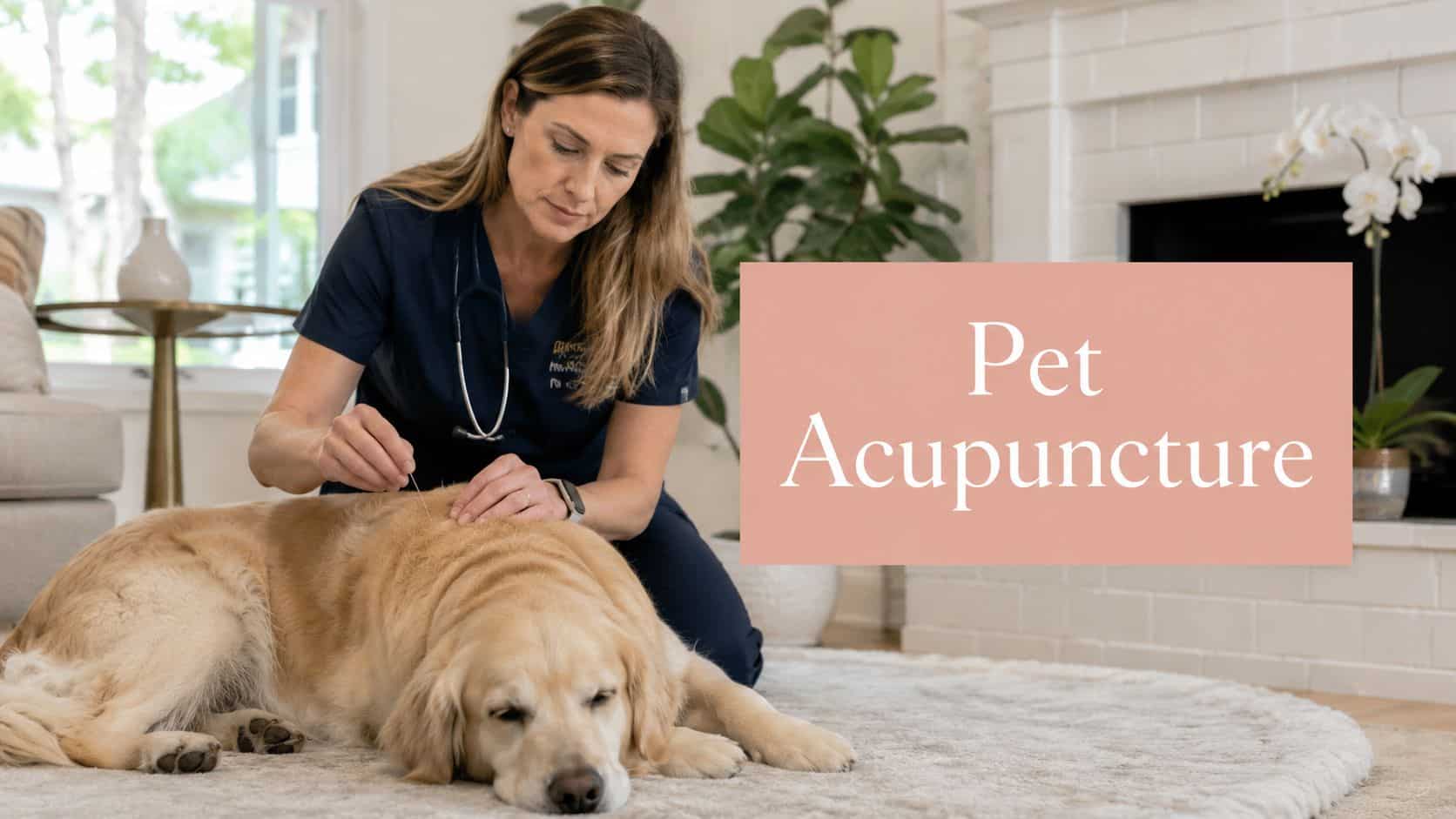
- Acupuncture or electroacupuncture: Often added to improve comfort and reduce medication reliance in some dogs
- Laser therapy: Sometimes used to support short-term pain control and tissue comfort
- Targeted procedures: For persistent or more severe pain, options such as epidural steroid injections may be discussed
The trade-off is that stronger pain control can make a dog feel better before the spine is ready for normal activity. Owners understandably see that tail wag and brighter attitude and assume the problem is resolving. Sometimes it is. Sometimes the dog is just more comfortable. That is why the treatment plan has to include activity limits and recheck points, not only medication.
What Works Better Than Owners Expect
Owners are often surprised by how much improvement comes from small, controlled changes at home. Careful footing, help with standing, shorter bathroom walks, better bedding, and a clear plan for getting on and off furniture can matter as much as the first round of medication.
Rehab usually starts with control and coordination, not conditioning. A painful dog does not need a harder workout. That dog needs the right amount of movement, in the right form, at the right time.
I often tell owners that good rehab looks a little boring at first. That is a compliment. Quiet, repeatable routines protect healing tissue and make flare-ups less likely.
For local families looking for structured recovery support, dog physical therapy at home can be one part of that plan, alongside medication and veterinary follow-up. Pet Acupuncture & Wellness (PAW Vet Practice) is one in-home option in South Tampa that provides integrative services such as acupuncture, laser therapy, and home exercise planning in coordination with a pet's regular veterinarian.
Later in the plan, this overview may help owners understand how hands-on care and movement work together:
What Improvement Can Look Like
Many dogs do not improve in a straight line. They may have a better day, then a sore day after slipping on the floor, turning too fast, or doing more because they felt better. That does not always mean the plan failed. It does mean the plan may need adjustment.
Meaningful relief often takes days to a couple of weeks rather than showing up after one treatment. Some dogs need medication changes. Some need a slower rehabilitation schedule. Some need imaging or referral because the pain pattern does not fit a routine strain.
Treatment works best when it matches the cause of pain and is adjusted as the dog's comfort, strength, and mobility change.
Partnering With an In-Home Vet for Long-Term Wellness
Back pain care often breaks down after the first visit. Owners are told to “rest” their dog, but they're left guessing about leash length, room setup, stair use, when to restart activity, and what changes mean trouble. That information gap is one of the biggest reasons recovery gets messy.
A review of rehabilitation guidance for back pain conditions notes that mainstream advice often lacks a practical framework for activity progression and monitoring, and that physical rehabilitation warrants more investigation, as described in this review on lumbosacral pain and rehabilitation gaps. In-home veterinary care helps because the plan gets built where the problem happens.
Why Home Visits Change The Quality Of Care
An in-home vet can watch your dog stand up from their own bed, walk across your own flooring, and manage your actual doorway, steps, and furniture. That changes recommendations in useful ways. The advice becomes specific.
- Environmental setup: Where rugs should go, which couch access needs blocking, whether a ramp would help
- Handling technique: How to support your dog during transfers without twisting the spine
- Activity progression: When to add short leash walks, when to keep things more restricted
- Monitoring: Which changes are expected and which mean the plan needs to change
A Better Fit For Painful Dogs
Many dogs with back pain hate car rides, slippery clinic floors, and waiting-room stress. Home visits reduce that burden. They also make follow-up easier, which matters because spinal pain management often requires reassessment rather than one-and-done advice.
If you're in South Tampa, a mobile veterinary clinic near you can make long-term care more realistic by bringing evaluation, comfort-focused treatment, and rehabilitation guidance into the home where your dog feels safest.
Back pain can be frightening. It also becomes much more manageable when someone helps you translate “rest your dog” into a real daily plan.
If your dog is showing signs of spinal discomfort, weakness, or reluctance to move, Pet Acupuncture & Wellness (PAW Vet Practice) provides in-home integrative veterinary care for families in South Tampa. That can include pain-focused evaluation, acupuncture, laser therapy, rehabilitation guidance, and practical home recommendations designed around your dog's actual environment and comfort needs.