Your dog may still greet you at the door, wag for dinner, and ask to go outside. But something has changed. They pause before standing up. They sit a little crooked. They hesitate at the first step or shorten their walk before you expected. Most families notice these changes before they have words for them.
That instinct to help matters. It's one of the best things about caring for a dog at home. But dog physical therapy at home works best when it isn't treated like a grab bag of internet exercises. The safest home program starts with observation, then a diagnosis, then a plan that fits the dog in front of you.
Your Guide to Safe and Effective Home Therapy
Many owners search for dog physical therapy at home because they want to do something useful right away. That motivation is good. The problem is that generic routines often skip the most important question.
As TopDog Health's discussion of dog physical therapy exercises puts it, the biggest unanswered question is not which exercises exist, but which exercises are safe for your dog today, and what symptoms mean you should stop. That's the standard I want you to use at home.
Home Therapy Is Part of a Plan
Home rehab isn't usually a fully DIY project. It's more often a continuation of a veterinarian-designed rehabilitation plan, adjusted to your dog's pain level, diagnosis, and stage of recovery. That distinction matters for arthritic dogs, post-surgical dogs, and dogs with neurologic weakness.
If your dog has already been slowing down, stiffness may be only one piece of the picture. Pain control, traction in the home, movement pacing, and exercise selection all need to work together. If you haven't already addressed daily comfort, start with practical at-home dog pain relief strategies so you're not asking a painful dog to “exercise through it.”
Practical rule: If you don't know what structure is injured, what movement causes pain, or whether your dog is compensating, you're not ready to progress intensity.
What Works and What Usually Doesn't
What works is boring in the best way. Short sessions. Careful observation. Stable footing. Repeatable exercises. A dog that stays relaxed and willing.
What doesn't work is also predictable:
- Random exercise mixing: Pulling advanced balance drills from social media can overload a weak or painful dog.
- Using pain as feedback: If the dog stiffens, refuses, pants unusually, or worsens later, the session was too much.
- Progressing too fast: Owners often add duration, difficulty, and frequency all at once. Change one variable at a time.
- Ignoring compensation: A dog can complete a movement and still do it poorly. Completion isn't the same as benefit.
For families in South Tampa, the right mindset is simple. Help your dog at home, but do it like a professional would. Assess first. Start gently. Stop when the body says stop.
How to Assess Your Dog's Needs Before You Begin
Before you ask your dog to do a single exercise, watch them. Good home rehab starts with a baseline. If you don't know how your dog moves on an average day, you won't know whether your plan is helping or making things worse.

Watch Everyday Movement First
Observe your dog on a normal day, in a familiar space, before they get excited. Watch them rise from lying down, stand still, turn, and walk away from you and back toward you. If it's safe, also watch a slow trot.
Look for asymmetry. A dog with a front leg problem may shift weight off one side and look uneven through the shoulders. A dog with a rear limb issue may sway through the hips, shorten the stride on one side, or push up with the front end first when standing.
A few practical clues matter:
- During standing: Is more weight carried on one side?
- During sitting: Does your dog sit straight, or does one leg swing out?
- During turning: Do they pivot comfortably both ways, or avoid one direction?
- After rest: Are the first steps stiff, then easier?
- After activity: Do they improve with movement, or worsen?
Check Comfort Without Forcing Anything
Use your hands gently. Stroke along the limbs and large muscle groups. Notice whether your dog turns to look, tenses, pulls away, licks at you, or shifts weight when you touch a certain area. Those are useful observations, but they are not a substitute for a veterinary exam.
You can also note whether your dog willingly performs normal daily movements, such as stepping over a threshold, getting into a sit, or lowering their head to eat. If they resist a movement they used to do easily, that's meaningful.
If pain signals are subtle, this guide on how not to miss the sign of pain in a senior dog or cat can help you sharpen what you're looking for at home.
| Home Mobility Observation Checklist | What to Look For |
|---|---|
| Gait | Limping, shortened stride, stiffness, uneven pacing |
| Standing posture | Weight shifting, paw lifting, widened stance, hunched posture |
| Sit to stand transition | Slow rise, pushing up with front legs first, crooked sit |
| Turning and pivoting | Reluctance in one direction, slipping, crossing limbs awkwardly |
| Daily function | Hesitation on floors, avoiding stairs, reluctance to jump or squat |
Build a Baseline You Can Compare
Write down what you see for several days. Keep it simple. Morning stiffness, best time of day, worst surface in the house, willingness to walk, and whether your dog seems better or worse after activity.
A good home program isn't built from exercises first. It's built from patterns.
This baseline is what lets you make smart decisions later. If a new drill causes shorter steps, more crooked sitting, or next-day fatigue, you'll catch it early. If your dog starts rising more easily and moving more evenly, you'll see that too.
Foundation Exercises for Gentle Mobility and Comfort
When a dog is stiff, deconditioned, or early in recovery, the first priority isn't strength. It's comfortable movement quality. That means preserving joint motion, supporting body awareness, and avoiding rough handling.

Start With Passive Range Of Motion
For gentle exercises, precision matters. According to this guide to dog physical therapy exercises you can do at home, passive range-of-motion work at home typically starts with the dog lying on their side, then each toe is gently flexed and released about 10 times per limb, followed by slow flexion and extension of the leg. During these exercises, the neck and back should stay in a neutral, straight line.
PROM is not stretching for the sake of stretching. It's controlled, low-force movement through a comfortable range. You should feel smooth motion, not push for extra motion.
How To Do PROM Safely
- Set up the right space. Use a non-slip surface and a calm room. Your dog should be relaxed, not bracing.
- Position the body well. Side-lying works best for many dogs. Support the body so the spine stays neutral.
- Begin distally. Start with the toes. Gently flex and release each toe about 10 times.
- Move up the limb slowly. Use slow flexion and extension of the leg. If the dog tenses or resists, reduce the range.
- Stop at resistance. Don't force a joint past what the body allows that day.
Add Simple Proprioception
Proprioception is your dog's awareness of where their body is in space. Dogs recovering from injury often lose precision before owners notice obvious weakness. Gentle proprioceptive work can help restore control.
A good entry-level option is a static stand. Ask your dog to stand squarely on stable footing. Keep the session short and quiet. Some rehab guidance also uses 5 to 10 second holds for simple static work and raised-limb positioning, with careful attention to posture and comfort.
Try these low-risk options:
- Square stand: Encourage even weight through all four limbs.
- Very gentle weight shifts: A tiny side-to-side body shift while the dog remains comfortable.
- Surface awareness: Standing on a folded towel or firm cushion can be useful for some dogs, but only if the footing is stable and the dog isn't slipping.
Keep the movement slow enough that you can see compensation start before it becomes the whole exercise.
What Owners Commonly Get Wrong
The most frequent mistakes are speed and force. Owners move the limb too quickly, pull on a tight joint, or assume discomfort is part of the process. It isn't. Some strengthening drills are specifically limited to dogs that are not in pain, and that principle should guide your gentlest work too.
Another mistake is poor alignment. If the neck lifts sharply, the back arches, or the dog twists to avoid the target limb, the exercise has stopped being therapeutic. Reset the body. Reduce the demand. Try again later if needed.
If you want a veterinarian-guided home plan rather than guessing exercise sequence and technique, rehabilitation exercises for cats and dogs can be part of a broader in-home rehab approach.
Building Strength and Balance with Core Exercises
Once your dog is moving comfortably and tolerating basic mobility work, you can start asking the body to work harder. At this point, home rehab becomes more active. The goal is not exhaustion. The goal is controlled muscle use, better balance, and cleaner movement during daily life.

Sit To Stand Is A Workhorse Exercise
One of the most useful home strengthening drills is the sit-to-stand. A practical home protocol described in Chewy's dog physical therapy exercise guide is to start with 5 to 10 sit-to-stands once or twice daily, then progress to 15 repetitions as strength improves. The same guidance notes that balance tasks can involve standing on cushions, and that controlled leash walking with a chest harness helps prevent compensation such as bunny-hopping.
A good sit-to-stand should look quiet and symmetrical. The dog sits squarely, rises without throwing weight dramatically forward, and stands without stumbling.
How To Coach It Well
- Use a non-slip surface: Tile and slick wood make form worse.
- Keep the dog straight: If the hips swing out, reduce repetitions.
- Use calm pacing: Fast reps teach momentum. Slow reps teach strength.
- Stop before fatigue changes form: Sloppy reps don't build the pattern you want.
Controlled Walking Builds Real Function
Walking sounds simple, but therapeutic walking is different from letting a dog wander. Keep the leash short enough for guidance but loose enough to allow normal movement. A chest harness is often more helpful than a neck collar for control and alignment.
Watch for compensation. Common examples include bunny-hopping, swinging the hindquarters, toe dragging, or repeatedly shifting away from one limb. If you see those patterns, shorten the session or return to easier work.
A few decisions improve walking quality:
- Choose steady surfaces: Flat, grippy ground first.
- Avoid chaotic routes: Don't add stairs, pulling, greetings, and uneven terrain all in one outing.
- Use short repeats: Several calm walks often beat one long, tiring walk.
Introduce Balance With Restraint
Balance training can be useful, but owners often make it too hard too soon. Start with a very mild challenge. Cushions, a stable padded surface, or a low-level balance task can work for some dogs. If the dog splays the toes, panics, or leans heavily on you, the setup is too difficult.
A common technical guideline from home rehab instruction is to use a raised surface around the height of the dog's ankle for certain hind limb stepping and postural drills, with 5 to 10 second holds. The point isn't to make the exercise look impressive. The point is to train postural control while keeping the spine aligned.
Here's a simple way to think about progression:
- Make it easy enough to perform well
- Repeat it consistently
- Increase only one variable at a time
A short demonstration can help owners visualize pacing and handling:
Don't Let Your Dog Cheat The Exercise
Dogs are clever. If one limb is weak or painful, they'll rotate the spine, unload the sore side, speed through the movement, or widen the stance to avoid the hard part. Owners often count the rep anyway. I wouldn't.
If the movement is crooked, the body is practicing compensation, not recovery.
Body weight also matters here. A dog carrying excess weight has to move more mass with the same sore joints and weaker muscles. If your dog is rebuilding mobility, the benefits of a healthy weight for cats and dogs are directly relevant to comfort, endurance, and exercise tolerance.
Creating a Sustainable Home Therapy Routine
Most home programs fail for the same reason diets fail. They ask for too much, too soon, in a way that doesn't fit real life. A sustainable rehab routine is short enough to repeat, clear enough to track, and flexible enough to adjust when your dog has an off day.

Build Around Your Dog's Best Time Of Day
Some dogs move best later in the morning after they've loosened up. Others are sharper before evening fatigue sets in. Schedule exercises when your dog is most comfortable and most willing. That alone improves compliance and movement quality.
Keep sessions brief. A calm, focused few minutes often beats a long session that ends in resistance. For dogs managing arthritis or chronic weakness, consistency matters more than intensity.
Use A Simple Weekly Structure
You don't need a complex spreadsheet. You need a repeatable rhythm. For a senior arthritic dog, many owners do well with one gentle mobility session and one short strengthening or walking session later in the day, with at least one lighter day built into the week.
| Sample Weekly Plan (Arthritic Senior Dog) | Morning Activity | Evening Activity |
|---|---|---|
| Monday | Gentle PROM and square stand | Controlled leash walk |
| Tuesday | Sit-to-stand practice | Restorative mobility work |
| Wednesday | Controlled leash walk | Light balance work |
| Thursday | Gentle PROM and posture reset | Controlled leash walk |
| Friday | Sit-to-stand practice | Light balance work |
| Saturday | Controlled leash walk | Restorative mobility work |
| Sunday | Short mobility check and easy session | Rest or brief walk |
This type of structure works because it alternates demand. Harder doesn't mean better. Better means your dog remains comfortable, willing, and a little steadier over time.
Keep A Rehab Journal
A notebook on the counter is enough. Record what you did, how your dog performed, and how they looked later that day and the next morning.
Track observations such as:
- Ease of rising: Better, same, or worse
- Walk quality: Smooth, stiff, short-strided, uneven
- Willingness: Eager, neutral, resistant
- After-effects: More tired than expected, stiffer later, no change, improved
This record helps you catch patterns that memory misses. It also gives your veterinarian much better information if your dog needs plan adjustments.
Consistency beats intensity in home rehab. The body responds to repeatable, tolerable work.
Know When To Hold Steady
Progression should feel almost boring. Increase one variable at a time. That could mean a few more repetitions, a slightly longer hold, or a small walking increase. Don't change all three in the same week.
If your dog has a setback, don't assume the program failed. Back up to the last level that was comfortable and stable. Good rehab often looks like two steps forward, one pause, then steady progress again.
When to Call a Professional for In-Home Rehab
Some dogs do well with a veterinarian-guided home program and careful owner follow-through. Others need hands-on assessment sooner. That isn't a failure. It's good judgment.
Call for professional help if your dog becomes more lame, starts refusing exercises they previously tolerated, vocalizes with movement, slips more often, stops bearing weight normally, or seems more uncomfortable after sessions instead of better. The same applies if you can't tell which limb is the problem, or your dog's form changes from day to day in a way you can't explain.
Professional rehab is a normal part of veterinary care, not an extreme measure. CareCredit's overview of dog physical therapy notes that an initial consultation is often around $180, individual treatment sessions commonly range from about $58 to $98, and acupuncture averages about $117 per session. That structure reflects a recognized veterinary service designed to be delivered under professional guidance, especially for post-surgical and chronic cases.
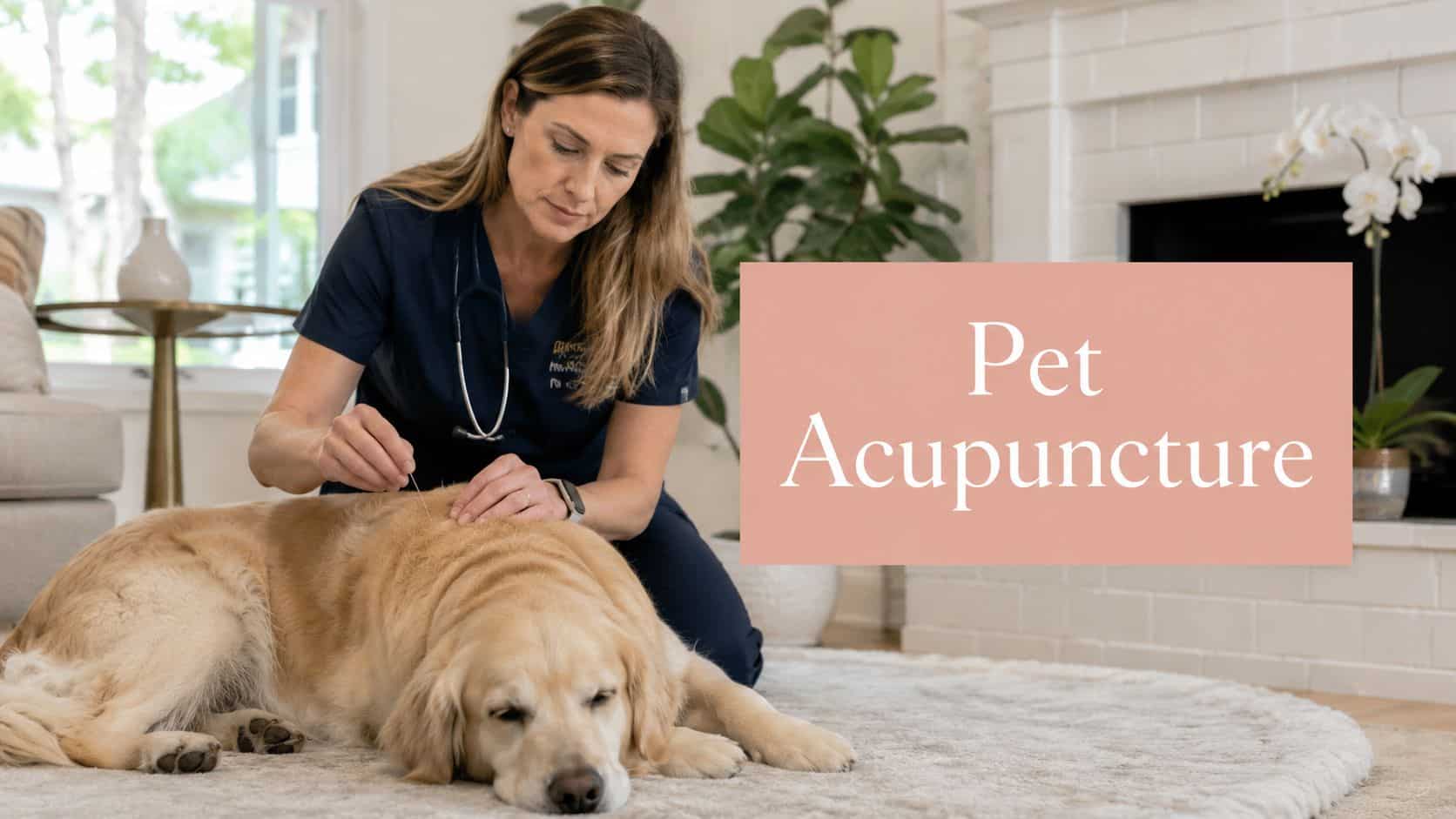
For South Tampa families, in-home care can make this process easier on both the dog and the owner. A mobile service may be appropriate when travel is stressful, the dog is painful, or the home setup itself needs to be evaluated. One local option is an in-home mobile veterinary clinic near you, where the veterinarian can assess movement, home surfaces, exercise technique, and whether therapies such as laser therapy, acupuncture, or a revised rehab plan make sense.
The right time to bring in help is earlier than most owners think. If you're unsure, ask.
If your dog is slowing down, recovering from injury, or struggling with mobility at home, Pet Acupuncture & Wellness (PAW Vet Practice) provides compassionate mobile care throughout South Tampa. Dr. Monica offers in-home support that can include rehabilitation guidance, acupuncture, laser therapy, and practical home exercise plans designed for your dog's comfort, diagnosis, and daily routine.