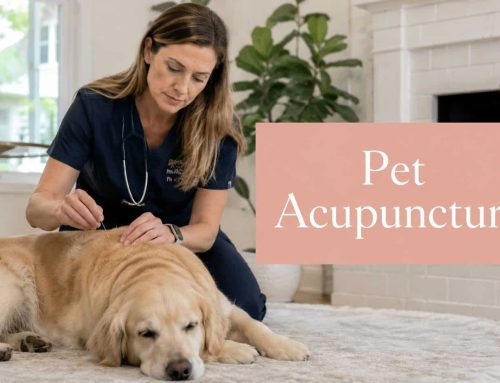
You've probably heard a friend say acupuncture helped their older dog walk more comfortably, or you've seen it mentioned as part of pain care for cats and dogs. At the same time, it's normal to pause and wonder whether the person holding the needles has the right training.
That question matters more than most pet owners realize. Acupuncture for animals isn't just about placing tiny needles. It requires judgment, anatomy knowledge, patient handling, and the ability to decide when acupuncture fits into a larger medical plan and when it doesn't.
If you live in South Tampa and want this kind of care for your dog or cat, the most useful phrase to understand is veterinary acupuncture certification. It's the clearest shortcut to answering a practical question: How do I know this veterinarian is qualified to provide acupuncture safely and thoughtfully?
Your Pet Deserves The Best Care
When a pet starts slowing down, families often notice the small things first. A dog hesitates before jumping onto the couch. A cat that used to greet you at the door starts staying in one room. A senior pet seems stiff after resting, or anxious during car rides to the clinic.
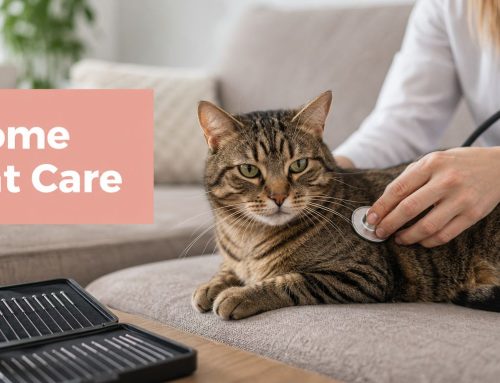
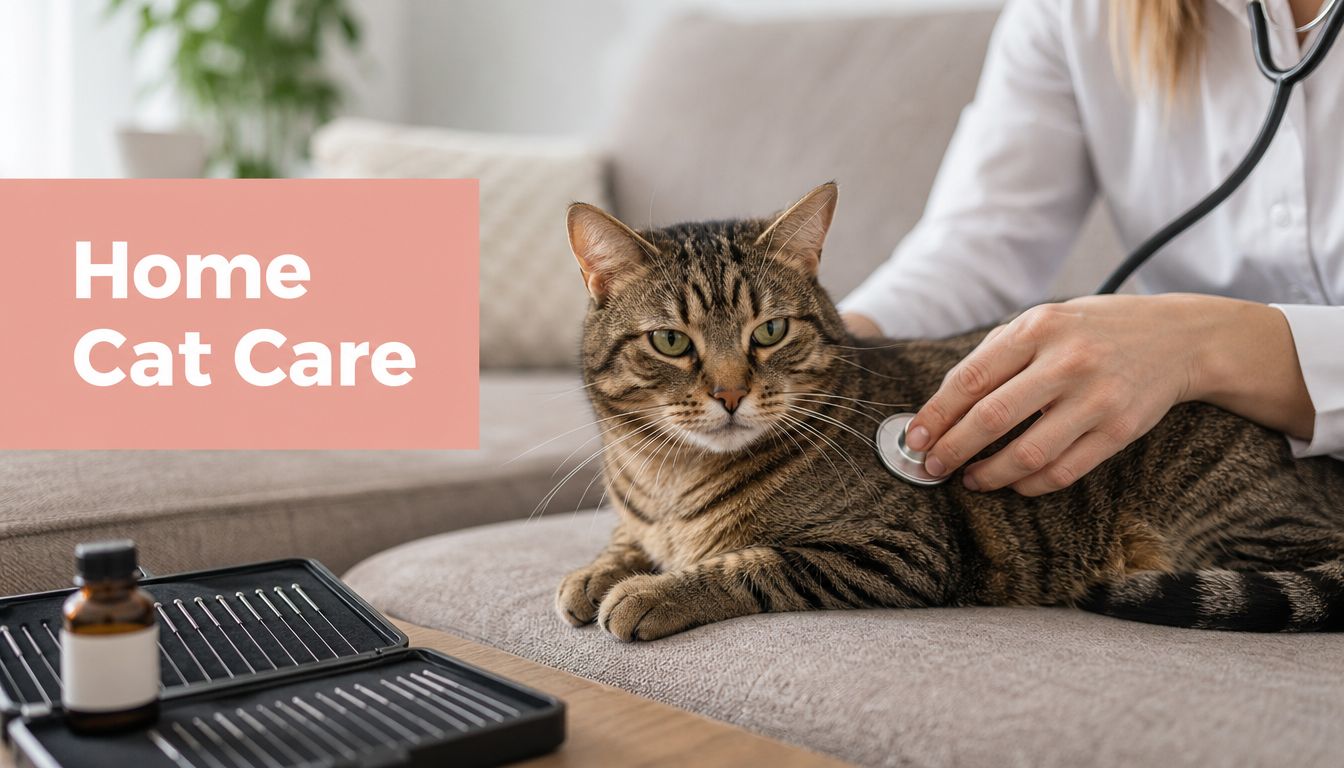
In those moments, many people start looking for gentler ways to support comfort and mobility. Acupuncture often comes up because it sounds less intimidating than another medication change, and many pets seem calmer when care happens in a familiar setting. That's one reason mobile care has become so appealing to families who value a quieter experience. If you're already considering the benefits of at-home vet care, it makes sense to ask the next question too. Who is trained to do this well?
Why Certification Matters To Pet Owners
A caring pet owner usually isn't trying to become an expert in credentials. You're trying to protect your pet.
That's why certification matters. It tells you the veterinarian didn't just become curious about acupuncture and add it casually to practice. It signals that they pursued formal training beyond veterinary school, learned technique under supervision, and had to demonstrate competence.
Practical rule: If a treatment is specialized, the training should be specialized too.
Think of certification as a quality filter. It doesn't promise that every pet will respond the same way, and it doesn't replace a good exam or good communication. What it does is lower the guesswork about the clinician's preparation.
What Peace Of Mind Looks Like
For most families, peace of mind comes from three simple ideas:
- Licensed Veterinary Oversight: Your pet is being treated by someone who already understands diagnosis, pain, medications, and underlying disease.
- Specialized Acupuncture Training: The veterinarian has gone further than general practice education and studied this modality in depth.
- Safer Decision Making: A certified practitioner is more likely to know when acupuncture is appropriate, when to modify a plan, and when to say no.
That last point is easy to overlook. Good acupuncture care isn't just about doing the procedure. It's also about recognizing the pet who needs imaging first, bloodwork first, rest instead of stimulation, or a combined plan that includes rehabilitation, medication, or other supportive therapies.
That's what makes certification reassuring. It shifts the conversation from “Do they offer acupuncture?” to “Are they trained to use it well for my pet?”
What Veterinary Acupuncture Certification Really Means
Veterinary acupuncture certification is an advanced professional credential. It comes after veterinary school, not before, and not instead of it.
A helpful analogy is human medicine. If someone has a heart condition, you feel better seeing a physician with focused training in cardiology. In the same way, if your pet is receiving acupuncture, you want a veterinarian with focused training in that specific skill.

It Starts With Being A Veterinarian
A widely recognized pathway requires the doctor to first hold a veterinary degree, then complete an approved acupuncture course with classroom learning and supervised hands-on training, followed by written and practical exams that assess point location, safety, and clinical application, as described in CareerExplorer's overview of veterinary acupuncturist training requirements.
That distinction is important. A certified veterinary acupuncturist is not someone practicing outside veterinary medicine. This is a veterinarian who added a structured, tested skill set to an existing medical foundation.
Why A Short Course Isn't The Same Thing
Pet owners sometimes hear terms that sound similar but mean very different things. A veterinarian may have attended a lecture, completed continuing education, or earned a formal credential. Those are not interchangeable.
Certification usually means the veterinarian had to do more than show up. They had to learn technique, demonstrate it, and meet standards set by a training organization. That's very different from a brief introduction course.
The safest way to read a credential is to ask what the veterinarian had to complete, not just what they had the opportunity to attend.
What This Means In Real Life
When you choose a certified practitioner, you're choosing someone who has spent additional time learning things owners rarely see directly:
- Needle Placement Skills: Knowing where to place needles accurately on different body types and temperaments.
- Patient Selection: Deciding which pets are likely to tolerate and benefit from treatment.
- Safety Judgment: Recognizing sensitive areas, adjusting technique, and integrating treatment with the rest of the medical record.
- Clinical Reasoning: Building a plan that fits the pet's diagnosis, age, medications, mobility, and stress level.
If you're curious how this type of care fits into a broader whole-pet plan, integrative veterinary care is a useful framework. Acupuncture is often one part of that larger picture, not a stand-alone replacement for everything else.
Understanding The Main Certification Pathways
You may meet two veterinarians who both offer acupuncture, yet they explain the same treatment in very different words. One may talk about patterns, balance, and meridians. Another may describe nerves, muscles, and pain pathways. For a pet owner, that can feel like hearing two mechanics describe the same engine with different manuals.

Two Common Ways To Think About Treatment
TCVM-oriented training usually teaches acupuncture as part of a larger whole-body system. A veterinarian working from this model may look at your pet's overall pattern, including comfort, digestion, sleep, tongue appearance, pulse quality, and other signs that help guide point selection. The goal is not only to address one sore joint or one diagnosis, but to understand how the pet is functioning as a whole.
Western medical acupuncture explains treatment through anatomy and physiology. A veterinarian using this framework may talk about nerve stimulation, trigger points, local tissue response, circulation, and pain modulation. That style of explanation often feels more familiar to owners who are used to conventional medical language.
The practical experience for your pet may look quite similar either way. Your dog still rests on the mat. Your cat still gets a careful exam. The biggest difference is the clinical map the veterinarian uses to decide why a certain point, technique, or treatment schedule makes sense.
Many Certified Veterinarians Blend Both
In everyday practice, the lines are often less rigid than the labels suggest. Some certified veterinarians train in one pathway first, then add coursework or clinical experience from the other. Others use one framework to explain the case and another to refine treatment choices.
That matters because your pet is not a philosophy test.
A thoughtful practitioner may use TCVM ideas to look at the whole patient, while also using a Western understanding of pain pathways and musculoskeletal anatomy to explain how treatment may help a dog with arthritis or a cat with chronic back tension. For owners, this middle ground is often reassuring. It means the veterinarian is choosing tools that fit the patient, not forcing the patient into one script.
What The Pathway Means For Your Search
Certification pathways help you understand how a veterinarian was trained, but they do not tell the full story by themselves. A TCVM-trained doctor is not automatically a better choice than a Western-trained doctor, and the reverse is also true. The better question is simpler: can this veterinarian explain their reasoning clearly, handle your pet gently, and connect acupuncture to the rest of your pet's medical care?
That is where certification becomes useful in a very practical way. It gives you a starting point for judging safety, communication, and fit. If your pet has a complex condition, takes multiple medications, or gets stressed easily during handling, you want a practitioner who can explain not just what they do, but why this approach is appropriate for your individual pet.
What To Listen For During A Consultation
You do not need to learn a new vocabulary before booking an appointment. You only need to listen for signs that the veterinarian can translate their training into a clear plan.
A TCVM-trained veterinarian might explain that your dog's signs fit a broader pattern they want to correct. A Western-trained veterinarian might explain that the goal is to reduce pain signaling and improve function. An integrative veterinarian may use both styles, then bring the conversation back to the same practical questions you care about most. Is this safe for my pet? What problem are we trying to improve? How will we measure whether it is helping?
Clear answers matter more than impressive terminology.
The Rigorous Journey To Become Certified
Your dog is sore, anxious, and slowing down. You are trying to decide whether acupuncture is a thoughtful medical option or just another wellness label. In that moment, certification matters because it helps answer a practical question. Has this veterinarian been trained and tested enough to treat my pet safely?
The path is usually much more involved than pet owners expect. A certified veterinary acupuncturist does not merely sit through a lecture and collect a certificate. Training often takes place over many months and combines classroom study, hands-on labs, supervised case work, and formal testing.

Training Is Structured And Substantial
The International Veterinary Acupuncture Society describes its 2025 to 2026 United States certification course as the “first certification program in the United States,” and the program includes 171 hours with multiple in-person sessions in San Antonio scheduled from September 2025 through March 2026, according to the IVAS United States certification course page.
For owners, that detail helps separate real professional training from a short continuing education experience. Acupuncture certification is closer to learning a new clinical skill set than attending a single workshop. A veterinarian has to study how points are selected, how needling is performed, how patients are positioned, and how treatment is adjusted for different diseases and temperaments.
Competency Matters More Than Attendance
Some programs also require veterinarians to prove they can apply what they learned. As noted earlier, the Chi University CVA track includes graded quizzes, written testing, hands-on point location assessment, case-based work, and additional advanced training or supervised internship time.
That matters because animals do not read textbooks.
A veterinarian may understand theory perfectly and still need practice in the practical aspects of treatment. Can they locate points accurately on a tense dog? Can they adapt for an arthritic cat who will not tolerate one position for long? Can they explain the treatment plan in plain language so you know what to watch for at home? Certification requirements are designed to check those applied skills, not just memory.
Different Programs, Similar Demands
Training models are not identical, but serious programs tend to ask for the same kinds of effort. For example, Evidence Based Veterinary Acupuncture course information describes multi-level training that combines online preparation, in-person labs, quizzes, exams, case reporting, and supervised clinical work.
That pattern is reassuring. It means certified practitioners have usually been observed, corrected, and evaluated before offering this service to your pet. The process works like pilot training. Reading the manual matters, but safe performance depends on guided practice before taking responsibility for a patient.
If you want to see how this credential may appear in a real veterinary profile, a page like Dr. Monica Suarez, DVM, CVA professional bio shows the kind of designation owners often notice when comparing practitioners.
Certification does not promise a perfect outcome. No careful veterinarian would claim that. It does mean your pet is more likely to be treated by someone who has spent significant time building skill, being tested, and learning how to combine acupuncture with sound veterinary judgment.
How To Verify A Practitioner's Credentials
Once you know what certification means, the next step is checking whether a veterinarian holds it. This doesn't need to feel confrontational. Good clinicians should be comfortable answering thoughtful questions about training.
Start with the simplest approach. Ask directly, then verify.

A Simple Way To Check
- Ask About The Exact Credential: Don't stop at “Do you do acupuncture?” Ask what certification they earned and through which organization.
- Look For Clear Letters After The Name: You may see terms like CVA. Ask what those initials stand for and how they were earned.
- Confirm That The Status Is Current: A good follow-up question is whether the practitioner actively maintains that credential.
- Check The Veterinary License Too: In Florida, acupuncture for animals falls within veterinary practice, so the provider should be a licensed veterinarian.
A personal profile can also help you see how a doctor describes their training and philosophy. For example, Dr. Monica Suarez, DVM, CVA shows the kind of credential language owners often look for when evaluating acupuncture care.
This short video can help you think through the verification process in a practical way.
What A Good Answer Sounds Like
A well-trained veterinarian usually answers credential questions with specifics. You'll hear where they trained, what kind of certification they completed, and how acupuncture fits into their current work.
Be cautious if the answer stays vague. “I've done some training” isn't the same as naming a formal program. If the explanation feels fuzzy, keep asking.
You are not being difficult when you ask about credentials. You are doing the same due diligence you'd do for surgery, dentistry, or rehabilitation care.
Questions That Help You Go Deeper
You can make the conversation more useful by asking about everyday practice:
- How Often They Use Acupuncture: Regular use usually leads to stronger clinical fluency.
- Which Patients They Commonly Treat: This helps you judge fit for your own dog or cat.
- How They Coordinate Care: Good acupuncture care should work alongside your primary veterinarian, not in isolation.
- How They Adapt For Nervous Pets: Technique matters, but handling and pacing matter too.
If you're in South Tampa, these questions are especially helpful for narrowing down mobile and in-home options. The calmer home environment can be a major advantage, but the person delivering the service still needs the right training behind it.
What Certification Means For Your Pet's At-Home Care
For a pet owner, the value of certification becomes real at the moment of treatment. It shows up in the veterinarian's hands, in their pacing, and in the quality of the plan they build around your pet.
A certified practitioner is more likely to approach the appointment with both precision and flexibility. They aren't just placing needles by rote. They're assessing comfort, posture, sensitivity, temperament, history, medications, and what the family can realistically manage at home.
Better Skill Often Means A Better Experience
At-home acupuncture can be wonderfully calm, but home visits also require judgment. A veterinarian has to adapt to the pet's favorite bed, kitchen floor, or sunny rug. They may be working with a senior dog who tires easily or a cat who only relaxes in one room.
Certification supports that kind of decision-making because the practitioner has trained in patient handling and treatment application, not just theory. That often means gentler needle placement, better point selection, and a more individualized session.
It Also Improves The Overall Plan
Acupuncture works best when it's part of thoughtful medical care. A certified veterinarian is more likely to connect treatment with the rest of your pet's needs, such as exercise modification, pain monitoring, home comfort changes, and complementary therapies. Families exploring options like dog laser therapy at home often benefit from this kind of integrated thinking.
That doesn't mean every pet needs a complex plan. Sometimes the best plan is simple. But it should still be deliberate.
Here's what certification often translates to for the family at home:
- More Personalized Sessions: The veterinarian can tailor the visit to your pet's diagnosis, tolerance, and daily routine.
- Safer Technique: Advanced training supports careful needle placement and appropriate treatment choices.
- Stronger Collaboration: Certified practitioners are often better prepared to work alongside your regular veterinarian and other providers.
- Clearer Expectations: You're more likely to get an honest discussion about goals, comfort, and how progress will be monitored.
Good at-home care should feel calm, organized, and medically grounded. Certification doesn't make acupuncture magical. It makes it more accountable.
Key Questions To Ask Your Veterinary Acupuncturist
A first conversation with a veterinary acupuncturist doesn't need to be long. It just needs to be focused. Good questions can tell you a lot about training, fit, and whether the veterinarian's approach matches your pet's needs.
Questions Worth Bringing To The First Visit
- What formal acupuncture certification have you completed? This helps separate general interest from documented advanced training.
- How do you explain your treatment approach? Their answer may sound more TCVM-based, more Western, or integrative.
- What kinds of pets do you most often treat with acupuncture? You want experience that feels relevant to your dog or cat's problem.
- What should my pet's first session look like? This gives you a practical sense of handling, pacing, and comfort.
- How will you coordinate with my primary veterinarian? The best care usually works as a partnership.
- How will we judge whether treatment is helping? Look for specific, observable goals such as easier rising, improved comfort, or better daily function.
What You're Listening For
You're not looking for perfect wording. You're listening for clarity, honesty, and medical judgment.
A strong practitioner should be able to explain their training in plain language, describe a reasonable treatment plan, and stay grounded about what acupuncture can and can't do. If they can also talk about comfort, mobility, and daily life in a way that feels practical, that's a very good sign.
If your pet is older, dealing with chronic pain, or not enjoying clinic visits anymore, these conversations can make a real difference in quality-of-life planning. Many families also find it helpful to reflect on broader pet quality of life questions before starting a new supportive therapy.
If you're looking for compassionate, in-home integrative care in South Tampa, Pet Acupuncture & Wellness (PAW Vet Practice) offers mobile veterinary support focused on pain relief, mobility, and comfort for dogs and cats. If you'd like help deciding whether acupuncture may be appropriate for your pet, reaching out for a conversation is a thoughtful next step.