Yes, many dogs with peripheral (idiopathic) vestibular episodes can be safely supported at home with careful nursing and veterinary guidance. Your first priorities: set up a safe, non-slip space, keep your dog from falling, and offer small amounts of water often. Call your vet right away if there’s vomiting that won’t stop or your dog seems confused. Most dogs start showing real improvement within a few days.
TL;DR:
- Most dogs recover from idiopathic vestibular episodes within 2 to 3 weeks, with a median improvement time of about 4 days, though some may retain a slight head tilt.
- Emergency vet care is necessary if symptoms worsen after 48 hours, vomiting persists despite hydration, or there are signs of difficulty swallowing or breathing.
- Safe home support includes using non-slip surfaces, gentle supported walks, small frequent water offerings, and pressure sore prevention with frequent repositioning.
- Medical treatments primarily involve anti-nausea medications and IV fluids, while antibiotics or steroids are reserved for specific underlying causes like ear infections.
- In-home veterinary services such as acupuncture and guided rehab can speed recovery and minimize stress by avoiding clinic visits during the acute phase.
Table of Contents
- Recognizing the Signs, Types, and Common Causes of Vestibular Disease
- When Should You Call Your Vet or Seek Emergency Care?
- How Do You Nurse a Dog With Vestibular Disease at Home?
- What Medications and Treatments Do Vets Use for Vestibular Episodes?
- How Long Does Recovery From Vestibular Disease Take?
- Preventing Complications: Eye Care, Pressure Sores, and Mobility Aids
- Can In-Home Rehab and Integrative Visits Speed Up Recovery?
- A Note From Pet Acupuncture & Wellness on Calm, Patient Care
- In-Home Acupuncture and Rehab Support for Vestibular Recovery
- Sources
- FAQ
Recognizing the Signs, Types, and Common Causes of Vestibular Disease
A dog with vestibular disease looks like she’s had too much to drink, and that image sticks with most owners the first time they see it. Her head tilts, her eyes flick rapidly back and forth (a symptom called nystagmus), and she can barely walk a straight line without tipping over. Research on clinical sign prevalence in vestibular dysfunction found ataxia, the medical term for that wobbly, uncoordinated gait, in about 64.5% of cases, and nystagmus in roughly two-thirds of cases.
The signs themselves don’t tell you the cause. What matters is where the problem lives.
- Peripheral vestibular disease (inner ear, often idiopathic or from an infection): the dog is dizzy but alert and responsive.
- Central vestibular disease (brainstem or brain involvement): expect additional red flags like altered mentation, weakness on one side, or abnormal proprioception (the dog doesn’t know where her feet are).
Idiopathic geriatric vestibular syndrome is the most common culprit in older dogs, but ear infections, toxin exposure, and, less often, tumors can produce similar symptoms.
When Should You Call Your Vet or Seek Emergency Care?
Not every wobbly dog needs an emergency room, but some do, and knowing the difference matters. Contact your veterinarian promptly, and treat these as urgent:
- Neurological signs that get worse instead of better, especially past 48 to 72 hours.
- Vomiting that continues despite small, frequent water offerings.
- Trouble swallowing, drooling excessively, or any sign of labored breathing.
- Known or suspected exposure to a toxin, medication overdose, or plant.
- No improvement at all after two to three days of home care.
When you call, describe exactly when symptoms started, whether they’re improving or worsening, how your dog is eating and drinking, and whether vomiting or breathing changes are present. Your vet will likely want to examine the ears with an otoscope, run bloodwork, and, if central disease is suspected, discuss advanced imaging. The Frontiers consensus on idiopathic vestibular syndrome notes that otoscopy and bloodwork are key first steps in ruling out treatable causes like otitis media or interna.
How Do You Nurse a Dog With Vestibular Disease at Home?
Home nursing for a dizzy dog comes down to four things: safety, support, food, and hygiene. Get these right and you’ll prevent most of the complications that turn a manageable episode into a rough one.
Build a safe recovery space. Choose a small room, not the whole house, so your dog can’t stumble far or tumble down stairs. Cover the floor with non-slip mats or thick towels, since hardwood and tile become genuine hazards for a dog who can’t balance. Keep the lighting low and steady at night, since sudden shadows or bright flashes can worsen disorientation. Skip the crate. Introducing new confinement during an active episode can raise stress and injury risk for a dog who’s already struggling to understand which way is up.
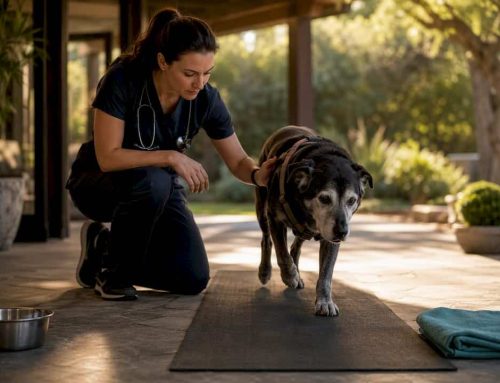
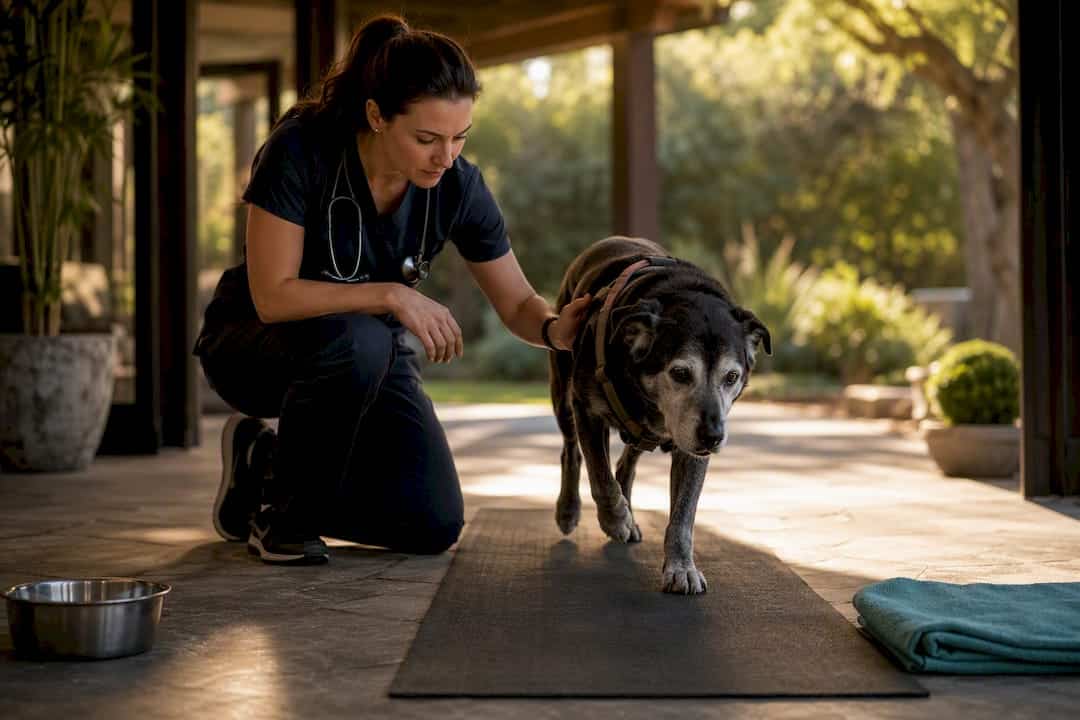
Support movement carefully. A folded towel slung under your dog’s belly works as a makeshift harness for short bathroom trips. For medium and large dogs, always use two people: one supporting the chest, one the hindquarters, following the approach recommended in veterinary nursing guidance on vestibular disease. Never let a big dog attempt stairs alone. In the first day or two, rest matters more than exercise. Gentle, supported walking can begin once your dog can bear weight without collapsing.
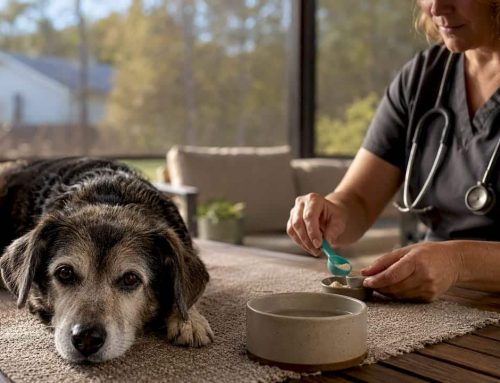
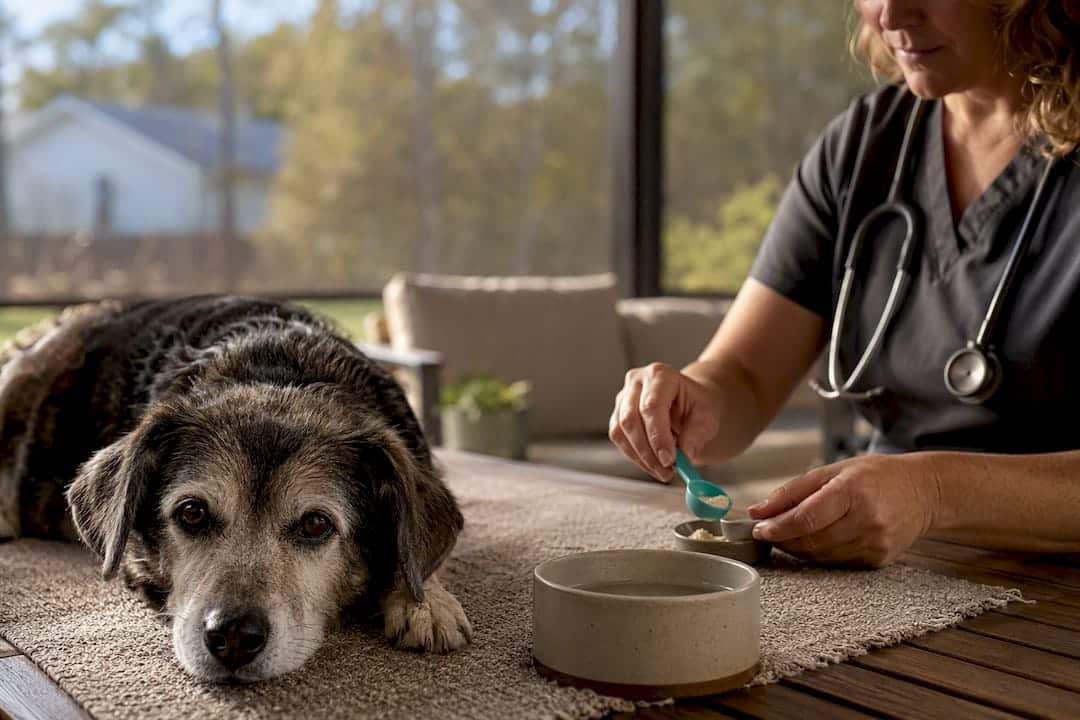
Manage feeding and hydration. Hand-feed small amounts if your dog seems reluctant to approach the bowl. Elevating the food and water dishes slightly can reduce strain for a dog with a persistent head tilt. Only syringe-feed if your veterinarian specifically instructs it, since a disoriented dog can aspirate liquid into the lungs.
- Offer water in small, frequent amounts rather than a full bowl at once.
- Watch for coughing or gagging while eating or drinking, which signals aspiration risk.
- Keep meals calm and quiet, away from other pets that might startle her.
Handle toileting and hygiene. Support your dog outside on a towel sling and give her extra time. If accidents happen indoors, clean promptly and check her skin for early redness, since a dog lying down for extended stretches is prone to pressure sores.
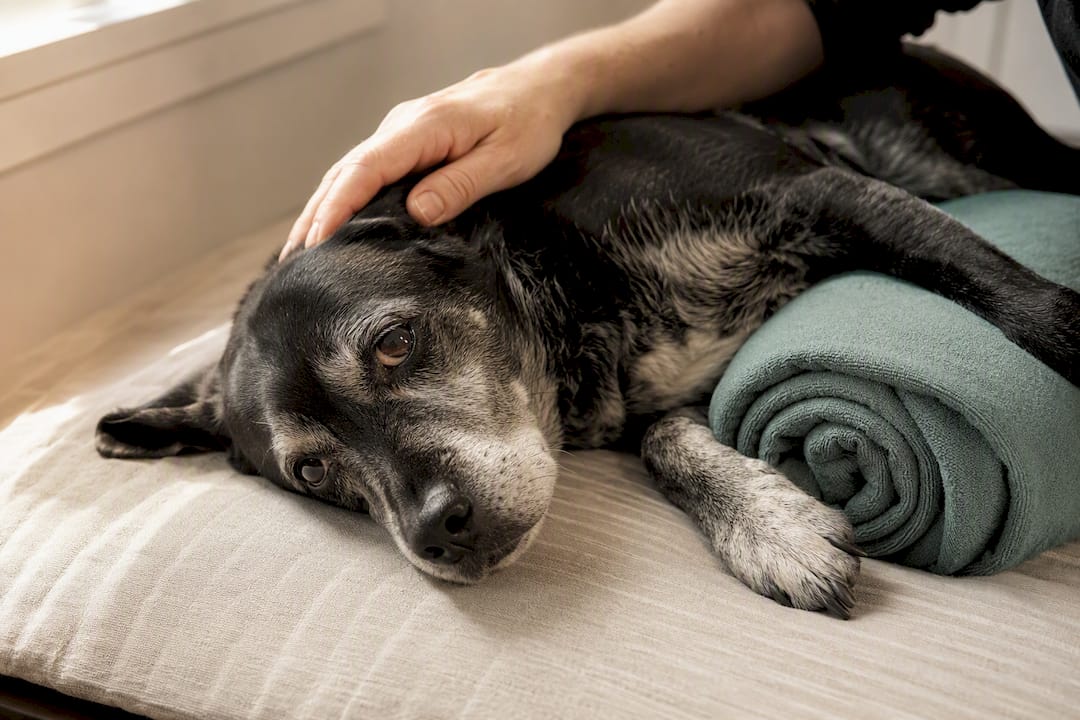
Pro Tip: If your dog shows facial drooping or can’t fully blink one eye, a sign of facial nerve involvement, position her with that eye facing up when she’s lying down, and keep a rolled towel behind her back to stop her from rolling completely onto her side. This protects the eye from dust and drying and keeps her airway easier to monitor.
What Medications and Treatments Do Vets Use for Vestibular Episodes?
Most of the medical heavy lifting happens at your vet’s office or during a house call, not from your medicine cabinet. Still, understanding what’s being used helps you follow instructions accurately and recognize side effects.
- Antiemetics control the nausea and vomiting that often accompany vestibular episodes. Maropitant is the medication specialist surveys most commonly favor, typically dosed once daily by your veterinarian, while ondansetron is sometimes used as well.
- IV fluids become necessary when a dog isn’t drinking enough on her own and dehydration sets in, which frequently means a short hospital stay.
- Antibiotics are indicated only when an ear infection, otitis media or interna, is the underlying cause, not for idiopathic cases.
- Corticosteroids are generally not recommended for idiopathic vestibular syndrome, despite being a common assumption among owners.
Never adjust a dose or add an over-the-counter remedy without checking with your vet first. What looks like a mild side effect can sometimes signal the medication needs to change entirely.
How Long Does Recovery From Vestibular Disease Take?
Expect the roughest patch in the first 24 to 48 hours. From there, most dogs turn a corner fast. Research tracking idiopathic vestibular disease recovery found a median time to improvement of about 4 days, with most dogs falling somewhere between 2 and 10 days. Full recovery, or something close to it, often arrives within 2 to 3 weeks.
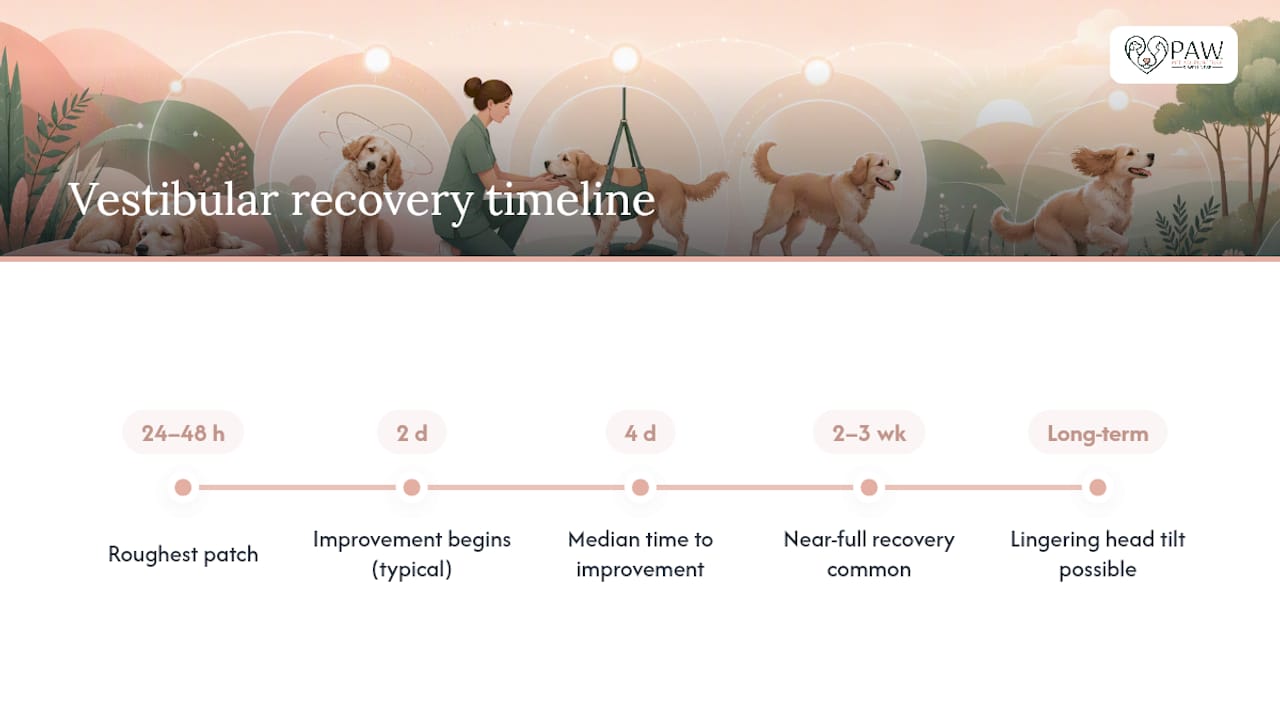
A lingering head tilt sometimes remains permanently, even after everything else resolves. Primary-care data confirms this pattern: most cases improve quickly without ever needing a specialist referral, though a minority retain some head tilt or mild facial weakness long-term. If your dog plateaus or starts sliding backward instead of improving, that’s your cue to call your vet again rather than wait it out.
Preventing Complications: Eye Care, Pressure Sores, and Mobility Aids
A dog who can’t move normally for a few days needs help avoiding the secondary problems that come from lying still too long. If your dog’s blink looks weak or infrequent on one side, ask your vet about lubricating eye drops to prevent corneal drying, and gently wipe away any drool or discharge from facial paresis.
- Reposition a dog who can’t move much on her own every few hours to prevent pressure sores.
- Use padded, washable bedding rather than a thin blanket over hard flooring.
- Only apply barrier creams to pressure points if your vet recommends it.
- Fit a proper harness or sling rather than pulling on a collar, which can worsen neck strain.
- Add ramps for any dog navigating stairs or getting into a car.
For dogs slow to regain coordination, professional in-home rehab can speed things along with guided exercises tailored to her specific deficits. A resource like PAW Vet Practice’s guide to rehabilitation equipment walks through selecting the right slings and mats for a recovering dog.
Can In-Home Rehab and Integrative Visits Speed Up Recovery?
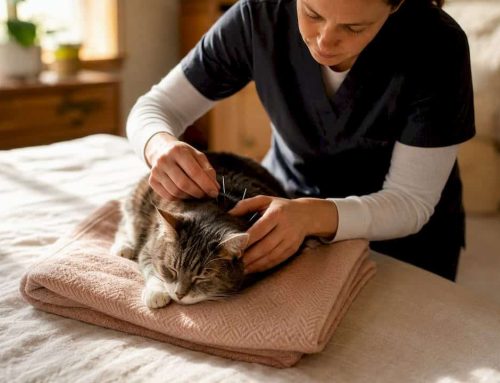
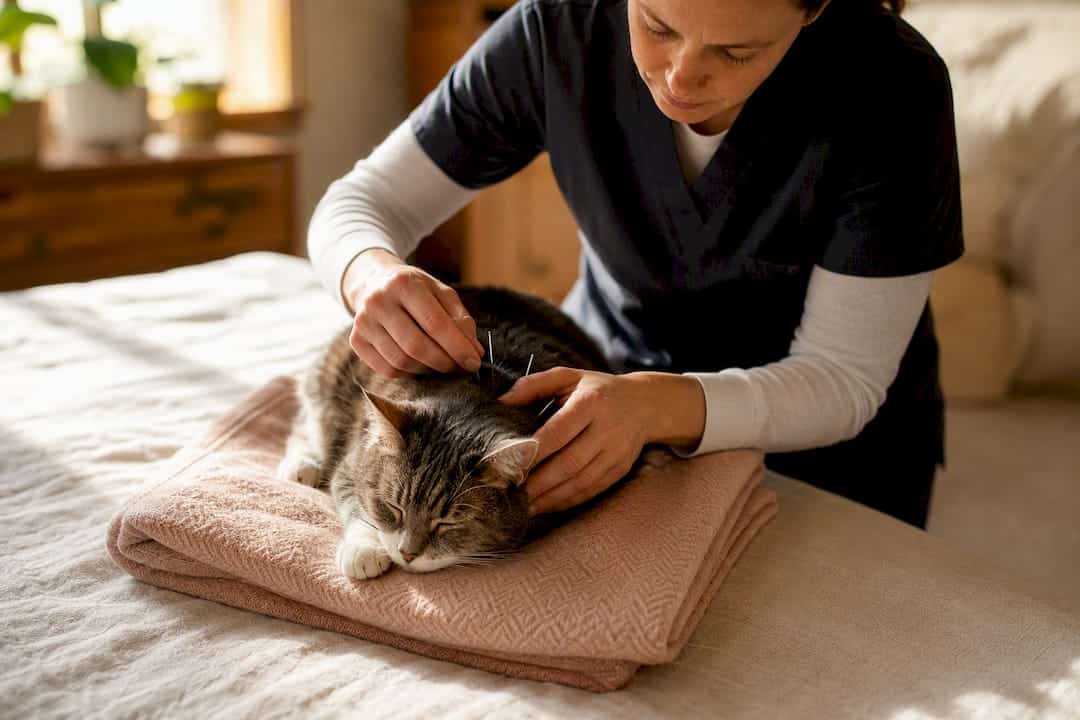
A mobile integrative visit typically includes a hands-on assessment, acupuncture, guided rehab exercises, and food or herbal therapy recommendations tailored to your dog’s recovery stage. Progress gets tracked step by step, right in the environment where your dog actually lives and heals, detailed further in PAW Vet Practice’s home physical therapy guide. When booking, ask how the practitioner will coordinate findings with your primary vet, since vestibular recovery works best as a team effort.
A Note From Pet Acupuncture & Wellness on Calm, Patient Care
Watching your dog struggle to stand is frightening, and that fear is completely reasonable. Most dogs improve steadily with patience, a quiet space, and consistent nursing. Keep your voice low, your movements slow, and your handling gentle. If cooperative-care techniques help reduce stress during exams or medication time, training resources like this one can make a real difference. Lean on your primary vet, and consider in-home support when extra hands would help.
— Pet Acupuncture & Wellness
In-Home Acupuncture and Rehab Support for Vestibular Recovery
Skipping the stressful car ride and waiting room matters more than most owners realize when a dog is already dizzy and disoriented. Mobile veterinary care can bring services directly to your home, which helps your unsteady dog avoid navigating a clinic parking lot or a slippery exam table during recovery.

Visits can be designed for senior, anxious, or mobility-limited dogs similar to those described in this guide. A typical first visit may include a full assessment of your dog’s balance, gait, and comfort level, followed by recommendations such as acupuncture, guided rehab exercises, or herbal support depending on need. Coordination with your primary veterinarian throughout the process helps ensure that nothing about the existing treatment plan is duplicated or missed. If your dog is still wobbly, still recovering, or just needs a gentler path forward, book a mobile acupuncture visit or explore our in-home rehabilitation therapy to get her stable, comfortable, and back on her feet.
Sources
- Idiopathic vestibular disease study (PMC10556701)
- Frontiers: Current definition, diagnosis, and treatment of idiopathic vestibular syndrome (2023)
- Vestibular disease in dogs under primary veterinary care (J Vet Int, 2020)
- Dog Travel Digest: guidance on sedation and air travel
FAQ
How long does it take for a dog with vestibular disease to recover?
Most dogs improve significantly within 72 hours and reach near-full recovery within 2 to 3 weeks, though the median time to improvement is around 4 days. A slight head tilt sometimes persists permanently.
What is the most common symptom of vestibular dysfunction in dogs?
Nystagmus, the rapid, involuntary eye flicking, appears in about 68.1% of cases, with ataxia (wobbliness) close behind at roughly 64.5% of cases.
How do I keep my dog’s vestibular system healthy after recovery?
There’s no guaranteed way to prevent idiopathic vestibular disease, but treating ear infections promptly, scheduling regular vet checkups for senior dogs, and staying alert to early wobbliness helps catch problems before they escalate.
Can you fly with a dog experiencing vestibular issues?
It’s generally not safe to fly with a dog having active vestibular symptoms. Airlines can refuse transport of unsteady animals, and veterinary travel guidance advises against sedating a dog for air travel due to respiratory and cardiac risks.
Should I carry or walk my dog during a vestibular episode?
Support gentle, assisted walking once your dog can bear weight, using a towel sling or harness, but avoid stairs and unsupported movement until she’s steadier. Two-person lifts are safest for medium and large dogs in the first days of an episode.