Myofascial release can improve a dog’s mobility and comfort when it’s part of a veterinary-supervised rehabilitation plan, not a stand-alone fix. Before trying any hands-on technique at home, your dog needs a vet assessment, because some conditions call for clinic-based care rather than massage. Once cleared, many owners can learn simple, safe routines to support the plan between sessions.
TL;DR:
- Get veterinary assessment before hands on care; new injuries, fever, wobbliness, paw dragging, progressive weakness, suspected fractures, or disk disease call for professional care.
- After veterinary clearance and instruction, owners can use gentle strokes for five to ten minutes; stop immediately if the dog tenses or pulls away.
- A study found that after cranial cruciate ligament repair, structured rehabilitation combining manual therapy and exercise improved limb function compared with exercise restriction alone.
- Dogs with osteoarthritis, compensatory tension after surgery, or repetitive strain may benefit; choose a provider who coordinates with the primary veterinarian and tracks progress.
Table of Contents
- What myofascial release is and how it differs from pet massage
- Conditions and dogs that commonly benefit
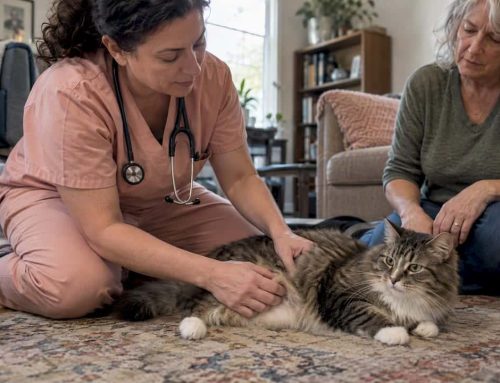
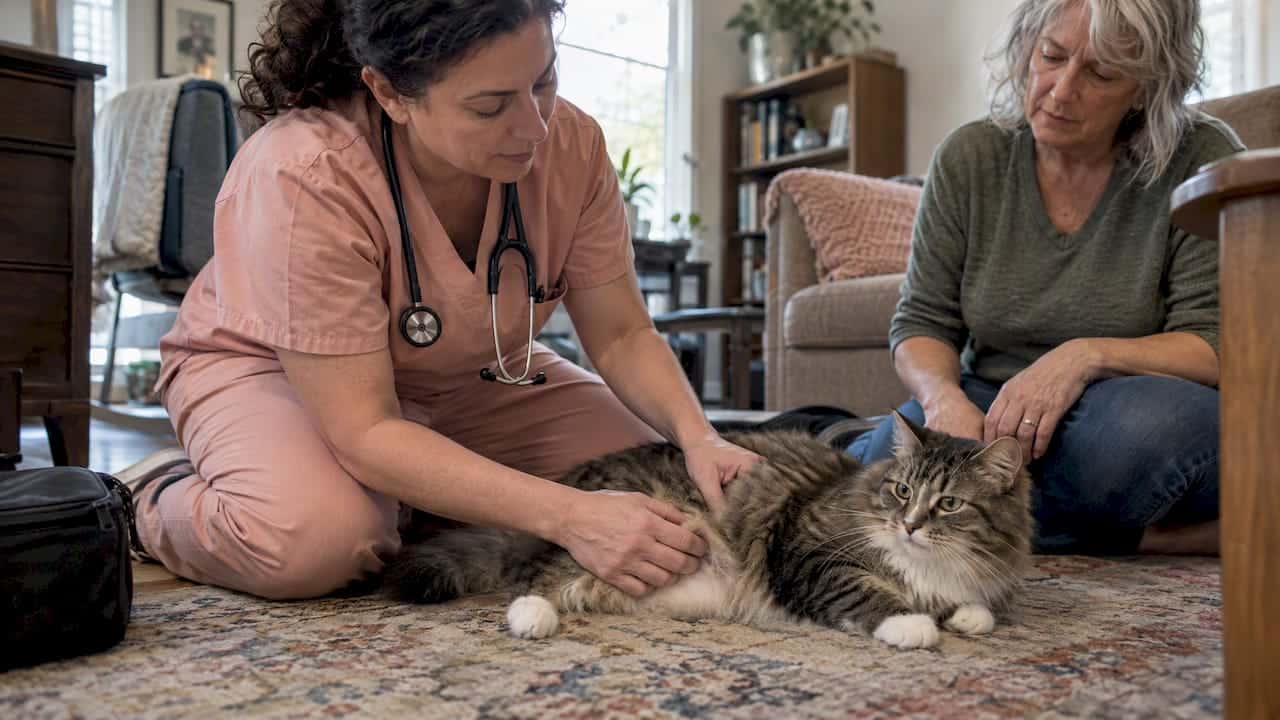
- What to expect during a professional myofascial release session
- Safe at-home techniques owners can use after a professional assessment
- When to see a professional: safety, red flags, and multimodal rehab
- Our perspective on in-home integrative care
- How we can help you get started
- FAQ
- Sources
What myofascial release is and how it differs from pet massage
Fascia is the connective web that wraps every muscle, nerve, and joint in your dog’s body. Think of it as an internal stretchy suit. When it tightens or sticks to itself after an injury, surgery, or years of favoring one leg, your dog’s movement gets stiffer even after the original problem has healed.

Myofascial release (MFR) is a hands-on approach aimed at restoring glide between those layers. Rehabilitation professionals use it alongside therapeutic exercise, laser therapy, and electrotherapy as part of an individualized treatment plan, according to UC Davis’s Sports Medicine and Rehabilitation service.
What sets clinical MFR apart from a relaxing rubdown comes down to training and intent:
- Trained practitioners use direct, indirect, and sometimes instrument-assisted techniques to target specific fascial restrictions.
- Skilled palpation lets a therapist feel subtle tension or heat that an untrained hand would miss, according to Colorado State University.
- Generic massage soothes muscles generally, while MFR works toward a specific functional goal, like restoring hip extension.
- MFR rarely stands alone. It typically fits into a broader integrative pain management plan built around your dog’s specific diagnosis.
That combination, manual therapy paired with exercise and other modalities, is what separates a true rehabilitation approach from a feel-good spa treatment.
Conditions and dogs that commonly benefit
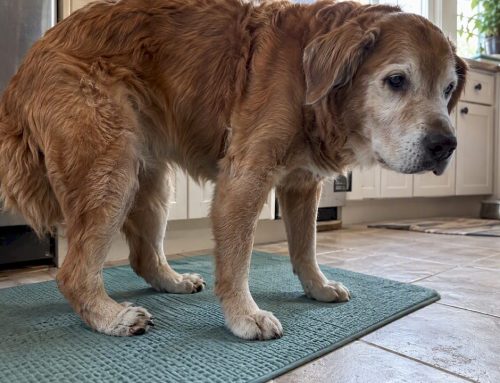
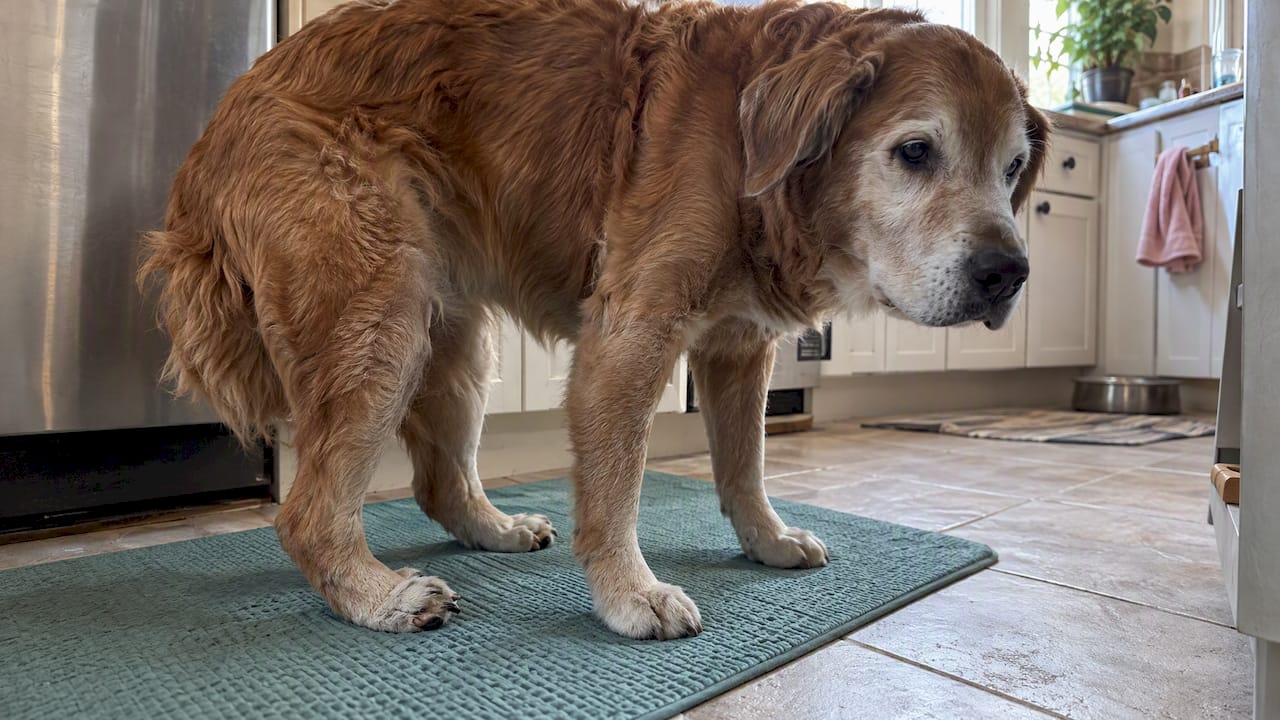
Dogs carrying compensatory tension are often the best candidates for MFR. An achy joint or a healing injury rarely stays isolated. The body adjusts, and those adjustments create new tight spots elsewhere.
- Dogs with osteoarthritis often develop generalized stiffness and reduced range of motion that MFR can help ease.
- Dogs recovering from orthopedic surgery, including procedures like TPLO, frequently compensate through their back or opposite limb, creating secondary tension worth treating.
- Active or working dogs sometimes develop strain-related restrictions from repetitive motion that benefit from maintenance bodywork.
- Dogs with neurologic compensation or chronically tense muscle chains may respond well, but only with direct veterinary clearance first.
- Dogs with acute injuries or an unstable spine need caution. Excessive pressure near a vulnerable spine can cause harm, which is why Colorado State’s veterinary team stresses a consultation before starting therapy of any kind.
If your dog is limping more, moving stiffly after rest, or seems reluctant to jump or climb stairs, those are worth mentioning at your next visit.
What to expect during a professional myofascial release session
A session rarely starts with hands-on work right away. A clinician first needs the full picture.
- The visit opens with a history review, a gait assessment, and palpation to locate tenderness, heat, or tension.
- Tissue is often warmed first, then targeted MFR addresses the restricted areas identified during assessment.
- Passive range-of-motion work follows, gently moving joints through their natural arc.
- Therapeutic exercises reinforce the new movement pattern while it’s fresh.
- Adjunct modalities like laser therapy or electrical stimulation often round out the visit, matching the multimodal approach described at Ohio State’s sports medicine and rehabilitation service.
Progress gets tracked through owner reports, gait observation, and measured range of motion, with frequency adjusted as your dog improves.
Pro Tip: Watch your dog’s face and body during a session: a soft, relaxed expression and loose tail suggest comfort, while lip licking, stiffening, or pulling away signal it’s time to ease off.
Safe at-home techniques owners can use after a professional assessment
Once your veterinarian has cleared your dog and shown you what’s safe, a few gentle routines can support the clinical plan between visits. Skip home techniques entirely if your dog has a new injury, a fever, or any sign of neurologic trouble like wobbliness or dragging a paw.
- Use gentle effleurage, light stroking in the direction of the muscle fibers, for five to ten minutes once your dog is relaxed.
- Move joints through passive range of motion with slow, comfortable reps, often ten to fifteen repetitions two to three times daily, following your clinician’s exact plan, which research on osteoarthritis management shows owners can learn to perform safely after proper guidance.
- For sustained pressure work, use very light force with short holds, stopping immediately if your dog withdraws, tenses, or shows any stress signal.
- Keep a short log of session length, your dog’s reaction, and anything that seemed off, then share it at the next checkup.
Pro Tip: Pick the same quiet time each day, like right after a short walk when muscles are already warm, so your dog starts to associate the routine with comfort rather than handling.
For a fuller walk-through of these movements, our guide to massage therapy for dogs with arthritis breaks down each step at home.
When to see a professional: safety, red flags, and multimodal rehab
Home care has real limits, and knowing where they sit keeps your dog safer.
- Seek veterinary attention promptly for neurologic signs, progressive weakness, suspected fractures, or disk disease rather than attempting any hands-on work.
- Structured rehabilitation that combines manual therapy with exercise improved limb function after cranial cruciate ligament repair compared with exercise restriction alone, according to a JAVMA study published in 2002.
- Professional providers set measurable goals and track objective progress, something difficult to replicate with home care alone.
- Look for a provider with hands-on manual therapy training who coordinates directly with your dog’s primary veterinarian rather than working in isolation. Our physical therapy guide for pet owners walks through what that collaborative model looks like in practice.
Scheduling consistent visits matters as much as the technique itself. Mobile providers coordinating in-home appointments often rely on dedicated booking systems to keep recurring rehab visits on track, which helps dogs stay on a steady treatment rhythm.
Our perspective on in-home integrative care
Healing happens faster when a dog feels safe, and nothing feels safer than home. For a senior or disabled dog, the stress of a car ride and waiting room can undo some of the benefit a rehab session is meant to provide.
Tailored rehabilitation, hands-on manual therapy instruction, acupuncture, laser therapy, and telemedicine follow-up can be provided directly in your living room. Booking an assessment is the first step toward a plan built around your dog’s actual home and routine.
— Pet Acupuncture & Wellness
How we can help you get started
We offer the pieces that make a safe myofascial release plan work: an initial assessment and acupuncture evaluation with a technician, ongoing rehabilitation therapy, and acupressure sessions that complement manual work.
- Initial visits can include gait and palpation assessments conducted in your dog’s own space.
- At-home rehabilitation packages are created based on findings, with instructions for any safe owner-taught techniques.
- Telemedicine follow-ups may be available to check progress without another full visit.
- Plans should be coordinated with your dog’s regular veterinarian.
Reach out through our cost of services page to see what an initial visit involves and get a plan started for your dog.
This article is general information, not a substitute for advice from a qualified doctor. Consult a qualified healthcare professional about your own circumstances before acting on anything here.
FAQ
Are there downsides to myofascial release for dogs?
Myofascial release carries little risk when performed by a trained professional on an appropriately assessed dog, but improper pressure near an unstable spine or an undiagnosed injury can cause harm. That’s why a veterinary assessment before starting, whether at a clinic or at home, matters more than the technique itself.
What health issues most often go unnoticed in dogs?
Osteoarthritis and other sources of chronic muscle tension are frequently missed because dogs tend to mask discomfort rather than show obvious limping. Watching for subtle stiffness after rest, reluctance to jump, or a shortened stride is often the first clue something needs a veterinary look.
How do I safely stretch or decompress my dog’s spine?
Spinal work should only happen under direct veterinary or rehabilitation professional guidance, since the spine can be vulnerable to excessive force, particularly with disk disease. A professional assessment determines whether gentle traction or range-of-motion work is appropriate for your dog at all.
Where should I rub my dog to help them relax?
Gentle, slow strokes along the back, shoulders, and base of the ears, following the direction of the fur and muscle, often help a dog settle. Keep pressure light and stop if your dog turns away, licks their lips, or tenses up, since those are signs the touch isn’t welcome.
Sources
- UC Davis — Sports Medicine and Rehabilitation service
- Colorado State University: Pet Health — Rub in improved wellness with medical massage
- JAVMA: Effects of caloric restriction and physiotherapy for lameness in overweight dogs with osteoarthritis (2006)