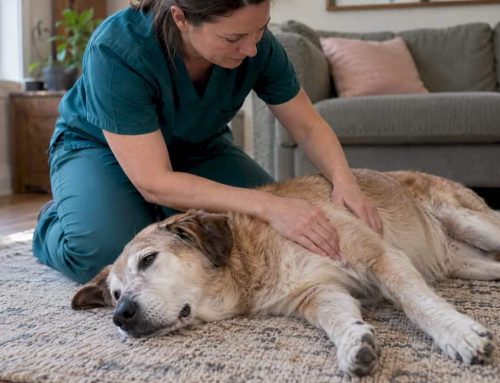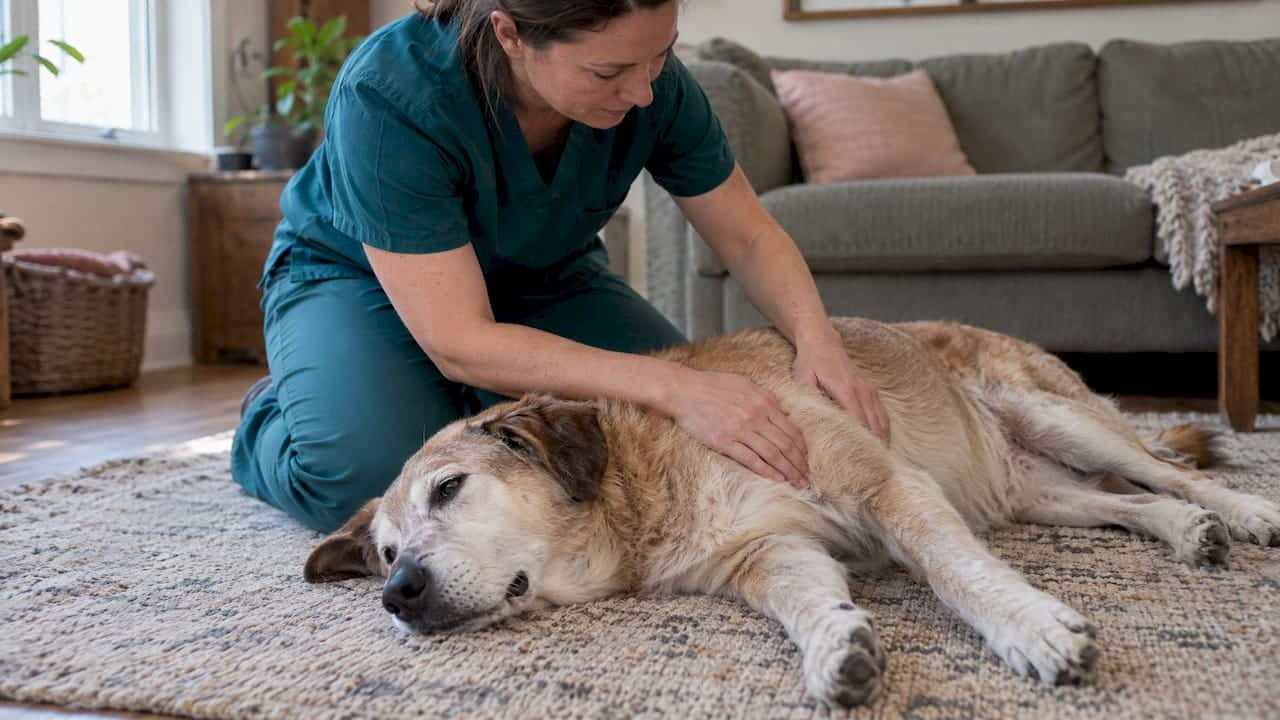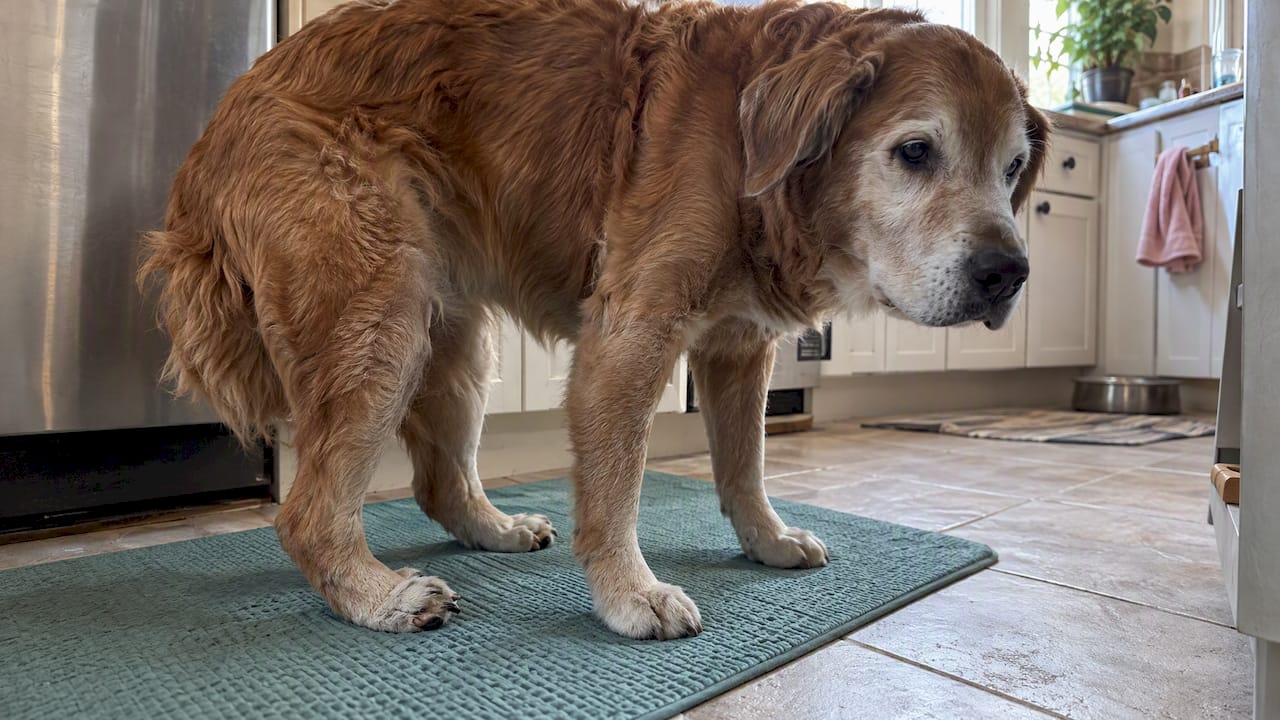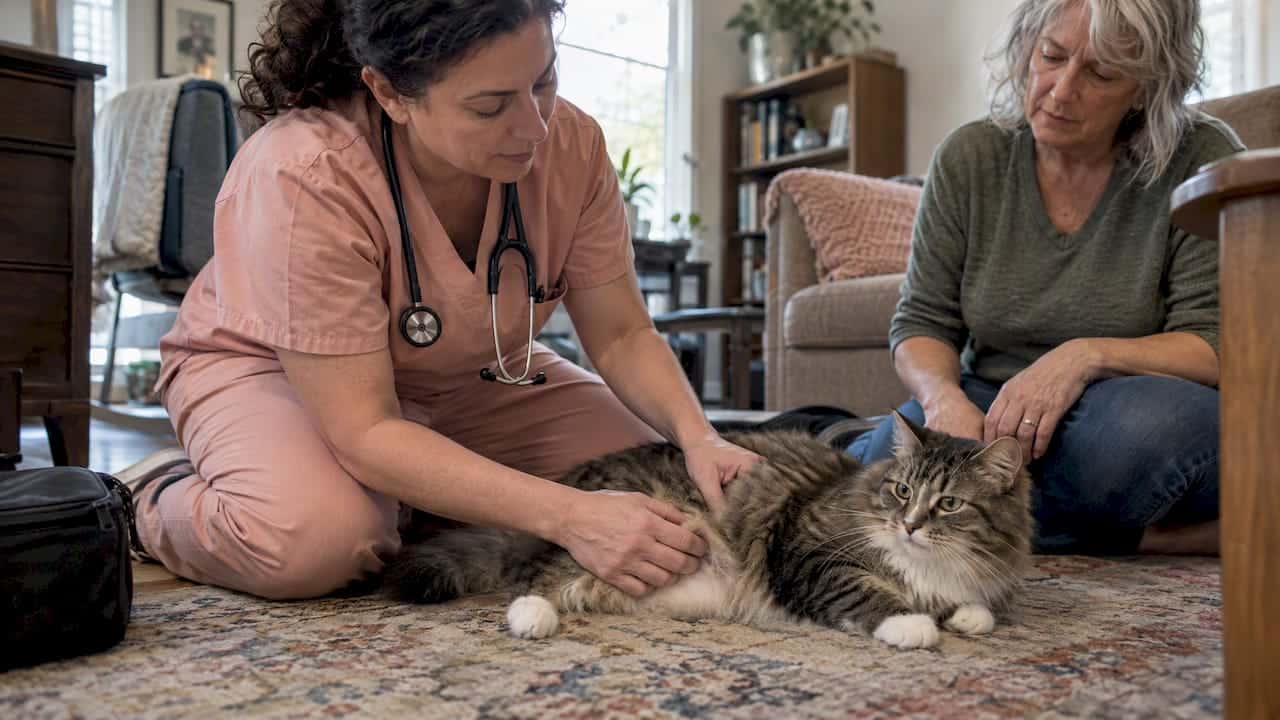
Short, gentle massage sessions can meaningfully reduce muscle tension and improve mobility for many dogs with arthritis — and you can start today, right at home. This works best as part of a broader veterinary care plan, not as a replacement for it. The Merck Veterinary Manual classifies manual therapy as an integrative adjunct for pain and stiffness, and a cross-sectional study of 527 dogs treated by Canine Massage Guild practitioners found that more than 93% showed improvement on at least one pain indicator after just one to three treatments.
Here is what to do in your first session:
- Warm up with effleurage (palm glide): Using your whole palm, stroke slowly along the muscle, moving in the direction the fur grows. Keep pressure very light — think “weight of a hand resting,” not pushing.
- Focus on muscles, not joints: Work the large muscle groups around the hips, thighs, and shoulders. Never press directly on a joint capsule or bony prominence.
- Spend 2–3 minutes per region: A total session of 5–10 minutes is plenty for a first attempt. Short and consistent beats long and occasional.
- Watch for pain signals: If your dog stiffens, turns to look at you, holds their breath, or tries to move away, ease off immediately.
Key Takeaways
Massage therapy for dogs with arthritis works by relieving compensatory muscle tension around damaged joints, and it produces the best results when used consistently as part of a veterinary care plan, not as a standalone treatment.
| Point | Details |
|---|---|
| Focus on muscles, not joints | Work the large muscle groups around hips, knees, and shoulders — never press directly on a joint capsule. |
| Keep sessions short and consistent | Start with 3–5 minutes per region, three times weekly; build gradually based on your dog’s tolerance. |
| Stop for any pain signal | Whale eye, freezing, vocalization, or limb withdrawal means ease off immediately and reassess. |
| Track progress weekly | Log gait, stair confidence, and willingness to rise on a 1–5 scale; expect meaningful trends over 3–6 weeks. |
| Pet Acupuncture & Wellness | Offers in-home integrative evaluations, acupuncture, and rehab planning for arthritic dogs in South Tampa. |
Table of Contents
- How does massage therapy for dogs with arthritis actually help?
- When should you stop — and when is massage unsafe?
- How to set up a calm, safe space before you begin
- Step-by-step massage techniques you can do at home
- How often should you massage your dog, and what should you expect?
- Common mistakes owners make — and how to avoid them
- When should you move from home massage to professional care?
- What does the research actually say about canine massage?
- What we see in integrative care
- In-home integrative care for arthritic dogs in South Tampa
- Sources
- FAQ
How does massage therapy for dogs with arthritis actually help?
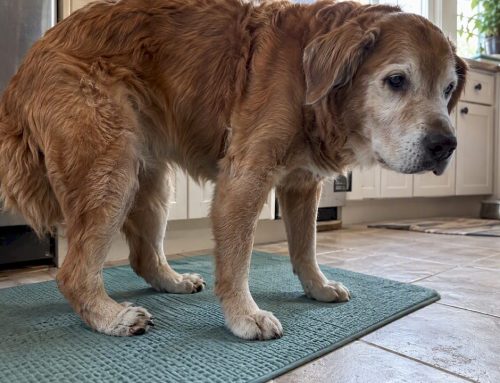
Arthritis damages cartilage inside the joint, but much of the day-to-day pain your dog feels often comes from the muscles around that joint. When a hip or knee hurts, your dog shifts weight to protect it. Over time, the muscles on the compensating side become chronically tight, developing what clinicians call myofascial trigger points — small, hypersensitive knots that refer pain and restrict movement. Massage targets exactly this soft-tissue layer.
Three primary mechanisms explain the benefit. First, gentle kneading and compression release tension in overworked compensatory muscles, which lowers the overall pain load even when the joint itself is unchanged. Second, rhythmic strokes increase local circulation, delivering oxygen and clearing metabolic waste from fatigued tissue. Third, sustained pressure and slow gliding strokes mobilize the fascia — the connective tissue wrapping every muscle — reducing the stiffness that makes rising from rest so difficult for senior dogs.
Review literature on myofascial pain supports these mechanisms as plausible, while also noting that randomized, blinded trials with objective outcome measures in dogs remain sparse. The honest picture is a coherent mechanistic rationale backed by encouraging clinical data, not yet by gold-standard trial evidence.
Pro Tip: If your dog struggles most getting up from rest, prioritize the gluteal and hamstring muscles at the back of the thigh. These are the primary compensators for a painful hip and respond quickly to gentle kneading.
When should you stop — and when is massage unsafe?
Knowing when not to massage is as important as knowing how. Some conditions make massage genuinely harmful, and a few require urgent veterinary attention before you do anything else.
Absolute contraindications — do not massage if your dog has:
- Open wounds, skin infections, or active hot spots in the area
- A fever (rectal temperature above 102.5°F)
- A suspected or confirmed acute fracture
- Signs of intervertebral disc disease (IVDD): sudden weakness in the hind limbs, knuckling, loss of bladder or bowel control
- Any neurological deficit — stumbling, dragging a paw, or sudden incoordination
Relative cautions — consult your vet first:
- Recent surgery (within 6–8 weeks, depending on the procedure)
- Visible swelling, edema, or suspected cellulitis over the area
- A cancer diagnosis near the region you plan to work
Stop the session immediately if your dog shows:
- Whale eye (whites of the eyes visible), sudden freezing, or a hard stare
- Vocalization — whimpering, growling, or yelping
- Rapid withdrawal of a limb or snapping
- Panting that starts abruptly during the session
Call your vet right away if you notice sudden paralysis or collapse, severe acute lameness that appeared within hours, uncontrolled bleeding, or any neurological sign listed above. These are not massage situations.
How to set up a calm, safe space before you begin
The environment you create shapes how well your dog tolerates and benefits from each session. A few minutes of preparation makes a real difference, especially for anxious or frail seniors.
Environment checklist:
- Non-slip mat or folded blanket on the floor (hardwood is too slippery for a dog trying to relax)
- Quiet room with minimal foot traffic and no loud sounds
- Warm room temperature — cold muscles tighten, which works against you
- Warm compress option: a damp towel heated in the microwave for 30–45 seconds, cooled to comfortable skin temperature, applied to stiff areas for 5 minutes before you start
Dog preparation:
- A short, slow walk beforehand loosens tissue and gives you a baseline gait observation
- Let your dog choose their position — lying on their side is ideal, but some dogs prefer sternal (sphinx) position
- Use low-calorie treats and calm, slow movements to associate the session with something pleasant
- Keep your own breathing slow and steady; dogs read your energy accurately
Supplies to have ready:
- Timer (your phone works fine)
- Soft blanket or orthopedic mat
- Small treats in a bowl nearby
- Vet-approved massage oil if desired — plain coconut oil or a product your vet has cleared; avoid essential oils, which can be toxic to dogs
Pro Tip: For a very anxious or frail dog, spend the first two or three sessions doing nothing but gentle palm resting — no strokes, no pressure. Let them learn that your hands mean safety before you introduce any technique.
Step-by-step massage techniques you can do at home
These four technique sets build on each other. Work through them in order, and spend no more than 2–3 minutes on any single region. The Dogster guide to massaging a dog with arthritis and Australian animal rehab protocols both emphasize keeping per-area time short to avoid over-treating sensitive tissue.
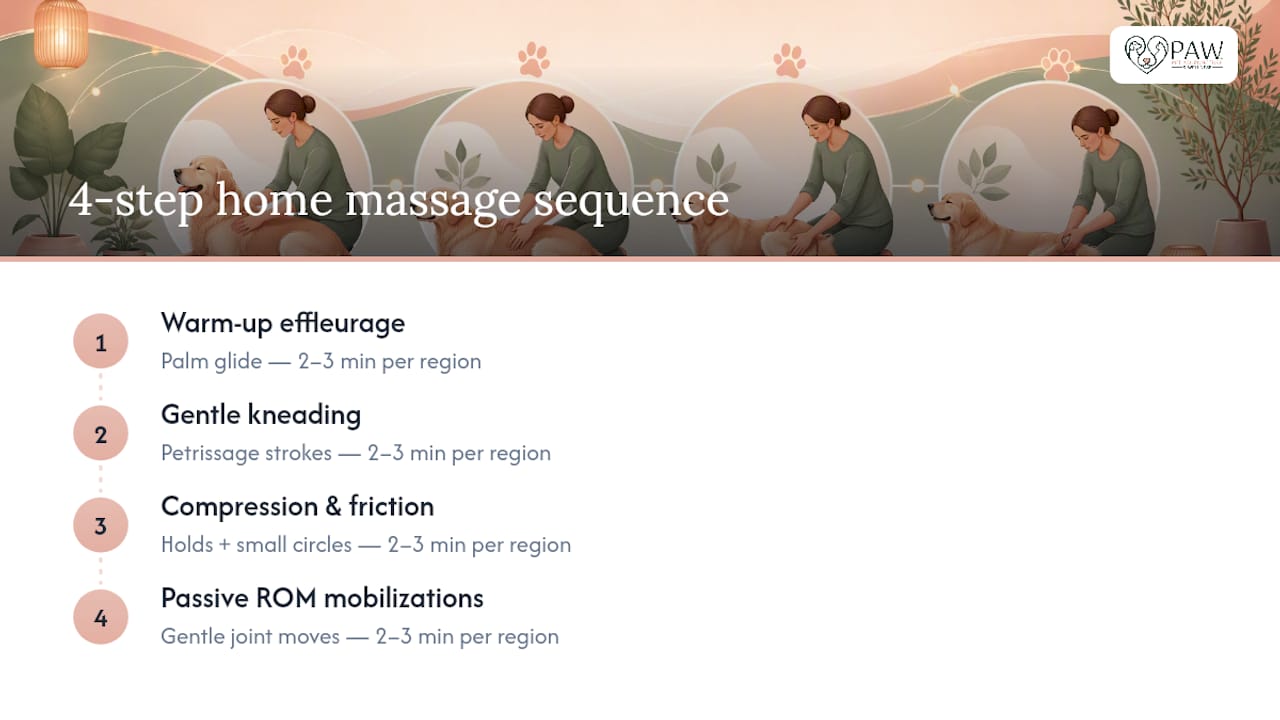
1. Warm-up effleurage (palm glide)
Place your whole palm flat on the large muscle mass — the thigh, the shoulder, or alongside the spine. Glide slowly in the direction the fur grows, using only the weight of your hand. Cover the full length of the muscle in one smooth stroke, then lift and repeat. Do this for 1–2 minutes per area.
Purpose: Relaxes superficial tissue, warms the area, and tells you how the dog responds to touch before you increase pressure.
Stop cue: Any muscle flinching under your palm means the pressure is too much or the area is acutely inflamed. Move to a neighboring region.
2. Gentle kneading (petrissage)
Using your fingertips and the pads of your thumbs, gently lift and roll the muscle tissue — think of kneading bread dough, but with a fraction of the force. Work the large muscle groups: the quadriceps and hamstrings of the thigh, the triceps of the shoulder, and the muscles alongside the lumbar spine. Spend 30–90 seconds per area, starting with very light pressure and increasing only if the dog remains relaxed.
Purpose: Releases compensatory tightness and addresses myofascial trigger points, as research on compensatory muscle patterns in arthritic dogs supports.
Small dog note: Use two or three fingertips only — no thumb pressure — and reduce force significantly. Large breeds tolerate more pressure in thick muscle bellies.
3. Compression holds and small circular friction
Place the flat of your thumb or two fingers on a tight muscle area and apply steady, gentle downward pressure for 5–10 seconds, then release. For circular friction, make very small circles (dime-sized) with your fingertips over a specific tight spot. Avoid this technique near bony prominences, thin skin over the spine, or any area with visible swelling.
Purpose: Reduces localized trigger points and improves tissue pliability in chronically guarded areas.
Severity note: For dogs with moderate-to-severe arthritis, skip compression entirely on the first few sessions. Introduce it only once the dog is comfortable with effleurage and petrissage.
4. Passive range of motion (PROM) and joint-safe mobilizations
With your dog lying on their side, cup the joint (hip, knee, or elbow) in one hand and support the limb with the other. Slowly flex and extend the limb through a comfortable, pain-free range — never push to the end of range or force movement. Three to five slow repetitions per joint is sufficient.
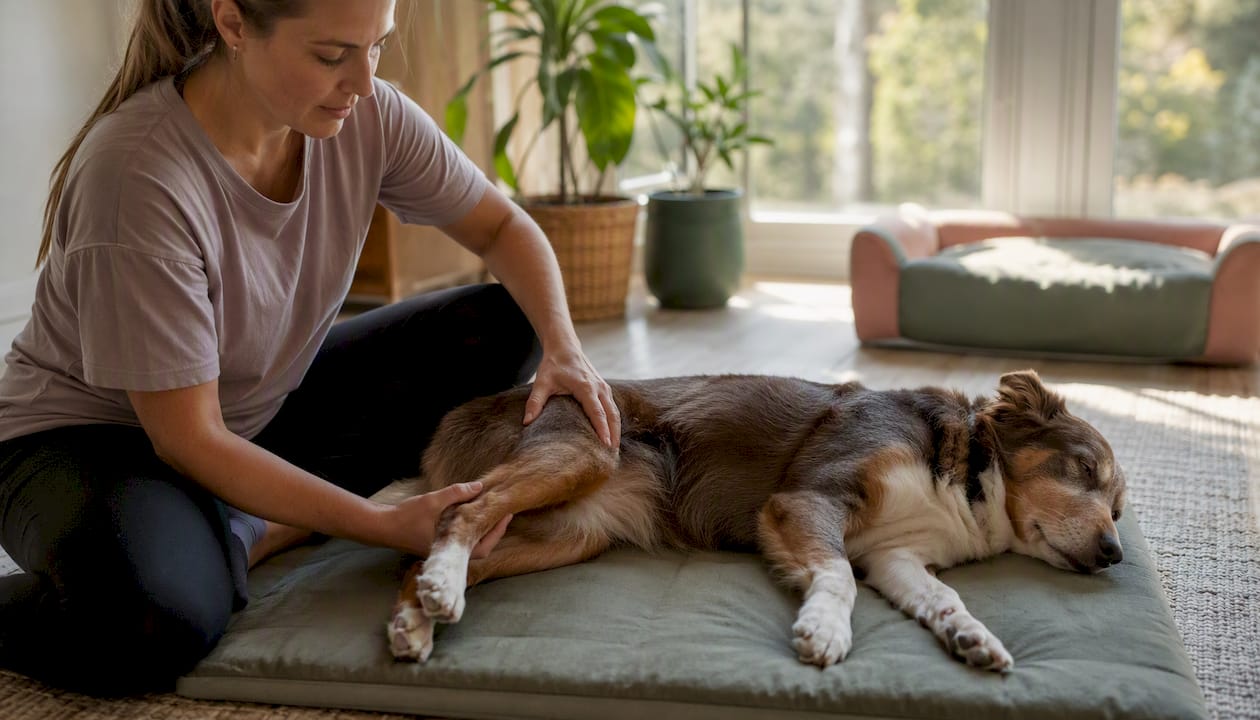
Purpose: Maintains joint flexibility and lubricates cartilage surfaces without stressing the joint capsule.
Critical rule: If the dog resists at any point in the arc, stop at that angle. Resistance means pain or structural limitation — never override it.
How often should you massage your dog, and what should you expect?
Consistency matters more than duration. Short, frequent sessions produce better results than occasional long ones, and building a routine your dog anticipates is itself therapeutic.
Sample schedules:
- Beginner (weeks 1–2): 3–5 minutes per affected region, three times per week. Focus on effleurage only. Goal: build tolerance and establish trust.
- Building phase (weeks 3–6): Add petrissage and compression. Extend to 8–10 minutes total, four times per week if the dog is tolerating well.
- Maintenance: 10–15 minutes total, daily or on alternate days. Include all four technique sets and PROM for affected joints.
How to progress safely:
- Increase duration or frequency only when the dog shows no pain signals for three consecutive sessions at the current level.
- If a session produces increased stiffness the following morning, reduce duration by half and hold there for a week.
- Always check with your vet before moving to the maintenance schedule, particularly if your dog is on pain medications.
Tracking progress — log these weekly:
- Gait quality: does your dog limp less after rest?
- Stair confidence: are they going up and down more willingly?
- Willingness to rise from lying down
- Play behavior and social engagement
- Appetite and sleep quality
Rate each item on a simple 1–5 scale. A meaningful trend usually becomes visible over 3–6 weeks. If you see no change after six weeks of consistent sessions, that is a signal to schedule a veterinary recheck rather than simply continuing.
Common mistakes owners make — and how to avoid them
Even well-intentioned massage can cause harm or simply waste effort when a few key principles are missed.
The most common mistakes:
- Pressing directly on the joint: The joint capsule is already inflamed. Pressure on it increases pain and can worsen swelling. Always work the surrounding muscle belly, not the joint itself.
- Over-massaging one area: Spending ten minutes on a single tight spot creates tissue irritation. Two to three minutes per region, then move on.
- Treating massage as a standalone cure: Massage addresses soft-tissue compensation; it does not slow cartilage loss or replace anti-inflammatory medications. It works best alongside veterinary arthritis treatment, not instead of it.
- Ignoring subtle pain signals: A dog that goes quiet, looks away, or subtly shifts weight is communicating discomfort. Many owners misread stillness as relaxation.
- Inconsistent sessions: Three sessions in one week, then nothing for two weeks, produces minimal lasting benefit. Regularity is the variable that matters most.
Do/don’t pairs to keep in mind:
- Do focus on the muscles surrounding the hip, knee, and shoulder. Don’t try to mobilize the joint capsule with direct pressure.
- Do keep sessions short and end on a positive note. Don’t push through resistance to “finish the routine.”
- Do combine massage with a warm compress before and gentle movement after. Don’t substitute massage for prescribed medications without veterinary guidance.
Pro Tip: Keep a simple before-and-after note after each session — two sentences about how your dog moved before and how they settled afterward. Patterns that emerge over weeks are far more informative than any single session observation.
When should you move from home massage to professional care?
Home massage is a meaningful tool, but it has a ceiling. Knowing when to escalate keeps your dog safe and ensures they get the level of care their condition actually requires.
Go to the vet urgently if your dog shows:
- Sudden hind-limb weakness, knuckling, or loss of bladder control
- Collapse or inability to bear weight on a limb
- Severe acute lameness that developed within hours
- Any sign of neurological deterioration
Schedule a veterinary rehab referral when:
- Six weeks of consistent home massage produces no measurable improvement in gait or daily activity
- Arthritis is progressing despite home care and current medications
- Your dog has multiple comorbidities (heart disease, obesity, diabetes) that complicate a home protocol
- You want a professionally designed, progressive rehabilitation plan
Professional services worth knowing about:
- Veterinary rehabilitation: Credentialed rehab clinicians (find one through Rehabvets) use therapeutic exercise, underwater treadmill therapy, and manual therapy in structured programs.
- Certified canine massage therapists: Practitioners trained through programs like the Canine Massage Guild apply clinical technique sets beyond what most owners can safely perform at home.
- Acupuncture: A growing body of veterinary evidence supports acupuncture for dog arthritis as an adjunct for pain modulation, particularly in dogs who respond poorly to NSAIDs alone.
- Laser therapy and herbal support: Both are used as adjuncts in integrative veterinary practices to reduce inflammation and support tissue healing.
What does the research actually say about canine massage?
The evidence base is encouraging but still developing. Here is an honest summary of where it stands.
What the data shows:
- A cross-sectional study of 527 dogs treated by Canine Massage Guild practitioners found that median combined pain severity dropped from 2.4 (moderate) to 1.4 (mild) after three treatments, with more than 93% of dogs showing improvement on at least one indicator. The study is not randomized and has no control group, so placebo effects and observer bias cannot be ruled out.
- Review literature supports plausible mechanisms — myofascial release, improved circulation, reduced guarding — while consistently noting the need for randomized controlled trials with objective outcome measures.
- The Merck Veterinary Manual positions manual therapy as an integrative adjunct for pain, stiffness, and mobility problems, with the explicit note that high-quality clinical trial evidence in animals remains limited.
What the research cannot yet tell us:
- The optimal pressure, frequency, or technique combination for specific arthritis severities
- Whether benefits persist long-term without ongoing sessions
- How massage compares head-to-head with other physical therapies in a controlled setting
The honest takeaway: massage is a low-risk, low-cost adjunct with a plausible mechanism and encouraging preliminary data. It is not a cure, and it is not a substitute for a veterinary diagnosis and treatment plan. Used within those limits, it is a genuinely useful tool for alternative pain relief for dogs.
What we see in integrative care
At Pet Acupuncture & Wellness, the dogs who respond best to at-home massage are the ones whose owners treat it as one piece of a larger plan — not a replacement for veterinary care, but a daily act of connection that keeps soft tissue supple between professional sessions. Massage, when done consistently and gently, gives owners something concrete to do for their dog every day. That matters for the dog’s comfort, and it matters for the owner’s peace of mind too. When home massage reaches its limits, in-home integrative evaluation — combining acupuncture, rehab planning, and hands-on assessment in your dog’s own environment — tends to produce the clearest picture of what the next step should be.
In-home integrative care for arthritic dogs in South Tampa
For arthritic senior dogs, the trip to a clinic can undo an hour of careful pain management at home. Stress spikes cortisol, stiff joints stiffen further in a cold car, and the waiting room adds anxiety on top of pain. Pet Acupuncture & Wellness brings the evaluation to your dog instead.
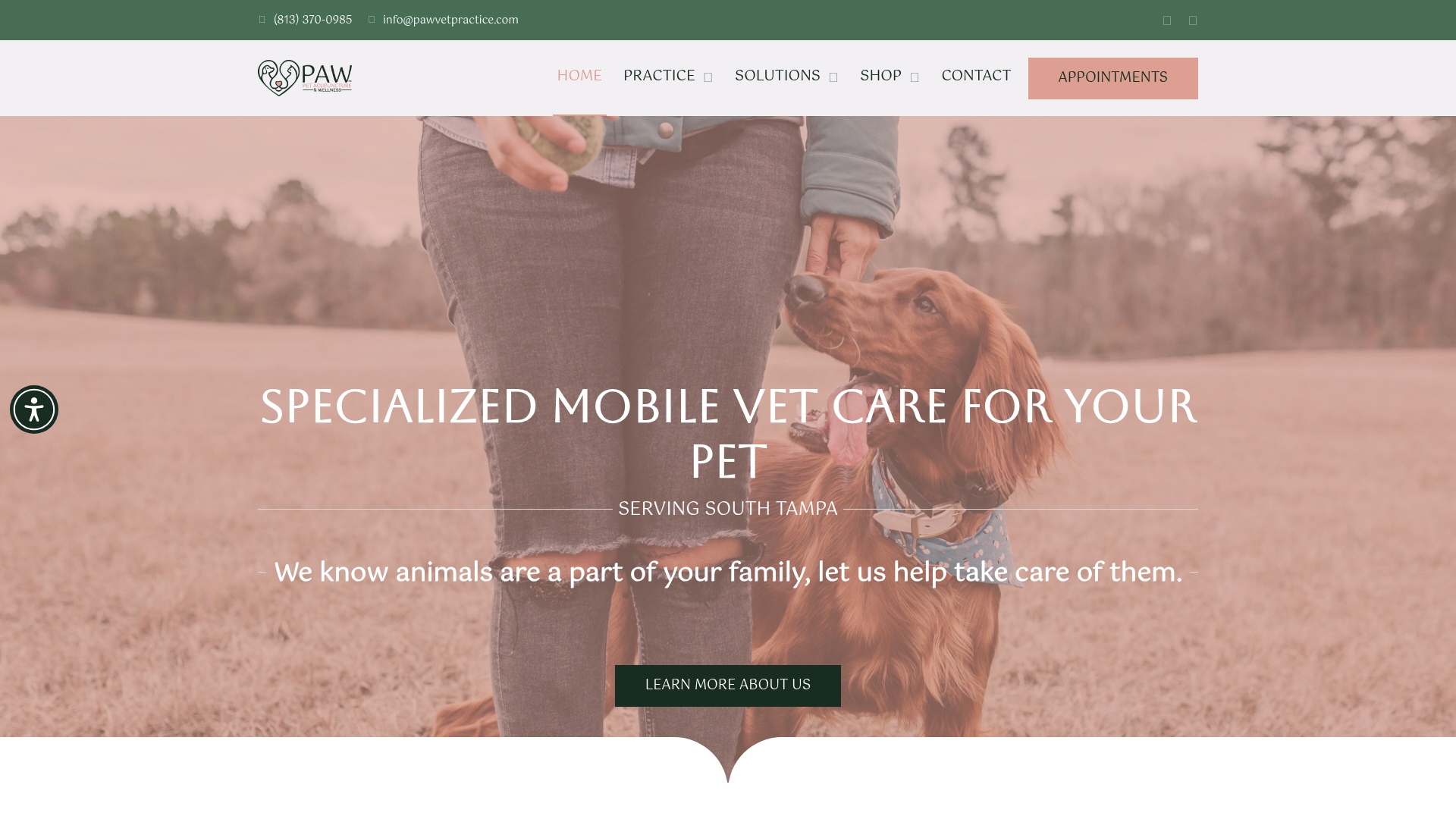
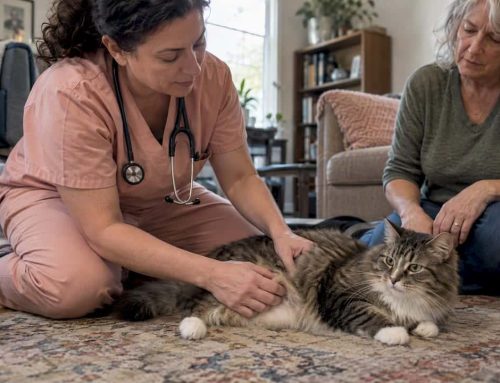
The practice offers in-home integrative evaluations that combine hands-on assessment, acupuncture, veterinary rehab planning, herbal support, and telemedicine follow-ups — all coordinated around your dog’s actual home environment, where functional testing is most accurate. For a dog who struggles to rise from their bed, seeing how they move in their own space tells a clinician far more than a brief exam table assessment ever could.
Core services for arthritic dogs include in-home acupuncture, veterinary rehabilitation planning, herbal adjuncts, and telemedicine check-ins between visits. To request an in-home consult for your dog, visit Pawvetpractice and book directly — the first visit includes a full integrative assessment and a care plan tailored to your dog’s current condition and home setup.
Sources
- Effect of massage therapy on pain and quality of life in dogs: A cross sectional study
- Manual Therapy in Veterinary Patients – Therapeutics – Merck Veterinary Manual
- Ncbi
- Rehabvets
- How to Massage a Dog with Arthritis
FAQ
Is it good to massage a dog with arthritis?
Yes, gentle massage can reduce compensatory muscle tension and improve mobility for many arthritic dogs when used alongside veterinary care. A cross-sectional study of 527 dogs found more than 93% showed improvement on at least one pain indicator after one to three treatments.
What is the most effective treatment for arthritis in dogs?
No single treatment is universally most effective; the Merck Veterinary Manual recommends combining medications, weight management, targeted exercise, and integrative therapies like massage and acupuncture for the best outcomes.
My dog is crying in pain from arthritis — what should I do?
Vocalization signals acute pain, which is a reason to call your vet rather than begin massage. Once your vet has assessed the flare and adjusted pain management, gentle massage can be reintroduced cautiously when the acute episode has settled.
What are the do’s and don’ts for dogs with arthritis?
Do keep sessions short (5–15 minutes total), focus on surrounding muscles, and stop at any sign of discomfort. Don’t press directly on joints, skip prescribed medications in favor of massage alone, or force range of motion into painful arcs.
How often should I massage my arthritic dog at home?
Start with three sessions per week of 3–5 minutes per affected region, then build toward daily or alternate-day sessions of 10–15 minutes total as your dog’s tolerance improves over several weeks.