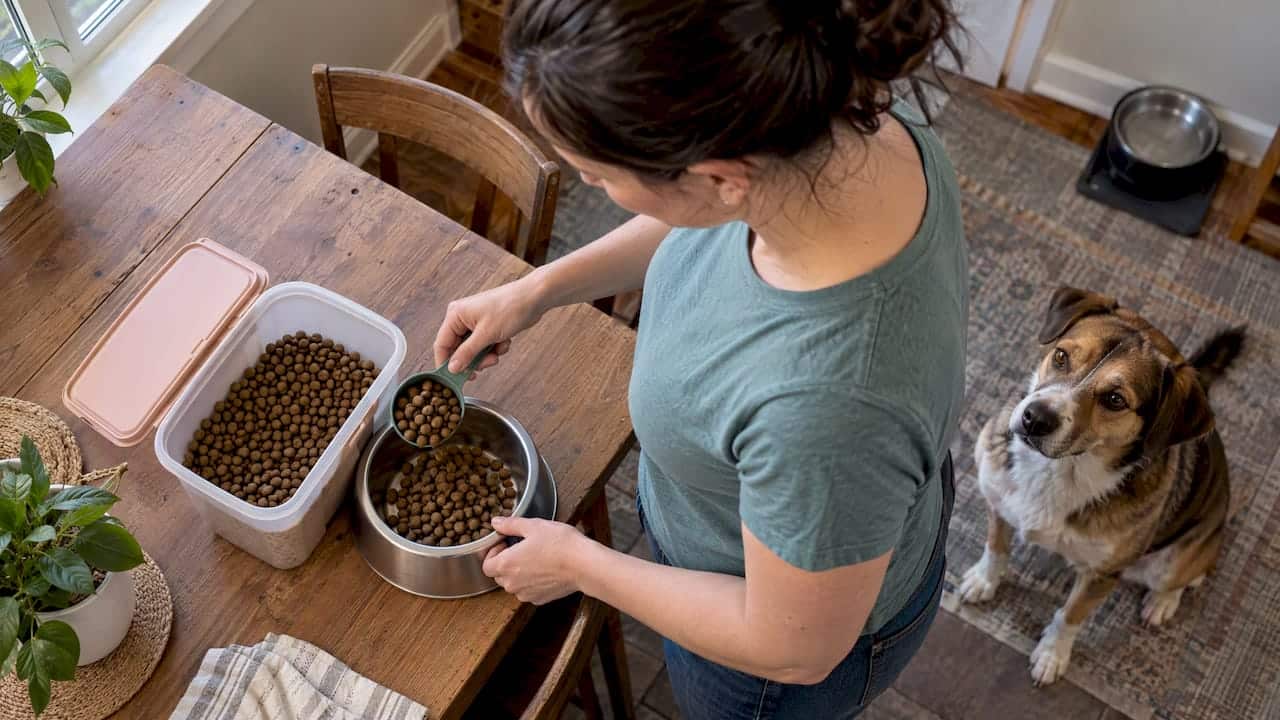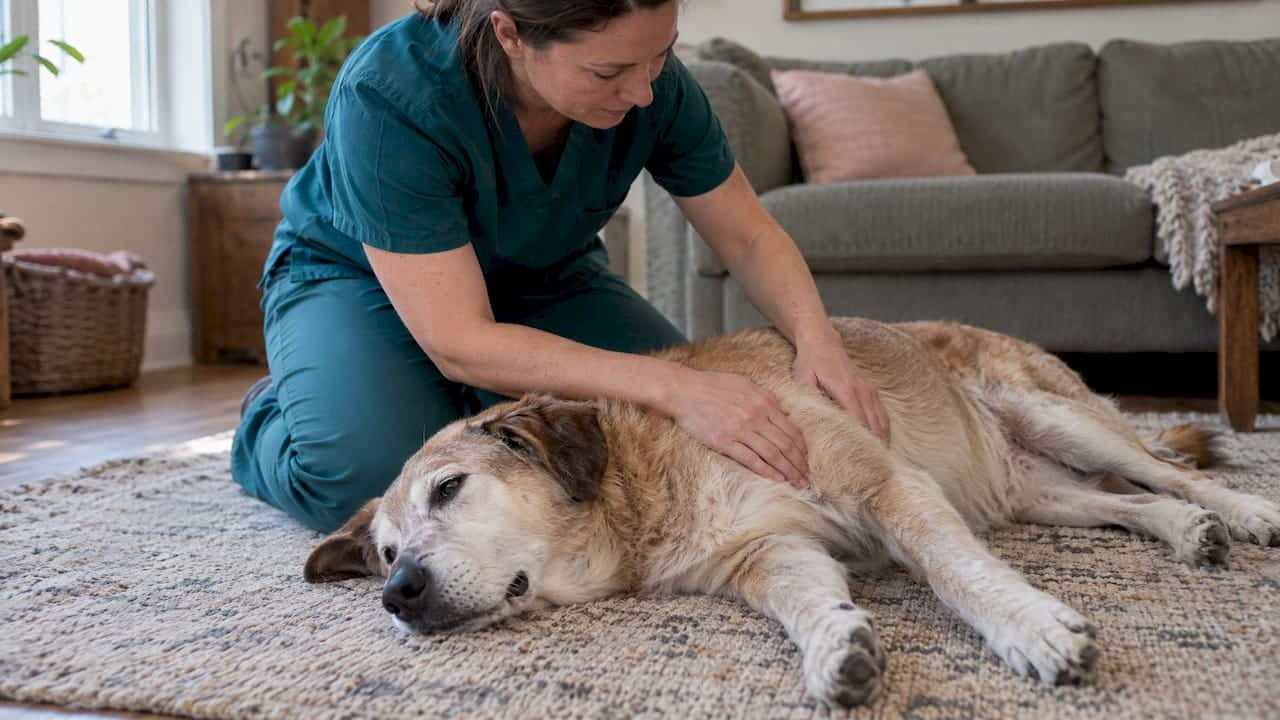
When your dog panics at the vet, stop what’s happening, keep everyone safe, and give your dog physical distance from whatever triggered the fear. Tell the staff calmly and ask for a low-interaction approach, or step outside to your car or a quiet room until things settle. A single panic episode isn’t a training failure. It’s usually a sign that behavior work, and possibly a conversation about medication or in-home care, needs to become part of your dog’s routine.
TL;DR:
- Desensitization programs at home can reduce a dog’s fear of veterinary environments when practiced consistently over four weeks, focusing on pairing triggers with rewards.
- In the moment of a panic, immediate actions like creating distance and requesting gentle restraint can prevent escalation, while pre-arranged clinic accommodations can ease stress.
- Pre-visit preparations such as calming aids, carrying familiar items, and using separate entrances can significantly lower the likelihood of panic during appointments.
- Medications prescribed by a veterinarian may be necessary for severe cases, and they should be combined with behavior modification to improve outcomes.
- In-home veterinary visits and therapies like acupuncture tend to be more effective for highly anxious dogs, especially for those with mobility or deep-seated fear issues.
Table of Contents
- Immediate Actions: What to Do in the Clinic When Panic Occurs
- How Do You Desensitize a Dog to Vet Visits?
- What Is Cooperative Care for Dogs at the Vet?
- Medication and Supplements: What to Expect Before a Visit
- Pre-Visit Preparation That Actually Cuts Panic Risk
- When Should You Escalate to a Vet Behaviorist?
- Why an At-Home Approach Works Better for Some Panic-Prone Dogs
- Where Pet Acupuncture & Wellness Fits Into Your Dog’s Care Plan
- Sources
- FAQ
Immediate Actions: What to Do in the Clinic When Panic Occurs
A dog in full panic isn’t being stubborn or difficult. Physiologically, they’re overwhelmed, and the AKC notes that signs like rapid breathing, a racing heart, drooling, trembling, freezing, or frantic escape attempts point to a nervous system that has already tipped past its coping limit. Your job in that moment isn’t to push through. It’s to interrupt the spiral.
Here’s what actually helps on the spot:
- Tell the front desk immediately. Ask for a pause, a quiet exam room, or a moment away from the waiting area.
- Create distance from the trigger. That might mean stepping back to your car, into a hallway, or a separate room away from other animals and loud sounds.
- Skip forceful handling. Restraint, punishment, or rushing the exam almost always escalates fear rather than resolving it.
- Let staff use gentle short-term tools. Towel wraps, minimal restraint, high-value treats, and distraction can de-escalate a dog without confrontation.
- Ask about sedation when needed. If your dog can’t be examined safely without extreme distress, immediate sedation protects both your dog’s welfare and the safety of staff.
A clinical review of fear and aggression in veterinary settings found that clinics prepared for fearful patients in advance, having towels, treats, and alternate restraint options ready before touching the animal, avoid a huge share of escalations that happen when staff have to improvise mid-exam.
Pro Tip: Call ahead before you arrive and say, “My dog panics at the vet.” Front desk staff can often prep a quiet room or waive the waiting area entirely, which changes the whole visit before it even starts.
How Do You Desensitize a Dog to Vet Visits?
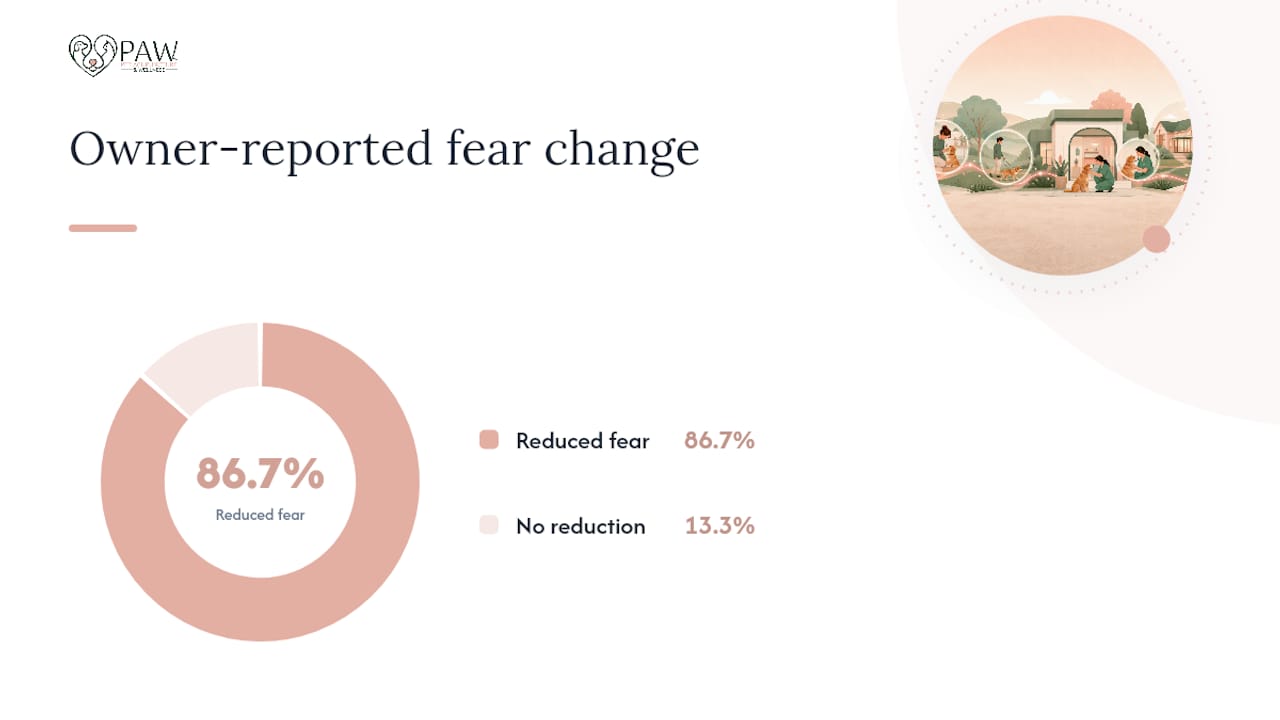
Desensitization and counter-conditioning work by pairing the scary thing, the clinic door, the exam table, the smell of alcohol wipes, with something your dog actively wants. Done correctly, you’re not distracting your dog from fear. You’re rewriting what the trigger means to them. A standardized four-week program tested in companion dogs found that 86.7% of owners reported reduced fear afterward, though the measured behavioral changes were more modest than owner perception suggested. That gap matters: real progress is often slower and less dramatic than it feels, so track it objectively rather than trusting your gut alone.
Here’s a realistic four-week template to start at home:
- Week 1, carrier and door work. Leave the carrier open in a common room with treats inside. Practice opening and closing your front door calmly, rewarding calm behavior each time.
- Week 2, car conditioning. Sit in the parked car with your dog for a few minutes, treats flowing the entire time. Progress to short drives with no destination, then short drives ending somewhere pleasant.
- Week 3, mock exams at home. Place a non-slip mat on the floor and practice gentle touches: paws, ears, mouth, in short sessions. Reward the instant you touch, not after your dog tolerates it.
- Week 4, combine and generalize. Do a full “pretend visit” at home: carrier, car ride, mat, gentle handling, all paired with treats in sequence.
The timing of the reward is what makes or breaks this. According to AAHA’s guidance on stress-free visits, the reward needs to land the instant the trigger appears, not after your dog calms down on its own. Practicing when your dog is a little hungry (not starving, just ready for a snack) sharpens the effect, since food rewards carry more weight on an empty stomach.
Track progress with something concrete: how many seconds your dog tolerates the carrier before showing stress signals, or how close you can get to the car before panting starts. Numbers don’t lie the way our optimism sometimes does.
Pro Tip: Keep sessions short, five to ten minutes, and end on a win. A ten-minute session that ends with your dog relaxed beats a thirty-minute session that ends in shutdown.
If four weeks in you’re seeing no measurable change, or your dog’s fear response is getting worse instead of better, that’s the signal to stop DIY-ing it and bring in a veterinary behaviorist.
What Is Cooperative Care for Dogs at the Vet?
Cooperative care means giving your dog some control over handling instead of forcing it on them. Low-stress handling is the clinic-side version of the same idea: minimal restraint, predictable movements, and letting the dog opt in rather than pinning them down. Together they’re the backbone of how modern practices approach fearful patients, and you can build both at home before you ever set foot in a clinic.
Practical techniques worth requesting from your vet team and practicing yourself:
- Mat-based exams. A familiar mat gives your dog a “safe zone” cue that a full exam can happen without table restraint.
- Towel wraps for small or anxious dogs. These provide gentle pressure and containment without pinning the dog down.
- Muzzle training in advance. If your dog might need a muzzle for safety, practice it at home with treats weeks before the visit, not for the first time in the exam room.
- Choice-based handling. Letting your dog approach the vet’s hand rather than having the hand approach first builds trust faster than either would alone.
Your own behavior matters more than you’d think. A calm voice and slow, predictable movements tell your dog’s nervous system there’s no emergency. Resist the urge to scoop your dog up and rescue them the second they whine. Doing so can accidentally reward the panic response instead of the calm one.
At home, practice touching paws, ears, and the mouth in short daily sessions, rewarding each touch. When you book your next appointment, ask for the first slot of the day (fewer competing smells and sounds) and request that staff skip the white coat for the first few minutes of contact. Small requests, real impact.
Medication and Supplements: What to Expect Before a Visit
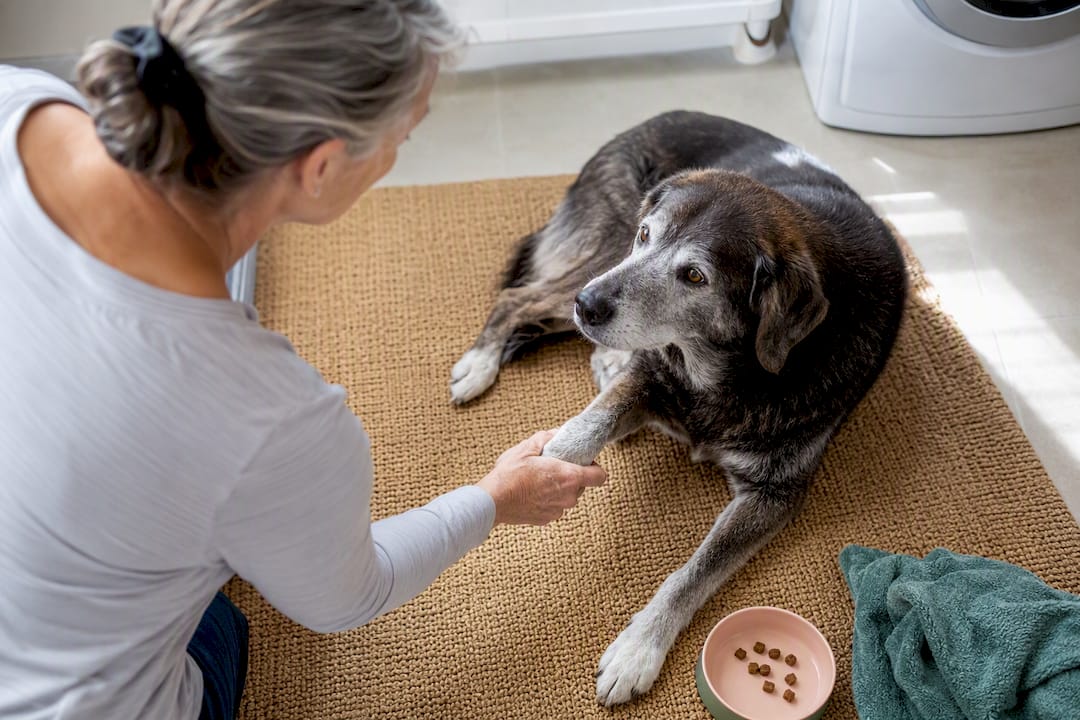
Short-acting anxiolytics prescribed by your veterinarian, not over-the-counter sedatives, are the standard tool for dogs whose fear is severe enough to prevent a safe exam. AAHA’s behavior guidelines frame this plainly: medication that prevents a traumatic visit is a welfare tool, not a shortcut or a failure on your part.
A few things to know before that conversation with your vet:
- These require a prescription. Your vet will choose the medication and dose based on your dog’s health history and the severity of the reaction.
- Timing matters. Give the medication exactly when your vet instructs, often the night before and again a set number of hours pre-visit, since timing affects how well it works.
- Medication and training work together. A calmer dog learns faster, which means anxiolytics can actually accelerate your desensitization progress rather than replace it.
- Supplements and pheromones are adjuncts, not substitutes; for supportive nutrition, consider products like Healthy Aging Chews from PetGev that promote general well-being alongside calming strategies. Products like Adaptil pheromone diffusers or vet-guided herbal options can support a calming plan, but they don’t replace prescribed medication when your vet has recommended one.
If your dog’s anxiety runs deeper than clinic visits, it’s worth reading about how acupuncture fits into a broader anxiety treatment plan as one piece of an integrative approach.
Pre-Visit Preparation That Actually Cuts Panic Risk
The 24 to 72 hours before an appointment are where most panic prevention actually happens, not in the exam room itself. “Happy visits,” short trips to the clinic with no procedures, just treats and a friendly hello from staff, build a positive association long before an actual exam is on the line.
A few adjustments make a bigger difference than most owners expect:
- Use calming aids early, not day-of. Adaptil pheromone products and calming music work best when introduced a few days ahead, giving your dog time to acclimate.
- Secure the carrier and skip the slippery car floor. A non-slip mat inside the carrier and car reduces the physical instability that often triggers fear on top of the emotional stress.
- Wait in the car if the lobby is chaotic. Many clinics will text or call when a room is ready, cutting your dog’s exposure to barking, unfamiliar animals, and crowded waiting areas.
- Ask about separate entrances. Some practices offer side doors or private waiting spaces for anxious patients. It never hurts to ask.
- Pack smart. Bring high-value treats, a favorite toy, and a blanket or towel that smells like home. Feed a smaller breakfast that morning so your dog is motivated by food rewards during the visit.
For a more detailed checklist tailored to senior and anxious dogs specifically, our guide to prepping for a low-stress mobile visit walks through timing in more depth.
When Should You Escalate to a Vet Behaviorist?
Not every panic episode is purely behavioral. Pain frequently drives or intensifies fear responses, and the MSD Veterinary Manual notes that pain should be ruled out before assuming a behavior problem is purely emotional. A sudden change in temperament, repeated panic across multiple visits, or new aggression during handling all deserve a direct conversation with your vet before you write it off as “just anxiety.”
Watch for these red flags:
- A dog who was previously fine at the vet suddenly panics or becomes aggressive.
- Panic that escalates with each visit instead of improving with the exercises above.
- Signs of pain alongside the fear response: limping, flinching at touch, reluctance to move.
If your vet rules out pain and the fear persists at a severe level, ask for a referral to a veterinary behaviorist. A specialist assessment can include a tailored medication plan, a structured behavior modification program, and, for some dogs, a recommendation to shift toward at-home or mobile veterinary care going forward.
Why an At-Home Approach Works Better for Some Panic-Prone Dogs
An in-home exam strips away most of the clinic triggers entirely: no waiting room, no unfamiliar dogs, no slick tile floor. That alone often lets a vet get a far more accurate read on mobility, pain, and behavior than a rushed, adrenaline-fueled clinic visit ever could. For dogs where fear has become the dominant variable in every appointment, removing the environment is sometimes more effective than trying to desensitize against it indefinitely.
Integrative therapies like acupuncture, rehabilitation, and herbal support work best as companions to behavior modification, not replacements for it. When your primary vet, a behaviorist, and a mobile integrative provider coordinate, care tends to move faster and with less trial and error for everyone involved, especially your dog.
Where Pet Acupuncture & Wellness Fits Into Your Dog’s Care Plan
If your dog’s panic has made every clinic visit a dreaded event, an in-home option changes the equation entirely. Mobile veterinary care that eliminates car ride triggers, waiting room chaos, and other anxious animals nearby allows dogs to be assessed calmly in a familiar space.
For dogs whose panic is severe, senior dogs with mobility issues, or pets managing chronic conditions alongside their fear response, this is often where treatment plans start making real progress. Services relevant to anxious dogs include an initial assessment and acupuncture with a technician, telemedicine consultations for dogs who don’t need to leave home at all, and rehabilitation therapy for pets whose fear and physical discomfort are intertwined.
First contact is simple: reach out to discuss your dog’s specific triggers and history, and the team will recommend whether a telemedicine consult or an in-home initial assessment makes sense as the first step. Full pricing details are available here so you know what to expect before booking.
— Pet Acupuncture & Wellness
Sources
- Effect of a Standardized Four-Week Desensitization and Counter-Conditioning Training Program on Pre-Existing Veterinary Fear in Companion Dogs
- Can dogs have panic attacks? — AKC
- How can my pet have stress-free veterinary visits? — AAHA
- Review: fear and aggressive behaviour in veterinary clinics (Animals, 2021)
FAQ
How Do I Ease My Dog’s Anxiety at the Vet?
Start with happy visits that involve no procedures, use pheromone products like Adaptil in the days before an appointment, and pair every clinic-related trigger with high-value treats using the precise reward timing AAHA recommends.
What Is the 3-3-3 Rule for Dogs With Anxiety?
The 3-3-3 rule is a general guideline for newly adopted dogs, referring to roughly three days to decompress, three weeks to settle into routine, and three months to fully adjust, not a specific vet-visit protocol. Definitions vary depending on the source, so treat it as a rough timeline for building trust rather than a fixed clinical standard.
Do Dogs Forgive Their Owners for Taking Them to the Vet?
Dogs don’t hold a grudge the way people imagine, since fear responses are tied to the environment and handling itself, not a sense of betrayal toward you. That said, repeated traumatic visits can build a lasting negative association with the clinic, which is exactly why desensitization work and, when needed, in-home alternatives matter.
How Do You Calm a Dog Down at the Vet?
In the moment, get distance from the trigger, ask staff for a quiet room or a pause, and let handlers use gentle tools like towel wraps and treats rather than force. If your dog can’t calm enough for a safe exam, discuss pre-visit anxiolytic medication with your vet for future appointments.
Can Pet Acupuncture & Wellness Help a Dog That Panics at the Vet?
Pet Acupuncture & Wellness provides in-home veterinary care in South Tampa, which removes many of the clinic triggers that cause panic in the first place. An initial assessment and acupuncture visit or a telemedicine consult are both reasonable starting points for dogs with severe vet-related fear.