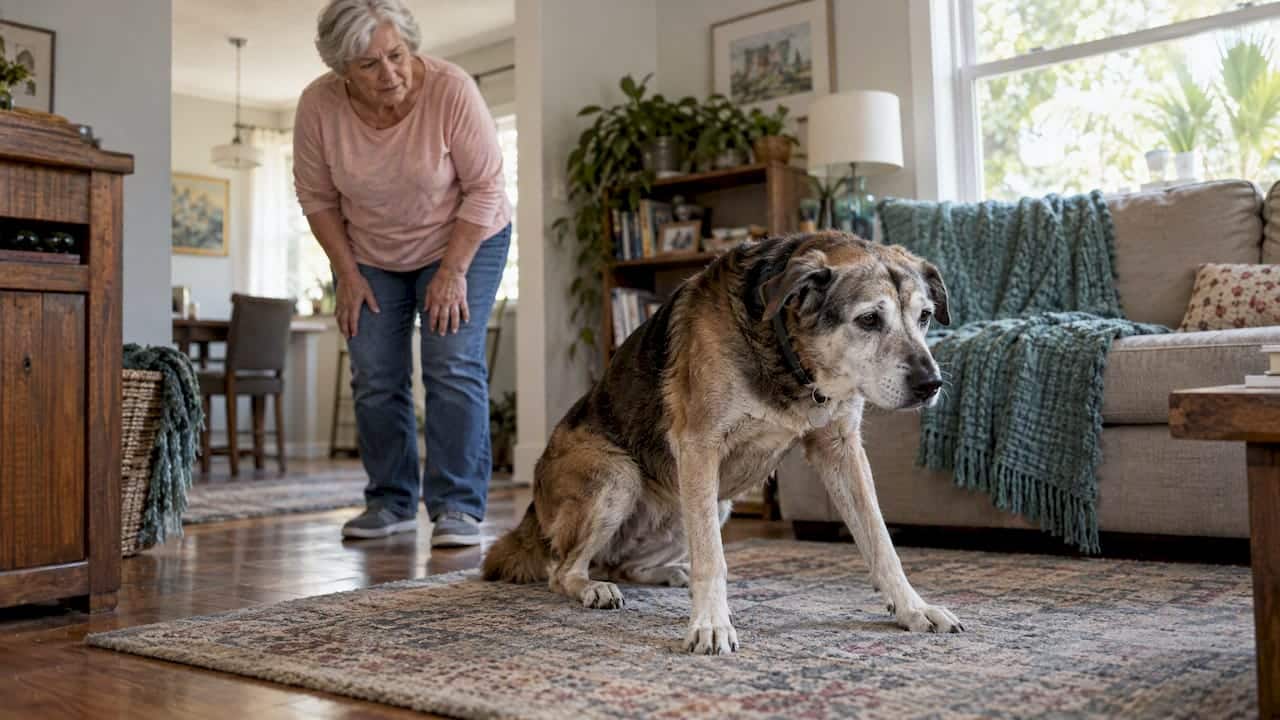
Acupuncture can genuinely help many dogs with back pain, especially as part of a broader pain-management plan rather than a stand-alone fix. A meta-analysis in the American Journal of Traditional Chinese Veterinary Medicine found real, measurable benefit when it’s combined with conventional treatment for intervertebral disc disease, and Washington State University’s Veterinary Teaching Hospital includes it in its integrative pain protocols. Your first move should be a conversation with your primary veterinarian to confirm the diagnosis and see where acupuncture fits into your dog’s care.
TL;DR:
- Acupuncture, especially electroacupuncture, enhances nerve response and stimulates natural pain relief in dogs with chronic or severe back pain.
- Combining acupuncture with treatments like laser therapy, massage, and rehabilitation can improve overall recovery outcomes for dogs with intervertebral disc disease.
- Early application of acupuncture yields better results, as it is less effective once dogs lose deep pain perception, which indicates advanced nerve damage.
- In-home acupuncture reduces stress and increases effectiveness by allowing treatment in a familiar environment, especially for senior or anxious dogs.
- Most dogs benefit from a series of six to eight weekly sessions followed by maintenance visits, with safety being high when performed by certified professionals.
Table of Contents
- What Veterinary Acupuncture Does for a Dog’s Back Pain
- What the Research Actually Shows About Back Pain and IVDD
- What to Expect at Your Dog’s Acupuncture Appointments
- Is Acupuncture Safe for Every Dog With Back Pain?
- What Acupuncture Costs and How to Plan for It
- How to Choose the Right Practitioner for Your Dog
- Why In-Home Acupuncture Changes the Equation for Many Dogs
- Where Conventional Advice on Dog Back Pain Falls Short
- A Gentler Path to Managing Your Dog’s Back Pain
- Sources
- FAQ
What Veterinary Acupuncture Does for a Dog’s Back Pain
There are two main approaches your vet might use, and the choice usually comes down to how severe and how long-standing your dog’s pain is. Dry needle acupuncture places thin, sterile needles at specific points along the body without any electrical stimulation. Electroacupuncture (EA) adds a mild electrical current between paired needles, which tends to be favored for chronic or more severe cases because it delivers a stronger, more sustained nerve response.
Think of it less like magic and more like precision biology. When a needle stimulates a specific point, it activates sensory nerves that send signals to the spinal cord and brain. That cascade triggers the release of endorphins and other natural pain-relieving substances, dials down inflammatory signaling, and prompts local blood vessels to dilate. More circulation to a tight, spasming muscle around the spine means more oxygen and nutrients reaching tissue that badly needs them, and less of the guarded, achy stiffness that makes your dog reluctant to jump on the couch. The VCA describes this same mechanism: relaxed muscles, better circulation, and a natural anti-inflammatory effect that works alongside conventional medicine rather than against it.
Point selection isn’t random. Practitioners select points along the spine that correspond to specific nerve segments, essentially targeting the exact vertebral level where a disc is bulging or a nerve root is irritated. This is why a licensed acupuncturist takes a full neurologic history before ever placing a needle. And the effects build over time. One session might loosen a spasm temporarily, but a full course tends to produce a more lasting shift in how your dog’s nervous system processes pain signals.
Acupuncture rarely works in isolation, and most integrative plans pair it with:
- Laser therapy to reduce localized inflammation and support tissue healing
- Therapeutic massage to release secondary muscle guarding around the spine
- Structured rehabilitation exercises to rebuild strength and coordination
- Weight management support, since extra pounds put direct pressure on a compromised spine
What the Research Actually Shows About Back Pain and IVDD
The evidence here is stronger than most owners expect, though it comes with real caveats worth understanding before you commit to a treatment course.
A systematic review and meta-analysis of canine and human clinical studies found that combining acupuncture with conventional treatment significantly improved treatment success rates and shortened recovery time in dogs with intervertebral disc disease.
The AJTCVM meta-analysis reported a statistically significant improvement in treatment success rate and a shortened recovery timeline when acupuncture was added to standard IVDD care, with p-values indicating strong evidence in the pooled canine studies.
The core finding: adding acupuncture to conventional IVDD treatment measurably speeds recovery and improves the odds of a good outcome, according to pooled clinical data.
A separate clinical study of postoperative dogs recovering from acute thoracolumbar disc herniation found that dogs receiving acupuncture alongside physiotherapy were more likely to regain the ability to walk than dogs receiving physiotherapy alone, a difference that reached statistical significance (p = 0.042). A related knowledge summary published in Veterinary Evidence reviewed the available randomized and cohort studies and concluded the evidence is moderate, not definitive, for using electroacupuncture and manual acupuncture as adjuncts to medical management in dogs with thoracolumbar disc extrusion.
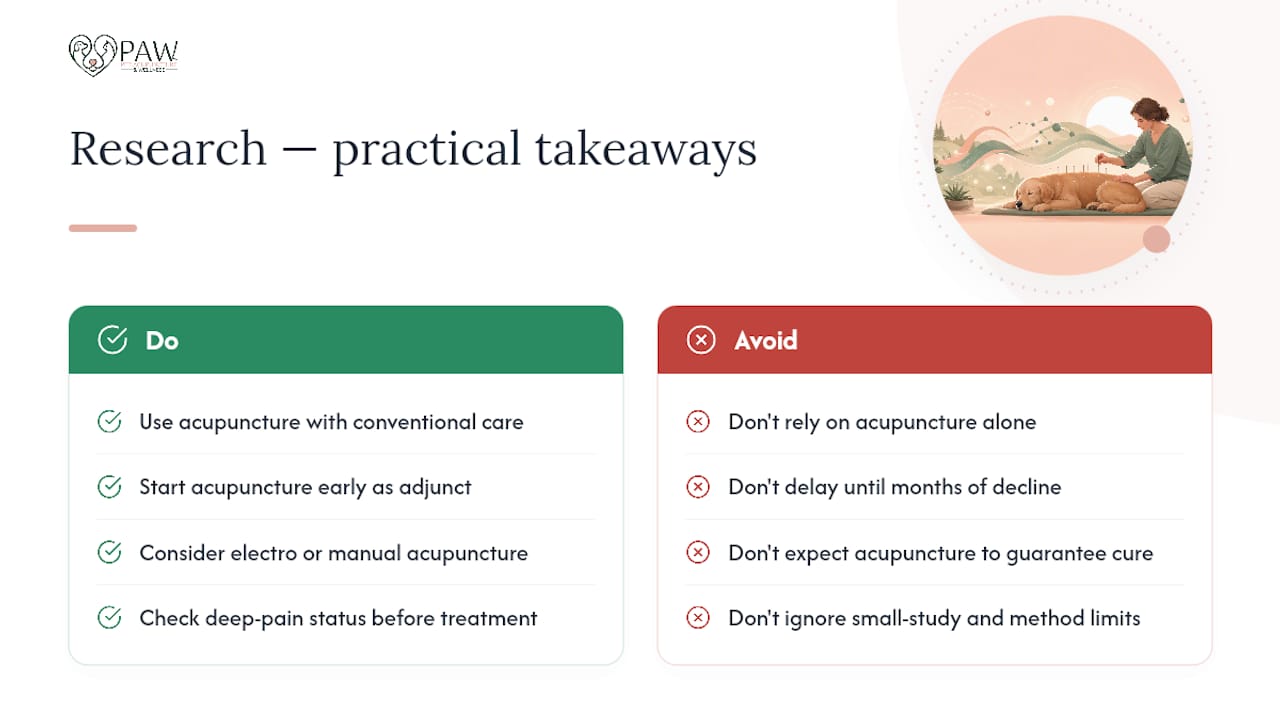
That word “moderate” matters. Sample sizes in most of these studies are small, methods vary from one clinic to the next, and researchers haven’t standardized point selection or session frequency across trials. The clearest limitation, though, is prognostic: dogs that have lost deep pain perception, meaning they can’t feel a firm pinch on their toes, have a much poorer outlook and are far less likely to benefit from acupuncture as a primary therapy. A JAVMA study comparing surgery, electroacupuncture, and combined approaches for dogs with long-standing severe neurologic deficits reinforces that outcomes depend heavily on how advanced the nerve damage already is. The practical takeaway: acupuncture works best as an early adjunct, not a last resort after months of untreated decline.
What to Expect at Your Dog’s Acupuncture Appointments
Your first visit looks more like a thorough physical exam than a spa treatment. A qualified practitioner will take a full history, run a neurologic and orthopedic exam, and coordinate with your primary veterinarian’s diagnostics (X-rays, an MRI if one exists) before touching a single needle. This step matters because acupuncture treats symptoms alongside a diagnosis, never instead of one.
Once the exam is done, here’s roughly how a session unfolds:
- Your dog settles into a comfortable position, often lying down on a soft surface at home or in a quiet exam room.
- The practitioner places anywhere from a handful to a dozen or more thin needles at specific points along the spine and limbs.
- Needles typically stay in place for 10 to 30 minutes, with the full session running 15 to 30 minutes depending on your dog’s tolerance.
- For chronic or more severe cases, the practitioner may attach electrodes for electroacupuncture, alternating low and high frequencies depending on whether the pain is acute or long-standing.
- Your dog rests, and many dogs actually relax or doze off once they adjust to the sensation.
Most chronic back pain cases start with an initial series of weekly acupuncture sessions, typically around six to eight, then taper to maintenance visits every few weeks to months once your dog shows steady improvement. Acute flare-ups sometimes respond faster, while long-standing degenerative cases need patience and consistency to see the cumulative benefit build.
Pro Tip: Keep a simple mobility journal after each session, noting how easily your dog rises from lying down, climbs stairs, or tolerates a leash walk. Small, steady changes are often easier to spot in writing than in memory.
In-home sessions tend to reduce the anxiety that makes needle placement harder in an unfamiliar clinic, which matters most for senior or disabled dogs who already find car rides and waiting rooms stressful.
Is Acupuncture Safe for Every Dog With Back Pain?
Acupuncture has an excellent safety record in trained hands, but “safe” doesn’t mean “appropriate for every situation.” Understanding both sides protects your dog and your budget.
Mild, temporary effects are the most common reaction:
- Slight soreness or tenderness at needle sites for a day or so
- Temporary drowsiness or lethargy, especially after the first session
- Occasional mild bruising at a needle site
- Rarely, a brief increase in symptoms before improvement (sometimes called a “healing crisis”)
Serious complications are uncommon when a certified veterinary acupuncturist follows sterile technique and sound point selection, but they underscore why credentials matter. A dog that has lost deep pain perception, meaning no response to a firm toe pinch, has a far poorer prognosis, and research on thoracolumbar disc extrusion shows acupuncture offers less benefit in that scenario compared to dogs with intact deep pain sensation. That’s a surgical emergency window, not a wait-and-see one.
Always tell every treating clinician, including your acupuncturist, about every medication your dog is on. NSAIDs, steroids, and certain supplements can interact with treatment timing or mask symptoms your practitioner needs to track. Stop acupuncture and call your veterinarian immediately if you notice worsening weakness, new incontinence, or pain that escalates rather than eases across sessions.
What Acupuncture Costs and How to Plan for It
Session pricing varies by region, practitioner experience, whether electroacupuncture is used, and whether the visit happens in a clinic or at your home. Mobile care typically carries a travel or house-call fee on top of the treatment itself, though many owners find that cost offset by skipping the stress, time, and expense of frequent clinic trips with a dog who struggles to travel.
A few practical points to sort out before you commit to a plan:
- Ask whether the practice offers package pricing for an initial series versus paying session by session.
- Request a written treatment plan that spells out goals, expected session count, and a checkpoint for reassessing progress.
- Clarify what’s included: is EA an add on, and does the fee cover coordination with your primary vet?
- Confirm cancellation and rescheduling policies, especially if your dog has unpredictable good and bad days.
Insurance coverage for acupuncture is inconsistent. Some pet insurance policies cover it under complementary or alternative therapy riders, while others exclude it entirely or require it to be recommended by a licensed veterinarian for a diagnosed condition. Keep detailed invoices and your written treatment plan on hand. That paperwork is usually what an insurer needs to process a reimbursement claim, and having it ready from session one saves you a scramble later.
How to Choose the Right Practitioner for Your Dog
Not every veterinarian who offers acupuncture has the same depth of training, and for a condition as serious as spinal disease, that difference matters.
- Confirm the credentials. Look for a DVM with additional certification in Traditional Chinese Veterinary Medicine or veterinary acupuncture through a recognized program such as IVAS or the Chi Institute, ideally alongside training in veterinary sports medicine and rehabilitation.
- Ask about case experience. A practitioner who regularly treats IVDD and uses electroacupuncture for spinal cases will have a clearer sense of what’s realistic for your dog’s specific situation than one who mostly treats general stiffness.
- Check how they coordinate care. A good integrative practitioner communicates directly with your primary veterinarian, shares notes after each visit, and has a clear plan for what happens if your dog needs urgent surgical evaluation.
- Clarify the logistics. Ask about sedation policy (most acupuncture requires none), consent forms, mobile versus clinic-based visits, and what a missed or rescheduled appointment costs you.
Pro Tip: Ask any prospective practitioner how they’d handle a dog who suddenly stops improving or gets worse mid-series. Their answer tells you a lot about whether they treat acupuncture as one tool among many or as the whole plan.
The best practitioners will be upfront that acupuncture works best alongside, not instead of, a full diagnostic workup and ongoing veterinary oversight.
Why In-Home Acupuncture Changes the Equation for Many Dogs
A dog with back pain often dreads the very things that make a clinic visit stressful: the car ride, the slippery exam table, the unfamiliar smells of other anxious animals. All of that tension works against the calm state acupuncture depends on to be effective. WSU’s teaching hospital and other integrative programs note that a relaxed, cooperative dog gets more out of each session, and mobile care removes most of the friction that gets in the way of that.
Pet Acupuncture & Wellness builds its in-home visits around exactly this idea, layering acupuncture into a broader plan that can include rehabilitation exercises and herbal support tailored to your dog’s specific back pain diagnosis.
If travel stress, mobility limits, or your own scheduling constraints have kept you from pursuing acupuncture, an in-home consult is worth exploring alongside your primary veterinarian’s recommendations.
Where Conventional Advice on Dog Back Pain Falls Short
Most owners get told to “wait and see” or jump straight to a surgical consult, with little discussion of what happens in between. That gap is where acupuncture earns its place, not as an alternative to good conventional medicine, but as a way to actively manage pain and support recovery while a diagnosis is confirmed and a longer-term plan takes shape.
The research supports a specific, narrower claim than what marketing around holistic pet care often implies: acupuncture is not a cure for a herniated disc, and it will not reverse nerve damage in a dog that has already lost deep pain perception. What it does reliably do, according to the pooled clinical evidence, is improve comfort, support mobility, and shorten recovery windows when it’s started early and layered into a real multimodal plan.
The single biggest mistake we see is delay. Owners often try rest and a wait-and-see approach for weeks before considering integrative options, and by then the window for the strongest outcomes has narrowed. If your dog is showing early signs of back pain, get a diagnosis first, then ask about acupuncture before your dog’s mobility declines further, not after.
— Pet Acupuncture & Wellness
A Gentler Path to Managing Your Dog’s Back Pain
Some practices bring acupuncture, rehabilitation, and herbal therapy directly to your home, built specifically for senior, disabled, or anxious dogs who find traditional vet visits stressful or physically difficult.
If your dog’s back pain has you weighing clinic visits against your dog’s comfort, an in-home evaluation removes that trade-off entirely. Instead of loading a sore dog into the car, you get a full assessment on your own floor, in the environment where your dog already feels safe, with a practitioner who can build acupuncture into a coordinated plan alongside rehabilitation therapy and herbal support if your dog’s case calls for it. This is exactly the kind of layered, patient-specific care the research points to as most effective, delivered without the added stress of a waiting room.
If your dog is showing signs of back pain, stiffness, or reluctance to move, schedule an in-home acupuncture consultation and get a clear, coordinated plan built around your dog’s specific diagnosis.
This article is general information, not a substitute for advice from a qualified doctor. Consult a qualified healthcare professional about your own circumstances before acting on anything here.
Sources
- Evaluating the Efficacy of Acupuncture for the Treatment of Intervertebral Disc Disease: A Systematic Review and Meta-analysis of Canine and Human Clinical Studies
- Clinical Study on the Application of Acupuncture in the Postoperative Rehabilitation of Dogs Affected by Acute Thoracolumbar Disc Herniation
- In dogs with thoracolumbar disc extrusion does the use of acupuncture improve clinical recovery? | Veterinary Evidence
- Acupuncture and Acupressure for Dogs | VCA Animal Hospitals
FAQ
What helps a dog’s back pain naturally?
Weight management, gentle rehabilitation exercises, orthopedic bedding, and acupuncture all support natural back pain relief, though the right combination depends on your dog’s specific diagnosis. Acupuncture in particular has research support for improving comfort and mobility when paired with your veterinarian’s conventional treatment plan.
How much does veterinary acupuncture cost?
Pricing varies by region, session length, whether electroacupuncture is used, and whether the visit is in a clinic or at your home. Ask any practice for a written treatment plan with package pricing for an initial series so you know the full cost before committing.
Is dog acupuncture worth it?
For most dogs with back pain, especially those with intervertebral disc disease and preserved deep pain perception, research shows acupuncture combined with conventional treatment improves recovery odds and shortens healing time compared to conventional treatment alone. It’s less likely to help dogs that have already lost deep pain sensation, which is why an accurate diagnosis matters before starting.
What are the potential side effects of acupuncture on dogs?
Most dogs experience only mild, short-lived effects like tenderness at needle sites or brief drowsiness after a session. Serious complications are rare when a certified veterinary acupuncturist uses sterile technique and sound point selection.
How many acupuncture sessions does a dog with back pain typically need?
Most chronic back pain cases start with six to eight weekly sessions, then move to maintenance visits spaced weeks or months apart once your dog shows steady improvement. Acute cases sometimes improve faster, while long-standing degenerative conditions require more patience to see the full cumulative benefit.