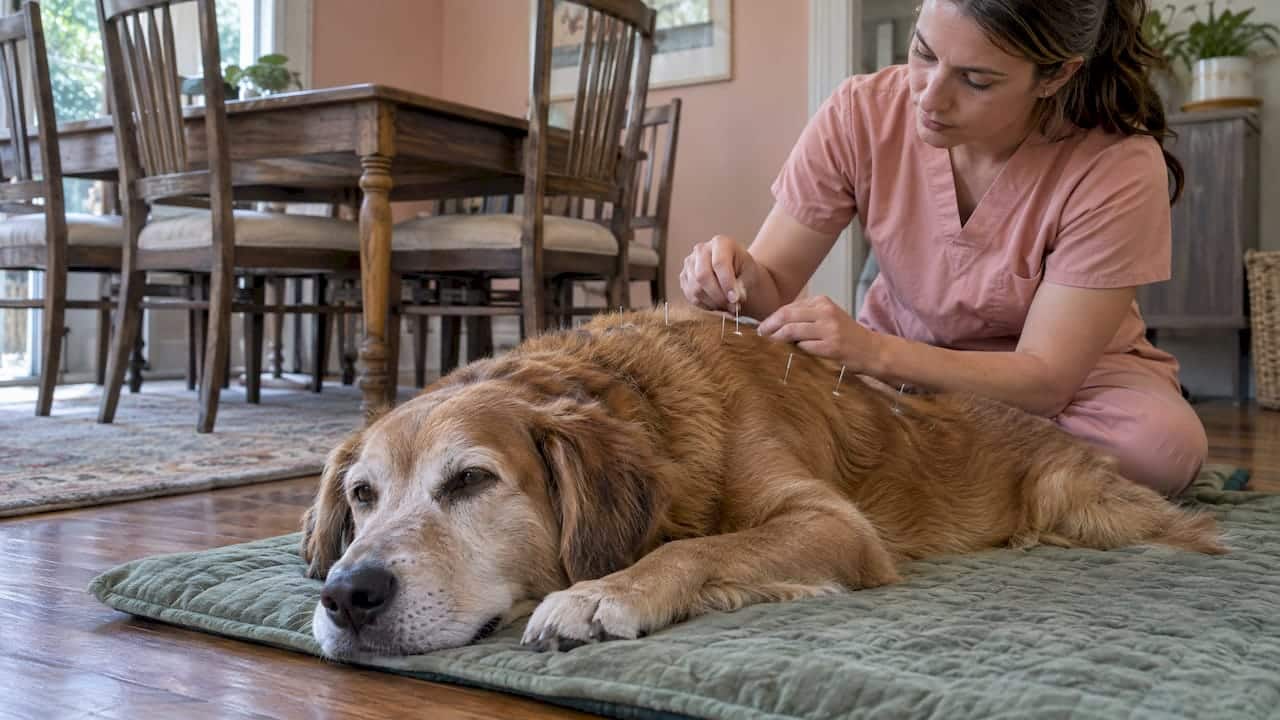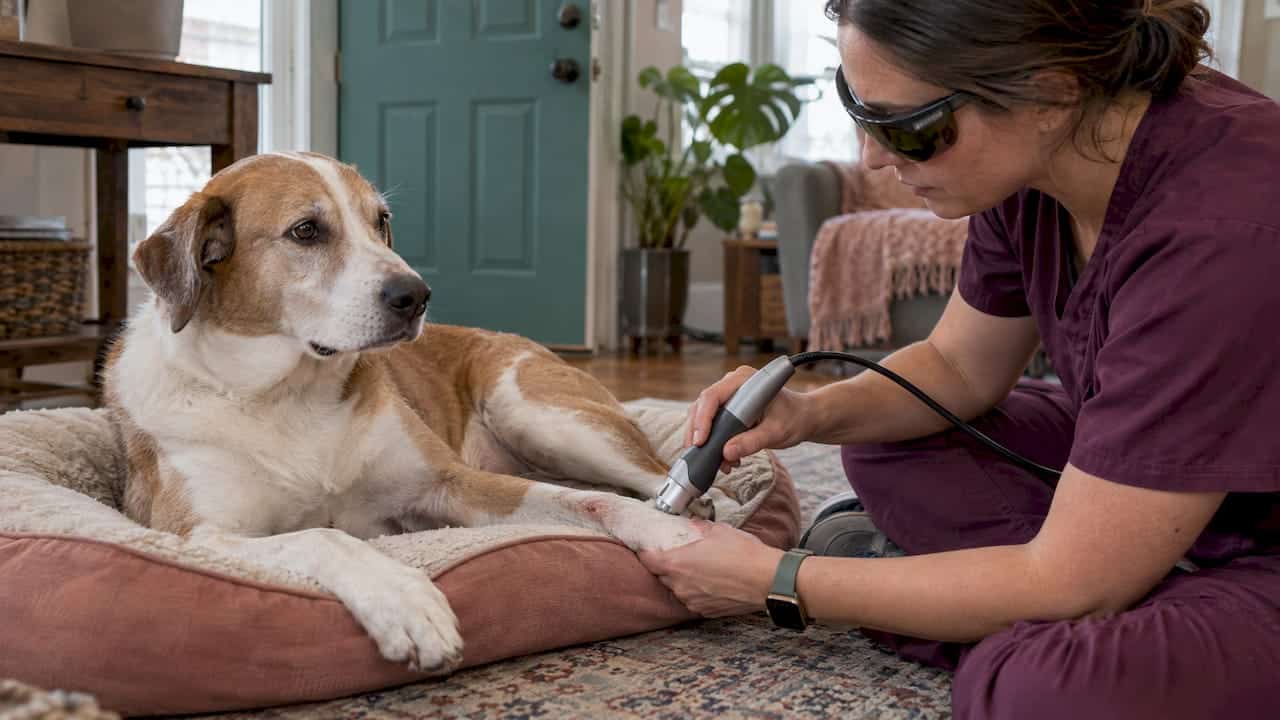
Acupuncture can be used alongside your veterinarian’s seizure plan for a cat, and some practitioners use it to support better seizure control. The published research is still young, and most of it comes from dogs and people rather than cats. That is why the safest way to use it is as a partner to a proper diagnosis and to any medication your cat takes, never as a replacement. Below we explain how seizures are worked up, what acupuncture may add, what a session looks like, and what to do if your cat has a seizure tonight.
TL;DR
- Every cat with repeated seizures should first have a full veterinary workup, because most feline seizures have an underlying cause rather than being true epilepsy.
- Acupuncture is used as an add-on to conventional care. Evidence specific to cats is limited, so we lean on research in dogs and people as a guide.
- Never lower or stop antiseizure medication on your own. Any change belongs to your cat’s primary veterinarian or neurologist.
- A seizure lasting more than 5 minutes, or more than one in 24 hours, is an emergency.
- We bring acupuncture to your cat’s own home in South Tampa, which spares an anxious or fragile cat the car ride and the waiting room.
Table of Contents
- Why a seizure workup comes first
- How conventional care treats feline seizures
- What the research says about acupuncture and seizures
- How acupuncture works alongside medication
- Herbs, food and what to avoid
- A TCVM view of a seizure
- What an at-home session looks like
- What it costs
- Our perspective
- Book a visit at home in South Tampa
- What to do if your cat has a seizure
- FAQ
- Sources
Why a seizure workup comes first
If you have watched your cat collapse, paddle, drool or twitch, you know how frightening it is. The first step is not a treatment. It is finding out what is happening.
A seizure is a burst of abnormal, over-synchronized electrical activity in the brain. Epilepsy is the diagnosis given when seizures keep recurring, more than 24 hours apart, without an identifiable cause outside the brain. That second part matters for cats. According to a veterinarian writing for PetMD, true epilepsy is relatively rare in cats, and most seizures are a symptom of something else.
The list of possible causes is long. Published reviews of feline seizures name infections such as feline infectious peritonitis and toxoplasmosis, tumors such as meningioma and lymphoma, and strokes. They also describe reactive seizures, which come from toxins or metabolic problems outside the brain. Toxins are among the most common triggers of sudden seizures, and permethrin poisoning, which causes severe muscle twitching, is often mistaken for a seizure. Dog flea products containing permethrin are dangerous for cats, so tell your veterinarian about any product used in your home.

A standard workup includes a neurologic exam and bloodwork. The 2014 review recommends a complete blood count and chemistry profile with T4. When those come back normal, it recommends brain imaging, with MRI preferred. You may be referred to a veterinary neurologist for that step.
How conventional care treats feline seizures
Knowing the standard plan helps you see where acupuncture fits.
Phenobarbital is the usual first-line medication. Clinical guidance describes it as the most commonly recommended anticonvulsant for cats, with a favorable safety profile compared with its effects in dogs. Starting doses vary between sources, which is one more reason dosing is a decision for your veterinarian. Blood levels are checked two to three weeks after starting or changing a dose. Some drugs used in other species are avoided in cats. Potassium bromide and diazepam, for instance, are not recommended for cats because of serious side effects.
Not every cat needs daily medication right away. Current guidance suggests starting maintenance therapy when seizures come more often than every 12 to 16 weeks, in clusters, as status epilepticus, or with structural brain disease.
The outlook with medication can be good. In one long-term follow-up of cats with suspected primary epilepsy, about 40 to 50% became seizure-free, and another 20 to 30% were reasonably well controlled. That leaves cats whose seizures stay hard to control, and families who want something gentle to add. That is where integrative care comes in.
What the research says about acupuncture and seizures
Here is what we can tell you plainly, so you can decide with clear eyes.
Acupuncture has been studied for seizures mostly in dogs and people. A scoping review of acupuncture in companion animals found hundreds of studies and case reports, with dogs the most common patients, and called for more high-quality trials. For cats with seizures specifically, a 2014 veterinary chapter on add-on treatments says information on acupuncture and other alternative therapies is very limited. We take that seriously and it shapes how we talk about this.
What the dog research shows is encouraging. In a study of 15 dogs with uncontrolled idiopathic epilepsy, gold wire implants at acupuncture points were followed by clear changes in seizure frequency and severity, and nine dogs had at least a 50% reduction in frequency over 15 weeks. A 2018 review of acupuncture for small-animal neurologic disorders adds that dry needling and implantation at acupoints may reach a 50% reduction in seizure frequency, while noting that a Cochrane review found insufficient evidence for human epilepsy.
Why might it work? A TCVM practitioner writing in the IVC Journal says acupuncture may raise the release of calming brain chemicals such as serotonin, GABA and opioid peptides. Methods in use include needles, electrical stimulation, ear and scalp acupuncture, and implants.
A fair summary: professionals see integrative medicine as a promising partner to standard seizure treatment, especially for poorly controlled seizures, with more research still needed. That is the spirit in which we offer it: as one more layer of support around your cat.
If you also share your home with a dog, our guide on acupuncture for dogs with seizures goes deeper into the canine research.

How acupuncture works alongside medication
The question we hear most is whether acupuncture can replace phenobarbital. It cannot be decided from the couch, and it should never be decided by you or us alone.
The IVC Journal article describes a typical course of acupuncture every two to four weeks for five to eight initial sessions, often combined with Chinese herbal medicine. It says that once seizures are controlled, drug doses may be reduced gradually to the lowest effective dose, one drug at a time. It also advises owners to use a certified veterinary acupuncturist and to have the cat evaluated by the primary veterinarian or a veterinary neurologist.
Here is how that translates into safe practice at home:
- Keep giving medication exactly as prescribed. Stopping phenobarbital suddenly can bring on more seizures.
- Keep a seizure diary. Note the date, time, length, what your cat did before and after, and any changes at home. This is the best evidence of whether a plan is helping.
- Let your cat’s veterinarian lead any dose change. Phenobarbital levels take 10 to 15 days to settle after any change and are rechecked with bloodwork.
- Share our notes with your regular veterinarian. We work alongside your cat’s own veterinarian, not in place of them.
Herbs, food and what to avoid
Chinese herbal medicine is often part of a TCVM seizure plan. The IVC Journal article names a formula called Di Tan Tang as the most frequently used in seizure management. It also lists herbs that have been found to induce seizures and should be avoided, including nux vomica, Illicium henryi, betelnut and mulberry.
That list is why cats with seizures should never be given over-the-counter herbal blends or supplements picked from a shelf. Herbs for a seizure-prone cat should be chosen by a veterinarian trained in them, and checked against the medications your cat already takes. Our herbal therapy and food therapy services are built around that kind of individual review.
One more point from the research is worth knowing if anyone suggests implants. The 2018 WSAVA presentation recommends trying acupuncture and herbal medicine before any permanent metal implant, because implants may interfere with future MRI scans. Needle-based sessions leave nothing behind, which is one reason we favor them.
A TCVM view of a seizure
In Traditional Chinese Veterinary Medicine, a seizure is not just an electrical event. Think of Qi as your cat’s flowing energy, traveling along Meridians like a highway system. Yin and Yang are like shade and sunlight: two sides of one balance. When Qi stalls or the balance tips, practitioners see a pattern. In seizure cases that can show up as heat, wind or phlegm disturbing the mind.
A 2018 review notes that TCVM works best when an experienced practitioner makes an accurate pattern diagnosis and chooses the acupuncture and herbs to match. That is why two cats with the same diagnosis may get different points and different plans.
What an at-home session looks like
Many cats with seizures are not good travelers. A carrier, a car and a clinic waiting room can be stress enough to matter, and stress is a trigger some owners watch closely. Our practice treats cats and dogs in their own homes in South Tampa, so the visit happens where your cat already feels safe.
A first visit usually goes like this:
- History and records. We review your seizure diary, bloodwork, imaging and the medication list from your primary veterinarian.
- Gentle exam. We look at how your cat moves, rests and responds to touch, and read the whole picture, including appetite, temperature preference and temperament.
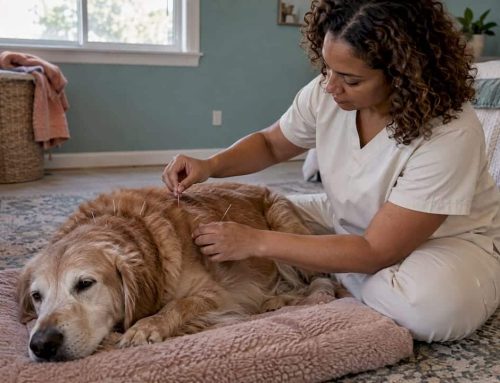
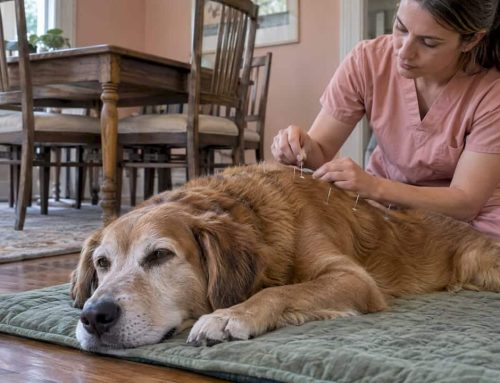
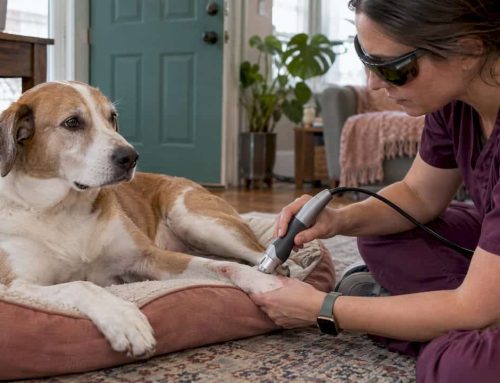
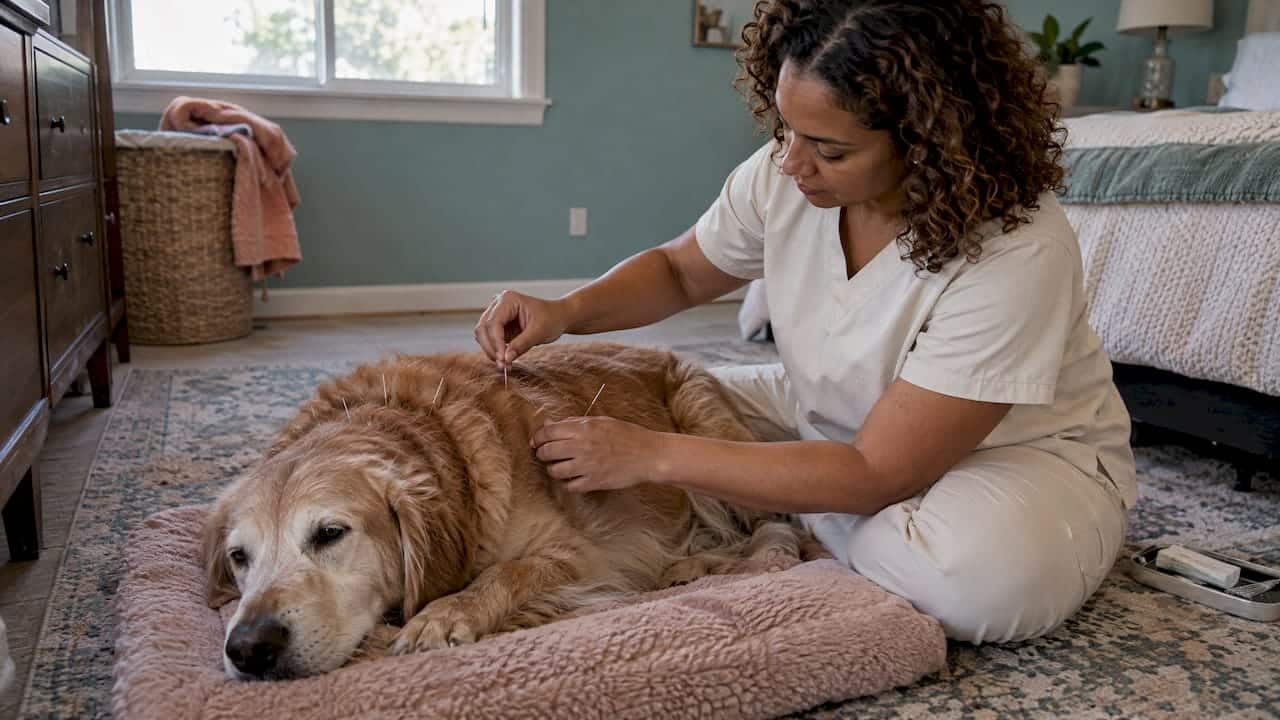
- Treatment on your cat’s terms. Needles are very fine, and many cats settle on a favorite blanket or lap. Some cats do better with acupressure or electroacupuncture at low settings. We pause whenever your cat asks us to.
- A plan you can follow. That can include a session schedule, food therapy ideas, herbs reviewed for safety and what to report back to your veterinarian.
If your cat also shows nausea, we have written about PC6 acupuncture for cat nausea, which can be relevant when medications upset the stomach. Our dog-focused page on how electroacupuncture works also explains the technique we use for some pets.
What it costs
As published on our site, the initial assessment and acupuncture session with a technician starts from $430. A technician mobile fee of $60 applies to visits. Electroacupuncture is $30, and laser treatments run $45 to $120 per treatment. Acupressure, herbal therapy, food therapy and telemedicine do not have published prices, so ask us about them. You can see the current list on our cost of services page.
Our perspective
We see cats whose families are tired. They have done the bloodwork, they give the pill twice a day, and they still hold their breath every time the cat goes quiet. They are not looking for a miracle. They are looking for one more way to help.
We believe acupuncture and the rest of integrative care belong beside conventional treatment, never in competition with it. Our approach is to bring a calm, personalized plan into your living room, share what we find with your regular veterinarian, and adjust as your cat’s needs change.
For a senior cat, a cat who panics in the carrier, or a cat with other conditions on top of seizures, getting care at home often changes what is possible. Less stress for your cat means less stress for you, and that matters too.
Pet Acupuncture & Wellness
Book a visit at home in South Tampa
If your cat has had a veterinary workup and you would like to add acupuncture, herbs or food therapy to the plan, we can come to you. We tailor each treatment plan to your cat and home, and we keep your cat’s regular veterinarian in the loop.

Start on our home page to reach us, or ask about a remote telemedicine consultation first if you want to talk through your cat’s history before a visit.
What to do if your cat has a seizure
Stay calm and keep your hands away from your cat’s mouth. Move nearby objects out of the way, dim the room and note the time. Do not try to hold your cat still.
When to go to an emergency clinic: guidance for veterinarians defines status epilepticus as a seizure lasting longer than 5 minutes, and clusters as more than one seizure in 24 hours. Both need urgent care. Emergency teams typically start with benzodiazepines such as diazepam or midazolam to stop the seizure. If you suspect a toxin, such as a flea product, take the packaging with you.
Acupuncture is for the days between seizures, not for the seizure itself.
FAQ
Can acupuncture cure my cat’s seizures?
No one can promise a cure, and we do not. Acupuncture is used as a supportive therapy that may help reduce how often or how severe seizures are, mostly based on research in dogs and people. We pair it with your veterinarian’s diagnosis and treatment plan.
Can I stop my cat’s phenobarbital if acupuncture helps?
Never stop or lower it on your own. Practitioners describe reducing doses gradually only after seizures are controlled, and only under the direction of your primary veterinarian or a neurologist, with blood levels rechecked. We will share our observations to support that conversation.
How many sessions does a cat usually need?
A published TCVM protocol describes sessions every two to four weeks for five to eight initial treatments, then adjusting to your cat’s response. Your cat’s plan may differ based on age, temperament and the cause of the seizures. We review progress with you using your seizure diary.
Is acupuncture safe for a cat on seizure medication?
Thin needles used by a trained veterinary acupuncturist are generally well tolerated, and we always review your cat’s medication list first. The bigger safety issue is herbs: some can provoke seizures, so only use herbs chosen by a veterinarian trained in them.
Sources
- Seizures and epilepsy in cats (PMC)
- Seizures in Cats: Causes & Treatment Guide (PetMD)
- Antiseizure Medications for Cats (Clinician’s Brief)
- Seizures and epilepsy in cats (Dove Medical Press)
- How to Diagnose and Manage Feline Seizures (Today’s Veterinary Practice)
- Treatment and long-term follow-up of cats with suspected primary epilepsy
- A scoping review of the evidence for efficacy of acupuncture in companion animals
- Novel and adjunctive treatments for canine and feline epilepsy
- Electroencephalographic evaluation of gold wire implants in dogs with epilepsy
- Acupuncture for Small Animal Neurologic Disorders
- TCVM for challenging illnesses, Part 1: seizures (IVC Journal)
- Improve Seizure Control with Integrative Medicine (WSAVA, VIN)
- Emergency Approach to Acute Seizures in Dogs and Cats