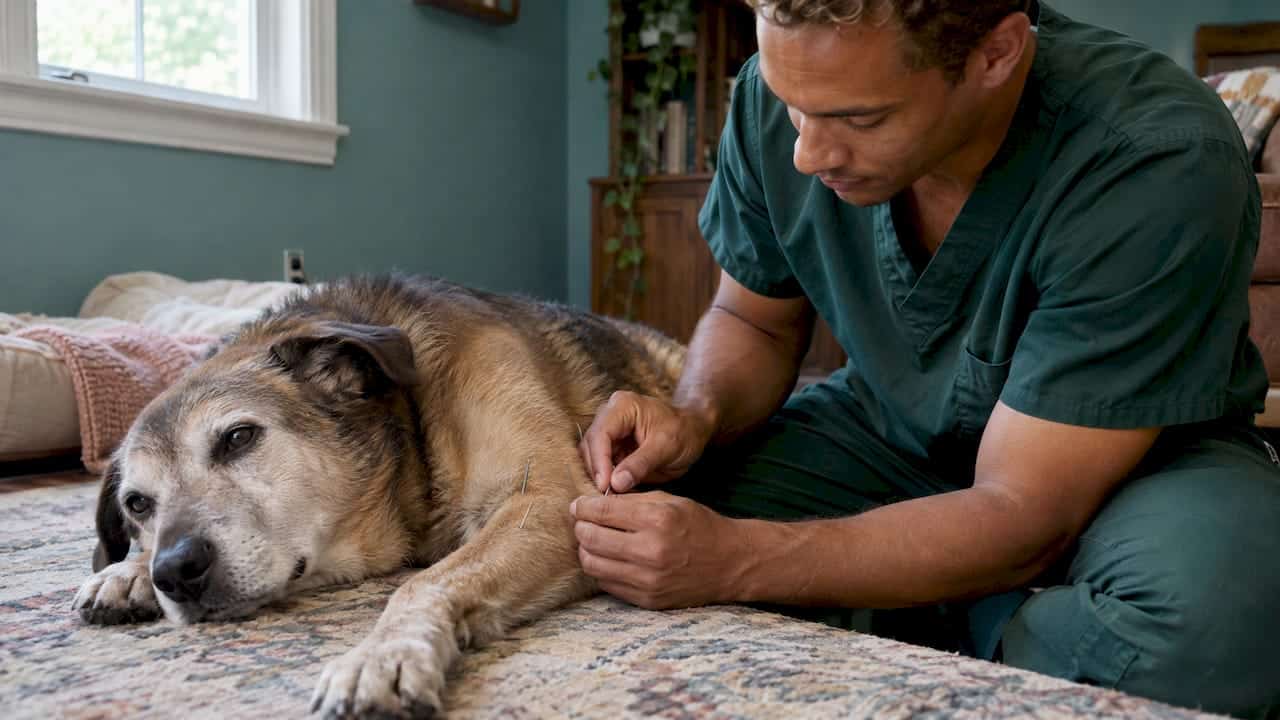
Acupuncture and chiropractic care both aim to ease pain and help a dog move more comfortably, but they work in different ways and carry different levels of evidence and risk. Acupuncture uses very thin needles at specific points to stimulate nerves and the body’s own pain-relief response. Chiropractic care uses hands-on spinal manipulation. For a senior, arthritic, or anxious dog, the gentler and better-studied option is usually acupuncture, ideally guided by your dog’s regular veterinarian.
If you are watching your dog hesitate at the stairs or struggle to get up from a nap, you want an answer you can trust. Here is how the two compare, what the research says, and how to decide.
TL;DR
- Acupuncture stimulates points with thin needles. Chiropractic care adjusts the spine and joints by hand. They are not interchangeable.
- Veterinary guidelines describe acupuncture as a useful part of a multimodal plan for pain and mobility, especially in senior dogs.
- The Merck Veterinary Manual says well-designed studies of chiropractic in dogs are limited, and it warns that forceful thrusts can injure weakened animals.
- PEMF is a separate, non-invasive modality. It can sit beside acupuncture in a plan, and your veterinarian should guide it.
- Whatever you choose, get a diagnosis first and keep your regular veterinarian involved.
Table of Contents
- How acupuncture and chiropractic care actually differ
- What the research says about acupuncture
- What the research says about chiropractic care
- Safety: the questions that matter most
- Where PEMF fits in
- Choosing for a senior, disabled, or anxious dog
- What a first visit looks like at home
- Cost: what to expect
- Ready to help your dog move more comfortably?
- FAQ
- Sources
How acupuncture and chiropractic care actually differ
The simplest way to picture it: acupuncture works through the nervous system, while chiropractic care works through the skeleton and joints.
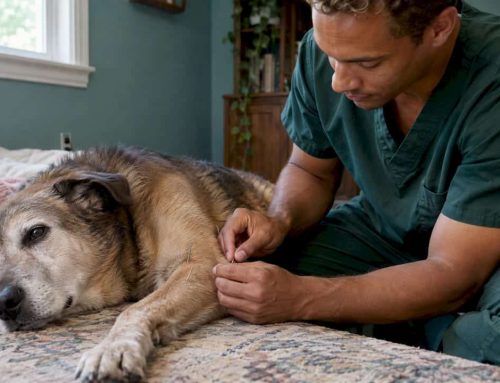
According to the AAHA, acupuncture involves inserting thin needles into specific body points to stimulate nerve endings, release endorphins, and support the body’s natural healing response. It is used to manage pain, improve mobility, and ease signs linked to arthritis, intervertebral disc disease, and neurologic disorders. The same AAHA page describes veterinary spinal manipulative therapy, the formal name for chiropractic care, as focused on the alignment of the spine and musculoskeletal system to improve nerve function, restore mobility, and relieve pain.
In Traditional Chinese Veterinary Medicine (TCVM), we describe the body as having a kind of highway system, the meridians, along which Qi (vital energy) travels. When traffic backs up, a dog may feel stiff, sore, or restless. Acupuncture points are like exits along that highway where we can gently help the flow resume.
Here is a side-by-side view:
| Acupuncture | Chiropractic (spinal manipulation) | |
|---|---|---|
| What happens | Thin needles placed at specific points, or points stimulated by pressure, laser, or mild electrical current | Hands-on adjustments of the spine and joints, sometimes with stretching |
| Main aim | Reduce pain, calm the nervous system, support mobility | Restore joint motion and spinal alignment |
| Typical use | Arthritis, disc disease, chronic pain, post-surgical comfort | Back and hip stiffness, musculoskeletal injuries |
| Feel for the dog | Most dogs settle quietly; many relax | Involves positioning and manual pressure |
| Research in dogs | Growing, mixed on some conditions, encouraging in multimodal care | Limited |
| Who may perform it | A licensed veterinarian trained in veterinary acupuncture | Varies by state law |
What the research says about acupuncture
The evidence is honest but encouraging when acupuncture is used the way it is meant to be used: as one part of a plan.
The 2022 AAHA Pain Management Guidelines report acupuncture as helpful as an adjunct for postoperative pain and intervertebral disc disease. They also note that little work has been done on its benefit in chronic pain and that it was not found beneficial for osteoarthritis pain in the trials they reviewed. The same document points to a prospective study of 181 dogs with success rates of 79 to 84 percent for pain and quality of life when acupuncture was used alone or with analgesics, and to a 2016 trial showing short-term gains in comfort and mobility when acupuncture was combined with manual therapy.
A 2024 review in Veterinary Evidence looked at randomized placebo-controlled trials of acupuncture as the only pain relief for chronic musculoskeletal pain. Its authors noted owners perceived analgesic effects, and they called for future studies to look at acupuncture as part of multimodal therapy rather than on its own.
That is exactly how we use it. A 2022 review by Miscioscia and Repac describes growing evidence in the veterinary literature for acupuncture, and some herbal supplements, in the multimodal management of canine osteoarthritis. It adds that most evidence supporting chiropractic comes from equine and human literature.
For senior dogs in particular, the AAHA senior care guidelines say pain and mobility management must be integrative and multimodal. They list acupuncture, manual therapy, exercise therapy, hydrotherapy, and modalities such as photobiomodulation, shock wave, and pulsed electromagnetic field therapy among the options for seniors with chronic musculoskeletal disease.
If your dog has arthritis or a back problem, our guides on acupuncture for dogs with arthritis and acupuncture for degenerative disc disease go deeper.
What the research says about chiropractic care
Chiropractic care is popular, and plenty of owners report that their dogs seem looser afterward. The published research, though, is thin. The Merck Veterinary Manual states that limited or no data from well-designed scientific studies supports chiropractic interventions in dogs, cats, and horses. A 2020 Today’s Veterinary Practice article agrees that minimal veterinary data exists, with most of it on horses, and adds that severe neurologic dysfunction is unlikely to improve with spinal manipulation, because changes inside the spinal cord cannot be fixed by correcting alignment.
This matters most for older dogs. These are the same dogs whose bones, discs, and joints are most likely to be changed by age.
Safety: the questions that matter most
With any hands-on or needle-based therapy, safety starts with a diagnosis. Here is what the veterinary sources say.
For chiropractic care. The Merck Veterinary Manual cautions that thrusts are not always harmless: a heavy-handed practitioner can seriously harm an animal, and even milder thrusts can injure dogs weakened by age, joint disease, osteopenia, or cancer. Injuries usually come from trauma to the spinal cord or brain. It lists conditions that may be contraindications, including hyperadrenocorticism (Cushing’s disease), cancer, renal secondary hyperparathyroidism, degenerative joint disease, and disc disease. It also notes that manual therapies may be performed by non-veterinarians and that state laws differ on scope of practice.
The Today’s Veterinary Practice authors strongly recommend pursuing a diagnosis, with advanced imaging and other warranted testing, before any spinal manipulation, and ruling out cancer and trauma such as fractures, luxations, and ligament tears.
For acupuncture. Acupuncture is performed with fine needles and, for many dogs, is a calm experience. It still belongs in the hands of a licensed veterinarian who knows your dog’s diagnosis, medications, and history.
Before booking any of these therapies, ask:
- Has my dog had a full exam, and imaging if needed, for the area that hurts?
- Is the practitioner a licensed veterinarian, and what training do they have in this therapy?
- Will they share notes with my dog’s regular veterinarian?
- Does my dog have a heart condition, cancer, a bleeding problem, or seizures that change the plan?
Where PEMF fits in
Many owners searching this topic also ask how PEMF (pulsed electromagnetic field therapy) compares with acupuncture. They are different tools.
PEMF uses a device that delivers pulsing electromagnetic signals. A 2019 Today’s Veterinary Practice article calls it perhaps one of the most benign rehabilitation modalities, with benefits including pain relief, wound healing, and reduced soft-tissue pain and swelling. It is contraindicated for patients with pacemakers or arrhythmias and those with active hemorrhage.
An AKC article reports that PEMF is non-invasive, does not generate heat, and is generally well tolerated. Veterinarians use caution in pregnant dogs, dogs with tumors, and dogs prone to seizures. The veterinarian quoted there says the studies are promising but not numerous, and that results vary with the device, the signal, and the schedule. She also stresses working with a medical professional.
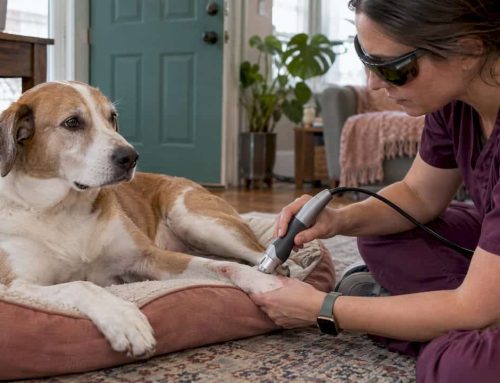
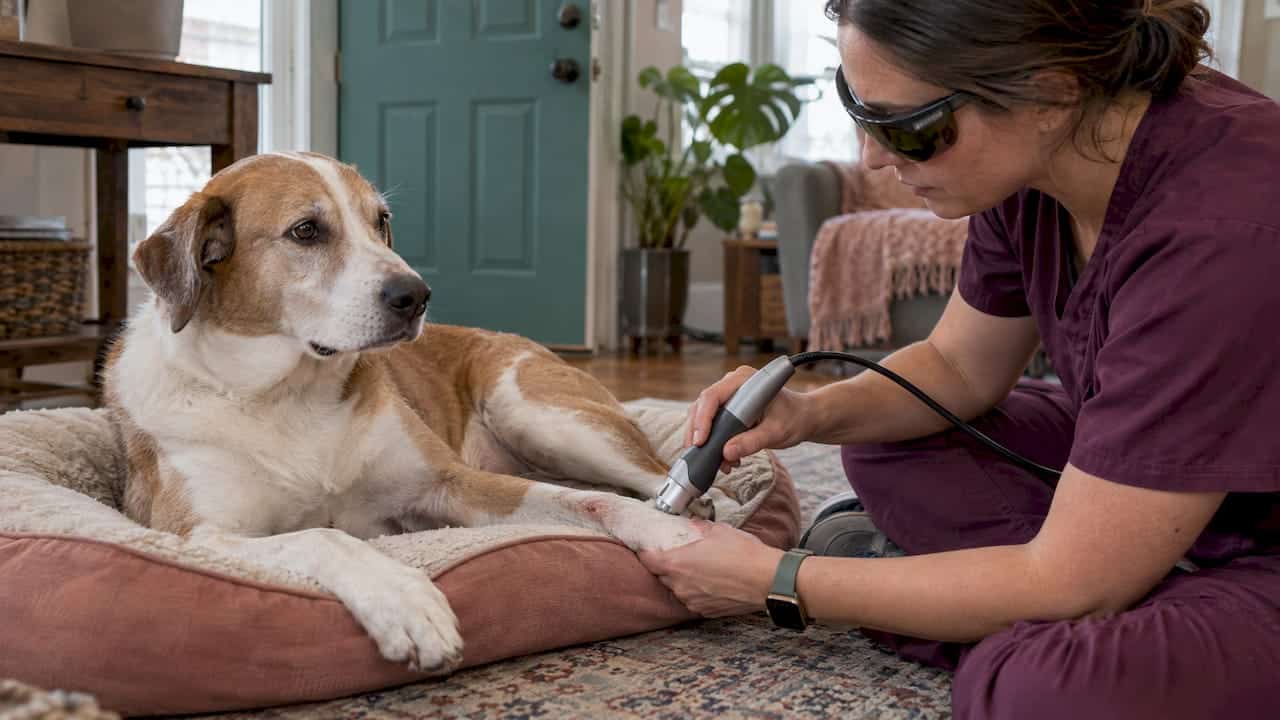
In practice, acupuncture and PEMF are not rivals. Acupuncture is a needle-based point therapy rooted in TCVM. PEMF is a device-based therapy. In our mobile practice we offer acupuncture, acupressure, electroacupuncture, aquapuncture, laser therapy, and rehabilitation, and we build the plan around your dog.
Choosing for a senior, disabled, or anxious dog
Think of Yin and Yang as shade and sunlight: a healthy body keeps both in balance. An older dog in chronic pain often has too much of the shade, with stiffness, cold sensitivity, and a tendency to withdraw. Our job is to bring warmth and movement back gently.
For most senior and anxious dogs, these factors point toward acupuncture and related gentle therapies:
- Comfort. Many dogs relax during acupuncture and acupressure. Dogs who dread the car and the waiting room can have it in their own living room.
- Fit with existing care. Acupuncture is used alongside medications and rehabilitation, not instead of your veterinarian’s plan.
- Diagnosis-led. We want to know whether we are treating arthritis, a disc problem, or something else.
- Low strain on fragile bodies. Needle, laser, and pressure-based approaches do not rely on spinal thrusts.
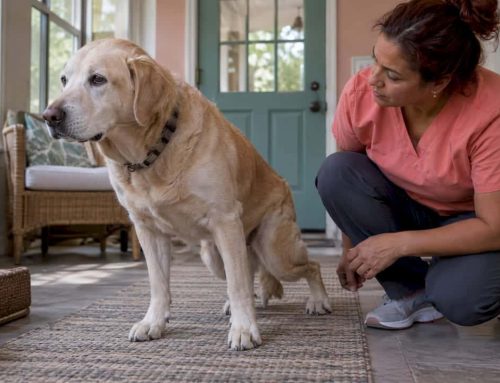
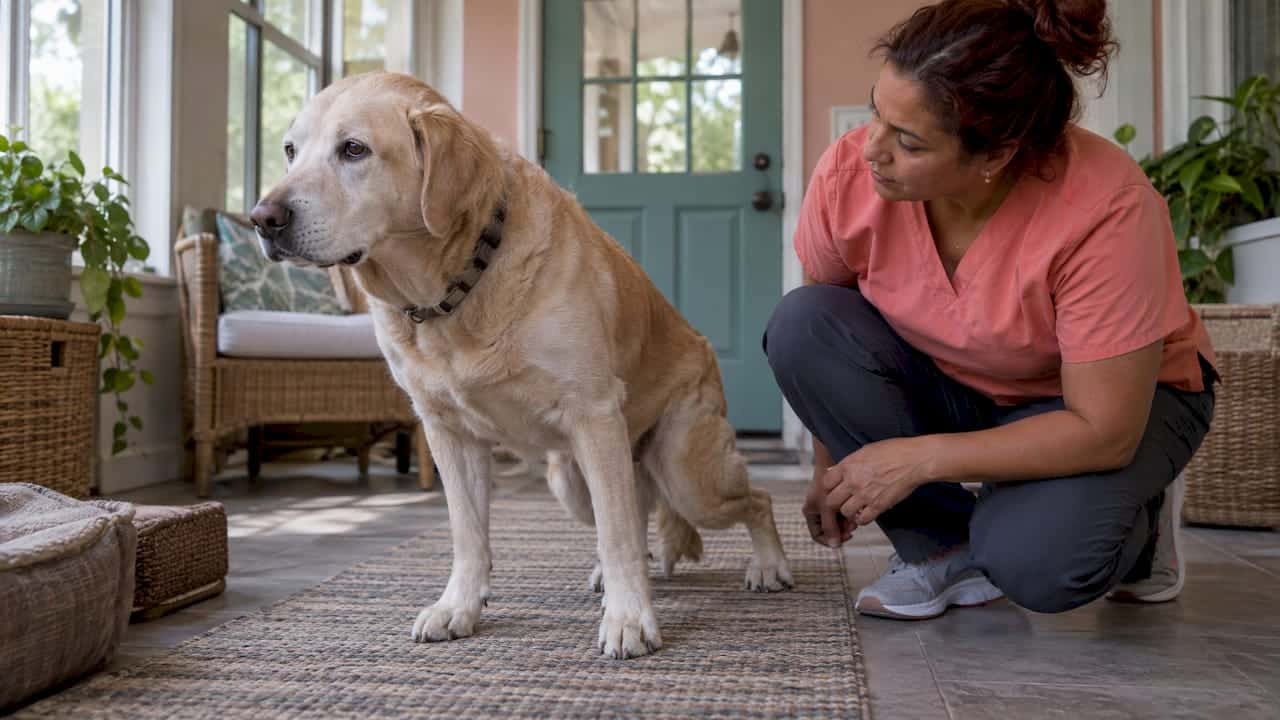
A few examples. An old Labrador with hip arthritis who slips on tile might do well with acupuncture, laser, and a home exercise routine. Our senior dog mobility routine and home physical therapy guide show what that looks like between visits. A small dog who panics at the clinic may be much calmer at home, and many owners also find senior dog mobility support products such as supportive bedding and grip aids helpful around the house. A dog with sudden weakness or pain in the back legs needs a veterinary exam first, because that can signal a disc problem that should not wait.
Watch for warning signs like crying out, dragging a paw, loss of bladder control, or refusing to walk. Those call for your veterinarian right away, before any alternative therapy. Our page on when to stop and call the vet lists more.
What a first visit looks like at home
A first visit with us is unhurried. We review your dog’s history and records, watch how they walk and rise, and talk through what you have noticed. Then we plan treatment. Your dog stays on a familiar bed, with familiar smells and your voice nearby. We do not rush a frightened dog. If your dog is wary, we go slowly and let them set the pace.

Between visits, we may suggest herbal therapy, food therapy, or a rehabilitation plan, and we keep your regular veterinarian informed so everything works together. If you are not sure whether your dog needs a house call first, a telemedicine visit can help you decide.
Cost: what to expect
Here are our published prices for common services, as listed on our cost of services page:
| Service | Published price |
|---|---|
| Initial assessment and acupuncture with a technician | from $430 |
| Technician mobile fee | $60 |
| Electroacupuncture | $30 |
| Laser treatments | $45 to $120 per treatment |
| At-home rehabilitation packages | $85 to $918 |
Acupressure, herbal therapy, food therapy, and telemedicine are also available; see the pages for details.
Our perspective
When owners ask us whether acupuncture or chiropractic is better, we start with a different question: what is your dog feeling, and what does your dog’s body need right now? For the senior, disabled, and anxious dogs we see in South Tampa, the answer is nearly always the gentlest approach that helps, delivered where your dog feels safest.
Acupuncture lets us work with the nervous system, calm the body, and support comfort and movement without forceful manipulation of a fragile spine. We pair it with acupressure, laser, herbal and food therapy, and rehabilitation so the plan fits one dog, not a category. We see integrative care as a partnership with your regular veterinarian, never a replacement.
Most of all, we believe a dog’s last years can be full of comfort. Seeing an older dog lift their head, wag, and take the stairs again is why we make house calls.
Pet Acupuncture & Wellness
Ready to help your dog move more comfortably?
If your dog is slowing down, hurting, or too anxious for clinic visits, our mobile team brings integrative care to your door in South Tampa. We offer acupuncture, electroacupuncture, laser therapy, rehabilitation, herbal and food therapy, and telemedicine, each tailored to your dog and coordinated with your regular veterinarian.

See our rehabilitation therapy and acupressure pages, or visit our home page to book a house call.
FAQ
Does a dog chiropractor work?
Some owners report improvement, but the research is limited. The Merck Veterinary Manual says well-designed studies in dogs are scarce and lists conditions where manipulation may be unsafe. Talk to your veterinarian first and get a diagnosis before any spinal manipulation.
Which is more effective for dogs, acupuncture or chiropractic?
There is more published veterinary research on acupuncture, especially as part of a multimodal plan for conditions like osteoarthritis and disc disease. Most evidence for chiropractic comes from horses and humans. The best choice depends on your dog’s diagnosis, and a veterinarian can help you match the therapy to the problem.
Can acupuncture and PEMF be used together?
They can be part of the same plan, since they work differently and guidelines list both among options for senior dogs with chronic musculoskeletal disease. Ask your veterinarian first if your dog has a pacemaker, a tumor, or a seizure history, because those affect PEMF safety.
Is acupuncture safe for an anxious or elderly dog?
Most dogs tolerate it well, particularly in a calm home setting. We keep sessions at your dog’s pace and tailor each plan to your dog’s health and medications. A veterinary exam beforehand makes sure it suits your dog.
Sources
- 2022 AAHA Pain Management Guidelines for Dogs and Cats
- AAHA: Veterinary Physical Rehabilitation
- AAHA 2023 Senior Care Guidelines: Pain Management
- Merck Veterinary Manual: Manual Therapy in Veterinary Patients
- Today’s Veterinary Practice: Manipulative Therapies for Hip and Back Hypomobility (2020)
- Today’s Veterinary Practice: Rehabilitation Modalities for Pain Management and Healing (2019)
- Miscioscia and Repac: Evidence-Based Complementary and Alternative Canine Medicine (2022)
- Veterinary Evidence: Assessing the efficacy of acupuncture as the sole analgesic (2024)
- AKC: PEMF Therapy for Dogs