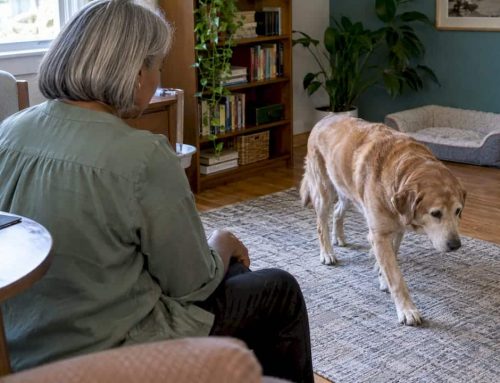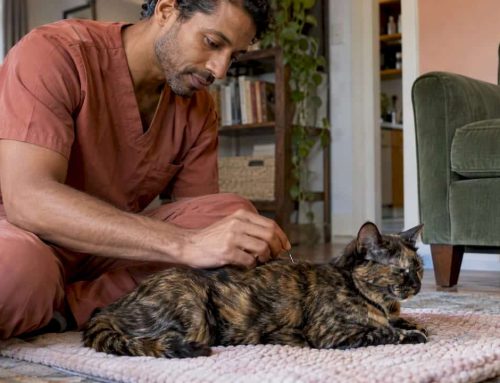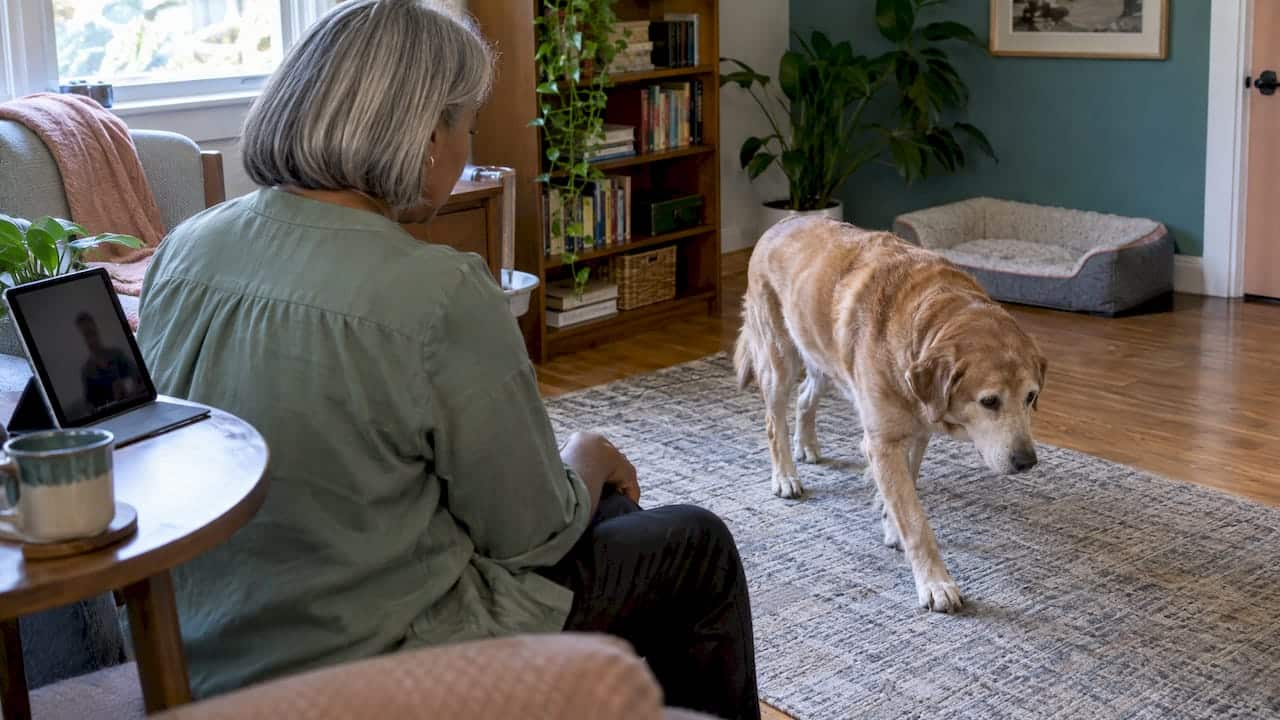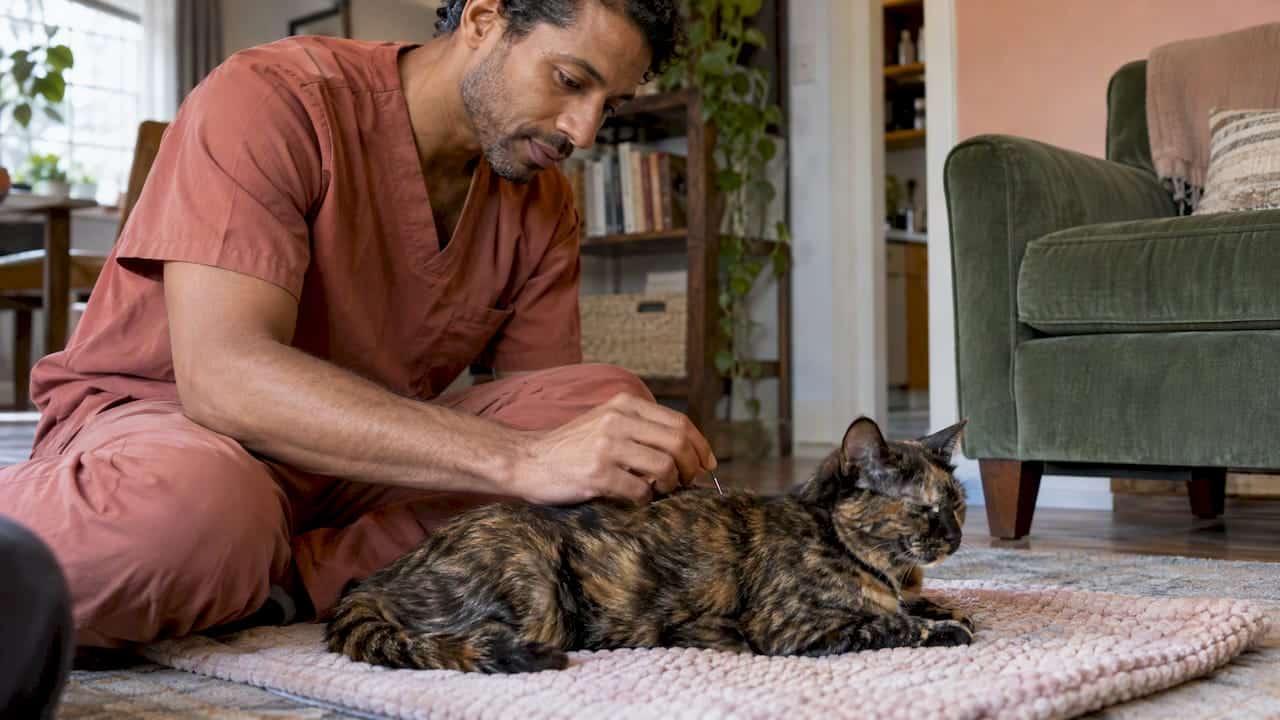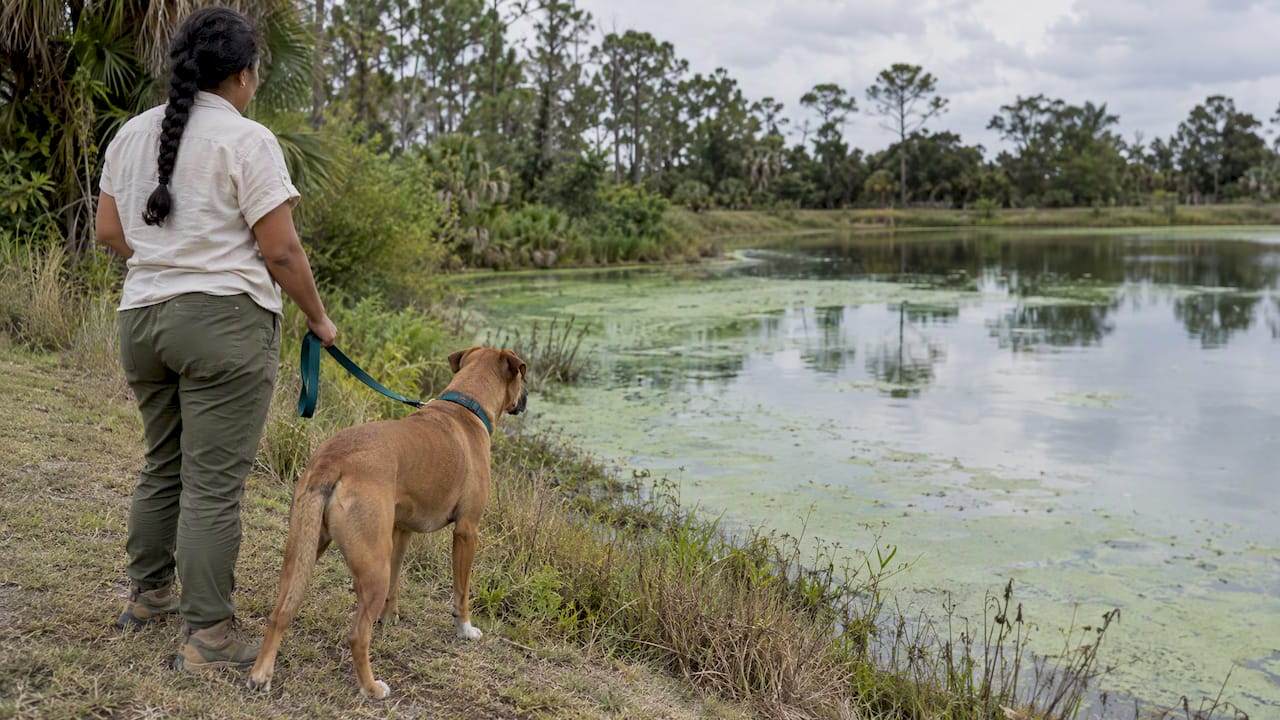
In-home canine rehabilitation brings a trained veterinary professional to your living room, so your dog can build strength, regain mobility and feel less pain without a car ride or a waiting room. For a senior dog with sore hips, a dog recovering from surgery, or a dog who panics at the clinic door, treatment on familiar floors is often the gentlest way to start. Here is how it works, who it helps, and what it costs in South Tampa.
TL;DR
- Rehabilitation can help arthritic dogs, dogs recovering from orthopedic surgery, and dogs with musculoskeletal or neurological problems move better and hurt less.
- At home, your therapist can adjust footing, ramps and routines to the actual rooms your dog lives in.
- Exercises should only be done with veterinary guidance, and a rehabilitation professional can teach you to do them correctly.
- Our published South Tampa pricing includes a $60 technician mobile fee, laser treatments at $45 to $120 each, and rehabilitation packages from $85 to $918.
- Start with a conversation with your regular veterinarian, then book an in-home assessment.
Table of Contents
- What in-home canine rehabilitation actually is
- Which dogs may benefit
- What treatments may be part of a plan
- How a plan is shaped around your home
- Exercises and routines between visits
- How often, and for how long
- What in-home rehabilitation costs in South Tampa
- Book an in-home assessment
- How to choose a rehabilitation provider
- FAQ
- Sources
What in-home canine rehabilitation actually is
Think of it as physical therapy for dogs, delivered where your dog already feels safe. The American Kennel Club notes that rehabilitation can help arthritic dogs, dogs recovering from orthopedic surgery, and dogs with musculoskeletal or neurological problems increase mobility and strength, recover faster and reduce chronic pain.
In a clinic, that work happens around unfamiliar smells, slick floors and other animals. At home, the same goals are pursued in a calmer setting. Your dog is not worn out from the drive, not trembling on a steel table, and not guarding a painful joint from a stranger’s hands. A relaxed dog is easier to examine, easier to treat and far more likely to cooperate with gentle exercises.
In-home care does not replace your dog’s regular veterinarian. It works alongside that care. Our approach is to complement what your vet has already diagnosed and prescribed, and to keep that vet informed.

Which dogs may benefit
PetMD explains that dogs recovering from surgery or injury, or living with long-term neurologic or neuromuscular conditions, may benefit from physical therapy, and that a veterinarian can advise whether it is suitable. In practice, the dogs we hear about most often include:
- Senior dogs with arthritis who hesitate on stairs, slip on tile, or take longer to stand up in the morning.
- Dogs after orthopedic surgery, such as a cruciate repair. If this is your situation, our guide to home rehab after TPLO and our article on cruciate injury home care walk through what recovery tends to look like.
- Dogs with limited use of their back legs, including those with neurological conditions. Our page on at-home rehab for paralyzed dogs covers this in more depth.
- Anxious or fearful dogs who become stressed by travel and clinic visits, and whose owners dread the trip as much as they do.
- Large dogs that are hard to move, where lifting a 90-pound Lab into a car is its own risk for your back and theirs.
If your dog has suddenly stopped bearing weight, cries out in pain, drags a paw, or loses control of the back legs, call your veterinarian or an emergency clinic first. Rehabilitation begins after a diagnosis, not instead of one.
What treatments may be part of a plan
According to PetMD, treatments can include hydrotherapy, manual therapy, therapeutic exercises, laser, ultrasound, and heat or cold therapy. The AKC adds that common options include massage and chiropractic techniques, exercise programs, laser, ultrasound, TENS and other electrical stimulation.
Not everything on that list travels to your house. Underwater treadmills need a specialized facility. What we bring to South Tampa homes is designed around what can be done well on your floors:
- Therapeutic exercises for strength, balance and range of motion
- Laser therapy for comfort and recovery
- Massage and acupressure
- Acupuncture and electroacupuncture, which pair naturally with rehabilitation
- Herbal and food therapy guidance rooted in Traditional Chinese Veterinary Medicine
- Telemedicine check-ins between visits
You can read about how these fit together in our rehabilitation therapy for pets guide or on our rehabilitation therapy page.
How a plan is shaped around your home
A good home plan starts with a walk through the house. Where does your dog slip? Which step is the hardest? Where does she sleep, and how does she get on the couch?
PetMD points out that at home, environmental modification can provide secure footing, or ramps and steps to areas that would otherwise be inaccessible. That is where in-home care has a real advantage: the therapist sees the actual hazards and fixes them on the spot.
After surgery, the AAHA pain management guidelines suggest considering a crate or gated area and safe footing such as carpet, rugs or yoga mats. Many Tampa homes have tile or terrazzo floors that look lovely and turn into skating rinks for a weak dog. Runners and non-slip mats along your dog’s regular paths are often the cheapest, fastest improvement you can make.

The same AAHA guidance notes that creative planning between an owner and a trained rehabilitation specialist can yield at-home alternatives to buying animal fitness equipment. Before you order a wobble board or a set of cavaletti poles, ask what can be built from towels, pillows and things you already own. If you do want equipment, our vet’s guide to dog rehabilitation equipment helps you sort what is worth buying.
Exercises and routines between visits
A session once in a while cannot do the whole job. What your dog does on the other days matters just as much.
A review in the academic literature describes home programs that may include strengthening, proprioceptive and balance exercises, massage and regular walking, tailored to the dog and the caregiver. It also says owners should be trained to perform prescribed exercises correctly. Therapeutic exercises target weak muscles and improve balance and limb use, and owners can do many of them at home with proper guidance.
The word that matters is guidance. PetMD is direct that exercises should not be attempted without veterinary guidance. Texas A&M’s veterinary team adds that owners may find it hard to get pets to do exercises correctly, and that a rehabilitationist can help make sure they are done safely and effectively. A dog who cheats, rushes or compensates with the wrong leg can undo the benefit.
Once your plan is in place, these guides can help you practice with confidence:
- Balance exercises for dogs, a safe start at home
- Joint range exercises for senior dogs, with a clear rule: stop at pain
- Home exercises after surgery
- Massage therapy for dogs with arthritis
- Our broader dog physical therapy at home guide
For an older dog with stiff joints, some owners also ask their veterinarian about a joint support supplement for dogs alongside a rehabilitation plan. Check with your vet before adding anything new, especially if your dog takes other medication.
Signs to stop and call
Stop an exercise and contact your veterinarian if your dog yelps, limps more than before, pants heavily, refuses food afterward, or seems worse the next morning. Mild muscle tiredness is one thing. Pain is a signal to pause, not push.
How often, and for how long
There is no single schedule. A dog recovering from orthopedic surgery usually needs a structured, progressive plan over weeks. A senior dog with arthritis may need more frequent visits at first, then a maintenance rhythm with home exercises in between. A dog with a neurological condition may need ongoing support.
What we can say honestly is that your plan should be built from your dog’s diagnosis, your veterinarian’s instructions, and how your dog responds. Expect your therapist to recheck progress and adjust, rather than hand you a fixed script. Telemedicine can bridge the gaps: our telemedicine visits for senior pets help decide whether a concern needs a house call or a clinic, and you can read about what pet telemedicine cannot do so your expectations are realistic.
What in-home rehabilitation costs in South Tampa
Cost depends on what your dog needs, how many sessions are involved, and travel to your home. These are the prices published on our cost of services page:
| Service | Published price |
|---|---|
| Initial assessment and acupuncture with a technician | From $430 |
| Technician mobile fee | $60 |
| Laser treatment (per treatment) | $45 to $120 |
| Electroacupuncture | $30 |
| At-home rehabilitation packages | $85 to $918 |
| Vitamin B12 injection | $31.50 |
The wide range on rehabilitation packages reflects how different dogs are. A short package for a dog needing a few guided sessions looks very different from a longer plan for a dog recovering from major surgery. Services such as acupressure, herbal therapy, food therapy and telemedicine do not have a published price, so we discuss those with you directly.
A few things shape your total:
- Diagnosis and goals. Post-surgical recovery and chronic conditions call for different plans.
- Number and type of sessions. Laser sessions are priced per treatment, while packages bundle visits.
- Combining therapies. Rehabilitation often pairs with laser or acupuncture.
- Equipment at home. Smart use of what you already have can reduce what you buy.
Prices are as published on our site and may be updated, so check the cost page before you book.
Our perspective
When we started doing house calls, what struck us was how much changed once the dog stopped being a patient in a strange room and became a dog in her own home. A senior Lab who will not walk across a clinic lobby will often stroll to her favorite rug and lie down for a treatment. The pain assessment is better, the handling is calmer, and the owner is no longer wrestling a sore dog into a car.
We believe rehabilitation works best when it is integrative. Exercises build strength and balance. Laser and acupuncture can help with comfort so the dog is willing to move. Herbal and food therapy, grounded in Traditional Chinese Veterinary Medicine, support the whole animal. Think of Qi as the energy that keeps everything flowing, and of a stuck joint as a traffic jam on the body’s highway system. Our job is to help traffic move again.
Most importantly, we work with your regular veterinarian, not around them. Your dog’s care stays coordinated, and you are never left guessing what to do on a Tuesday afternoon between visits.
Pet Acupuncture & Wellness
Book an in-home assessment
If your dog is slowing down, recovering from surgery, or dreading the car, we can come to you in South Tampa. Your first visit is an initial assessment, where we look at your dog’s history, movement and home setup, then build a plan with you. You can see what each visit includes on our rehabilitation therapy page.
Ready to talk through your dog’s needs? Visit Pet Acupuncture & Wellness to get started, and tell us what your veterinarian has already told you.
How to choose a rehabilitation provider
Credentials matter, because rehabilitation involves handling an animal that may be in pain. PetMD advises choosing a professional certified in animal physical rehabilitation, such as a CCRT, or a veterinarian board-certified by the American College of Veterinary Sports Medicine and Rehabilitation.
Beyond credentials, ask these questions:
- Will you coordinate with my dog’s regular veterinarian?
- Will you assess my home and recommend changes to footing and access?
- Will you teach me each exercise and watch me do it before I practice alone?
- How will we measure progress, and when will you adjust the plan?
- What does each visit cost, including any travel or mobile fee?
A provider who answers clearly and without pressure is a good sign. One who promises a cure is not.
FAQ
Is in-home rehabilitation as effective as going to a clinic?
For many dogs it can be a strong fit, especially when the goal is building strength, balance and comfort in the environment where the dog lives. Equipment such as underwater treadmills needs a facility, so your veterinarian can help decide what your dog needs. Many rehabilitation goals can be pursued with exercises, laser, manual therapy and home adjustments.
Can I do the exercises myself without a therapist?
Not safely on your own. Exercises should only be done with veterinary guidance, and owners often find it hard to get a dog to perform them correctly. A rehabilitation professional can train you so that you practice them properly between visits.
How much does canine rehabilitation cost in Tampa?
Our published in-home rehabilitation packages range from $85 to $918, with a $60 technician mobile fee and laser treatments at $45 to $120 each. The initial assessment with acupuncture starts at $430. See our cost of services page for current figures.
Should I talk to my veterinarian first?
Yes. A veterinarian can confirm the diagnosis and advise whether physical therapy is suitable for your dog. We work alongside your regular vet, so sharing records and instructions makes the plan safer and more effective.
Sources
- Canine Rehabilitation Therapy: What to Know, American Kennel Club
- Dog Physical Therapy: Everything a Pet Parent Should Know, PetMD
- Exploring Physical Rehabilitation For Dogs, Texas A&M University
- Physiotherapeutic Strategies and Their Current Evidence, PubMed Central
- Nonpharmacologic Modalities for Pain Management, AAHA