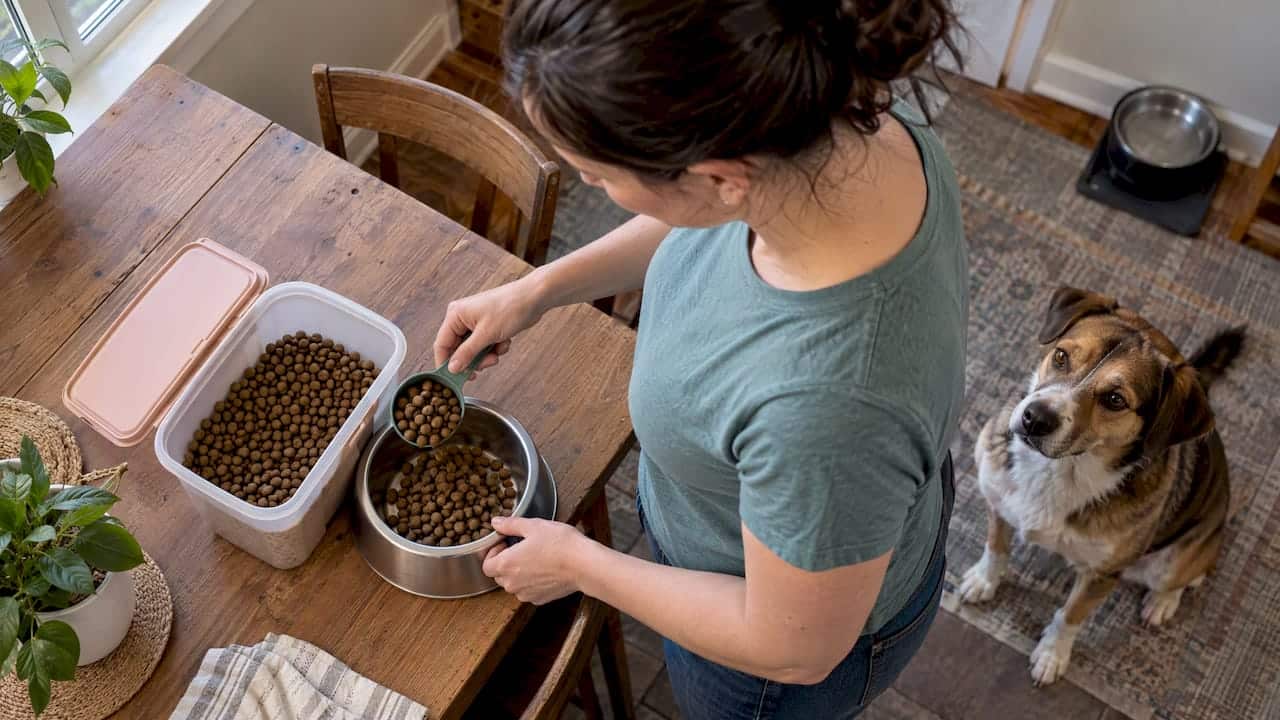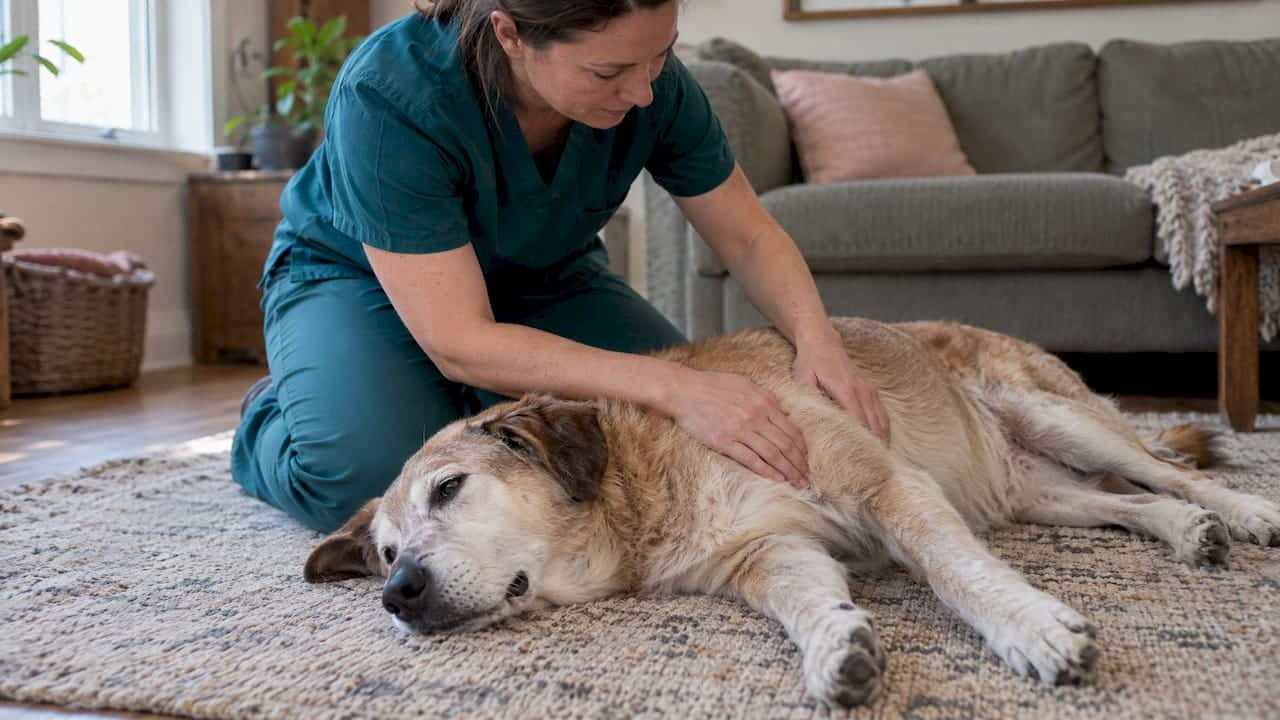
In-home dog palliative care is veterinarian-guided pain and symptom management delivered where your dog feels safest, with hospice as the final stage. AAHA and the AVMA both recognize end-of-life care at home as appropriate. Your first step is simple: call your veterinarian, or ask us for an at-home assessment or telemedicine triage.
TL;DR:
- The first visit should produce a written plan with goals, medication doses, care tasks, comfort checks, and emergency contacts; bring a video of bad symptoms.
- A flare plan should list warning signs, medication and dose, expected improvement within 24 to 48 hours, and when to call or seek emergency care.
- Use rugs, raised bowls, ramps, and supportive bedding, then score comfort at the same time daily and after treatment changes rather than relying on memory.
- Plan hospice decisions before a crisis: guidelines report 30% of owners experience substantial grief and 50% later question their choices.
- Pet Acupuncture & Wellness lists an initial assessment and technician acupuncture from $430 USD, plus a $60 mobile fee; other costs depend on services.
Table of Contents
- What palliative care and hospice mean for dogs
- How to create a personalized at-home palliative plan with your veterinarian
- Managing pain, medications, and crisis planning at home
- Home changes and daily routines that improve comfort
- When hospice and in-home euthanasia become options
- What a quality in-home integrative veterinary practice offers
- Why veterinary-led comfort at home matters to us
- How we support your dog’s palliative care at home
- FAQ
- Sources
What palliative care and hospice mean for dogs
Palliative care is for dogs living with chronic, progressive or terminal illness. It focuses on pain and symptom relief and can run alongside treatments aimed at slowing or curing disease. Hospice is the end stage of that same umbrella, and it adds planning for decline, crisis management and the final event, whether that is euthanasia or a palliated death, according to AAHA’s definitions.
You do not have to choose between comfort and treatment. Good at-home programs commonly include:
- Pain and symptom management with prescribed medications
- Nursing care such as wound, hydration and mobility support
- Telemedicine check-ins between visits
- Planning for in-home euthanasia when the time comes
The decisions are shared. We work with your dog’s primary veterinarian, and the team documents your goals, the medication plan, your daily tasks and who to call. That written record keeps everyone pulling in the same direction, especially during a hard week.
How to create a personalized at-home palliative plan with your veterinarian
The first palliative visit runs longer than a routine exam. According to the 2023 AAHA Senior Care Guidelines for Dogs, it should include a full history, a physical exam, pain assessment and shared goal-setting, ending in a written plan for home care and crises.
Ask that your plan include these pieces:
- Goals: what a good day looks like for your dog, such as eating, greeting you or walking to the yard.
- Daily medications: names, doses and timing.
- Nursing tasks: who does what, such as assisted standing, skin checks or syringe feeding.
- Monitoring schedule: when you score comfort and when rechecks happen.
- Emergency contacts: your veterinarian, an after-hours option and the nearest emergency hospital.
You are the caregiver, so you deserve hands-on training for every task. The 2016 AAHA/IAAHPC guidelines note that hospice happens almost entirely at home, which means clear documentation and training lower caregiver stress.
Pro Tip: Bring a short video of your dog on a bad day. It shows your veterinarian what the exam room often hides.
Managing pain, medications, and crisis planning at home
Ask your veterinarian which pain-management options are appropriate for your dog, and how the plan can support comfort.
The part owners underestimate is the flare plan. AAHA’s crisis-proofing guidance calls for a written, rehearsed plan that spells out:
- The signs of a flare, such as panting at rest, crying or refusing food
- The first-line medication and dose to give
- How long improvement should take, typically within 24 to 48 hours
- When to call your veterinarian versus go straight to emergency care
A written, rehearsed flare plan can help you respond more calmly during a crisis. It turns panic into a checklist.
Controlled drugs add a wrinkle. Some practices send home an emergency medication kit where state rules allow it. Where take-home opioids are not permitted, ask your veterinarian for the alternative route, such as a rapid in-home visit or a non-opioid backup.
Pro Tip: Tape the flare plan inside a kitchen cabinet and rehearse it once, aloud, with everyone in the house.
For more on keeping your dog comfortable day to day, see our guide to at-home dog pain relief.
Home changes and daily routines that improve comfort
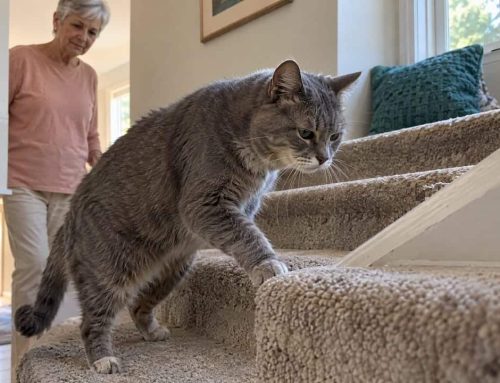
Small changes add up quickly. AAHA’s senior care guidance points to easier access to food and water, rugs or mats for traction, ramps, padded bedding and a comfortable room temperature.
Start with what your dog uses most:
- Lay runners or yoga mats over slick floors
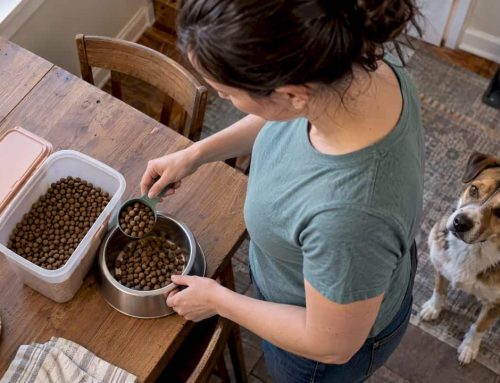
- Raise bowls so your dog does not strain the neck
- Add a ramp for the car or the couch
- Give thick, supportive bedding away from drafts
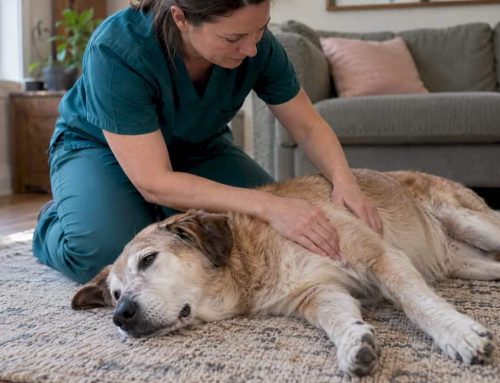
Daily care matters just as much; for helping your dog stay calm and comfortable during these routines, see advice on addressing dog separation anxiety. Offer gentle, short walks, help your dog stand and toilet when needed, and keep the coat and skin clean. Soft massage or acupressure can feel soothing when your veterinarian shows you how.
Track comfort with a structured scale, not memory alone. AAHA explains that tools like CBPI, LOAD and CSU give you shared vocabulary and trend lines that catch decline earlier when you score before every recheck and after any change in treatment. Also watch for joy: veterinary insight reminds us to look at your dog’s capacity for engagement, not just clinical markers.
Pro Tip: Score at the same time each day, such as after breakfast, so the numbers compare fairly.
When hospice and in-home euthanasia become options
Hospice is the end stage of palliative care, and the 2023 AAHA Senior Care Guidelines for Dogs describe it as including the plan for the final event. The AVMA confirms that euthanasia at home is an option under veterinary expertise, with your dog’s comfort always coming first.
At a home visit, expect these steps:
- A quiet, private setting you choose, such as a favorite bed or the yard
Ask the veterinarian to explain the available options, what to expect during the visit and the aftercare arrangements.
Plan early. The 2016 AAHA/IAAHPC guidelines report that 30% of owners feel substantial grief and 50% question their decisions afterward. Choosing signs and a decision point in advance, while your dog is still having good days, spares you from deciding in a crisis.
What a quality in-home integrative veterinary practice offers
A trustworthy provider shows its work. Look for veterinarian oversight, a written plan, QOL scoring, a crisis protocol, grief referrals and open communication with your primary veterinarian, all themes of the 2016 AAHA/IAAHPC guidelines.
Ask whether integrative services such as acupuncture, laser or rehabilitation may be appropriate alongside your dog’s pain-management plan. When you first call, ask who the supervising veterinarian is, what happens after hours, how often you will be rechecked and how they will coordinate with your regular clinic. Our approach to senior dog pain relief follows these same principles.
Why veterinary-led comfort at home matters to us
We have seen how much a dog relaxes on a familiar rug, with a family nearby and no car ride ahead. Home care lets us build a plan around your dog’s habits, not a clinic schedule, and it keeps your regular veterinarian in the loop.
These decisions are painful, and we do not pretend otherwise. Planning ahead gives you room to enjoy good days without dreading the next crisis. If you are unsure where to begin, talk to us about your dog’s goals. Ask about consultation options and any fees, and discuss what support may be available.
— Pet Acupuncture & Wellness
How we support your dog’s palliative care at home
We bring integrative care to your living room. Services relevant to comfort care include an initial assessment with acupuncture, electroacupuncture, at-home rehabilitation therapy, injectable medications and telemedicine. For pricing, the initial assessment and acupuncture with a technician starts at 430 USD, and our full list is on our cost of services page.
At the first visit, we review your dog’s history, assess pain and comfort, and talk through your goals. We then share our findings with your primary veterinarian. If you want a lower-friction start, our telemedicine visits let us triage your questions first. Book an at-home assessment or a telemedicine visit through Pet Acupuncture & Wellness today.
This article is general information, not a substitute for advice from a qualified doctor. Consult a qualified healthcare professional about your own circumstances before acting on anything here.

FAQ
What should I do before putting my dog down?
Talk with your veterinarian about comfort, timing and logistics well ahead of the day. Decide where it will happen, who will be present and what aftercare you want. Planning in advance reduces regret, which AAHA/IAAHPC guidance links to anticipatory grief support.
How long can a dog live with palliative care?
It depends on the illness, and no one can promise a number. Palliative care aims to protect comfort and quality of life, and it can run alongside other treatments. Your veterinarian can give an honest outlook for your dog’s diagnosis.
How much does palliative care cost for dogs?
Cost depends on the services your dog needs. For our own work, an initial assessment and acupuncture with a technician starts at 430 USD, and a technician mobile fee of 60 USD applies, both listed on our cost of services page.
How do I care for a dying dog at home?
Keep your dog warm, clean, hydrated and close to family, and follow the written medication and flare plan. Track comfort with a QOL scale and call your veterinarian when signs shift.