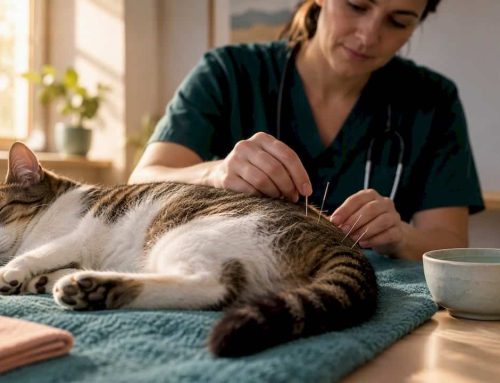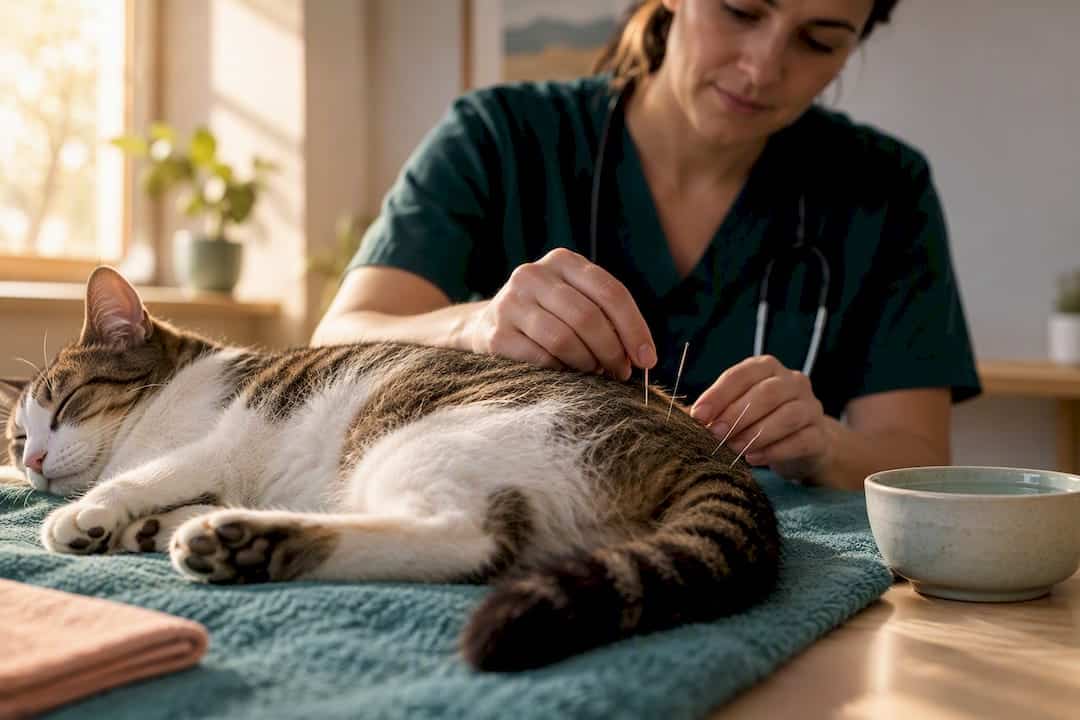
Acupuncture can help support a cat with kidney disease by improving appetite, easing nausea, and enhancing comfort. It is not a cure and it does not replace renal diets, fluid therapy, or blood pressure medication. Used alongside your veterinarian’s core treatment plan, it can be a gentle, evidence-aligned way to support your cat’s quality of life at every stage of chronic kidney disease.
TL;DR:
- Acupuncture primarily supports appetite, nausea, and comfort but does not significantly alter creatinine levels in cats with CKD.
- It is most effective when integrated with core medical treatments like renal diets, fluids, and blood pressure control.
- Limited high-quality research exists, and most evidence comes from small studies and clinical experience; large trials are lacking.
- In-home acupuncture reduces stress for senior cats and allows ongoing adjustment in coordination with your veterinarian.
- Expect sessions to cost around $430 for initial assessment plus $60 for home visits, with treatment focusing on quality-of-life improvements rather than reversing kidney damage.
Table of Contents
- Cat Kidney Disease Acupuncture as Part of an Integrative Plan
- What the Research and Major Guidelines Actually Say
- How Acupuncture May Help: Mechanisms and Realistic Outcomes
- What Acupuncture Sessions Actually Look Like
- Safety, Contraindications, and Working With Your Veterinarian
- Supporting Your Cat Between Sessions
- Our Perspective on In-Home Integrative Care for CKD Cats
- Getting Started With In-Home Acupuncture Support
- Sources
- FAQ
Cat Kidney Disease Acupuncture as Part of an Integrative Plan
Chronic kidney disease, often shortened to CKD, is a slow, progressive condition that affects a striking number of older cats. Estimates suggest a significant portion of cats over age 15 have some degree of it, according to the Cornell Feline Health Center. It is generally not reversible, but with the right combination of therapies, many cats live comfortably for months or years after diagnosis.
The foundation of that care is medical, not holistic. Veterinarians managing feline CKD lean on staging systems from the International Renal Interest Society (IRIS) to guide treatment decisions based on bloodwork and blood pressure readings. Core interventions typically include:
- A therapeutic renal diet, formulated to reduce phosphorus and protein load on the kidneys
- Subcutaneous or intravenous fluids to manage hydration
- Blood pressure medication when hypertension is present
- Phosphate binders and potassium supplementation as bloodwork dictates
- Regular monitoring of creatinine, SDMA, and urine specific gravity
This is where acupuncture, herbal medicine, and acupressure enter the picture, not as replacements but as supportive layers. Think of the renal diet and medications as the structural repairs on a house, and acupuncture as the work that makes the house feel like home again: better appetite, less nausea, a calmer nervous system. Cat kidney disease acupuncture works best when your veterinarian and your acupuncture provider are reading from the same chart, adjusting as lab values shift and your cat’s needs change.
What the Research and Major Guidelines Actually Say
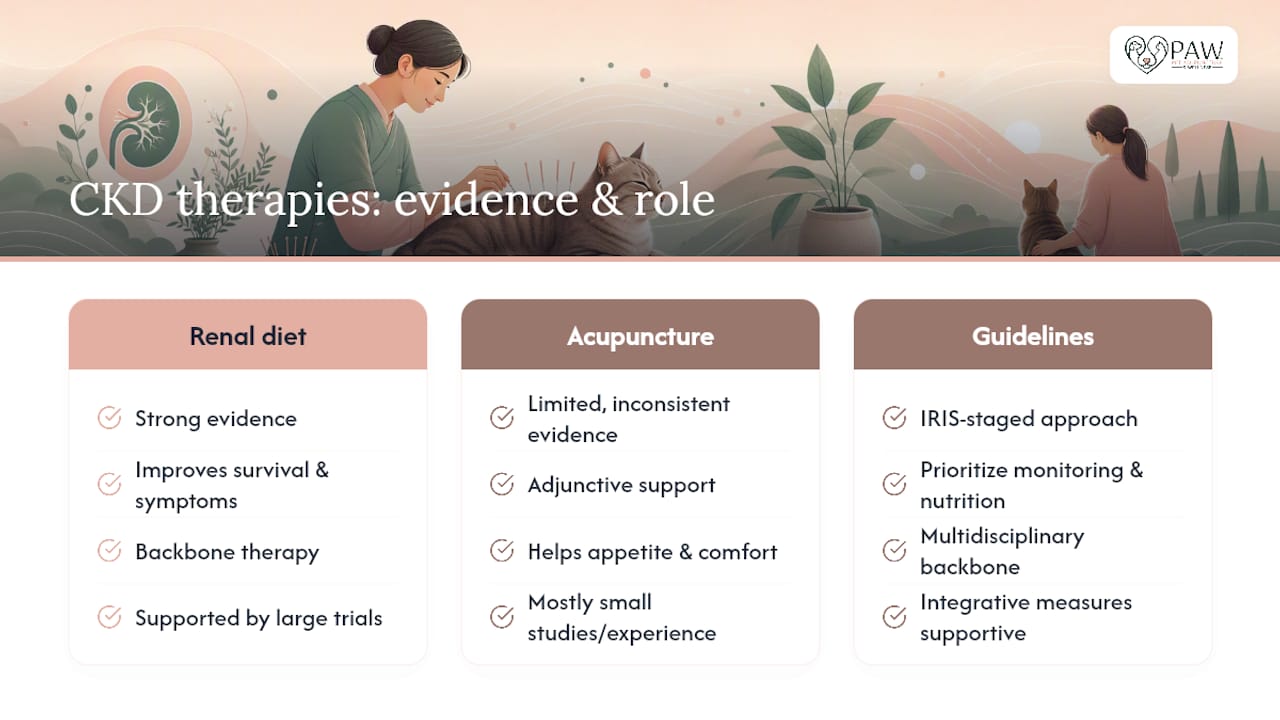
Cat owners deserve a straight answer here, not marketing language. A systematic review of therapies for feline CKD found that therapeutic renal diets carry the strongest evidence for improving outcomes, while many adjunctive therapies, acupuncture among them, have limited or inconsistent research behind them. That does not mean acupuncture does nothing. It means the scientific literature has not yet produced the kind of large, controlled trials that exist for renal nutrition.
Evidence quality varies sharply across CKD therapies. Renal diets show the clearest survival and symptom benefits, while many complementary approaches rest on smaller studies, case series, or clinical experience rather than large trials.
The 2026 iCatCare consensus guidelines reinforce this hierarchy. Their staged approach uses IRIS criteria to time interventions, and it treats monitoring, nutrition, and multidisciplinary collaboration as the backbone of management. Integrative measures like acupuncture get a place in the plan, but as support for wellbeing, not as a substitute for medical therapy.
Cornell’s guidance lands in a similar spot: CKD tends to progress regardless of what supportive care is added, but appropriate monitoring paired with medical management lets many cats maintain a good quality of life for a meaningful stretch of time. Complementary therapies, when layered on top of that foundation, may help with symptom control, particularly appetite and comfort.
Here is the honest limitation worth sitting with: most of the acupuncture-specific data for feline CKD comes from clinical experience and smaller studies rather than the kind of randomized trials that back the renal diet recommendation. Owners should expect acupuncture to help with comfort and appetite, not to move creatinine numbers on its own. Quality-of-life gains are a legitimate goal even when lab values shift slowly, which is exactly the outcome many owners care about most.
How Acupuncture May Help: Mechanisms and Realistic Outcomes
Acupuncture works by stimulating specific points along the body, and in veterinary medicine, the proposed mechanisms include modulation of the nervous and immune systems, activation of pathways that influence nausea and appetite, and localized release of natural pain-relieving compounds. For a cat with CKD, that translates into a few plausible, realistic benefits rather than a dramatic turnaround.
Owners who use acupuncture as part of their cat’s CKD plan often report:
- Improved appetite, which matters enormously for a species prone to hepatic lipidosis when they stop eating
- Reduced nausea and less frequent vomiting
- Better energy and willingness to move around the house
- A calmer, more relaxed demeanor during and after treatment
These are owner-observed patterns, not guaranteed outcomes, and they vary from cat to cat. A veterinary acupuncturist may use several techniques depending on your cat’s temperament and clinical picture: manual acupuncture with fine needles, electroacupuncture (mild electrical stimulation through the needles), aquapuncture (injecting small amounts of vitamin B12 or saline at acupoints), and acupressure, which uses gentle finger pressure instead of needles.
Pro Tip: Keep a simple log of appetite, energy, and litter box habits before starting acupuncture. Two weeks of baseline notes make it far easier to tell whether the sessions are actually helping, rather than guessing from memory.
What Acupuncture Sessions Actually Look Like
A first appointment usually starts with a conversation, a physical exam, and a review of recent bloodwork before any needles come out. From there, most veterinary acupuncturists recommend a defined trial period rather than an open-ended commitment.
- Initial assessment. The practitioner reviews IRIS stage, current medications, hydration status, and comfort level to build a treatment plan specific to your cat.
- Starting course. A common approach is three to six weekly sessions, followed by a reassessment of appetite, energy, and any measurable lab changes your primary vet is tracking.
- Maintenance phase. If your cat responds well, sessions often taper to every two to four weeks, adjusted based on how your cat’s CKD progresses.
- Ongoing coordination. Results get shared back with your primary veterinarian so the acupuncture plan and the medical plan stay aligned.
Cost varies by region, whether you visit a clinic or use a mobile provider, and what additional services are bundled in. As a general range, expect an initial acupuncture assessment to run several hundred dollars, with follow-up sessions typically priced lower once a plan is established. The goals worth tracking alongside cost are concrete: appetite and weight trends, hydration status, activity level, and the lab markers your vet already monitors, like creatinine and SDMA.
Safety, Contraindications, and Working With Your Veterinarian
Acupuncture is generally considered low risk when performed by a properly trained practitioner, but CKD adds a layer of nuance that a general wellness cat does not have. Many veterinary acupuncturists prefer to confirm that hydration status and blood pressure are reasonably controlled before needling, and they may adjust point selection and stimulation intensity for a cat with active azotemia.
Situations that call for stabilization first, not acupuncture first, include:
- Severe dehydration or an acute kidney injury layered on top of chronic disease
- Uncontrolled hypertension
- A cat in active crisis with vomiting, collapse, or extreme lethargy
Credentialing matters here more than almost anywhere else in holistic pet care. Look for a DVM who has completed formal certified training through a recognized body, such as IVAS, WATCVM, or one listed with the American Academy of Veterinary Acupuncture. A licensed veterinarian with acupuncture certification understands both the needle technique and the underlying kidney pathology, which matters when adjusting a plan around fragile bloodwork.
| Coordination Step | Why It Matters |
|---|---|
| Share recent labs (creatinine, SDMA, blood pressure) | Guides safe point selection and session intensity |
| List all current medications and supplements | Prevents overlapping effects being misattributed to acupuncture |
| Report any new symptoms immediately | Distinguishes disease progression from treatment response |
| Keep one primary vet informed of all changes | Avoids conflicting adjustments to diet, fluids, or meds |
Supporting Your Cat Between Sessions
Some of the most meaningful support happens at home, not in a treatment room. Gentle acupressure, taught by a qualified practitioner, can be a safe way to extend comfort between visits. Focus stays on light, non-invasive pressure at practitioner-recommended points, never anything that causes your cat to pull away or seem uncomfortable.
A few habits that reinforce professional care:
- Offer fresh water in multiple locations, and consider a pet fountain if your cat prefers moving water
- Discuss appetite stimulants with your vet if interest in food drops for more than a day
- Keep feeding areas calm and low stress, away from foot traffic or other pets
- Maintain the renal diet consistently, since gradual transitions work better than abrupt changes
Contact your veterinarian promptly if you notice a sudden drop in appetite, repeated vomiting, or noticeable lethargy. These signs need medical evaluation, not just an extra acupressure session.
Pro Tip: Ask your acupuncturist to show you one or two safe pressure points during a session. Owners who practice a technique or two at home tend to stick with the overall plan longer, and it gives you something concrete to do for your cat between visits.
Our Perspective on In-Home Integrative Care for CKD Cats
Cats with kidney disease are often older, sometimes fragile, and almost always stressed by car rides and waiting rooms. That stress alone can skew blood pressure readings and make a vet visit counterproductive for the very condition you are trying to manage. Pet Acupuncture & Wellness built its model around that reality, bringing acupuncture and related therapies directly into the home instead of asking a compromised cat to travel.
That approach lines up with what CKD management actually requires: consistency, low stress, and close coordination with your primary veterinarian rather than a separate, siloed treatment track. Services like acupuncture, aquapuncture, vitamin B12 injections, telemedicine consultations, and food and herbal therapy can be woven into a plan built around your cat’s specific IRIS stage and lab trends. Treatment plans are personalized to your cat’s home environment and health status, and the practice works alongside your existing veterinarian rather than replacing that relationship.
For a senior cat already managing multiple medications and a renal diet, removing the added stress of transport is not a minor convenience. It is often the difference between a treatment plan your cat tolerates and one that fights you every step of the way.
— Pet Acupuncture & Wellness
Getting Started With In-Home Acupuncture Support
If your cat has been diagnosed with CKD and your veterinarian is open to complementary care, in-home acupuncture removes the single biggest obstacle most owners face: getting a stressed, fragile cat safely to and from a clinic. This care can be brought to your home, working around your cat’s routine instead of the other way around.
Before your first visit, gather what your acupuncturist will need: recent bloodwork (creatinine, SDMA, blood pressure if available), a current medication and supplement list, and a few notes on recent appetite and water intake. If you are unsure whether your cat is a good candidate, a telemedicine consultation is a low-pressure way to talk through your cat’s history before booking an in-person visit.
The initial assessment and acupuncture session with a technician starts at $430 and includes a full review of your cat’s health history, current CKD stage, and a personalized treatment plan built around what your primary vet is already doing. A $60 mobile fee covers the visit itself, bringing the care to your cat instead of the reverse. If diet is part of the conversation too, Pet Acupuncture & Wellness’s food therapy service can help align nutrition with your cat’s renal needs. Reach out to schedule an initial assessment and find out whether acupuncture belongs in your cat’s care plan.
This article is general information, not a substitute for advice from a qualified doctor. Consult a qualified healthcare professional about your own circumstances before acting on anything here.
Sources
- Therapies for Feline Chronic Kidney Disease: What is the Evidence? – PMC
- 2026 iCatCare consensus guidelines on the diagnosis and management of chronic kidney disease in cats
- Cornell Feline Health Center — Chronic kidney disease (CKD) in cats
FAQ
Can Kidney Disease in Cats Be Reversed?
No, chronic kidney disease in cats is generally progressive and not reversible once kidney tissue has been damaged. With consistent management, including renal diet, hydration support, and monitoring, many cats maintain good quality of life for months to years after diagnosis.
How Much Does Cat Acupuncture Cost?
Pricing varies by provider and region, but with Pet Acupuncture & Wellness, an initial assessment and acupuncture session starts at $430, plus a $60 mobile fee for in-home visits. Follow-up electroacupuncture sessions are priced separately, and exact current rates are always listed on the practice’s cost page.
How Long Can a Cat Live With CKD?
Life expectancy after a CKD diagnosis depends heavily on the IRIS stage at diagnosis and how consistently the treatment plan is followed, but many cats live for a meaningful stretch of time with proper care. Cornell notes that appropriate monitoring and management often allow cats to maintain good quality of life for months or years rather than declining rapidly.
Can I Lower My Cat’s Creatinine Naturally?
Therapeutic renal diets have the strongest evidence for supporting kidney function and slowing disease markers, according to a systematic review of feline CKD therapies. Hydration support and consistent veterinary monitoring matter too, but no home remedy or supplement has been shown to reliably lower creatinine on its own, so any natural approach should be discussed with your veterinarian first.