Feline hyperesthesia syndrome (FHS) is a diagnosis of exclusion marked by short bursts of rippling skin, frantic self-grooming, and sometimes tail chasing. If your cat is drawing blood or biting at their own body, that’s an emergency, not a wait-and-see situation. Otherwise, your path forward runs through your vet’s rule-out workup, then a combination of behavioral changes, medication if needed, and gentle supportive therapies.
TL;DR:
- Most cats with hyperesthesia respond well to a combination of behavioral modifications and medication, with 82% achieving long-term symptom-free periods.
- Episodes often involve rippling skin, frantic grooming, and tail chasing, occurring suddenly and lasting only a short time, which makes capturing videos crucial for diagnosis.
- Veterinarians diagnose FHS by ruling out allergies, parasites, skin conditions, and neurological issues, relying on symptom logs and physical exams.
- Home environment improvements, such as added vertical space and consistent routines, can significantly reduce episode frequency and severity.
- Integrative therapies like acupuncture and manual treatments may support anxiety reduction, especially for cats sensitive to clinic visits or difficult to medicate.
Table of Contents
- What Does Feline Hyperesthesia Look Like in Practice?
- What Should You Do the Moment You See an Episode?
- How Do Vets Diagnose FHS as a Diagnosis of Exclusion?
- What Treatments Actually Help Cats With Hyperesthesia?
- What Can You Change at Home to Reduce Episodes?
- Can Integrative Therapies Support a Sensitive Cat at Home?
- How Long Until Your Cat Actually Improves?
- Why Home-Based Care Changes the Equation for Sensitive Cats
- How Pet Acupuncture & Wellness Supports Cats With Hyperesthesia
- Sources
- FAQ
What Does Feline Hyperesthesia Look Like in Practice?
Recognizing FHS starts with watching for a specific cluster of signs, not just “weird cat behavior.” The skin along your cat’s back and flanks may ripple or twitch as if a fly landed on it, even when nothing is there. Episodes are usually short, often 30 seconds to a few minutes, and they tend to end abruptly rather than winding down like normal play.
Watch for:
- Rippling or twitching skin along the lower back and flanks
- Sudden, intense licking or biting at the flank, tail, or lower back
- Bursts of frantic running, jumping, or “possessed” behavior
- Loud vocalization, dilated pupils, or a dazed look mid-episode
- Tail chasing or self-directed biting that leaves marks or bald patches
Ordinary play has a buildup and a natural end. FHS episodes often come out of nowhere and stop just as fast, sometimes followed by your cat seeming confused or startled by their own tail. Start a simple log: date, time, what happened right before, how long it lasted. A short phone video of an actual episode is one of the most useful things you can bring to a veterinary appointment.
What Should You Do the Moment You See an Episode?
Your first job during an active episode is to keep your cat from hurting themselves further, not to physically restrain them, which usually backfires and raises their stress level.
- Move nearby objects out of the way and let the episode run its course in a safe, contained room.
- Once your cat has calmed down, gently check for broken skin, missing fur, or bleeding at the tail or flank.
- Call your regular vet the same day if you see self-inflicted wounds, limping, disorientation, or repeated episodes within hours.
- Go to an emergency clinic immediately if there’s heavy bleeding, seizure activity, or your cat seems unable to stand normally afterward.
- Separate other pets from the affected cat temporarily if episodes seem to escalate around them.
A soft e-collar can prevent further self-trauma between episodes, but only use one under your vet’s guidance since it can raise anxiety in some cats.
Pro Tip: Film episodes in landscape mode and narrate what happened just before it started (a loud noise, another cat walking by, you’re petting near the tail). That fifteen-second clip often tells your vet more than a five-minute verbal description.
How Do Vets Diagnose FHS as a Diagnosis of Exclusion?
FHS has no blood test or scan that confirms it. Vets diagnose it by systematically ruling out everything else that could explain the same signs, which is why the workup can feel slower than owners expect. The Cornell Feline Health Center frames anxiety and stress as contributors that need to be addressed directly, but only after physical causes are cleared.
A typical initial visit includes a skin exam and cytology to check for allergies or parasites, a thorough flea check, bloodwork, and often a fecal test. If your cat’s history or exam points toward itch or dermatologic disease, your vet may try a trial of prednisolone, ciclosporin, or oclacitinib alongside stricter flea control, since resolving an underlying skin condition can eliminate the hyperesthetic behavior entirely.
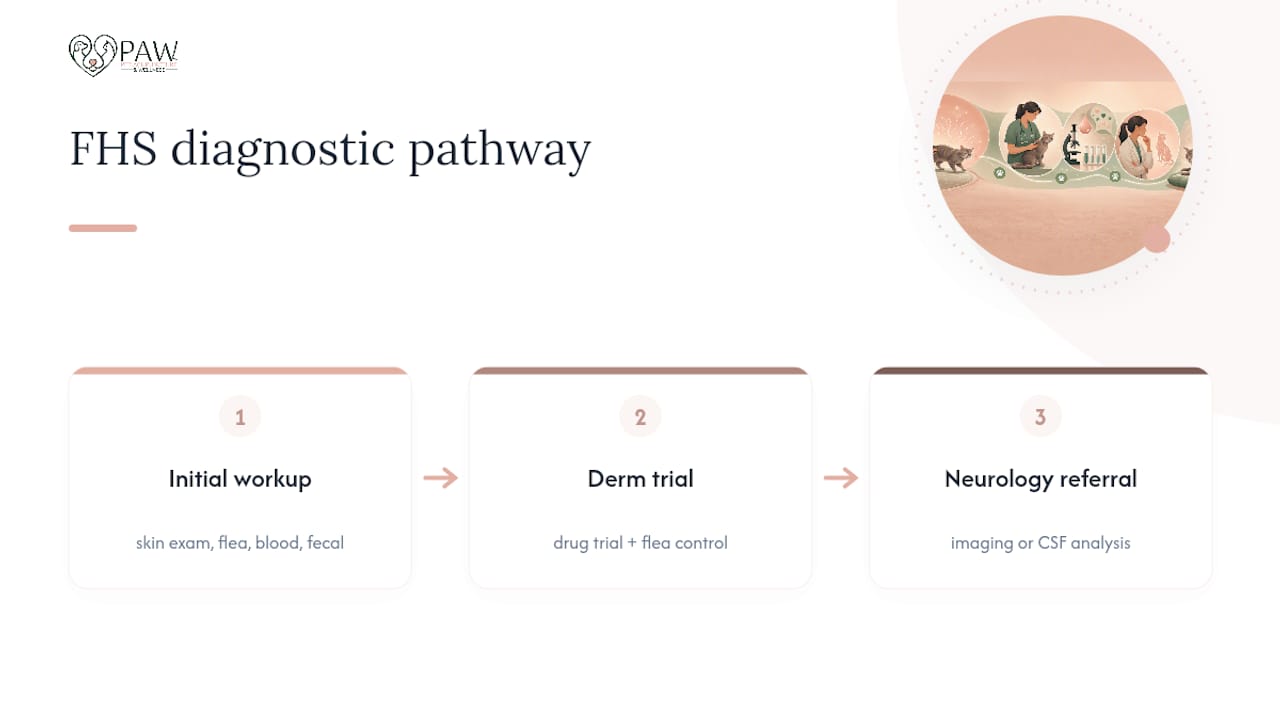
When neurologic signs show up, such as wobbliness, weakness, or seizure-like activity, your vet may refer you to a specialist for imaging or cerebrospinal fluid analysis. Today’s Veterinary Practice notes that FHS should never be assumed just because a cat’s behavior looks dramatic. Referral usually happens when self-trauma is severe, neurologic deficits appear, or a cat isn’t responding to first-line treatment. Bring your symptom log and video to every appointment. It shortens the process considerably.
What Treatments Actually Help Cats With Hyperesthesia?
Most cats do best on a layered plan rather than a single fix. Behavioral and environmental changes come first for milder cases, with medication added when episodes are frequent, severe, or tied to underlying anxiety.
The 5-Pillars framework, developed for feline environmental needs generally, is a useful structure here. It covers safe resting spaces, separate resources for multi-cat homes, opportunities for normal predatory play, positive human interaction, and respecting your cat’s sense of smell. Addressing chronic arousal through this lens can lower how often episodes happen and sometimes reduces how much medication a cat needs long term.
When medication is warranted, vets typically reach for:
- Fluoxetine, an SSRI that has shown notably fast response times in some cats, particularly when anxiety drives the episodes
- Gabapentin or pregabalin, used when sensory dysregulation or an underlying neuropathic-pain component is suspected
- Adjunctive options like topical anti-pruritics or short anti-inflammatory trials if there’s a dermatologic overlap
Vets often sequence these as trials, starting with the option that best matches the suspected driver, then adjusting based on response over several weeks. Combining behavior modification with medication tends to produce faster, more durable control than either approach alone.
The outcomes back this up. A retrospective study of 28 cats found that 82% achieved an episode-free period of nine months or longer, and 93% showed no clinical signs at all by the one-year mark. Cats managed with fluoxetine alone often reached that improvement faster than those on other regimens.
What Can You Change at Home to Reduce Episodes?
Your cat’s daily environment matters as much as anything a vet prescribes. Chronic low-grade stress, boredom, or unpredictable household chaos can prime a cat for more frequent episodes, so small changes in routine often pay off.
Focus on:
- Adding vertical space (cat trees, shelves) so your cat has options to retreat and observe
- Placing puzzle feeders and rotating toys to satisfy predatory instincts in short, predictable bursts
- Keeping at least one quiet, hideaway spot per cat, away from foot traffic and loud appliances
- Sticking to consistent feeding and play times rather than random schedules
- Avoiding sudden loud noises, forceful petting near the tail or lower back, and rough handling during grooming
If flea control or diet changes are part of your vet’s plan, follow that trial completely before judging results. A litter box and enrichment setup from a retailer focused on feline needs can simplify sourcing the right hideaways and feeders without guesswork. If episodes seem tied to specific triggers you can’t remove, a certified feline behaviorist can help design a counterconditioning plan.
Pro Tip: Introduce one enrichment change at a time and give it two weeks before adding the next. Changing everything at once makes it impossible to tell what actually helped.
Can Integrative Therapies Support a Sensitive Cat at Home?
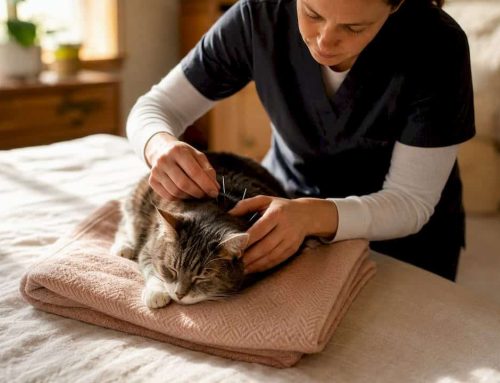
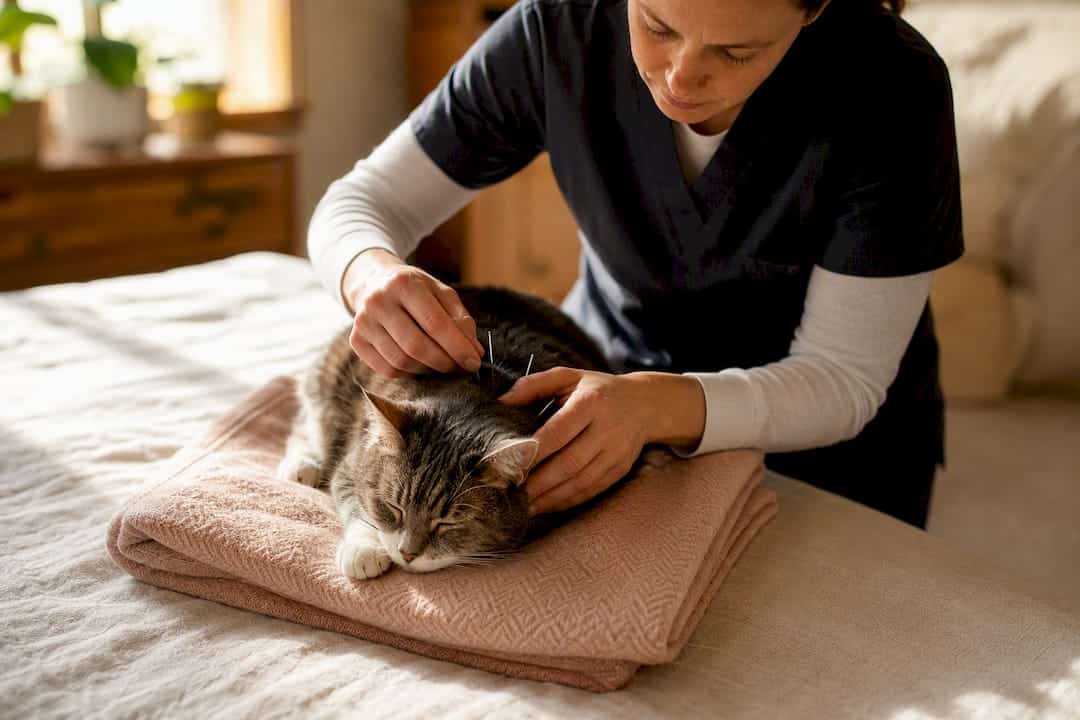
Cats with FHS are often the same cats who panic in a clinic waiting room, which can make standard veterinary handling part of the stress cycle itself. A published case report documented a treatment-resistant cat improving through a stepwise approach: starting with gentle craniosacral and myofascial techniques, then progressing to acupuncture once the cat tolerated hands-on work.
That stepwise, noninvasive-first sequence matters. Not every cat is a candidate for acupuncture on day one, but many can tolerate light touch work that gradually builds trust and reduces guarding behavior around the back and tail.
What to know before starting:
- Low-stress, in-home settings let some highly sensitive cats accept therapy they would refuse entirely in a clinic
- Manual therapies work best as an adjunct to, not a replacement for, the diagnostic workup and any prescribed medication
- Share your cat’s full medication list and diagnostic results with any integrative provider so nothing conflicts
- Acupuncture delivered in a familiar home environment may improve comfort and tolerance for cats that shut down in clinical settings, though it isn’t a substitute for ruling out physical causes first
Coordination is the key word here. Integrative work should complement your primary vet’s plan, not run parallel to it in isolation.
How Long Until Your Cat Actually Improves?
Improvement with FHS is rarely instant, but the data on multimodal management is genuinely encouraging. In that same 28-cat retrospective series, 82% of cats reached an episode-free stretch of nine months or more, and 93% showed no signs whatsoever at the one-year checkpoint.
Cats treated with fluoxetine alone tended to respond faster than those needing combination therapy, though both groups saw strong long-term improvements. “Success” usually looks like fewer episodes, shorter episodes, no new self-trauma, and eventually the option to taper medication under your vet’s supervision. If episodes plateau or worsen despite a full trial period, that’s the signal to revisit the diagnosis or ask for a specialist referral rather than simply increasing a dose.
Why Home-Based Care Changes the Equation for Sensitive Cats
Handling-triggered stress is one of the most overlooked pieces of the FHS puzzle. A cat who tenses at the sight of a carrier is already primed for a rougher episode before the exam even starts, which can muddy what a vet is actually seeing during that visit.
Assessing a cat in their own space, on their own schedule, tends to surface a more accurate picture of triggers and severity. Integrative techniques coordinated with a cat’s regular veterinary diagnostics and medications work best when nothing about the process itself is adding to the arousal that drives the syndrome.
None of that replaces urgent care. Any cat with open wounds, neurologic changes, or a sudden worsening of episodes needs a veterinary or emergency evaluation without delay. Home-based, low-stress options are for building a sustainable long-term plan once the serious causes are off the table.
— Pet Acupuncture & Wellness
How Pet Acupuncture & Wellness Supports Cats With Hyperesthesia
For a cat who shuts down at the vet’s office, getting an accurate read on hyperesthesia symptoms can be nearly impossible in a clinical setting. Pet Acupuncture & Wellness brings the visit to your South Tampa home instead, so your cat is assessed in the environment where their actual triggers live.

A first visit typically includes an initial assessment and acupuncture session with a technician, starting at $430, plus a $60 technician mobile fee. From there, treatment plans might incorporate laser therapy for pain-related contributors, herbal therapy, or rehabilitation therapy depending on what the diagnostic workup uncovers. For cats already established with a primary veterinarian, Pet Acupuncture & Wellness coordinates directly on diagnostics and medication lists, and offers telemedicine consults when an in-person visit isn’t the immediate need. If your cat has been struggling with hyperesthesia episodes and clinic visits only make things worse, request an initial assessment and start building a plan built around your home, not a waiting room.
This article is general information, not a substitute for advice from a qualified doctor. Consult a qualified healthcare professional about your own circumstances before acting on anything here.
Sources
- Long-Term Clinical Response to Medical Treatment, Behavioral Therapy, or Their Combination in Cats With Hyperesthesia Syndrome
- Retrospective study of outcomes in cats with hyperesthesia (28-case series)
- Hyperesthesia Syndrome | Cornell Feline Health Center
- Multimodal Treatment of Feline Hyperesthesia Syndrome Incorporating Myofascial Release, Spinal Manipulation and Craniosacral Techniques with Traditional Chinese Veterinary Medicine: Case Report
FAQ
How do you calm feline hyperesthesia?
Reduce known triggers, add environmental enrichment based on the 5-Pillars framework, and follow your vet’s plan for medications like fluoxetine or gabapentin if episodes are frequent or severe.
Can feline hyperesthesia syndrome go away?
Many cats reach long stretches without symptoms. In one retrospective study, 93% of cats had no clinical signs at the one-year mark after multimodal treatment.
What calms a hyper cat down during an episode?
Give your cat space in a safe, quiet room rather than restraining them, since handling during an active episode usually raises stress and can worsen self-directed biting.
Is feline hyperesthesia the same as a seizure?
No. Hyperesthesia episodes involve rippling skin and grooming or biting behavior while the cat stays responsive, whereas seizures typically involve loss of normal consciousness or control, which is one reason vets rule out neurologic causes first.
How much does an initial evaluation for hyperesthesia cost?
Pet Acupuncture & Wellness offers an initial assessment and acupuncture session starting at $430, plus a $60 mobile technician fee for in-home visits in South Tampa.