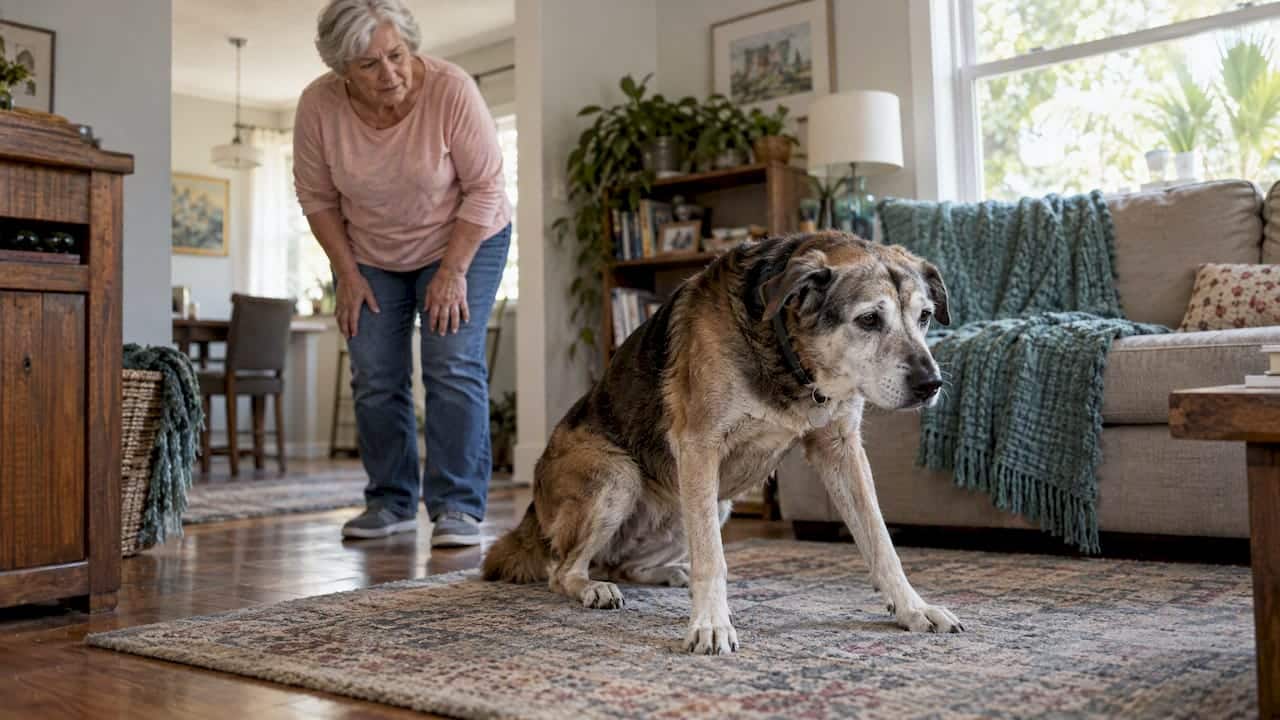
Yes, most major pet insurers reimburse acupuncture, but only under specific conditions. The treatment must address a covered illness or injury, a licensed veterinarian must perform or supervise it, and whether it’s reimbursed depends on your plan tier or an optional rider. Before your pet’s first session, pull out your policy and check how it labels alternative care.
TL;DR:
- Most pet insurance plans reimburse acupuncture only when performed or supervised by a licensed veterinarian for a covered condition, often requiring specific policy language or riders.
- Coverage varies widely, with some insurers including it in the base plan at no extra cost, while others offer it only as a paid rider or depend on plan tiers and state regulations.
- Typical acupuncture sessions cost between $60 and $150, with insurance mainly helping cover ongoing treatments for chronic issues like arthritis or disc disease.
- Insurers usually require clear diagnosis, proof of veterinary supervision, and detailed invoices to approve claims, and documenting medical necessity is crucial.
- In-home or mobile acupuncture reduces pet stress, often improves treatment effectiveness, and simplifies insurance documentation requirements.
Table of Contents
- What “Pet Insurance Acupuncture” Coverage Actually Means
- How Coverage Varies Across Major Pet Insurance Providers
- What Acupuncture Costs and How Reimbursement Math Works
- How to Check Your Policy and File an Acupuncture Claim
- Why Mobile, In-Home Acupuncture Fits Certain Pets Best
- Does Acupuncture Actually Work for Dogs and Cats?
- Which Conditions Respond Best to Acupuncture in Pets
- Are There Risks or Side Effects to Watch For?
- How to Find a Qualified Veterinary Acupuncturist
- Comparing Coverage Across Major Pet Insurance Providers
- A Mobile Vet’s View on Acupuncture and Insurance
- When Insurance Falls Short, In-Home Integrative Care Fills the Gap
- Sources
- FAQ
What “Pet Insurance Acupuncture” Coverage Actually Means
Insurers rarely use the plain phrase “acupuncture coverage” in their policy documents. Instead, you’ll find it tucked under broader terms like “alternative therapy,” “complementary care,” or “recovery and complementary care.” Think of these labels as different doors leading to the same room. Some open easily, some require a key you have to buy separately, and a few don’t lead anywhere at all.
Who performs the treatment matters just as much as the label. Nearly every insurer requires acupuncture to be delivered by, or under the direct supervision of, a licensed veterinarian. A general practice license usually qualifies, though many vets also pursue formal training through programs like the International Veterinary Acupuncture Society or Chi University, which carries real weight if your claim ever gets a closer look.
Where acupuncture sits in your plan structure changes everything about your premium and your claims experience:
- Included in the base plan: No extra premium, but you’re stuck with whatever conditions the insurer bundles in.
- Included only in a higher tier: You pay more monthly for a broader condition list, acupuncture often riding along with it.
- Sold as an optional rider: A separate add-on, priced apart from your core accident and illness coverage.
Almost every policy layers on standard mechanics regardless of which door you walked through: a waiting period (often 14 to 30 days) before coverage kicks in, exclusions for pre-existing conditions, and either an annual dollar cap or a per-incident limit on what gets reimbursed.
Pro Tip: Search your policy PDF for the words “complementary” and “rider” before you call customer service. Half your questions get answered in thirty seconds flat.
How Coverage Varies Across Major Pet Insurance Providers
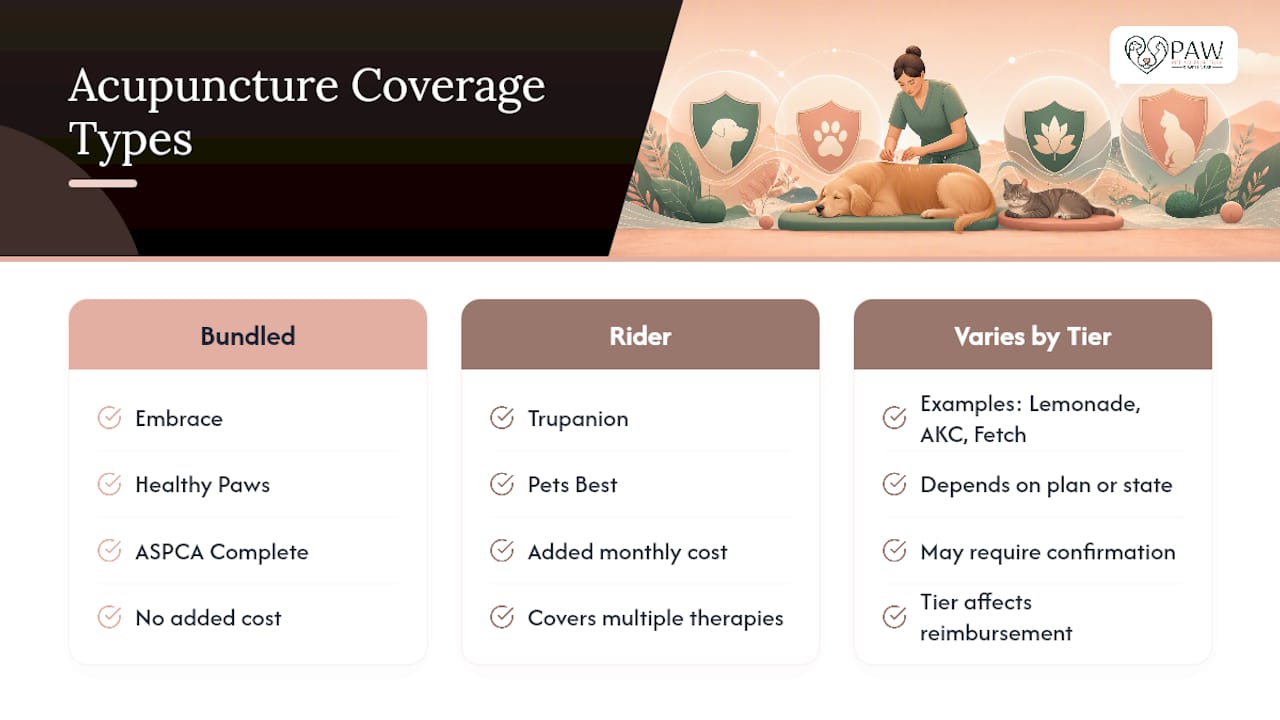
Insurers generally fall into three camps on acupuncture, and knowing which camp yours belongs to changes how you budget for treatment.
Bundled into the base policy. Embrace includes acupuncture and other complementary treatments in every accident and illness policy at no added cost, as long as a licensed veterinarian performs or directly supervises it. Healthy Paws takes a similar approach, covering alternative care like acupuncture when it’s part of recovering from a covered accident or illness. ASPCA Pet Health Insurance lists acupuncture under its Complete Coverage plan, folding it into the same policy that handles your pet’s routine illness claims.
Sold as a separate rider. Trupanion’s Recovery and Complementary Care rider reimburses acupuncture, chiropractic, and hydrotherapy for an added monthly cost on top of the base policy. Pets Best structures its plans in tiers, with alternative therapies showing up only once you step up from the entry-level option.
Varies by tier or requires confirmation. Lemonade, AKC Pet Insurance, Fetch, Spot, MetLife, and Nationwide all offer some form of alternative or complementary therapy coverage, but the details shift depending on the plan you select and, in some cases, your state. A rider that costs a few extra dollars a month can pay for itself fast if your dog needs eight sessions for disc disease rather than one visit for a sore shoulder.
These summaries describe general patterns, not guarantees. Insurance products change yearly, so confirm the exact language in your own declarations page rather than assuming your plan matches what a competitor’s website advertises.
What Acupuncture Costs and How Reimbursement Math Works
A typical acupuncture visit for a dog or cat isn’t cheap on its own, which is exactly why coverage matters. Initial consultations commonly run $100 to $150, and follow-up sessions typically land between $60 and $120 each. Most treatment plans for a chronic condition call for multiple sessions rather than a single visit, and that course can add up to considerable costs before insurance reimbursement. You can see how session counts typically break down for a given condition.
Here’s how the reimbursement math typically plays out:
- Your pet requires multiple sessions for arthritis management, with costs accumulating over time.
- Your plan includes an annual deductible and reimburses a portion of covered costs.
- Insurance pays a portion of the covered expenses, leaving you responsible for the remainder.
Insurance tends to help most with chronic, ongoing conditions like arthritis or IVDD recovery, where session counts stack up and the deductible gets absorbed across multiple visits. A single maintenance session for a healthy senior dog often falls below what’s practical to file, especially once you account for per-incident caps some policies apply on top of the annual maximum.
How to Check Your Policy and File an Acupuncture Claim
Before booking a session, do a quick document search. Pull up your policy PDF and search for “complementary,” “alternative,” “recovery,” “rider,” “waiting period,” and “pre-existing condition.” Those six terms will tell you almost everything about where you stand.
Gather this paperwork before you submit anything:
- A veterinary diagnosis that explicitly ties the acupuncture recommendation to a covered condition, not a vague wellness note.
- Signed treatment records confirming a licensed veterinarian performed or directly supervised each session.
- Itemized invoices listing the provider’s license information alongside the charges.
Most insurers, including Embrace, now process claims through mobile apps or online portals, and turnaround typically runs anywhere from a few days to two weeks once everything is submitted correctly. The most common denial reasons are entirely avoidable: a pre-existing condition the insurer flags at enrollment, missing language confirming veterinary supervision, or a provider type the policy doesn’t recognize. A clear diagnosis connecting the acupuncture to a covered illness dramatically raises approval odds, since insurers rarely reimburse anything labeled purely as “wellness” or “maintenance.”
Pro Tip: Ask your vet to write “acupuncture recommended for [specific diagnosis]” directly on the treatment note. That single sentence resolves more denials than any follow-up call ever will.
Why Mobile, In-Home Acupuncture Fits Certain Pets Best
Senior dogs with arthritis, cats recovering from surgery, and pets with severe anxiety often do worse, not better, when a car ride and a waiting room get added to the stress of treatment. In-home acupuncture removes that variable entirely, and the calmer state a pet is in during treatment can make the session itself more effective.
Mobile care changes what your documentation needs to look like, since there’s no clinic visit stamped on a check-in sheet. Strong records should include:
- An explicit diagnosis linking the visit to a covered condition, not a general checkup note.
- A clear statement that a licensed veterinarian performed the treatment personally, since insurers can’t rely on clinic intake paperwork to confirm this.
- Session notes detailed enough to show progression over a treatment course, not just a single date and fee.
The clinical logic here is straightforward: documenting medical necessity in the record is the step insurers actually look for, regardless of whether treatment happened in an exam room or a living room. Pet Acupuncture & Wellness structures its at-home visits around exactly this kind of paper trail, which matters just as much for your claim as it does for your pet’s comfort.
Does Acupuncture Actually Work for Dogs and Cats?
Veterinary acupuncture has moved well past the fringe. It’s recognized as a legitimate complementary therapy by mainstream veterinary organizations, and its clinical use centers on real, measurable problems rather than vague wellness claims.
In Traditional Chinese Veterinary Medicine, practitioners describe the goal as restoring the smooth flow of Qi, the body’s vital energy, along pathways called Meridians. Picture those Meridians as a highway system. When traffic backs up at one interchange, pain and inflammation show up somewhere else down the road. Fine needles placed at specific points aim to clear that traffic, and Western researchers have found measurable mechanisms behind the effect, including increased blood flow and the release of natural pain-relieving compounds around treated areas.
The strongest evidence supports acupuncture for chronic pain and musculoskeletal conditions like arthritis and disc disease, where it’s often used alongside conventional pain management rather than instead of it. Results tend to build gradually. Most pets need a course of several sessions before owners notice a clear difference, not a single dramatic turnaround after visit one. Vets who practice it generally frame it as one tool in a broader pain management plan, not a replacement for diagnostics or medication when those are genuinely needed.
Which Conditions Respond Best to Acupuncture in Pets
Chronic osteoarthritis tops the list for a reason. Older dogs and cats with worn joints often show improved mobility and reduced stiffness after a consistent treatment course, especially when it’s paired with weight management and, when appropriate, conventional medication.
Intervertebral disc disease, or IVDD, is another area where acupuncture shows meaningful clinical use, particularly during recovery after a disc episode when the goal is restoring nerve function and reducing inflammation without additional surgery. Dogs recovering from orthopedic surgery, including cruciate ligament repairs, sometimes use acupuncture alongside physical rehabilitation to manage post-operative discomfort and rebuild range of motion.
Beyond joints and spines, acupuncture shows up as supportive therapy for cancer patients managing treatment side effects, and for some pets with systemic conditions like kidney disease, where the goal shifts from cure to comfort. Anxiety and certain gastrointestinal issues appear in clinical use as well, though the evidence base there is thinner than for musculoskeletal pain. If your dog’s diagnosis falls into one of these categories, that’s exactly the kind of language your vet should be writing into the treatment note your insurer will eventually read.
Are There Risks or Side Effects to Watch For?
Acupuncture carries a favorable safety profile when performed by someone properly trained, which is precisely why insurers insist on licensed veterinary involvement rather than treating it as a casual add-on service.
Most pets tolerate treatment well. The most common side effects are mild and short-lived: slight soreness at needle sites, temporary lethargy for a few hours after a session, or an occasional pet who seems more relaxed than usual to the point of grogginess. These typically resolve within a day without any intervention.
Real risks are rare but worth knowing. Improperly placed needles can occasionally cause bruising or, in very rare cases, more serious injury near sensitive structures, which is exactly the argument for choosing a practitioner with formal training rather than someone working from a weekend seminar. Pets with bleeding disorders or certain skin infections at the needle site may need modified treatment or should avoid it altogether, a decision that belongs to your veterinarian, not a generic checklist. Electroacupuncture, a variant that adds a mild electrical current to the needles, carries its own separate considerations and is sometimes excluded from coverage even when standard acupuncture is included, so it’s worth checking that distinction in your policy separately.
How to Find a Qualified Veterinary Acupuncturist
Credentials matter here in a very specific, checkable way. Look for a veterinarian who has completed certification through a recognized program, most commonly the International Veterinary Acupuncture Society or Chi University’s TCVM track. These programs require hundreds of hours of coursework and hands-on training beyond a standard veterinary degree, which is a meaningfully different credential than a general practitioner who dabbles in the technique.
A few practical steps narrow the search fast. Ask any candidate directly whether they’re certified and through which program, since a confident, specific answer is itself a good sign. Check whether they’ll provide documentation your insurer will accept, including a diagnosis tied to a covered condition and detailed treatment notes, since a practitioner unfamiliar with insurance paperwork can cost you a reimbursement even when the treatment itself was excellent.
For pets who struggle with car rides, waiting rooms, or general veterinary anxiety, a mobile or in-home practitioner solves a problem a clinic visit can’t. Ask how many sessions they typically recommend for a condition like your pet’s, since a vague answer suggests less experience than you want. Confirm supervision requirements meet your insurer’s threshold before the first visit, not after the first claim gets denied.
Comparing Coverage Across Major Pet Insurance Providers
| Provider | Coverage approach | What to check |
|---|---|---|
| Embrace | Included in base accident and illness policy | Confirm licensed vet performed or supervised treatment |
| Healthy Paws | Included as alternative care for covered conditions | Must support recovery from an accident or illness |
| Trupanion | Optional Recovery and Complementary Care rider | Rider cost versus expected session frequency |
| ASPCA Pet Health Insurance | Listed under Complete Coverage plan | Confirm plan tier includes complementary treatments |
| Pets Best | Varies by plan tier | Entry-level plans may exclude alternative therapies |
| Lemonade | Available depending on plan and add-ons | Confirm state availability and rider terms |
| AKC Pet Insurance | Varies by plan selected | Check declarations page for specific inclusion |
| Fetch | Coverage varies by policy | Confirm alternative therapy is explicitly listed |
| Spot | Coverage varies by plan | Check annual and per-incident limits |
| MetLife | Coverage varies by plan | Confirm provider-type requirements |
| Nationwide | Coverage varies by plan | Review wellness versus illness plan distinctions |
The pattern across nearly every provider is consistent even when the specifics differ: base-plan inclusion means simpler claims but less negotiating power over premiums, while a rider means an extra monthly cost that can pay for itself if your pet needs a full course of sessions rather than a single visit. Always pull the current policy document for your state and plan tier before assuming any of the above holds true for your specific coverage.
A Mobile Vet’s View on Acupuncture and Insurance
Owners choose mobile acupuncture because a stressed pet in a waiting room rarely responds as well as a calm one on their own couch. Comfort isn’t incidental to outcomes here, it’s part of the treatment.
Before starting, ask your vet three things: what specific condition the treatment targets, what risks apply to your pet’s health history, and roughly how many sessions before you should expect to see change. Then keep every treatment note and invoice. Thorough records protect your insurance claim today and give the next vet on your pet’s team the full picture tomorrow.
— Pet Acupuncture & Wellness
When Insurance Falls Short, In-Home Integrative Care Fills the Gap
Even a generous rider won’t cover every session, and a lot of owners end up paying out of pocket for at least part of a treatment course. A mobile veterinary practice can bring acupuncture, rehabilitation, and herbal therapy directly to your home, designed to accommodate senior, disabled, and anxious pets who do not do well with clinic visits.
Every visit generates the kind of documentation insurers actually want to see: a clear diagnosis tied to your pet’s condition, detailed treatment notes confirming direct veterinary involvement, and itemized invoices ready to attach to a claim. A first visit typically starts with a full assessment of your pet’s mobility, comfort level, and history before any needles come out, so you know exactly what you’re working toward. If your dog needs ongoing joint support or post-surgical recovery, the rehabilitation therapy program pairs naturally with acupuncture for a more complete recovery plan. Book a consultation today to see whether in-home integrative care fits your pet’s needs and your insurance situation.
Sources
- Complementary Treatments Coverage for Pets — Embrace
- Alternative care coverage for pets — Healthy Paws
- Does Trupanion cover alternative medicine or holistic therapy? — Trupanion
- Veterinary acupuncture review — NCBI PMC
FAQ
Can Acupuncture Be Covered by Insurance?
Yes, most major insurers reimburse acupuncture when a licensed veterinarian performs or supervises it to treat a covered illness or injury, though some require an add-on rider rather than including it in the base plan.
What Is Not Covered Under Pet Insurance?
Pre-existing conditions, treatments during an active waiting period, and therapies labeled purely as wellness or maintenance rather than tied to a diagnosed condition are the most common exclusions across policies.
Is Dog Acupuncture Worth It?
For dogs with chronic conditions like arthritis or disc disease, acupuncture often provides meaningful pain relief over a full treatment course, especially when insurance offsets part of the cost and it’s combined with conventional care.
What Is the Success Rate of Acupuncture for Dogs?
There’s no single agreed-upon success rate, since outcomes depend heavily on the condition treated, but clinical use is strongest and most consistent for chronic pain and musculoskeletal issues like arthritis and IVDD recovery.