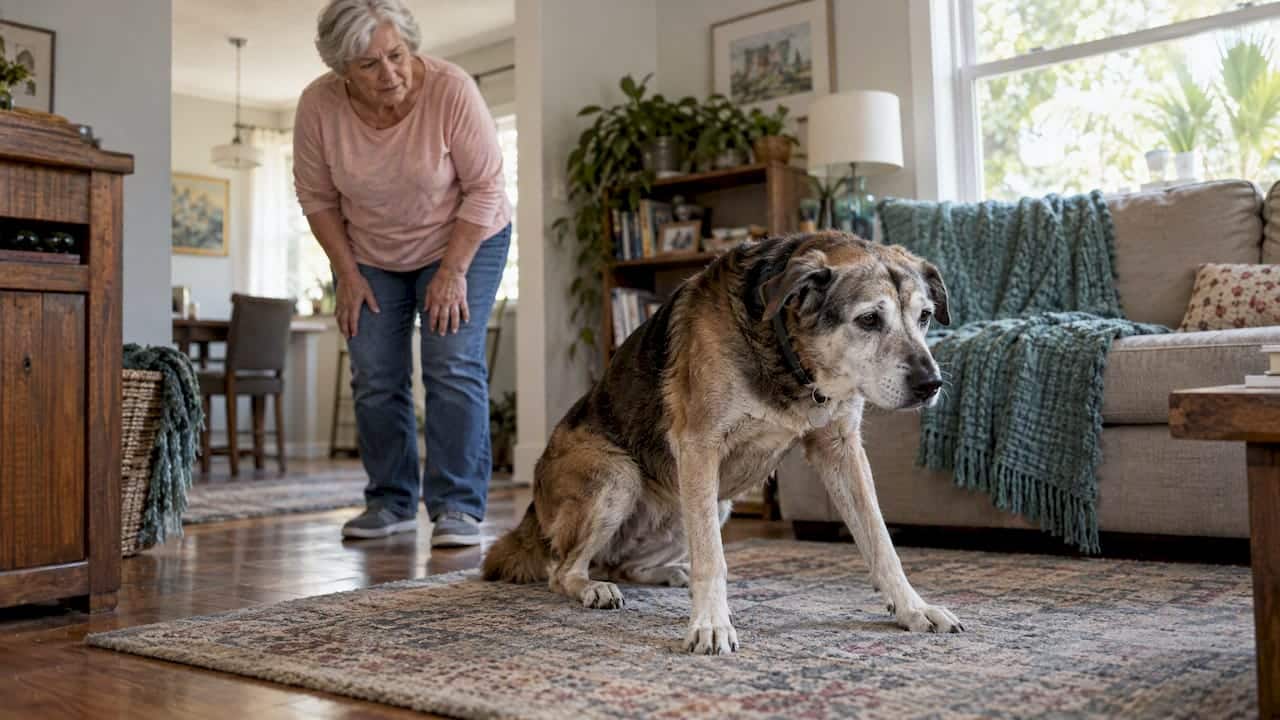
If your dog is still walking, bearing weight on all four legs, and not in obvious pain, this is very likely a routine issue to schedule with your veterinarian, not a 911 event. But if your dog can’t stand, has gone limp in the hindquarters within hours, or shows no response when you gently pinch a toe, that’s an emergency and you need to get to a vet clinic tonight, not tomorrow. Clinicians generally sort dog hind leg weakness into orthopedic (pain-driven) or neurological (nerve-driven) categories, and getting that distinction right matters because treatment for one can actually harm the other.
Before you call: quick do/don’t checklist
- Do watch your dog walk on a flat, non-slip surface and note whether the paw drags, knuckles under, or scuffs the nail.
- Do check whether your dog can bear weight at all, even briefly.
- Don’t give any human pain medication, including ibuprofen or Tylenol. Both are dangerous for dogs.
- Don’t force exercise or stairs if your dog seems unsteady or is crying out.
Before your vet visit, jot down three things: when you first noticed it, whether it came on suddenly or gradually, and any recent falls, jumps, or injuries. This timeline alone often narrows the diagnosis before your veterinarian even touches your dog. At Pet Acupuncture & Wellness, we hear from a lot of worried owners of senior dogs whose back legs “just gave out,” and the first job is always sorting urgent from manageable.
Key Takeaways
Distinguishing sudden neurologic weakness from gradual orthopedic decline determines whether your dog needs an ER visit tonight or a scheduled vet workup this week.
| Point | Details |
|---|---|
| Emergency signs | Loss of deep pain, rapid paralysis, or loss of bladder control means go to the ER immediately. |
| Orthopedic vs neurologic | Pain that eases with warm-up suggests arthritis; weakness that worsens with activity suggests nerve involvement. |
| Diagnosis takes multiple steps | Expect a gait exam, bloodwork, and imaging like x-rays or MRI depending on suspected cause. |
| Rehab must match diagnosis | Strengthening exercises help arthritis but can worsen an unstable spine, so assessment always comes first. |
| Track changes at home | Weekly gait videos and a simple symptom log make vet visits far more productive. |
| In-home integrative support | Pet Acupuncture & Wellness offers mobile acupuncture, rehab, and laser therapy for senior dogs in South Tampa once a diagnosis is in hand. |
This article is general information, not a substitute for advice from a qualified doctor. Consult a qualified healthcare professional about your own circumstances before acting on anything here.
Table of Contents
- What Causes Dog Hind Leg Weakness in Senior Dogs?
- Recognizing Dog Knuckling, Dragging, and Other Warning Signs
- How Vets Diagnose the Cause of Hind Leg Weakness
- Treatment Options Based on the Underlying Cause
- Rehabilitation, Mobility Aids, and Daily Home Support
- Do Acupuncture and Laser Therapy Actually Help?
- What’s the Realistic Recovery Timeline?
- Reducing the Risk of Future Hind Leg Problems
- Getting In-Home Support for Your Dog’s Mobility
- Sources
- FAQ
What Causes Dog Hind Leg Weakness in Senior Dogs?
Hind-limb weakness in older dogs rarely traces back to a single cause. Vets group the likely culprits into six categories, and knowing which one fits your dog’s pattern helps you describe symptoms accurately.
- Orthopedic causes include osteoarthritis, hip dysplasia, and cranial cruciate ligament disease. These usually build gradually, often affect both hind legs unevenly, and tend to improve slightly once your dog “warms up” into a walk.
- Neurologic causes include intervertebral disc disease (IVDD), degenerative myelopathy, and nerve root disease. These often produce knuckling, dragging, or a wobbly, drunken-looking gait called ataxia, and unlike orthopedic pain, the weakness usually persists or worsens with activity rather than easing.
- Vascular causes, chiefly aortic thromboembolism, are less common but serious. A clot lodged in the aorta can cause sudden, painful hind-limb weakness with cold paws and weak or absent pulses, and Doppler ultrasound is typically needed to confirm it.
- Metabolic and endocrine causes such as hypoglycemia or diabetic neuropathy can mimic primary leg problems, especially in dogs with existing diabetes or on certain medications.
- Infectious or toxic causes, including tick-borne diseases and certain toxin exposures, can produce weakness alongside fever, lethargy, or gastrointestinal signs.
- Trauma, from a fall, car accident, or rough play, causes sudden weakness or paralysis that demands immediate imaging to rule out fractures or spinal injury.
Distinguishing these groups isn’t always tidy. A sudden neurologic event, like a herniated disc from IVDD, produces genuine nerve deficits, whereas monoplegia limited to a single limb often points toward focal nerve trauma or a mass rather than a spine-wide process, according to the MSD Veterinary Manual.
Senior dogs rarely present with one clean cause. Sarcopenia, the age-related loss of muscle mass, often layers on top of arthritis, and extra body weight compounds joint stress further. It’s common for a 12-year-old Labrador to have hip arthritis, weak core muscles from years of low activity, and mild early degenerative myelopathy all contributing to the same wobbly back end. That overlap is exactly why a proper veterinary workup, rather than a guess based on symptoms alone, matters so much for senior dogs.
Recognizing Dog Knuckling, Dragging, and Other Warning Signs
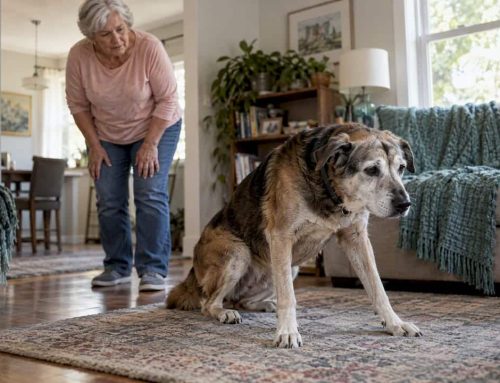
Hind leg weakness doesn’t always look dramatic. Often it starts subtly: your dog hesitates before jumping onto the couch, takes the stairs one at a time instead of two, or seems to “sit down” into a stand rather than pushing straight up.
Watch for these observable signs:
- Dragging or scuffing the back paws, sometimes audible as toenails clicking or scraping on hard floors
- Knuckling, where the paw folds under and your dog walks on the top of the foot instead of the pad
- Bunny-hopping, where both back legs move together rather than alternating
- Ataxia, a wobbly, uncoordinated gait that looks almost drunken
- Reluctance to climb stairs, jump into the car, or rise from lying down
- Visible muscle loss along the thighs or hips
Gradual onset over weeks or months usually points toward arthritis or degenerative myelopathy. Sudden onset, especially within minutes to hours, points toward IVDD, trauma, or a vascular event, and demands faster action.
These signs mean you need emergency care now, not a scheduled appointment:
- Loss of deep pain sensation (no reaction to a firm toe pinch)
- Rapid, progressive paralysis in both back legs
- Loss of bladder or bowel control
- Labored breathing or collapse
- Signs of severe pain, such as screaming or rigid posture
If none of those apply, it’s still worth calling your vet the same day rather than waiting. What you should never do at home is medicate with human drugs, apply heat or ice without guidance, or push your dog through forced exercise “to work it out.” That last instinct, common among devoted owners, can actually worsen an unstable spine.
How Vets Diagnose the Cause of Hind Leg Weakness
Your veterinarian’s job is to answer one question first: orthopedic or neurologic? That single distinction shapes almost everything that follows, because a treatment plan built for arthritis can be the wrong call, even a harmful one, for a compressed spinal nerve.
The diagnostic pathway typically follows these steps:
- History and timeline. Your vet will ask when symptoms started, whether they’re worsening, and about any recent trauma, medication changes, or other health issues.
- Gait observation. Watching your dog walk and trot on flat ground, then on an incline or stairs, reveals a lot. Orthopedic pain often eases slightly once a dog “warms up,” while neurologic weakness tends to persist or get worse with continued movement.
- Orthopedic exam. Palpating joints, checking range of motion, and testing for cruciate ligament laxity or hip pain.
- Neurological exam. Testing reflexes, proprioception (does your dog know where its paws are placed), and deep pain response.
- Bloodwork and urinalysis. These rule out metabolic causes like diabetes or hypoglycemia.
- Imaging. Survey x-rays check joints and spine for arthritis, disc narrowing, or fractures. When neurologic disease is suspected, MRI or CT provides a much more detailed look at the spinal cord, and a spinal tap or electrodiagnostic testing may follow if nerve involvement remains unclear.
Before your appointment, jot down a few specifics: exact onset timeline, whether symptoms are better or worse after exercise, and any stumbling on one side versus both. That kind of detail often shortens the diagnostic process considerably. Watching for reluctance to move rather than true inability to move is one of the most common things owners misjudge, and it’s exactly the kind of detail your vet needs from you.
Treatment Options Based on the Underlying Cause
Once the cause is identified, treatment branches quickly, and expectations should branch with it.
Orthopedic conditions like osteoarthritis usually start with a combination approach: NSAIDs for inflammation, joint supplements, weight loss if needed, and physical rehabilitation. Surgical stabilization becomes an option for advanced hip dysplasia or a torn cruciate ligament, particularly in dogs who are otherwise good surgical candidates. Our guide to degenerative joint disease in dogs covers this progression in more detail.
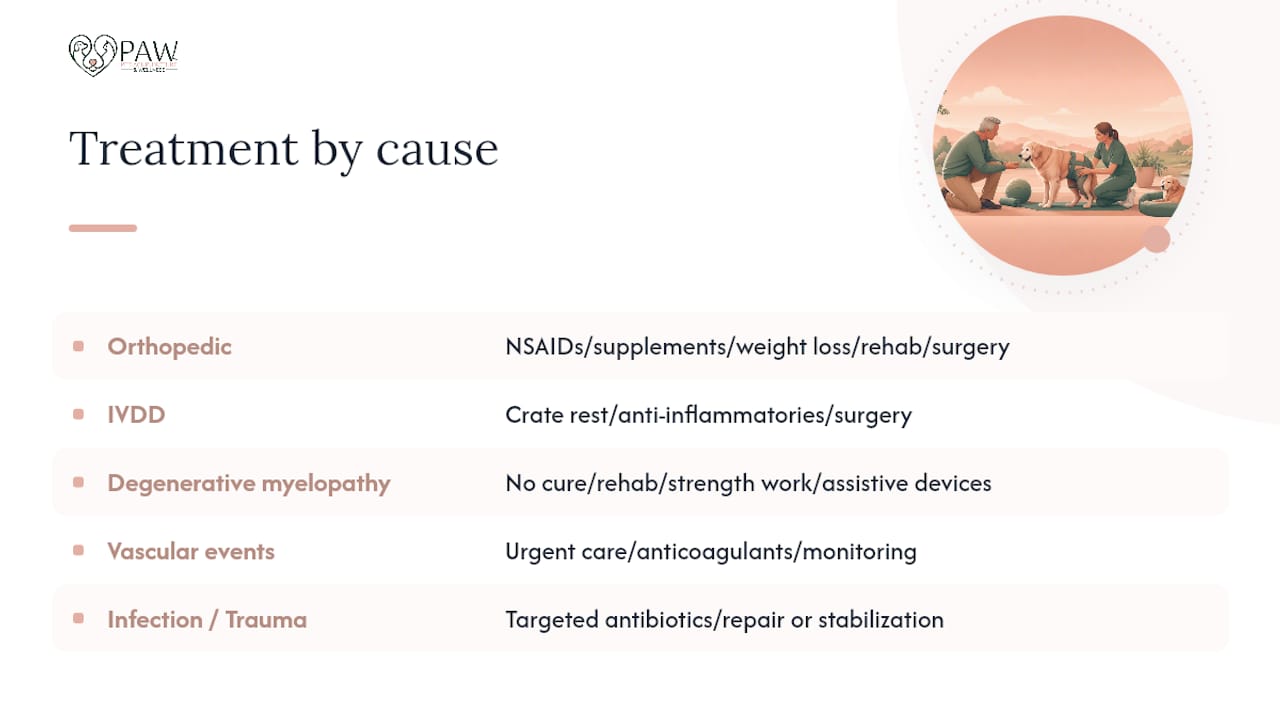
IVDD typically starts with strict crate rest and anti-inflammatory medication, sometimes steroids, always under direct veterinary guidance, since these drugs carry real risks if dosed incorrectly. Dogs with significant nerve compression or loss of deep pain sensation usually need decompressive surgery, and timing matters. Surgery performed sooner after severe signs appear generally carries a better outlook.
Degenerative myelopathy has no cure. Management centers on supportive rehabilitation, gradual strength work, and assistive devices to preserve independence for as long as possible.
Vascular events, like aortic thromboembolism, require urgent veterinary care, sometimes anticoagulant therapy, and close monitoring since these cases can be life-threatening.
Infections respond to targeted antibiotics once identified, and trauma cases are handled based on the specific injury, from fracture repair to spinal stabilization.
Common medications include gabapentin for nerve pain, tramadol for additional pain control, and NSAIDs formulated specifically for dogs, never human versions. Prognosis varies widely: many arthritis cases improve meaningfully with consistent management, IVDD cases treated early often recover well, and degenerative myelopathy is managed rather than reversed. Your vet’s read on severity at diagnosis is usually the single best predictor of how things go.
Rehabilitation, Mobility Aids, and Daily Home Support
Rehabilitation is where a lot of senior dogs regain real, meaningful function, but it has to match the diagnosis. Underwater treadmill work and targeted strengthening exercises help many dogs with arthritis or post-surgical recovery, but the same exercise plan could aggravate an unstable spine, which is why an assessment always comes before a program.
Common rehab tools include:
- Hydrotherapy and underwater treadmill sessions for low-impact strengthening
- Manual therapy and stretching to maintain joint range of motion
- Balance and proprioception exercises, like standing on cushions or wobble boards
- Gradual endurance building through short, frequent walks rather than one long outing
Assistive devices help bridge the gap while strength returns. A short-term sling supports a dog during bathroom breaks after surgery. A full-body harness gives more sustained support for dogs with chronic weakness. A wheeled cart becomes appropriate for dogs with permanent hind-limb paralysis who still have good upper body strength and appetite for life. Our guide to rehabilitation equipment walks through when each option makes sense.
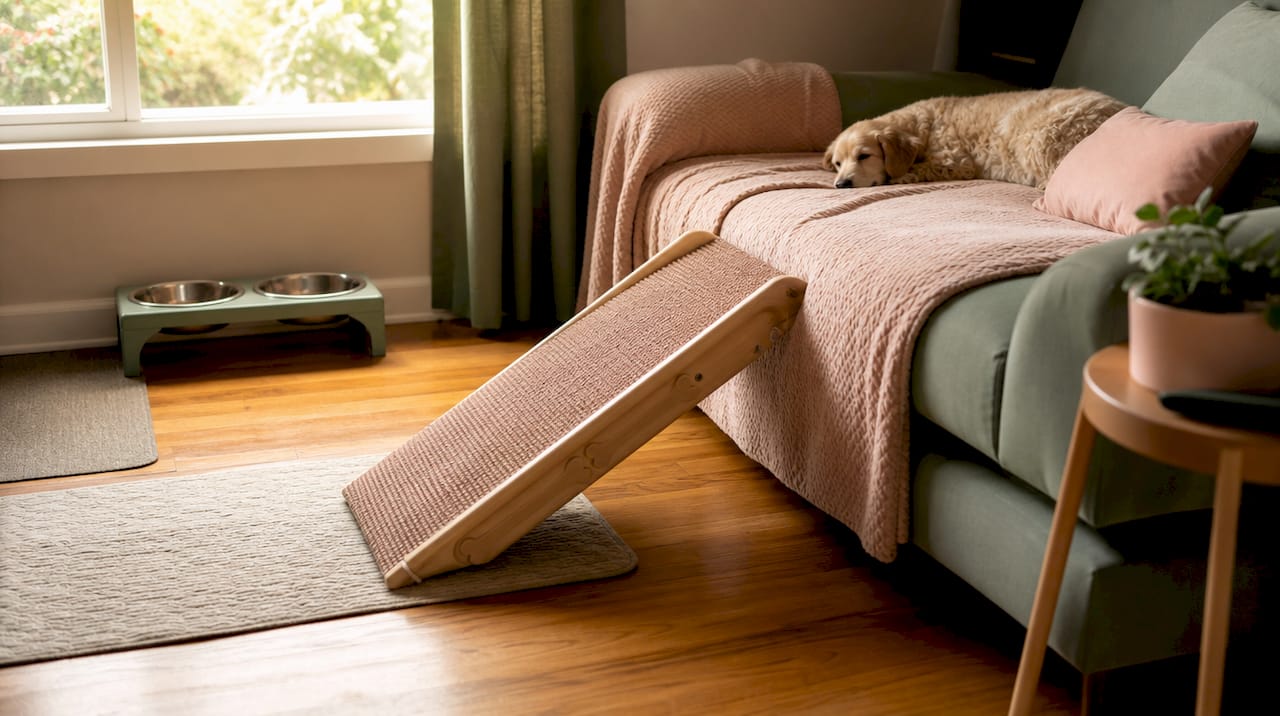
At home, non-slip flooring, ramps instead of stairs, and raised food bowls all reduce strain. Keep a simple log: how long your dog stands before tiring, distance walked before knuckling starts, any new stumbling. That record makes follow-up visits far more productive.
Pro Tip: Take a 15-second video of your dog walking once a week. Side-by-side comparison over a month often reveals gradual changes that are easy to miss day to day.
Do Acupuncture and Laser Therapy Actually Help?
Integrative therapies won’t reverse degenerative myelopathy or replace surgery for a herniated disc, but they can meaningfully support recovery and comfort alongside conventional care. Acupuncture and therapeutic laser are commonly used to manage pain and support circulation in arthritic or post-surgical dogs, while herbal adjuncts and food therapy are sometimes layered in as part of a broader mobility plan. None of these should be presented as a cure, and any practitioner who promises one is worth a second opinion.
For senior or anxious dogs, receiving these therapies at home rather than in a clinic waiting room removes a major source of stress, and it tends to improve follow-through on the daily exercises rehab actually requires. When choosing a provider, look for veterinary credentials, formal training in acupuncture or rehabilitation, and clear, measurable goals rather than vague promises.
What’s the Realistic Recovery Timeline?
Recovery timelines depend heavily on cause and severity at diagnosis.
- Surgically treated IVDD or trauma: weeks to a few months for meaningful recovery, with early surgery generally producing better outcomes.
- Orthopedic arthritis under medical management: measurable improvement often within weeks to a couple of months, though it’s ongoing management rather than a cure.
- Degenerative myelopathy: progressive over months to years, with the goal being supportive maintenance, not reversal.
Severity at presentation matters enormously. Dogs that retain deep pain sensation and have no major comorbidities tend to do better than dogs with advanced deficits or conditions like obesity and heart disease layered on top. Objective, regular functional reassessment, rather than a single vet visit and no follow-up, is what actually drives good long-term outcomes for geriatric dogs.
Reducing the Risk of Future Hind Leg Problems
You can’t prevent every cause of hind-limb weakness, but a few habits meaningfully lower the odds and slow progression in dogs already affected.
- Keep your dog at a lean, ideal body condition. Extra weight is one of the most modifiable stressors on aging joints, and our guide to canine weight management covers practical steps.
- Prioritize regular, low-impact activity like short daily walks over sporadic bursts of intense exercise.
- Ask your vet about omega-3s and joint-support supplements, which have a reasonable evidence base for supporting mobility in aging dogs.
- Track muscle mass, ease of rising, and gait changes monthly, and bring a symptom log to every senior wellness visit.
A Note From Pet Acupuncture & Wellness
Watching your dog’s back legs give out, even a little, hits differently once they’ve been by your side for a decade. It’s easy to panic, and just as easy to dismiss slow changes as “just getting old.” Neither extreme serves your dog well. What actually helps is simple: a five-minute daily check of how your dog rises, walks, and settles, written down, so you notice real change before it becomes a crisis.
Getting In-Home Support for Your Dog’s Mobility
If your dog’s hind-leg weakness has already been evaluated and you’re looking for consistent, low-stress follow-up care, Pet Acupuncture & Wellness brings acupuncture, rehabilitation, laser therapy, and herbal treatments directly into your South Tampa home. This matters most for senior, anxious, or mobility-limited dogs who find car rides and waiting rooms genuinely stressful, and for whom that stress alone can set back progress.
In-home care also means our team sees your actual stairs, floors, and furniture layout, which shapes far more practical rehab advice than a generic clinic conversation ever could. A consult is the right next step once your dog can walk and bear weight but is showing gradual mobility decline; anything sudden or severe still belongs at an emergency clinic first. If that describes where you’re at, book a mobile acupuncture assessment or explore our in-home rehabilitation program to get a plan built around your dog’s actual home and routine.
Sources
- Gait abnormality: musculoskeletal or neurologic condition? — Today’s Veterinary Practice
- Canine geriatric rehabilitation: considerations and strategies — Frontiers in Veterinary Science
- Hind-Limb Weakness in Senior Pets — Dog & Cat Rehab
FAQ
Why Is My Dog Suddenly Weak in the Hind Legs?
Sudden hind-leg weakness usually points to IVDD, trauma, or a vascular event like aortic thromboembolism, and it needs same-day veterinary evaluation to rule out spinal compression or a clot.
What Can I Give My Dog for Hind Leg Weakness?
Nothing at home without veterinary direction. Human pain medications like ibuprofen and Tylenol are dangerous for dogs; your vet may prescribe dog-specific NSAIDs, gabapentin, or other options based on the diagnosis.
What Are the First Signs of Hind Leg Weakness?
Early signs include hesitating before jumping, taking stairs slowly, scuffing back toenails, and slight wobbliness that’s easy to mistake for normal aging.
My Dog Is Losing Feeling in the Hind Legs. What Could Be Causing This?
Loss of sensation typically indicates a neurologic problem such as IVDD or nerve compression, and any loss of deep pain response is an emergency requiring immediate veterinary care.
Can Acupuncture Help With Dog Hind Leg Weakness?
Acupuncture can support pain management and mobility alongside conventional treatment for many dogs, particularly with arthritis or post-surgical recovery, though it isn’t a substitute for diagnosis or emergency care.