TL;DR:
- Feeding an older cat that is losing weight requires providing high-protein, calorie-dense, and easily digestible wet food to preserve muscle mass. Medical evaluation is essential because weight loss often signals underlying health issues like hyperthyroidism or kidney disease, not just aging. A gradual diet transition and environmental adjustments can help improve appetite and support overall health in senior cats.
Feeding an older cat that is losing weight means prioritizing high-protein, calorie-dense, and highly digestible foods, primarily wet food, to preserve muscle mass and support overall well-being. Senior cats, generally those aged 11 and older, face a condition veterinarians call “sarcopenia,” the gradual loss of lean muscle tissue that accelerates when calorie intake drops. Weight loss in a senior cat is rarely just aging. It signals a need for both dietary adjustment and veterinary evaluation. The right food choices, combined with smart feeding habits, can meaningfully improve your cat’s quality of life.
What nutritional components are essential for older cats losing weight?
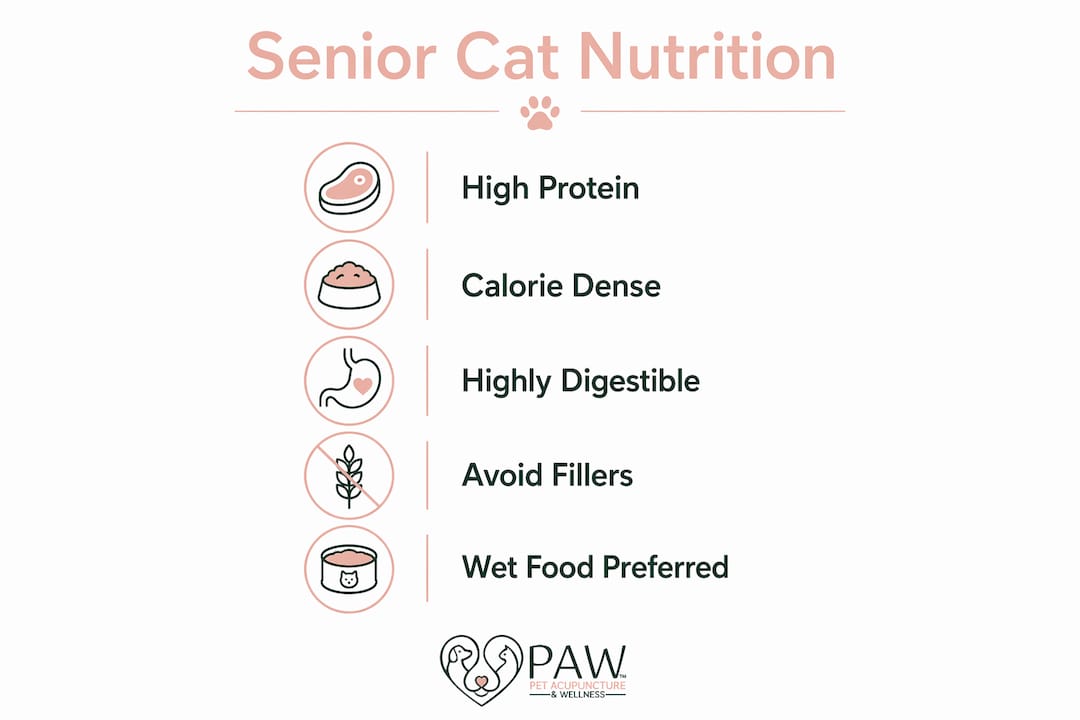
The foundation of any food for senior cats losing weight is high-quality animal protein. Protein preserves lean muscle, supports immune function, and fuels daily energy. Senior cats actually need more protein than younger adults, not less, because their ability to digest and absorb it declines with age.
Beyond protein, calorie density matters. A cat that eats smaller portions due to reduced appetite or oral discomfort needs every bite to count. Calorie-dense, highly digestible wet foods deliver more nutrition per mouthful than lower-calorie options. That efficiency becomes critical when your cat is already eating less than it should.
Key nutrients to look for in senior cat food for weight gain include:
- High animal protein: Chicken, turkey, salmon, or rabbit as the first ingredient. Aim for named meat sources, not generic “meat meal.”
- Taurine: An amino acid cats cannot produce on their own. Deficiency causes heart and eye disease. Every complete cat food must contain it.
- Omega-3 fatty acids: Found in fish oil, these reduce inflammation and support kidney and joint health.
- B vitamins: Especially B12, which supports nerve function and appetite. Senior cats often absorb B vitamins poorly.
- Moisture content: Wet food typically contains 70–80% water, supporting kidney health and hydration in cats prone to renal disease.
- Moderate phosphorus: Cats with early kidney disease benefit from controlled phosphorus levels. A vet can confirm whether this applies to your cat.
Avoid foods with excessive fillers like corn syrup, artificial preservatives, or unnamed by-products. These add calories without nutritional value and can worsen digestive sensitivity in older cats.
Why is wet food better than dry food for senior cats with weight loss?
Wet food is strongly recommended for senior cats dealing with weight loss, and the reasons go beyond simple preference. The higher moisture content, typically 70–80%, directly supports kidney health. Aging cats are prone to chronic kidney disease, and adequate hydration slows its progression.
Palatability is the other major factor. Wet food has a stronger aroma than dry kibble. Senior cats often experience a decline in their sense of smell, which reduces appetite. A more aromatic food triggers the appetite response more reliably. That means your cat is more likely to actually eat what you put in front of it.
Here is why wet food outperforms dry for aging cats:
- Easier to chew: Cats with dental disease, missing teeth, or jaw pain find wet food far less painful to eat than hard kibble.
- Higher calorie delivery per volume: Wet food’s soft texture means cats can consume more before tiring, which matters when fatigue affects eating.
- Better hydration: Cats evolved as desert animals and have a low thirst drive. Wet food compensates for this naturally.
- Supports kidney function: Hydration and kidney health are directly linked in senior cats, making moisture content a medical consideration, not just a preference.
Dry food can supplement wet food if your cat tolerates it well, but relying on dry food alone for a senior cat losing weight is rarely effective. The calorie-to-moisture ratio simply does not support recovery in most cases.
How do you feed an older cat losing weight effectively?
Changing what you feed matters less than you might expect if you do not also change how and where you feed. Functional under-eating from arthritis, oral pain, or sensory decline is one of the most overlooked causes of weight loss in senior cats. Your cat may have a full bowl and still not eat enough.
Follow these steps to improve intake:
- Offer 3–6 small meals daily. Smaller portions reduce the pressure of finishing a large bowl and are easier on a sensitive digestive system. Small, frequent meals also keep blood sugar more stable throughout the day.
- Warm the food slightly. Heating wet food to just below body temperature (around 98–100°F) releases aroma and makes it more appealing to cats with reduced smell. Never microwave in the can. Transfer to a dish first.
- Switch to shallow, wide bowls. Deep or narrow bowls press against a cat’s sensitive whiskers, causing discomfort called whisker fatigue. Shallow, wide bowls and raised feeding stations reduce neck strain for cats with arthritis.
- Place food in a calm, low-traffic area. Stress suppresses appetite. Cats with arthritis also avoid locations that require jumping or navigating obstacles. Keep the feeding spot consistent and easy to reach.
- Use separate feeding stations if you have multiple pets. Competition at the bowl causes anxiety and reduces intake in less dominant cats.
- Add moisture-rich toppers. A small amount of low-sodium broth or a spoonful of plain cooked chicken can increase palatability without disrupting nutritional balance.
Pro Tip: Watch your cat during meals, not just before and after. Dropping food, eating slowly, or approaching the bowl and then walking away are signs of oral pain or nausea, not pickiness. These behavioral clues guide your vet toward the right diagnosis.
How do you safely transition an older cat to a new diet?
Sudden diet changes cause digestive upset in cats of any age. In senior cats, the consequences are worse. Diarrhea or vomiting from a rushed transition can trigger appetite loss that sets back weight gain by days or weeks.
The safest approach is a gradual 7–10 day transition. Start by mixing roughly 25% new food with 75% of the current food. Every two to three days, shift the ratio further toward the new food. By day 10, your cat should be eating the new diet exclusively. Monitoring stool quality and appetite throughout this period tells you whether the pace is too fast.
Veterinary-prescribed recovery diets are sometimes used short-term to deliver a concentrated calorie boost during illness recovery. These are not permanent solutions. They are designed for supervised, short-term use and should not replace a complete senior diet without ongoing medical oversight.
Pro Tip: Increasing caloric intake by roughly 10–20% gradually over a week helps stabilize weight without triggering vomiting or diarrhea. Always confirm this approach with your vet before starting, especially if your cat has kidney disease or diabetes.
Supplements like appetite stimulants or calorie gels should only be used under veterinary guidance. Using them without a diagnosis can mask symptoms of serious illness and delay the treatment your cat actually needs.
When should you see a vet about your cat’s weight loss?
Weight loss in senior cats is not a normal part of aging. It signals an underlying condition that requires diagnosis before any diet plan can be truly effective. Conditions like hyperthyroidism, chronic kidney disease, diabetes, and inflammatory bowel disease all cause weight loss and each requires a different dietary approach.
Key reasons to seek veterinary care promptly include:
- Unexplained weight loss despite normal appetite: This pattern strongly suggests hyperthyroidism or diabetes, both of which are treatable with early diagnostics.
- Rapid weight loss over weeks: Any loss exceeding 10% of body weight in a short period warrants immediate evaluation.
- Changes in litter box habits: Increased urination or diarrhea alongside weight loss points to systemic disease.
- Visible muscle wasting: Loss of muscle over the spine or hindquarters indicates the body is breaking down tissue for energy.
Switching to a high-calorie food before getting a diagnosis can mask symptoms and delay treatment for conditions like kidney disease or inflammatory bowel disease. Veterinary diagnostics, including blood panels for thyroxine (T4), glucose, and renal function, should guide every dietary decision for a senior cat losing weight.
Tracking your cat’s weight at home using a kitchen scale every one to two weeks gives your vet precise data. That information shapes treatment decisions far better than a general impression of “she seems thinner.” You can also learn to recognize signs of pain in senior cats that affect eating comfort, which is often the missing piece in the weight loss puzzle.
Key Takeaways
Senior cat weight loss requires both targeted nutrition and veterinary diagnostics, because food alone cannot address the underlying conditions that drive most cases of age-related weight decline.
| Point | Details |
|---|---|
| Prioritize wet food | High-moisture, high-protein wet food supports muscle mass, hydration, and kidney health in aging cats. |
| Feed small, frequent meals | Offering 3–6 small meals daily reduces digestive stress and improves total calorie intake. |
| Transition diets gradually | A 7–10 day transition prevents digestive upset and appetite loss during food changes. |
| Get a vet diagnosis first | Weight loss signals treatable diseases; dietary changes without diagnostics can delay critical treatment. |
| Adjust the feeding environment | Shallow bowls, raised stations, and calm feeding areas increase intake more than switching food brands alone. |
What we see at Pet Acupuncture & Wellness
Weight loss in older cats is one of the most common concerns we hear from cat owners in South Tampa. What surprises many people is how often the problem is not just about food. A cat that approaches the bowl and then walks away is not being picky. That cat is often in pain.
Arthritis is a major and underdiagnosed driver of reduced food intake in senior cats. When neck movement hurts, bending to a floor-level bowl becomes something a cat avoids. When joint pain makes sitting still uncomfortable, a cat eats less and moves away faster. These are not appetite problems. They are pain problems that look like appetite problems.
At Pet Acupuncture & Wellness, we see cats whose owners have tried three or four different foods with little improvement. Once we address the underlying discomfort through acupuncture or herbal support, appetite often returns on its own. The benefits of a healthy weight for senior cats extend well beyond appearance. Lean muscle mass protects joints, supports organ function, and directly affects how long and how comfortably a cat lives.
My honest advice: watch your cat eat, not just whether the bowl empties. Observation at feeding time gives you more useful information than any food label. And if your cat is losing weight, get a diagnosis before you change the diet. Nutrition is a powerful tool, but it works best when you know what you are treating.
— Pet Acupuncture & Wellness
Natural wellness support for your senior cat in South Tampa
If your older cat is losing weight and you want to address more than just diet, Pet Acupuncture & Wellness offers mobile veterinary care that comes directly to your home in South Tampa.

For senior cats dealing with arthritis or chronic pain that affects their appetite and eating comfort, pet acupuncture in Tampa provides natural pain relief without the stress of a clinic visit. We also offer herbal therapy for senior pets to support overall wellness and complement your cat’s nutritional plan. Both approaches work alongside conventional veterinary care, not instead of it. Contact Pet Acupuncture & Wellness to learn how integrative care can help your senior cat feel more comfortable, eat better, and live well.
FAQ
What is the best food for a senior cat losing weight?
High-protein, calorie-dense wet food is the best choice for senior cats losing weight. Look for named animal proteins like chicken or salmon as the first ingredient, and confirm the food contains taurine.
How often should I feed my older cat to help it gain weight?
Offer 3–6 small meals per day rather than one or two large ones. Smaller, more frequent meals reduce digestive stress and help cats with low appetite consume more calories overall.
Can weight loss in older cats be a sign of disease?
Yes. Weight loss in senior cats commonly signals treatable conditions such as hyperthyroidism, kidney disease, or diabetes. A veterinary blood panel including T4, glucose, and renal markers is the right first step.
How long does it take to transition a senior cat to a new food?
A safe diet transition takes 7–10 days. Mix increasing amounts of the new food into the old food every two to three days, and monitor stool quality and appetite throughout the process.
Why does my senior cat lose weight even when eating normally?
A cat can eat a normal amount and still lose weight due to poor nutrient absorption, hyperthyroidism, or diabetes. Oral pain or arthritis can also cause a cat to appear to eat while actually consuming far less than needed.