Your dog still wants to follow you from room to room. He still perks up when you reach for the leash. But lately there's that pause. He takes a moment to rise from his bed. He circles before lying down. He looks at the couch, then decides it's not worth the effort. For many South Tampa families, that's the moment arthritis becomes real.
Most owners don't need a dramatic limp to know something's changed. They see the slower stairs, the hesitation on slick floors, the way a once-eager dog seems careful with his own body. That's also when many people start looking for relief that feels gentler than “wait and watch,” and more practical than loading an uncomfortable dog into the car for another stressful clinic visit.
In-home acupuncture can fit that moment well. Instead of asking an arthritic dog to brace through the ride, the lobby, and the unfamiliar exam room, treatment happens where he already knows how to relax. For many dogs, that matters. A calm body often accepts care better than a tense one.
Easing Your Dog's Arthritis Pain at Home
A common South Tampa scenario looks like this: a senior dog hears you come through the front door, gets up to greet you, then stops halfway because standing hurts. He still wants the connection. He just doesn't move the way he used to.
Owners usually notice the small changes first. The back legs look stiff after a nap. The morning walk starts slowly. Jumping into the car turns into a negotiation. None of that means there's no help left. It usually means it's time for a smarter pain plan.
For many arthritic dogs, in-home acupuncture is a useful next step because the setting removes a lot of friction. The dog stays on his own bed, blanket, or favorite rug. He isn't bracing on a slippery clinic floor or using energy to manage nerves. That lower-stress setup often makes the visit easier on both the pet and the owner.
Why Home Can Change The Whole Experience
At home, it's simpler to see how your dog moves in daily life. You can point out the exact stretch of hallway where he slips, the couch he no longer tries to reach, or the back step he now avoids. Those details matter when building an arthritis plan.
A house-call approach also tends to feel more manageable for people caring for large dogs, senior dogs, or anxious dogs. If your dog already dreads the car, comfort starts before the first needle ever goes in. You can learn more about at-home dog pain relief options if your goal is to support mobility without adding more stress to the day.
Home visits don't just move the appointment location. They often change how the dog experiences treatment.
What owners want is straightforward. Less pain getting up. Better movement on walks. More ease at bedtime. Acupuncture won't turn back the clock, but in the right dog, it can help restore comfort in a way that feels calm, gentle, and realistic.
What Is Veterinary Acupuncture
Veterinary acupuncture is the placement of very fine needles at specific points on the body to encourage pain relief, relaxation, and better function. If the term feels unfamiliar, a simple way to think about it is this: the body has communication pathways, and pain can act like a traffic jam. Acupuncture helps clear some of that congestion so signals move more normally again.
That explanation works whether you approach acupuncture through Traditional Chinese Veterinary Medicine or through a modern pain-management lens. In practice, most owners care less about the label and more about the question, “What does it do for my dog?” The practical answer is that it's used to support comfort, mobility, and recovery, especially in dogs who are stiff, sore, or moving less freely.

Dry Needle Acupuncture
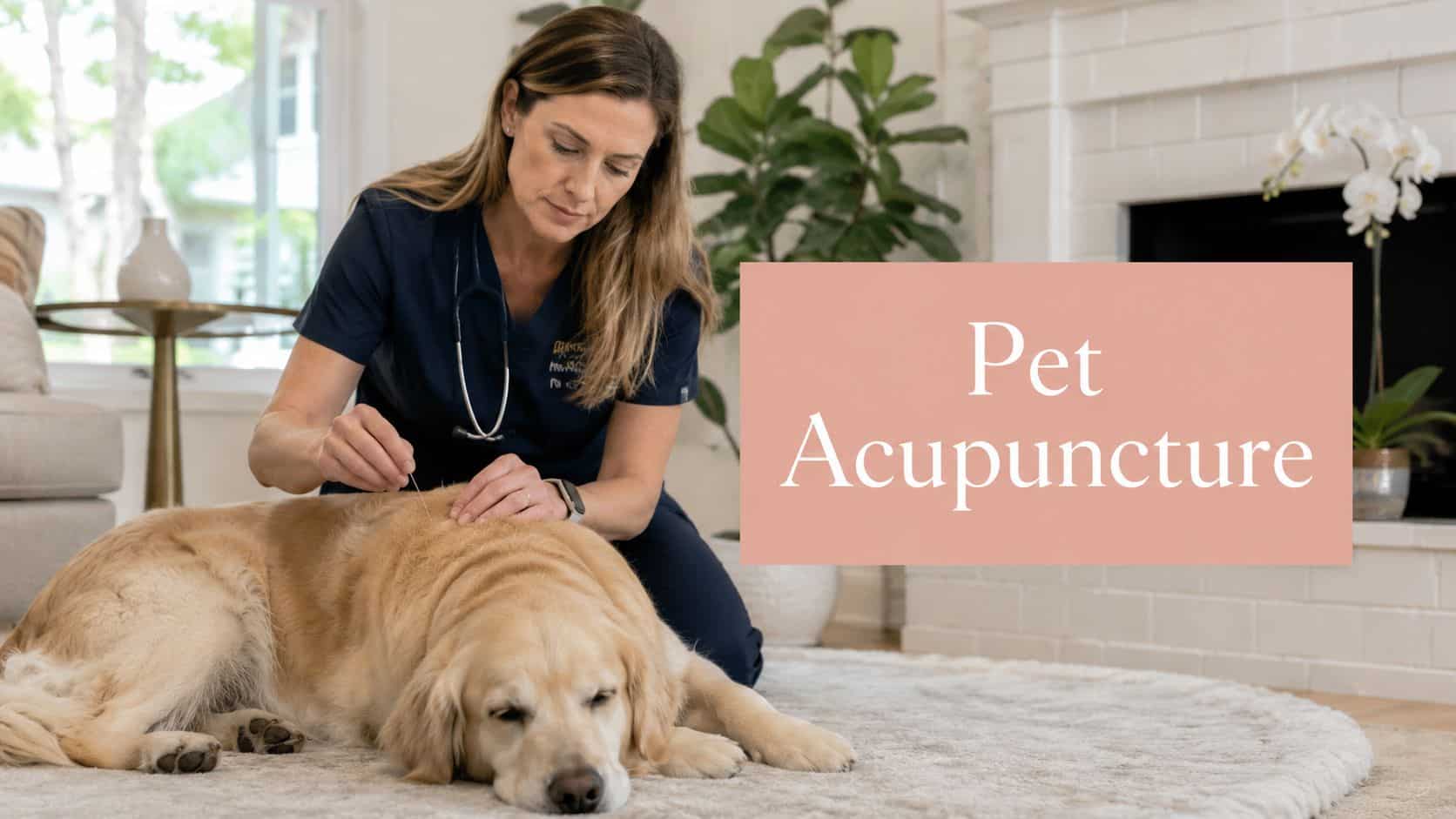
This is the form commonly envisioned. A veterinarian places sterile, hair-thin needles into selected acupuncture points and leaves them in place for a short treatment period.
Many dogs tolerate this better than owners expect. Some barely react. Some blink, lick, or turn to look for a moment, then settle. Others get drowsy once the session is underway.
Dry needle acupuncture is often the foundation. It's precise, adaptable, and well suited for dogs with arthritis who need a gentle starting point.
Electroacupuncture
Electroacupuncture uses the same needles, but pairs some of them with a very mild electrical current. The sensation is controlled and subtle. It isn't about “shocking” the dog. It's about adding deeper, more sustained stimulation to selected points.
A practical analogy is turning up the volume on a healing signal that the body is already receiving. In dogs with chronic arthritis pain, that extra stimulation can be especially useful when simple needle placement alone doesn't seem strong enough.
Aquapuncture
Aquapuncture involves injecting a small amount of liquid into an acupuncture point. Depending on the case, that may be something like Vitamin B12 or another selected substance. The goal is a longer-lasting stimulation at that point.
Some dogs do well with aquapuncture when a veterinarian wants a time-released effect without needing many needles left in place. In a home setting, it can also be a helpful option for dogs who are wiggly, highly sensitive, or unlikely to lie still for long.
How A Veterinarian Chooses Between Them
The choice depends on the dog in front of you, not on a one-size-fits-all formula. A dog with mild stiffness and a calm temperament may start with dry needle acupuncture. A dog with more stubborn pain may benefit from electroacupuncture. A dog who won't tolerate a traditional session well may be better served with aquapuncture.
For owners who want more background on training and standards, this overview of veterinary acupuncture certification is useful. Credentials matter because technique, point selection, and patient handling all affect the experience.
Practical rule: The best acupuncture plan is the one your dog can comfortably receive, consistently, in a form matched to his arthritis and temperament.
Proven Benefits Versus Minimal Risks
The strongest reason owners consider acupuncture for dog arthritis isn't novelty. It's that they want relief that's meaningful in everyday life. They want their dog to stand more comfortably, move with less guarding, and seem more like himself.
There is real support for using acupuncture in canine osteoarthritis. Multiple studies and systematic reviews have demonstrated the efficacy of acupuncture for canine osteoarthritis. For example, one clinical trial found that dogs treated with electroacupuncture showed a significant decrease in pain scores and lameness compared to a control group, with improvements lasting for weeks after treatment in this clinical review on canine osteoarthritis acupuncture.

What Benefits Owners Usually Care About Most
The first benefit is usually pain relief. Dogs may show that improvement in quiet ways. They rise with less hesitation. They ask to go farther on walks. They stop shifting constantly to find a comfortable sleeping position.
Mobility is the second big target. Better comfort often allows better movement, and better movement helps preserve daily function. That matters in arthritis, because once dogs move less, they often lose strength and confidence along with comfort.
A third potential advantage is that acupuncture can fit into a broader pain plan. Some dogs still need conventional medication. Some need less. Some can't tolerate certain medications well and need another way to support comfort. If you're comparing options locally, this guide to the benefits of acupuncture for dogs in South Tampa offers a useful local perspective.
What Acupuncture Does Not Do Well
It doesn't rebuild a severely damaged joint. It doesn't replace a full orthopedic evaluation when a dog has sudden worsening, collapse, or obvious distress. It also doesn't work best as a one-time rescue treatment for a chronic problem that has been building for months or years.
That's an important trade-off. Acupuncture often works best when expectations are realistic and when treatment is repeated in a way that matches the chronic nature of arthritis.
The Risks Are Usually Mild, But They Still Matter
When acupuncture is performed by a trained veterinarian using proper technique, the risks are generally minimal. The most common issues are mild and short-lived. A dog may be temporarily sore, briefly tired, or mildly uncertain during a first session.
Rarely, you might see a tiny bruise at a needle site or a dog who doesn't tolerate handling well enough for a productive visit. That doesn't mean acupuncture is wrong in principle. It may mean the technique, timing, or treatment style needs to change.
Acupuncture is often most successful when it's treated as part of good arthritis management, not as a miracle or a last resort.
A Look Inside Your In-Home Acupuncture Session
Most owners feel better once they know what the visit looks like. The unknown is usually harder than the treatment itself.
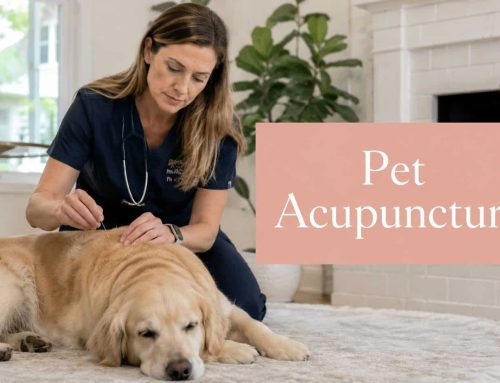
A typical in-home session starts before the veterinarian even touches your dog. You'll usually be asked to choose a quiet area with decent footing and enough room for your dog to lie down comfortably. That might be a living room rug, an orthopedic bed, or a folded blanket in the spot where your dog already rests.

Before The Needles Go In
The first part of the visit is observation. How does your dog stand? Does he offload one leg? Does he resist turning one direction more than the other? In a home visit, these details are easier to see because the dog is moving in a normal environment.
The physical exam is gentle and practical. A veterinarian may assess painful areas through palpation, watch gait changes, and, in an integrative setting, also consider pulse and tongue findings. That isn't theatrical. It's part of building a fuller picture of comfort, circulation, tension, and overall pattern.
Owners often expect a lot of drama at this point. Usually there isn't any. The session tends to be quiet.
During The Treatment
Once the treatment plan is set, the veterinarian places needles in selected points. Some are near the painful area. Others may be used to support relaxation, circulation, or whole-body balance. Dogs respond in different ways. Some stay seated at first, then lie down. Some look mildly puzzled for a minute, then soften. Some get so relaxed that they nap.
For dogs receiving care at home, one major advantage is familiarity. The room smells normal. The sounds are familiar. There's no waiting-room buildup. That can make a noticeable difference for dogs who tense up in clinics and for owners who don't want stress added to an arthritis appointment.
If you're exploring whether there's a house-call option nearby, this page on finding pet acupuncture near me can help orient you to what to ask for.
How Long It Takes And What Happens After
A typical session often lasts 30 to 60 minutes. That timing includes the assessment, treatment, and short aftercare discussion. For chronic arthritis, treatment is usually done as a series rather than a single visit, because ongoing pain patterns rarely shift in one sitting.
After the needles are removed, your dog may seem sleepy, loose, hungry, or content. Some dogs want a nap. Others get up and walk with a little more fluidity. It's also normal for changes to be subtle at first.
This short video gives a helpful visual sense of the treatment environment and handling style many owners find reassuring.
What Helps The Session Go Smoothly
A few simple choices can make the visit easier:
- Pick the right surface: Use a rug, yoga mat, or blanket so your dog doesn't brace on slick flooring.
- Keep the room quiet: Turn off loud TVs and limit foot traffic if possible.
- Don't overexercise beforehand: A short potty walk is helpful. A long outing can leave an arthritic dog too sore to settle.
- Have favorite rewards nearby: Some dogs relax more with calm praise, a chew, or a few small treats.
A good in-home acupuncture session shouldn't feel rushed. It should feel like your dog had room to settle into it.
An Integrated Approach to Arthritis Care
Acupuncture can help arthritic dogs, but it usually works best when it's part of a broader plan. Arthritis affects joints, muscles, balance, confidence, daily habits, and sometimes mood. One tool rarely addresses all of that well on its own.
That's why an integrated approach tends to produce the most useful day-to-day results. Instead of asking a single therapy to do everything, the plan combines methods that solve different parts of the problem.

What Often Pairs Well With Acupuncture
Some dogs benefit from low-level laser therapy alongside acupuncture. The goals overlap in useful ways. Laser therapy is often chosen to support comfort and calm irritated tissues around painful joints.
Rehabilitation matters too. An arthritic dog who hurts will often stop using certain muscles properly. Then weakness creates more strain. A home exercise plan can help maintain muscle, support joint stability, and keep the dog engaged in movement without overdoing it.
Nutrition and herbal support can also have a place. That may include food changes aimed at weight management, because less excess load on sore joints usually helps. It may also include Chinese herbal or food therapy when an integrative veterinarian believes it fits the dog's pattern and medical history.
What Usually Does Not Work Well
Owners are often tempted to keep adding random supplements, new beds, and occasional rest days without a clear strategy. That patchwork approach can waste time. It's not that every individual tool is bad. It's that the pieces don't add up to a coordinated plan.
A stronger framework usually includes:
- Pain control: This may include acupuncture, medication, laser, or a combination.
- Movement support: Controlled walks, home rehab exercises, and traction changes in the house.
- Lifestyle adjustments: Ramps, non-slip runners, easier access to favorite resting places.
- Monitoring: Watching for flare-ups, reduced tolerance for walks, or changes in sleep and appetite.
For a deeper look at this whole-pet model, integrative veterinary care is the phrase worth understanding. It means using the right mix of conventional and complementary care, not choosing one camp and ignoring the other.
The best arthritis plans are practical enough to keep doing on tired weekdays, not just ambitious enough to sound good on paper.
Is Your Dog a Good Candidate for Acupuncture
Some dogs are obvious candidates for acupuncture. Others need a bit more thought. The easiest way to decide is to look at the dog's daily pattern, medical history, and tolerance for other options.
A dog is often a strong candidate if arthritis has already been diagnosed and you're seeing the usual quality-of-life changes. That includes stiffness after rest, reluctance with stairs, slower walks, difficulty jumping, or a general drop in ease and enthusiasm.
Dogs Who Often Benefit Most
A closer look helps:
- Senior dogs with ongoing stiffness: Even when they're still active, older dogs often benefit when movement has become effortful.
- Dogs who don't tolerate NSAIDs well: If medication side effects are a concern, acupuncture may offer another layer of support.
- Dogs with clinic anxiety: A dog who trembles during car rides or shuts down in exam rooms may do better with treatment at home.
- Dogs already on medication but still uncomfortable: Acupuncture can be considered when current care helps, but not enough.
There are also dogs who may not be ideal candidates right away. A dog with severe distress from handling, an unstable medical issue, or a brand-new limp that hasn't been worked up yet may need a different first step. Arthritis care works best when the diagnosis is clear.
What About Cost And Insurance
Cost matters, and owners should ask about it directly. The practical question isn't whether acupuncture is “worth it” in the abstract. It's whether the expense improves your dog's daily comfort enough to justify the plan for your household.
Pet insurance coverage varies. Some policies include acupuncture or rehabilitation under complementary care, especially when tied to a diagnosed condition. Others don't. Before starting, ask your insurer what documentation they require, whether a referral is needed, and whether reimbursement depends on the veterinarian's credentials.
A useful mindset is to compare the cost to the outcomes you care about most: easier rising, more comfortable walks, better sleep, and less strain around the home. For many families in South Tampa, those changes are the reason they pursue dog acupuncture arthritis treatment in the first place.
Common Questions and Your Next Steps in South Tampa
Owners usually ask the same final questions, and they're good ones.
Does Acupuncture Hurt My Dog
Most dogs tolerate it well. The needles are very fine, and the reaction is often much smaller than people expect. A dog may notice insertion at a few points, then relax once the session gets going.
How Quickly Will I See Results
Some dogs show small changes early, such as easier rising or a more relaxed posture later that day. Others improve more gradually over a series of visits. Chronic arthritis usually responds best when you judge progress by trends over time, not by expecting one dramatic moment.
Do I Need A Referral From My Regular Vet
Not always, but coordination with your primary veterinarian is important. Arthritis care is safer and more effective when everyone involved understands the diagnosis, current medications, and any limits on exercise or handling.
Can Acupuncture Replace Arthritis Medication
Sometimes it complements medication rather than replacing it. Some dogs do best with both. Others need a multimodal plan that includes medication, exercise changes, traction support at home, and periodic acupuncture.
How To Take The Next Step In South Tampa
If you live in South Tampa, start by gathering the basics before you book: your dog's diagnosis, current medications or supplements, recent changes in mobility, and the main goal you want help with. Be specific. “He can't get comfortable at night” is more useful than “He seems old.”
Then ask practical questions when scheduling. Is the service area limited to South Tampa? Is the visit performed in-home? What should you prepare in the house? How are follow-up sessions usually spaced for arthritis cases? Clear answers matter.
The right next step should feel simple, not overwhelming. If your dog is struggling with stiffness, slower movement, or visible discomfort, getting an in-home assessment can give you a clearer plan and often a calmer experience from the start.
If your dog is dealing with arthritis and you want calm, in-home support in South Tampa, Pet Acupuncture & Wellness (PAW Vet Practice) offers mobile integrative veterinary care focused on pain relief, mobility, and everyday comfort. Dr. Monica provides acupuncture, electroacupuncture, aquapuncture, laser therapy, rehabilitation guidance, and other whole-pet support right in your home, where your dog can relax and receive care with less stress.