When your dog starts hesitating before standing up, swings the back end awkwardly after a nap, or turns down a walk they used to love, hip pain is often part of the story. Owners usually notice the change before they have a name for it. They just know their dog seems older, stiffer, or less comfortable.
Hip pain can feel overwhelming because there usually isn't one simple fix. The dogs who do best are often the ones with a layered plan that combines home support, smart movement, weight control, and the right veterinary therapies.
Your Guide To Managing Canine Hip Pain
For many families, the search for dog pain relief hips starts with a practical question. What can I do that helps today, and what comes next if the standard options aren't enough?
That matters because most advice online gives you a long menu of treatments without helping you choose an order. In practice, hip pain management works better when you stack the right tools instead of chasing a single cure. The literature supports a multimodal approach for canine hip joint disease, especially when owners need answers beyond routine medication alone, as discussed in this overview of multimodal treatment options for dogs with hip dysplasia.
Why Layered Care Works Better
Hip discomfort usually has more than one driver. A dog may have joint inflammation, muscle tightness, weakness from reduced activity, slick flooring that causes strain, and fear of slipping that makes movement even worse. If you only address one piece, improvement can be limited.
A more useful plan often includes:
- Pain control: This may include medication from your primary veterinarian, but it isn't the only option.
- Home setup: Beds, rugs, ramps, and traction can reduce daily strain.
- Exercise selection: The right movement helps. The wrong movement hurts.
- Integrative therapies: Acupuncture, laser therapy, and rehabilitation can fit alongside conventional care.
- Monitoring: Small changes in sleep, posture, and stamina often tell us whether the plan is working.
Practical rule: If your dog's hips hurt, think in layers, not single solutions.
Some dogs need a lighter plan with home changes and rehab. Others need more support because the pain has been building for months. If your dog has already been diagnosed with arthritis or joint decline, this guide on degenerative joint disease in dogs gives helpful background on what may be happening inside the joint.
The encouraging part is that hip pain doesn't always mean an immediate surgery decision. It does mean your dog needs a plan that fits their body, age, and daily life.
Decoding Your Dog's Discomfort Signs
Hip pain is often quiet. Dogs rarely sit you down and make it obvious. They compensate, avoid, shift, and slow down long before they cry out.

The More Obvious Signs
Some signals are easy to spot once you know to look for them.
- Difficulty rising: Your dog braces with the front legs first, then slowly pushes the back end up.
- Bunny hopping: Both back legs move together when running or climbing.
- Reluctance with stairs or jumping: Dogs who once hopped into the car may stop even trying.
- Post-walk stiffness: They loosen up slowly, then seem sore later in the day.
- Weight shifting: A dog may stand with one rear leg lightly touching the ground instead of fully loading it.
These signs matter because hips are load-bearing joints. Pain often shows up most clearly during transitions, like getting up, sitting down, or turning tightly.
The Subtle Signs Owners Miss
Many dogs show pain through behavior before they show a limp.
- Less interest in play: They still want to be with you, but they don't initiate as much movement.
- Grumpiness during touch: Brushing the hindquarters or helping them into the car may trigger tension.
- Licking near the hips or thighs: Not every licking episode means allergies.
- Shorter stride length: The rear legs stop reaching as far under the body.
- Trouble getting comfortable: They circle repeatedly, change positions often, or avoid lying flat.
A lot of owners assume these are just “senior dog” changes. Sometimes they are age-related, but pain is often the reason the behavior changed in the first place. This guide on how not to miss signs of pain in a senior dog or cat is a useful companion if your dog's changes have been gradual.
What To Watch For This Week
Keep your observations simple. You don't need a spreadsheet. You do need specifics.
- Morning movement: Is getting out of bed harder than it was last month?
- Walk tolerance: Does your dog slow down halfway through the usual route?
- Surface preference: Do they avoid tile, wood, or other slick areas?
- Bathroom posture: Is squatting awkward or abbreviated?
- Recovery after activity: Are they stiff later, even after mild exercise?
This short visual can help you compare what you're seeing at home.
Dogs don't always show pain by crying. Many show it by doing less, moving differently, or avoiding what used to feel easy.
Bring those observations to your veterinarian. Good pain plans start with good pattern recognition.
Immediate Comfort And At-Home Care
If your dog is sore tonight, start with comfort and simplicity. The goal isn't to fix the whole problem in one evening. The goal is to lower strain right away.
Build A Better Resting Spot
Many painful dogs are resting in the wrong place. A bed that's too thin, too slippery, or too far from the family can make a sore dog move more awkwardly than necessary.
Set up a quiet area with:
- Supportive bedding: An orthopedic bed or thick, stable cushion that doesn't collapse under the hips.
- Easy access: Keep it away from stairs and far enough from drafts that muscles don't stay tense.
- Good traction nearby: Add a rug or yoga mat so standing up feels safer.
If your dog paces before lying down or struggles to settle, the resting surface often needs improvement.
Use Warmth And Cold Carefully
For many chronic hip cases, gentle warmth feels better than cold. A warm compress over the hip muscles can help relax guarding and make it easier for your dog to stand after rest.
Use common sense:
- Warm compresses: Use a comfortably warm towel for short sessions. Test it on your own skin first.
- Cold packs: These may help after a flare-up or overexertion if the area seems more inflamed.
- Always protect the skin: Never apply heat or cold directly without a towel barrier.
- Stop if your dog resists: Discomfort, anxiety, or skin sensitivity means that method isn't helping.
Supportive Basics That Help Over Time
Supplements aren't emergency pain relief, but they can be part of a broader support plan. Owners commonly ask about omega-3 fatty acids, glucosamine, and chondroitin. Those products may have a role, but they should be chosen with your veterinarian's input, especially if your dog has other medical conditions or takes prescription medication.
A few immediate habits matter just as much:
- Keep nails short: Long nails reduce traction and change posture.
- Use a harness, not neck pressure: A supportive harness gives you more control during slow walks.
- Prevent big weekend exertion: One overenthusiastic outing can trigger several uncomfortable days.
- Help with transitions: A folded towel under the abdomen or a rear-support harness can make standing easier for larger dogs.
For more practical home strategies, this page on at-home dog pain relief offers additional ideas you can discuss with your veterinarian.
At-home priority: Reduce slipping, reduce strain, and make it easier for your dog to rest well.
If your dog suddenly can't bear weight, cries when touched, or declines rapidly, skip home troubleshooting and contact a veterinarian promptly. Sudden severe pain needs direct evaluation.
Creating A Pain-Free Home And Lifestyle
The dogs who stay comfortable longest usually live in homes that have been adjusted for their bodies. Small environmental changes can remove dozens of painful micro-struggles from a normal day.
Your Home Checklist

Start where your dog spends the most time.
- Flooring: Add runners or non-slip rugs where your dog turns, rises, and eats.
- Furniture access: Use ramps or steps if your dog is allowed on beds or couches.
- Entry points: Make the path outside as short and steady as possible.
- Feeding area: Raised bowls may help some dogs avoid awkward postures during meals.
- Sleep location: Keep the bed close to family activity without forcing repeated navigation across slick surfaces.
Most owners don't realize how exhausting it is for a painful dog to brace on polished floors all day.
Rest Isn't The Goal. Controlled Movement Is.
A common mistake is assuming a dog with hip pain should rest as much as possible. That sounds gentle, but too much inactivity leads to more weakness, more stiffness, and often less confidence when the dog does need to move.
Public-facing guidance often underexplains this point, but the key idea is clear. High-impact activity can worsen unstable hips, while short daily walks, swimming, and other low-impact rehabilitation can help maintain muscle and range of motion, and weight reduction is one of the most impactful levers for pain relief in dogs with hip or joint disease, as explained in this article on exercise and weight support for dogs with hip dysplasia.
What Good Exercise Looks Like
Not all exercise counts as therapy. The right movement is controlled and repeatable.
Consider options like:
- Short leash walks: Favor level ground and predictable footing over long, exhausting outings.
- Swimming or underwater treadmill work: These can reduce load on sore joints while allowing movement.
- Gentle stretching and massage: Best done with instruction so you don't force uncomfortable positions.
- Frequent mini-sessions: Several short outings are often easier than one long session.
Avoid activities that add torque, impact, or sudden acceleration.
- Repeated ball chasing: Hard stops and turns overload painful hips.
- Jumping from cars or furniture: Even if your dog still can, that doesn't mean it's wise.
- Rough play on slick surfaces: Sliding and scrambling create extra strain.
Weight Changes The Whole Load
If a dog is carrying extra weight, every step asks more from inflamed joints. For many dogs, improving body condition changes stamina, comfort, and recovery more than owners expect. This is why I treat weight management as a pain-relief tool, not just a wellness goal.
If you need help getting started, this resource on the benefits of a healthy weight for cats and dogs is worth reviewing with your veterinarian.
A painful hip does better with steady muscle support, reliable footing, and less body weight to carry.
Integrative And Veterinary Pain Relief Options
When home care and basic medication aren't enough, the next step isn't guessing. It's matching the therapy to the problem in front of you. Some dogs need help calming inflammation. Others need better weight-bearing, stronger muscles, or a plan that avoids heavy reliance on NSAIDs.

When Medication Helps And When It Doesn't Solve Enough
Cornell notes that treatment for canine hip dysplasia can range from weight management and NSAIDs to physical therapy, acupuncture, regenerative medicine, and surgery, and that severe cases not responding to medical management may need salvage procedures such as femoral head and neck ostectomy (FHO) or total hip replacement (THR), as described in Cornell's review of canine hip dysplasia diagnosis and treatment options.
That's an important framework because it reflects real veterinary decision-making. Medication can be useful, but it doesn't rebuild muscle, improve traction in your kitchen, or teach a dog to move more comfortably again.
Cornell also recommends screening predisposed breeds before 20 weeks of age with PennHIP in that same review. Early recognition changes planning, even though many families don't discover the issue until adulthood.
Acupuncture, Electroacupuncture, And Laser Therapy
These are common integrative tools because they target different parts of the pain cycle.
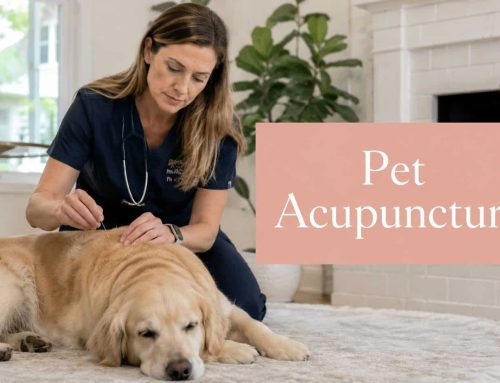
- Acupuncture: Often used to influence pain signaling, muscle tension, and overall comfort.
- Electroacupuncture: Adds gentle electrical stimulation between selected acupuncture points, which can be especially helpful when standard needle treatment needs more intensity.
- Laser therapy: Often used over painful joints and surrounding tissues to support comfort and local healing responses.
- Aquapuncture: Involves injecting a small volume, such as vitamin B12, into selected acupuncture points for longer stimulation in some cases.
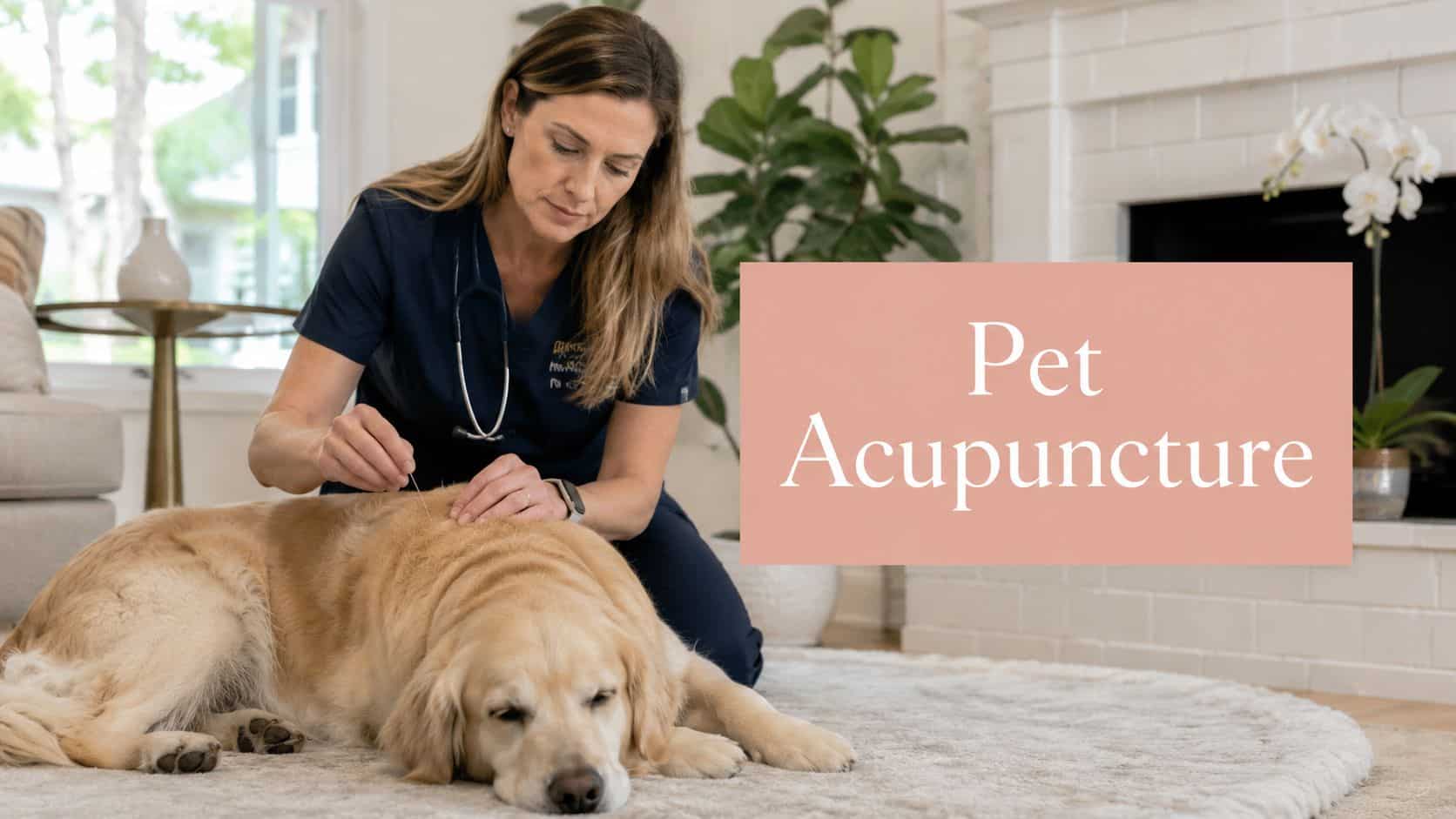
In practice, these options are often combined with rehab exercises, weight management, and medication from the primary veterinarian rather than used alone. For owners in South Tampa seeking in-home support, integrative veterinary care may include modalities such as acupuncture, laser therapy, rehabilitation plans, and other complementary approaches coordinated with the regular vet.
What The Research Tells Us About Results
Evidence matters, especially when owners are trying to decide whether a professional therapy is worth the time and effort.
In a 2019 Frontiers in Veterinary Science pilot study of canine hip dysplasia and coxofemoral osteoarthritis, the mean Canine Brief Pain Inventory pain score dropped from 9.4 before treatment to 1.8 after treatment, and pressure-mat analysis showed treated hips bore significantly more weight than saline-treated hips by day 28 (p < 0.05). The study concluded the treatment was superior to saline sham control for hip osteoarthritis pain and lameness. A related review in the same source notes that hydrotherapy is important for dogs with hip joint disease because it combines body-weight reduction with increased joint mobility, and that mesenchymal stem cells and platelet-rich plasma have reduced pain and improved physical activity at 1, 3, and 6 months after treatment in reviewed studies, as summarized in this Frontiers clinical study and review on canine hip osteoarthritis therapies.
That doesn't mean every dog responds the same way. It does mean these therapies have measurable clinical relevance, not just anecdotal appeal.
Regenerative Medicine And Expected Timing
One of the biggest mistakes owners make is expecting biologic therapies to work overnight.
A 60-day clinical study in dogs with degenerative hip joint disease found that both adipose-derived stem cell therapy and platelet-rich plasma were considered successful on the Canine Brief Pain Inventory, but the timing differed. Success was 12.5% at 30 days in both groups, then 75% in the ADSC group versus 25% in the PRP group at 60 days. Both treatments were reported as safe and effective for reducing chronic pain behaviors, with ADSC showing a trend toward greater improvement, according to this PMC study on stem cell therapy and platelet-rich plasma for canine degenerative hip disease.
That kind of timeline matters. If a dog starts a regenerative plan, I tell owners to think in weeks, not days. You're looking for gradual changes in rising, walking, posture, and willingness to engage.
Some treatments soothe quickly. Others build benefit more slowly. A good plan matches your expectations to the biology.
Building Your Dog's Custom Care Plan
No two dogs need the exact same hip pain plan. A young athletic dog recovering from injury has different priorities than a senior dog with long-standing arthritis and muscle loss. Age, temperament, home layout, other medical conditions, and family routine all shape what will work.
A practical plan usually includes three questions.
- What hurts most right now: Rising, walking, stairs, getting into the car, or settling at night?
- What can your dog safely do: Not what they're willing to push through, but what they can do without paying for it later.
- What can your household maintain: The best plan is one you can repeat consistently.
For a senior dog, I often think in terms of comfort, confidence, traction, and preserving muscle. For a younger dog, I may focus more on controlled recovery, strengthening, and preventing compensation patterns that create future pain.

The best results usually come when the primary veterinarian's diagnostics are paired with thoughtful day-to-day management and, when appropriate, integrative support. Dogs with chronic hip pain often improve because several small decisions finally start working together.
If you're in the South Tampa area and ready to create a thorough, compassionate plan for your dog's hip pain, contact us at Pet Acupuncture & Wellness. We bring expert care right to your home, where your pet is most comfortable.
If your dog is slowing down, struggling to rise, or no longer enjoying normal movement, Pet Acupuncture & Wellness (PAW Vet Practice) offers mobile, in-home integrative veterinary care for families in South Tampa. Dr. Monica works alongside your primary veterinarian to build realistic care plans focused on pain relief, mobility, and daily comfort.