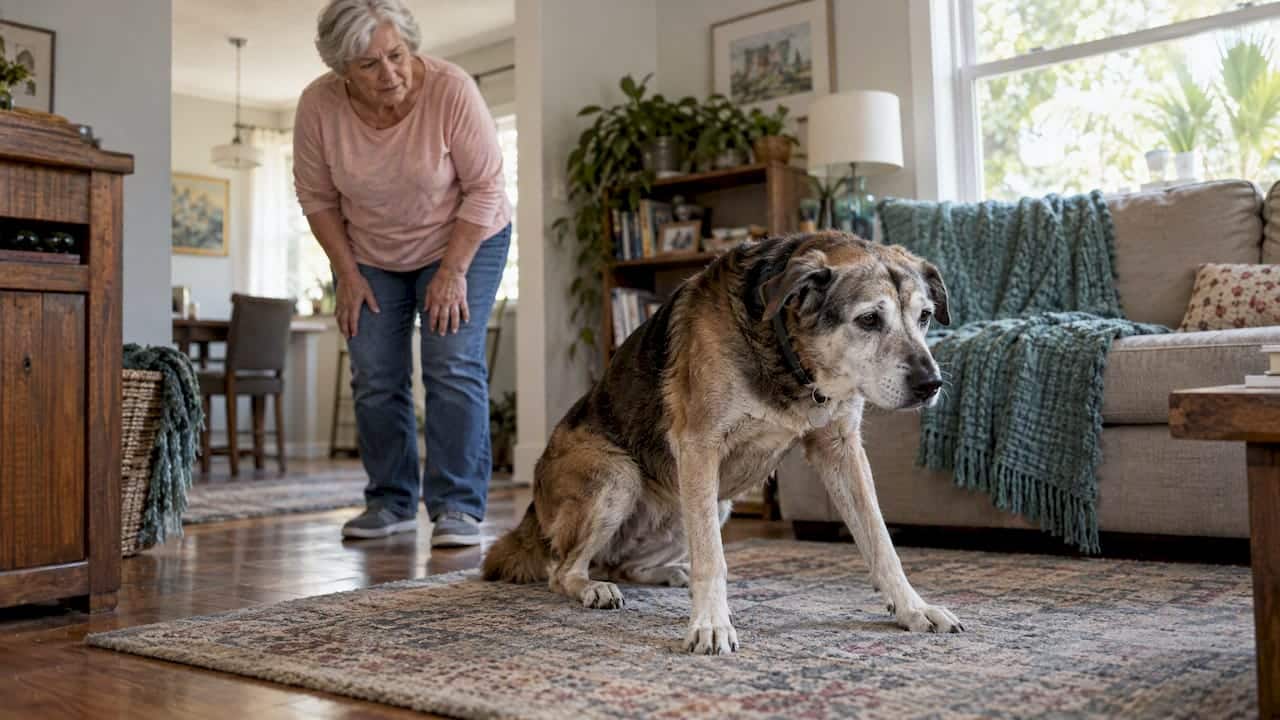
Acupuncture can genuinely help dogs with cranial cruciate ligament (CCL) injuries, but the role it plays depends heavily on your dog’s size, age, and how severe the tear is. As an adjunct therapy, it offers real benefits for pain control, post-operative recovery, and conservative management in selected patients. It is not, however, a reliable mechanical substitute for surgical stabilization in most large, active dogs with complete, unstable tears. Here is what you need to know before your next conversation with your veterinarian.
- What owners typically see: Reduced limping, more willingness to rise from rest, and improved comfort during daily movement, often noticeable within the first 1–2 treatments when combined with manual therapy.
- Timeline: Meaningful symptomatic improvement can appear early, but durable results in a conservative (non-surgical) plan typically require a longer commitment, with retrospective reports indicating multiple sessions over several months.
- One clear limitation: Acupuncture does not restore mechanical stability to an unstable, high-demand joint. For most large-breed dogs with complete tears, procedures like TPLO or TTA remain the recommended path, with acupuncture playing a supportive role before and after surgery.
Your best next step is a conversation with your primary vet or a certified veterinary acupuncturist to determine whether acupuncture fits your dog’s specific situation.
Key Takeaways
Acupuncture is a well-supported adjunct for CCL pain management and rehabilitation in dogs, but it does not replace surgical stabilization for most large, active dogs with complete, unstable tears.
| Point | Details |
|---|---|
| Acupuncture as adjunct, not replacement | Acupuncture controls pain and supports recovery but does not restore mechanical joint stability in unstable CCL tears. |
| EA targets L4–L6 for stifle pain | Electroacupuncture at segmental spinal levels produces the most reliable pain modulation for stifle disease. |
| Expect 6–7 sessions for conservative plans | Retrospective data shows an average of 6.9 treatments over 4–10 months for clinical recovery in selected senior dogs managed without surgery. |
| Monitor with both owner tools and vet exams | Combine CBPI or CSOM scores with veterinary gait analysis at 2–4 weeks and 8–12 weeks to assess real progress. |
| Pet Acupuncture & Wellness | Offers in-home electroacupuncture and coordinated care plans for CCL dogs in South Tampa, working alongside your primary vet or surgeon. |
Table of Contents
- How acupuncture works to relieve stifle pain in dogs with CCL injuries
- What the research actually shows about acupuncture for cruciate injury dogs
- When acupuncture makes the most sense for your dog’s CCL condition
- What a typical acupuncture treatment plan looks like for CCL cases
- What credentials should your dog’s acupuncturist have?
- Safety, side effects, and when to pause treatment
- How to tell whether acupuncture is working and when to reconsider surgery
- What to expect from a mobile acupuncture visit for your dog’s CCL injury
- Our perspective on acupuncture as part of CCL care
- Mobile acupuncture for CCL dogs in South Tampa
- Sources
- FAQ
How acupuncture works to relieve stifle pain in dogs with CCL injuries
Acupuncture modulates pain through three overlapping pathways: segmental neural effects at the spinal cord level, local tissue responses at the needle site, and systemic neurochemical changes that affect how the brain processes pain signals. Understanding these mechanisms helps explain why canine acupuncture therapy can be genuinely useful for stifle disease, while also clarifying its limits.
Segmental nerve modulation at L4–L6 is the most clinically relevant mechanism for CCL-related pain. The stifle (the dog’s knee) receives its primary sensory innervation from spinal segments L4 through L6. Needling points that share these segmental levels can inhibit pain transmission through the dorsal horn of the spinal cord, a process called segmental inhibition. Think of it like adjusting the volume on a pain signal before it reaches the brain. This is why practitioners targeting muscles around the stifle, such as the quadriceps, biceps femoris, and gastrocnemius, can produce meaningful local pain relief even without needling directly into the joint.
Dry needling (DN) and electro-acupuncture (EA) serve complementary roles. Dry needling uses fine solid needles inserted into specific points or myofascial trigger zones to produce local tissue effects: improved microcirculation, release of inflammatory mediators, and muscle relaxation. Electro-acupuncture adds a mild electrical current between paired needles, amplifying the neurochemical response. EA tends to produce stronger endorphin and enkephalin release and a more pronounced segmental inhibitory effect, which is why it is often preferred for acute or moderate orthopedic pain.
Systemically, both techniques trigger the release of endogenous opioids, serotonin, and norepinephrine, all of which contribute to central pain modulation. Local effects include reduced prostaglandin activity and improved lymphatic drainage around the joint. Together, these responses can reduce the perception of pain and support the tissue environment needed for healing, even when the underlying structural problem (a torn ligament) remains.
Targeting L4–L6 spinal segments is the cornerstone of effective acupuncture for stifle disease. A comprehensive review of acupuncture for pain management in companion animals confirms that segmental effects at these levels, enhanced by electroacupuncture, are central to pain relief in dogs with stifle conditions.
Pro Tip: Ask your veterinary acupuncturist specifically which spinal segments they are targeting and why. A practitioner who can explain the segmental rationale for each point selection is demonstrating the kind of clinical reasoning that separates evidence-informed care from generic needle placement.
What the research actually shows about acupuncture for cruciate injury dogs
The honest summary: the evidence is supportive but mixed, and the quality of individual studies varies considerably. Owner-reported outcomes tend to show more consistent benefit than objective gait metrics, which is a pattern worth understanding before you set expectations.
| Study | Design | Sample Size | Objective Outcome | Owner-Reported Outcome |
|---|---|---|---|---|
| EA one month post-CCL repair | Randomized, blinded | 47 dogs | Significant immediate reduction in stance time; no ROM or gait-analysis benefit from single treatment | Not measured |
| Acupuncture + manual therapy (CAMT) | Repeated-measures therapeutic trial | 47 dogs | Not primary focus | Significant short-term improvement in walking, trotting, jumping, rising |
| Acupuncture for canine OA | Prospective, randomized, placebo-controlled crossover | 32 dogs | No improvement in ground reaction forces or accelerometry | Owner CSOM showed improvement with acupuncture |
| Senior dogs, non-surgical CCL (acupuncture + herbs) | Retrospective case series | seven dogs | Clinical recovery (no drawer sign, no lameness) in selected cases | Owners reported functional improvement |
| Perioperative EA in TTA surgery | Prospective, randomized, blinded | 32 dogs | No significant analgesic benefit vs. control | Not measured |
A randomized blinded trial of EA administered one month after CCL repair found a statistically significant immediate reduction in stance time in the treated limb, but a single session did not produce measurable range-of-motion or gait-analysis improvements. That result is encouraging but also a reminder that one treatment is not a course of care.
The 47-dog combined acupuncture and manual therapy trial showed owner-detected improvements in walking, trotting, jumping, and rising after just 1–2 treatments. Meanwhile, a prospective placebo-controlled crossover trial in 32 dogs with osteoarthritis found no objective improvement in ground reaction forces or accelerometry, though owner-completed clinical metrology instruments did show benefit. A 2026 prospective randomized study of perioperative EA in TTA patients found no significant analgesic advantage over control, underscoring that timing and protocol matter enormously.
The retrospective case series of senior dogs managed without surgery is the most compelling data point for conservative management: seven dogs achieved clinical recovery averaging 6.9 acupuncture treatments over 4–10 months. The sample is small, the design retrospective, and patient selection was careful, so this finding should not be generalized to all dogs.
Key limitations to keep in mind:
- Small sample sizes across nearly all published trials
- Heterogeneous protocols (different points, frequencies, and paired therapies) make direct comparisons difficult
- Caregiver placebo effect is a real confounder in owner-reported outcomes
- Most studies pair acupuncture with other therapies, making it hard to isolate acupuncture’s independent contribution
The practical takeaway: acupuncture can accelerate symptom relief and support rehabilitation, but plan for a multimodal approach and set realistic expectations around objective improvement.
When acupuncture makes the most sense for your dog’s CCL condition
Acupuncture is most commonly recommended in three clinical scenarios: post-operative pain control and rehabilitation, conservative management for dogs who are not surgical candidates, and long-term palliative care for chronic osteoarthritis following CCL injury.
Scenarios where acupuncture is commonly integrated:
- 1–4 weeks post-surgery: Pain management after TPLO or TTA, where acupuncture can complement pharmaceutical analgesia and support earlier return to comfortable movement. Post-operative integrative care is one of the most evidence-supported applications.
- Conservative pathway for small or older dogs: Small-breed dogs, senior dogs with significant comorbidities, or dogs whose owners decline surgery may benefit from a structured conservative plan that includes acupuncture, exercise restriction, weight management, and Chinese herbal medicine.
- Partial tears with mild instability: Dogs with partial CCL tears and minimal joint instability are sometimes managed conservatively, and acupuncture can help control pain during the restricted-activity period.
- Long-term osteoarthritis management: CCL injury almost always leads to progressive joint degeneration. Ongoing acupuncture sessions, often monthly during maintenance, can help manage chronic OA pain and maintain quality of life.
When surgery is the recommended path, acupuncture is adjunctive, not a substitute. Active large-breed dogs, complete tears with significant instability, and high-performance working dogs typically need TPLO or TTA to restore functional stability. In those cases, the most helpful thing acupuncture can do is support recovery before and after the procedure.
Coordinating with your primary vet or orthopedic surgeon from the start produces the best outcomes. A written plan that specifies acupuncture frequency, rehabilitation milestones, and clear escalation criteria keeps everyone on the same page.
What a typical acupuncture treatment plan looks like for CCL cases
A single acupuncture session for a dog with a CCL injury typically lasts 20–45 minutes and involves 8–20 needles placed at points targeting the stifle’s segmental nerve supply and surrounding musculature. Electro-acupuncture is commonly added, connecting two to four needle pairs to a low-frequency current for 10–20 minutes. Some practitioners also incorporate Tui-na (Chinese veterinary massage) or laser therapy in the same visit.
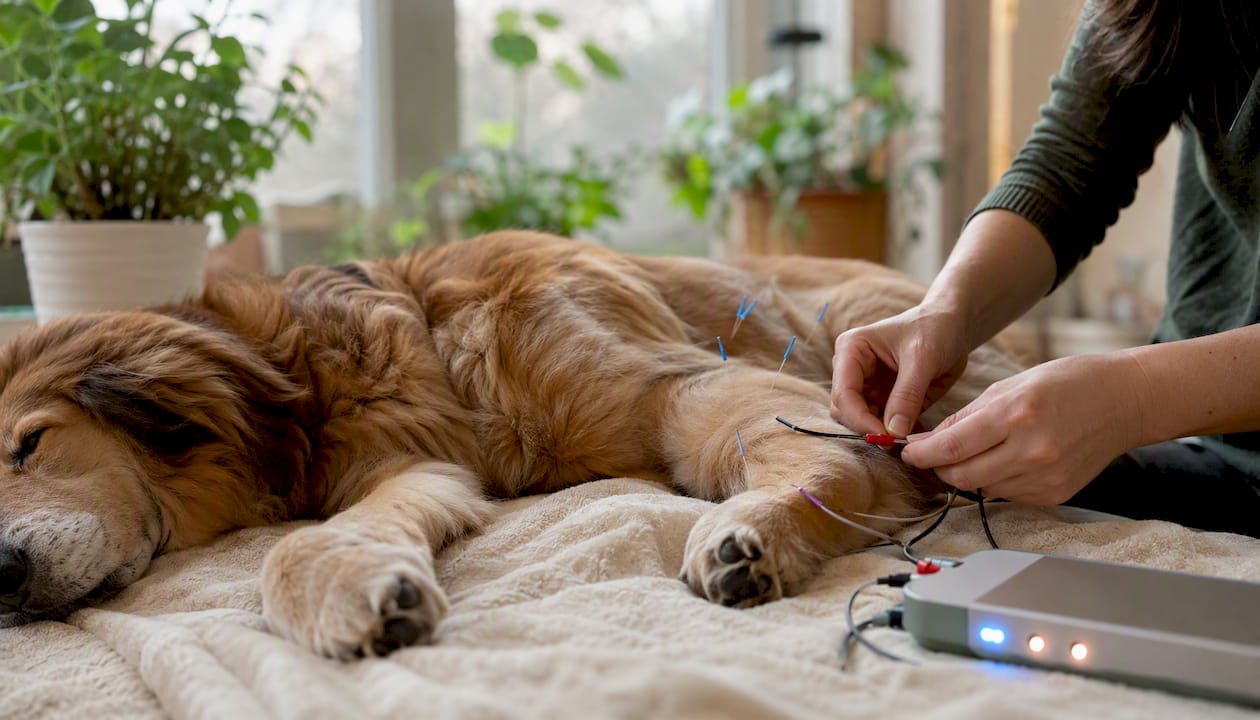
| Protocol Element | Typical Range | Notes |
|---|---|---|
| Session length | 20–45 minutes | Shorter for anxious or first-time patients |
| Needle count | 8–20 needles | Varies by patient size and tolerance |
| EA inclusion | Common for orthopedic pain | Paired needles, low frequency (2–10 Hz) |
| Induction frequency | Weekly for 4–6 weeks | More frequent early in the plan |
| Maintenance frequency | Every 4–8 weeks | Adjusted based on response |
| Time to noticeable change | 1–4 sessions | Owner-reported comfort often improves first |
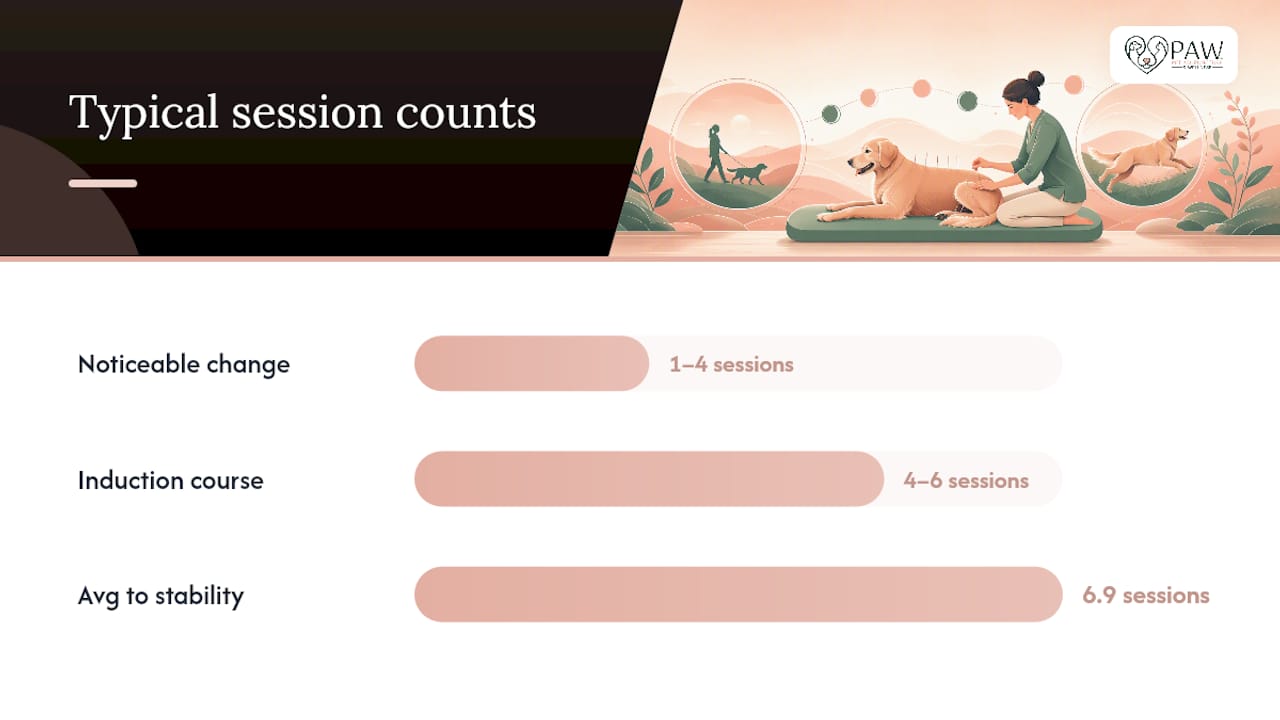
Progress tends to follow a recognizable pattern. After the first one or two sessions, many owners notice their dog rising more easily or limping less at the end of the day. By weeks 4–8, a well-responding dog typically shows more consistent comfort and willingness to bear weight. Long-term maintenance, often monthly, helps sustain those gains, particularly in dogs managing concurrent osteoarthritis. The retrospective series of senior dogs averaged 6.9 treatments over 4–10 months to achieve clinical stability in selected cases, which gives a reasonable benchmark for conservative plans.
Cost varies by region, provider, and whether the visit is clinic-based or mobile. In the United States, individual sessions generally range from roughly $75 to $200, with mobile or in-home visits sometimes carrying an additional travel fee. Many pet insurance policies now cover veterinary acupuncture when performed by a licensed DVM, so it is worth checking your plan before the first appointment. Tracking improvement through consistent activity logs and brief video clips of your dog’s gait helps both you and your vet assess whether the investment is producing results.
What credentials should your dog’s acupuncturist have?
Veterinary acupuncture must be performed by a licensed veterinarian. In the United States, only a DVM (or equivalent) is legally authorized to diagnose and treat animal patients, which means a human acupuncturist or unlicensed practitioner cannot legally provide this service for your dog, regardless of their personal training.
Beyond the DVM license, look for recognized post-graduate acupuncture certification. The Chi Institute and the International Veterinary Acupuncture Society (IVAS) both offer structured training programs that lead to a Certified Veterinary Acupuncturist (CVA) designation. Board-certified specialists in veterinary sports medicine and rehabilitation (Diplomates of the American College of Veterinary Sports Medicine and Rehabilitation, or ACVSMR) often work alongside or refer to TCVM-trained practitioners for integrative orthopedic cases.
Why do vet credentials matter beyond the needle technique itself? A DVM can perform a physical and orthopedic examination, order imaging, recognize red flags like progressive neurologic signs or acute joint effusion, and integrate acupuncture into a broader medical plan. That diagnostic capacity is what separates safe, effective care from well-intentioned but potentially harmful treatment.
When coordinating care, ask your acupuncturist to send written session notes to your primary vet or surgeon after each visit. A shared record that documents needle sites, patient response, and any changes in lameness score keeps the whole team aligned and creates a paper trail that helps with insurance reimbursement.
For in-home or mobile visits, a few additional competencies matter. The provider should have portable EA equipment, experience handling anxious or mobility-limited dogs in a home environment, a clear protocol for infection control (single-use sterile needles, proper disposal), and a defined escalation pathway if your dog shows a sudden change during or after treatment.
Safety, side effects, and when to pause treatment
Acupuncture performed by a qualified veterinary professional is generally low-risk, but adverse events and contraindications do exist, and knowing them helps you monitor your dog appropriately.
Common, mild side effects (usually resolve within 24 hours):
- Transient soreness or stiffness at needle sites
- Brief lethargy or sleepiness after a session, often described as a “treatment response”
- Minor surface bleeding or small bruise at a needle point
- Temporary increase in lameness in the first 24 hours, sometimes called a “healing crisis”
Rarer complications:
- Localized infection if aseptic technique is not followed (single-use sterile needles eliminate most of this risk)
- Needle migration in very rare cases, particularly if a needle is not accounted for at session end
Red flags that require stopping treatment and contacting your vet promptly:
- Acute worsening of lameness beyond 48 hours post-session
- New neurologic signs (dragging a paw, sudden weakness, loss of bladder control)
- Signs of systemic illness (fever, vomiting, marked lethargy)
- Swelling, heat, or discharge at a needle site suggesting infection
Dogs with poorly controlled bleeding disorders or those on anticoagulant medications require careful evaluation before acupuncture, since needling carries a small bleeding risk. Active skin infections, open wounds, or tumors at the intended needle sites are local contraindications. Pregnant dogs and dogs with certain cardiac conditions may also need modified protocols, which is another reason a DVM’s assessment before starting is non-negotiable.
How to tell whether acupuncture is working and when to reconsider surgery
Combine objective veterinary measures with structured owner-observation tools and consistent monitoring intervals. That combination gives you the clearest picture of whether your dog is genuinely improving or whether it is time to escalate care.
Recommended monitoring timeline:
- Baseline (before first session): Veterinary orthopedic exam, gait assessment, and a standardized owner questionnaire such as the Canine Brief Pain Inventory (CBPI) or the Canine Specific Outcome Measure (CSOM). Video your dog walking and trotting on a flat surface.
- 2–4 week check: Owner-reported CSOM or CBPI scores compared to baseline; brief veterinary recheck to assess lameness grade and joint comfort.
- 8–12 week reassessment: Full orthopedic exam, repeat gait analysis if available, updated owner scores. This is the decision point for continuing, adjusting, or escalating.
Objective measures your vet may use include force plate or pressure-mat gait analysis (which quantifies how much weight your dog places on the affected limb), goniometry (range-of-motion measurement), and visual lameness grading on a standardized scale. These tools are more reliable than owner impression alone, because caregiver perception and actual limb loading can diverge significantly.
Escalation red flags that should trigger surgical consultation:
- Persistent joint instability on orthopedic exam after a reasonable trial (8–12 weeks)
- Progressive lameness despite consistent treatment
- Acute worsening at any point, particularly if accompanied by joint effusion or new pain on manipulation
- Imaging showing significant joint deterioration or meniscal injury
Pro Tip: Film your dog’s gait from the same angle, on the same surface, at the same time of day for each monitoring interval. Consistent video clips reduce caregiver bias and give your vet a far more useful comparison than memory alone. A 30-second clip walking away from the camera and 30 seconds walking toward it covers most of what a lameness evaluation needs.
For senior dogs managing joint pain, structured monitoring is especially important because age-related changes can mask or mimic treatment response.
What to expect from a mobile acupuncture visit for your dog’s CCL injury
Mobile acupuncture offers a genuinely different experience from a clinic visit, and for senior, anxious, or mobility-limited dogs, that difference often matters clinically. A dog who arrives at a clinic already stressed and guarded is harder to assess and harder to treat than one who is relaxed on their own bed.
Before you book, ask the provider these questions:
- Do you hold a DVM license and a recognized acupuncture certification (CVA or equivalent)?
- Do you carry portable electro-acupuncture equipment for in-home use?
- How do you handle a situation that requires urgent escalation during a visit?
- What is your infection control protocol (needle disposal, surface preparation)?
- Have you treated dogs with CCL injuries, and can you describe your approach to integrating with the primary vet or surgeon?
- How many follow-up visits do you typically recommend for a CCL case, and what does the maintenance phase look like?
A typical mobile visit flows like this: the provider conducts a pre-visit phone or telemedicine consult to review records and set expectations, then arrives for an in-home orthopedic and acupuncture exam. Baseline documentation (lameness grade, ROM, owner questionnaire) is completed before the first needle is placed. The treatment itself follows, often 20–40 minutes, and the session ends with a written take-home plan covering the next appointment, activity guidelines, and any red flags to watch for.
For CCL cases specifically, ask whether the provider coordinates written notes with your orthopedic surgeon or primary vet. That communication loop is what turns a standalone appointment into part of a coherent care plan.
Providers should be able to share their credentials, relevant case experience, and any client feedback on request. When evaluating a mobile service, ask directly for this information rather than assuming it is available online.
Our perspective on acupuncture as part of CCL care
At Pet Acupuncture & Wellness, we see acupuncture as a meaningful piece of a larger puzzle, not a standalone solution. For dogs with CCL injuries, the most effective plans we participate in are multimodal: acupuncture and electroacupuncture for pain modulation, coordinated rehabilitation for strength and proprioception, and clear communication with the primary vet or orthopedic surgeon so that everyone is working from the same clinical picture.
Our focus on senior, anxious, and mobility-limited patients reflects a straightforward reality: these dogs often struggle most with the logistics of conventional care. A dog who is already painful and stiff does not need the added stress of a car ride and a waiting room. Bringing care to them, in their own space, on their own terms, tends to produce calmer patients and more accurate assessments.
We encourage every owner to bring the studies referenced in this article to their vet. The evidence is real, the limitations are real, and an informed conversation between you, your primary vet, and a certified veterinary acupuncturist is the best starting point for any CCL management plan.
Mobile acupuncture for CCL dogs in South Tampa
If your dog is recovering from CCL surgery or managing a partial tear conservatively, in-home acupuncture in South Tampa from Pet Acupuncture & Wellness brings certified veterinary acupuncture directly to your dog’s most comfortable space. No car ride, no waiting room, no added stress on an already painful joint.
Pet Acupuncture & Wellness offers in-home electroacupuncture, dry needling, and coordinated integrative care plans designed to work alongside your primary vet or surgeon. Whether your dog is one week post-TPLO or six months into a conservative management plan, the approach is the same: a thorough in-home assessment, a written treatment plan shared with your existing care team, and a realistic schedule built around your dog’s response.
To request a consult or book a house call, visit Pawvetpractice or ask your primary vet for a referral. Bringing a copy of your dog’s imaging and surgical notes to the first visit helps the provider build the most targeted plan from session one.
Sources
- Evidence-Based Application of Acupuncture for Pain Management in Companion Animal Medicine – PMC
- Non-Surgical Treatment for Cranial Cruciate Ligament Rupture in Senior Dogs: A Retrospective Case Series – AJTCVM
FAQ
Can acupuncture replace surgery for a dog with a torn CCL?
For most large, active dogs with complete, unstable CCL tears, acupuncture is not a reliable substitute for surgical stabilization procedures like TPLO or TTA. It can play a meaningful role in conservative management for carefully selected patients, particularly senior or small-breed dogs with partial tears or significant surgical risk.
How much does veterinary acupuncture cost per session?
Individual sessions in the United States generally range from roughly $75 to $200, with mobile or in-home visits sometimes carrying an additional travel fee. Many pet insurance policies cover acupuncture when performed by a licensed DVM, so reviewing your policy before the first appointment is worthwhile.
How many acupuncture sessions does a CCL dog typically need?
A retrospective case series of senior dogs managed without surgery averaged 6.9 acupuncture treatments over 4–10 months to achieve clinical stability. Post-operative cases often follow a shorter induction phase of 4–6 weekly sessions, then monthly maintenance adjusted to the individual dog’s response.
What is the success rate of acupuncture for dogs with CCL injuries?
No large-scale controlled trial has established a definitive success rate for acupuncture in CCL cases specifically. Small studies and retrospective reports show consistent owner-reported improvement in comfort and mobility, while objective gait metrics show more variable results. Outcomes depend heavily on patient selection, protocol, and whether acupuncture is part of a broader multimodal plan.
Can a dog recover from a CCL injury without surgery?
Some dogs, particularly small breeds and carefully selected senior patients, can achieve functional recovery through conservative management that includes exercise restriction, weight control, physical rehabilitation, and acupuncture. The retrospective series cited in this article documented clinical recovery in seven senior dogs managed this way. Large, active dogs with complete tears and significant instability generally have better long-term outcomes with surgical stabilization.