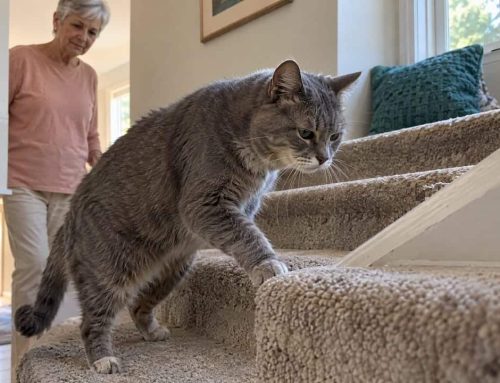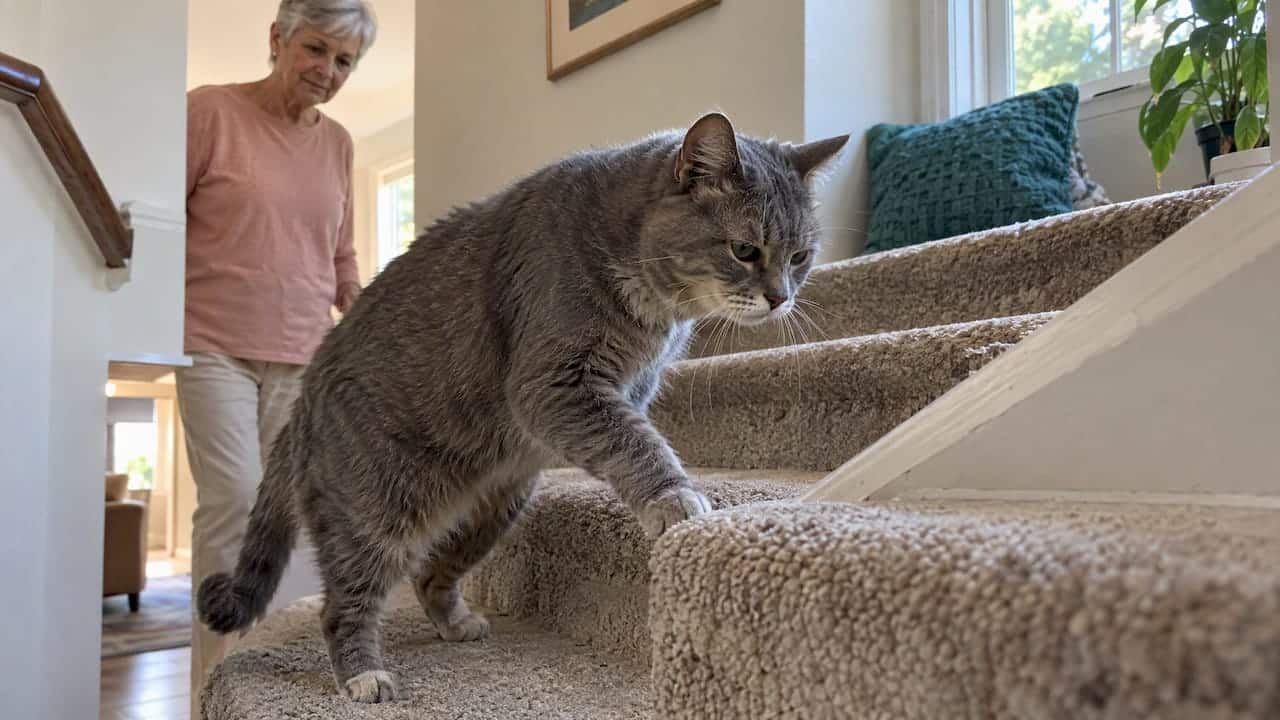
Yes, acupuncture and acupressure can help many constipated cats, but the treatment fits best as a partner to veterinary care, not a substitute for it. Gentle acupressure is safe for mild, occasional constipation. If your cat hasn’t passed stool in more than 48 to 72 hours, is straining without result, vomiting, or crying out when you touch her belly, that’s an emergency, not a home project.
TL;DR:
- Acupuncture and acupressure serve as supportive therapies, but are not substitutes for veterinary diagnosis and treatment, especially in emergency cases.
- Evidence for acupuncture’s effectiveness includes a case where a cat with megacolon regained normal bowel movements after several monthly sessions.
- Most cats tolerate acupuncture without sedation, but proper point placement requires trained professionals, and DIY methods are only safe for mild cases.
- Home acupressure around specific points can help with mild constipation, but should be discontinued if symptoms worsen or no improvement occurs.
- Combining acupuncture with diet adjustments, hydration, and medical interventions offers the best approach to managing feline constipation.
Table of Contents
- Signs of Cat Constipation and What’s Behind It
- What the Evidence Says About Acupuncture for Feline Constipation
- What a Course of Acupuncture Treatment Looks Like
- A Gentle Acupressure Routine You Can Try at Home
- Supporting Digestive Health Alongside Treatment
- How Pet Acupuncture & Wellness Approaches Feline Constipation
- Booking an In-Home Acupuncture Visit for Your Cat
- Sources
- FAQ
Signs of Cat Constipation and What’s Behind It
A healthy cat usually has a bowel movement once a day. When that rhythm breaks, you’ll usually notice it before you see it: repeated trips to the litter box with little or nothing to show for it, hard little pebbles instead of a formed stool, or a cat who suddenly avoids the box altogether because she associates it with pain.
Watch for these signs:
- Straining or crying in the litter box
- Small, dry, or pebble-like stool (or none at all)
- Reduced appetite or skipped meals
- Vomiting or a hunched, painful posture
- Lethargy or hiding more than usual
Constipation has plenty of drivers. Age-related slowdown in colon motility is common in senior cats, and dehydration, low-fiber diets, and hairballs all thicken stool until it’s too hard to pass comfortably. Pelvic injuries, spinal issues, and certain medications can interfere with the nerves and muscles that move waste along. In more serious cases, the colon overstretches and loses its ability to contract at all, a condition called megacolon. That’s why a vet will typically start with a history, abdominal palpation, and often radiographs or bloodwork before recommending any treatment, acupuncture included. Ruling out an obstruction or systemic illness first protects your cat from a treatment plan built on the wrong diagnosis.
What the Evidence Says About Acupuncture for Feline Constipation
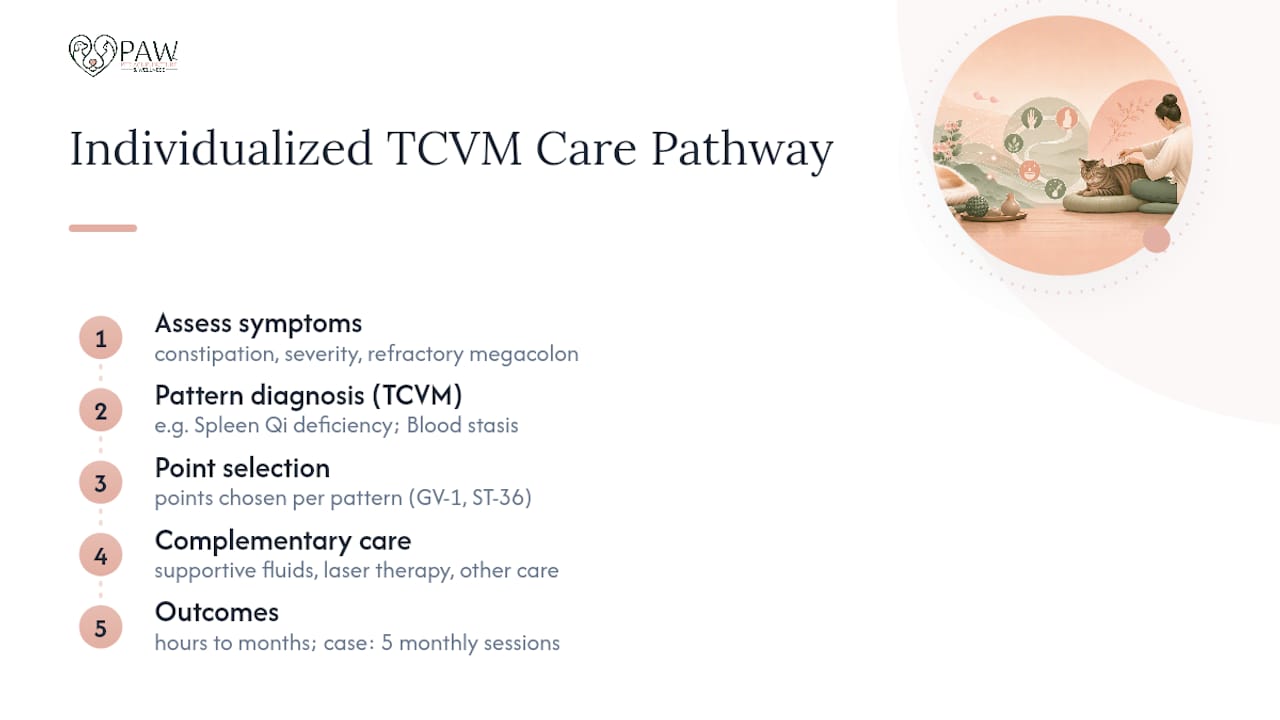
The strongest single piece of published evidence is a case report where a Maine Coon with 22 months of severe, refractory constipation and diagnosed megacolon returned to normal bowel movements after several monthly acupuncture sessions using points including GV-1 and ST-36. That’s a single-documented case, not a guarantee, but it’s a meaningful data point for a condition that often has few good options once it becomes chronic.
Case in point: Five monthly acupuncture treatments turned a nearly two-year, treatment-resistant megacolon case back into normal, regular bowel movements, according to the published case report.
Practice-based accounts add more texture. Clinical write-ups in Animal Wellness Magazine describe cats showing less pain and better disposition shortly after treatment, with some passing stool within hours when acupuncture was combined with supportive care like fluids or laser therapy.
Traditional Chinese Veterinary Medicine doesn’t treat constipation as one problem with one fix. A practitioner identifies the underlying pattern, whether that’s Spleen Qi deficiency, Blood stasis, or something else, and selects points accordingly. That’s why two cats with nearly identical symptoms might leave an appointment with different treatment plans, and why one cat may respond faster than another. Randomized clinical trials in cats remain limited, so acupuncture is best understood as a complementary tool with real clinical support behind it, not a proven universal cure.
What a Course of Acupuncture Treatment Looks Like
A veterinary acupuncturist has more than one tool in the kit, and which one they reach for depends on your cat’s diagnosis, temperament, and how she responds over time.
- Dry-needle acupuncture places fine needles at specific points to stimulate nerve and muscle response.
- Electroacupuncture adds a mild electrical current to needles for stronger stimulation, often used in more stubborn cases like megacolon.
- Aquapuncture injects a small amount of sterile fluid (often vitamin B12) at acupoints when needling isn’t tolerated well.
- Owner-applied acupressure uses finger pressure at the same points between professional visits.
Most practitioners start with an initial series, often four to six weekly sessions, because the benefits tend to build session over session. Once a cat stabilizes, visits typically space out to monthly maintenance. At each appointment, expect a TCVM pattern evaluation before any needle touches your cat, followed by point selection tailored to that pattern, careful placement, and monitoring throughout. Fluids, dietary adjustments, or medication may be added depending on what your cat needs that day.
Most cats tolerate acupuncture without sedation, and serious side effects are rare. Still, discuss any contraindications with your veterinarian first.
Pro Tip: Leave needle placement entirely to a credentialed professional. DIY acupressure is safe for mild cases, but needling requires training in exact point location and depth, and getting it wrong can cause more harm than the constipation itself.
A Gentle Acupressure Routine You Can Try at Home
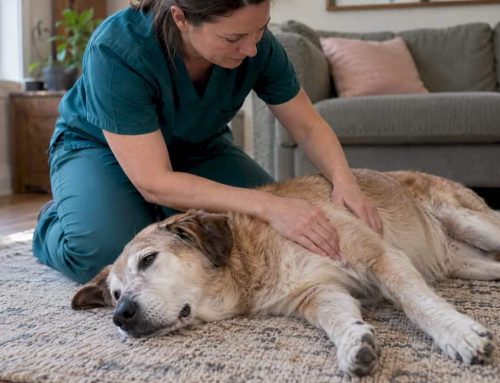
For mild, occasional constipation, acupressure gives you something concrete to do while you wait to see if things resolve on their own or need a vet visit. It won’t fix an obstruction or megacolon, but as a low-risk adjunct between professional visits, it’s genuinely useful.
Three points come up again and again in practitioner guidance:
- ST-36: Located on the outside of the hind leg, below the knee joint, near the top of the shin muscle.
- CV-12: On the belly’s midline, roughly halfway between the bottom of the breastbone and the belly button.
- Bai-hui/GV-1 region: At the base of the tail, right where it meets the spine.
Here’s a simple routine to follow:
- Pick a quiet time when your cat is relaxed, not right after eating or during a nap she’s protective of.
- Settle her in your lap or beside you on a soft surface, and let her sniff your hands first.
- Using one or two fingers, apply gentle, circular pressure at each point for two to five minutes.
- Watch her body language the entire time. Purring or settling in is a good sign; pulling away or tensing means stop.
- Repeat once daily, or every 24 to 72 hours, depending on how she responds.
Pro Tip: Think of acupressure the way you’d think of a warm compress for a sore muscle: helpful support, not a cure for a structural problem. If nothing changes after a couple of sessions, that’s your signal to call your vet, not to press harder.
Never attempt acupressure if your cat shows signs of acute abdominal pain, repeated vomiting, or extreme lethargy. Those are red flags for something acupressure can’t touch, and time matters more than technique in that moment.
Supporting Digestive Health Alongside Treatment
Acupuncture and acupressure work best inside a broader care plan, not as a stand-alone fix. A few adjustments at home make a real difference:
- Diet: Increasing wet food and adjusting fiber, always under your vet’s direction, softens stool and eases the whole process. Gradual changes beat sudden ones, since abrupt diet swaps can upset a sensitive gut further. A tailored constipation diet built around your cat’s age and history tends to outperform generic “high fiber” advice.
- Hydration: Cats are notoriously bad at drinking enough water. A circulating water fountain or an extra water bowl in a new spot can nudge intake up, and chronically dehydrated cats may need subcutaneous fluids at home.
- Medical support: Stool softeners, laxatives, vet-administered enemas, and in refractory megacolon cases, surgery, remain part of standard care. Acupuncture complements these interventions; it doesn’t replace them when your cat genuinely needs them.
- Monitoring: Keep a simple stool log, note appetite or weight changes, and schedule rechecks so small setbacks get caught before they become emergencies.
How Pet Acupuncture & Wellness Approaches Feline Constipation
We build every treatment plan around the individual cat sitting in front of us, not a standard protocol pulled off a shelf. That starts with an in-home TCVM pattern assessment, then a combination of acupuncture, acupressure coaching so you can support treatment between visits, and nutrition guidance suited to your cat’s age and history.
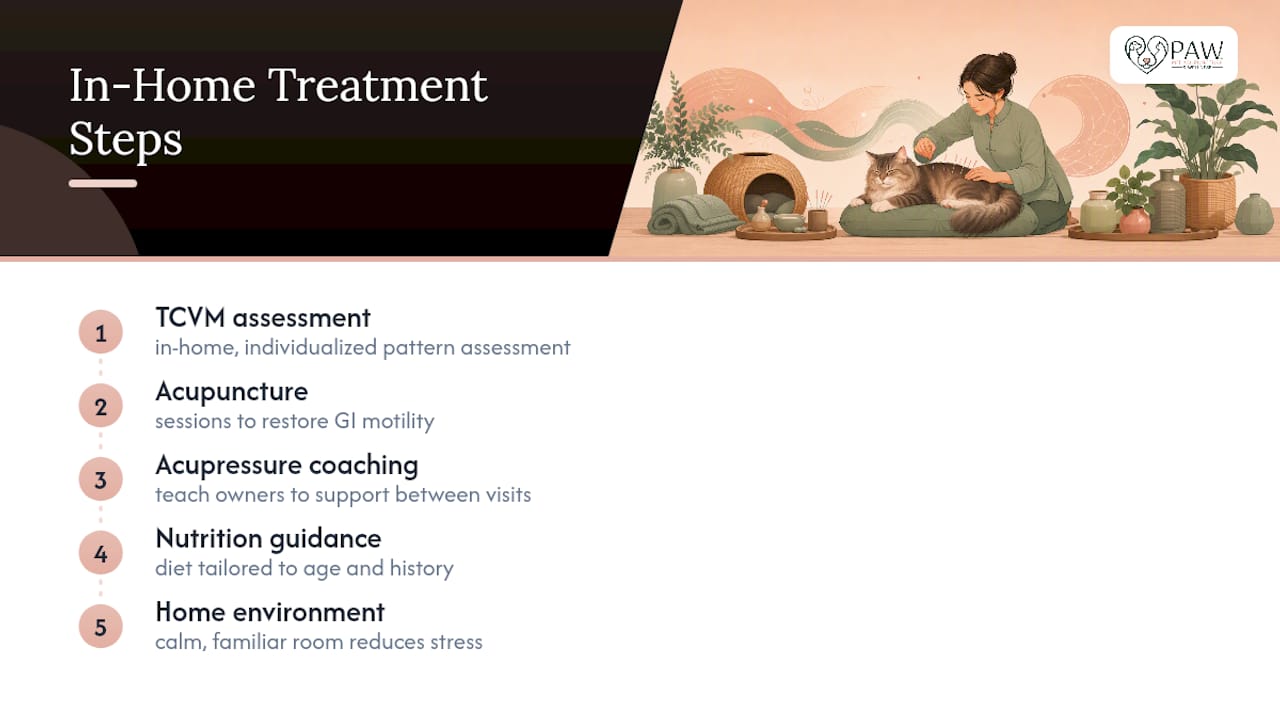
Doing this in your cat’s own home matters more than it might seem. Senior and anxious cats often tense up the moment they smell a clinic, and that stress alone can work against the very motility we’re trying to restore. A calm, familiar room changes what’s possible in a session.
[Veterinarian credentials and licensing information to be added.] [Case studies and treatment outcomes to be added.] [Supporting clinical data on integrative therapies to be added.]
— Pet Acupuncture & Wellness
Booking an In-Home Acupuncture Visit for Your Cat
Pet Acupuncture & Wellness brings the whole appointment to your living room, which means no car ride, no waiting room, and no fighting a carrier while your cat is already uncomfortable. For constipation cases specifically, that typically means an initial assessment and acupuncture session with a technician, paired with acupressure coaching so you can keep supporting her between visits, plus food therapy guidance and telemedicine follow-up if you have quick questions after the appointment.
Your first visit covers a full history, a hands-on TCVM pattern evaluation, and a gentle treatment, whether that’s needling or an acupressure demonstration depending on what your cat can tolerate that day. You’ll leave with a home-care plan built around her specific pattern, not a generic handout. Pricing for the initial assessment and acupuncture visit starts at $430, with a $60 technician mobile fee, and full details on electroacupuncture, laser treatments, and rehabilitation packages are listed if you want to see the full range before booking. Reach out through the Pet Acupuncture & Wellness site to schedule and get a visit on the calendar this week.
Sources
- Acupuncture Treatment of Chronic Constipation and Megacolon in a Cat
- Acupuncture for cats | Animal Wellness Magazine
- Cat Massage for Constipation: Gentle Acupressure for Digestive Support
FAQ
How Do You Relieve a Constipated Cat Quickly?
Encourage water intake, offer wet food, and try gentle acupressure at points like ST-36 or CV-12 for a few minutes if the constipation is mild. If she hasn’t passed stool in more than 48 hours or seems painful, skip home remedies and call your vet, since quick relief for a severe case usually requires an enema or manual evacuation performed by a professional.
How Much Does Feline Acupuncture Cost?
At Pet Acupuncture & Wellness, an initial assessment and acupuncture session with a technician starts at $430, plus a $60 technician mobile fee. Costs vary elsewhere depending on the practice, location, and whether electroacupuncture or additional therapies are included.
Can Acupuncture Actually Fix Constipation?
Acupuncture has resolved chronic constipation in documented cases, including one cat with 22 months of megacolon that returned to normal bowel movements after five monthly sessions. It’s not guaranteed for every cat, though, and works best alongside diet, hydration, and any medical treatment your vet recommends.
Does Acupuncture Actually Work on Cats?
Yes, most cats tolerate acupuncture well, and practice reports describe reduced pain and improved bowel movement in cats treated for constipation, sometimes within hours when combined with fluids or laser therapy. Response varies by cat and by underlying cause, which is why a proper TCVM evaluation matters before treatment starts.