Telemedicine for senior pets works best as a bridge, not a replacement. It’s genuinely useful for monitoring chronic conditions, adjusting medications, hospice check-ins, and deciding whether a symptom needs an urgent trip versus a wait-and-watch approach. What it can’t do is replace hands-on palpation, bloodwork, or imaging, and every state has its own rules about when a vet can treat your pet virtually at all.
TL;DR:
- Telemedicine is effective for monitoring chronic conditions, adjusting medications, and providing quick follow-ups, especially when it allows for at-home assessments.
- Virtual care cannot replace hands-on exams, bloodwork, or imaging, and legal restrictions in some states limit diagnoses and prescriptions without an in-person visit.
- Preparing for video visits with senior pets involves testing devices, filming gait and movement, and having medication and health details readily available.
- Urgent symptoms like severe breathing difficulty, collapse, or major trauma require immediate in-person care rather than virtual consultation.
- Telemedicine works best when integrated with mobile in-home services, allowing for initial assessment online and follow-up with hands-on care tailored to the pet’s comfort.
Table of Contents
- What Telemedicine Can and Cannot Do for Senior Pets
- Common Telemedicine Use Cases for Senior Pets
- What Are the VCPR Rules for Pet Telemedicine?
- How to Prepare for a Virtual Vet Visit With a Senior Pet
- When Telemedicine Isn’t Enough: Red Flags to Watch For
- How a Mobile Integrative Practice Uses Telemedicine
- A Note on Balancing Screens and Hands-On Care
- Ready to Book a Virtual or Mobile Visit?
- Sources
- FAQ
What Telemedicine Can and Cannot Do for Senior Pets
Watching your dog navigate your living room tells a veterinarian things a clinic exam room never will. Senior pets often mask pain, stiffness, or disorientation the moment they smell antiseptic and hear other animals barking down the hall. At home, the mask comes off. That’s part of why the 2023 AAHA senior care guidelines point to telemedicine as a way to cut travel stress while allowing more frequent, higher-quality rechecks for arthritis, kidney disease, or heart conditions than a busy clinic schedule typically permits.
But a camera has real limits. Your vet can’t feel for a mass, listen to a heart murmur through a screen, or run the bloodwork that catches early kidney decline. The 2021 AAHA/AVMA telehealth guidelines are direct about this: virtual care has to meet the same standard of care as an in-person visit, and when it can’t, the vet’s job is to say so and recommend an exam instead.
Here’s where video visits genuinely earn their place:
- Spotting subtle mobility changes in the pet’s own environment, without clinic stress skewing behavior
- Fielding quick questions between scheduled rechecks so small issues don’t snowball
- Connecting you with a specialist for a second opinion without another car ride
- Catching image quality or connection problems early, before they compromise the assessment
Common Telemedicine Use Cases for Senior Pets
Not every concern calls for the same kind of virtual visit. Matching the right format to the right need is what makes a session worth your time.
- Chronic condition monitoring. Arthritis flare-ups, mobility scores, and heart medication adjustments are ideal for video check-ins, especially since a 2025 Frontiers study found that repeated video visits improved caregiver knowledge and made at-home management strategies feel more workable for cats with chronic mobility problems.
- Palliative and hospice support. Quality-of-life conversations often go better at home, where your pet is relaxed and you can speak candidly without an audience.
- Behavior and nutrition consults. Appetite changes, litter box avoidance, and confusion at night are easier to describe and demonstrate from the room where they happen.
- Post-op follow-ups and teletriage. A quick video check on an incision or a call to decide whether vomiting warrants same-day care saves you an unnecessary drive.
What Are the VCPR Rules for Pet Telemedicine?
The veterinarian-client-patient relationship, or VCPR, is the legal backbone of virtual veterinary care. AVMA policy states plainly that telemedicine should happen within an existing VCPR, meaning a vet has already examined your pet in person, except in genuine life-threatening emergencies.
That single rule shapes what’s possible on a screen:
- A vet with no prior in-person relationship generally can’t diagnose or prescribe for your pet remotely
- States vary on how recently that in-person exam needs to have happened
- Controlled substances almost always require a documented, active VCPR and often an in-person visit
- Some states permit broader telehealth advice even without a VCPR, but treatment stays restricted
Ask directly when scheduling: does this practice already have a relationship with my pet, and what does Florida require for the specific medication or condition you’re calling about? The answer changes what the vet can legally do for you that day.
How to Prepare for a Virtual Vet Visit With a Senior Pet
A little setup turns a rushed, frustrating call into a genuinely useful appointment. Aging pets don’t always cooperate with technology, so plan around them, not against them.
- Test your device and internet connection beforehand, and use good, even lighting so gait and posture are actually visible
- Film your pet walking, standing from a lying position, and climbing stairs if that’s part of the concern
- Have a current medication list, recent weight, and notes on appetite or water intake ready to reference
- Take a couple of photos or short videos of the specific issue, like a limp or a skin patch, in case the live feed lags
- Keep the room calm and familiar, and have a second person on hand to help demonstrate movement safely
Pro Tip: Film your pet’s gait from the side, at floor level, a day or two before the appointment. Vets often catch subtle limping or stiffness on video that’s harder to see live because you’re distracted by holding the phone.
Set expectations going in. A thorough video visit typically runs 15 to 20 minutes, and the most common outcomes are a medication adjustment, a home-care plan, or a recommendation to schedule hands-on care.
When Telemedicine Isn’t Enough: Red Flags to Watch For
Some symptoms need eyes and hands in the room, not a screen. Treat these as immediate in-person or emergency signs, no video call first:
- Severe difficulty breathing, collapse, uncontrolled bleeding, a seizure lasting more than a few minutes, or major trauma
Others develop more gradually but still call for diagnostics a camera can’t provide:
- Rapid, unexplained weight loss
- Lameness that’s worsening or won’t bear weight at all
- Vomiting or diarrhea lasting more than a day
- Sudden confusion, stumbling, or other signs of neurologic decline
Teletriage still has a job here. A quick call can help you decide whether a symptom means “monitor overnight” or “go now,” but once you’re looking at any item on that emergency list, skip the screen and get your pet seen.
How a Mobile Integrative Practice Uses Telemedicine
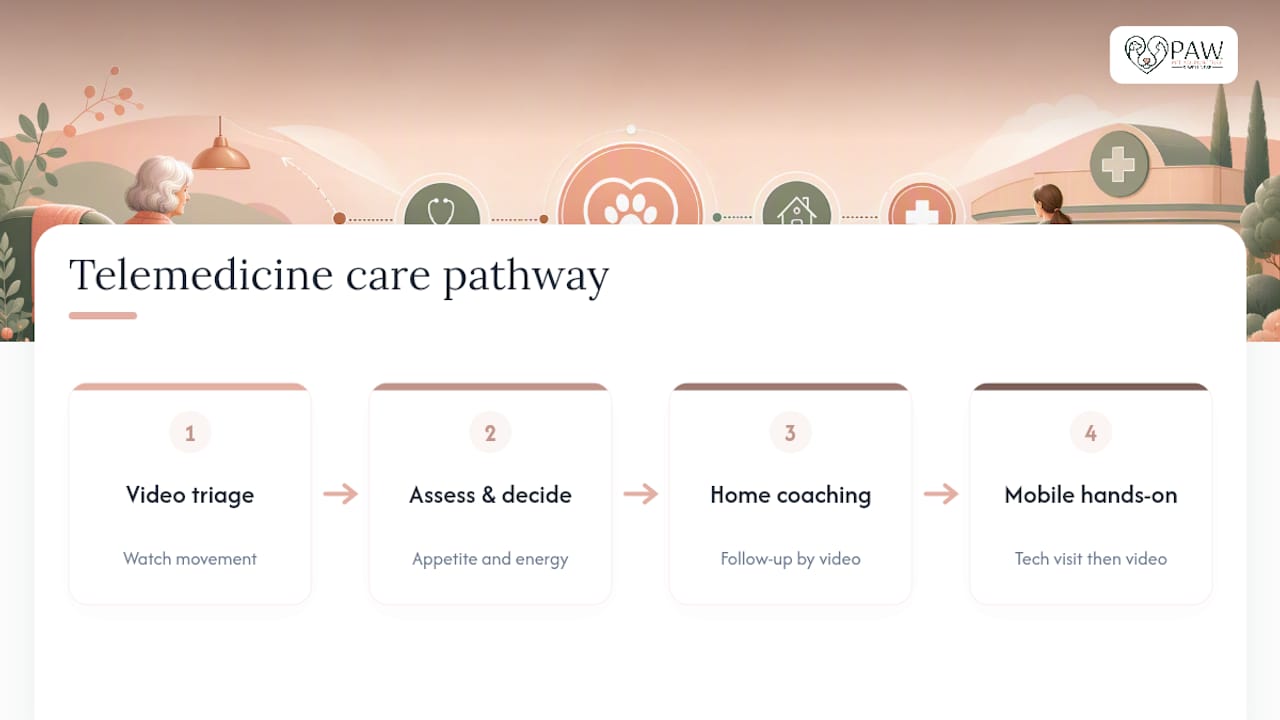
This mobile integrative practice uses telemedicine as part of a comprehensive, hands-on care approach rather than as a standalone service. A typical path starts with a video consult where we watch your dog move around the house, ask about appetite and energy, and decide together whether home coaching is enough for now or whether it’s time to bring hands-on care to your door.
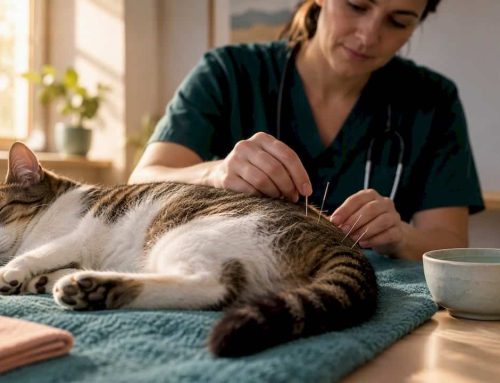
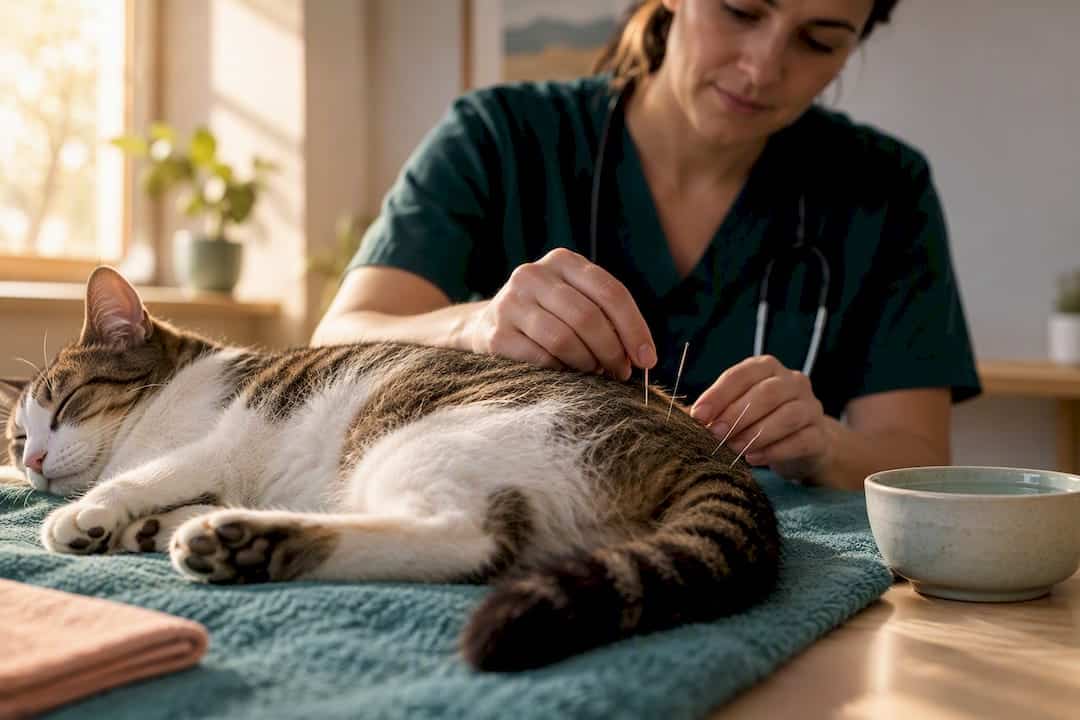
Say your senior cat has been stiffer getting onto the couch. A tele-assessment might lead to at-home acupuncture and an at-home rehabilitation package, scheduled for wherever your pet is most relaxed, which for most senior pets means their own living room. After a mobile technician visit, we’ll often follow up by video rather than asking a frail or anxious pet to travel again, checking how they responded and adjusting the plan from there.
This is what a Florida telemedicine workflow for a mobile practice actually looks like in practice: triage or monitor by video, then bring the appropriate level of hands-on care to the pet, not the other way around.
A Note on Balancing Screens and Hands-On Care
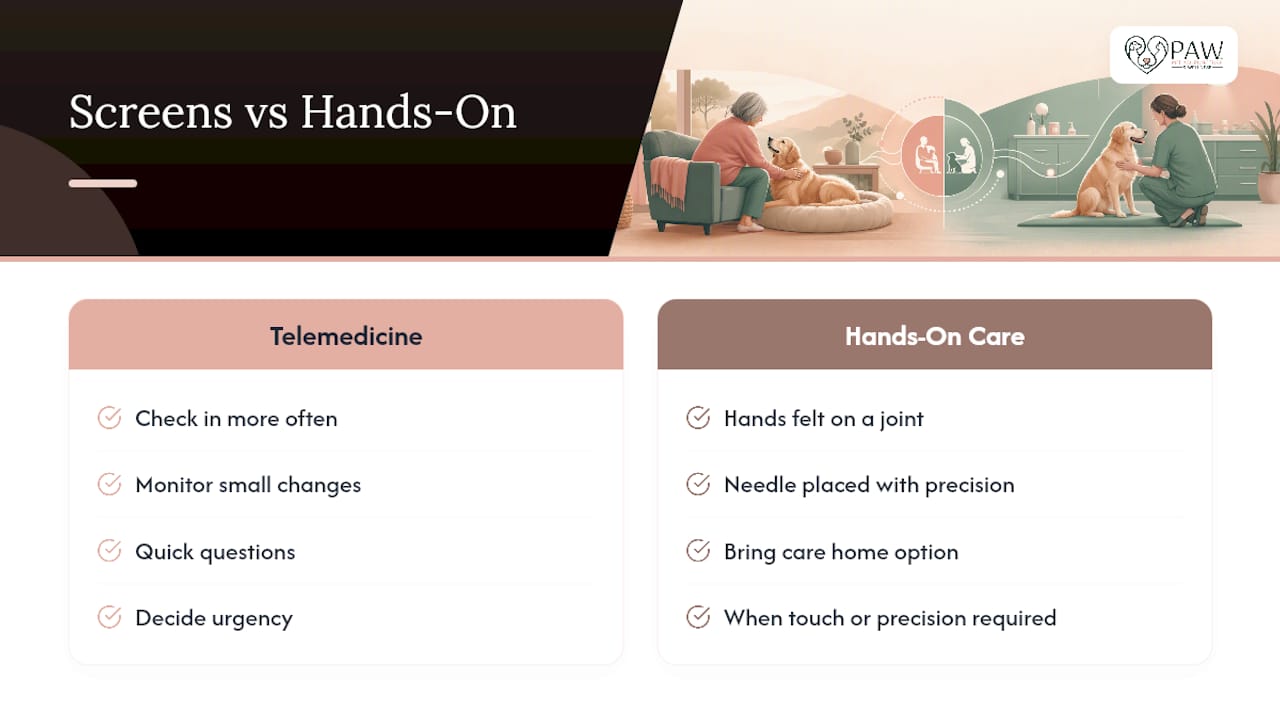
We built Pet Acupuncture & Wellness around the belief that senior and disabled pets deserve care that meets them where they are, literally. Telemedicine extends that philosophy. It lets us check in more often, catch small changes before they become big ones, and spare a nervous senior dog another stressful car ride for a question that a video call can answer.
Use it that way: for monitoring, for quick questions, for deciding what’s urgent. When your pet needs hands felt on a joint or a needle placed with precision, ask about bringing that care home instead of defaulting to a clinic visit that may not be necessary.
— Pet Acupuncture & Wellness
Ready to Book a Virtual or Mobile Visit?
If your senior pet needs monitoring between rechecks, a nutrition consult, or a quick answer about a new symptom, a telemedicine consultation gets you talking to a vet without loading an arthritic dog into the car. This virtual access can be paired with in-home care services such as acupuncture, laser therapy, and rehabilitation packages, delivered at the pet’s residence rather than a clinic.
Mobile integrative care services are available that focus on addressing the needs of senior, disabled, and anxious pets who may have difficulty with traditional veterinary visits. When you schedule, ask which telemedicine option fits your pet’s situation and whether Florida’s VCPR rules mean an in-person visit should come first. Check current telemedicine costs or review full service pricing to see how a video consult and an at-home visit fit together, then book the option that meets your pet where they’re most comfortable: home.
Sources
- Using telehealth and telemedicine technologies — 2023 AAHA senior care guidelines
- AVMA telehealth, telemedicine and VCPR policy
- Incorporating video telehealth to improve at-home management of chronic mobility problems in cats — Frontiers in Veterinary Science (2025)
FAQ
Is Telemedicine Safe for Senior Pets With Multiple Health Issues?
Yes, for monitoring and follow-up, but it works best alongside an established relationship with a vet who has examined your pet in person. Complex cases with multiple chronic conditions typically need periodic hands-on exams to catch what a camera misses, per AAHA/AVMA telehealth guidelines.
Can a Vet Prescribe Medication Through a Video Call?
Generally only within an existing VCPR, and controlled substances usually require additional in-person requirements. AVMA policy restricts remote prescribing without that established relationship, and rules vary by state.
How Much Does a Telemedicine Vet Visit Cost for a Senior Pet?
Costs vary by practice and the type of consult needed. Pet Acupuncture & Wellness lists current telemedicine and mobile service pricing on its cost of services page.
What Should I Have Ready Before a Virtual Vet Appointment?
Have your pet’s medication list, recent weight, and short videos of the concern, like a limp or stiffness, ready before the call. Good lighting and a calm, familiar room make it much easier for the vet to assess mobility and behavior accurately.
Does Telemedicine Help With Hospice or End-of-Life Care?
Yes, video visits are often preferred for quality-of-life check-ins because your pet stays relaxed at home during a sensitive conversation. Caregivers in the Frontiers study reported higher interest in video visits when managing pets with more advanced mobility problems.