TL;DR:
- Most dog owners in the U.S. pay $25 to $70 per laser therapy session, with total costs varying based on condition and treatment protocol. Laser therapy stimulates cellular healing using specific light wavelengths, benefiting pain management, recovery, and chronic conditions like arthritis. Completing the full course is essential for effective results, and in-home options can reduce stress for anxious or senior dogs.
Most dog owners pay what varies per session for veterinary laser therapy in the U.S., with a full initial treatment course costs that depend on your dog’s condition and the number of sessions the protocol requires. If your dog has a chronic condition like arthritis, annual maintenance adds to that total. Here’s what to expect at a glance:
- Per session (standard clinic): most U.S. clinics charge $25–$70 for standard laser therapy, with lower costs of $8–$20 for shorter post-op or wound treatments
- Typical initial course (multiple sessions): cost varies widely depending on sessions and condition
- Annual maintenance (monthly visits): maintenance costs accumulate annually for chronic cases
- Mobile or in-home visits: may involve an additional house-call fee on top of session pricing
Your most useful next steps: ask your vet for a written treatment plan with a session count and total estimate, check your pet insurance policy for laser therapy reimbursement, and consider whether an in-home provider like Pet Acupuncture & Wellness might reduce the stress and logistics for a senior or anxious dog.
Table of Contents
- What laser therapy actually is and why vets use it for dogs
- How laser therapy works on your dog’s body
- Which conditions respond well to laser therapy
- Benefits, side effects, and what to watch for
- Cost and timeline: what real treatment plans look like
- Why clinics charge different prices for the same therapy
- At-home devices vs. clinic laser therapy: which is right for your dog?
- What to expect at a laser therapy session
- Is laser therapy worth the cost? Evidence, insurance, and smart planning
- How to choose a laser therapy provider and what to ask
- Mobile laser therapy from Pet Acupuncture & Wellness
- Key Takeaways
- Why we bring laser therapy to your dog’s home
- Ready to get a written estimate for your dog?
- Useful sources and further reading
- FAQ
What laser therapy actually is and why vets use it for dogs
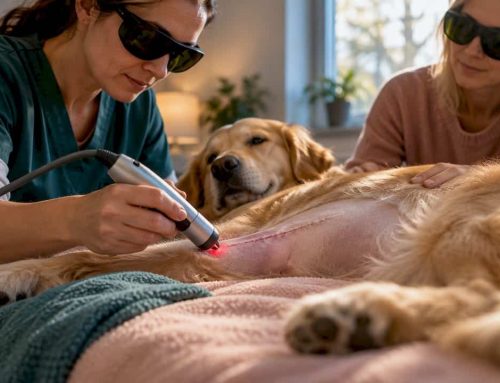
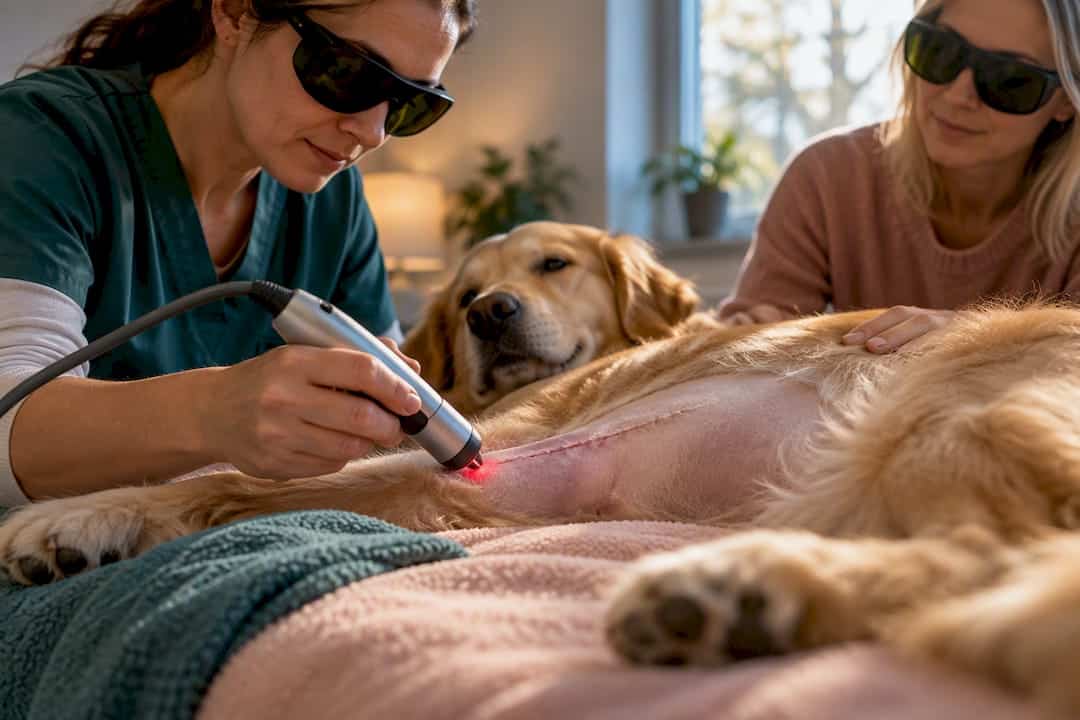
Laser therapy for dogs, formally called photobiomodulation (PBM) or cold laser therapy, uses specific wavelengths of light to stimulate healing at the cellular level without cutting, heat, or medication. Vets use it most often for pain management, post-surgical recovery, wound healing, and chronic inflammatory conditions like degenerative joint disease.
The two main categories you’ll encounter in clinical settings are Class IIIb and Class IV therapeutic lasers. Class IV units deliver higher power output and can treat deeper tissues faster, which is why they’re the standard in most modern rehab and integrative practices. Consumer red-light LED mats and panels sit in a completely different category: lower power, broader coverage, and not equivalent to what a licensed vet uses in a clinical setting. Pet Acupuncture & Wellness uses therapeutic laser as part of an integrative care plan, often alongside acupuncture and rehabilitation, rather than as a standalone procedure.
How laser therapy works on your dog’s body
The mechanism is called photobiostimulation. When therapeutic light penetrates tissue, it’s absorbed by mitochondria inside cells, which then produce more adenosine triphosphate (ATP), the molecule cells use for energy. More ATP means faster tissue repair, reduced inflammation, and improved local circulation.
At the cellular level, a few things happen simultaneously:
- ATP production increases, giving damaged cells the energy to repair themselves
- Inflammation pathways slow down, reducing swelling and pain signals
- Blood flow improves to the treated area, bringing oxygen and nutrients
- Nerve sensitivity decreases, which is why dogs often visibly relax during treatment
One thing owners should understand: the effects are cumulative. The first session rarely produces dramatic results. Owners should expect gradual, cellular-level changes that build over multiple treatments, which is exactly why completing the full prescribed course matters so much. Skipping sessions mid-protocol is one of the most common reasons owners conclude the therapy “didn’t work.”
Which conditions respond well to laser therapy
Laser therapy covers a wide range of conditions, and the expected outcome varies meaningfully by diagnosis. Here’s what the clinical picture looks like for the most common cases:
Arthritis and degenerative joint disease are the most frequent reasons dogs receive laser therapy. Most arthritic dogs need an initial loading phase followed by ongoing maintenance, and many owners report visible improvement in mobility and willingness to climb stairs or rise from rest.
Post-surgical recovery is where shorter, targeted sessions shine. Incision sites and dental recovery areas typically need only 5–15 minutes of treatment per session, which is why post-op and oral treatments often fall at the lower end of the pricing scale at $8–$20 per session. Most post-op courses are short, usually several sessions.
Acute sprains, strains, and soft tissue injuries often respond within a handful of sessions. These cases rarely require long-term maintenance once the injury resolves.
Wounds and skin conditions benefit from the improved circulation and reduced inflammation laser therapy promotes. Chronic or non-healing wounds may need more sessions than a straightforward laceration.
Intervertebral disc disease (IVDD) is another area where laser therapy is increasingly used as part of a conservative or post-surgical management plan, though it works best alongside physical rehabilitation.
Benefits, side effects, and what to watch for
Laser therapy has a genuinely favorable safety profile, which is part of why it’s become so common in integrative and rehab practices. That said, it’s worth knowing both sides before committing to a course of treatment.
Benefits:
- Noninvasive and drug-free, which matters for dogs who can’t tolerate NSAIDs or are already on multiple medications
- Reduces pain and inflammation without sedation
- Speeds tissue healing after surgery or injury
- Most dogs tolerate sessions well and some visibly relax during treatment
Risks and limitations:
- Not appropriate over active cancerous tissue, the eyes, or the thyroid gland
- Pregnant animals require special precautions
- Results vary by condition severity and individual response
- It is not a cure for degenerative disease; it manages symptoms and slows progression
Pro Tip: Always confirm that the clinic uses proper laser safety goggles for both the patient and staff. A licensed DVM or certified canine rehabilitation therapist (CCRT) should oversee the protocol, not just a technician working unsupervised.
Side effects are rare when therapy is administered correctly. Mild, temporary discomfort or increased sensitivity at the treatment site has been reported in some cases, but serious adverse events are uncommon in properly supervised clinical settings.
Cost and timeline: what real treatment plans look like
The table below reflects typical U.S. clinic pricing ranges and session counts by condition type. These are ranges, not guarantees; your dog’s size, the number of joints or areas treated, and your clinic’s location all shift the final number.

| Condition | Typical Sessions | Per-Session Range | Estimated Course Total |
|---|---|---|---|
| Post-op / incision healing | multiple sessions typical | lower per-session cost typical | course total cost varies |
| Acute sprain or soft tissue injury | several sessions typical | moderate per-session cost typical | total cost varies |
| Wound care | multiple sessions typical | moderate per-session cost typical | total cost varies |
| Chronic arthritis (initial phase) | multiple sessions typical | higher per-session cost typical | course total varies |
| Chronic arthritis (annual maintenance) | ongoing sessions typical | higher per-session cost typical | annual maintenance costs accumulate |
Sample case totals to help you budget:
A dog recovering from a routine orthopedic surgery might complete several sessions at a lower per-session cost, totaling a modest sum. A large-breed dog with moderate hip arthritis starting a loading phase with multiple sessions at a higher per-session cost incurs greater upfront cost, then pays ongoing monthly maintenance fees, adding up to a significant annual cost.
Many clinics offer bundled packages that reduce the per-session cost by a significant percentage. Asking about package deals like “buy 5, get 1 free” or prepaid packages is one of the simplest ways to lower your total spend without changing the treatment plan.
Why clinics charge different prices for the same therapy
The price variation you’ll see between clinics isn’t arbitrary. Several real cost drivers explain why one practice charges $35 a session and another charges $65.
- Laser class and equipment cost. Professional Class IIIb and Class IV units cost practices $8,000–$30,000 to purchase. That capital investment gets amortized into per-session pricing, which is why clinics with newer, higher-powered equipment often charge more.
- Session length and treatment area. Sessions range from 5 to 30 minutes depending on how many joints or tissue areas need treatment. A single-joint session on a small dog costs less than a full-spine protocol on a large breed.
- Your dog’s body size. Larger dogs require more time and energy output to treat the same tissue depth, which translates directly to higher per-session fees at many practices.
- Geographic location and clinic overhead. Urban practices in high-cost markets charge more than rural clinics, reflecting rent, staffing, and operating costs.
- Provider specialization. A board-certified veterinary rehabilitation specialist or integrative practice typically charges more than a general practice offering laser as an add-on, but the protocol design and monitoring are usually more thorough.
- Mobile or house-call fees. In-home services add a travel or visit fee on top of the session cost, though this often replaces the stress of transporting a painful or anxious dog to a clinic.
Pro Tip: When you call a clinic for pricing, ask specifically: “What is included in that session fee?” Some practices bundle the exam and treatment; others charge separately. Knowing the full per-visit cost prevents surprises at checkout.
For a deeper look at how device class affects treatment outcomes, the type of laser matters as much as the number of sessions.
At-home devices vs. clinic laser therapy: which is right for your dog?
The short answer: clinic therapy and at-home devices serve different purposes, and the best approach for many dogs is a combination of both.
| Feature | Clinic Laser (Class IIIb/IV) | At-Home LED/Red-Light Device |
|---|---|---|
| Power output | High (treats deep tissue) | Low to moderate (surface-level) |
| Precision | Targeted, protocol-driven | Broad, less controlled |
| Veterinary oversight | Yes | No (unless coordinated with vet) |
| Upfront cost | $25–$70/session (lower cost $8–$20 for post-op/wound sessions) | — |
| Best for | Acute injury, post-op, loading phase | Maintenance between clinic visits |
| Safety monitoring | Built into clinical setting | Owner-dependent |
Clinic care is necessary when your dog is in an acute phase, recovering from surgery, or needs deep-tissue treatment that consumer devices simply can’t reach. At-home devices can be a reasonable supplement for maintenance between visits, particularly for dogs with chronic arthritis who are stable and whose vet has reviewed the device.
The risk with at-home use is skipping the clinical loading phase because the device seems “good enough.” A responsible at-home approach always starts with a vet-designed protocol and uses the consumer device to extend, not replace, professional care.
What to expect at a laser therapy session
Knowing what happens during a visit helps you prepare your dog and judge whether the session count your vet recommends is reasonable.
- Check-in and brief exam. The vet or therapist reviews your dog’s current status, checks the treatment area, and adjusts the protocol if needed based on how your dog has responded since the last session.
- Positioning. Your dog lies or sits comfortably, often without restraint. Most dogs settle quickly, especially after the first session.
- Safety goggles on. Protective eyewear goes on your dog, the clinician, and anyone else in the room. This is non-negotiable with therapeutic lasers.
- Treatment application. The handheld laser probe moves slowly over the target area. Sessions typically run 5–30 minutes depending on the condition and number of areas treated.
- Aftercare guidance. You’ll receive instructions on activity level, any signs to watch for, and when to return. Some dogs are slightly more relaxed or sleepy after treatment; this is normal.
Timeline for seeing results:
- Sessions 1–3: Minimal visible change; cellular repair is beginning
- Sessions 4–6: Many owners notice subtle improvements in comfort or mobility
- Sessions 6–10: Clearer improvement in most cases; reassessment recommended
- Maintenance phase: Monthly or bimonthly visits to sustain gains
According to AKC guidance, chronic conditions typically begin with 2–3 sessions per week during the loading phase before tapering to monthly maintenance. Plan your schedule and budget around that front-loaded structure.
Is laser therapy worth the cost? Evidence, insurance, and smart planning
The evidence base for photobiomodulation in veterinary medicine is growing. Clinical research supports its use for pain reduction and tissue healing, particularly as part of a multimodal pain management or rehabilitation plan rather than as the only treatment. Dogs with arthritis who receive laser therapy alongside appropriate exercise, weight management, and pain medication tend to do better than those relying on any single approach.
On insurance reimbursement: Many major U.S. pet insurers may reimburse laser therapy when it’s performed by a licensed veterinarian and prescribed as part of a covered treatment plan. Coverage varies widely by policy. Before your first session, check your policy for:
- Whether laser therapy is listed as a covered procedure
- Whether a formal diagnosis is required
- Any prior authorization or referral requirements
- Your deductible and reimbursement percentage
Providers like ASPCA Pet Insurance, Trupanion, and Nationwide each handle alternative and rehabilitation therapies differently, so a quick call to your insurer before starting treatment can save you hundreds of dollars.
For the most cost-effective long-term plan, combine clinic-based acute and loading-phase care with at-home maintenance when your vet approves it, and always ask about integrative care options that bundle laser therapy with acupuncture or rehabilitation for a single visit fee.
How to choose a laser therapy provider and what to ask
Not every clinic offering laser therapy is equally equipped or experienced. Here’s what to look for and what to ask before committing to a course of treatment.
Qualifications to look for:
- A licensed DVM overseeing the protocol, not just supervising a technician
- Certification in canine rehabilitation (CCRT or CCRP) if the practice markets itself as a rehab center
- Experience with the specific laser class they use (Class IV requires more training than Class IIIb)
Questions to ask:
- What class of laser do you use, and what power settings are typical for my dog’s condition?
- How many sessions do you recommend, and what does the full course cost?
- Do you offer package pricing or bundle discounts?
- Will you coordinate with my primary vet and share treatment notes?
- What safety protocols do you follow, including eye protection?
Red flags:
- No written treatment plan or session count estimate provided upfront
- Vague pricing (“it depends” with no range given)
- Refusal to communicate with your primary veterinarian
- No safety goggles used during treatment
- Guarantees of specific outcomes or cure claims
For South Tampa dog owners, local laser therapy options that include mobile in-home visits can be especially valuable for dogs who struggle with car rides or clinic environments.
Mobile laser therapy from Pet Acupuncture & Wellness
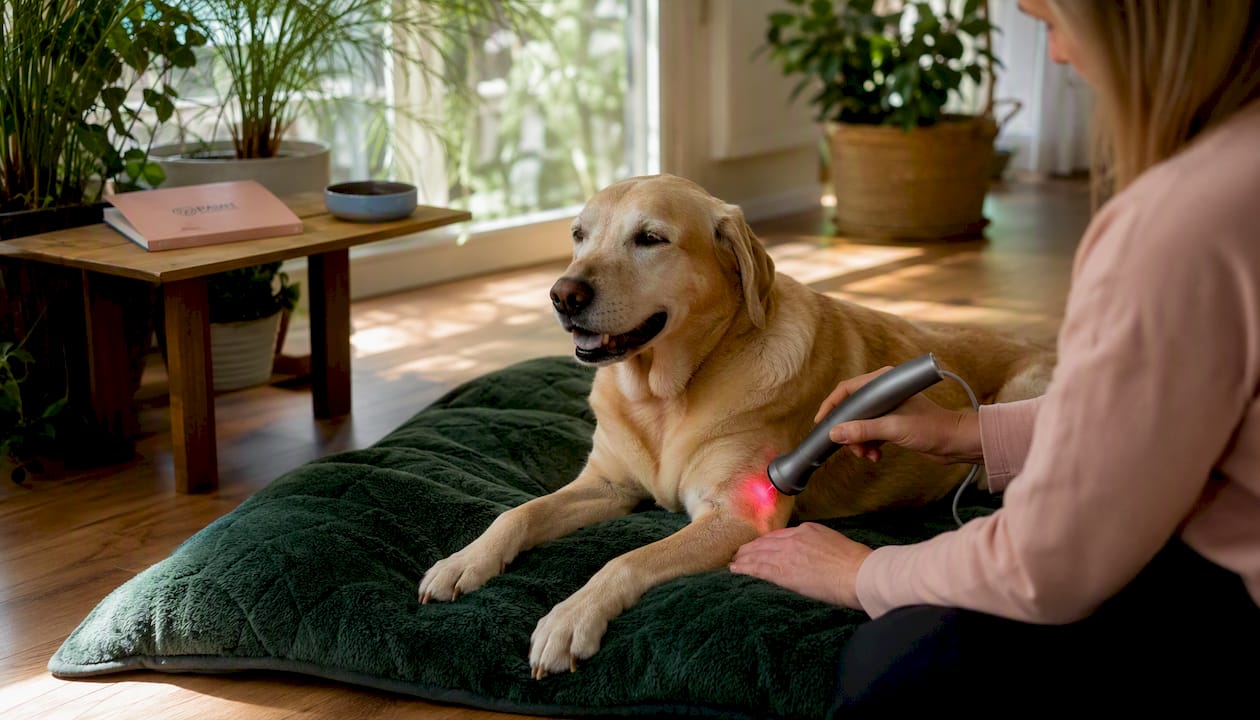
Pet Acupuncture & Wellness brings veterinary laser therapy directly to your home in South Tampa, which changes the experience for dogs who find clinic visits stressful, painful, or physically difficult. Senior dogs, dogs with mobility limitations, and anxious patients often respond better to treatment in a familiar environment where they’re already relaxed.
The mobile model also means laser therapy can be integrated into a single visit alongside acupuncture, rehabilitation exercises, or herbal therapy, rather than requiring separate appointments at separate locations. That kind of coordinated, same-visit care is genuinely harder to replicate in a traditional clinic setting.
| Service Component | Description |
|---|---|
| Mobile house-call visit fee | Covers travel to your South Tampa home; combined with session fee |
| Laser therapy session | Priced per session or as a prepaid package; written estimate provided at consultation |
| Integrative add-ons | Acupuncture, rehabilitation, or herbal therapy can be combined in one visit |
| Initial consultation | Includes exam, condition assessment, and written treatment plan |
Pricing is provided in writing after the initial consultation so you know exactly what to budget before committing to a course of treatment. To learn more about what a session looks like and whether your dog is a good candidate, visit the South Tampa laser therapy service page.
Key Takeaways
Laser therapy for dogs costs $25–$70 per session at most U.S. clinics, with shorter post-op or wound treatment sessions often running $8–$20. A full initial course typically costs $180–$700 for 6–10 sessions, and chronic-condition maintenance can add $300–$840 or more annually.
| Point | Details |
|---|---|
| Per-session cost range | Most U.S. clinics charge $25–$70; post-op sessions often run $8–$20. |
| Full course estimate | A typical 6–10 session initial course costs $180–$700 depending on condition and clinic. |
| Bundle savings | Asking for package pricing can reduce per-session cost by 10–25%. |
| Insurance check | Major U.S. insurers may reimburse when a licensed vet prescribes the treatment; verify before starting. |
| Mobile option | Pet Acupuncture & Wellness offers in-home laser therapy in South Tampa with written estimates provided upfront. |
Why we bring laser therapy to your dog’s home
The dogs who benefit most from laser therapy are often the ones who struggle most to get to a clinic: the arthritic senior who cries in the car, the anxious rescue who shuts down in a waiting room, the post-surgical patient for whom every car ride is a setback. That’s the gap Pet Acupuncture & Wellness was built to fill. Bringing integrative care into the home isn’t a convenience feature; for many patients, it’s what makes consistent treatment adherence possible at all. A dog who receives 10 sessions in a calm, familiar space will almost always do better than one who completes 4 sessions before the owner gives up on the clinic visits.
Ready to get a written estimate for your dog?
For South Tampa dog owners who want laser therapy without the clinic stress, Pet Acupuncture & Wellness offers in-home sessions that fit into your dog’s day rather than disrupting it. You get a licensed veterinarian at your door, a written treatment plan with clear pricing, and the option to combine laser therapy with acupuncture or rehabilitation in a single visit.
The first step is a consultation where your dog is assessed, a session count is recommended, and a written cost estimate is provided before any commitment is made. To book or ask questions, visit the vet referral and booking page or explore integrative care options in South Tampa that pair laser therapy with acupuncture for a more complete pain management plan.
Useful sources and further reading
These are the primary sources used to build the cost estimates, clinical guidance, and protocol recommendations in this article:
- AKC: Laser Therapy in Dogs — Covers typical protocols, loading phases, and condition-specific guidance from a trusted breed and health authority.
- PetMD: Laser Therapy for Dogs — Plain-English explanation of the mechanism, expected timeline, and multimodal integration guidance.
- Antech Diagnostics: How Much Should Veterinarians Charge for Laser Therapy? — Industry-side perspective on bundle pricing and clinic economics.
- ASPCA Pet Insurance: What’s Covered? — Guidance on what major U.S. pet insurers may reimburse and what documentation is typically required.
- PMC: Photobiomodulation in Veterinary Medicine — Peer-reviewed research on the clinical evidence base for laser therapy in animals.
- PAW Vet Practice: South Tampa Pet Laser Therapy — Local service details for South Tampa dog owners considering in-home laser therapy.
FAQ
How expensive is laser therapy for dogs?
Most U.S. clinics charge $25–$70 per session for standard laser therapy, while shorter post-op or wound treatment sessions often fall between $8 and $20. A full initial course of 6–10 sessions typically costs $180–$700.
Is laser therapy worth it for dogs?
For most dogs with arthritis, post-surgical recovery needs, or soft tissue injuries, yes, particularly when it’s part of a multimodal plan that includes rehabilitation or pain management. Results are cumulative, so completing the full prescribed course is what determines whether the therapy delivers its full benefit.
How long does a laser therapy session last on a dog?
Sessions typically run 5–30 minutes depending on the condition, the number of areas treated, and your dog’s size. Larger dogs and multi-joint protocols take longer than a single-site post-op treatment.
What are the drawbacks of laser therapy for dogs?
The two most common drawbacks are cost over time for chronic conditions and the need for multiple sessions before results appear. Laser therapy is also contraindicated over cancerous tissue and the eyes, and it is not a cure for degenerative disease, only a tool for managing symptoms and supporting healing.
Can pet insurance cover laser therapy for dogs?
Many major U.S. pet insurers may reimburse laser therapy when a licensed veterinarian prescribes it as part of a covered treatment plan. Check your specific policy for prior authorization requirements, diagnosis documentation, and your deductible before starting treatment.